
Voices from Beyond
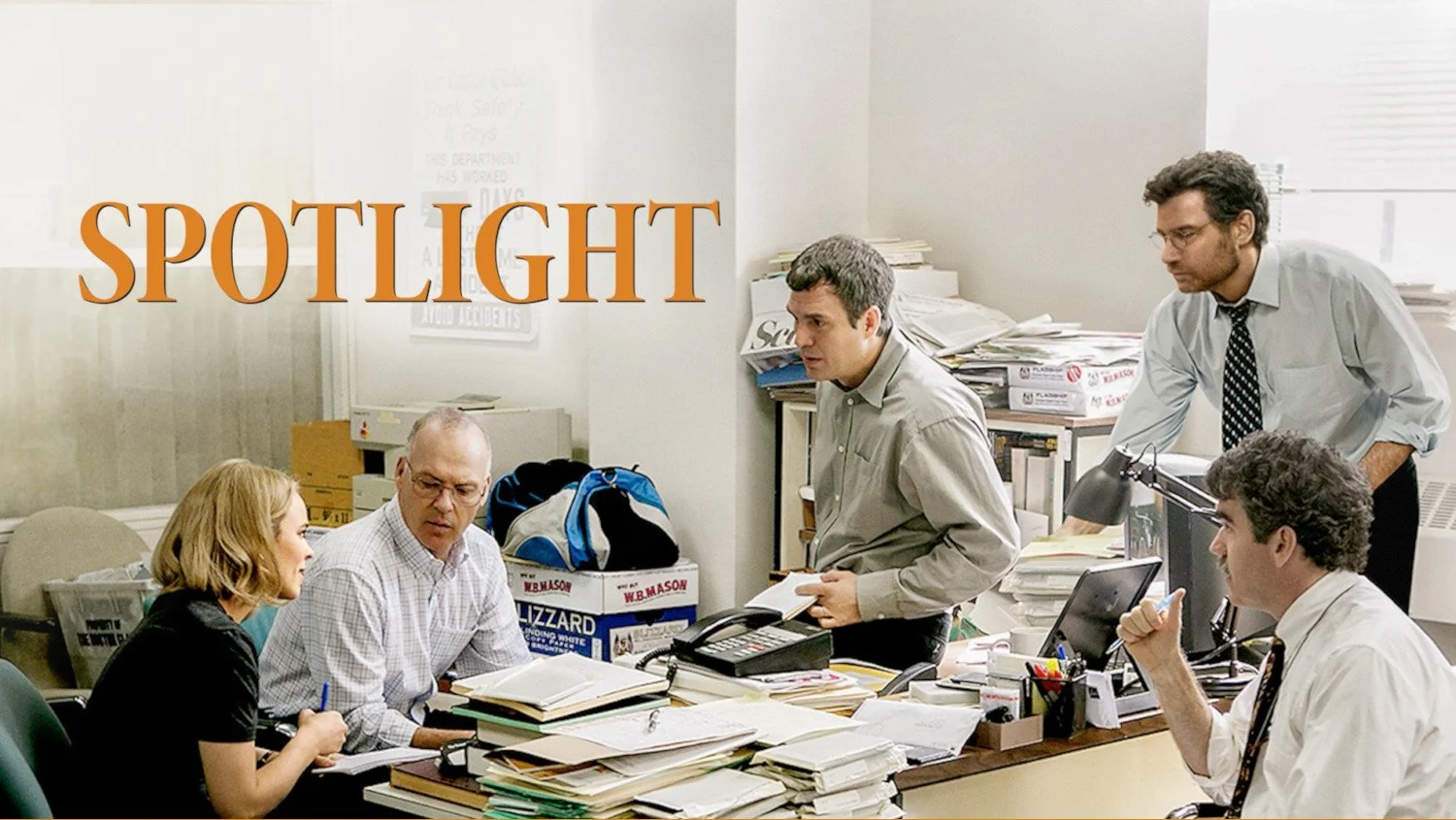
Oscar Hangover Special: Why “Spotlight” Is a Terrible Film
Father Gordon MacRae was accused and convicted in 1994 for crimes absolutely unsupported by evidence. MacRae got 67 years for refusing to lie. Let that sink in.

Father Gordon MacRae was accused and convicted in 1994 for crimes absolutely unsupported by evidence. MacRae got 67 years for refusing to lie. Let that sink in.
July 14, 2026 by JoAnn Wypijewski
Editor’s Note: This outstanding article by JoAnn Wypijewski was first published on February 29, 2016 at CounterPunch. It is republished here with permission of the author.
+ + +
I don’t “believe the victims”.
I was in Boston in the Spring of 2002 reporting on the priest scandal, and because I know some of what is untrue, I don’t believe the personal injury lawyers or the Boston Globe’s “Spotlight” team or the Catholic “faithful” who became harpies outside Boston churches, carrying signs with images of Satan, hurling invective at congregants who’d just attended Mass, and at least once — this in my presence — spitting in the face of a person who dared dispute them.
I don’t believe the prosecutors who pursued tainted cases or the therapists who revived junk science or the juries that sided with them or the judges who failed to act justly or the people who made money off any of this.
And I am astonished (though I suppose I shouldn’t be) that, across the past few months, ever since Spotlight hit theaters, otherwise serious left-of-center people have peppered their party conversation with effusions that the film reflects a heroic journalism, the kind we all need more of.
I don’t believe the claims of all who say they are victims — or who prefer the more tough-minded label ‘survivor’ — because ready belief is not part of a journalist’s mental kit, but also because what happened in 2002 makes it difficult to distinguish real claims from fraudulent or opportunistic ones without independent research. What editor Marty Baron and the Globe sparked with their 600 stories and their confidential tip line for grievances was not laudatory journalism but a moral panic, and unfortunately for those who are telling the truth, truth was its casualty.
By their nature, moral panics are hysterical. They jettison reason for emotion, transform accusation into proof, spur more accusation and create a climate that demands not deliberation or evidence or resistance to prejudice but mindless faith.
They are the enemy of skepticism, which those on the left and near-left, liberals, progressives, regard as the sword and shield of journalism when it’s convenient or ideologically appealing. The Globe did not so much practice journalism as it constructed a courtroom of panic, one that reversed the presumption of innocence and spilled over into real courtrooms where real defendants didn’t stand a chance.
In 2002 I investigated only one case, but it was a doozy: that of Father Paul Shanley, who figures in Spotlight and who was declared a “depraved priest” by the Globe’s editorial page of April 9, 2002, the day after a PowerPoint show put on for the press by personal injury lawyer Eric MacLeish. Shanley is now imprisoned for crimes that are heinous in description and absolutely unsupported by evidence.
Since then I have followed the case of another priest: Father Gordon MacRae of New Hampshire, who does not figure in the film. He was accused, tried and convicted in 1994, a time when Spotlight would have you believe that every sexual accusation against a priest either fell on deaf ears or was handled in a hush-hush settlement, and every playground, church and rectory was a hunting ground for the great Whore of Babylon. MacRae remains imprisoned for crimes that are only slightly less heinous in description and absolutely unsupported by evidence.
Both men were called monsters. Both men were offered plea deals by their respective prosecutors that, had they actually committed the crimes, would be an affront to justice and proportion. Shanley was offered time served – the seven months he’d been jailed while awaiting trial — plus two and a half years’ house arrest if only he’d say he was guilty of raping a child on Sunday mornings between Masses. MacRae was offered three years in prison, later reduced to two, if only he’d say he was guilty of cruelly molesting a teenager. Both men refused and went to their fates abandoned by church hierarchy.
“Can you imagine”, Shanley said to me after his conviction in 2005, “here I am, the worst monster, a danger to children everywhere, and they offer me time served? … But for refusing to lie, I got twelve to fifteen years.”
Shanley did lie about his sexuality. As a young man he’d had sex with teenagers and grown men. He had a boyfriend. He himself was probably not the best boyfriend. He was politically radical. During the AIDS crisis, with a fellow priest he had run a motel in California for a mostly gay clientele. In the 1960s he opposed the war on Vietnam. With a nun he had started a mobile health unit to serve street people in Boston. He was on the action phone tree of Gay Community News. He spoke a lot, for mercy and love and against the church’s condemnations of homosexuality, divorce, contraception, sex. He spoke of social sin: racism, exploitation, police stings, violence. He made enemies. He made mistakes. He was a good man, a bad man, a sinner. He had a sign on his desk that read, “How Dare You Assume I’m Heterosexual” when he ran a counseling service that advertised, “Gay, Bi, Confused – Want to talk about it?” He didn’t always only talk, and some men who saw him were liberated and some were more confused, and some were not able to navigate the difference easily and later found in him a simple explanation for everything that went wrong. He was not brave enough, honest enough, in an institution that could be neither; in a straight world that required bravery to be honest. The “Spotlight” team got almost everything wrong. The movie doesn’t even try to be right.
MacRae is politically conservative. He writes blogs in prison about God’s mercy, God’s love and the meaning of Lent. He was not a critic of the church, but the church left him to his own defense anyway, meaning public defense, which in his case was enough to make a deal but not enough for trial. MacRae got sixty-seven years for refusing to lie. Let that sink in.
The multiple affronts to justice in MacRae’s case and the gross unreliability of his accuser have been amply documented by Dorothy Rabinowitz in The Wall Street Journal, by the National Center for Reason and Justice and by Ryan MacDonald, summarizing recent legal papers in the case on MacRae’s website, beyondthesestonewalls.com. Last year a federal district court judge rejected MacRae’s appeal for habeas corpus, refusing to allow a hearing on the merits, or new witness testimony, or a statement from MacRae himself. “Rot behind bars”, the judge essentially said.
That injury — despite the priest’s position outside the direct glare of the Globe’s “Spotlight” — is the legacy of the courtroom of panic that made “the pedophile priest” a cultural bogeyman, a devil, who need not be real but only named to light the fires of wrath. This is what the scribblers and the swells in Hollywood celebrated on Oscar night.
Here is what else they celebrated: the bunk of recovered memory; the Globe reporters’ failure to challenge any charlatan who embraces it; and the lure of money.
It’s unseemly to mention money. We are asked to believe that the ATM that is the Catholic Church, password VICTIM, could not possibly be an inducement to any of the thousands of accusers who have lined up since the “Spotlight” team’s first breathy reports — as if the usual reflexes of American money-grubbing are inoperative in this one area of life, and the people who, for instance, clambered for cash to ease the pain and suffering of having seen a priest naked in the YMCA really are salt of the earth.
The church was known to have begun making settlements with accusers by the early 1990s. Some, perhaps many, were legitimate, but as a closet culture, an institution scandalized by scandal, the church is also particularly vulnerable to extortion. Spotlight does not reflect that reality, just as the Globe did not seriously explore it. Every financial settlement in the film is proof of beastliness.
(The rock certainty from which Spotlight proceeds on this point leads to its most stunning, bite-the-hand-that-feeds misrepresentation: in which Eric MacLeish, played by Billy Crudup, is a smooth hack whom the noble actor-reporters disdain for getting rich from settlements rather than trust as a source, which MacLeish was to them in real life, a vital link between the press, private interests and state prosecutors. More on that later.)
The church settled four claims against Shanley that emerged in the early 1990s but concerned events said to have occurred twenty years earlier. Spotlight and “Spotlight” and millions of repetitive words spilled on the subject claim Shanley’s diocesan file is stuffed with allegations of sexual abuse from the 1960s and 70s which the church ignored. That is false. There was one hearsay allegation from 1967, which Shanley vehemently denied and church superiors did not pursue further. Of those claims settled in the 1990s one was brought by relatives of a dead man; another by a blackmailer who was making harassing phone calls to church workers. Once the settlement business got rolling in the 90s, and galloped at full speed post-2002, accusations and payouts multiplied. How many are valid? Having read a number of post-2002 affidavits, some of which are incredible, some of which describe willing sexual behavior, some of which seem to follow a script, I won’t hazard a guess. The point is they were not sitting in Shanley’s file for thirty years ignored.
It was in the early 1990s also that a drug addict and criminal named Thomas Grover said he had been molested as a 15-year-old by MacRae. The first assault, he said, occurred during a counseling session in the early 1980s. He returned for counseling three more times because, he said, after each bout with the priest he suffered total amnesia, his memory erased until one day years later he remembered all. Grover eventually collected $200,000 from the church.
Under pressure from the Globe, MacLeish and others, the church paid Shanley’s accuser, a military malcontent named Paul Busa, $500,000; it defrocked Shanley, presumed guilty on every front, and it did all of this before the trial had even begun. Let that sink in, too.
Busa claimed he was raped every Sunday or every other Sunday after being plucked from catechism classes. He said this began when he was 6, and each time he too suffered total amnesia, thus going like a lamb to the slaughter, unknowing, again and again for three years, on the busiest day, in a busy church, where children were in the care of several adults, none of whom could corroborate anything.
Busa made up his memories — literally, he started sketching them out in journal entries dated before his claimed epiphany of remembering — and those newly minted memories degenerated before and during the trial. Thus the jury heard of only a few instances of molestation, thin on detail, vague as to time and less baroque than initially stated. On the witness stand Busa substituted tears and shouting for recall. Some jurors later said they considered tears and shouting evidence. Although he had sworn in depositions that the priest had forced him to perform fellatio, on the witness stand Busa couldn’t recall. The judge just dropped that count from the charges, and the prosecutor argued that the accuser’s shifting stories, which in another context might be called perjury or at least backpedalling, evasion, unreliability, actually proved his veracity. If Busa had wanted to lie, she said, “it could have been a better lie”.
Claims of sexual abuse based on recovered memory — or repressed memory of trauma, dissociative amnesia, the names are many — were not uncommon in 1994, when MacRae faced trial, but they had been virtually eliminated in courts by 2005, when Shanley was at the bar. Research psychologists had produced a formidable and damning body of literature on the subject. Therapists who once rode high on the spurious diagnosis had been disgraced, stripped of their licenses and revealed as dangerous frauds in successful malpractice suits. And scientific-legal teams had established precedent that this was “junk science”, hence inadmissible in prosecutions. (Anyone interested in the record of reason can start with the work of Harrison G. Pope, Jr. et al., Richard McNally et al., and with the court rulings in State of Rhode Island v. Quattrocchi [1999] and Barrett v. Hyldburg [1998].)
These legal challenges were complicated and expensive, beyond the capacity of MacRae’s public defender. Shanley’s defense should have been better equipped, but it was not. More important here, neither was the Globe’s “Spotlight” team. Its reporters treated Busa’s ravings with utmost respect, as it had the ravings of Busa’s friend Gregory Ford, who provided the template for Busa and two other men, who also claimed serial rape on Sundays in the same church followed by total amnesia.
Gregory Ford had been Boston’s favorite victim, the ultimate proof of Shanley’s monstrosity, from the time MacLeish introduced him to the world during that PowerPoint presentation in April of 2002. I won’t relate the young man’s sad and tortured tale here except to say that his claim of recovered memory (which Busa copied in all important respects) did not ring alarm bells with those noble reporters or their editors. When it was pointed out that Ford’s own mother was the catechism teacher at the time he claimed his agony of weekly rape began, the family, the lawyers, the press, the prosecution, simply amended the start date. When the prosecution dropped Ford from its child rape case against Shanley because at various times Ford had also said he was raped by his father, a neighbor, a relative, our noble reporters did not review their past unskeptical reports and say, “Mea culpa, mea culpa, mea maxima culpa.” Likewise when the two other men were dropped from the case, and Busa was left standing alone, the press, like the prosecution, pretended it didn’t matter. Against the advice of its legal counsel, the church had settled the civil suit MacLeish had brought on behalf of all four men. Ford faded away, with a check for more than $1.4 million. At the time of Shanley’s trial, broadcast live on TV and covered by media across the country, it was as if Ford had never existed, but he and the others are counted among Shanley’s victims.
The prosecution’s expert witness in the trial, Dr. James Chu, came from the freak fringe of clinical psychology that treats stories of recovered memory as sacred text. The Globe, whose Pulitzer for public interest reporting was by then catching dust, apparently did not think that here was an occasion for public vigilance, since in the not so distant past plain people, not priests, not those pre-emptively branded ‘sicko’ or ‘depraved’ or ‘scum’ but parents, teachers, had been threatened with the loss of everything by someone, anyone, who claimed they suddenly remembered something horrible.
The paper’s reporters did not inform readers that there is no scientific evidence to support the type of “massive amnesia” that Busa and the prosecution were claiming. They did not point out that the notion defies fifty years of research on memory and trauma, involving 120 studies and more than 14,000 persons with documented experiences of rape, sexual abuse, torture, death camps, war or other horrors. They didn’t even offer the colorful aside that Chu’s mentor had promoted belief in Satanic ritual abuse, as well as in a cult involving the KKK, the US military, the Mafia and FTD Florists, until his career ended in a lawsuit brought by a patient who had come to believe under his ministrations that she was a Satanic priestess. The closest the corporate press came was to say that this thoroughly discredited nonsense was controversial. Years later the Supreme Judicial Court of Massachusetts heard a compelling appeal from Shanley on the junk science at the heart of his prosecution, but the justices ruled that the weight of research and law wasn’t compelling enough in his case. “We’re not willing to be the ones to let the pervert go”, they essentially said.
“But wait!” it will be argued. “None of that is in Spotlight! It’s just a good old movie about the press versus the big bad power structure.”
This is exactly the film’s toxicity, and the Globe’s: what they obscure.
I have focused here on Shanley because I researched his history, read his files, spoke to some of his accusers, interviewed his friends, family and detractors, followed his trial. The numerous and unattended complexities of his case, as well as those of some other priests’ accusers whom I interviewed at length, make me doubt the neat story line that “Spotlight” and Spotlight present for every other case. I speak of MacRae because, apart from the injustice against him, it should be understood that the concept Accusation = Guilt has a long and persistent reach. Although it became the “Spotlight” team’s hallmark, even if the word ‘alleged’ provided occasional perfunctory cover, it predated the Globe’s work, provided a spectacular theorem to which its reporters conformed, and has been hardened by their courtroom of panic — influencing appeals prospects, influencing culture, shaping “the story we all know” whether in fact we know anything at all.
The film’s advertisement for SNAP, the Survivors Network for those Abused by Priests, faithfully represents the Globe’s affiliation. It elides SNAP’s belief that wrongful prosecutions are a minor price to pay in pursuit of its larger mission, something the newspaper didn’t much concern itself with either as it collected its Pulitzer for service in the public interest; something even the Center for Constitutional Rights disregarded in 2011 when it joined with SNAP to file a grotesque brief to the International Criminal Court demanding “investigation and prosecution” of the Vatican for crimes against humanity.
Liberals who cheer this sort of thing ought to ponder whether they have any principles at all, or whether those are contingent, jelly-like and poisoned by prejudice. The CCR brief failed, but its unchallenged acceptance of accusations, anonymous complaints, prosecution arguments, grand jury reports, commission findings with no benefit of cross examination and no recognized rights of the accused is breathtaking, especially when one considers that CCR was simultaneously and courageously arguing on behalf of Guantanamo detainees whose designation as ‘terrorists’ was made in a similar amoeba-like medium of hysteria and accusation. To CCR’s shame, Father MacRae is specifically mentioned in that brief, with respect to allegations of videotape (that is, child porn), which prosecutors threw in at sentencing but for which there is no evidence, according to the lead detective in the case cited by Rabinowitz.
Besides normalizing the presumption of guilt, the Globe’s courtroom of panic made a high and punishing principle out of cheap popular opinion: Well, maybe he didn’t do this, but he had to have done something! Where there’s smoke, there’s fire! Where the victim has to be believed, it doesn’t much matter if one person is telling the truth and one person is a money-grubber (or, to put the kindest interpretation on it, just looking for a simple explanation for all the troubles of his or her life). It doesn’t much matter who is in the dock or behind bars for what because, after all, statutes of limitations are limiting, and the notion that guilt might go unpunished is intolerable. Someone must pay. The church must pay. Priests must pay, because even if they didn’t do something, they said something; or they said nothing but they should have spoken; they knew nothing but they should have known; they should have acted. We “thought they were God”, and we must have our pound of flesh.
In the film an actor-victim says something to the effect of “I thought he was God” regarding a priest. It is a phrase I heard many times in 2002, a phrase quoted at the time in the Globe, in Vanity Fair and elsewhere. I was struck that the reporters never paused to consider this, but simply reported it as if it were a reasonable conclusion for a Catholic child, as if its alarming deference to authority were not a fundamental problem, with or without sexual abuse. It occurred to me hearing it again, unexamined, in Spotlight that this probably was not an oversight, not a problem the reporters couldn’t plumb because they were on deadline or had space constraints or didn’t know quite how to approach it. It occurred to me that their aim, conscious or not, was not to strengthen children or to encourage independence or self-possession, but simply to replace one deference for another, one authority for another. The Globe became authority, and so too all its imitators, all its accuser-sources and their attorneys, SNAP and state prosecutors and all those people outside churches spewing venom and chanting, “Believe the Victims” — unanswerable, undoubted and now joined by Hollywood.
Here, finally, we come to why Spotlight is so unfair to Eric MacLeish. I am no fan of MacLeish. I interviewed him back in 2002, and it did not go well. I began by trying to be cool, a mere sponge to take in his views. He, I quickly realized, was being who he was, the authoritative source who shaped the way reporters saw the Shanley case, or at least how they reported it down to minor detail. There was an 800-page personnel file; I had read every page. MacLeish was citing discrete passages as evidence of the priest’s depravity. They were the same passages I had already seen quoted in the Globe and The New York Times and any other paper whose reporters had spoken to the lawyer, each one identical, with the same interpretation, MacLeish’s interpretation. He said something to the effect that no decent person could think that this man Shanley was anything but a monster. I objected, he objected, I strenuously objected, and soon the interview was over: “Of course now I’m not going to let you speak to my client”, he said in parting; that was Gregory Ford, with whose family I’d had an appointment scheduled for the next day.
To suggest, as the movie does, that MacLeish was not passionate about his clients is outrageous. To suggest, ditto, that Mitchell Garabedian, another prominent personal injury lawyer, played by Stanley Tucci in the film, was a selfless worker among the downtrodden, wanting nothing beyond justice and the thin gruel of his lonely lunch, is more outrageous. Both men thundered about morality, both got richer in the process, and the only journalist I’m aware of to have investigated the lucrative legal business of the church scandal was Daniel Lyons, whose revealing articles appeared in Forbes in 2003.
But there is something more, because MacLeish was particularly interested in prosecutions. As a condition of his settlements, at least by 2002, he made his clients vow that they would cooperate in any state criminal action that might arise as a result of his civil actions. This made MacLeish not just an authority but a conduit for state authority, and his active relationship with the press meant that he was organizing it, too, into an arm of the prosecution, an arm of the state.
By the time jury selection occurred in the child rape case against Shanley, every prospective juror said he or she knew something about the defendant; most commonly, what they knew was that he had been involved with the North American Man-Boy Love Association, or NAMBLA. This was not true, as I had learned from individuals who were present at the founding meeting that Shanley supposedly attended. But MacLeish had made the insinuation at the aforementioned PowerPoint presentation based upon a selective passage from a newspaper article in Shanley’s file, whereupon reporters, willingly led, printed the priest’s membership as fact, which was then repeated endlessly.
I had not been in Boston for that presentation, but the CD of the files I received from MacLeish’s office thoughtfully included the extracts he had highlighted for a hungry press. Every gross misrepresentation of Shanley’s personnel file I read from then on — and there are many — issued from those extracts. As a propagandist for his cause, MacLeish was masterful. The PowerPoint show was the highlight of a press conference called to release 800 pages of documents. It occurred in the afternoon, ran two and a half hours long, featured the emotional declamations of accusers, and ended just in time for reporters to hurry back to their desks to file before the afternoon deadline. Their stories would be used as source material by fact checkers and other writers, bloggers, soapbox orators, everyday people, and would fold into the common trade of fable. If any of the scribes who took up the anti-Shanley cudgel actually read the whole file after writing their stories, they left no trace.
Robin Washington, who was with the Boston Herald at the time, told me later that during the press conference some of the assembled reporters wept. Their tears, too, no doubt helped lubricate the wheels of prosecution. After Shanley was found guilty, Washington wrote in the Duluth News Tribune that Shanley’s real trial had been MacLeish’s press conference, the “lawyer playing judge, jury and executioner”, presenting the priest as “the devil incarnate”.
The reporters, though, were MacLeish’s agents, and not just his, and not just with respect to Shanley. What Spotlight, for all its tedium, captures so precisely is the free-floating suspicion, the eerie sense of collective menace and the urge to punish that the Globe and its “Spotlight” team fanned in their certainty as public servants, under running heads in every day’s paper, right next to reports from the war on terror. That’s a hell of a thing to celebrate.
JoAnn Wypijewski is the author of What We Don’t Talk About When We Talk About #MeToo: Essays on Sex, Authority & the Mess of Life.
+ + +
Editor’s Note: The above article is published as a companion piece to another that appears at Beyond These Stone Walls entitled, “Ten Years After The Boston Globe Spotlight Prostituted Journalism” by Father Gordon MacRae.

Upon the Death of a Great, Good Friend: Fr David L. Deibel
Fr David L. Deibel, JCL, JD entered eternal life on June 16, 2025, a courageous canonical advocate for Fr Gordon MacRae and Fr Frank Pavone at Priests for Life.

Fr David L. Deibel, JCL, JD entered eternal life on June 16, 2025, a courageous canonical advocate for Fr Gordon MacRae and Fr Frank Pavone at Priests for Life.
June 20, 2025 by Ryan A. MacDonald
Canonist, Fr. David Deibel had endured unjust criticism as an advocate for Fr. Gordon MacRae at Beyond These Stone Walls and Fr. Frank Pavone at Priests for Life.
The Rev. David L. Deibel, J.D., J.C.L. was a respected and deeply committed Catholic priest with training and expertise in both civil and canon law. As such, he had proven to be a great asset to the U.S. Catholic Church throughout the last few decades of scandal and cultural upheaval.
Many Catholic priests accused of wrongdoing had found themselves without the benefit of solid canonical advice and advocacy to their own detriment and the detriment of the entire Church. Some canon lawyers with whom I have spoken were reticent to advocate for priests accused in decades-old sexual abuse claims because they say some U.S. bishops have themselves discarded observance of many of the tenets of canon law that provided for due process for priests accused. This has been especially so since the enactment of the Dallas Charter adopted by the United States Conference of Bishops in 2002.
The Charter and its much nuanced “zero tolerance” policy came as a result of the bishops’ invitation to SNAP members to address the conference in the company of the news media in 2002. It was, in effect, the sole voice the bishops heard as they embraced what many now believe to be a panic-driven policy that summarily discarded the rights of priests and inflicted great harm on the relationship of trust between priests and their bishops.
For the moment, however, the American Catholic church has to live with this policy. Let me be clear here that the concerns I raise for both its efficacy and its fairness are mine and were not necessarily Father David Deibel’s. But he had been left with some of its wreckage, and a part of that had been his unqualified and courageous canonical defense of a Catholic priest who I and many others have determined was falsely accused. For many years, Father Deibel helped to preserve this man’s rights under Church law when far too many in our Church were prepared to discard those rights.
A number of prominent writers have drawn that same conclusion, not least among them Dorothy Rabinowitz, a Pulitzer-Prize winning investigative journalist for The Wall Street Journal who authored a series of articles about this falsely accused and wrongfully convicted priest. Her gripping series blew open the doors of judicial and prosecutorial tyranny that resulted in the 1994 witch hunt trial and conviction of Father Gordon MacRae. In that series, Dorothy Rabinowitz commended Father David Deibel, the sole Catholic official to tell the truth when the rest of the Church and court system was willing to settle for “a negotiated lie” in their condemnation of a priest, but with no evidence or corroboration whatsoever.
This is why the late Father Richard John Neuhaus referred to the MacRae case as reflecting “a Church and a justice system that seem indifferent to justice.” The problem for nearly everyone involved in that debacle of a trial is that Father MacRae did not just go quietly into the night. He has been writing, and what he writes has captured the attention of fair-minded Catholics everywhere, and others willing to hear another side of the sordid story of sex abuse and unquestioned monetary settlements that have been its driving force in more recent decades. In an article for Catholic Exchange, I wrote of Beyond These Stone Walls:
“Sitting in his cell on an empty plastic bucket in front of an old Smith-Corona typewriter, Father MacRae has produced some remarkable writing about the scandal for which the Church and priesthood have been unjustly stoned in the public square. He writes about moral panic, about the Church in Western culture, about fidelity, false witness, and prison itself... The amazing result is Beyond These Stone Walls, an eye-catching, conscience-grabbing blog that is both riveting and spiritually uplifting. This blog’s fidelity to the Church, and to the truth, has been deemed by many to be the finest example of priestly witness the last decades of scandal have produced.”
If that is the truth — and I believe it is — then Father David Deibel’s advocacy for Father Gordon MacRae, and his advocacy for Father Frank Pavone and Priests for Life is the second finest example of priestly witness the last decades of scandal have produced. It takes great courage to stand up for the truth, but even greater courage to stand up to an institution grown complacent about compromising truth and justice.
The Wall Street Journal publicly commended Father David Deibel for his advocacy for a falsely accused and wrongfully convicted priest. It is an advocacy echoed by the Catholic League for Religious and Civil Rights, and The National Center for Reason and Justice.
Father David Deibel was also a friend and chaplain of sorts to the advocacy group Men of Melchizedek, which provides moral and spiritual support to accused priests.
+ + +
Learn more at http://beyondthesestonewalls.com/about.

Travesty of Justice: The Ordeal of Father Gordon MacRae
God gives us all a cross to bear, but some are heavier than others. Few can match the weight of the one that Fr Gordon J MacRae has been carrying for two decades.

by William Donohue, Ph.D., President of the Catholic League
God gives us all a cross to bear, but some are heavier than others. Few can match the weight of the one that Fr Gordon J MacRae has been carrying for three decades.
His troubles began in 1983. Father Gordon MacRae was working at a clinic for drug-addicted youths in New Hampshire when a 14-year-old told his psychotherapist that the priest had kissed him; there was nothing to the story, so nothing came of it. Three years later, when the young man was expelled from a Catholic high school for carrying a weapon, he started telling his counselor how MacRae had fondled him. It turns out that the adolescent was quite busy at the time making accusations: he said two male teachers also molested him. An investigation into all of these cases was made, and they were all dismissed.
Ten years after the first charges against MacRae were tossed, the same man resurfaced with new accusations. The preposterous nature of the charges meant they would go nowhere, but as fate would have it, they would nonetheless play a role in helping to bolster a criminal charge against MacRae one year later.
It wasn’t over for MacRae, not by a long shot. In 1988, a teenager at a hospital that treats drug abusers told the priest about sexual encounters he allegedly had at the hospital and then exposed himself. MacRae, taking no chances, reported this to his superiors. While they believed him, they nonetheless suspended him pending an investigation. But the effect that this incident had on a local detective was not sanguine. In fact, he proved to be a zealot who made it his duty to get all the goods on MacRae, even to the point of making some details up.
The detective went on a tear interrogating nearly two dozen boys whom MacRae had counseled — looking for dirt — but he came up empty. Then MacRae met a teenager who worked for the detective in a “family-owned business,” and whose mother worked for the police. The young man said MacRae had molested him after the priest turned him down for a loan of $75; the same teenager was accusing others of abuse. Under considerable pressure to end this ordeal —MacRae had no legal counsel and was interrogated for four-and-a-half hours— he signed a statement saying he had endangered the welfare of a minor. The detective, who wanted more, said, “though no actual molestation took place, there are various levels of abuse.” It must be noted that the accuser refused to speak to an FBI investigator about what happened, and his own brother said the whole thing was “a fraud for money.” This was the last time MacRae would allow himself to be framed.
It is not a matter of opinion to say the detective was obsessed with MacRae: the evidence convinced independent observers that he was. For example, when the priest received letters claiming he had abused a male youth, little did he know that the detective had authored the letters for the accuser. Also, it was learned subsequently that a witness signed a statement saying the detective had given him cash, offering “a large sum of money” to make a false claim against MacRae (this happened just before his trial). Word on the street was that the Catholic Church was writing checks to get accusations of priestly abuse off its desk, a process that kept feeding the next frenzy. MacRae was caught up in it, and his superiors were ever quick to clear themselves.
On September 23, 1994, Father Gordon MacRae was shackled and led out of Cheshire County Superior Court in Keene, New Hampshire. He had been convicted by a jury of sexual assaults that allegedly happened nearly twelve years earlier. The 41-year-old priest was sentenced to a prison term of 33 ½ to 67 years.
MacRae says he is innocent. So do those who have looked into his case. Count me among them. “I did not commit these crimes,” MacRae says. “In fact, no one did.” Pointedly, he maintains that he wasn’t the one on trial. “The priesthood itself was on trial. No evidence whatsoever was introduced to support the claims. My accuser committed a $200,000 fraud, the amount in settlement he received from my diocese.”
No one has covered this story better than Dorothy Rabinowitz, a columnist for The Wall Street Journal. MacRae’s accuser, Thomas Grover, has a history of theft, drugs, and violence. More than anyone else, he is responsible for the ordeal that MacRae has endured. He provided not a single witness, even though the alleged offenses took place in populated areas; the places were so busy that it is unlikely that no one would notice if something were awry. Moreover, Grover was coached by professionals, people more interested in getting a priest than justice. His attorney put him in touch with a counselor who came in quite handy. She stood at the back of the courtroom during Grover’s testimony, away from the sight of the jury, instructing him when to feign crying. On cue, he cried loudly, often at some length.
In the pretrial hearing, Grover went into high gear. He said MacRae chased him through a cemetery, trying to corner him. The priest also allegedly pointed a gun at Grover, threatening him if he told anyone about their encounter. Not to be outdone, MacRae supposedly chased Grover down the highway in his car.
At the trial, Grover said MacRae sexually abused him when he was 15-years-old during five episodes. Rabinowitz captures the essence of what was really going on. “Why, after the first horrifying attack,” she asks, “had Mr. Grover willingly returned for four more sessions, in each of which he had been forcibly molested? Because, he explained, he had come to each new meeting with no memory of the previous attack.” If this is not preposterous enough, the accuser said he had “out of body” experiences that blocked his recollection. Just as we might expect, Grover conveniently changed his story many times.
Before the trial, MacRae had twice been offered a plea deal, but he turned them down. Midway through the trial, he was offered another opportunity. It sounded reasonable: plead guilty and the sentence is one to three years; refuse and risk spending decades in prison. He refused for a third time. The trial moved forward and he was found guilty. The sentence was obscene: it was thirty times what the state had offered in the plea bargain.
Why do I believe MacRae is innocent, a veritable modern-day Job who has been treated unjustly by the authorities, both ecclesiastical and civil? MacRae and I have been writing to each other for years, and I have read his account many times. The clincher year for me was 2012: recently discovered evidence emerged (now part of on-going court proceedings) that showed how utterly manipulative the accuser is. To be specific, signed statements by the accuser’s family and friends demonstrate that Thomas Grover admitted to them that he lied about everything; they have also spoken about his reaction after the trial ended.
Grover’s former wife and stepson say that he is a “compulsive liar,” “manipulator,” “drama queen,” and “hustler” who “molded stories to fit his needs”; he could also “tell a lie and stick to it ’till his end.'” When he was confronted with his lies, he would lose his temper and sign himself into the psychiatric ward at a local hospital.
The former wife and stepson testify that Grover bragged how he was going to set up MacRae and “get even with the church.” What the stepson said is worth repeating at length:
“Grover would laugh and joke about this scheme and after the criminal trial and civil cash award he would again state how he had succeeded in this plot to get cash from the church. On several occasions, Grover told me that he had never been molested by MacRae…[and] stated to me that there were other allegations, made by other people against MacRae and [he] jumped on and piggy-backed onto these allegations for the money.”
Grover’s former wife, who acknowledges that he “never stated one word of abuse by [MacRae],” knew early on in their marriage that something was wrong. She had two daughters when they met, and both were frightened of him from the start. They saw him as a “sick individual who was obsessed with sex and teenage girls”; thus did they label him a “creep” and a “pervert.” They recall that he was “constantly eying” and groping them. When they woke up in the middle of the night, they would sometimes find him in their room, between their beds, staring at them.
It was also recently disclosed that the detective who had earlier hounded MacRae was guilty of badgering witnesses, misrepresenting what they said, offering inaccurate reports, and even collaborating with Grover’s civil lawyer. No wonder that another detective, a former FBI investigator, exonerated MacRae. “During the entirety of my three-year investigation of this matter,” James M. Abbott said, “I discovered no evidence of MacRae having committed the crimes charged, or any other crimes.”
When the trial was over, and Grover got a check for over $195,000 from the Diocese of Manchester, he photographed himself with $30,000 in cash. He bragged to his buddies, with bags of cash in his hands, that he had succeeded in “putting it over on the church.” That was in March 1997. In August, he took his former wife with him to Arizona where he blew it on alcohol, drugs, gambling, pornography, and other vices. In a three-day gambling spree, he went through $70,000 and he even had a Nevada casino hunting him down for another $50,000.
MacRae arrived in prison on September 23, 1994. He did not know it at the time, but it was the Feast of Saint Padre Pio, himself the subject of false allegations of sexual abuse. A dozen guards in riot gear surrounded him, forcing him to stand naked in the middle of them for an hour while they laughed at him. “For the first three nights while locked alone in a cell with nothing — naked and with no bedding but a bare concrete slab — tiers of prisoners stomped their feet in unison chanting, ‘Kill the Priest’ for hours on end into the night. It was maddening.” Prayer allowed him to persevere. “I lifted the cross willingly — though perhaps then more like Simon of Cyrene than like Christ — but I lifted it.”
Should MacRae have accepted the three plea deals? He never regrets saying no. As he sees it, “to succumb to a negotiated lie was like falling under the weight of the cross of false witness for the first, second, and third time.” Incredibly, even in prison, he is still the target of those seeking to shake him down, looking for the Church to fork over more money. In 2003, he was accused by another man of molesting him many years earlier. But MacRae had never even heard of this guy, so he instructed his lawyer to challenge the accusation. He did, and neither MacRae nor his lawyer ever heard from him and his attorney ever again.
December 23, 2006, MacRae calculated that he had been a priest for 4,125 days before he was sent to prison. He then tallied the number of days he had been in prison and came to the realization that on the very next day he would be a priest in prison longer than in freedom. “For the first time in 4,125 days in prison, I sobbed uncontrollably at this realization. I was losing myself.”
MacRae’s despair was relieved the next day when a Conventual Franciscan priest, Father Jim McCurry, visited him in prison. He gave him a laminated “holy card” depicting Saint Maximilian Kolbe, a member of Father McCurry’s order in whose cause for sainthood he had been involved as a Postulator. To this day, Kolbe’s historic story provides much inspiration to MacRae, as well as to countless others. The Polish priest gave his life in a Nazi death camp so that the life of another innocent person, a young father, would be spared.
Father Gordon J. MacRae does not aspire to be in the same league with Father Kolbe. That is not the point. The point is that his ordeal, like that of Kolbe’s, is born of grave injustice. There are so many guilty parties to this travesty it is hard to know where to begin. At work is maliciousness, callousness, apathy, and cowardice.
Please keep Father MacRae in your prayers. We can never give up hope.

When Priests Are Falsely Accused: The Mirror of Justice Cracked
Stung by claims of cover-up when abuse was alleged in the past, Church leaders and some treatment professionals now set aside the rights of accused priests.

Stung by claims of cover-up when abuse was alleged in the past, Church leaders and some treatment professionals now set aside the rights of accused priests.
Posted by Fr. Gordon J. MacRae on October 13, 2010
Updated April 8, 2023 by Fr. Gordon J. MacRae
Are you sick of stories about the sex abuse scandal? I sure am. I’ve been treading water in this deluge for almost 30 years. In August, 2010, Our Sunday Visitor Publisher Greg Erlandson read my mind when he wrote, “Sick of clerical abuse stories? We are too,” (OSV, August 15). It was a bit ironic that in the same issue this site, the blog of a falsely accused and wrongly imprisoned Catholic priest, was profiled in Our Sunday Visitor’s “2010 Readers’ Choice for the Best of the Catholic Web.”
A letter published in a subsequent issue of Our Sunday Visitor (August 29) pointed out that “the Church is not just an easy target for the slurs of Jay Leno and the [New York] Times. It’s also an easy target for lawyers and false claimants looking to score a windfall.” Of my own situation, the letter writer asserted,
“To paraphrase the Gospel parable, this priest was beaten by robbers and left on the side of the road in our Church. A growing number of Catholics have become unwilling to pass him by, no matter how sick we are of the sex abuse story.”
I’m grateful to see such letters. Writer Ryan A. MacDonald had one in an issue of Homiletic & Pastoral Review. He wrote about this blog and the case against me, but in a few superb paragraphs he summed up the great danger posed to priests when Catholics are so sick of this story that they stop looking. He agreed to let me use part of his HPR essay:
“Many of the faithful are scandalized yet again when beloved priests disappear in the night, presumed by their shepherds to be guilty of crimes claimed to have occurred two, three, or four decades earlier. Many accused priests have been simply abandoned by their bishops and fellow clergy. Church laws governing their support and defense have been routinely set aside, and many have languished under dark clouds of accusation for years. Some, far too many, have been summarily dismissed from the priesthood at the behest of their bishops without due process or adequate civil or canonical defense.
The Puritan founders of New England would approve of the purging of the priesthood that is now underway, for it is far more Calvinist than Catholic.”
HPR, June/July 2010
Those are powerful words, and they are the truth. If you wonder about the impact on fair-minded Catholics of conscience when their priests are so accused, please take a few moments to read the comments on my post, “The Exile of Father Dominic Menna.” Father Dom was an 81-year-old Boston priest who was removed from ministry and forced to move from his home in 2010 while the Archdiocese of Boston “investigated” a claim of sexual abuse alleged to have occurred in 1959 when Father Menna was 29 years old. That’s the problem with a “zero tolerance” policy. As the media-fueled lynch mob settles down, and people begin to think for themselves again, zero tolerance seems a lot more like zero common sense.
The Boston Globe acted true to form with front-page coverage of Father Menna’s exile while virtually burying the story that Switzerland declined to extradite famed Hollywood film director Roman Polanski in a real case of child rape from which he fled from the United States after being charged. The Archdiocese of Boston was “ground zero” of the Church’s sex abuse scandal in 2002, but now many in Boston question whether they are ready to accept the character assassination of good priests like Father Menna just because someone sees a chance for a financial windfall. More on that next week.
The Boston Globe’s Spotlight Team may have won a Pulitzer for its 2002 archeological expedition into ancient claims against priests, but its target wasn’t sexual abuse. I can prove that, and already have. A problem with sensational media “spotlight” reports is that they focus an intense beam in one place while leaving the rest of the story in darkness.
Are Civil Liberties for Priests Intact? After I wrote “Due Process for Accused Priests” in the Catholic League journal, Catalyst, I received a letter from a Florida priest who wrote that he would never have even considered contacting me until he, too, was falsely accused. His letter was very candid. He wrote of his presumption that I and most priests accused must have been guilty of something for the spotlight of accusation to land on us. He presumed this, he wrote, until two men he never even heard of filed demands for compensation claiming abuse at his hands two decades earlier. Now he’s living in his sister’s guestroom, without income, and barred from ministry pending an “investigation” that he fears will be little more than a settlement negotiation with him as an unrepresented pawn. The lawyers for his diocese are meeting with the lawyers for the claimants, but the accused priest cannot afford a lawyer. Like many priests so accused, he is entirely excluded from the closed-door settlement discussions. More on that next week, too!
The priest wrote to me because his bishop and diocese are demanding that he submit to a psychological assessment at a treatment center for accused priests, and he doesn’t know what to do. It’s an all too familiar story. This priest knows that when I was accused I was working in ministry at one such facility as its Director of Admissions. I made some suggestions to this priest that he should find helpful. He needs to be very cautious because he’s in grave peril. I speak from experience, and I’ll describe why below.

Zero Tolerance of Innocence
“An ignorant, self-mutilating psychopath!,” this is how one treatment professional representing the Church labeled Padre Pio, sight unseen, after he was falsely accused for the second time of abusing women in the confessional. The claims eventually fell apart, but not before it became clear how much some in the Church WANTED to believe them because of a cynical agenda to discredit Padre Pio.
After I wrote that story, some readers wrote that they had been unaware of the extent to which Padre Pio suffered at the hands of fellow priests and Church leaders. This aspect of his life was minimized in public awareness for a long time, but I believe it’s important for Church leaders and all of us to understand and learn from what took place.
On September 27, 2010, The Wall Street Journal published an article entitled “Influential Pastor Pledges to Fight Sexual Allegations.” It’s a story about a Baptist pastor accused by four young men. It’s the subject of my post next week. Among the Journal’s vast on-line readership, his announcement that he is fighting the claims was the fifth most viewed article of that day. I make no judgment on his guilt or innocence, but that’s not the point. I have heard time and again that laity want the Church and falsely accused priests to fight the allegations instead of settling them.
At present, however, Church leadership in the U.S., at least, exhibits another kind of zero tolerance. It’s a zero tolerance of innocence. Accused priests who maintain their innocence, and insist on standing by the truth, are in for a very rocky road. Over the next two weeks, I will lay out my case for why I believe this to be true. It’s very important for both laity and priests to understand this. The time in which most priests can feel immune from all this is long past.
Priests, Perpetrators and Profit
Before writing my post about Fr. Dominic Menna, linked above, I received something very disturbing in the mail that no doubt influenced that post. It was a copy of an e-mail exchange between a writer doing research on falsely accused priests and a priest, psychologist, and former director of the largest treatment center for Catholic priests in the United States, St. Luke Institute in Maryland. The writer sent the exchange to me for a reaction, and certainly got one.
Here’s a segment of the priest-psychologist’s response to the writer:
“I am not familiar with the situation of [Father X], but I offer the following as someone who has personally worked with hundreds of priests who have been accused. False accusations are rare. They do happen and more so since all the publicity, nevertheless they are rare and usually don’t hold together under closer examination …. What is challenging to Church officials and clinicians working with offenders is the layers of denial and rationalization which the offenders often believe themselves and desperately try to convince others of …. Priest offenders can be intelligent and particularly convincing.”
Remember Padre Pio’s exasperated response to a Church official who claimed his wounds were psychologically induced? “Go out to the fields,” he wrote, “and look very closely at a bull. Concentrate on him with all your might. Do this, and see if you grow horns on your head!”
I unfortunately have none of Padre Pio’s sanctity, but all of the exasperation he felt at being wrongly accused and unable to offer a defense. Padre Pio suffered under repeated false claims of sexual abuse because such claims are the most potent way to destroy a Catholic priest. We now know those claims were baseless even though some in the media continue even today to exploit them. The irony is that if the claims against Padre Pio were brought today in America, he would be packed off to that very “treatment” center for an evaluation. He would not be an “accused priest” at the center. As the center’s former director described in chilling prose, Padre Pio would be seen from day one as a “priest offender,” and his denials would be interpreted as evidence of his guilt.
False accusations are rare? Tell that to journalist David F. Pierre, Jr. who wrote the book, Catholic Priests Falsely Accused: The Facts, The Fraud, The Stories. Tell that to the late Cardinal George Pell, whose wrongful imprisonment and ultimate exoneration was world news.
Justice has turned on its head when men who stand to gain hundreds of thousands of dollars for making a false claim are automatically called “victims” or “survivors” by Church leaders now, while priests accused without evidence from decades ago are just as quickly called “priests-offenders” and “slayers of souls.”
Will the Truth Set You Free?
I’m sure it feels uncomfortable to read about this. It’s just as uncomfortable to write it because I know – we all know – that abuse really did take place in many cases involving priests. At the time I was accused, I was Director of Admissions for the Servants of the Paraclete Center for priests. A significant number of our priest-residents were sent to the center after being accused of sexual misconduct. I had much interaction with priests who were accused, with the Church leaders who referred them for assessment, and sometimes even with their accusers. It is true that some priests who were guilty initially denied guilt. However, another expert in this field recently wrote just the opposite of what the former director of the center for priests said above:
“It is extremely rare for a priest guilty of sexual abuse to maintain plausible deniability for an extended period of time. Those who maintain their innocence should thus be believed, absent solid evidence to the contrary, especially when there is a demonstrated financial incentive for false claims.”
It horrifies me to realize that the dominant treatment center for accused priests in the U.S. operates with a stated bias that denies priests one of the foundational civil rights of American citizens: a presumption of innocence when accused. How does someone win when denial of the crime is used as evidence against the innocent, and often, the ONLY evidence?
I faced this same roadblock years ago. Ryan A. MacDonald wrote about it in “Should the Case Against Father Gordon MacRae Be Reviewed?” It was a response to a piece of sheer propaganda offered up by a member of Voice of the Faithful who condemned me, sight unseen, in terms a lot like those once used against Padre Pio.
Ryan A. MacDonald’s rebuttal article describes an evaluation of me that took place after I was first accused. The clinician, who had an M.A. in something unknown, warned me repeatedly during interviews that my insistence that the claim never took place is called “denial” and it is evidence of guilt. He then, after only three forty-minute interviews, declared me a sexual predator and paved the path to monetary settlements against my will. Perhaps the wrong people are being thrown into prison.
The staff at the Servants of the Paraclete Center was deeply supportive of me when I was accused. They believed my stated innocence, and still do. While not a single priest of my diocese has visited me, and only two have written to me (once each) in over 29 years in prison, several priests from the Servants of the Paraclete order have traveled across the country to visit me on numerous occasions.
When I was accused, our staff advised me to seek out the counsel of a Catholic therapist to help me deal with the stress of being so accused. I was advised to find counsel outside of our own staff. It is a shocking and shameful reality that, even in 1994, I was unable to find a Church sponsored treatment professional who did not automatically assume that every accused priest was guilty.
You may have read about my 1994 trial in The Wall Street Journal. Throughout that trial, the Honorable Arthur Brennan referred to my accuser before the jury as “the victim.” And he was clearly not a child. He was a 220-pound, almost 30-year-old man posing as a victim.
“I should get an Academy Award for that performance!” he was overheard saying after my trial.
I’m told that “The truth will set you free.” Well, that’s true, but first someone has to tell it. I struggle terribly with this. Taking positions contrary to those of my own bishop and diocese is the most painful part of my existence, and not something I do lightly. Cardinal Avery Dulles, and Bill Donohue at The Catholic League, both convinced me that the truth is always what is in the best interests of the Church. So tell it I must.
+ + +
Editor’s Note: Fr. Gordon MacRae rejected a pre-trial plea deal to serve one year in prison. He maintains his innocence as he approaches his 30th year in prison having been sentenced to a term of 67 years. Visit The Wall Street Journal’s reports on this story.


Could Fr. Gordon MacRae Finally Go Free?
There is new evidence that the detective, whose investigative report led to the priest’s conviction, had submitted false reports in an earlier case, and likely in the MacRae case as well.

There is new evidence that the detective, whose investigative report led to the priest’s conviction, had submitted false reports in an earlier case, and likely in the MacRae case as well.
November 11, 2022 by Kathy Schiffer | Catholic World Report
“Those aware of the facts of this case find it hard to imagine that any court today would ignore the pervertion of justice it represents.”
— Dorothy Rabinowitz, The Wall Street Journal
Father Gordon J. MacRae, wrongly convicted of sexual misconduct, may finally be freed soon, after serving nearly thirty years in prison. Father MacRae, who tells his story on his blog Beyond These Stone Walls, has long been believed to be innocent of the alleged crimes for which he was convicted in 1994. He has many supporters, though — among them, the Wall Street Journal.
On October 9, the Wall Street Journal published an article titled “Justice Delayed for Father MacRae”, by famed civil rights attorney Harvey Silverglate. The article cited new evidence that New Hampshire Detective James McLaughlin, the detective whose investigative report led to the priest’s conviction, had submitted false reports in an earlier case and, Silverglate believed, likely in the MacRae case as well. According to Silverglate, the detective’s name was included in the original “Laurie List” — a catalog of law enforcement officers who had falsified evidence in order to secure a guilty verdict. McLaughlin was proven to have falsified records in an unrelated case, nine years before Fr. MacRae went to trial.
Silverglate reasoned that this newly uncovered evidence of Detective McLaughlin’s past misconduct raises serious concerns about the Fr. MacRae case. This revelation was important, according to the Wall Street Journal, because
… MacRae has not only vehemently argued that McLaughlin paid off his accusers to manufacture a case against him but that recordings by McLaughlin of the priest purporting to prove MacRae’s guilt were bogus. Indeed, when MacRae demanded that that these recordings be turned over for his trial, McLaughlin was suddenly unable to produce them, claiming that they were taped over and that transcripts of the recordings were not made due to an alleged ‘clerical error.’
Widespread Belief in Fr. MacRae’s Innocence
Silverglate’s new report is not the only public defense of the prisoner priest. His case has received attention from journalists and from voices within the Church.
In 2005, Pulitzer Prize-winning journalist Dorothy Rabinowitz, a member of the Wall Street Journal’s Editorial Board, published an account of the travesty of justice by which Fr. MacRae was convicted. Her report was described by Father Richard John Neuhaus in First Things magazine as “a story of a Church and a justice system that seem indifferent to justice.”
In September 2008, Father Neuhaus published an editorial in First Things calling the case “A Kafkaesque Tale.”
Father Michael Orsi, writing for the Catholic League for Religious and Civil Rights, insisted that “Bogus Charges Against Priests Abound.”
The late Cardinal Avery Dulles believed in Father MacRae’s innocence and encouraged him to write his story. Cardinal Dulles wrote in 2005,
Someday your story and that of your fellow sufferers will come to light and will be instrumental in a reform. Your writing, which is clear, eloquent, and spiritually sound, will be a monument to your trials.
The following year, Cardinal Dulles invited Father MacRae to contribute a chapter to the volume of Christian literature from believers who were unjustly imprisoned.
Cary Solomon, writer, producer, and director of the pro-life film “Unplanned” has said,
Fr. Gordon Macrae is beyond innocent. It is a travesty that he is in jail. If you listened and read the evidence, transcripts, videos, audio tapes you would be horrified. The people who did this need to get on their knees and beg forgiveness from God.
And William Donohue, Ph.D., president of the Catholic League for Religious Liberty and Civil Rights, said in an interview on NBC’s “Today” Show, “There is no segment of the American population with less civil liberties protection than the average American Catholic priest.”
Prejudice against the Church Led to Improper Verdict
Why was Father MacRae convicted if, as he asserts, he had not taken sexual liberties with a young man? The clergy abuse scandal was fresh in the news in 1994, when Father MacRae was accused of sexual assault; and there was a lot of anger toward the Catholic Church. The accuser was 27-year-old Thomas Grover — a man with a long history of violence, theft, and drug charges. The charges against Father MacRae were uncorroborated; in fact, many people, including Grover’s ex-wife and son, testified that Grover had told them the incident didn’t really occur.
Although Grover himself stood to benefit substantially from filing a complaint against the priest (he was eventually awarded $200,000 from the diocese), the court found Father MacRae guilty.
Offered a plea deal which would have brought only two or three years in jail, Father MacRae declined. He was innocent and refused to confess to any crime, even a misdemeanor offense. He was found guilty without evidence or corroborating testimony. New Hampshire Judge Arthur Brennan then imposed a harsh 33-1/2 to 67-year sentence in the New Hampshire State Penitentiary.
As Dorothy Rabinowitz wrote in the Wall Street Journal, “Father MacRae’s case is troubling to anyone concerned for the state of due process, justice, and liberty in America.” Catholics and others who value the integrity of the judicial system will be watching this month for signs that the case against Father MacRae might be revisited.
Please continue to keep him in your prayers.
Kathy Schiffer is a Catholic blogger. In addition to her blog Seasons of Grace, her articles have appeared in the National Catholic Register, Aleteia, Zenit, the Michigan Catholic, Legatus Magazine, and other Catholic publications. She’s worked for Catholic and other Christian ministries since 1988, as radio producer, director of special events and media relations coordinator. Kathy and her husband, Deacon Jerry Schiffer, have three adult children.