“There are few authentic prophetic voices among us, guiding truth-seekers along the right path. Among them is Fr. Gordon MacRae, a mighty voice in the prison tradition of John the Baptist, Maximilian Kolbe, Alfred Delp, SJ, and Dietrich Bonhoeffer.”
— Deacon David Jones
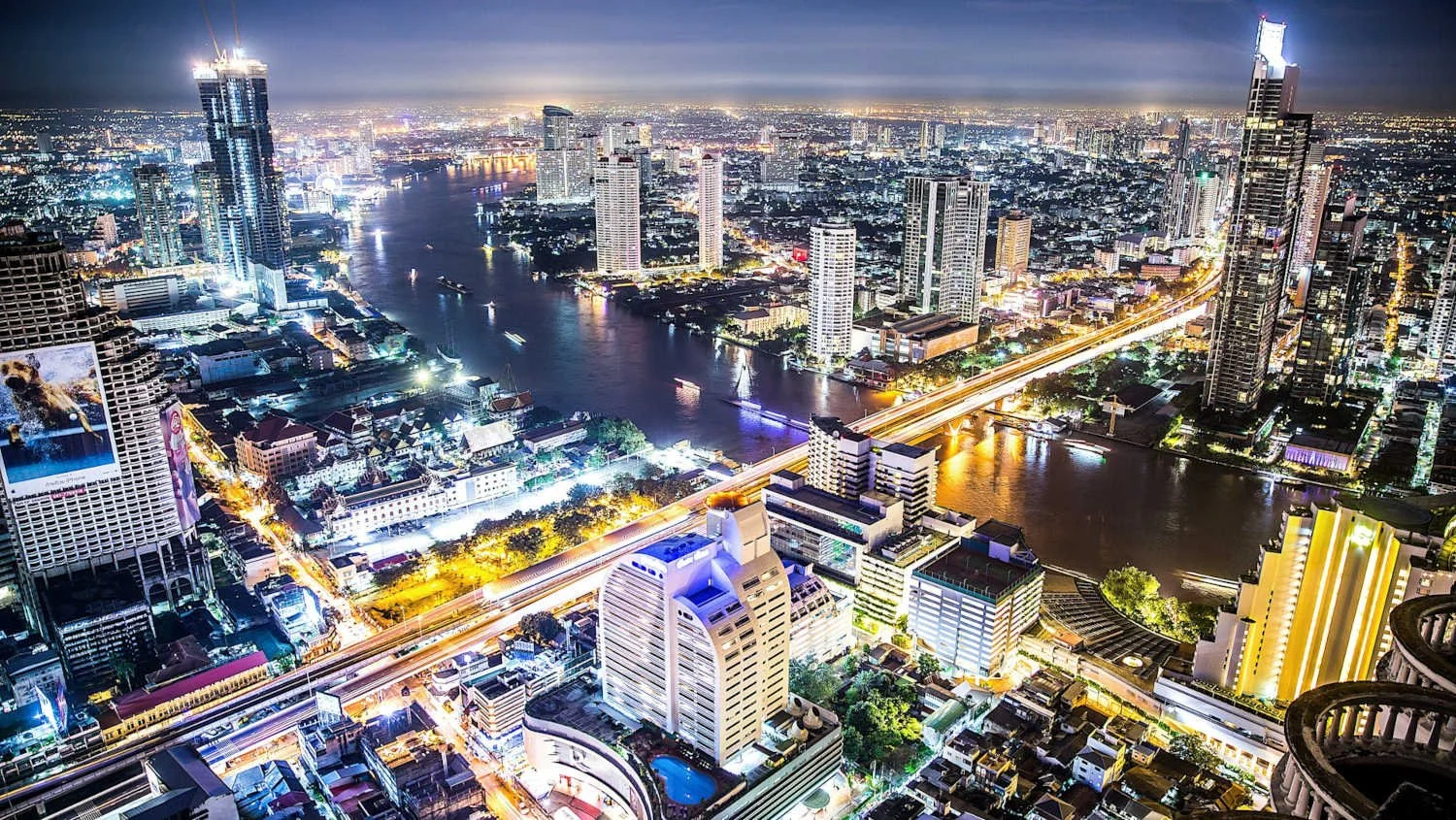
Knock and the Door Will Open: The Long Road to Bangkok Thailand
Thanks to Bill Donohue, “Pornchai’s Story” made its way around the world and was read to Catholics in Thailand. Pornchai’s Divine Mercy bridge to Thailand was built.
Thanks to Bill Donohue, “Pornchai’s Story” made its way around the world and was read to Catholics in Thailand. Pornchai’s Divine Mercy bridge to Thailand was built.
May 6, 2026 by Father Gordon MacRae
I wrote a post recently entitled “Book of Tobit: The Angel Raphael on the Road with Pornchai Moontri.” It was an allegory, like the Book of Tobit itself. An allegory is a sort of genre of Sacred Scripture in which a story is told more for its meaning than for its historical value. Every parable of Jesus falls into this same genre. A part of the story of Tobit, and his son Tobias and their interactions with the Archangel Raphael in disguise were all part of the allegory. That does not mean the allegory did not happen. It means only that the truth of the story does not depend upon someone believing it. There was one aspect of the Book of Tobit story that became a centerpiece of my blog linked above. At the beginning and the end of the Book of Tobit there is a mysterious dog whose presence, meaning and purpose remain a mystery.
My friend Pornchai Max and his grueling assimilation to his native Thailand after a forced absence of 36 years and all the torment he endured in that time, also included the presence of a mysterious dog named Hill. When that post was published on April 29 this year, a number of our readers wanted to know what became of Hill. So I went back this week and added an important addendum, which you can read for yourselves by clicking on it at the end of this post.
Now I want to back up about 19 years, in 2007 when Max learned that he would be deported to Thailand at the end of his sentence. He would be taken to Bangkok and left there. ICE would have no further responsibility for him.
Bangkok, the Capitol of the Kingdom of Thailand, is a massive city of about 9.5 million people. In Thai, the great city’s name is almost unpronounceable to the Western World, and the longest name of any city on Earth at 156 characters. I don’t expect you to memorize it, but in the Thai language Bangkok’s name is: Krungthepmahanakorn Amornrattanakosin Mahintrayuthaya Mahadilokpob Noparat Rajataniburirom Udomrajanivej Mahasatharn Amornpimarn Awatarnsat Sakatadtiya Wisanukamprasit. For daily use in Thai, the name is simply abbreviated to “Bangkok Krung Thep” which in English means “City of Angels.” When Max first told me of this in a phone call, he said, “I’m not kidding. They called it that even before I got here!”
This is a complicated but amazing story that meanders down a long and winding road. Our presentation of it begins in 2006 in a New Hampshire prison cell and threads its mysterious connections all the way around the globe. I n the end you may find any lingering doubts about Divine Mercy falling away. Divine Mercy has opened impenetrable doors for Pornchai Moontri, many of them in otherwise unreachable places.
If you have read my post, “The Parable of a Priest and the Parable of a Prisoner” then you know that Max had been in prison for 29 years, more than half his life, for a crime committed as a teenager, a crime that was set in motion by someone else. You also know that Max was moved from a maximum security solitary confinement unit in Maine to the New Hampshire Prison where we met and became friends late in 2006. That story is told powerfully at the link above.
I had another friend in this prison from Cambodia whom I had helped with the deportation process. He was brought to this country as a child of two, and committed a petty crime at age 18. After a long failed process of appeals, he was deported at age 25 to Cambodia, but spoke not a word of Khmer. One year after his deportation, I received a note from his sister telling me that he disappeared in the capital city of Phenom Penh. He had never been seen or heard from again.
We learned an important but scary lesson from what happened to my Cambodian friend. Since Max was brought to the U.S. as a young child, and has no known family or contacts in Thailand other than distance cousins, the experience of our friend in Cambodia chilled me to the core. I became determined that Max would be ready to live and cope somehow in the immense City of Bangkok when the time came. We had a few years to prepare, but I did not even know where to begin.
How could two men living in a prison cell in New Hampshire with no resources, no online access, and a severely limited budget find and connect with people on the other side of the world? How could I interest anyone in Thailand with the plight of a young man taken from there at age 11, his mother murdered, only to come to the United States to end up homeless and in prison as a teenager? This was not a good place from which to start.
THE SILENCE
“I don’t even know where to begin,” Max told me dismally. “I don’t even know how to learn about Thailand.” I knew I had to start writing, but this was two years before even the idea of this blog was conceived. A day in the prison library produced some addresses. First, I wrote of Max’s situation to Catholic Charities in the Diocese of Manchester (NH). They are, after all, a global network. No response, but no real surprise there. Then I wrote to the national office of Catholic Charities. No response. Then I wrote to the Office of Immigration and Refugee Assistance sponsored by my Diocese. No response. Then I wrote to the Catholic Legal Immigration Network at Boston College. No response. I knocked at the door of every official Catholic agency I could find. No one answered. I knocked, and I waited, and I knocked some more.
I cannot convey in words the utter frustration of writing repeatedly only to have my overtures met with silence. I decided that the problem was not Pornchai’s plight, but rather mine. I told Max that we will have to write all these letters again, but coming directly from him. So we redrafted all the letters under his name. More knocking; more waiting. More silence.
When all of our letters from prison were relegated to the netherworld without responses, I took it personally. I knew we needed a different approach. I asked Max to candidly write his life story — which is an amazing story in and of itself — in as few pages as possible, and let me send it to the few Catholic contacts I had who did not ignore our plight. One of them was Bill Donohue, President of the Catholic League for Religious and Civil Rights. Once he read “Pornchai’s Story,” he wrote back immediately asking if he could publish it on the Catholic League website. From there, it slowly made its way around the world. We knocked and knocked, and waited some more.
The late Father Richard John Neuhaus — a courageous Catholic writer and editor of First Things magazine — sent Max a personal letter to tell him how very important his story is, not only for Max, but for the Church. Father Neuhaus promised to pass the story along to others. This was a year before Father Neuhaus faced his own untimely death from cancer in January, 2009. More knocking, and more waiting.
Max started receiving letters from other important figures in the Church. One came from His Eminence Cardinal Kitbunchu, Archbishop Emeritus of Bangkok. Max was bowled over by that letter. Another came from the Rome Office of Ambassador Mary Ann Glendon, who had been appointed by President George W. Bush as U.S. Ambassador to the Holy See.
Bill Donohue extending to Max honorary membership in the Catholic League and promised to promised to promote his story. My article for Catalyst appeared at the same time, in the July/August 2009 issue. It was “Due Process for Accused Priests.” As an unintended consequence, Pornchai’s story and mine became linked together.
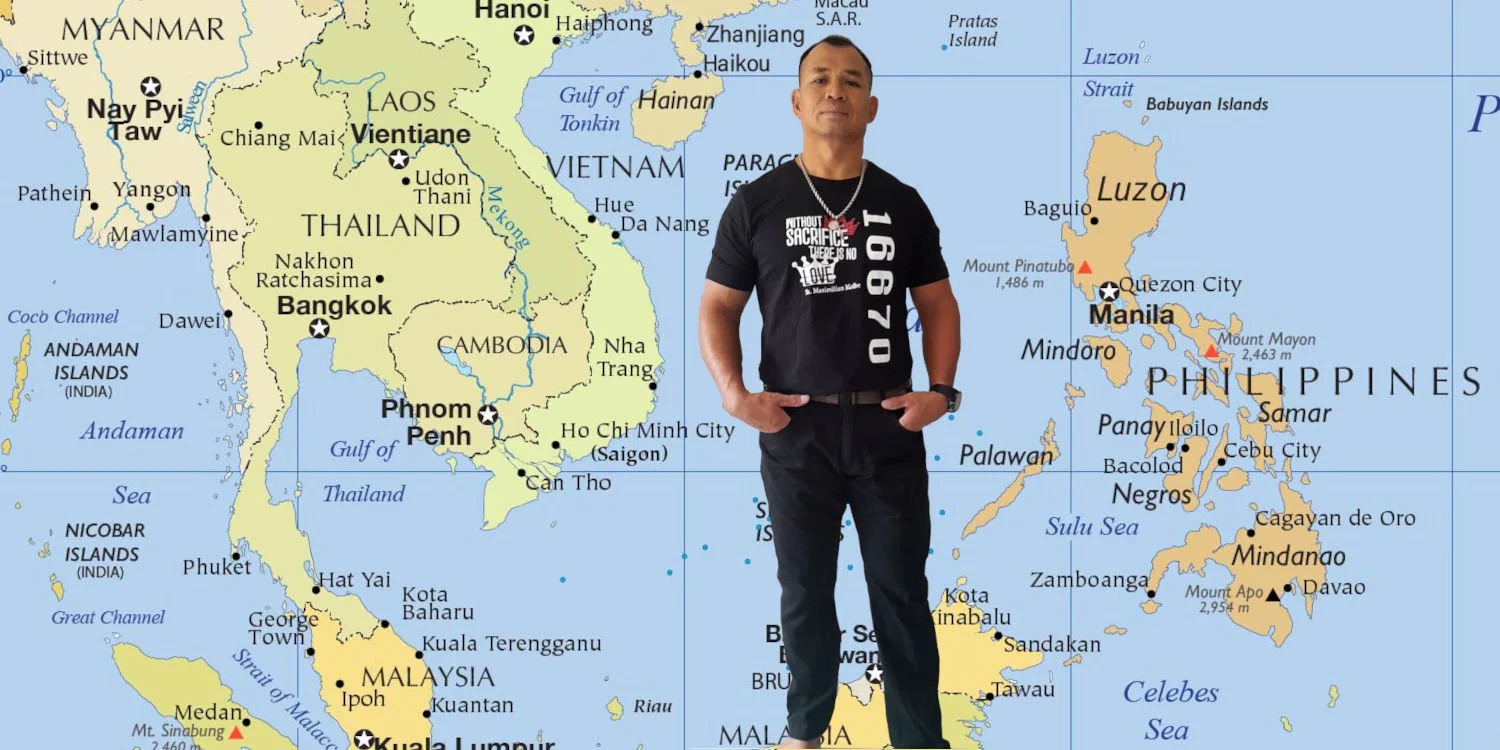
Pornchai’s Story
Here is Pornchai’s Story:
[From Dr. Bill Donohue: ] As we begin the New Year, we’d like to share with you this moving account of one young man’s conversion story.
My name is Pornchai Moontri, and as I write this I am prisoner #77948 in the New Hampshire State Prison. I come to the Catholic faith after a painful journey in darkness that my friend, Father Gordon MacRae, has asked me to write candidly. This is not something I do easily, but I trust my friend.
I was born in Bua Nong Lamphu, in a small village in the north of Thailand near Khon Kaen on September 10, 1973. At the age of two, I was abandoned by my mother and a stranger tried to sell me. A distant teenaged relative rescued me. He walked many miles to carry me away to his family farm where I worked throughout my childhood raising water buffalo, rice, and sugar cane. I never attended school, however, and never learned to read and write in Thai. Though my childhood involved hard work, I was safe and happy.
When I was 11 years old, my mother re-emerged in Thailand with a new husband — an American air traffic controller from Bangor, Maine. I was taken from Thailand by them against my will, and brought to the United States. This transition was a trauma to be endured. A month after my arrival in Bangor, my new stepfather’s motive for importing a ready-made Thai family became clear. I was forcibly raped by him at age 11, an event that was to be repeated with regularity over the next three years. I was a prisoner in his house, and resistance was only met with violence against me and against my mother. I was all of 100 pounds. I cannot describe this further. Welcome to America!
Being one of only three Asians in 1985 Bangor, and speaking little English, I did not readily comprehend my new names. “Gook,” “V.C.” and “Charlie” meant nothing to me, but I could sense the scorn with which such names were delivered. Because my English was poor, I was treated as though I was stupid. Part of my humiliation was that I had to get a paper route at age 12, and my earnings were taken from me to pay for the “privilege” of living in my captor’s house. Stephen King’s home was on my paper route. Mr. King once gave me a Christmas bonus of 25¢ for delivering his newspaper all year. The horror stories he wrote about Maine are all true. Remember the one with the evil clown? It’s true.
When I was 14, my English was better. I was a little bigger, and a lot stronger — and nothing but angry. Anger was all I had. So with it I fled that house and became a homeless teenager in and around Bangor. One day the Bangor police actually picked me up and forced me to go “home.” I would rather have gone to one of the ones Stephen King wrote about. I just fled again and again, and ended up at the Good Will Hinckley School for people like me. I was there for a year and got kicked out for fighting. I was always fighting. I fought everyone.
Back on the streets of Bangor, I began to carry a knife. At 17 and 18, a lot of people were after me. I lived under a bridge for a while and sometimes my mother would bring me things. I tried to climb out of the deep hole I was in by signing up for night classes at age 18 to finish my high school diploma. I was kicked out of Bangor High School for punching the principal.
One night, at age 18, something that lived in me got out. I got very drunk with friends, and we walked into a Bangor Shop & Save supermarket to buy cigarettes. I barely remember this. In my drunken state, I opened a bottle of beer from a case and started to drink it. The manager confronted me and ordered me to leave. I tried to flee the store, but the manager and other employees then tried to keep me there. I tried to fight them off to flee. When I got outside, a manager from another Shop & Save had witnessed the incident and pounced on me. I was 130 pounds and was pinned to the ground by this 190-pound man. I think something snapped in my mind. IT was happening again. I fought, but his dead weight was suffocating me. The newspapers would later tell a different story, but this was the truth, and it is all I remember.
In jail that night, I was questioned for three hours. I was told that I had stabbed a man and was charged with attempted murder. I have no memory, to this day, of stabbing the man. The next morning, I awoke in a jail cell and was told that I was charged with Class A murder. The man had died during the night. I was told that I blew a .25 on the Breathalyzer, but the result was so high it was discarded as an error.
My stepfather could have hired expert counsel, but it was clearly not in his best interest that my life be evaluated, so I was left in the care of a public defender who wanted this high profile case off his desk. There was talk about the Breathalyzer, and “level of culpability,” and things like “defensive vs. offensive wounds,” but in the end there were no theories, no experts and no defense. I was terrified of being abandoned. My mother came to me in jail and pleaded with me to protect her and “the family” by not revealing what happened in my life. So I remained silent. I offered no defense at all. My co-defendant told the truth of my being pinned down, but he was not believed. I was convicted of “Class A murder with deliberate indifference” and sentenced, at age 18, to 45 years in a Maine Prison. Maine has no parole.
I was also sentenced with the soul of the innocent man whose life I took — despite my being unable to remember taking it. The mix of remorse and anger was toxic in prison, and I gave up. Prison became just an extension of where I had already been. My anger raged on and on, and I spent 13 of my 15 years in prison in Maine’s “supermax” facility for those who can’t be trusted in the light of day.
Five years into my imprisonment, I learned one night in my supermax cell that my mother and stepfather had relocated to the Island of Guam where my mother was murdered. She was pushed from a cliff. [The story that was told to Pornchai, but it was false.] The only suspect was her husband but there was no evidence. I was now alone in my rage.
After 14 years of this, the Maine prison decided to send me to an out-of-state prison. I had no idea where I was to be sent. I arrived in the New Hampshire State Prison on October 18, 2005 dragging behind me the Titanic in which I stored all my anger and hurt and loss and loss and loss — and guilt.
I started my time in a new prison by getting into a fight and ended up in the same old place — the hole. When some months went by, I was given another chance. I was sent to H-Building where I met my friend JJ, an Indonesian who was waiting to be deported. JJ introduced me one day to Gordon, who he said was helping him and some others with appealing their INS removal orders or with preparing themselves to be deported. He seemed to be the only person who even cared. JJ trusted Gordon, so I had several conversations with him. A few months later, I was moved to the same unit in which he lives in this prison. We became friends.
By patience and especially by example, Gordon helped me change the course of my life. He is my best friend, and the person I trust most in this world. It is the strangest irony that he has been in prison for 13 years accused fictionally of the same behaviors visited upon me in the real world by the man who took me from Thailand. I read the articles about Gordon in The Wall Street Journal last year. I know him better, I think, than just about anyone. I know only too well the person who does what Gordon is wrongly accused of. Gordon is not that person. Far from it. It is hard for me to accept that laws and public sentiment allow men to demand and receive huge financial settlements from the Catholic Church years or decades after claimed abuse while all that happened to me has gone without even casual notice by anyone — except, ironically, Gordon MacRae.
On September 10, I will be 34 years old. I have been in prison now for nearly half of my life, but in the last year I have begun to know what freedom is. My anger is still with me and it always lurks just below the surface, but my friend is also with me. We both recently signed up for an intense 15-week course in personal violence. He is doing this for me. I spend my days in school instead of in lock-up now, and I will soon complete my High School diploma. Gordon helped me obtain a scholarship for a series of non-credit courses in Catholic studies at Catholic Distance University. In the last year, with help and understanding, I have completed programs offered in the New Hampshire prison. One day I felt strangely light so I looked behind me, and the Titanic was not there. I parked it somewhere along the way. I have put my childhood aside. Now I am a man.
In March of this year, after 15 years in prison, I was ordered by an INS court to be removed from the United States and deported to Thailand at the end of my sentence in 17 to 20 years or so. Gordon hopes that I can seek a sentence reduction so that I can return to Thailand at an age at which I may still build a life. There are many obstacles. The largest is that I do not speak Thai any longer and I never had an opportunity to learn and to read and write in Thai. We are working hard to prepare me for this. Though years away, it is a very frightening thing to go to a country only vaguely familiar. I have not heard Thai spoken since age 11, 23 years ago. There is no one I know there and no place for me to go. I have no home anywhere.
Along this steep path, I have made a decision to become Catholic. The priest in my friend has not been extinguished by 13 years in prison. It is still the part of him that shines the brightest. Gordon never asked me to become Catholic. He never even brought it up. I t is the path he is on and I was pulled to it by the force of grace, and the hope that one day I could do good for others. Gordon showed me a book, Jesus of Nazareth, in which Pope Benedict wrote: “The true ‘exodus’…consists in this: Among all the paths of history, the path to God is the true direction that we must seek and find.”
I am taking a correspondence course in Catholic studies through the Knights of Columbus and I look forward to the studies through Catholic Distance University. I go to Mass with Gordon when it is offered in the prison, and our faith is always a part of every day. When I return to the place I haven’t seen since age 11, I want to go there as a committed Catholic open to God’s call to live a life in service to others. It is what someone very special to me has done for me, and I must do the same.
My friend asked me to sit down today and type the story of my life and where I am now. He asked me to let him send this to a few friends who he says may play some role — directly or indirectly — in my life some day. The account is my own. What Father Gordon added was hope, and somehow faith has also taken root. In prison, hope and faith are everything. Everything!
[Written by Pornchai Moontri in 2008 and published by the Catholic League.]
Thanks to Bill Donohue and the Catholic League, “Pornchai’s Story” made its way around the world and was read to Catholics in Thailand. Pornchai Moontri’s Divine Mercy Bridge to Thailand was built despite many obstacles.
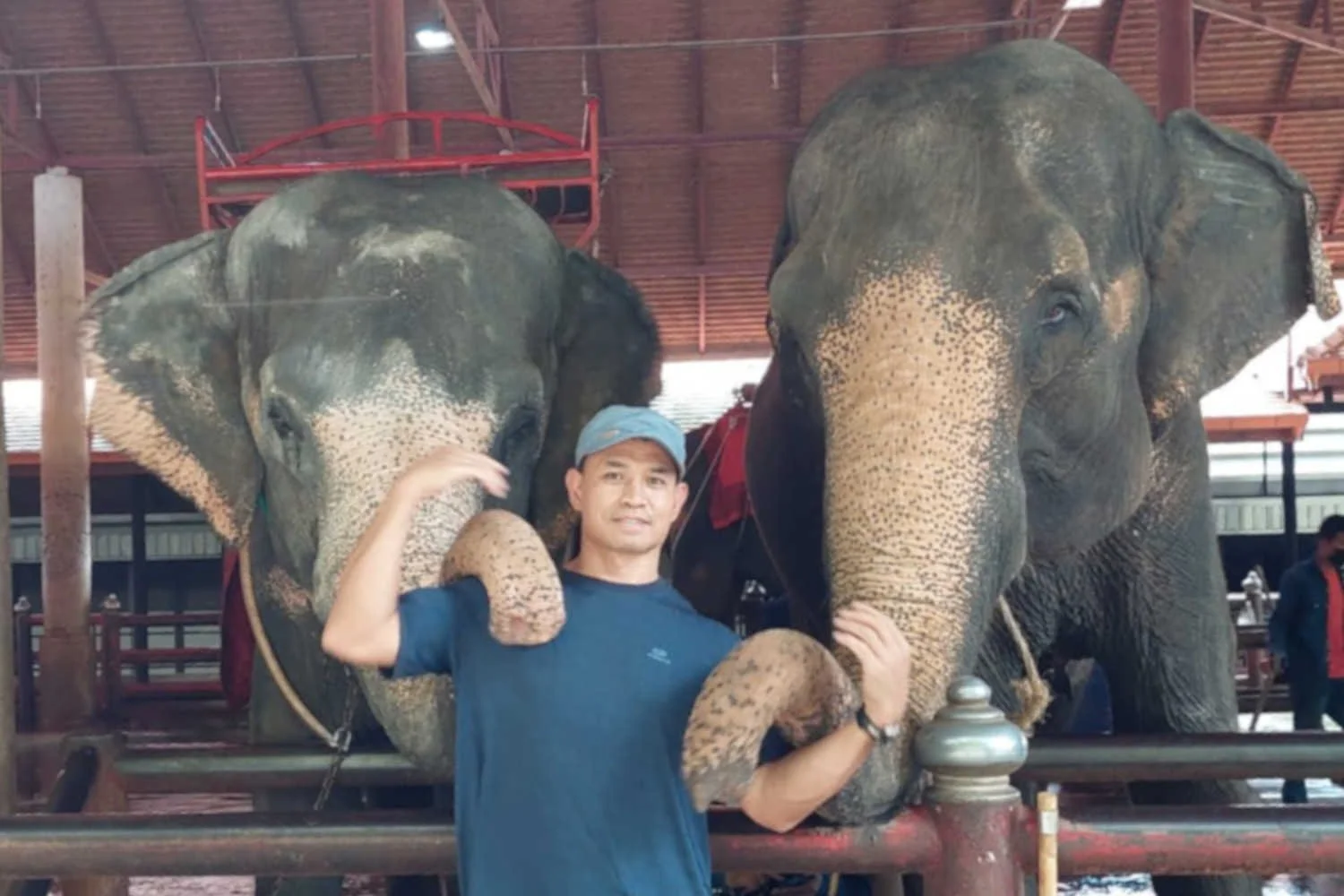
Note from Father Gordon MacRae: Pornchai’s story does not end here. There were other miracles yet to be told, but they are told in other posts here:
Book of Tobit: The Angel Raphael on the Road with Pornchai Moontri
The Parable of a Priest and the Parable of a Prisoner
Getting Away with Murder on the Island of Guam
A Catholic League White House Plea Set Pornchai Moontri Free



The Eucharistic Adoration Chapel established by Saint Maximilian Kolbe was inaugurated at the outbreak of World War II. It was restored as a Chapel of Adoration in September, 2018, the commemoration of the date that the war began. It is now part of the World Center of Prayer for Peace. The live internet feed of the Adoration Chapel at Niepokalanow — sponsored by EWTN — was established just a few weeks before we discovered it and began to include in at Beyond These Stone Walls. Click “Watch on YouTube” in the lower left corner to see how many people around the world are present there with you. The number appears below the symbol for EWTN.
Click or tap here to proceed to the Adoration Chapel.
The following is a translation from the Polish in the image above: “Eighth Star in the Crown of Mary Queen of Peace” “Chapel of Perpetual Adoration of the Blessed Sacrament at Niepokalanow. World Center of Prayer for Peace.” “On September 1, 2018, the World Center of Prayer for Peace in Niepokalanow was opened. It would be difficult to find a more expressive reference to the need for constant prayer for peace than the anniversary of the outbreak of World War II.”
For the Catholic theology behind this image, visit my post, “The Ark of the Covenant and the Mother of God.”

Pornchai Moontri, Citizen of the Kingdom of Thailand
Pornchai Moontri waited 29 years for the image atop this post. His citizenship in the Kingdom of Thailand and his life in Divine Mercy have now come full circle.

Pornchai Moontri waited 29 years for the image atop this post. His citizenship in the Kingdom of Thailand and his life in Divine Mercy have now come full circle.
November 3, 2021
High school and college students from Chile to China have accessed and downloaded one of my most-visited posts, “Les Miserables: The Bishop and the Redemption of Jean Valjean.” When I wrote it, I did not intend it to be a source for book reviews, but I'm happy to be of service. With over a century of reflection on this longest and most famous of Victor Hugo’s works, the redemption of a former prisoner and the Catholic bishop who set it in motion are what many people find most inspiring.
Jean Valjean is the main character in Victor Hugo’s 1862 novel, Les Miserables, about injustices in Nineteenth Century French society. At the time he wrote it, Hugo had been exiled by Emperor Napoleon to the Isle of Guernsey. Like the Amazon “woke” of today, Napoleon censored and suppressed many writers and their works.
After 19 years in prison for stealing a loaf of bread, Jean Valjean was condemned to live on-the-run with self-righteous Inspector Javert in constant pursuit. Near starvation himself, Valjean stole two silver candlesticks from the home of a Catholic bishop. When caught, the bishop stated that the police were misinformed: “The silver was a gift,” he said. That set in motion a story of two of literature’s most noble figures, Jean Valjean and Bishop Bienvenue.
One of the great ironies of the novel is something I wrote about in the above post. After reading a draft, Victor Hugo’s adult son wanted the character of the bishop replaced with someone whose honesty and integrity would seem more realistic in Nineteenth Century France. He wanted the bishop replaced by a lawyer.
I hope most of our readers have by now divested themselves of the notion that everyone in prison is a criminal. It is not true and has never been true. And I hope readers recognize that there is nothing more essential for someone emerging from prison than a sense that he or she belongs somewhere. Being lost without hope in prison only to become lost without hope in freedom crushes all that is left of the human spirit.
This is something that, 16 years ago, I vowed would not happen to my friend, Pornchai Moontri. We were faced with the prospect that he would emerge from prison, and in a foreign land, after nearly 30 years incarcerated for an offense committed as a youth, an offense that someone else set in motion. The clear and compelling evidence for that is laid out in my post, “Human Traffic: The ICE Deportation of Pornchai Moontri.”
You know the rest of what happened. It is terribly painful to read, but no one should let that story pass by. Pornchai’s “going home” was far more complicated than most. He had a home as a poor but happy eleven-year-old. Having been abandoned by his single parent mother at age two, he grew up with an aunt and cousins who lived a simple, but by no means privileged, life. They loved him, and that counts for an awful lot in life. Then at age eleven he was suddenly taken away by a total stranger.

Pornchai at age 12 just after his arrival in America, and just before the events of this post took place. To the right, Pornchai prays at the tomb of his mother for the first time upon his arrival in Thailand in March 2021.
Home Is Where the Heart Is, Even If Broken
If you have been a regular reader of these pages, then you already know the circumstances that took Pornchai Moontri, at age 11, from the rice paddies and water buffalo of his childhood in the rural north of Thailand to the streets of Bangor, Maine. America was dangled before him with a promise that he would never be hungry again. The reality was very different. He was a victim of human trafficking. His mother, the only other person who knew of the horrific abuse inflicted on him, was murdered.
At age 14, Pornchai escaped from his nightmare existence into life on the streets of Bangor, Maine, a homeless adolescent stranded in a foreign land. On March 21, 1992, at age 18, he was attacked in a supermarket parking lot for trying to drown his sorrows in a shoplifted can of beer. In the struggle, a life was lost and Pornchai descended into despair. He was sent to prison into the madness of long term solitary confinement. Then, 14 years later, broken and lost, he was moved to another prison and was moved in with me.
In 2020, Pornchai was taken away again from his home — this time “home” was the 60-square-foot prison cell that he shared with me for the previous 15 years. During those years he had a dramatic Catholic conversion and committed himself and his life to Divine Mercy. He graduated from high school with high honors, earned two additional diplomas, and excelled in courses of Catholic Distance University. He became a mentor for younger prisoners, and a master craftsman in woodworking.
After 29 years in prison since age 18, 36 years after being taken from his home at age eleven, after five months in grueling ICE detention despite all the BS promises of a “kinder, gentler President” in the White House, Pornchai was left in Bangkok, Thailand on February 9, 2021 at age 47.
Sitting in my prison cell one night in late September 2021, a tiny number “1” suddenly appeared above the message icon on my GTL tablet. Unlike your email, the GTL tablet system for sale to prisoners is all about enhancing the GTL Corporation, not the prison or the prisoner. At $150 for the tablet, $.40 for each short message, $1.00 for a photo attachment, and $2.00 for a 15-second video, it feels exploitive. But after 27 years without electronic communication, the sight of that tiny number at the icon makes my heart jump a bit.
The message was from Pornchai Moontri in Thailand. It had a 15-second video clip that I wish I could post for you. We will have to settle for my description. In a dark prison cell in Concord, New Hampshire, I reached for my ear phones hoping that the brief video also had audio. It did. When I opened it, I saw my friend, Pornchai seated at a table in the dark with a small cake and a few lit candles illuminating his face.
Several people stood around Pornchai chanting “Happy Birthday” in Thai. There was a unified “clap-clap-clap” after each of several verses of the chant. Then, surrounded by the family of his cousin whom he last saw when they lived as brothers at age 11 in 1985, Pornchai distinctly made the Sign of the Cross, paused, and blew out the candles. There was an odd moment of silence just then. A sense that some hidden grace had filled the room. His cousin looked upon him with a broad smile, captured in the images below.

In my own darkness many thousands of miles away from this scene, I choked up as I took in this 15-seconds of happiness. I miss my friend, but my tears were not of sadness. They were of triumph. This was Pornchai’s 48th birthday and his first in freedom from the heavy crosses of his past.

And the Sea Will Surrender Its Dead
With the help of a few readers who contributed to the cause, I sent Pornchai some birthday funds to enable him to travel a few hours away for a week at the Gulf of Thailand to see the ocean for the first time in his life, and to connect with his cousin, now an officer in the Royal Thai Navy. As children in 1985, they lived together in the village of Phu Wiang (pronounced “poo-vee-ANG”), the place of Pornchai’s birth in the far rural northeast of Thailand. This seaside reunion with his cousin after 36 years was like a balm on the pain of the past as though the sea had surrendered its dead.
As I write this post, Pornchai is back in Phu Wiang, a 9-hour drive from Bangkok, accompanied by Fr John Hung Le, SVD and Pornchai’s Thai tutor, Khun Chalathip. Since his arrival in Thailand in February of 2021, this is his third visit to the shadowy memories of the place he once knew as home. I described his traumatic first visit there accompanied by Father John — to whom I am much in debt.
Then there was a second trip, again nine hours north accompanied by Father John whose order’s Thai headquarters were just a few kilometers from Pornchai’s place of birth. It is mind-boggling to me that the Holy Spirit had previously drawn together all these threads of connection. That second visit was his second attempt to secure his National Thai ID. It is generally issued at age 16 in Thailand to ratify citizenship and entry into adulthood, but through no fault of his own, Pornchai was not present to receive it.
The first trip to apply for the Thai ID was met with bureaucratic disappointment. I described that first pilgrimage to home in, “For Pornchai Moontri a Miracle Unfolds in Thailand.” Discouraged, Pornchai was told that he will have to return at some future date while documents are again processed through Bangkok and the Thai Embassy in Washington.
The second journey seemed more hopeful. Pornchai was accompanied by not only Father John, but by someone I wrote about in “Archangel Raphael on the Road with Pornchai Moontri.” Pornchai was still told to come back later to apply again. He felt like the Tin Man standing before the Wizard of Oz pleading for his heart. Then, on October 11, 2021 the third pilgrimage was a success. Pornchai was elated to have the image atop this post, and so was I. It represents an accomplishment for which we both struggled for 16 years from inside the same prison cell where I sat that night watching the video of his first birthday in freedom.
That was 16 years together in a place not exactly known for happy endings, redemptive outcomes, and a state of grace. Pornchai and I handed our lives over to Divine Mercy. In the end, as you know if you have kept up, it turned out that even in prison Saint Paul was right. In a place “Where sin increased, grace abounded all the more.” (Romans 5:20)
+ + +
A Note from Fr. Gordon MacRae: Please visit our Special Events page for information on how to help me help Pornchai in the daunting task of reclaiming his life and future in Thailand after a 36 year absence. I am also doing all I can to assist Fr. John Hung Le, SVD, who delivers rice to impoverished families during the pandemic lockdown. Thailand’s migrant families have been severely impacted since the Delta variant emerged there.
You may also wish to read and share these related posts:
For Pornchai Moontri, a Miracle Unfolds in Thailand
Archangel Raphael on the Road with Pornchai Moontri
The Parable of a Priest and the Parable of a Prisoner
Don’t forget to visit our new feature Voices from Beyond.

Pornchai, Father John Le, and Pornchai’s Thai tutor Khun Chalathip after Mass at the village Church of Saint Joseph in Phu Wiang, Thailand, October 24, 2021.

Pornchai Moontri: Bangkok to Bangor, Survivor of the Night
This is the long-awaited story of Pornchai Moontri and Fr. Gordon MacRae, two lives denied justice and deprived of hope that converged upon the Great Tapestry of God.
This is the long-awaited story of Pornchai Moontri and Fr. Gordon MacRae, two lives denied justice and deprived of hope that converged upon the Great Tapestry of God.
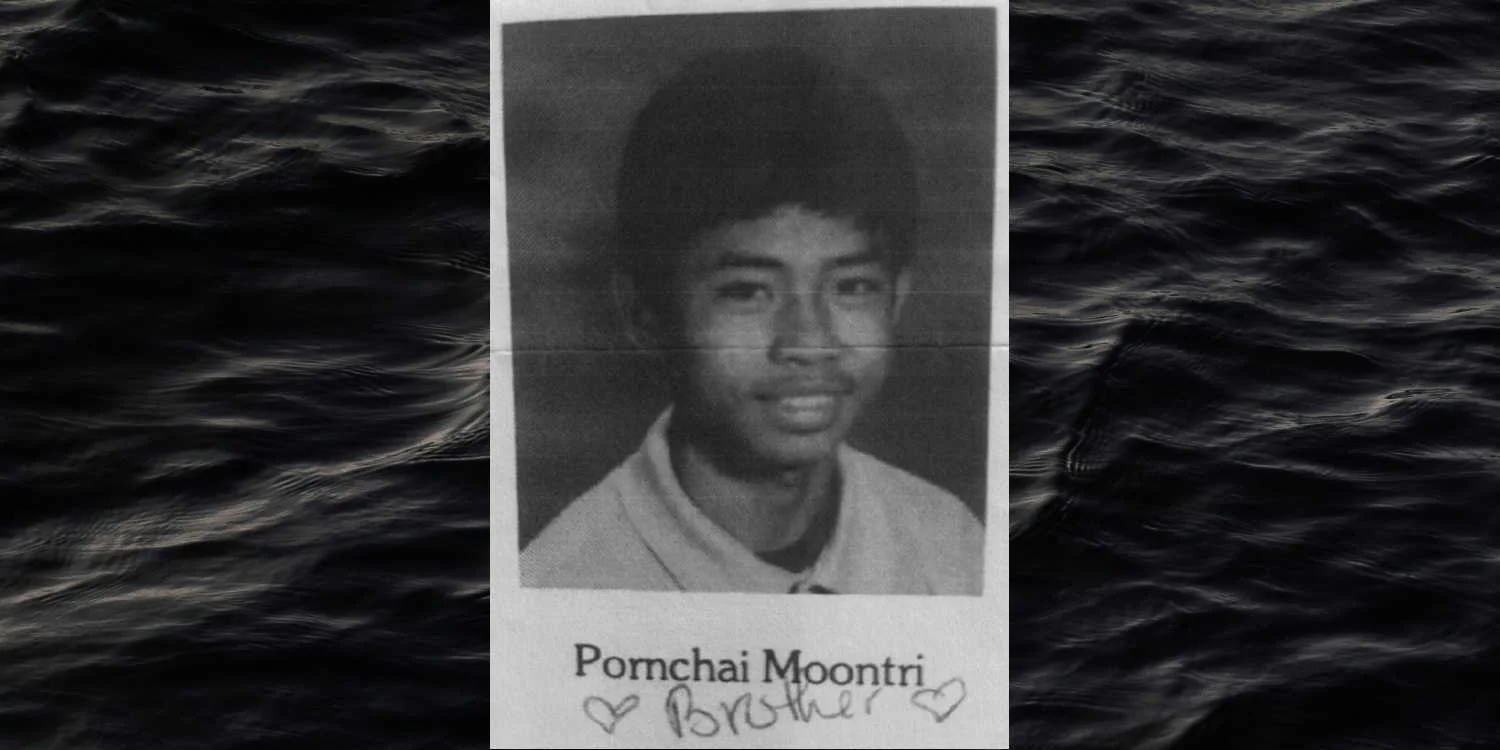
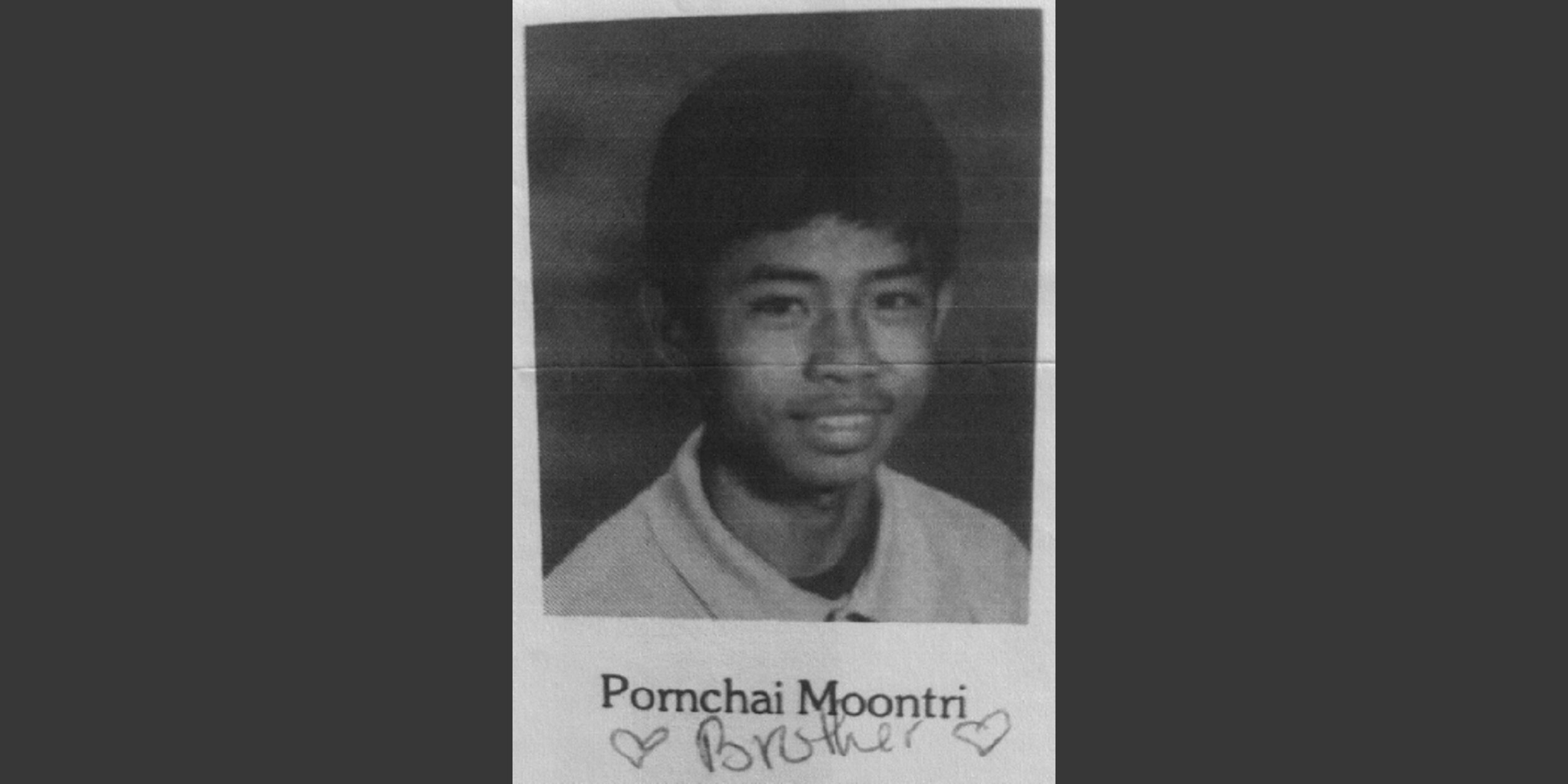
Editor’s note: The photo of Pornchai Moontri at the top of this post was a middle school yearbook photo taken at age 12 just after his arrival in America and just prior to the onset of events described in this post. His brother Priwan wrote the word “Brother” with the two hearts under the photo in the yearbook.
In nine years of writing for Beyond These Stone Walls, this is the most important post I have ever composed. If you have never before shared my posts on social media or emailed them to friends, I urge you to share this one. It is not about me — at least, not directly. It is about something that has haunted my every day for the last twelve years. It’s about someone who committed a ‘real’ and tragic criminal act, but was himself the victim of a horrible crime. It is something so ironic it defies belief.
I recently hinted that this story was coming. After twelve years in the making it came to its apex this month on the Feast of the Most Holy Name of Mary. Here’s what I wrote in a recent post about “Mary, Undoer of Knots”:
“I want to put some unexpected context on the significance of that day — September 10, 1985 — as I eulogized my beloved Uncle near Harvard. Unbeknownst to me, on that same day and moment on the far side of the world, Pornchai Moontri turned 12 years old in Bangkok, Thailand where he was reunited with his mother after her ten-year absence from his life. On that day, he began a journey to a promised new life in America.”
Six-and-a-half years later, on Saturday evening, March 21, 1992, in a state of intoxication, 18-year-old Pornchai Moontri walked into a Bangor, Maine supermarket and tried to walk out with a six-pack of beer. He was chased into the parking lot. In his drunken state Pornchai had trouble piecing together what came next. He heard much of it for the first time sitting in court.
As he fled across the Shop’n Save parking lot that night, 27 year-old Michael Scott McDowell injected himself into the scene. He saw store employees chasing a young Asian man and assumed it was for shoplifting. The much larger McDowell tackled Pornchai and wrestled him to the ground. Pinned down and helpless, Pornchai described this moment in “Pornchai’s Story” as “something that lived in me got out.”
Pornchai remembers getting up and running, running, running. Later that night he wandered the streets alone, exhausted and confused. He lived on those streets, a homeless teenager in a small port city of 31,000 in a foreign country. He slept under a bridge. As he fled, hunted, through the streets of Bangor that night, a car pulled up. A man he neither knew nor remembers told him to get in.
There, in that vehicle, he sat in silence until the police came for him. To this day, he knows nothing of the identity of the man who sheltered him. Pornchai was charged with assault with a deadly weapon, a knife he carried for protection while living on the streets. The next morning, the police told him that the charge is upgraded to murder. Michael Scott McDowell had died.
On Thursday, September 30, 1992, journalist Steve Kloehn penned a report for the Bangor Daily News entitled, “McDowell murder closed with a verdict, not a reason.” Its opening paragraph set the stage for the mystery contained therein:
“Thomas Goodwin, representing the state of Maine, was trying to explain to a jury the inexplicable: how Pornchai Moontri walked into the Shop’n Save a teenager and came out a murderer.”
Until now, I have not been able to write the whole truth of my last twelve years behind these stone walls. I have alluded to some of it in cryptic prose, but not everyone caught it. But many understood that there is an important story coming, a true story of unimaginable pain, power, and consequence. This is the most important post I have ever written.
If you have been reading these pages with any regularity at all, then you have come to know Pornchai “Maximilian” Moontri. This is his story, and it may bring tears. It should. But the sun also rises, and with the long awaited dawn comes — if not rejoicing — then at least a modicum of peace.

Solitary Confinement
Pornchai and I first met at the New Hampshire State Prison in 2006. He had been transferred from a “Supermax” prison in the State of Maine where he served the previous fourteen years — half of them in the utter cruelty of solitary confinement. He had a short fuse. He lived with a despair and a rage that walls could not contain.
The system deemed Pornchai to be dangerous, unfit for the presence of other human beings. A day in his life in Maine’s “supermax” prison was chronicled by the social justice site, “Solitary Watch” in an article entitled, “Welcome to Supermax.” After fourteen years in and out of that horror — including nearly four years in one long grueling stretch — Pornchai was transferred to another state.
The transfer from a prison in Maine to one in New Hampshire was administrative and not at Pornchai’s request. His arrival in 2006 took him to a very familiar place: an initial stay in solitary confinement. After a few months he was sent to a close custody unit, and finally to a unit in the general prison population where he and I met and became friends in early 2007.
I remember the first time we met. I was walking through the prison “chow hall” carrying my tray of food. As I made my way among the crowded tables looking for a seat, I heard my name. “Hey G, sit here with us.” I spotted my young Indonesian friend, Jeclan Wawarunto sitting next to the meanest looking young Asian man I had ever encountered. I could instantly see why the other two seats at their table were still empty.
“Come sit with us,” said the ever-smiling Jeclan. “This is my new friend, Ponch. He just got here.” As I sat down, I looked into the dark eyes of the young man across from me and saw anger, but it was anger masking something else, a hurt and pain I had never imagined possible. “Ponch wants to ask you a question,” said Jeclan. His friend looked so agitated that I looked quickly away. “I just want to know if you can help me transfer to a prison in Bangkok, Thailand,” said Pornchai with hostility.
I had, ironically, just finished reading a book — 4,000 Days — about the horror of life in a Bangkok prison. I told the young man that I would not help him do something that would only destroy him. “Who is this jerk?” he asked Jeclan. Weeks later, I was surprised to see that same young Asian man dragging a trash bag with his belongings into the housing unit where I lived. I approached him and said, “I’m glad you’re here.” He glared at me as though I were crazy.
We slowly became friends. I cannot really explain this long, slow, gradual building of trust with someone for whom trust is a deadly affair. I today know the courage it took for Pornchai to trust me. One day, his assigned cell mate came to me and said that he did not know what to do. He said that Pornchai had not spoken, eaten or even gotten out of bed for days.
I went to see Pornchai. He was known for having a short fuse, but I told him I would not leave until he got out of that bunk and spoke with me. I told him that I know what is under how he feels right now. I asked him to let me try to help him.
Some time later, his cell mate moved. Prison officials were cautious in imposing a new cell mate on Pornchai, so they told him to find someone he wanted to live with. He asked me and I said yes. It was early 2007. Over time, as trust developed, the story of Pornchai’s life was drawn out of him — de profundis — from out of the depths. It is a remarkable account that is now fully corroborated, and it is shocking.

From Thailand to Terror
Pornchai was born on September 10, 1973 near the village of Bua Nong Lamphu in the Northeast of Thailand beyond the city of Khon Kaen. His father was a Thai marshal arts fighter who earned a hard-won living traveling from town to town for bouts. He was sometimes away for long periods. When Pornchai was two years old, and his brother, Priwan, was four, their mother, Wannee, left telling them that she was going to the city. She did not return. The two boys were abandoned and stranded.
Their father came home weeks later to find Pornchai and Priwan foraging for food in the streets. Pornchai was hospitalized for severe malnutrition. When he left the hospital, his father was also gone, leaving them in the custody of another woman. She eventually put them out into the street where again they had to forage for food and shelter.
Learning of this, the extended family of Pornchai’s missing mother sent a 17-year-old uncle to search for the two boys and bring them to their small farm. Pornchai and Priwan grew up there raising rice, sugar cane, and water buffalo. They worked hard, but they were happy. Over time, Pornchai forgot his mother. He came to believe that his Aunt Mae Sin was his mother.
It was 1975 when Wannee left Pornchai and Priwan at ages two and four. She went to Bangkok to find work. While there she met Richard Bailey, an American military veteran and air traffic controller from Bangor, Maine who was a frequent visitor to Thailand. He brought Wannee to the United States.
Nine years passed. In 1985, when Pornchai was 11 years old, his mother, Wannee, suddenly reappeared in Thailand to claim her sons. Pornchai had no memory of her, and was traumatized to be taken away by a stranger. He never saw his home and family again. Wannee took Pornchai and Priwan to Bangkok for several months to await passports and travel documents. Pornchai turned 12 in Bangkok on September 10, 1985. Wannee told Pornchai and his brother that in America, they would never be hungry again.
In early December, 1985, they flew from Bangkok to Boston where Wannee’s husband, Richard Bailey, met them. On the long drive from Boston to Bangor, Pornchai and Priwan had their first meal in America at a McDonalds drive-thru. Both boys vomited the meal out the back seat windows of the car.
From the moment of their arrival in Bangor, the tone changed rapidly. Richard controlled their money, their speech, and their every move. The two boys and their mother were forbidden from speaking Thai in Bailey’s presence, and neither boy spoke or understood English.
Richard Bailey’s sister, who always treated Pornchai and Priwan with kindness, asked them what they wanted for Christmas. The boys did not know much about Christmas, but they understood that it involves presents. Pornchai’s adjustment had been traumatic. He asked for a watch and a teddy bear.
I caution you that from here on, this story may be difficult to read but please be brave for our friend who lived it. That night Pornchai was awakened from sleep and brought to a basement room by Richard Bailey. While there, Pornchai was forcibly raped by Bailey, an event that was to be repeated too many times to count. Pornchai was traumatized and terrified.
He did not understand what was being said, but its meaning was clear. If he resisted or told, the consequences to his mother would be severe. To demonstrate this, Bailey beat Wannee in the presence of both boys. When they tried to stop him, he beat them as well. They were treated as slaves.
Bailey then arranged separate bedrooms for the two brothers. Only much later did Pornchai learn that Bailey also raped his brother Priwan. In fear for each others’ safety, they both kept silent. They lived in a nightmare from which they saw no escape.
Witnesses who grew up in Bangor, and had read of Pornchai at this blog, have come forward with accounts of the 12-year-old who showed up at their homes traumatized, beaten and bloody. One man reports that he confronted Richard Bailey who later beat Pornchai again while forbidding him to interact with neighbors. Others have similar accounts. A school nurse reported his injuries. Nothing happened.
The first police intervention came when Pornchai was 13. He had run away, following railroad tracks out of Bangor. After a day or two, Richard Bailey reported him missing. Sheriff’s deputies pursued Pornchai through the woods and caught him. They did not understand his protests as they handed him back over to Bailey, but they filed a report alluding to their suspicions. Nothing happened.

Lost in America
By the time Pornchai was 14 in 1987, his brother, Priwan, traumatized and broken, fled Bangor. Pornchai was alone. He ran away again and again, and while evading police he lived for months on the streets of Bangor. For the second time in his life, he was forced to forage for food in the street. He also amassed a police record for stealing food, for truancy, and for being a chronic runaway.
At one point, Wannee asked Pornchai why he keeps running away. Pornchai broke down and told her in Thai what Richard Bailey had been doing to him. She warned Pornchai never to speak of this again. She said Bailey would beat her and then send her back to Thailand with no means to support them.
In the summer Pornchai lived in the woods, or under a downtown Bangor bridge (photo above) where his mother would sometimes bring him food. She held a job as a hotel maid arranged by Richard Bailey, but he tightly controlled her earnings. In the winter, Pornchai would sleep in vacant buildings or at times in the homes of friends whose parents’ welcome of him was at times generous but sometimes not. At 15, he was sentenced to reform school, the Maine Youth Center, and became a ward of the state.
While there, social worker Nancy Cochrane built some trust with Pornchai. When she learned of the severity of the physical and sexual violence he suffered, she filed a formal report with the Sheriff’s department. Deputies interviewed Richard Bailey, but no one else. Bailey convinced them that he heroically gave Pornchai a home in America and Pornchai made this whole story up. The deputies dropped the case without questioning Pornchai or his mother or brother or the social worker treating Pornchai.
The Maine Youth Center staff did not drop the matter so easily. They brought it to other authorities. During the investigation, Wannee visited Pornchai at the facility where he was held. She told him that the police questioned Bailey who then sent her to warn Pornchai to withdraw his claims. The implication — the truth of which Pornchai had already witnessed — was that Wannee would face Richard Bailey’s violence.
Fearing for his mother’s safety, Pornchai refused to cooperate further with the investigation. She was his only contact in both worlds, the nightmare he lived in America and the world he left behind in Thailand. He suffered in silence, consuming the injustices visited upon him like a toxin.
For many years, Pornchai believed that his mother chose to protect Bailey over him and Priwan. But at that moment Pornchai came to see that Wannee was as much a victim of Richard Bailey as he was. The evidence for that belief was still looming on the horizon.
State officials did not understand what was behind Pornchai’s silence. He was transferred to the Goodwill Hinckley School in Maine where he met Joe and Karen Corvino, foster parents who, for a brief period, became instrumental in his life. He later lost contact with them. Their tearful reunion with him came twenty years later when they discovered him by discovering this blog.
Pornchai did well at the Hinckley School. He excelled in Math and Soccer, and the Corvinos recognized the special child who had come to them. They considered legal adoption of Pornchai, but were told this would be difficult given that his biological mother still lived in Maine.
One day, at a soccer match with a rival school, a group of players realized that they could not win with Pornchai on the Hinckley team, so they targeted him for harassment. They pushed him, struck him, checked him, and he endured it all. Finally they shouted slurs about his mother. In seconds, all three of the larger boys were on the ground.
Pornchai was expelled from the game. The next day, over the strenuous objections of Joe and Karen Corvino, he was also expelled from the school. Joe and Karen had no choice but to put the 16-year-old alone on a bus to Bangor. They were told that a social worker would be at the other end but there was no one. At 16, Pornchai was again living on the streets. Sleeping in alleys and doorways, he began to carry a knife for protection.
Pornchai went in search of his brother, Priwan, and found him living in an Asian community in Lowell, Massachusetts. But because Pornchai was still a minor, authorities required that he return to Maine. He petitioned to be emancipated from being a ward of the state. At 17, Pornchai’s legal emancipation was processed by a reluctant Maine Youth Center staff.

The Fateful Day and the Loss of All Hope
At age 18, on March 21, 1992, Pornchai became intoxicated and the tragic offense that began this story took place. It was the last day Pornchai knew freedom, but in reality, his freedom had been taken from him six-and-a-half years earlier at age 12.
This is the context, the “why” that journalist Steve Kloehn asked in the Bangor Daily News at the end of Pornchai’s trial in 1992. Once charged, Pornchai was held without bail for months while awaiting trial in the Penobscot County Jail.
He was assigned a public defender. After a month, Wannee came to visit Pornchai once. Again sent by Richard Bailey, she pleaded with him to protect her by saying nothing of his past life. Convinced his mother was in danger, he again became silent, refusing to allow any defense that included an evaluation of his life. Under duress, he refused to participate in his own defense.
Pornchai’s brother, Priwan, told the public defender of the years of traumatic sexual and physical abuse, but Pornchai refused to discuss this and refused to allow the lawyer to raise it. He was never evaluated, and none of what happened to him became part of the court record. The judge mistook Pornchai’s silence for a defiant lack of remorse. Citing that he “had many opportunities in America but squandered them,” she sentenced 18 year-old Pornchai to 45 years in the Maine State Prison.
After the trial, Richard Bailey sold his Bangor home, took Wannee, and purchased land and a home on the U.S. Territorial Island of Guam in the Western Pacific. At age 18, alone and in prison, Pornchai was thousands of miles from his only contact with the outside world.
Eight years passed before he saw his mother again. She traveled to Thailand, and then to Maine to visit Pornchai in prison. She told him she was returning to Guam to finalize her divorce from Richard Bailey and financial settlements in the Guam courts. The year was 2000, Pornchai’s eighth year in prison.
To this day, the financial agreements ordered in the divorce decree have not been met. A cousin of Wannee in Thailand today reports that, upon her return to Guam, Wannee called her in 2000. Richard could be heard shouting in the background. The cousin states that Wannee cried that she is being threatened, and if she is found dead, she wants her cousin to demand an investigation.
Weeks later, Pornchai learned in prison that his mother had been murdered on the Island of Guam. He could learn no details except that it was filed as a homicide. The autopsy report indicates that she had been beaten to death and her body left on a beach. A Guam police report shows that Richard Bailey reported her missing, then the next day reported finding her body himself. No one has been charged. It remains today a “cold case” unsolved homicide in Guam.
This was a breaking point for Pornchai. He gave up, and ended up spending the next nearly seven years in and out of solitary confinement in Maine’s supermax prison. After seven years in hell, Pornchai was transferred to the New Hampshire State prison where we met. You know most of what followed, but not all. [Editor: WGBH-PBS Frontline’s documentary “Locked Up in America – Solitary Nation” depicts the nightmare of Pornchai’s solitary confinement. The prisoners you see were in solitary with him in adjacent cells. We’ve been having problems with the link, but this one to WGBH works well Frontline Solitary Nation.]
Once I learned the entire story, I could not let it go. I began several years ago to make discreet inquiries into Pornchai’s life in both Thailand and Maine. In 2007, shortly after we became friends and cell mates, a U.S. Immigration judge ordered that Pornchai is to be deported from the United States upon completion of his sentence. I assisted him in an appeal based on the severity of his life and his need for asylum, but to no avail.
I told Pornchai that we will need to build some connections in Thailand. He said that he did not even know where to begin. Pornchai felt overwhelmed, and took refuge in his imagined “Plan B” — his own final self-destruction. I challenged him to trust. A few years later, on Divine Mercy Sunday, 2010, Pornchai became a Catholic, and accepted my challenge to place his future in God’s hands with the guidance of his chosen Patron Saint, Maximilian Kolbe, whose name Pornchai chose as his own.
Then, Felix Carroll and Marian Press published Loved, Lost, Found with a beautiful chapter about Pornchai’s conversion. Felix graciously made the chapter available for posting. It made its way to Thailand where it moved many people in Bangkok to become involved in Pornchai’s story. A group called “Divine Mercy Thailand” organized to help bring him home. They have assured him of a home and support system when he returns.

Richard Alan Bailey at the time of his arrest on forty counts of felonious sexual assault.
A Day in Court
After being received into the Church, I convinced Pornchai to seek some treatment in the prison system. He was diagnosed with acute anxiety and severe Post Traumatic Stress Disorder. He is working with a counselor and is prescribed a medication for acute anxiety and another to inhibit nightmares.
The inquiries I had been making produced some amazing results. Clare and Malcolm Farr, a husband/wife team from an intellectual property law firm in Perth, Australia had been reading Beyond These Stone Walls. Entirely pro bono, they immersed themselves in Pornchai’s story with overtures to the government of Thailand and the State of Maine. Clare Farr, one of the attorneys, has been in daily contact with us over the last three years.
Their tireless efforts gained the notice of the Thai Consulate in New York from where officials have since visited Pornchai and involved themselves in his plight. This story also gained the attention of law enforcement in the State of Maine from where an investigation was launched. Detectives from the Bangor police traveled to Concord, NH to interview Pornchai and also met with his brother, Priwan. An Assistant District Attorney came on the second interview.
In 2017, Richard Alan Bailey was indicted on forty felony counts of gross sexual misconduct for his well documented victimization of Pornchai and his brother. He was arrested at his West Lake, Oregon home and released on $49,000 cash bond. On September 12, 2018, the Feast of the Most Holy Name of Mary, Richard Bailey entered a plea of no contest but was found guilty and stands convicted of the charges. At this writing, the 2000 Guam case remains an open unsolved homicide.
Bailey’s sentence may bring the biggest gasp of all, forty-four years in prison, but all suspended, and eighteen years of supervised probation. He will not serve a day in prison. This was a hard truth for me. I am serving 67 years in prison for crimes that never took place, with a fraction of the charges faced by Richard Bailey and with none of the evidence. It is clear. He is not ‘Father’ Richard Bailey.
Covering this story for the Bangor Daily News, reporter Judy Harrison referred to Pornchai as “the now 45-year-old convicted killer.” Fully one third of her brief coverage of this story focused not on Richard Bailey’s crimes, but on Pornchai’s. Judy Harrison turned a deaf ear to the profoundly troubling serial victimization that his Victim Impact Statement describes.
The shallowness of reporters notwithstanding, Pornchai has also learned the ways of Divine Mercy. He learned them from me. In his submitted impact statement, he asked the court for justice but also for mercy for his tormentor, the very person who has haunted his nightmares for all these years. From Pornchai’s Victim Impact Statement presented in court:
“My brother has struggled with gambling and alcohol addictions and my mother is dead. Richard carried out more sexual assaults against me than there are current charges against him. His actions have robbed me of a normal life which I can never reclaim. Fortunately I have since had a lot of counseling and with the guidance of a wonderful Catholic priest I have found faith and a firm belief in God… I asked God to help me to forgive Richard and through my strong faith I have done this… I cannot forget what he has done but I do forgive him. The law must pass a just sentence, but I agree with the terms of this plea agreement.”

But there is something even more compelling in this story. Pornchai Moontri came to me, a Catholic priest whom he believes with all his heart to be innocent of the very things that stole his hope and his ability to trust. The irony sends me to my knees in thanksgiving for an opportunity. The most important mission of my life as a man and as a priest has been walking with Pornchai Moontri from dusk to dawn in his survival of the darkest night.
Editor’s Note: Thank you for reading and sharing this important post. You may also like these related posts:
Getting Away with Murder on the Island of Guam by Fr Gordon MacRae
Pornchai Moontri and the Long Road to Freedom by Fr Gordon MacRae
Elephants and Men and Tragedy in Thailand by Pornchai Maximilian Moontri