What Do John Wayne and Pornchai Moontri Have in Common?
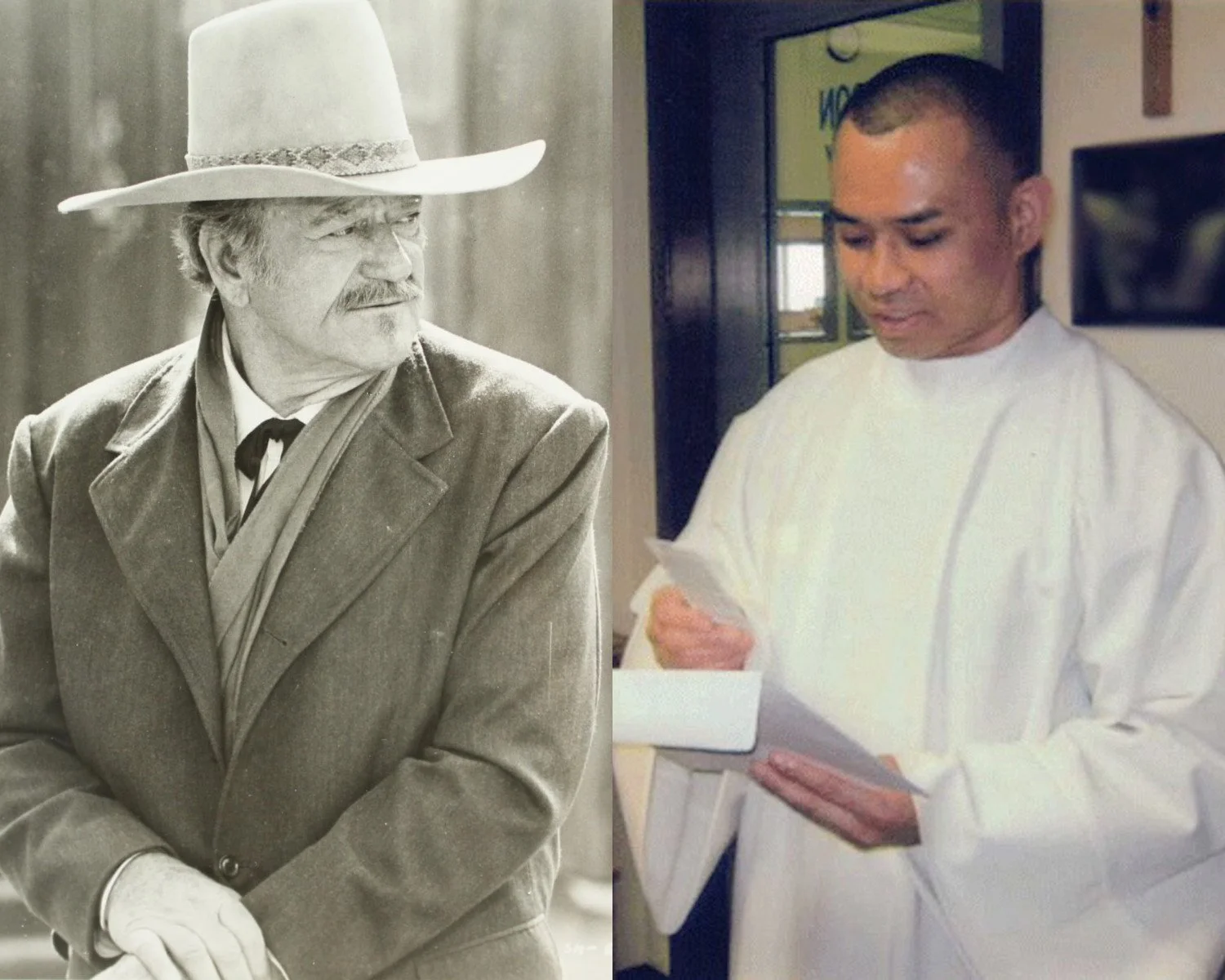
Pornchai Moontri celebrates his 52nd birthday on September 10 this year. It is his 15th birthday as a Catholic, a conversion he shares with the great actor, John Wayne.
September 10, 2025 by Father Gordon MacRae
I last wrote about our friend and my former roommate, Pornchai Max Moontri at a time of tragedy. That post was “A Devastating Earthquake Shook Thailand, Myanmar and Our Friends.” Ironically, I just noticed, it appeared on April 9, 2025, which was my 72nd birthday. I was recently talking with Pornchai in Thailand by telephone, and the subject of birthdays came up. He was absent from Thailand for 36 years, and it was 36 years of loss and tragedy. He spoke of his impression that what constitutes “family” for him is not only those with whom you share blood, but even more so those with whom you share and survive trials and tribulation. This is why those in the military who go through war together and survive form a bond that transcends all other bonds, including family. I readily agreed with that and mentioned the famous series, Band of Brothers as an example.
In an earlier post, “February Tales and a Corporal Work of Mercy in Thailand,” I described growing up on the Massachusetts North Shore — the stretch of seacoast just north of Boston. My family had a long tradition of being “Sacrament Catholics.”
I once heard my father joke that he would enter a church only twice in his lifetime, and would be carried both times. I was seven years old, squirming into a hand-me-down white suit for my First Communion when I first heard that excuse for staying home. I didn’t catch on right away that my father was referring to his Baptism and his funeral. I pictured him, a very large man, slung over my mother’s shoulder on his way into church for Sunday Mass, and I laughed.
We were the most nominal of Catholics. Prior to my First Communion at age seven, I was last in a Catholic church at age five for the priesthood ordination of my uncle, the late Father George W. MacRae, a Jesuit and renowned Scripture scholar. My father and “Uncle Winsor,” as we called him, were brothers — just two years apart in age but light years apart in their experience of faith. I was often bewildered, as a boy, at this vast difference between the two brothers.
But my father’s blustering about his abstention from faith eventually collapsed under the weight of his own cross. It was a cross that was partly borne by me as well, and carried in equal measure by every member of my family. By the time I was ten — at the very start of that decade of social upheaval, life in our home had disintegrated. My father’s alcoholism raged beyond control, nearly destroying him and the very bonds of our family. We became children of the city streets as home and family faded away.
I have no doubt that many readers can relate to the story of a home torn asunder by alcoholism, and some day I hope to write more about this cross. But for now I want to write about conversion, so I’ll skip ahead.
The Long and Winding Road Home
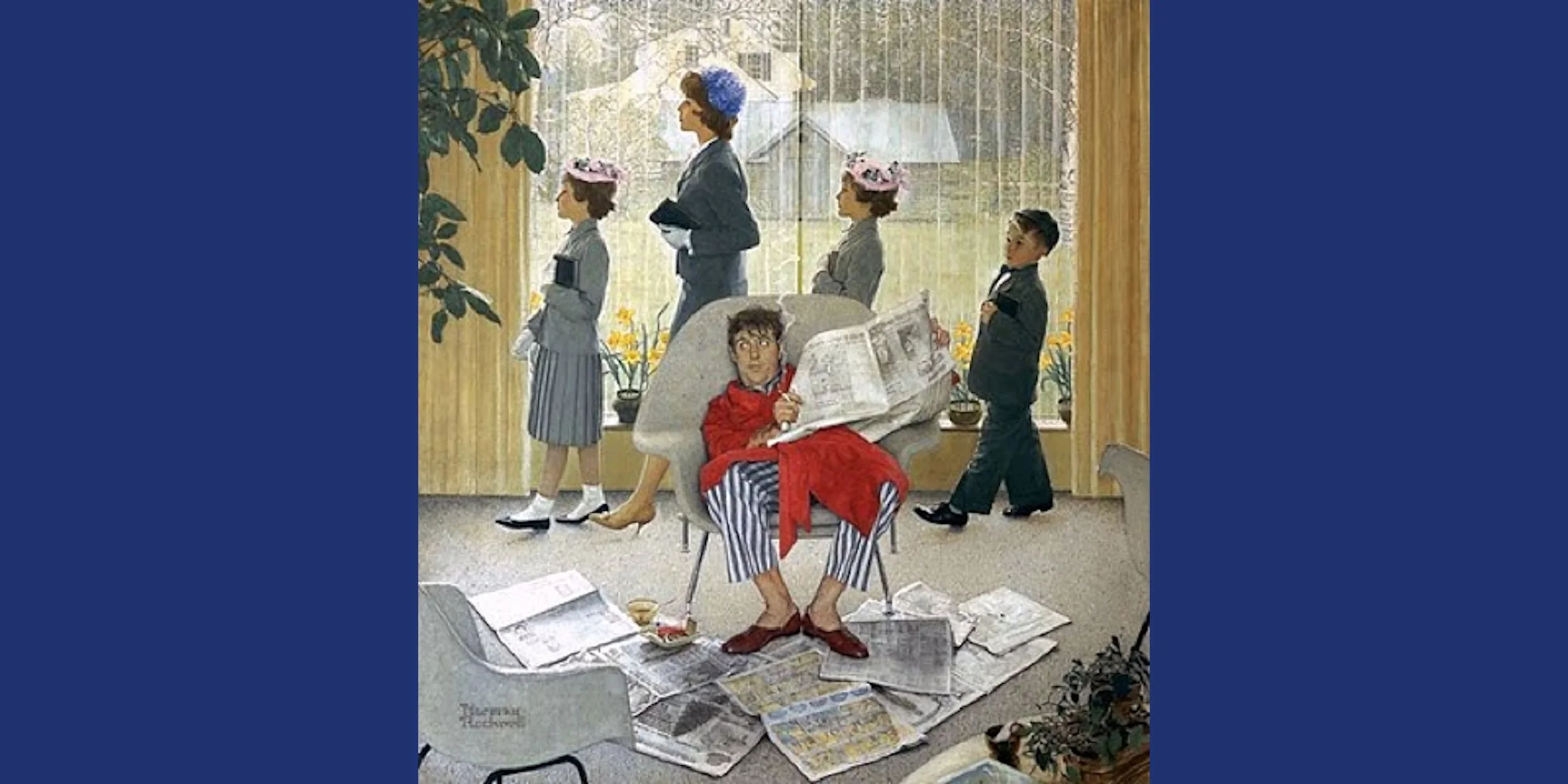
As a young teenager, I had a friend whose family attended a small Methodist church. I stayed with them from time to time. They knew I was estranged from my Catholic faith and Church, so one Sunday morning they invited me to theirs. As I sat through the Methodist service, I just felt empty inside. There was something crucial missing. So a week later, I attended Catholic Mass — secretly and alone — with a sense that I was making up for some vague betrayal. At some point sitting in this Mass alone at age 15 in 1968, I discovered that I was home.
My father wasn’t far behind me. Two years later, when just about everyone we knew had given up any hope for him, my father underwent a radical conversion that changed his very core. He admitted himself to a treatment program, climbed the steep and arduous mountain of recovery, and became our father again after a long, turbulent absence. A high school dropout and machine shop laborer, my father’s transformation was miraculous. He went back to school, completed a college degree, earned a masters degree in social work, and became instrumental in transforming the lives of many other broken men. He also embraced his Catholic faith with love and devotion, and it embraced him in return. That, of course, is all a much longer story for another day.
My father died suddenly at the age of 52 just a few months after my ordination to priesthood in 1982. I remember lying prostrate on the floor before the altar during the Litany of the Saints at my ordination as I described in “The Power and the Glory if the Heart of a Priest Grows Cold.” I was conscious that my father stood on the aisle just a few feet away, and I was struck by the nature of the man whose impact on my life had so miraculously changed. Underneath the millstones of addiction and despair that once plagued him was a singular power that trumped all. It was the sheer courage necessary to be open to the grace of conversion and radical change. The most formative years of my young adulthood and priesthood were spent as a witness to the immensity of that courage. In time, I grew far less scarred by my father’s road to perdition, and far more inspired by his arduous and dogged pursuit of the road back. I have seen other such miracles, and learned long ago to never give up hope for another human being.
The Conversion of the Duke
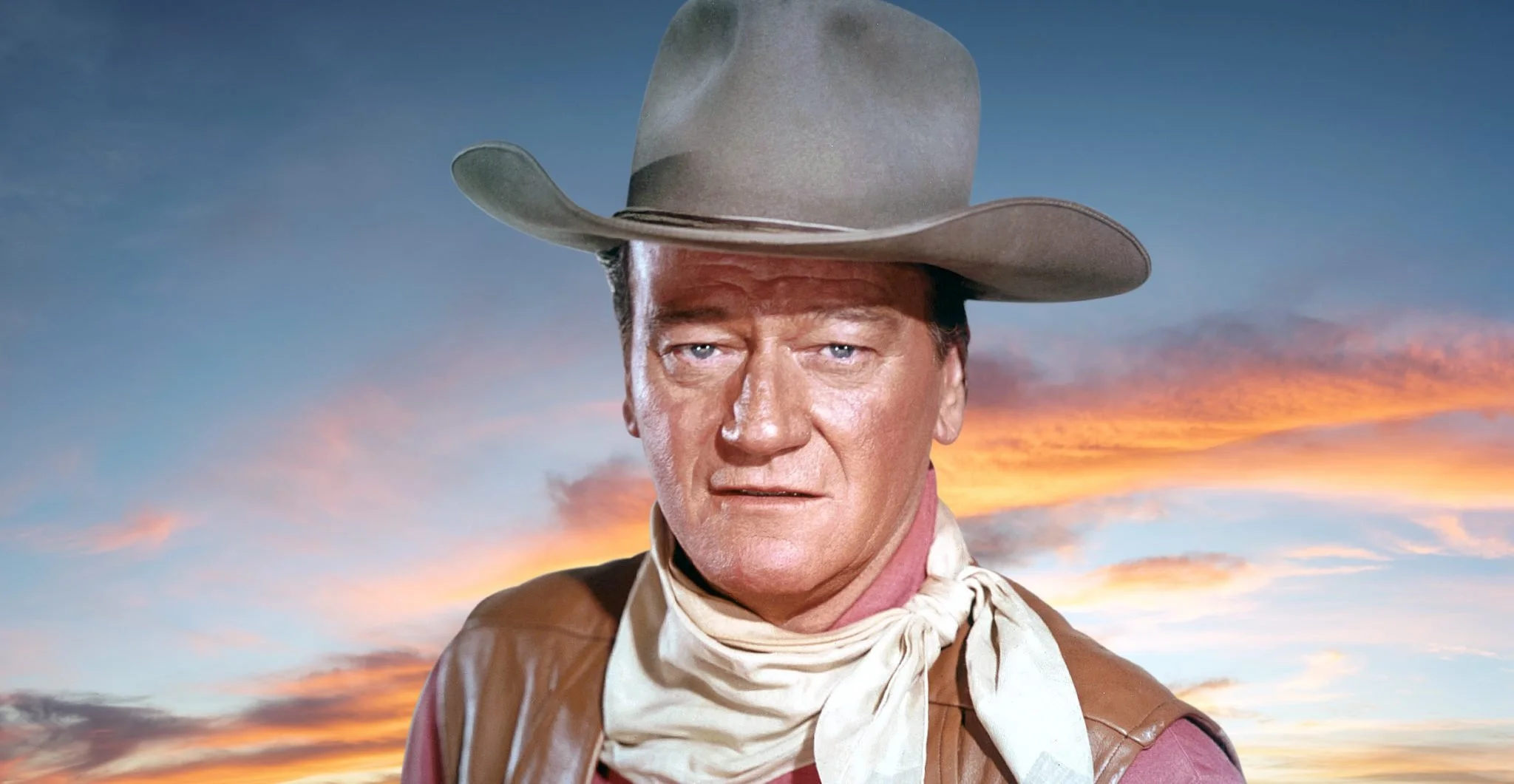
I once wrote that John Wayne is one of my life-long movie heroes and a man I have long admired. But all that I really ever knew of him was through the roles he played in great westerns like “The Searchers,” “The Comancheros,” “Rio Bravo,” and my all-time favorite historical war epic, “The Longest Day.”
In his lifetime, John Wayne was awarded three Oscars and the Congressional Gold Medal. After his death from cancer in 1979, he was posthumously awarded the Presidential Medal of Freedom. But, for me, the most monumental and courageous of all of John Wayne’s achievements was his 1978 conversion to the Catholic faith.
Not many in Hollywood escape the life it promotes, and John Wayne was no exception. The best part of this story is that it was first told by Father Matthew Muñoz, a priest of the Diocese of Orange, California, and John Wayne’s grandson.
Early in his film career in 1933, John Wayne married Josephine Saenz, a devout Catholic who had an enormous influence on his life. They gave birth to four children, the youngest of whom, Melinda, was the mother of Father Matthew Muñoz. John Wayne and Josephine Saenz civilly divorced in 1945 as Hollywood absorbed more and more of the life and values of its denizens.
But Josephine never ceased to pray for John Wayne and his conversion, and she never married again until after his death. In 1978, a year before John Wayne died, her prayer was answered and he was received into the Catholic Church. His conversion came late in his life, but John Wayne stood before Hollywood and declared that the secular Hollywood portrayal of the Catholic Church and faith is a lie, and the truth is to be found in conversion.
That conversion had many repercussions. Not least among them was the depth to which it inspired John Wayne’s 14-year old grandson, Matthew, who today presents the story of his grandfather’s conversion as one of the proudest events of his life and the beginning of his vocation as a priest.
If John Wayne had lived to see what his conversion inspired, I imagine that he, too, would have stood on the aisle, a monument to the courage of conversion, as Matthew lay prostrate on the Cathedral floor praying the Litany of the Saints at priesthood ordination. The courage of conversion is John Wayne’s most enduring legacy.
Pornchai Moontri Takes a Road Less Traveled
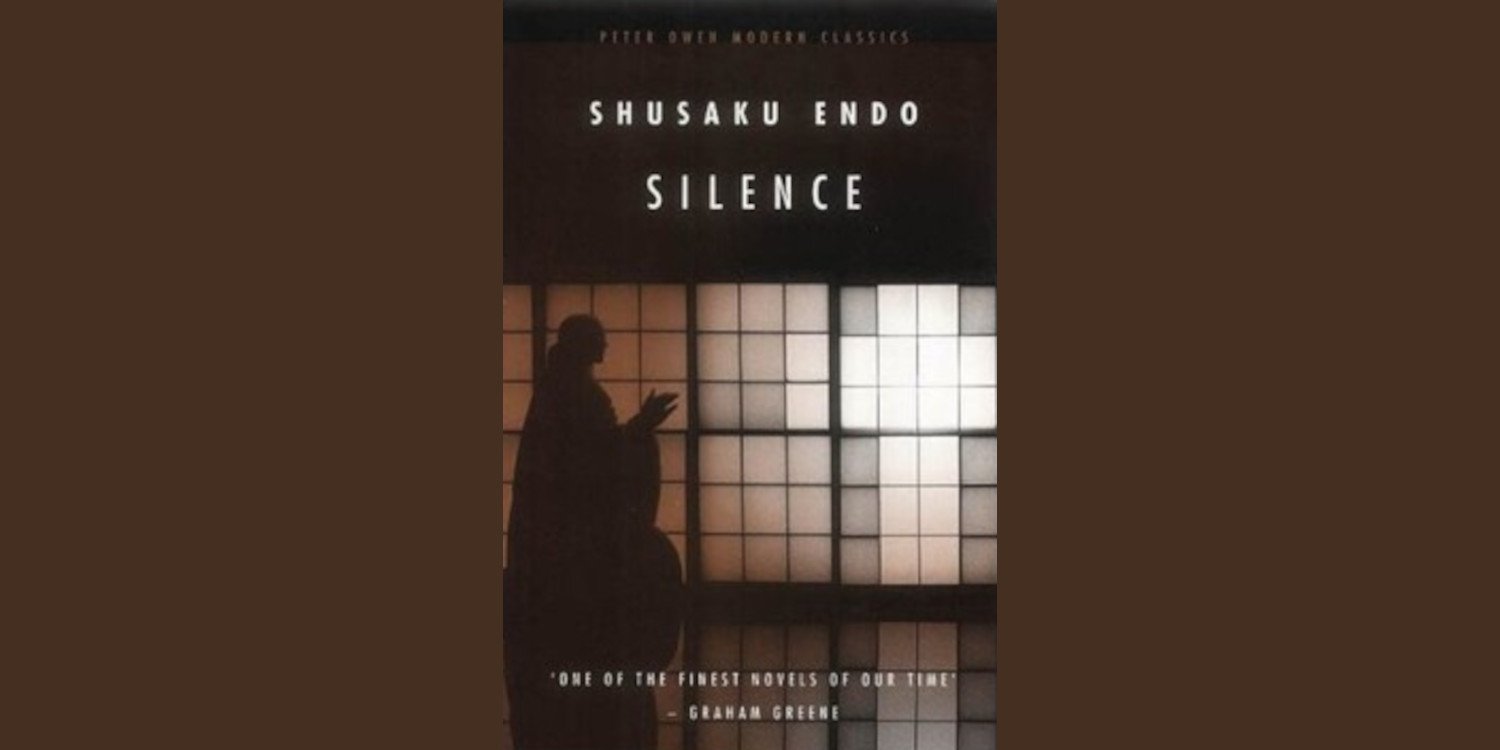
The Japanese Catholic novelist, Shusaku Endo, wrote a novel entitled Silence (Monumenta Nipponica, 1969), a devastating historical account of the cost of discipleship. It is a story of 17th Century Catholic priests who faced torture and torment for spreading the Gospel in Japan. The great Catholic writer, Graham Greene, wrote that Silence is “in my opinion, one of the finest novels of our time.”
Silence is the story of Father Sebastian Rodriguez, one of those priests, and the story is told through a series of his letters. Perhaps the most troubling part of the book was the courage of Father Rodriguez, a courage difficult to relate to in our world. Because of the fear of capture and torture, and the martyrdom of every priest who went before him, Father Rodriguez had to arrive in Japan for the first time by rowing a small boat alone in the pitch blackness of night from the comfort and safety of a Spanish ship to an isolated Japanese beach in 1638 — just 18 years after the Puritan Pilgrims landed the Mayflower at Squanto’s Pawtuxet, half a world away as I describe in “The True Story of Thanksgiving.”
In Japan, however, Father Rodriguez was a pilgrim alone. Choosing to be left on a Japanese beach in the middle of the night, he had no idea where he was, where he would go, or how he would survive. He had only the clothes on his back, and a small traveler’s pouch containing food for a day. I cannot fathom such courage. I don’t know that I could match it if it came down to it.
But I witness it every single day. Most of our readers are very familiar with “Pornchai’s Story,” and with his conversion to Catholicism on Divine Mercy Sunday in 2010. Most know the struggles and special challenges he has faced as I wrote in “Pornchai Moontri, Bangkok to Bangor, Survivor of the Night.”
But the greatest challenge of Pornchai’s life was yet to come. After serving more than half his life in prison in a sentence imposed when he was a teenager, Pornchai faced forced deportation from the United States to his native Thailand. Like Father Sebastian Rodriguez in Silence, Pornchai would be stepping onto the shores of a foreign land in darkness, a land he no longer knew and in which he knew no one.
This was a time of great turmoil for both of us. I have told much of this story before, but it is worth repeating now. I asked Pornchai to write his life story. He was lost for words and did not know how or where to begin. So I asked him to just talk. He sat on the floor of our prison cell and the words came cautiously at first, but then they began to flow as I took notes. Neither of us knew what to expect but in the end I typed the four pages from my notes and titled it simply “Pornchai’s Story.” We had no way to know that this short story would become known all over the world. I sent a copy to Catholic League President Bill Donohue, a Catholic leader with a heart of pure gold. Dr. Donohue published it on the Catholic League website and he wrote that it was “remarkable.” Then the letters came addressed to Pornchai. One was from Ambassador Mary Ann Glendon, who was then U.S. Ambassador to the Holy See. Another was from the late Father Richard John Neuhaus, Editor of First Things magazine, who told Pornchai that his powerful story would turn many souls back to God. Yet another was from Cardinal Kitbunchu, the Archbishop Emeritus of Bangkok. Yet another was from Yela Roongruangchai, Founder and President of Divine Mercy Thailand.
Also in Thailand at the time “Pornchai’s Story” arrived was Father Seraphim Michalenko, MIC, who also happened to be the Vatican’s Postulator for the Cause of Sainthood of Saint Maria Faustina Kowalska, the Saint of Divine Mercy. Father Seraphim read “Pornchai’s Story” aloud during a Divine Mercy Retreat in Bangkok. Ten years before all of this happened, I boldly told Pornchai during a night of near despair, that we would have to build a bridge from a prison in Concord, New Hampshire to Thailand. Pornchai scoffed, but it was the only hope we had to hold onto. Then the bridge was built right before our very eyes. What we once faced with terror in the darkness of a future unseen, we now face with the gift of hope. Happy Birthday, Max!
+ + +
Note from Father Gordon MacRae: Thank you for reading and sharing this post. Don’t stop here. Learn a bit more of this story through the following related posts:
Pornchai Moontri and the Long Road to Freedom
The Shawshank Redemption and Its Grace Rebounding
Thailand’s Once-Lost Son Was Flag Bearer for the Asian Apostolic Congress
A Catholic League White House Plea Set Pornchai Moontri Free
+ + +
A Further Note from Father Gordon MacRae: While writing the above post I received a note from my friend Sheryl Collmer in Tyler, Texas. Along with it was an article Sheryl had written for Crisis Magazine. The article is about the magnificent new film, Triumph of the Heart, telling the story of our Patron Saint Maximilian Kolbe. Sheryl’s article is magnificent in its own right and it casts a light into a very dark place in our world. But her article does not leave us there. There is not much in this world that makes me want to shout from the rooftops, but Sheryl Collmer’s article is one of them. You must not miss “The Tenebrae of Maximilian Kolbe” and I hope you will share it.
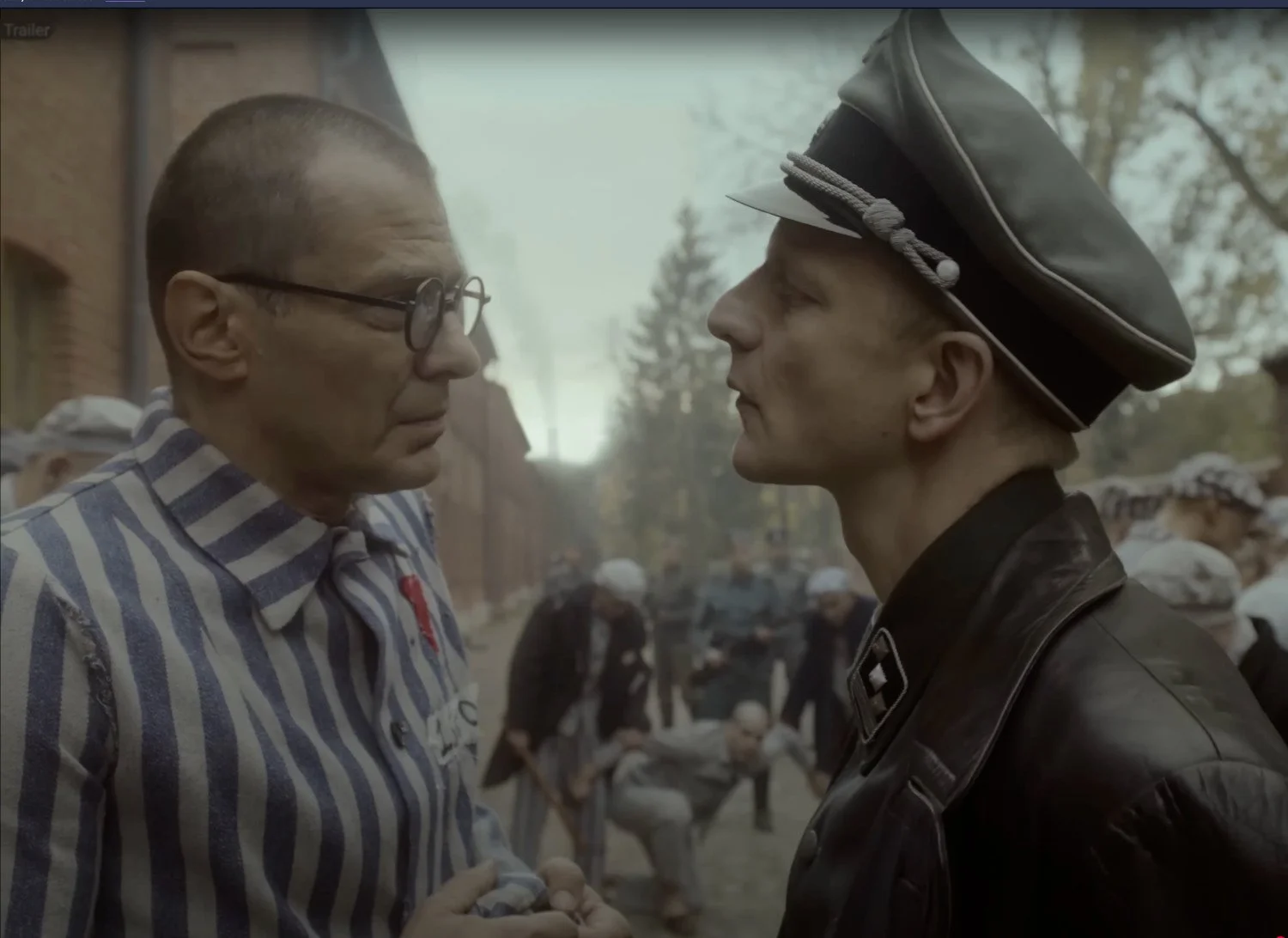

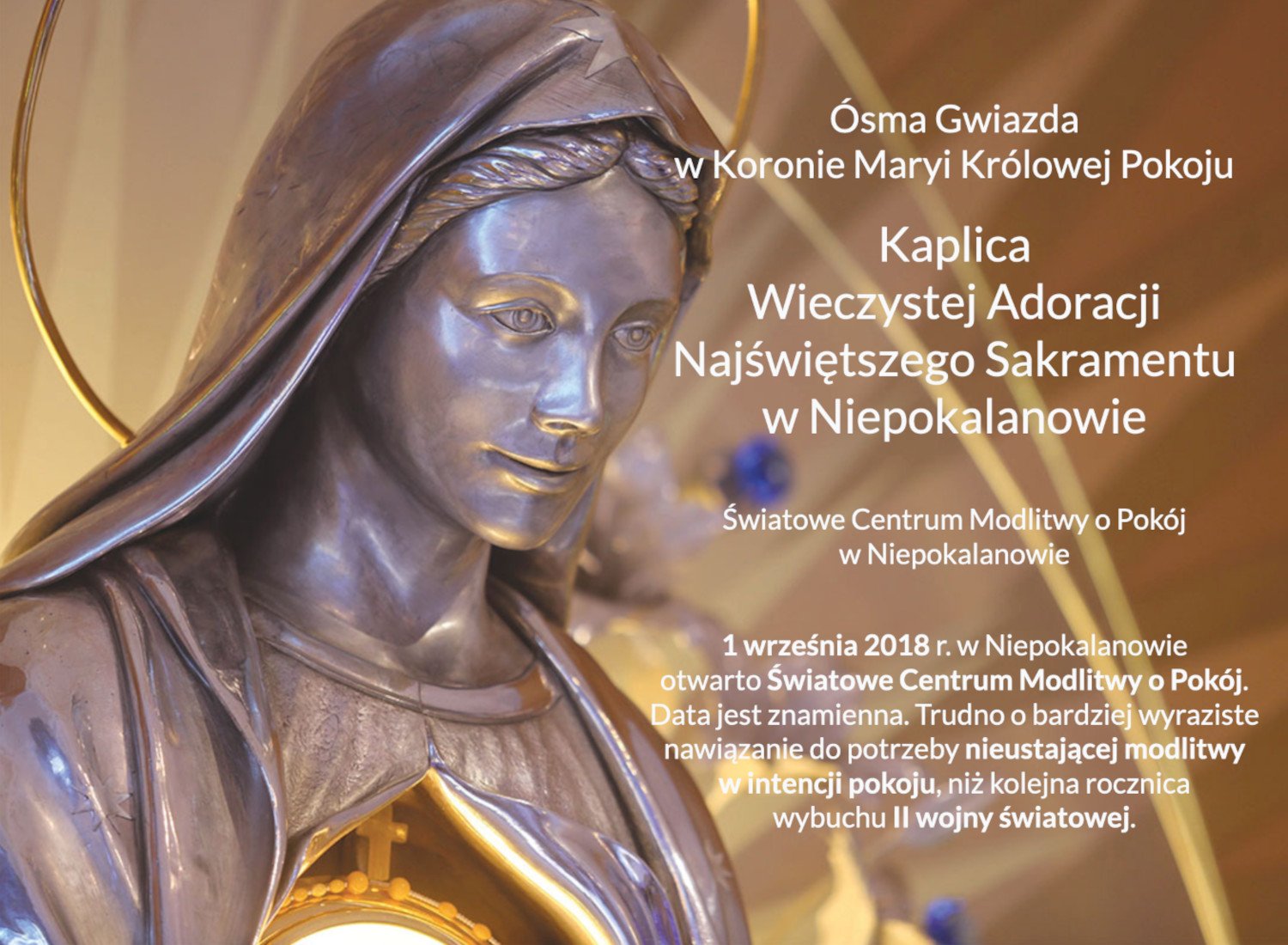

The Eucharistic Adoration Chapel established by Saint Maximilian Kolbe was inaugurated at the outbreak of World War II. It was restored as a Chapel of Adoration in September, 2018, the commemoration of the date that the war began. It is now part of the World Center of Prayer for Peace. The live internet feed of the Adoration Chapel at Niepokalanow — sponsored by EWTN — was established just a few weeks before we discovered it and began to include in at Beyond These Stone Walls. Click “Watch on YouTube” in the lower left corner to see how many people around the world are present there with you. The number appears below the symbol for EWTN.
Click or tap here to proceed to the Adoration Chapel.
The following is a translation from the Polish in the image above: “Eighth Star in the Crown of Mary Queen of Peace” “Chapel of Perpetual Adoration of the Blessed Sacrament at Niepokalanow. World Center of Prayer for Peace.” “On September 1, 2018, the World Center of Prayer for Peace in Niepokalanow was opened. It would be difficult to find a more expressive reference to the need for constant prayer for peace than the anniversary of the outbreak of World War II.”
For the Catholic theology behind this image, visit my post, “The Ark of the Covenant and the Mother of God.”