“There are few authentic prophetic voices among us, guiding truth-seekers along the right path. Among them is Fr. Gordon MacRae, a mighty voice in the prison tradition of John the Baptist, Maximilian Kolbe, Alfred Delp, SJ, and Dietrich Bonhoeffer.”
— Deacon David Jones

I have Seen the Fall of Man: Christ Comes East of Eden
The Genesis story of the Fall of Man is mirrored in the Nativity. Unlike Adam at the Tree of Knowledge, Jesus did not deem equality with God a thing to be grasped.
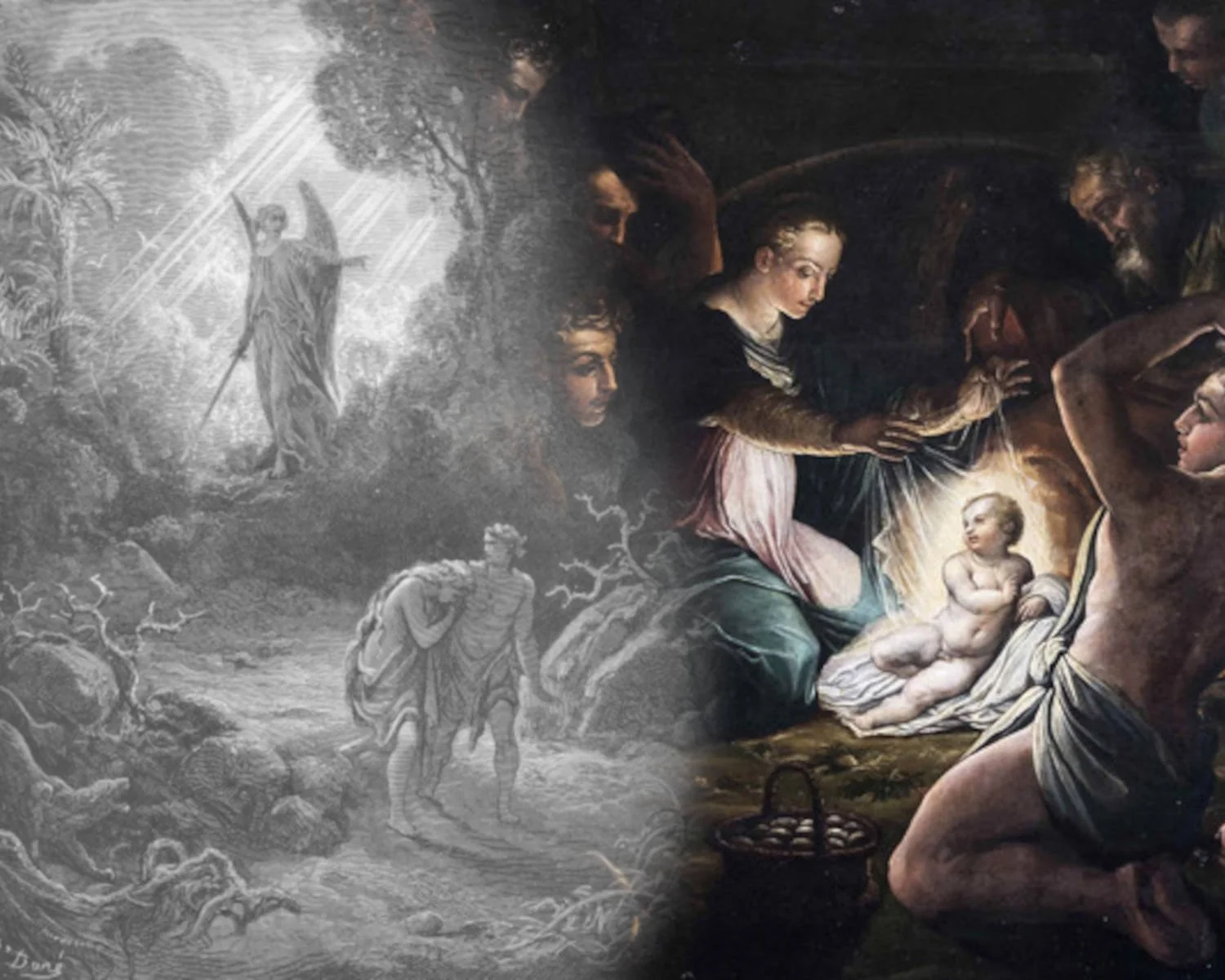
The Genesis story of the Fall of Man is mirrored in the Nativity. Unlike Adam at the Tree of Knowledge, Jesus did not deem equality with God a thing to be grasped.
December 17, 2025 by Father Gordon MacRae
Back in 2014, one of our readers sent me an article that appeared inCrisis Magazine, “Who will Rescue the Lost Sheep of the Lonely Revolution?” by the outstanding writer, Anthony Esolen. It is an admonitory parable about the lost sheep of the Gospel and the once-dead prodigal son of another parable. What exactly did Jesus mean by “lost” and “dead”?
Mr. Esolen raises questions about controversies I had been taking up in previous weeks, perhaps most notably in “Synodality Blues: Pope Francis in a Time of Heresy.” Some of my posts then had a focus on the Parable of the Prodigal Son, so central to the Gospel, but Esolen makes a point missing from the Synod debate:
“That is why you came among us, to call sinners back to the fold. Not to pet and stroke them for being sinners, because that is what you mean by ‘lost,’ and what you mean by ‘dead’ when you ask us to consider the young man who had wandered into the far country. The father in your parable wanted his son alive, not dead.”
In over thirty years in prison, I have seen firsthand the fall of man and its effects on the lives of the lost. No good father serves them by inviting them home then leaving them lost, or worse, dead; deadened to the Spirit calling them out of the dark wood of error. Mr. Esolen has seen this too:
“…you say your hearts beat warmly for the poor. Prisoners are poor to the point of invisibility… Go and find out what the Lonely Revolution has done to them. Well may you plead for cleaner cells and better food for prisoners, and more merciful punishment. Why do you not plead for cleaner lives and better nourishment for their souls when they are young, before the doors of the prison shut upon them? Who speaks for them?”
Here in prison, writing from the East of Eden, I live alongside the daily consequences of the Fall of Man. It will take more than a Synod on the Family to see the panoramic view I now see. Anthony Esolen challenges our shepherds: “Venturing forth into the margins, my leaders?… [Then] leave your parlors and come to the sheepfold.”
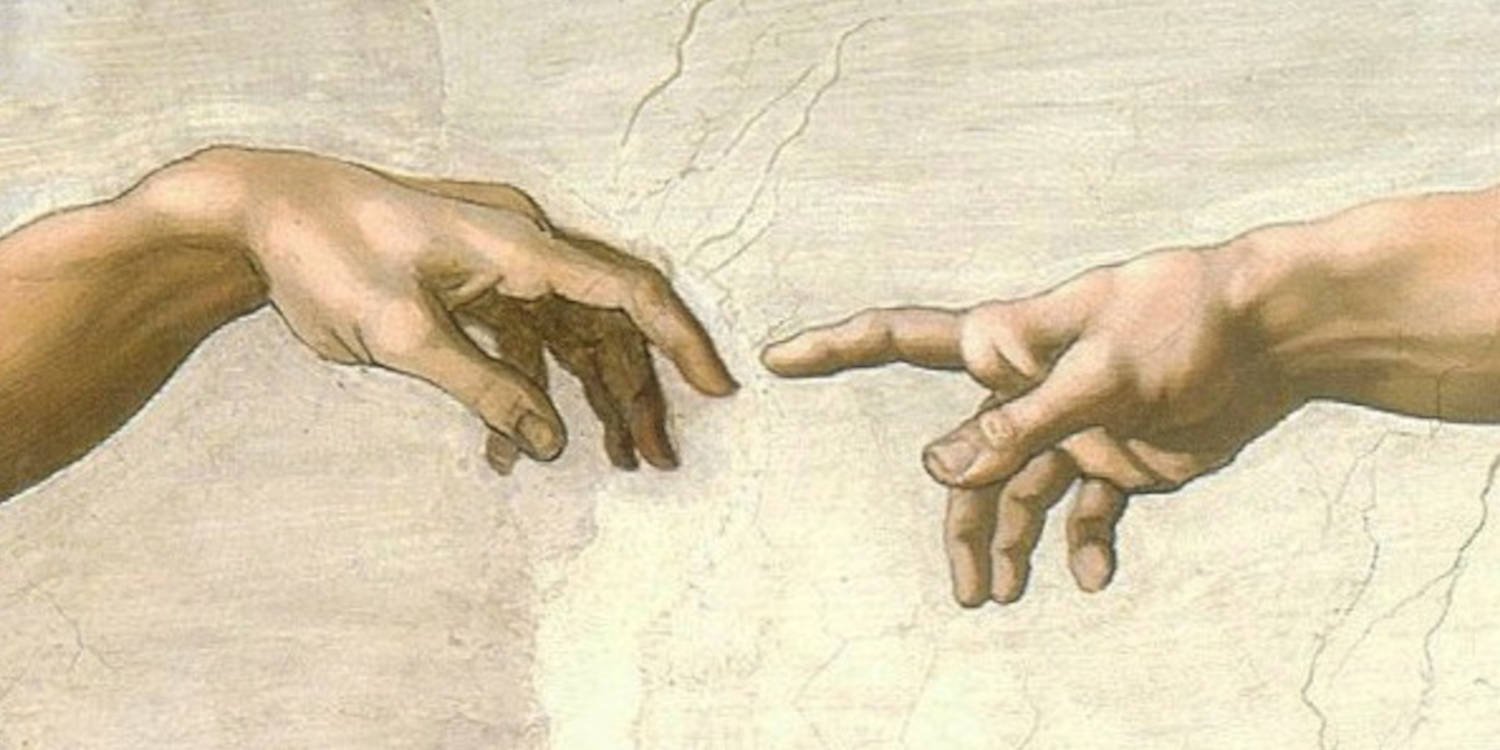
In the Image and Likeness of God
Adrift in synodal controversy, we might do well this Advent to ponder the Genesis story of Creation and the Fall of Adam. I found some fascinating things there when I took a good long look. The story of Adam is filled with metaphor and meaning that frames all that comes after it in the story of God’s intervention with Salvation History.
Accounts of man created from the earth were common in Ancient Near Eastern texts that preceded the Book of Genesis. The Hebrew name for the first human is “ha-Adam” while the Hebrew for “made from earth” is “ha-Adama” which some have interpreted as “man from earth.” Thus Adam does not technically have a name in the Genesis account. It is simply “man.” His actions are on behalf of all.
As common as the story of man from the earth was in the texts of Ancient Near Eastern lore, the Biblical version has something found nowhere else. In Genesis (2:7) God formed man from the ground “and breathed into his nostrils the breath of life.” And not only life, but soul, life in the image and likeness of God. The Breath of God, or the Winds of God, is an element repeated in Sacred Scripture in a pattern I once described in an article entitled “Inherit the Wind.” To save you some time, we just discovered this AI overview of it:
“Inherit the Wind: Pentecost and the Breath of God” refers to a theological theme, particularly from writer, Father Gordon MacRae, connecting the biblical concept of “inheriting the wind” (Proverbs 11:29, meaning futility/foolishness) with Pentecost, where the Holy Spirit arrives as wind (Ruah in Hebrew) and breath, bringing life, understanding, and new creation, contrasting worldly futility with spiritual fulfillment. It uses “wind” (a symbol of God’s Spirit) to explore how believers receive divine life, moving beyond empty pursuits to a deeper, shared faith, just as the Apostles understood each other’s languages at Pentecost.
The title, “Inherit the Wind: Pentecost and the Breath of God” draws a parallel between the empty “inheritance” of the world (wind) and the profound gift of the Spirit (wind/breath) at Pentecost, which brings true substance and unity.
It signifies that instead of pursuing futile worldly gains (“inheriting the wind”), believers receive God’s Spirit, which transforms them into new creations and empowers them to share the Gospel, effectively reversing the confusion of Babel.
Back to our Genesis account: God will set the man from earth in Eden. Then in the following verse in Genesis (2:8) God establishes in Eden what would become the very instruments of man’s fall: the Tree of Knowledge of Good and Evil and the Tree of Life. So what exactly was Adam’s “Original Sin?”
When I wrote “Science and Faith and the Big Bang Theory of Creation” I delved into the deeper meaning of the first words in Scripture spoken by God, “Let there be light” (Genesis 1:3). Saint Augustine in the Fifth Century saw in that command the very moment God created the angelic realm, a sort of spiritual Big Bang. What is clear is that spiritual life was created first and the material world followed. For all we know — and, trust me, science knows no better — “Let there be light” was the spark that caused the Big Bang.
You might note that the creation of light preceded the creation of anything in the physical world that might generate light such as the Sun and the stars. Saint Augustine then considered the very next line in Genesis (1:4), “God separated the light from the darkness,” and saw in it the moment the angels fell and sin entered the cosmos. It was only then in the Genesis account that construction of the material universe got underway.
When God created a man from the earth, a precedent for “The Fall” had already taken place. God then took ha-adama, Adam, and commanded him (2:16) to eat freely of the bounty of Eden, “but of the Tree of Knowledge of Good and Evil you may not eat, for in the day you eat of it, you shall die.” Die not in the sense of physical death — for Adam lived on — but in the spiritual sense, the same sort of death from which the father of another famous parable receives his Prodigal Son. “Your brother was dead, and now he is alive” (Luke 15:32).
The Tree of Knowledge of Good and Evil is what is called a “merism” in Sacred Scripture. It acts as a set of bookends which include all the volumes in between. Another example of a merism is in Psalm 139:2, “You know when I sit and when I stand.” In other words, “you know everything about me.” The Tree of Knowledge, therefore, is access to the knowledge of God, and Adam’s grasping for it is the height of hubris, of pride, of self-serving disobedience.
In the end, Adam opts for disobedience when faced with an opportunity that serves his own interests. From the perspective of human hindsight, man was just being man. In an alternate creation account in Ezekiel (28:11-23), God said to the man:
“You corrupted your wisdom for the sake of splendor, and the guardian cherub drove you out.”
God’s clothing Adam and Eve — who is so named only after The Fall — before expelling them is a conciliatory gesture, an accommodation to their human limitations. Casting them out of Eden is not presented solely as God’s justice, but also God’s mercy to protect them from an even more catastrophic fall, “Lest he put forth his hand and take [grasp] also from the Tree of Life” (Genesis 3:22).
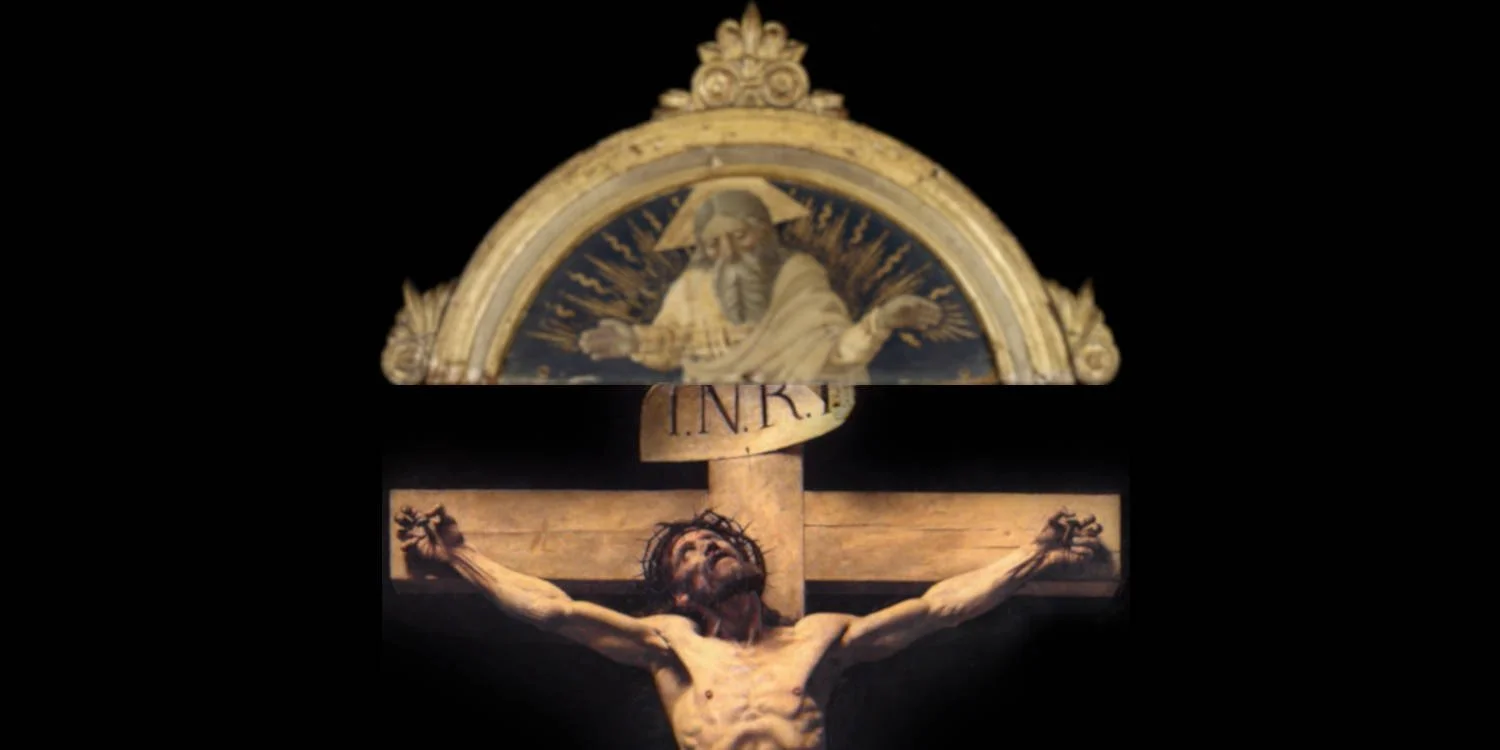
Jesus in the Form of God
The Church’s liturgy has always been conscious of the theological link between the fall of Adam and the birth of Christ. For evidence, look no further than the Mass Readings for the Solemnity of the Immaculate Conception. I also find a stunning reflection of the Eden story in a hymn from the very earliest Christian church — perhaps a liturgical hymn — with which Saint Paul demonstrates to the Church at Philippi the mission, purpose, and mind of Christ. “Let each of you look not only to his own interests, but also the interests of others. Have this mind among yourselves which was in Christ Jesus…”
“…Who though he was in the form of God did not deem equality with God a thing to be grasped at, but emptied himself, taking the form of a servant, being born in the likeness of men. And being found in human form he humbled himself and became obedient unto death, even death on a cross. Therefore God has highly exalted him and bestowed upon him the name which is above every other name, that at the name of Jesus every knee should bend, in heaven and on earth and under the earth, and every tongue proclaim to the glory of God the Father: Jesus Christ is Lord.”
— Philippians 2:3-11
The two accounts above — the story of Adam fallen from the image and likeness of God and expelled from Eden, and the story of Jesus in the form of God “being born in the likeness of men” — reflect the classic dualism of Plato. A Greek philosopher in the 3rd and 4th Century B.C., the essence of Plato’s thought was his theory of image and form. Forms or universalities in the spiritual realm had imperfect reflections in the material world.
Hence, Adam is in the image of God, and falls, but Christ is in the form of God. The verses recounted by Saint Paul in Philippians point to something of cosmic consequence for the story of the Fall of Man. Man, made from the earth in the image of God grasps to be like God, and falls from grace at Eden. At Bethlehem, however, God Himself traces those steps in reverse. He comes to earth taking the image and likeness of man, and sacrifices Himself to end man’s spiritual death.
The late Pope Francis summoned us to extend our gaze to the peripheries of a broken world. It is a cautious enterprise in a self-righteous world in a fallen state. Without a clear mandate from the Holy Spirit, we could lose ourselves and our souls in such an effort. Anthony Esolen expresses the danger well in the Crisis article cited above:
“Who speaks for the penitent, trying to place his confidence in a Church that cuts his heart right out because she seems to take his sins less seriously than he does.”
We can bring no one to Christ that way, but the caution should not prevent the Church from her mission to reach into the ends of the earth, to save sinners, and not just revel with the self-proclaimed already saved. Ours is a mission extended to the fallen.
I have seen the Fall of Man — where I now live I see it all around me — and so had the Magi of the Gospel who came from the East to extend to Him their gifts. “Upon a Midnight Not so Clear, Some Wise Men from the East Appear” is my own favorite Christmas post, and one I hope you will read and share in the coming days.
They represent the known world. They came to bend their knee in the presence of Christ in the form of God born in the likeness of men at Bethlehem. Even my own aching, wounded knee must bend for that!
+ + +
Note from Father Gordon MacRae: Thank you for taking the time to prayerfully read and share this post, which I hope draws us away from the dark wood of error toward the wood of the Cross and our Salvation. You may also like these related Yuletide posts from Beyond These Stone Walls:
Saint Gabriel the Archangel: When the Dawn from On High Broke Upon Us
The Ark of the Covenant and the Mother of God
Upon a Midnight Not So Clear, Some Wise Men from the East Appear

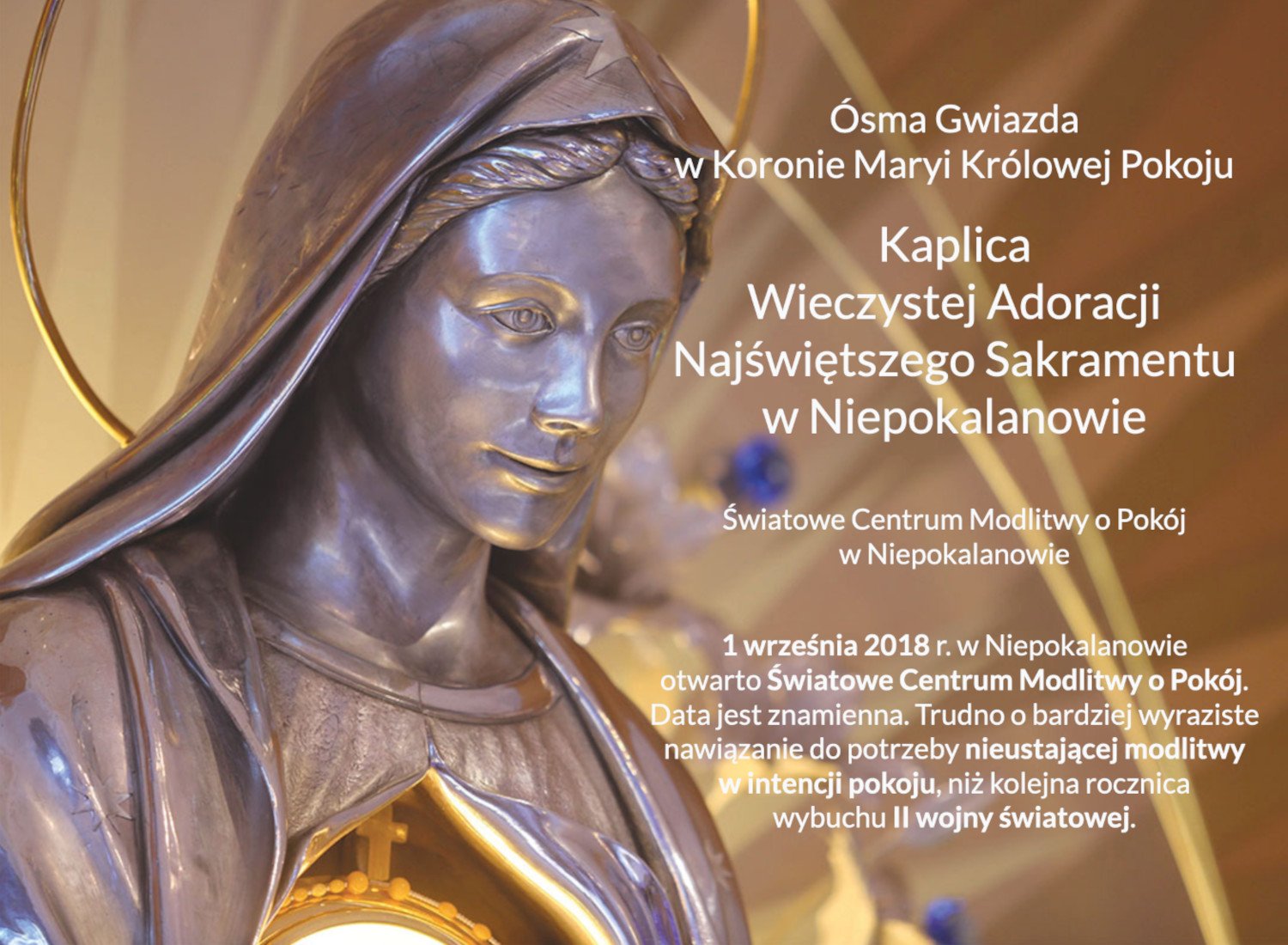

The Eucharistic Adoration Chapel established by Saint Maximilian Kolbe was inaugurated at the outbreak of World War II. It was restored as a Chapel of Adoration in September, 2018, the commemoration of the date that the war began. It is now part of the World Center of Prayer for Peace. The live internet feed of the Adoration Chapel at Niepokalanow — sponsored by EWTN — was established just a few weeks before we discovered it and began to include in at Beyond These Stone Walls. Click “Watch on YouTube” in the lower left corner to see how many people around the world are present there with you. The number appears below the symbol for EWTN.
Click or tap here to proceed to the Adoration Chapel.
The following is a translation from the Polish in the image above: “Eighth Star in the Crown of Mary Queen of Peace” “Chapel of Perpetual Adoration of the Blessed Sacrament at Niepokalanow. World Center of Prayer for Peace.” “On September 1, 2018, the World Center of Prayer for Peace in Niepokalanow was opened. It would be difficult to find a more expressive reference to the need for constant prayer for peace than the anniversary of the outbreak of World War II.”
For the Catholic theology behind this image, visit my post, “The Ark of the Covenant and the Mother of God.”
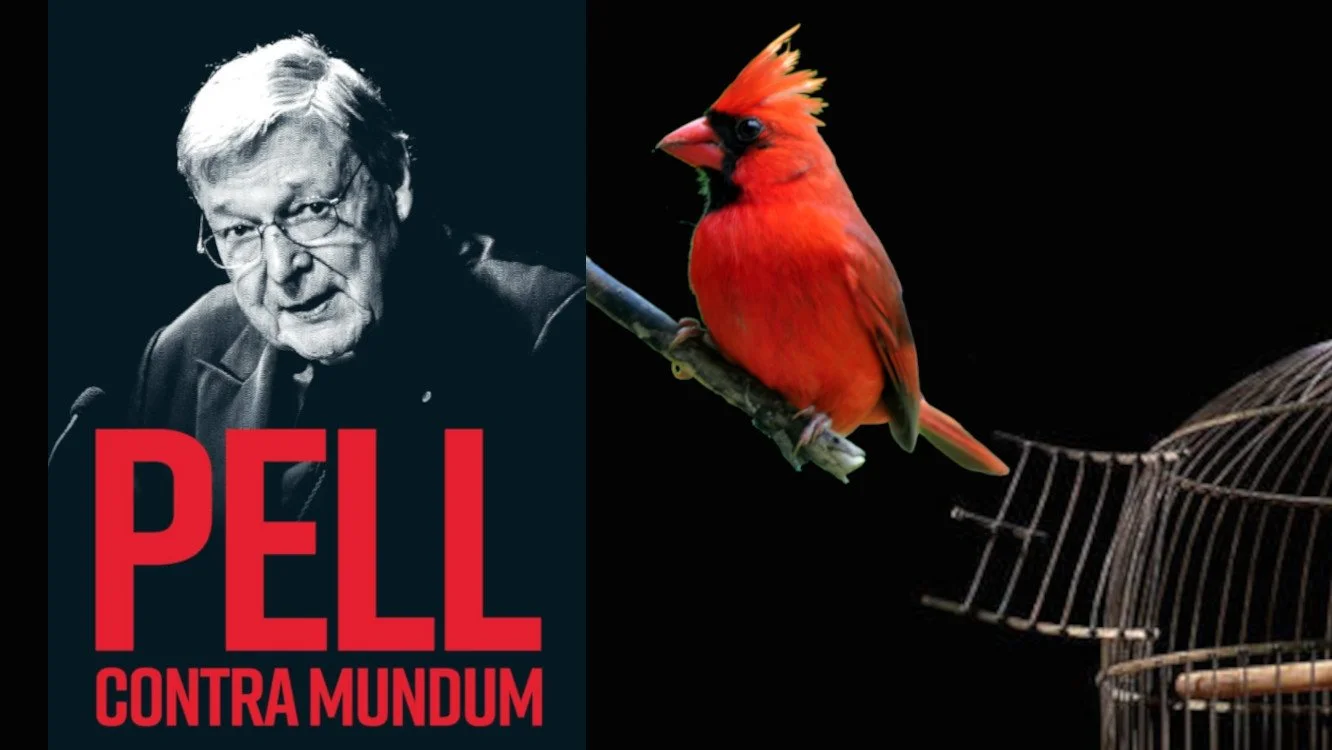
Pell Contra Mundum: Cardinal Truth on the Synod
In Pell Contra Mundum, Fr. Robert A. Sirico profiles the late Cardinal George Pell including some incisive reflections on the Synod he called ‘a toxic nightmare.’
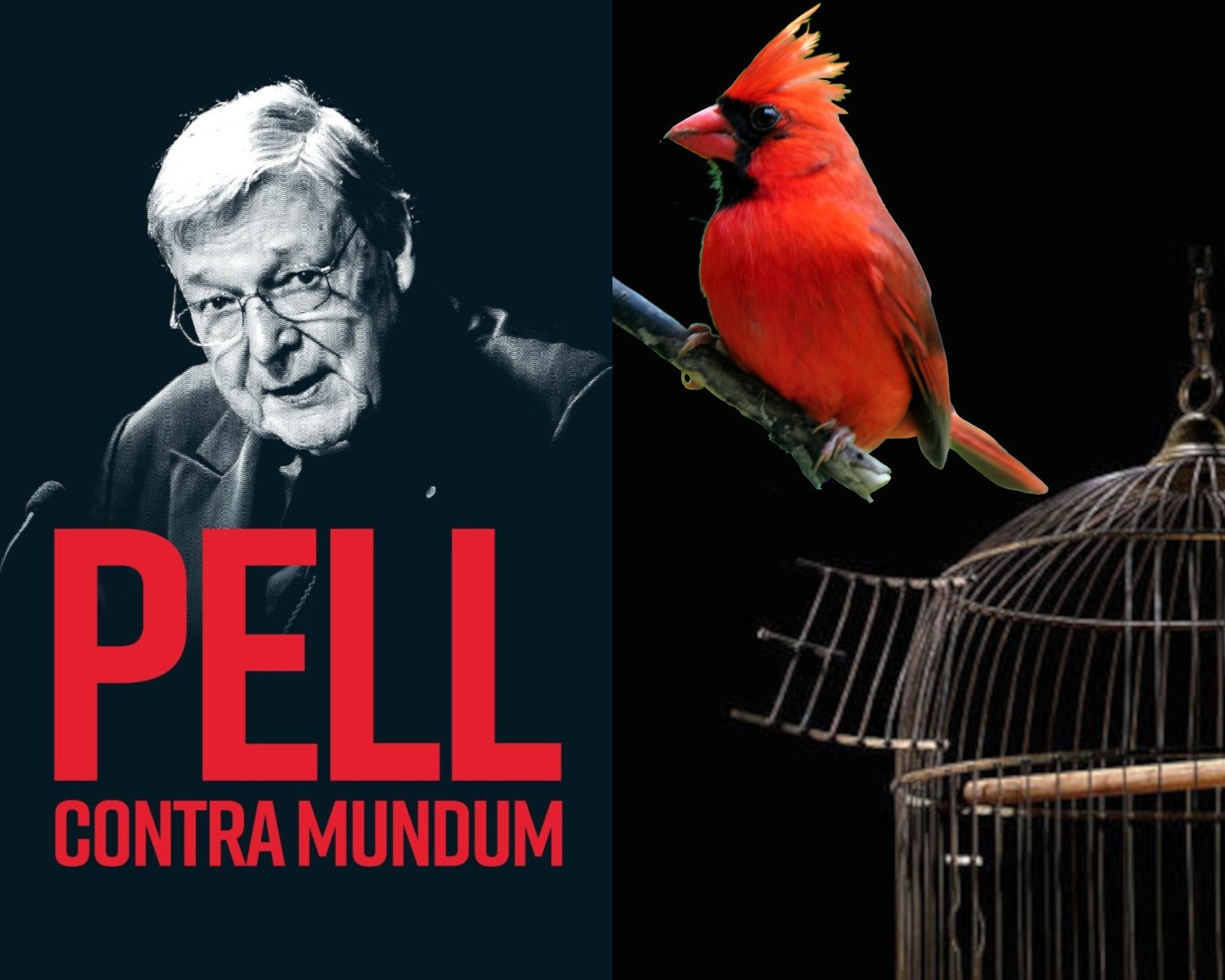
Book cover image courtesy of Connor Court Publishing; Red cardinal photo by RachidH (CC BY-NC 2.0 DEED)
In Pell Contra Mundum, Fr. Robert A. Sirico profiles the late Cardinal George Pell including some incisive reflections on the Synod he called ‘a toxic nightmare.’
November 15, 2023 by Fr Gordon MacRae
“This prison journal should never have been written. That it was written is a testament to the capacity of God’s grace to inspire insight, magnanimity, and goodness amidst wickedness, evil, and injustice. That it was written so beautifully bears witness to the Christian character that divine grace formed in its author.”
Such words could never describe anything that I have ever written or will write from within my impenetrable prison walls. The above quote is from George Weigel’s Introduction to the Prison Journal of George Cardinal Pell (Ignatius Press, 2020). As I undertook my own prison journal — writing one post at a time, week after week, half a world away from the prison Cardinal Pell innocently and gracefully endured — I had no idea that my own prison writing would have a presence in his.
I learned of it only after Cardinal Pell finally saw justice and became free after 400 days in solitary confinement in an Australia prison. Like much of the free and thinking world, I was angered and mortified that he had to endure those 400 days, and the humiliating trials that preceded them, for crimes that never took place. I had written a post from my own prison entitled, “Was Cardinal George Pell Convicted on Copycat Testimony?” It was sent to Cardinal Pell in prison by Sheryl Collmer of Tyler, Texas, a writer for Crisis Magazine. It brought a focused light to the prosecutorial fraud that, once exposed, may have helped to overturn his conviction.
Still, even today in Australia and beyond, there are some who claim to a biased and bigoted condemnation of this White Martyr, a condemnation devoid of all truth and justice. After his release and his return to Rome, Cardinal Pell wrote to thank me for the small role I played in writing about the fraud perpetrated against him. I don’t think anyone has ever gotten all the way to the bottom of that fraud.
After his release, Cardinal Pell also wrote to me of his desire to bring attention to my own plight, but that was not meant to be. It was nonetheless a great solace to me to be able to write in 2020, “From Down Under, the Exoneration of George Cardinal Pell.”
On the day that I write this entry into my own less exalted prison journal, I mark 10,740 days and nights in prison also for crimes that never took place. I do not compare this to the abomination of humiliation endured by George Pell. It is just the opposite. I write it to convey the extent to which he inspired me, inspires me still, and gives me hope that justice eventually wins out whether here or in Thy Kingdom Come.
Cardinal Pell is gone from our sight now, but his words still inspire many. One of the many is Fr. Robert A. Sirico, cofounder of the Acton Institute and editor of the recent book, Pell Contra Mundum (Connor Court Publishing, 2023). Father Sirico described his subject matter for the book: “George Cardinal Pell, a White Martyr with insights into the Spirit of this age and the ongoing crisis in the Church.” In an interview with Edward Pentin in the National Catholic Register, Father Sirico spoke of the book:
“It really grew out of the sadness, the grief of Cardinal Pell’s death. I was with him the night of Pope Benedict’s funeral. We had dinner in his apartment. Cardinal Zen [another White Martyr] was there and a few others ... . I had known Pell for more than 25 years, and over these last few months we had been talking about the Synod and things happening in the Church. We knew he was going in for the surgery. I left Rome, and then that morning got up to the call that he had died in the hospital ... . And later that day or the next, his piece in the London Spectator came out.”

“Hostile to the Apostolic Tradition”
KABOOM! As 2023 was underway shortly after Cardinal Pell’s death, that is how I summed up his posthumously published article in The Spectator which Pell titled, “The Catholic Church Must Free Itself from this Toxic Nightmare.” Its focus was on the present Synod on Synodality that has rocked the Church and faithful Catholics. In that same edition of The Spectator (11 January 2023) associate editor Damian Thompson characterized Cardinal Pell’s explosive article:
“Shortly before he died ... Cardinal George Pell wrote the following article for The Spectator in which he denounced the Vatican’s plan for its upcoming ‘Synod on Synodality’ as ‘a toxic nightmare.’ The booklet produced by the Synod, to be held in two sessions this year and next year, is ‘one of the most incoherent documents ever sent out from Rome,’ says Pell. Not only is it ‘couched in neo-Marxist jargon,’ but it is ‘hostile to the apostolic tradition,’ and ignores fundamental Christian tenets such as belief in divine judgment, heaven and hell.
“The Australian-born Cardinal, who endured the terrible ordeal of imprisonment in his home country on fake charges of sex abuse before being acquitted, was nothing if not courageous. He did not know that he was about to die when he wrote this piece; he was prepared to face the fury of Pope Francis and the organisers when it was published. As it is, his sudden death may add extra force to his words when the Synod meets this October.”
I commend with gratitude Father Robert Sirico, Damian Thompson at The Spectator, Edward Pentin at the National Catholic Register, and others who have posthumously amplified Cardinal Pell’s voice in service to the Church. On 11 January 2023 the day after Cardinal Pell’s death while undergoing surgery, Damian Thompson wrote for The Spectator, “Cardinal Pell’s righteous fury at the Vatican’s theological direction”:
“Cardinal Pell, a former head of Vatican finances does not criticise Pope Francis directly in the piece he has written for The Spectator. But it was the latter who instituted this ‘synodal way’ which, according to Pell, ‘has neglected, indeed downgraded the Transcendent, covered up the centrality of Christ with appeals to the Holy Spirit and encouraged resentment, especially among participants.’ Pell states quite plainly that the whole process — which began with a ‘consultation’ of the laity in which only a minuscule proportion of the world’s Catholics took part — is in the process of being rigged. The Synod’s participants will not be allowed to vote and the organising committee’s views will be passed on to Pope Francis ‘for him to do as he decides.’
“That phrase goes to the heart of the matter. Pell describes this arrangement as ‘an abuse of synodality, a sidelining of the bishops, which is unjustified by scripture or tradition’ and ‘liable to manipulation.’ ... This is the last public statement by a hugely influential cardinal who was once part of the Pope’s inner circle. Put simply, it expresses righteous fury at the theological direction of this pontificate, hinting that it is betraying Christ himself. And, by a sad coincidence, it appears in the same week as Archbishop Gänswein’s revelations that Benedict XVI in retirement was horrified by his successor’s suppression of the Latin Mass and also suggested that it was based on a bogus consultation.”
As Cardinal Pell thus wrote with candor and love for the Church: “The Catholic Church must free itself from this toxic nightmare.”

A Prequel: The German Inquisition of Benedict XVI
I cannot continue this post without placing it in its truthful context with an extended excerpt from my March 2, 2022 post, “Benedict XVI Faced the Cruelty of a German Inquisition.” Following vile accusations out of Germany that Benedict XVI was negligent in dealing with sexual abuse charges against a priest 40 years earlier, it did not take long for the true agenda to be unmasked. In the same week as this condemnation of Benedict, a meeting of Germany’s “Synodal Path” declared its support for same-sex unions, sweeping revisions in Church teaching on homosexuality and the practice of priestly celibacy, the ordination of women, lay involvement in the selection of bishops, and other signs of a Catholic “woke” agenda.
Several clergy from Germany anonymously shared that post with others, but only one under his own name on social media. On April 11, 2022, a group of 103 bold and faithful bishops from the United States, Canada, and around the world signed “A Fraternal Open Letter to Our Brother Bishops in Germany.” Here is an excerpt:
“Events in Germany compel us to express our growing concern about the nature of the entire German ‘Synodal Path’ process and the content of its various documents... . The urgency of our joint remarks is rooted in Romans 12, and especially in Saint Paul’s caution: ‘Do not be conformed to this world.’ And their seriousness flows from the confusion that the Synodal Path has already caused and continues to cause, and the potential for schism in the life of the Church that will inevitably result.”
In his weekly podcast carried by LifeSiteNews, Tyler, Texas Bishop Joseph Strickland explained why he was one of the signatories of that letter:
“It should be every bishop, in my opinion, and it’s because we are being bishops. Bishops are to guard the deposit of faith. It is a promise we made. And frankly, the Synodal Path of Germany is doing the opposite. It is eroding the deposit of faith, saying, ‘It’s all up for grabs.’”
It was encouraging for many that 103 brave and faithful bishops signed that letter in March of 2022. Ironically, and it is very painful for faithful Catholics in the United States, Bishop Joseph Strickland was removed as Shepherd of the Diocese of Tyler, Texas by Pope Francis on the very day that I am writing this post. Mainstream US media is only supposing the reason because no one really knows except Pope Francis. The secular media is attributing it to his disagreements with Pope Francis on the direction of the Synod.
From my limited perspective it is encouraging that 103 bishops signed that letter, and alarming that Bishop Strickland was removed for it. The bishops of Germany are failing to read and interpret the writing on the wall. Their agenda, which seems to have overwhelmed the direction of the Synod is barely distinguishable from the one being imposed on our culture by "woke" politicians. I wrote of that agenda in “The ‘Woke’ Have Commenced Our Totalitarian Re-Education.”
In Prison Journal Volume 2, Cardinal Pell wrote candidly about his concern for the direction of the Church in Germany and the Synod. From his prison cell on August 9, 2019, he wrote of Edith Stein, now known as Saint Teresa Benedicta of the Cross, who like Saint Maximilian Kolbe one year earlier, was murdered at Auschwitz in 1942.
In his journal, Cardinal Pell wrote that Edith Stein was German by birth, and he asked readers to pray for her intercession for the Catholic Church in Germany. He quoted German Cardinal Gerhard Müller, former Prefect of the Congregation for the Doctrine of the Faith, a position once held by Cardinal Joseph Ratzinger:
“The Catholic Church in Germany is going down. Leaders there are not aware of the real problems. They are self-centered and concerned primarily with sexual morality, celibacy, and women priests. They do not speak about God, Jesus Christ, grace, the Sacraments, faith, hope, or love.”
— Prison Journal Volume 2, p. 75
It is a cause of deepest concern and confusion that Bishop Strickland is removed from office while the bishops of Germany remain in place with their apostasy barely challenged. Later in the book, Cardinal Pell wrote about Vatican concerns for the growing possibility of a German Catholic schism over the very issues identified by Cardinal Müller. If such a progressive schism were to occur, it would sweep much of Europe where — with the exception of Poland — Mass attendance is at a historically low point. Cardinal Pell cited a September 17, 2019 Catholic Culture article by Philip Lawler, “Who Benefits from all this talk of schism?”
Lawler argued in 2019 that the prospect of a schism is remote, but becoming less so. He cited that Pope Francis has spoken calmly about such a prospect saying that he is not frightened by it, something that Lawler and Cardinal Pell found to be disconcerting in and of itself.
Cardinal Pell added that The New York Times has been writing about the prospect of a Catholic schism by the “John Paul and Benedict followers in the United States.” Cardinal Pell wrote that Lawler’s diagnosis is correct. The Cardinal added:
“The most aggressive online defenders of Pope Francis realize they cannot engineer the radical changes they want without precipitating a split in the Church. So they want orthodox Catholics to break away first, leaving progressives free to enact their own revolutionary agenda.”
— Prison Journal Volume 2, p.215 (emphasis added)
In light of this, it comes as no surprise that some progressive US bishops have pushed Pope Francis into divisive restrictions on the Traditional Latin Mass and other traditional expressions of the faith. These efforts, and German Catholic steps taken to marginalize the late Benedict XVI and Archbishop Gänswein, both stalwarts of Catholic orthodoxy, should be of grave concern to faithful Catholics everywhere. Embracing and promoting fidelity at this juncture has never been more minimized in Rome yet more urgently needed everywhere else.
Faithful Catholics must never accede to the desired end that German progressives and perhaps even the Synodal Path now seek. Handing the Church over to them would leave “Satan at the Last Supper” while Jesus is removed from the room. It is not the faithful, after all, who wander today into the desert to Azazel.
+ + +
An Important Message sent to us from the Catholic League for Religious and Civil Rights
November 17, 2023
To watch last night's episode of EWTN’s "The World Over with Raymond Arroyo," featuring Bishop Joseph Strickland, Fr. Gerald Murray, and Robert Royal, click here.
+ + +
Note from Fr. Gordon MacRae: Please share this post in honor of the late Cardinal George Pell and those who have amplified his most important voice in the desert. You may also like these related posts from Beyond These Stone Walls:
The Vatican Today: Cardinal George Pell’s Last Gift to the Church
Paths I Crossed with Benedict XVI and Cardinal George Pell
Fr Gordon MacRae in the Prison Journal of George Cardinal Pell by Ryan A. MacDonald
The Eucharistic Adoration Chapel established by Saint Maximilian Kolbe was inaugurated at the outbreak of World War II. It was restored as a Chapel of Adoration in September, 2018, the commemoration of the date that the war began. It is now part of the World Center of Prayer for Peace. The live internet feed of the Adoration Chapel at Niepokalanow — sponsored by EWTN — was established just a few weeks before we discovered it and began to include in at Beyond These Stone Walls. Click “Watch on YouTube” in the lower left corner to see how many people around the world are present there with you. The number appears below the symbol for EWTN.
Click or tap here to proceed to the Adoration Chapel.
The following is a translation from the Polish in the image above: “Eighth Star in the Crown of Mary Queen of Peace” “Chapel of Perpetual Adoration of the Blessed Sacrament at Niepokalanow. World Center of Prayer for Peace.” “On September 1, 2018, the World Center of Prayer for Peace in Niepokalanow was opened. It would be difficult to find a more expressive reference to the need for constant prayer for peace than the anniversary of the outbreak of World War II.”
For the Catholic theology behind this image, visit my post, “The Ark of the Covenant and the Mother of God.”