“There are few authentic prophetic voices among us, guiding truth-seekers along the right path. Among them is Fr. Gordon MacRae, a mighty voice in the prison tradition of John the Baptist, Maximilian Kolbe, Alfred Delp, SJ, and Dietrich Bonhoeffer.”
— Deacon David Jones

Oprah, Geraldo, and a Psycho-Therapist: A Perfect Storm
Popular 1980s daytime television hosts like Oprah, Geraldo and others injected repressed memory into pop psychology bringing unjust harm to a multitude of innocents.

Popular 1980s daytime television hosts like Oprah, Geraldo and others injected repressed memory into pop psychology bringing unjust harm to a multitude of innocents.
December 3, 2025 by Fr. Gordon MacRae and the False Memory Syndrome Foundation
Just as I was preparing to type this post, an alert reader informed me that my name is mentioned in a brief but brilliant article by William A. Donohue, PhD, President of the Catholic League for Religious and Civil Rights. The article, “What Happens When Truth Doesn’t Matter” appears in the November 2025 issue of the Catholic League Journal Catalyst. It tells a fascinating but disturbing story about a wealthy woman who had developed a best-selling memoir recounting her newly emerged memories of being raped by a middle school teacher 37 years earlier when she was 12. The story emerged with the help of a psychotherapist and the influence of a psychedelic drug called MDMA. The story propelled her memoir, promoted by Oprah Winfrey and other daytime TV luminaries. But it destroyed the life and career of the now elderly teacher, who had a spotless record and who vehemently denies the claims for which there is no other evidence beyond the memoir itself.
One well-known advocate of the use of the drug MDMA in therapy has gone on record to state that “whether or not repressed memories actually happened — from a therapeutic perspective — does not matter. People develop stories that help them make sense of their life … whether it is true or not, it has value because the emotion is real.” So is the irreparable harm done to an innocent man.
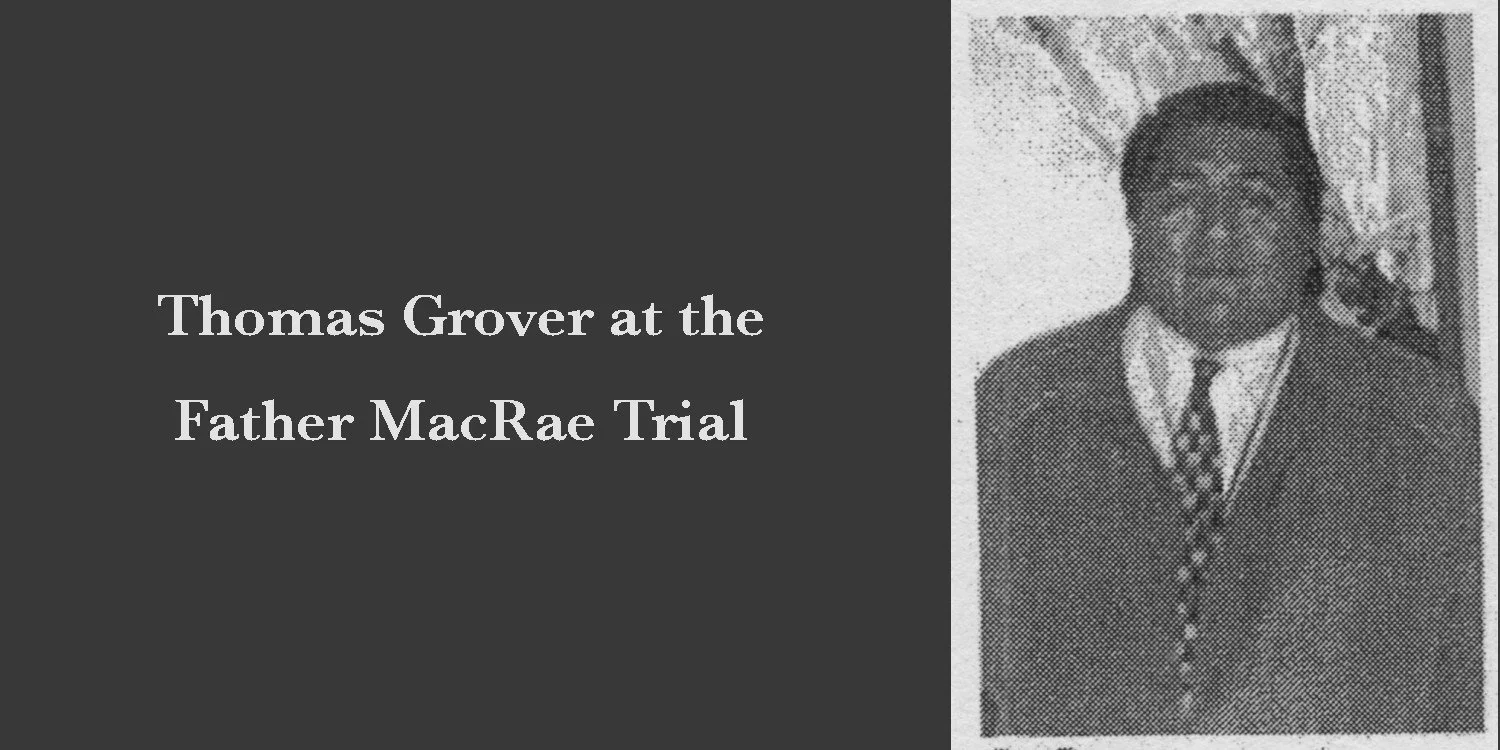
One of our readers sent this story to me because of a curious incident during my 1994 trial. As I sat before Judge Arthur Brennan, twelve jurors and a gaggle of prosecutors and news media in Cheshire County Superior Court in Keene, New Hampshire, the Court was listening intently to some wild testimony from 27-year-old Thomas Grover. He was describing how, a dozen years earlier at age 15, he came to me for five counseling sessions for his drug addiction while claiming to have been forcibly raped at the end of each session. When asked the obvious question of why, after that first horrific encounter he returned again and again, he stated simply, “I don’t know how I got there. I repressed it.”
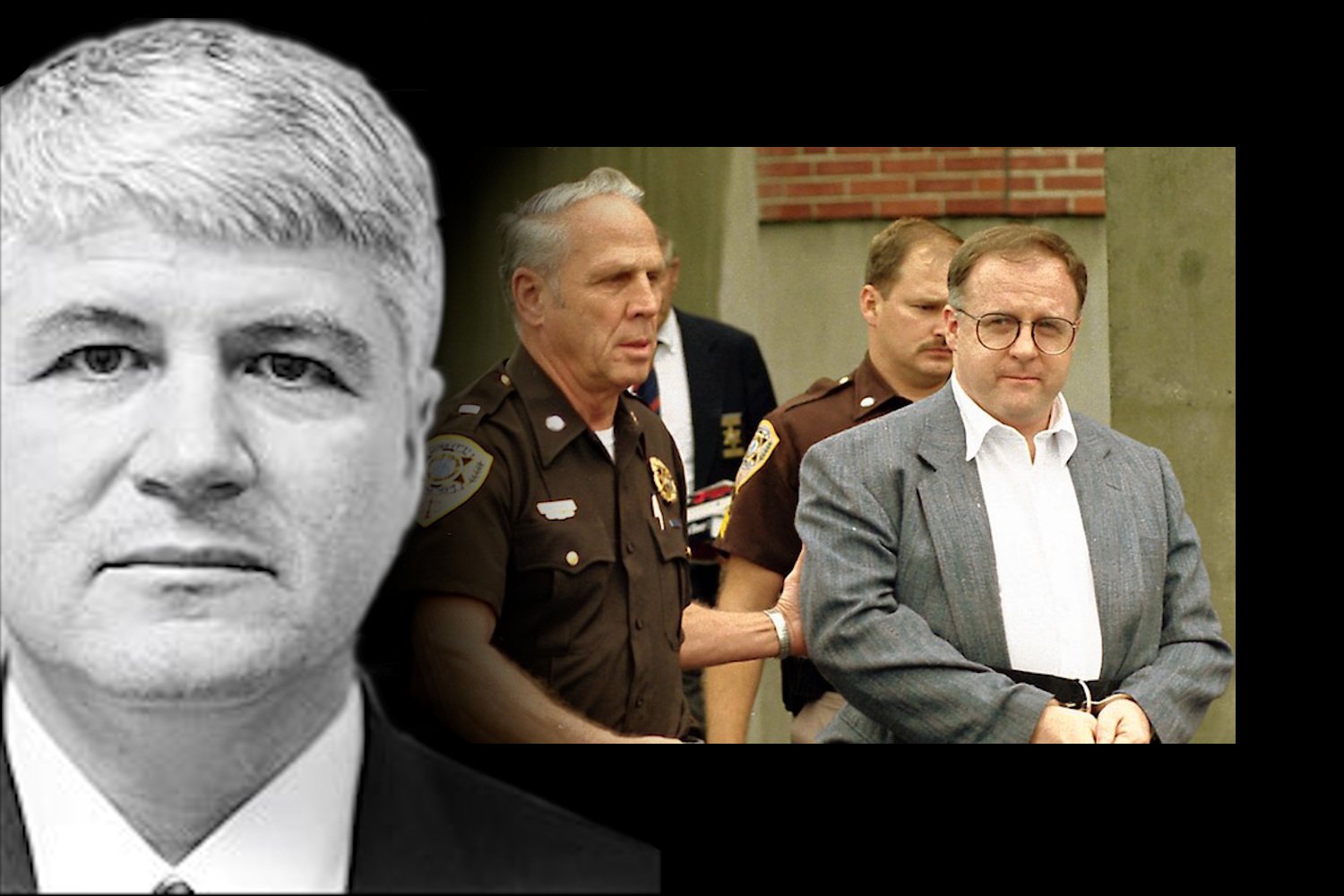
With pre-trial coaching from Detective James F. McLaughlin and psychotherapist Pauline Goupil, MA (now Pauline Goupil Vachon) — to whom Grover was referred by Robert Upton, his contingency lawyer — the details of a series of fictitious sexual assaults emerged from a dozen years earlier in the summer months of 1983. In earlier interviews between Grover and McLaughlin, the assaults were alleged to have occured in 1978 when Grover was 11, and then changed to 1980 when Grover was 13. Police reports indicate that Detective McLaughlin gave him a copy of my résumé “to help him with his dates.” The allegations were then updated to 1983, one year after my ordination to the Catholic priesthood, but the trial came twelve years later.
In the media-fueled background leading up to that trial was a lot of dishonest hype and consternation for which my Bishop and the Diocese of Manchester felt obliged to respond. Months before the trial began my Bishop issued a press release with the following pre-trial statement:
“The Church has been a victim of the actions of Gordon MacRae just as these individuals. It is clear that he will never again function as a priest.”
The die was cast. The verdict came first, and then the trial. From my perspective, this was never a story of so-called repressed and recovered memory, but rather a massive con perpetrated by a professional con man latching on to the rhetoric of the day for a quick-and-easy monetary settlement. He was given $200,000 by the Diocese of Manchester.
Alarmed at some point that Thomas Grover failed to show up for Ms. Goupil’s pre-trial coaching sessions, she sent him a letter which found its way into my trial, but not for the eyes and ears of the jury: “I have news,” Ms. Goupil wrote to Thomas Grover. “Jim” [Detective James F. McLaughlin] “told me that MacRae is being offered a plea deal his lawyers will want him to take so there likely won’t be a trial. We can just move on with the settlement.”
Unaware of that letter, and of the existence of Pauline Goupil and her pre-trial coaching of Grover, I was informed by my attorney that Prosecutor Bruce Elliott Reynolds presented a pre-trial deal to serve no more than one to three years in prison — later reduced to one to two — if I plead guilty. Because the alleged crimes never took place, I simply could not fathom doing this. I was repeatedly told, even by my own lawyer, that innocent defendants often have to take such deals to control a sentence if convicted. My lawyer reminded me that under New Hampshire law, no evidence beyond the accusation itself is required for a guilty verdict.
I was told that it all comes down to the credibility of a witness over the credibility of a defendant. Then I was reminded that I am a Catholic priest accused amid a barrage of accusations brought against other Catholic priests in New Hampshire and Massachusetts, all awaiting a lucrative payday. As our title suggests, it was a perfect storm.
Drug-Induced Courtroom Drama
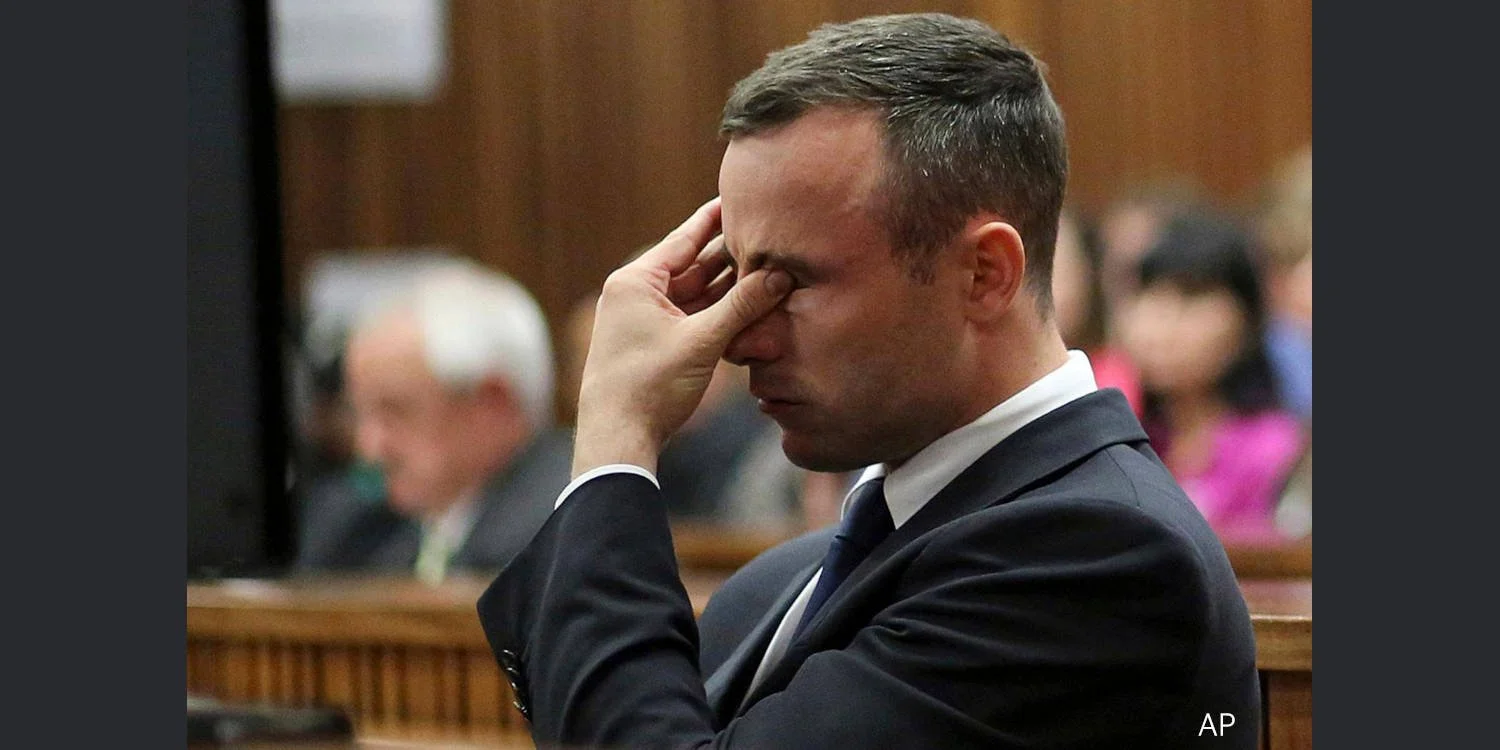
There were some moments of high drama in this trial. A woman seated in the courtroom gallery with line of site to the witness stand was observed to influence Thomas Grover’s testimony. During cross examination from my attorney, Grover protested to Judge Arthur Brennan that he cannot answer the attorney’s questions if he insists on standing near the defendant. So the judge instructed my lawyer to walk to the other side of the court to ask his questions. The question at hand was, “Who did you go to first with your claims, the police or a lawyer?” Instead of answering, Thomas Grover began to cry.
During a break in the trial, two persons who were present approached my attorney to report what they had just observed. The real issue was that while standing next to the defense table to pose his questions, my attorney was blocking the line of sight between Grover and that woman. The two court observers also reported to my attorney that the woman in question was giving Grover hand signals to influence and direct his testimony. This information was then reported to Judge Arthur Brennan, who apparently ignored it. Many years later one of these observers, Leo Demers, a PBS broadcasting official, wrote a letter to Judge Brennan, who again did not address the specific allegation:
“We saw something in your courtroom during the MacRae trial that I don’t think you ever saw. My wife nudged me and pointed to a woman, Ms. Pauline Goupil, who was engaged in what appeared to be clear witness tampering. During questioning by the defense attorney, Thomas Grover seemed to feel trapped a few times. On some of those ocassions, we witnessed Pauline Goupil make a distinct sad expression with a downturned mouth and gesturing with her finger from the corner of her eye down her cheek at which point Mr. Grover would begin to cry on the stand. I have been troubled about this for all these years. I know what I saw, and what I saw was a clear attempt to dupe the Court and the jury.”
In his brief response, retired Judge Brennan did not address any of the specific allegation of Leo Demers. Despite a pre-trial court order to turn over to the defense all records of Grover’s psychotherapy and counseling, the above incident was the first time my defense learned of therapist Pauline Goupil and her pre-trial coaching of Thomas Grover.
In a post-trial statement of Trina Ghedoni, who was Thomas Grover’s wife at the time of this trial, she reported that all information before and during trial passed through Pauline Goupil to Detective McLaughlin. Trina Ghedoni also reported that Pauline Goupil arranged for Mr. Grover to be drugged during the trial.
In “Repressed Memory Therapy: Lies of the Mind,” a foundational 1993 article in Time Magazine, author Leon Jaroff attributed the sensational emergence of repressed memory not to expert opinion, but to trends in popular culture “featured prominently on Geraldo, Oprah, Sally Jessy Raphael and other daytime TV talk shows.” The notion of repressed and recovered memory has never appeared in the Diagnostic and Statistical Manual of Mental Disorders published by the American Psychiatric Association.
Lies of the Mind or a Pathological Liar?
The famous Swiss psychologist, Jean Piaget, once penned an amazing account of false memory from his childhood. From early childhood on into adolescence, Piaget had a firm memory of an incident involving his nurse with himself as the potential victim of a kidnapping attempt. He had a clear memory of his nanny pushing him in a carriage when a man came up and tried to take him. He remembered in vivid detail the location of the event, the villain, the struggle, and the outcome. He recalled deep scratches on his nanny’s arms as she boldly fended off the attacker, and he remembered the police officer who came to their rescue.
However, when Piaget was 15 years old, his nanny decided to atone for her own past offenses. She publically admitted that she made up the entire kidnapping story including scratching her own arms to make it look as though an attacker had done it. Piaget was shocked to learn at age 15 that this story that haunted his early childhood, a story for which he had formed and retained vivid memories, never actually took place. In adulthood, Piaget concluded that his memories of the event arose and took shape solely from the nanny’s retelling of the false story in his childhood. Eventually the scene became rooted in Piaget’s memory as an actual event.
Another troubling story of memory reconstruction as evidence was reported by The Wall Street Journal’s Dorothy Rabinowitz in her myth-shattering book, No Crueler Tyrannies: Accusation, False Witness, and Other Terrors of Our Times. The terror this time was inflicted in Boston courts upon 61-year-old grandparents, Ray and Shirley Souza. No one could tell this with more succinctly existential terror than Dorothy Rabinowitz:
“Ray and Shirley Souza’s 24-year-old daughter had a dream one night. In the dream, her parents raped her. It was now the 1990s, the era of the repressed memory syndrome. Ray and Shirley’s grandchildren were taken to see therapists and interrogated. In court they testified that their grandparents tied them in a cage in the basement and raped them with elbows and feet and a big machine. Judge [Elizabeth] Dolan ruled [with no further evidence] that the children’s stories were credible and sentenced the Souza’s to a term of fifteen years in prison.”
— No Crueler Tyrannies, p. 90
Thus began the era of “Believe the Children” and the shame shrouded upon anyone who dared question a child’s account of abuse — even if the account emerged without evidence in the office of an agenda-driven therapist. It was also the era in which the case against me emerged.
And it was the era that gave birth to the False Memory Syndrome Foundation and its efforts to breathe sanity and reason into what can only be described as the emotional takeover of psychology and the justice system. The FMSF was established in 1992 and continued until 2019 to amass a database of false-memory claims and expertise in psychology and the legal system that refuted them. In 2008 the False Memory Syndrome Foundation published the following report on my 1994 trial and conviction:
From the quarterly journal of the False Memory Syndrome Foundation — Fall 2008, Vol. 17, No. 4, p. 8
FATHER MACRAE
A Reminder That There Are Still Many People in Prison Based Only on Accusations of Recovered Memories
Although there is no doubt of the Catholic Church’s irresponsible handling of thousands of reports of clergy abuse, there are also a growing number of cases in which priests appear to have been wrongly convicted. The case of Rev. Gordon MacRae, which was detailed by Dorothy Rabinowitz in 2005 in The Wall Street Journal, appears to be one of them.
In May 1993, Rev. Gordon MacRae was arrested for sexually assaulting three New Hampshire boys [all three came forward as adults at the same time, with the same claim of repressed memory, but only the claims of Thomas Grover went to trial], when he had been a priest there a decade earlier. The early 1990s were heydays for accusations of sexual abuse based on new-found memories and just about everything that could go wrong for the defense did go wrong.
Among the problems was a letter from Florida informing local police that MacRae was a suspect in a murder/sex crime there. This was the final bit of tinder for a hyper-zealous detective who then repeatedly interviewed many young people who knew MacRae and even attempted a series of “stings.” By the time that the Florida case was declared bogus, there was no stopping the effort to convict MacRae.
Prosecutors offered various plea arrangements to MacRae, who is serving a life term, but he refused them all, declaring his innocence. Indeed, Fr. MacRae would have been released after one to three years if he had taken a plea or would have been released on parole if he confessed. The “Catch-22” of prison is that those who do not admit guilt will not receive parole.
At the criminal trial, witness Thomas Grover’s testimony verged on the bizarre. He had accused MacRae of abusing him during counseling sessions. When asked why he continued to go to the sessions, Grover explained that he had ‘out of body’ experiences and completely forgot between sessions that he had ever been sodomized.
Even the judge’s rulings appeared biased. According to Rabinowitz:
“Throughout his testimony, [accuser] Thomas Grover repeatedly railed at the priest for forcing him to endure the torments of a trial. He would not have much to fear, in the end, in these proceedings, whose presiding judge, Arthur D. Brennan, refused to allow into evidence Thomas Grover’s long juvenile history of theft, assault, forgery and drug offenses. In New Hampshire, where juries need only find the accuser credible in sex abuse cases, with no proofs required, this was no insignificant restriction. The judge also took it upon himself to instruct jurors to “disregard inconsistencies in Mr. Grover’s testimony,” and said that they should not think him dishonest because of his failure to answer questions. The jury had much to disregard.”
To read more about this case: Beyond These Stone Walls/About
+ + +
Editor’s Note: Thank you for reading and sharing this troubling story, which should have had equal time in the influential daytime talk shows that contributed to it. You may also wish to read and share the following published statements of persons with first-hand knowledge of this case who have never been permitted by any New Hampshire judge to offer their testimony under oath.
Statement of Leo Demers, PBS Television executive
Statement of Dorothy Rabinowitz, The Wall Street Journal
Statement of Debra Collett, Thomas Grover’s former therapist

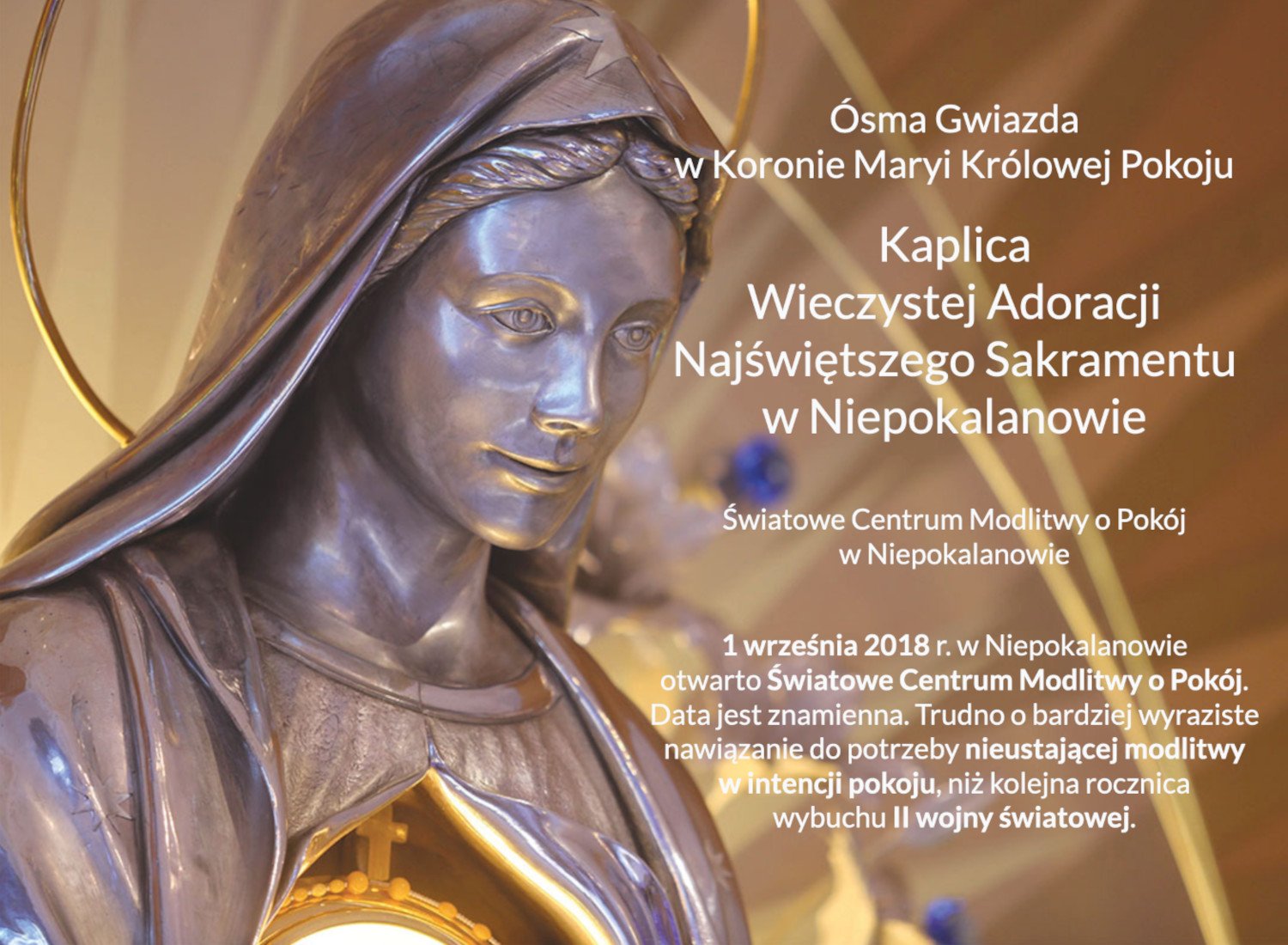

The Eucharistic Adoration Chapel established by Saint Maximilian Kolbe was inaugurated at the outbreak of World War II. It was restored as a Chapel of Adoration in September, 2018, the commemoration of the date that the war began. It is now part of the World Center of Prayer for Peace. The live internet feed of the Adoration Chapel at Niepokalanow — sponsored by EWTN — was established just a few weeks before we discovered it and began to include in at Beyond These Stone Walls. Click “Watch on YouTube” in the lower left corner to see how many people around the world are present there with you. The number appears below the symbol for EWTN.
Click or tap here to proceed to the Adoration Chapel.
The following is a translation from the Polish in the image above: “Eighth Star in the Crown of Mary Queen of Peace” “Chapel of Perpetual Adoration of the Blessed Sacrament at Niepokalanow. World Center of Prayer for Peace.” “On September 1, 2018, the World Center of Prayer for Peace in Niepokalanow was opened. It would be difficult to find a more expressive reference to the need for constant prayer for peace than the anniversary of the outbreak of World War II.”
For the Catholic theology behind this image, visit my post, “The Ark of the Covenant and the Mother of God.”

Paths I Crossed with Benedict XVI and Cardinal George Pell
In strange ways, injustices I have known as a prisoner and a priest intersected the lives of Pope Benedict XVI and Cardinal George Pell who died just ten days apart.

Paul Haring | CNS
In strange ways, injustices I have known as a prisoner and a priest intersected the lives of Pope Benedict XVI and Cardinal George Pell who died just ten days apart.
February 8 , 2023 by Fr. Gordon MacRae
Pope Benedict XVI passed from this life at age 95 on the final day of 2022. Ten days later, Cardinal George Pell died of cardiac arrest at age 81 while recovering from routine surgery at a hospital in Rome. Both of these men were giants in the Church as the many tributes to them from around the world make clear. They were also targets for much vitriol and injustice. It was in this targeted injustice that my path crossed with that of both men.
In “Justice Delayed for Father MacRae,” a recent op-ed in The Wall Street Journal by famed Boston criminal defense and civil liberties attorney Harvey Silverglate, he cited a ground-breaking book by Dorothy Rabinowitz, a member of the Journal’s Editorial Board entitled, No Crueler Tyrannies: Accusations, False Witness, and Other, Terrors of Our Time. Ms. Rabinowitz was awarded the Pulitzer Prize for her collection of writings about unjust sex abuse prosecutions that generated a spate of wrongful convictions of innocent people in the 1980s and 1990s. Some of her subjects in the book and subsequent writings spent decades in prison. I am one of them.
One of the tragically misguided prosecutions cited in the book is that of Margaret Kelly Michaels, then a 24-year-old nursery school teacher in New Jersey. Charged with multiple counts of child molestation in a witch hunt atmosphere, Kelly was innocent of the heinous crimes, none of which actually took place. The charges were fantastical and false, but the child abuse terror of the time resulted in easy convictions with no valid evidence.
The nature of the evidence in Kelly’s case was chilling. The prosecution’s child psych expert — who had no real expertise at all — fashioned a theory that young children who say that no sexual abuse happened actually mean the opposite. A vigilante jury bought that theory and convicted Kelly Michaels. At age 24, she was sentenced to 47 years in prison.
After failed appeals having nothing whatsoever to do with truth or justice, Kelly’s fate seemed sealed in wrongful imprisonment until Dorothy Rabinowitz began writing about it. Then New York civil rights attorney Morton Stavis came out of retirement to take the case pro bono. In her book, Ms. Rabinowitz revealed that Mr. Stavis sought the aid of a New York-based left-leaning legal think tank, the Center for Constitutional Rights that he himself founded. The CCR wanted nothing to do with this case. As Ms. Rabinowitz explained:
“Arguing for due process on behalf of a person charged with child sex abuse violated the politically progressive views held by many at the center. In the 1980s, as today, there was a school of advanced political opinion of the view that to take up for those falsely accused of sex abuse was to undermine the battle against child abuse. It was to betray children and other victims of sexual predators.”
No Crueler Tyrannies, 17-18
The charges against me stem from the same time period, filtered through the same progressive political opinions, and hyped by the same prosecutorial mindset that to be accused of such things is to be guilty. It is the cruelest of tyrannies that even our Catholic bishops have cowed in fear under that progressive steamroller as priests so accused are discarded without defense. This was articulated in my recent post, “Priests in Crisis: The Catholic University of America Study.”
The heroic attorney Morton Stavis was not defeated by the progressive disdain for his effort from his own tribe at the Center for Constitutional Rights. He did not live to see his victory in this case, but he had put together a small team of righteous defenders who eventually prevailed by exposing the truth and winning Kelly’s freedom. One of these defenders was Robert Rosenthal whose prior legal briefs on my behalf are still on display at the National Center for Reason and Justice.
Kelly Michaels went on in life to marry a judge. She eventually recovered — to the extent one can — from the tyranny of wrongful imprisonment. She has corresponded with me in freedom, imparting as much hope for justice as she can by urging me to never give up. I haven’t, but I will be 70 on my next birthday and like Job, I know that my Redeemer lives (Job 19:25).

Vincenzo Pinto | AFP
Benedict’s “Crimes against Humanity”
However, reading Dorothy’s book was unfortunately not my final encounter with the Center for Constitutional Rights. Clinging to the progressive view that to be accused of sexual abuse is to be guilty, the Center for Constitutional Rights allowed itself to be duped and used by SNAP, the activist group Survivors Network of those Abused by Priests. I wrote a post some time ago that seemed to mark the beginning of the end of this organization's campaign to destroy any due process for Catholic priests. The post was, “David Clohessy Resigns SNAP in Alleged Kickback Scheme.”
Prior to writing that post, David Clohessy and SNAP manipulated the Center for Constitutional Rights into bringing a “crimes against humanity” charge against Pope Benedict XVI and the Vatican at the International Criminal Court at The Hague in the Netherlands. It was a shameless publicity stunt that had no hope of success, but was filed only to shame Pope Benedict and bring attention to SNAP.
Though I was aware of the charge, it was only after the International Criminal Court dismissed it that I learned that I was an unwitting pawn in this debacle. Journalist Joann Wypijewski, a reporter of courage and high integrity, wrote of it in her blistering review of the movie “Spotlight,” a film about The Boston Globe Spotlight Team coverage of the sexual abuse scandal. The following is an excerpt of her bold article, “Spotlight Oscar Hangover: Why ‘Spotlight’ Is a Terrible Film”:
“The film’s advertisement for SNAP, the Survivors Network for those Abused by Priests, faithfully represents the Globe’s affiliation. It elides SNAP’s belief that wrongful prosecutions are a minor price to pay in pursuit of its larger mission, something [The Boston Globe] did not much concern itself with either as it collected its Pulitzer for service in the public interest; something even the Center for Constitutional Rights disregarded in 2011 when it joined with SNAP to file a grotesque brief to the International Criminal Court demanding ‘investigation and prosecution’ of the Vatican for crimes against humanity.
“Liberals who cheer this sort of thing ought to ponder whether they have any principles at all ... . The CCR brief failed ... but to CCR’s shame, Father MacRae is specifically mentioned in that brief, with respect to allegations of videotape (that is, child porn), which prosecutors threw in at sentencing but for which there is no evidence according to the lead detective in the case cited by [Dorothy] Rabinowitz.”
I was frozen in place by grief upon first learning of this. I knew that the charge had no substance. I also knew that in her WSJ investigation, Dorothy Rabinowitz confronted NH Detective James McLaughlin who first contrived the charge. Cornered, he finally admitted, “There was never any evidence of pornography.”
This did not stop SNAP and CCR from including it in a falsified brief before the International Criminal Court. There was no repercussion for the attempt at fraud upon the court. Even now, as recently as a few months ago, biased NH reporter Damien Fisher— whose wife Catholic blogger Simcha Fisher has ties to my diocese — repeated the pornography allegation without even mentioning that it had been widely discredited, including by the dishonest detective who first raised it.
All the claims that Pope Benedict XVI enabled accused priests and failed to protect victims are of a kind with the above story. In the end, it was never any of this that really made him a target. It was his orthodoxy, his fidelity, his clear-minded exposure of Catholic truths. None of this could ever successfully be assailed, so instead they smeared him with a weapon straight from hell: false witness. Let that sink in.

The Exoneration of George Cardinal Pell
In the same manner that Kelly Michaels reached out to me upon her exoneration, it was because I had been so falsely accused that I reached out to Cardinal George Pell during his 400 days of unjust imprisonment. Having come to recognize signposts of dishonesty in such a case, I was certain that Cardinal Pell had been falsely accused. But because of prison rules barring direct contact with other prisoners, I could not contact in prison directly.
A friend, Sheryl Collmer, a Tyler, Texas writer for Crisis Magazine and other venues, was my intermediary. I know that pride is one of the Seven Deadly Sins, but in this case it was perhaps a bit less deadly. There have been few really proud moments during my imprisonment, but my ability to detect and expose the truth in support of Cardinal Pell was one of them.
As a result, I found this excerpt in his published Prison Journal Volume 2 (Ignatius Press 2021). It was written from his prison cell:
“Friday, 2 August 2019: By a coincidence, today I received from Sheryl Collmer, a regular correspondent from Texas, a copy of the 15 May 2019 post on the blog, Beyond These Stone Walls, written by Fr Gordon MacRae. The article was entitled, ‘Was Cardinal George Pell Convicted on Copycat Testimony?’
“Fr MacRae was convicted on 23 September 1994 of paedophilia and sentenced to sixty-seven years in a New Hampshire prison for crimes allegedly committed around fifteen to twenty years previously. The allegations had no supporting evidence and no corroboration.
“It is one thing to be jailed for five months. It would be quite another step up, which I would not relish, to spend another three years if my appeal were unsuccessful. But we enter another world with a life sentence. Australia is not New Hampshire, and I don’t believe all the Australia media would blackball the discussion of a case such as MacRae’s.
“The late Cardinal Avery Dulles, whom I admired personally and as a theologian, encouraged Fr MacRae to continue writing from jail, stating, ‘Someday, your story and that of your fellow sufferers will come to light and be instrumental in a reform.’
“Fr MacRae recounts extraordinary similarities between the accusations I faced and the accusations of Billy Doe in Philadelphia, which were published in Australia in 2011 in the magazine, Rolling Stone. Earlier this year, Keith Windshuttle, editor of the quality journal Quadrant, publicized the seven points of similarity, pointing out that ‘there are far too many similarities in the stories for them to be explained by coincidence.’ (See Keith Windshuttle, ‘The Borrowed Testimony that Convicted George Pell,’ Quadrant, 8 April 2019).
“The author of the 2011 Rolling Stone article was Sabrina Rubin Erdely, no longer a journalist, disgraced and discredited. In 2014 she had written, and provoked a storm which reached Obama's White House, about ‘Jackie’ at the University of Virginia, who claimed she was gang-raped at a fraternity party in 2012 by seven men.
“As Fr MacRae points out, ‘The story was accepted as gospel truth once it appeared in print.’ [Note: Rolling Stone later retracted the article in 2015] . Jackie’s account turned out to be a massive lie. A civil trial for defamation followed; the seven students were awarded $7.5 million in damages by the jury; and Rolling Stone was found guilty of negligence and defamation.
“The allegations behind the 2011 Rolling Stone article, published in Australia, have also been demolished as false by, among others, Ralph Cipriano’s ‘The Legacy of Billy Doe’ published in the Catalyst of the Catholic League in January-February 2019. No one realized in 2015, when the allegations against me were first made to police, that the model for copycat allegations, or the innocent basis for the remarkable similarities, was also a fantasy or a fiction.
“I am grateful to Fr MacRae for taking up my cause, as I am to many others. These include in North America George Weigel and Fr Raymond de Souza and here in Australia Andrew Bolt, Miranda Devine, Gerard Henderson, Fr Frank Brennan, and others behind the scenes.
“I will conclude, not with a prayer, but with Fr MacRae’s opening quotation from Baron de Montesquieu (1742) [from the BTSW About Page], ‘There is no crueler tyranny than that which is perpetrated under the shield of law and in the name of justice]’”

Addendum
You may see — from Cardinal Pell’s last citation above — where Dorothy Rabinowitz got the inspiration for the title of her book, No Crueler Tyrannies. Once free from his wrongful prison sentence, Cardinal Pell was restored to his rightful position in Rome. From there, he reached out to me again in ways that I only learned about posthumously. He wrote to a mutual friend that he plans to refer to my situation in talks he is slated to present in Rome and Australia. He never got to present them.
In an op-ed in The Wall Street Journal, “Cardinal George Pell Faced Down a Hostile World” (January 13, 2023), Fr Raymond de Souza wrote that “His faith even during wrongful detention, was the crown of an inspiring Catholic life.” Reading his Prison Journal, I have no doubt been so inspired.
It is my prayer, and perhaps not even a necessary one, that Pope Benedict and Cardinal Pell both now stand in the Presence of God where they behold the fruition of all the graces bestowed upon them, and hopefully now upon us through them. We have not heard the last of them.
+ + +
Note from Fr. Gordon Mac Rae: Thank you for reading and sharing this post. You may also wish to visit these related posts from Beyond These Stone Walls:
From Down Under, the Exoneration of George Cardinal Pell
The Path of Sabrina Rubin Erdely’s Rolling Stone
Miranda Devine, Cardinal Pell, and the Laptop from Hell
Priests in Crisis: The Catholic University of America Study
+ + +

Francesco Sforza | Osservatore Romano | AFP

One of our Patron Saints, Saint Maximilian Kolbe, founded a religious site in his native Poland called Niepokalanow. The site has a real-time live feed of its Adoration Chapel with Exposition of the Blessed Sacrament. We invite you to spend some time before the Lord in a place that holds great spiritual meaning for us.
Click or tap the image for live access to the Adoration Chapel.
As you can see the monstrance for Adoration of the Blessed Sacrament is most unusual. It is an irony that all of you can see it but I cannot. So please remember me while you are there. For an understanding of the theology behind this particular monstrance of the Immaculata, see my post “The Ark of the Covenant and the Mother of God.”

The Prison of Father MacRae: A Conspiracy of Silence
The Diocese of Manchester demonstrates the difference between the stated rights of accused Catholic priests in Church law and actual observance of those rights.

The Diocese of Manchester demonstrates the difference between the stated rights of accused Catholic priests in Church law and actual observance of those rights.
February 26, 2014 by Ryan A. MacDonald (updated June 14, 2025)
Editor’s Note: This is Part Two of a guest post by Ryan A. MacDonald. Part One was “The Trial of Father MacRae: A Conspiracy of Fraud.”
“I don’t share your belief in Father MacRae’s innocence. I just don’t believe a judge and jury would sentence a priest to life in prison with anything less than clear and compelling evidence.”
The above quote was the reply of a prominent American Catholic writer when I challenged him to take a closer look at the trial and imprisonment of Father Gordon MacRae. There is nothing to be gained by publishing the writer’s name. I still hope he might accept my challenge to study this matter with more depth than the New Hampshire news media and priests of the Diocese of Manchester have given it. I have asked the writer to show me the evidence he feels so certain must exist. He is wrong about this. There is simply no factual evidence to support this conviction.
But for some, the absence of evidence is evidence of evidence. That Catholic writer’s presumption about evenhanded justice and due process reflects the naiveté of the innocent and just. I once shared such naiveté, but I have since learned that ignorance is not bliss. I know too much about this case to cling to any delusions that everyone in prison must be guilty, or that a Catholic priest, while actually innocent, could not be railroaded into prison based on false witness.
So does The Wall Street Journal’s Dorothy Rabinowitz, one of the most just and courageous journalists I know. She has a talent for enabling readers to place themselves in the shoes of the falsely accused, and it’s a terrifying place to be. A recent article, “On Woody Allen and Echoes of the Past” (WSJ.com, February 9, 2014), had that same effect. It isn’t long, but it’s compelling and powerful.
Despite its title, the article’s great power is in its depiction of falsely accused men and women — such as Violet, Cheryl, and Gerald Amirault of Massachusetts and Kelly Michaels of New Jersey — who were ripped from ordinary lives to be tried and sent to prison because of trumped up charges, lots of media hype, and the ambitions of prosecutors.

These same people were profiled in No Crueler Tyrannies (WSJ Books, 2005), a book by Dorothy Rabinowitz that has opened many eyes, including mine. She found a common denominator among those falsely accused and betrayed by the justice system during the “child terror” prosecutions of the 1980s and 1990s, the same era, and the same terror, that convicted Father MacRae. Rabinowitz wrote,
“Those who are falsely accused often naively believe that their innocence is obvious, that the allegations will be dropped.”
In “Judge Arthur Brennan Sentenced Fr Gordon MacRae to Die in Prison,” I wrote that plea deals work well for the guilty but not for the innocent. The guilty come before the justice system prepared to limit punishment by accepting any reasonable plea deal offered. The innocent cannot fathom such twisted justice, and therefore often spend far more time in prison than the guilty.
For preserving his right to a presumption of innocence and a fair trial — though he got neither, as you will see, from either Church or State — Father Gordon MacRae was sentenced by Judge Arthur Brennan to more than 30 times the sentence offered by prosecutors in the plea deal he refused. As I wrote in part one of this article last week, it is a perversion of justice that, had he been actually guilty, this priest would have been released from prison 17 years ago.

The Lie Detector Disaster
In the above article, Dorothy Rabinowitz cited that some of the innocent accused were anxious to take lie detector tests (aka polygraphs). Those who passed them, however, did so to no avail as prosecutors refused to consider, or even hear, the results. Father MacRae also voluntarily submitted to two lie detector tests conducted by an expert who reviewed the claims of Thomas Grover and his brothers, Jonathan and David Grover, who also accused the priest for settlement money from his diocese. I have repeatedly called upon MacRae’s accusers to agree to lie detector tests, a challenge met only with silence.
Had Father MacRae failed the polygraphs administered before his trial, you can be certain that fact would have found its way into court, or at least into the newspapers. He passed them conclusively, but the results were ignored, and not only by state prosecutors. The most difficult act of suppression to comprehend came from his bishop and diocese.
Defense attorney Ron Koch (pronounced “Coke”) often appeared to be as naive and trusting as his client. He seemed to believe that the Diocese of Manchester might be more inclined to defend its priest if clarity about his innocence could be established. However passing pre-trial lie detector tests, and making that fact known, actually proved disastrous for the defense of Father MacRae.
Within weeks of the defense lawyer’s effort to have polygraph results reviewed by Church lawyers, the Diocese of Manchester issued a press release that inflicted a mortal wound to MacRae’s civil and canonical rights. Plastered in the news media throughout New England before jury selection in his trial, this press release destroyed his defense in the court of public opinion, and influenced jurors in the court of law:
“The Bishop and the Church are saddened by and grieve with the victims of Gordon MacRae…and he was ultimately removed from his status as one who could ever function as a priest again…The Church is a victim of the actions of Gordon MacRae as well as the individuals… [The Diocese] will defend its officials who have been falsely accused [and] it will continue to cooperate in bringing those who have harmed others to light.”
— Bishop of Manchester Press Release, Sept. 11, 1993
Canonical Advocate, Father David Deibel, J.C.L., J.D., protested this gross violation of Church law and civil liberties. He was reportedly told that the press release “was a carefully crafted statement meant to respond to media concerns” about the MacRae case. When defense attorney Ron Koch called to protest, he was told that Father MacRae was the sole priest to have been so accused in the Diocese of Manchester.
Nine years later, officials for the Manchester Diocese worked out a plea deal of their own to avoid a misdemeanor charge based on a theory of law the state’s Attorney General admitted was “novel.” The published files as a result of that deal revealed that 62 New Hampshire priests had been accused, and some $23 million changed hands in mediated settlements. For his first six years in prison, 17 miles from the Chancery Office of the Diocese of Manchester, Father MacRae was summarily abandoned. The company line was that it was MacRae himself who refused to be visited in prison by any priest. The bitter refusal was reportedly issued through unnamed third parties who have never been identified. However, the prison’s Catholic chaplain during Father MacRae’s first years in prison saw this differently:
“I have been told by priests that Diocesan officials claimed that Father MacRae refused, through unnamed third parties, to be visited by a priest … During my tenure as chaplain, no one representing the diocese ever asked me to arrange a visit with Father MacRae [who] indicated to me he would welcome such contacts … . It remains my belief that Father MacRae is for some reason viewed differently from other priests that are, or have been, incarcerated.”
— Prison Chaplain John R. Sweeney, Sept. 20, 2004

Bishop’s Delegate Monsignor Edward Arsenault
Two years ago, I wrote an article entitled “To Azazel: Father Gordon MacRae and the Gospel of Mercy.” It was about some shockingly uncharitable conduct toward this imprisoned priest, but the offenders were not other prisoners trying to make names for themselves in the brutal prison culture. They were priests of the Diocese of Manchester.
In the year 2000, however, Diocesan interest in Father MacRae was radically altered when it became known that two media giants, Dorothy Rabinowitz at The Wall Street Journal, and PBS Frontline, expressed interest in the facts of this case. You may read for yourselves the manipulation aimed at this imprisoned priest, and the devastation of his rights in an article by Father George David Byers entitled, “Omertà in a Catholic Chancery — Affidavits Expanded.”
Throughout this period, the official Delegate (2000 until 2009) for the Bishop of Manchester was Monsignor Edward Arsenault. His published resume reveals that he personally negotiated mediated settlements in 250 claims against Diocese of Manchester priests. At the same time, Monsignor Arsenault was wearing another hat — some might say a highly conflicting one.
While negotiating settlements in the MacRae case and hundreds of others on behalf of the Diocese of Manchester, Arsenault was also Chairman of the Board of the National Catholic Risk Retention Group, an organization underwriting insurers of Catholic institutions and dioceses across the U.S. It is unclear which of these hats Monsignor Arsenault was wearing when he negotiated this typical round of mediated settlements described in David F. Pierre’s 2012 book, Catholic Priests Falsely Accused:
“In 2002, the Diocese of Manchester, New Hampshire, faced accusations of abuse from 62 individuals. Rather than spending the time and resources looking into the merits of the accusations, ‘Diocesan officials did not even ask for specifics such as the dates and specific allegations for the claims,’ New Hampshire’s Union Leader Reported. ‘Some victims made claims in just the past month and because of the timing of negotiations, gained closure in just a matter of days,’ reported the Nashua Telegraph. ‘I’ve never seen anything like it!’ a pleased and much richer plaintiff attorney admitted.”
— Catholic Priests Falsely Accused, p. 80
In 2001, Monsignor Edward Arsenault developed a policy statement for the Diocese of Manchester. As Bishop John McCormack’s Delegate, Monsignor Arsenault published the “Diocese of Manchester Statement of Rights and Obligations of Persons Accused of Sexual Misconduct.” The document was straightforward, and listed, in accord with Canon law and Diocesan policy, the rights of the accused and the obligations of the Diocese:
The Delegate (Monsignor Edward Arsenault) will:
Inform the person being interviewed of the process to be used;
Inform the person being interviewed what information will be shared with whom;
Inform the person being interviewed that he [the Delegate] is acting in the external forum on behalf of the Bishop of Manchester;
Inform the person being interviewed that any and all information disclosed will be treated with discretion, but not subject to confidentiality…
Rights of the Person Accused: The accused cleric or religious has:
The right not to implicate oneself;
The right to counsel, civil and canonical;
The right to review the results of one’s own psychological evaluations;
The right to know what has been alleged and to offer a defense against the allegations;
The right to know and understand the review process;
The right to discretion in the conduct of the investigation and to have his/her good name protected.
Over the next three years as the Diocese of Manchester submitted individual cases to the Vatican’s Congregation for the Doctrine of the Faith, every tenet of the above statement of rights was silently ignored or outright violated by Monsignor Arsenault and officials of the Diocese of Manchester in regard to the case of Father MacRae.
No investigations took place. No interviews took place. The imprisoned priest’s repeated requests for details of what has been represented in Rome in regard to this case have been ignored, and no right of defense has been honored. The promised assistance of legal counsel was never acted upon. Repeated and documented requests from Father MacRae that Bishop John McCormack and Monsignor Arsenault agree to confer with his Canonical Advocate to assure his rights under Church law were refused.
In the ultimate insult, when Monsignor Arsenault finally did agree to consult Father Deibel, the canonical advocate, he reportedly told the priest that, should Father MacRae be involuntarily laicized, “I’m sure Bishop McCormack will still send him $100 a month” to survive in prison. The suggestion that this was MacRae’s sole concern for the future of his priesthood left him feeling humiliated and violated.
A promise by Bishop McCormack to set aside $40,000 for Father MacRae’s appellate defense — on the condition that he set aside contacts with Dorothy Rabinowitz and The Wall Street Journal — was instead used to hire counsel to bypass MacRae’s lawyers and investigators, and to conduct a secret review of his trial and any chance of overturning the convictions. To this day, Monsignor Arsenault and the Bishop of Manchester have ignored requests to share that review with the wrongly imprisoned priest’s defense team struggling to afford his day in court.

Remember Those in Prison as Though in Prison with Them (Heb. 13:3)
In 2009, Monsignor Edward Arsenault was appointed Executive Director of Saint Luke Institute, a nationally known facility in Maryland for the psychological treatment of priests. Bishop John McCormack was the sole U.S. bishop on the Saint Luke Institute Board of Directors at the time. Monsignor Arsenault took leave from the diocese to assume the post with an annual salary of $170,000.
Earlier this month, on February 4, 2014, the news media announced that Monsignor Edward Arsenault has accepted a plea deal to plead guilty to three felony charges. He was indicted on multiple counts, and has agreed to plead guilty to the theft of thousands of dollars from the Diocese of Manchester while serving as Chancellor and Bishop’s Delegate, from Catholic Medical Center Hospital where he served on its Board of Directors, and from the estate of a deceased priest of the Manchester Diocese for which he served as Executor. According to news reports, the theft of funds from the Diocese of Manchester continued until 2013, four years after Monsignor Arsenault began his $170,000 a year post at Saint Luke Institute.
The plea deal Monsignor Arsenault has entered into forgoes trial and any testimony under oath. The exact number of felony charges and the exact amounts of stolen funds involved have not been made public, and possibly never will be. The New Hampshire Attorney General stated that the plea deal, and the minimum four year prison sentence Monsignor Arsenault has agreed to, are in “recognition of the extensive cooperation of the defendant,” and in anticipation of his continued cooperation in the ongoing investigation of “improper financial transactions.”
The investigation into financial wrongdoing was launched, according to news sources, when the Diocese began investigating a “potentially inappropriate adult relationship.”
For at least the next four years, Monsignor Edward Arsenault will share the same prison as Father Gordon MacRae, a priest who — armed only with the truth and his faith — refused plea bargains to face the cruelest of tyrannies, wrongful imprisonment. This is the priest against whom Monsignor Edward Arsenault and his prosecutorial friends have worked so arduously, and in secret, to undo and discard.
UPDATE:
Monsignor Arsenault served only a few weeks of his sentence in the New Hampshire State Prison. He was moved early one morning to serve out his sentence in the Cheshire County House of Corrections. This, we are told, was highly unusual. A State Senator who asked not to be named said that Monsignor Arsenault received “very special treatment” in the judicial and corrections systems. Special treatment did not end here. After serving only two years of the four-to-twenty year sentence, Arsenault’s sentence was commuted to house arrest. While serving that sentence his $300,000 restitution was paid by unnamed third parties. His entire twenty year sentence was then commuted by Judge Diane Nicolosi. Subsequently, Arsenault was dismissed from the clerical state by Pope Francis. In April of 2021 he legally changed his name to Edward J. Bolognini.
Under this new name, with his $300,000 restitution paid by unnamed third parties and his sentence for multiple financial felonies suddenly commuted Edward J. Bolognini was awarded with management of a multimillion dollar contract with the City of New York.
In 2018, sixteen years after Fr. MacRae and his advocates were told that MacRae was the only of the Manchester Diocese ever to be accused, current Bishop Peter A. Libasci proactively published a list of 73 priests of the Diocese of Manchester accused of sexual abuse. He cited “transparency” as his motive for publishing the list. Subsequently, Bishop Peter A. Libasci was himself accused of sexual abuse dating from his years as a priest in the Diocese of Rockville Center, New York. The charges were alleged to have occurred in 1983, the same year as the charges against Fr. MacRae.
Bishop Libasci maintains his innocence and remains Bishop of Manchester, and all transparency ceased.
In October 2022, The Wall Street Journal published its fourth article on this matter entitled, “Justice Delayed for Father MacRae.”