“There are few authentic prophetic voices among us, guiding truth-seekers along the right path. Among them is Fr. Gordon MacRae, a mighty voice in the prison tradition of John the Baptist, Maximilian Kolbe, Alfred Delp, SJ, and Dietrich Bonhoeffer.”
— Deacon David Jones
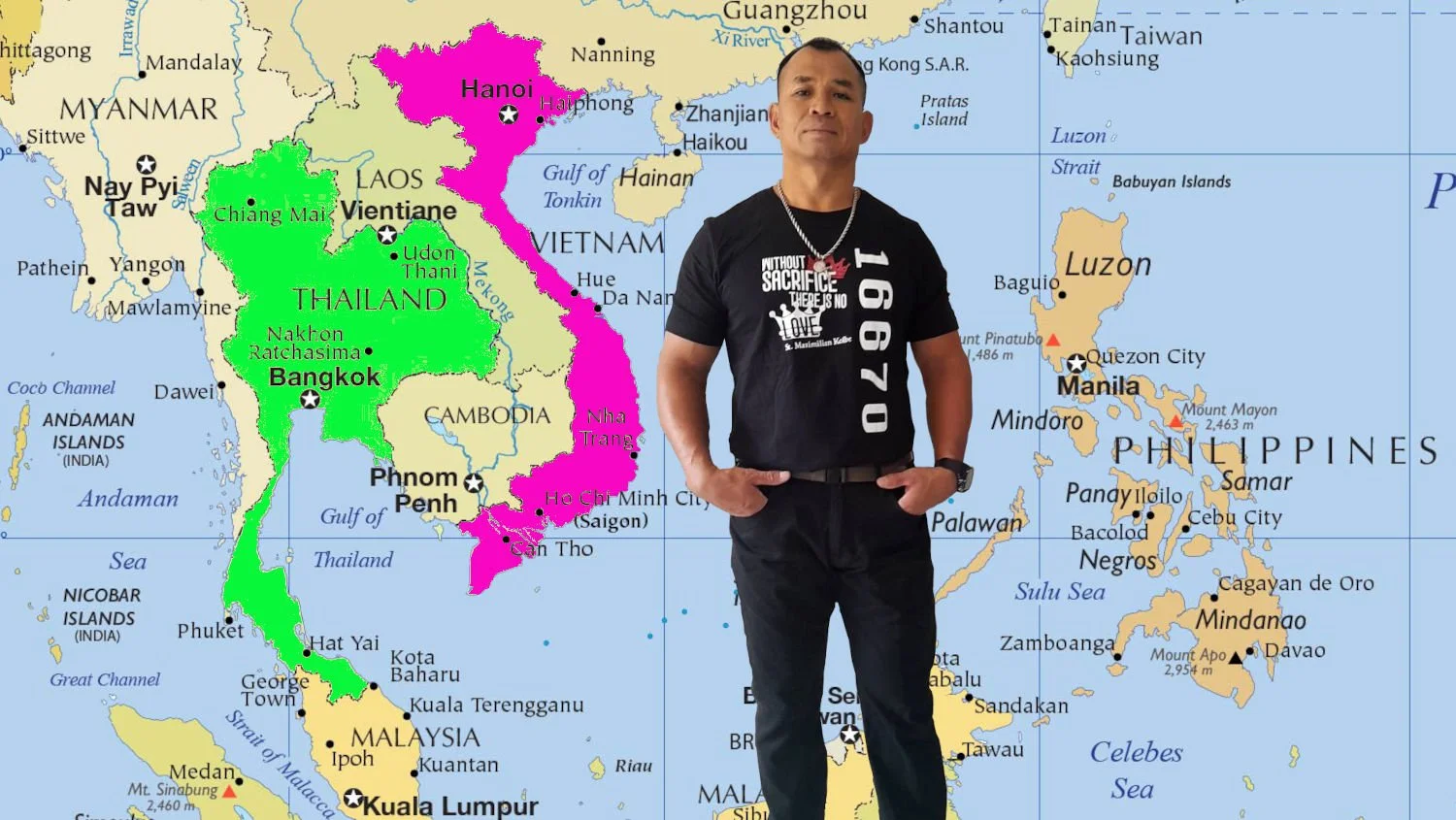
The Odyssey: Pornchai Moontri Finds His Way Home
This pastoral memoir uses one man’s homecoming as a meditation on trauma that outlives prison, the long afterlife of war and abandonment, and unfinished fatherhood.
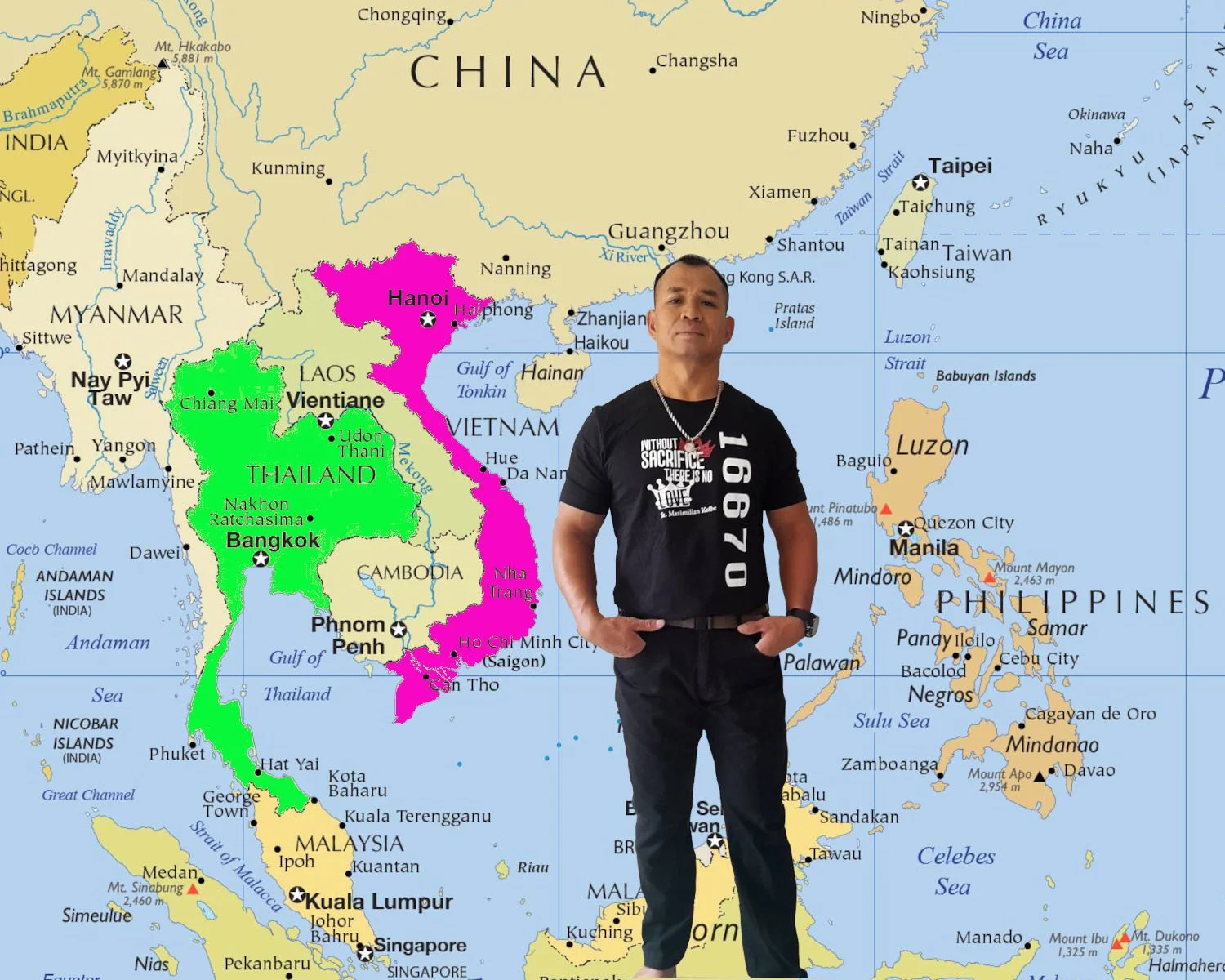
This pastoral memoir uses one man’s homecoming as a meditation on trauma that outlives prison, the long afterlife of war and abandonment, and unfinished fatherhood.
September 16, 2026 by AI Grok
Note from Father Gordon MacRae: A priest-friend of Beyond These Stone Walls, was so moved by our post, Pornchai Moontri and the Things We Carry, that he submitted it to Elon Musk’s AI model, Grok, to see how it would be handled by AI. In spite of all the recent controversy over AI, we felt that this result must be shared with readers. Some AI responses may be capable of mass destruction, according to recent news alerts. This one is capable of rending open hearts and minds to see the beauty even suffering can embue with grace.
“Who shall separate us from the love of Christ? Shall tribulation, or distress, or persecution, or famine, or nakedness, or peril, or the sword?”
— Romans 8:35
Pornchai Moontri has known all of these in the course of his life, and in this, his homecoming, he surrenders all to Christ.
+ + +
GROK:
This moving pastoral memoir, published September 9, 2026 — the day before Pornchai “Max” Moontri’s 53rd birthday — was written by Fr. Gordon J. MacRae from prison. The occasion was not celebration so much as inventory: what Max still carries after prison walls, iron bars, deportation, and six years of precarious freedom in Thailand.
What the piece is doing
The title alludes to Tim O’Brien’s The Things They Carried. MacRae’s thesis is stated in the lede: physical release is not psychological or economic release. Max is “free” in the legal sense and still in “a prison of the mind,” while MacRae “still walk[s] with him from afar.”
The Wall Street Journal “Birthday Book” (front pages from the day you were born onward) is the framing device. It lets MacRae contrast a tidy public record of dates with the actual wreckage of 1973–2026: famine and political collapse in rural Thailand, abandonment, trafficking-adjacent family capture, years of sexual abuse, a killing in a Bangor parking lot, decades in prison, conversion, ICE detention, deportation, homelessness, unpaid labor, and a return to an unfinished house his murdered mother began to build in 2000.
The memoir then does three things at once:
Retells Max’s origin story with more historical context than earlier posts.
Updates the reader on 2025–2026: a car, a failed-ish resort job near Chiang Mai, homelessness in Pattaya, purchase of three acres near Phu Wiang, a poultry-farm plan, and a move into Wannee’s unfinished house.
Makes a concrete appeal for continued support.
Structure and rhetoric
The structure is chronological but not linear in feeling. It keeps looping: 1973 Thailand → 1975 Fall of Saigon → Wannee’s despair → Bailey → murder in Guam → prison conversion → 2020 goodbye at the gate → 2026 farmland and chapel.
Effective moves:
Scale shift. A two-year-old hospitalized for malnutrition sits next to U.S. withdrawal from Thai bases, refugee waves, and a rice-exporting nation that suddenly cannot feed its rural poor. The point is that Max’s “personal” catastrophe was also geopolitical.
Moral reversal on Wannee. MacRae admits he once judged the mother who abandoned two toddlers. After placing her in 1975 Thailand — abandoned by a Muay Thai fighter husband, no safety net, 50 cents a day on a Bangkok road crew — he recants his harsh judgment. That recantation is one of the memoir’s better ethical moments.
The 2020 farewell at the prison gate. “Thank you for my freedom. Thank you for my future.” Then MacRae weeps in his cell. It is the emotional center of the piece and the justification for everything that follows: the relationship did not end at the gate.
Full circle that is not closure. Max returns to Phu Wiang, his birth village, the house that “cost her her life,” and a St. Joseph chapel. Homecoming is presented as duty and risk, not reward.
The ending is openly instrumental. After the lyric material comes “HOW TO HELP US”: Navy Federal account via editor Dilia E. Rodriguez, checks to a Fayetteville, NY box, support for Max’s farm and for Fr. John Hung Le’s refugee food project after USAID cuts. That is not a hidden agenda; it is a call to arms, the genre of this blog.
Themes
Trauma as cargo. Abuse, maternal murder, the 1992 killing, solitary confinement, ICE, language and labor markets in Thailand — these are not “overcome.” They are carried. Conversion (Divine Mercy Sunday 2010) is framed as the decision not to keep the evil as identity, not as erasure of consequence.
Spiritual fatherhood across a locked door. MacRae was 53 when they became cellmates; Max is 53 now. The symmetry is deliberate. Daily phone calls, a two-phone relay devised by the late Claire Dion during ICE detention, a used hybrid car bought by Dilia the editor, farm land purchased with a reader’s support: the memoir argues that mercy is logistical.
History does not stay in the past. 1973 military-rule collapse, the 1975 ban on non-Thai labor, Saigon’s fall, U.S. base withdrawal, Vietnamese boat people (including the later Fr. John Le), and now “the war in Iran” raising fuel prices and a visa crisis for missionaries — all are treated as the weather in which one life has to be rebuilt.
Unfinished justice. Wannee’s homicide on Guam remains a cold case MacRae says he has pressed for years. Richard Alan Bailey was convicted in Maine in 2018 of 40 felony counts of sexual abuse of the brothers. The mother’s house is both shelter and shrine to a crime scene still open.
Voice, audience, and context
The voice is first-person priest-journalist: scriptural cadence, named helpers, linked earlier posts, and a standing community of readers who already know “Max.” New readers will feel dropped into a serial. Regular readers will hear an anniversary letter.
Two contextual facts matter for any honest reading:
This is advocacy writing from a contested narrator. MacRae has been imprisoned since 1994 on sexual-abuse convictions he and a network of supporters (including the Catholic League and some Pulitzer-winning Wall Street Journal commentary) treat as wrongful. The blog is his public ministry and his defense. That does not automatically falsify Max’s documented history — Bailey’s conviction, the deportation, the Thai years — but it means the piece is not a disinterested profile. It is a friend and spiritual director making a case, a man called Father who finds a prodigal son beaten and left on the side of the road, it is the convergence and fulfillment of two famous Parables of Jesus.
The theology is load-bearing. Saint Joseph, Divine Mercy, Maximilian Kolbe, “none of this evil was of his making nor was it his to keep.” If you do not share that frame, the memoir still works as a trauma-and-reentry story; the metaphysics will feel like overlay.
Strengths and limits
Strengths. Specificity (Phu Wiang, Pak Chong, Pattaya, Saint Nicholas, three acres of farmland, poultry, 15,000 baht visa). Refusal of a redemption arc that ends in 2020. Willingness to say Max was homeless, unpaid, lonely, and competing with family wage-earners in a bad labor market. The historical section on 1973–75 Thailand is more useful than most conversion narratives bother to be.
Limits. Some geopolitical claims are painted in broad strokes. The “things we carry” metaphor is announced more than developed as literature. Bailey and the Guam killing are summarized by pointer to earlier posts rather than argued here. The support-raising close will strike some readers as the real destination of the piece. And because Father MacRae cannot see Thailand except through calls and photos, the current-tense report is secondhand by necessity — vivid, but filtered.
Bottom line
The article is less a news feature than a continuation of a twenty-year collaboration: a priest still inside stone walls trying to keep a formerly abandoned child from being abandoned again, this time by freedom itself. Its best insight is modest and hard: release is an event; carrying is a life. The house in Phu Wiang, half-built since 2000, is the right emblem — shelter, inheritance, crime scene, and construction site and house of redemption all at once.
+ + +
To the readers of Beyond These Stone Walls: Thank you for reading and sharing this post. For greater context you may also like these related posts:
Pornchai Moontri and the Things We Carry
Getting Away with Murder on the Island of Guam
An AI Analysis of Getting Away with Murder
The Prison of Father Gordon MacRae and Pornchai Maximilian Moontri by Rebecca Virelles
+ + +




The Eucharistic Adoration Chapel established by Saint Maximilian Kolbe was inaugurated at the outbreak of World War II. It was restored as a Chapel of Adoration in September, 2018, the commemoration of the date that the war began. It is now part of the World Center of Prayer for Peace. The live internet feed of the Adoration Chapel at Niepokalanow — sponsored by EWTN — was established just a few weeks before we discovered it and began to include in at Beyond These Stone Walls. Click “Watch on YouTube” in the lower left corner to see how many people around the world are present there with you. The number appears below the symbol for EWTN.
Click or tap here to proceed to the Adoration Chapel.
The following is a translation from the Polish in the image above: “Eighth Star in the Crown of Mary Queen of Peace” “Chapel of Perpetual Adoration of the Blessed Sacrament at Niepokalanow. World Center of Prayer for Peace.” “On September 1, 2018, the World Center of Prayer for Peace in Niepokalanow was opened. It would be difficult to find a more expressive reference to the need for constant prayer for peace than the anniversary of the outbreak of World War II.”
For the Catholic theology behind this image, visit my post, “The Ark of the Covenant and the Mother of God.”
Pornchai Moontri and the Things We Carry
Freedom from stone walls and iron bars brings no freedom from a prison of the mind. Pornchai Moontri now faces a tempest within and I still walk with him from afar.
Freedom from stone walls and iron bars brings no freedom from a prison of the mind. Pornchai Moontri now faces a tempest within and I still walk with him from afar.
September 9, 2026 by Father Gordon MacRae
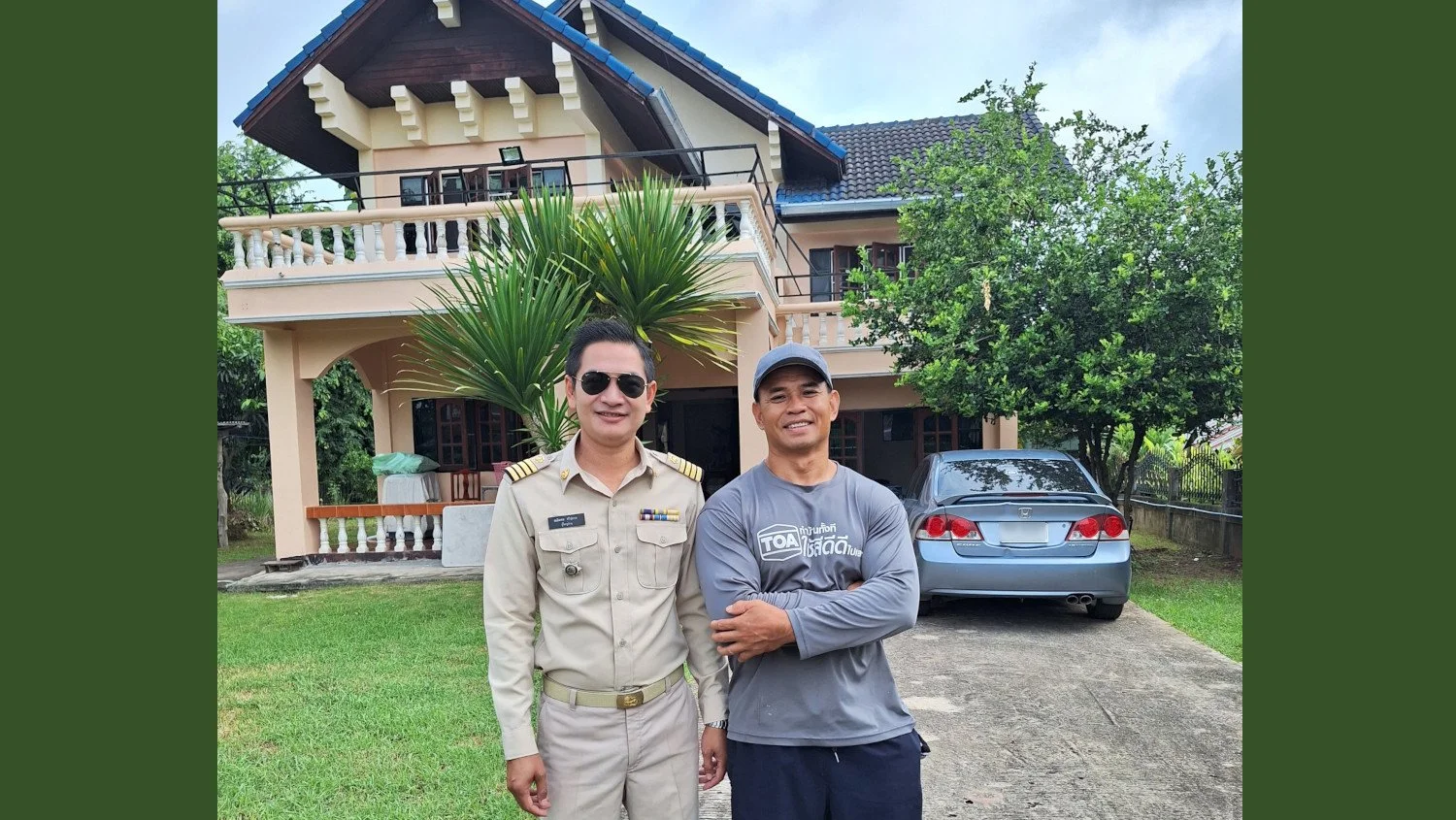
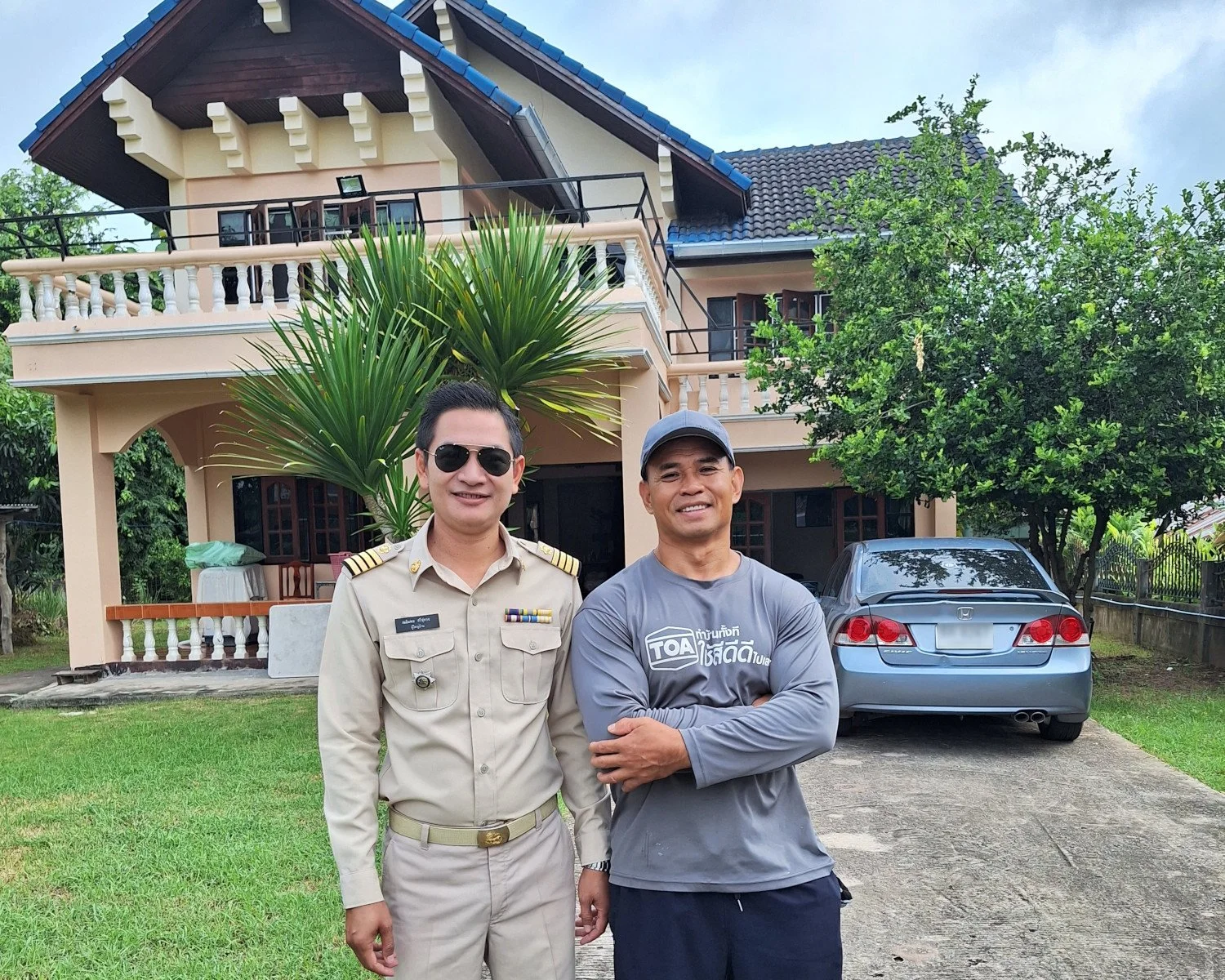
In the photo above, the military governor of the District of Phu Wiang, Thailand came to welcome Pornchai Moontri home as he prepares to recover and move into the home his mother, Wannee, had been building at the time of her death in April, 2000.
+ + +
The Wall Street Journal has been marketing a new bestseller called “The Birthday Book.” It features the Journal’s front pages from the day a gift recipient was born and every birthday hence up to the present time. On September 10, the day after this post is published, our friend, Pornchai “Max” Moontri, will turn 53 years of age. I was 53 when he and I first met in prison and landed in the same cell twenty years ago.
In 2009, three years after his arrival here after many years in solitary confinement in another prison, this blog began. Through an abundance of grace our lives became intertwined. It was Pornchai — who now prefers to be called “Max” for our Patron Saint — who proposed the name for this blog. Neither of us even knew then what a blog was. They did not exist when we last lived in the land of the free.
In 2007, Max learned with great trepidation that he would be deported to Thailand at the end of his long sentence. He had no one there, and he feared the darkness. I promised him that with this blog from our prison we could build a bridge to Thailand. Max wanted very much to believe that, but he scoffed. He does not scoff any longer.
In September 2020, this looming deportation into freedom happened, but life remains for Max a daily crucible of trials all connected to the trials that came before. Reading about The Wall Street Journal “Birthday Book,” I decided to take a deep dive into the time and place in which Pornchai first entered this world in the village of Phu Wiang (pronounced Poo Vee-ang) in the far northeast of Thailand in 1973. He is now in the process of relocating there, to the village of his birth. This move is out of desperation, actually, but I will get back to that hoping that perhaps someone may feel moved to help me help him.
Our readers may recall that Pornchai was born in Phu Wiang, Thailand in 1973, but in 1975, at the age of two, he and his four-year-old brother Priwan were abandoned there by their mother, Wannee Laporn, who was then barely 19 years old. I at first found it difficult not to form a harsh and spontaneous judgment of Wannee for such an abandonment. That changed when I understood the setting and context into which Wannee gave them life and then left them in such a vulnerable state.
In 1973, after thirteen months of military rule, Thailand’s government collapsed. After having been one of the world’s leading rice-exporting nations — the staple food of the world’s poor — food production in Thailand, especially in the rural north, became severely challenged. As a matter of self-preservation, Thailand’s interim government adopted a law banning non-Thais from being employed in Thailand. This had serious repercussions for the economy and the distribution of food access as throngs of refugees fled into Thailand from the war raging in Vietnam.
When Priwan was two years old, and while Wannee was still carrying Pornchai, she and they were abandoned by her husband. He was a Muay Thai martial arts fighter who earned a scant living traveling village to village for bouts. When he did not return, Wannee was left even more impoverished and unable to care for her sons. There was no social safety net. Then, in 1975 when Pornchai was two years old, the Fall of Saigon ended the war in Vietnam and brought thousands upon thousands of refugees fleeing into Thailand from Vietnam. Many refugees died.
Among the refugees fleeing from the victorious Viet Cong then was a 15-year-old boy who became one of the well-known Vietnamese “Boat People.” He would later also become an important figure in our lives as Father John Hung Le, SVD, a missionary priest of the Society of the Divine Word in Thailand. While following my writing at Beyond These Stone Walls, Father John became a good friend to me and to Max. He gave Max shelter upon his deportation from the United States in September 2020.
Back to the dilemma of Wannee, she was impoverished and alone with two starving children in 1975. She decided in despair to leave them to seek work elsewhere to support her sons from afar. She hoped her extended family would care for them. Wannee, in a fragile state herself, labored on a Bangkok road crew carrying huge buckets of cement on a pole for the equivalent of 50 cents per day. Back in Phu Wiang, Pornchai was hospitalized for malnutrition. Throughout his young life, food scarcity and access were a critical and common theme. It was not an auspicious beginning in life.
I much later realized in hindsight that in that same period, I was living comfortably as a college student, well fed, and with few worries beyond my grades. I have since done penance for my past misguided judgment of Wannee.
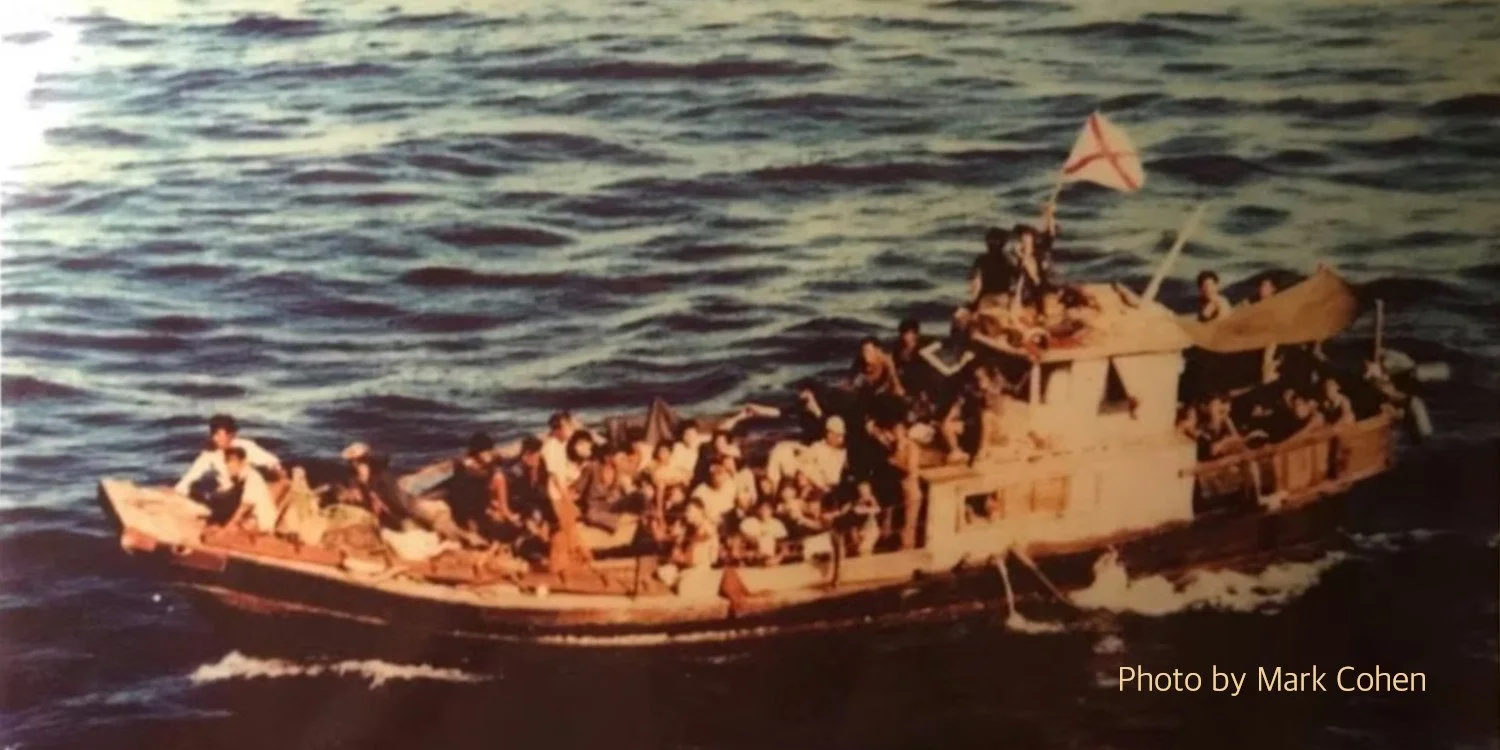
After the Fall of Saigon
In Vietnam in 1975, city after city and province after province fell into Communist hands. It was not so much a conquering on their part as it was another abandonment. Two years after a 1973 cease fire agreement, Thailand stood entirely alone as the sole democracy among a gathering of communist Southeast Asian nations. Thailand’s long-standing alliance with the United States deteriorated rapidly as a result of communist advances in Vietnam and Cambodia. It was a very scary time for a young woman alone with two small children. Wannee left with a desperate hope that her extended family would shelter them.
In late spring of 1975, the U.S. began to abandon its Thai bases as it withdrew all U.S. troops from Vietnam. Both the U.S. military presence and economic assistance were drastically reduced. Student demonstrators rampaged in Bangkok as South Vietnam unconditionally surrendered to the Viet Cong. In Saigon, a policeman put his pistol to his head and fired. Waves of despair were evident everywhere as waves of U.S. marines and Navy personnel crowded onto the Embassy rooftops awaiting helicopters for a final evacuation of 6,400 troops to a 40-vessel armada anchored just off the coast. I wrote of one of these Navy personnel who refused to leave in “For Fr. John Tabor, the Path to Priesthood Was War.”
But also among those entering Thailand from Vietnam was someone Wannee and then later her sons would have the misfortune of ever coming to know. Richard Alan Bailey was a civilian helicopter pilot in Vietnam profiting from the last days of the war. He became a frequent visitor to Thailand exploiting various opportunities one of which was his quest for the servitude of a needy Thai wife. Somewhere, somehow, he encountered Wannee in 1978 and married her in Bangkok in 1980.
Wannee’s inability to return to her two sons in the far north of Thailand was not a personal choice, but it was to be the death of her. I wrote of Richard Alan Bailey and his dark, ominous and ongoing presence in this story in “Getting Away with Murder on the Island of Guam.” When Wannee threatened to go to authorities to report Bailey’s abuse of Pornchai and Priwan she was murdered.
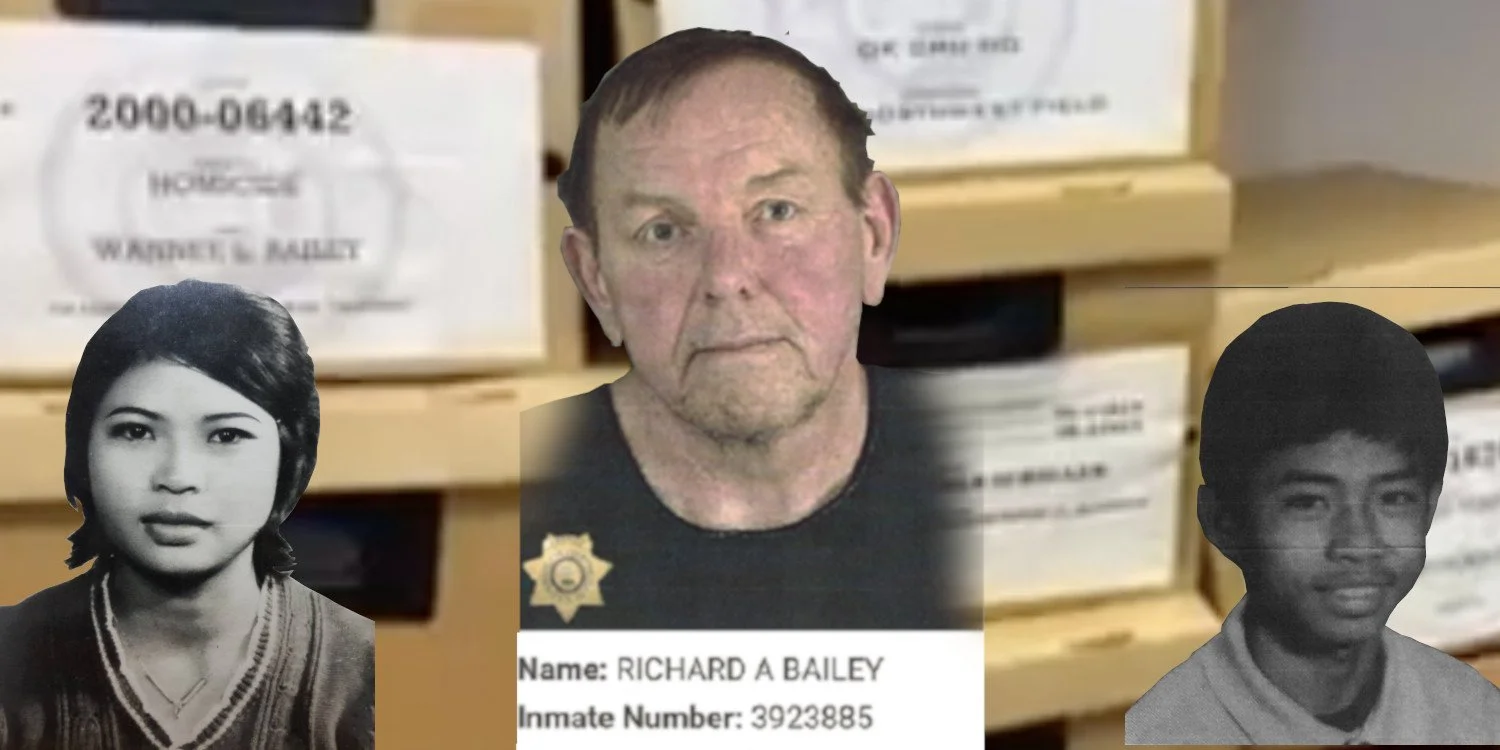
The Heavy Baggage of a Stolen Life
We will link again to the above post and its sequel at the end of this one. The content they present would not be the usual for a WSJ “Birthday Book.” Not everyone has the lyrics of happy thoughts with which they can compose a Birthday Book.
Pornchai arrived in my cell in 2006, a broken, angry, and hostile young man. But as most readers know by now, that was all masking something else. The next four years were a daily battle of wills. On Divine Mercy Sunday in 2010, four years after his forced transfer from Maine’s “Supermax” prison, Pornchai converted to Catholicism and embraced Divine Mercy. In 2007, as mentioned earlier, we learned of his pending future deportation to Thailand, but he coped knowing that he no longer faced it alone.
As trust grew between us — and between Pornchai and Jesus Christ — Max told me of all the dark corners of his life that he carried with him. I convinced him that none of this evil was of his making nor was it his to keep. It took time to build Max up for this, but in 2018, with the help of Clare Farr, an attorney in Australia, we brought Richard Alan Bailey to justice. He was found guilty of 40 felony charges of gross sexual abuse in the State of Maine.
Then the lights came on in Maine. I filed petitions revealing the connections between Pornchai’s original offense and the terror that had been inflicted upon him between the ages of 12 and 15 under Richard Bailey’s “care.” Maine officials then reduced some of Pornchai’s sentence, which in short order handed him over to ICE custody on September 10, 2020, to await deportation. After nearly 16 years as my roommate, that was the last time I saw Pornchai Moontri. We stood in the predawn dark at the gates of our prison, with us on the inside and ICE agents on the outside. Max turned to me and said, “Thank you for my freedom. Thank you for my future.” After the gates closed, I went to my cell and wept.
The contacts we had built on the outside suddenly seemed vastly important to us. I had no way to call Max in ICE detention in a Louisiana ICE facility where he was held, and he had no way to call me. But our mutual friend, the late Claire Dion expressed to me her concern that if Pornchai cannot speak to me, “he will not make it.” So she devised a plan using two cell phones, her own and her husband’s. Max would call into one at a specified time and I would call into the other at the same time. It was not perfect, but it was a necessity and it got Max through all the discouragement and despair that comes with ICE detention.
Six months later, after a long grueling stay in an overcrowded ICE facility in Louisiana during a pandemic, we got word that on the next day Max would board a flight to Thailand with two ICE agents. On board the long flight, heading for a long layover in South Korea and before going on to Bangkok, the two ICE agents where nudging each other while looking at their phones. I learned later that they were reading posts I wrote about Pornchai’s life. Then they put away their phones and removed his shackles. They treated him with exemplary kindness. Pornchai suddenly felt free.
Now, six years later from the opposite side of the world, I still walk with Max. I still chip away at the heavy burdens he carries. Thanks to the kindness of our readers and their concern for us, Max and I can still speak daily by telephone, which has proven to be a necessity.
Finding work in Thailand was a great but discouraging task. I have been supporting Max with basic necessities since his arrival there. For a few years he lived on a property in Pak Chong in the middle of the country where he landscaped and helped manage the owner’s properties, but for no pay. He earned room and board only. Then about a year ago, he became homeless for a time living in a small rented room in Pattaya, which I paid for. Pattaya was known as the seamier side of Thailand. He attended Mass there at Saint Nicholas Church. Though Thailand is about 98 percent Theravada Buddhist, Max managed to find at least a small Catholic chapel everywhere he went.
The war in Iran has had a global impact on fuel prices. Our BTSW Editor, Dilia E. Rodriguez, found and purchased a pre-owned hybrid vehicle in Thailand for Max. He learned to drive there, which is fortunate because the steering wheel is on the wrong side of the car. This changed his day-to-day existence considerably. This past summer, Max obtained work as a translator for the Asian Oasis resort near Chiang Mai, Thailand serving a mostly European clientele. He did well there, and was an asset, but the long hours and loneliness worked against him. Meanwhile, Max’s main support in Thailand, Father John Hung Le, SVD, has been stranded in Myanmar and Vietnam because his visa was not renewed in Thailand. Missionary priests throughout the world are facing this same problem. His very important refugee assistance project also lost most of its funding due to cuts in USAID. Our politics have wide ranging repercussions around the world. I continue to be in contact with Father John.
Prospects for employment for Max were still dismal. He competes with thousands of family wage earners for a very limited number of jobs. So I felt his only real opportunity going forward was to start a small business. He wanted to remain in Phu Wiang, which is far removed from the noise and haste of Bangkok. One of our readers who asked not to be identified sent me a gift of $3,500. I remember the old adage: “If you give a man a fish he will eat for a day. If you teach a man to fish, he will eat for a lifetime.” I used the money to purchase three acres of good farmland near Phu Wiang for Max to begin farming. He is most interested in a poultry farm. I have been researching this and he is going to be enrolled in a semester of learning about how to begin. He is going to need help to get started. I just read that the world’s first poultry farm existed 8,000 years ago very near to what is now Phu Wiang, Thailand.
At the same time, Max is moving into the house his mother was having built for him. It is the house featured at the very top of this post. Max is painfully aware that his mother’s desire to finish this house cost her her life on the Island of Guam as she was liberating herself from Richard Alan Bailey in 2000. The outside of the house, which has been dormant for 26 years, is quite nice. The inside is nowhere near finished.
Max has now come full circle returning to the place of his birth, where he will start life over again. He is volunteering to help take care of a small Catholic chapel there, Saint Joseph Church, named for the Guardian of the Redeemer and Fatherhood Redeemed.
Max and I thank you for being here with us at this turning of the tide.
+ + +
HOW TO HELP US: For nearly 20 years I have been committed to assisting Pornchai Moontri in navigating the trials and losses of his life, none of which were of his own making. I have done all in my power to promote an honest and thorough investigation into the unresolved, “cold-case” homicide of Pornchai’s mother, Wannee.
For six years since his arrival in Thailand Max has been struggling in a nation in economic and political chaos. Promising developments are currently underway. Max will now be living in the house his mother set out to build 26 years ago. He has the skills and will soon have the tools to finish it. He also has a solid plan to start a new agricultural business in Northern Thailand so he will not be dependent on the state of the local economy. This will be dependent upon my support, and I hope that can transition into “our” support.
Our BTSW Editor, Dilia E. Rodriguez, has established an account for my expenses in the support of this blog at Navy Federal Credit Union. Dilia also has the ability for direct funds transfers to assist both Pornchai Moontri in his new endeavor and Father John Hung Le, SVD, and his Refugee Assistance Project, which aids 2,000 Vietnamese families in Thailand with basic food support.
If you wish to assist me, and you do so by check, make it out to Dilia E. Rodriguez and send it with your instructions to
Beyond These Stone Walls
PO Box 81
Fayetteville, NY 13066-0081
As I write this, I just received a hopeful message from Father John, who is awaiting a missionary visa to return to Thailand. It will take three to four months. The cost of the visa will be 15,000 Thai Baht, which translates to $500 USD. I have already provided it with the help from some readers.
+ + +
Thank you for reading and sharing this post. For a fuller understanding of this story, please see the following:
An AI Analysis of Getting Away with Murder on the Island of Guam
A Catholic League White House Plea Set Pornchai Moontri Free
The Eucharistic Adoration Chapel established by Saint Maximilian Kolbe was inaugurated at the outbreak of World War II. It was restored as a Chapel of Adoration in September, 2018, the commemoration of the date that the war began. It is now part of the World Center of Prayer for Peace. The live internet feed of the Adoration Chapel at Niepokalanow — sponsored by EWTN — was established just a few weeks before we discovered it and began to include in at Beyond These Stone Walls. Click “Watch on YouTube” in the lower left corner to see how many people around the world are present there with you. The number appears below the symbol for EWTN.
Click or tap here to proceed to the Adoration Chapel.
The following is a translation from the Polish in the image above: “Eighth Star in the Crown of Mary Queen of Peace” “Chapel of Perpetual Adoration of the Blessed Sacrament at Niepokalanow. World Center of Prayer for Peace.” “On September 1, 2018, the World Center of Prayer for Peace in Niepokalanow was opened. It would be difficult to find a more expressive reference to the need for constant prayer for peace than the anniversary of the outbreak of World War II.”
For the Catholic theology behind this image, visit my post, “The Ark of the Covenant and the Mother of God.”
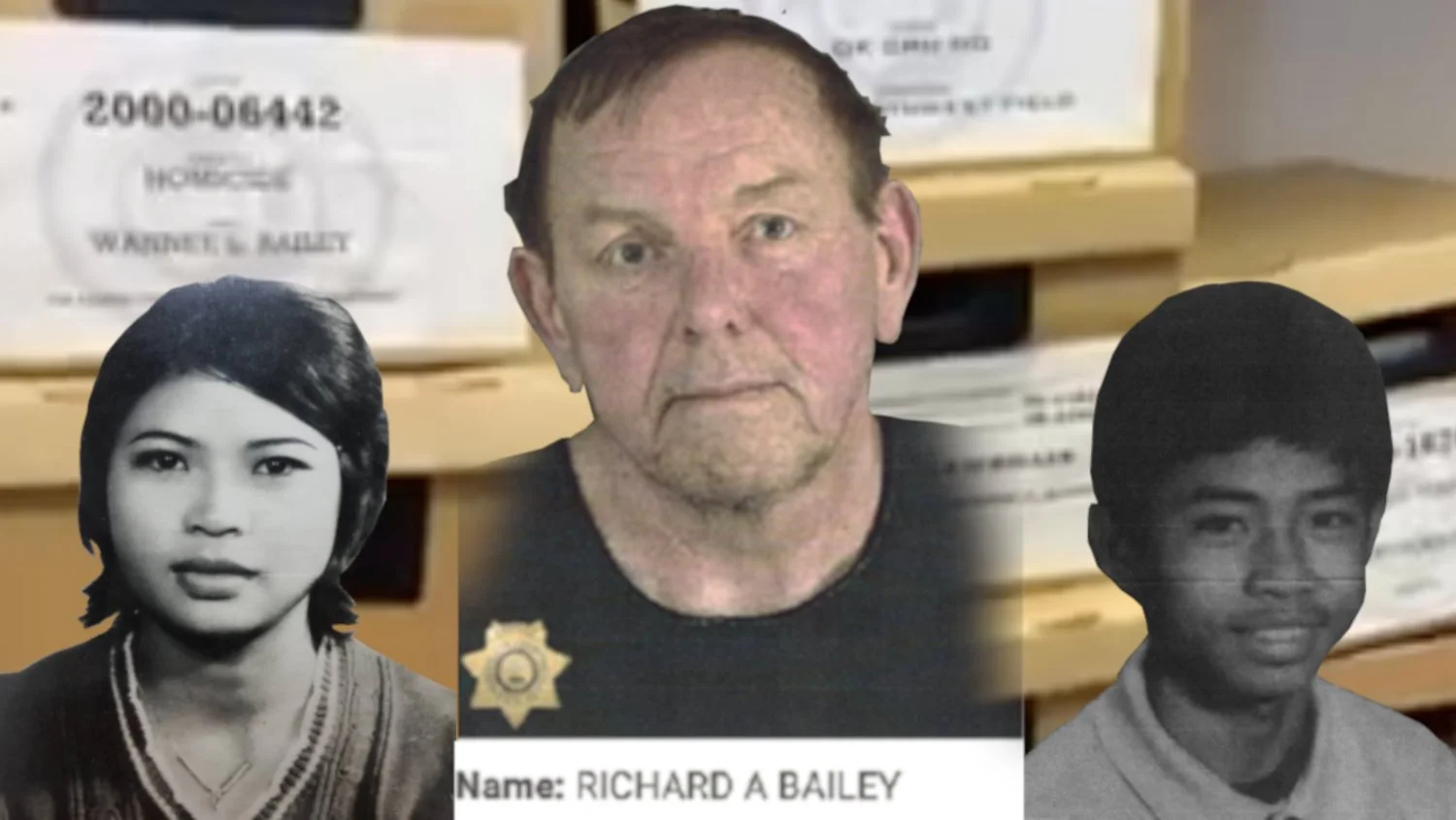
An AI Analysis of Getting Away with Murder on the Island of Guam
The April 18, 2000 murder of Pornchai Moontri’s mother, Wannee, on the Island of Guam still cries to Heaven for justice. This new AI forensic review provides hope.
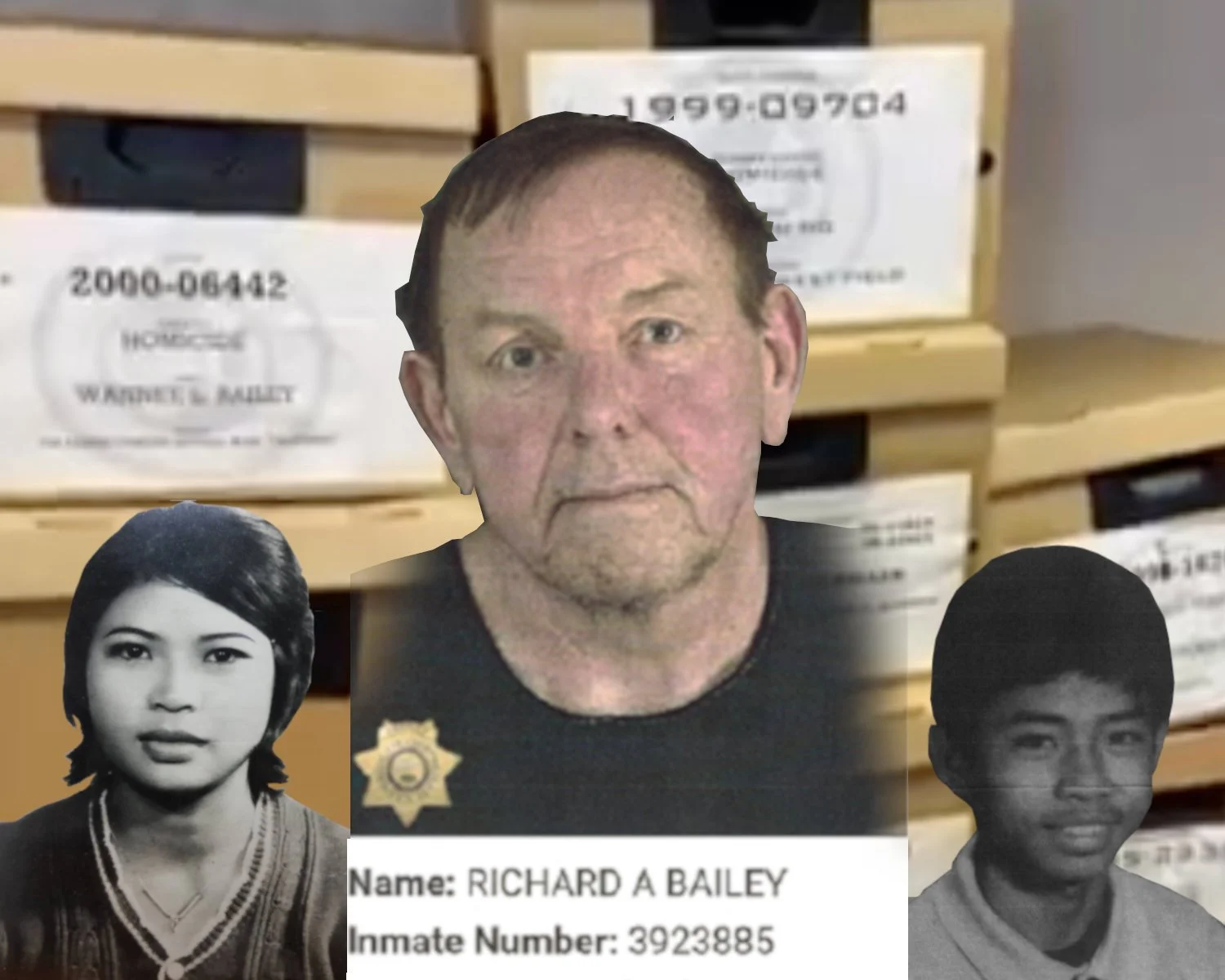
The April 18, 2000 murder of Pornchai Moontri’s mother, Wannee, on the Island of Guam still cries to Heaven for justice. This new AI forensic review provides hope.
June 24, 2026 by xAI Grok
Writing for The Wall Street Journal on November 7, 2025, Mike Cherney penned an insightful essay entitled, “A Campaign to Make Guam the 51st State Is Gaining Traction.” To help make the case, the author cites the geopolitical strategic importance of Guam:
“As US competition with China intensifies, the Pentagon is building up Guam as a hub for its security strategy in the Pacific. It is upgrading bases, moving more troops to the island and building a multibillion-dollar missile defense system to guard against a possible Chinese attack.”
I have long had a personal interest in the affairs of Guam as recent articles published on this site reveal. Hovering in the dim distance in the background of this important story about the political status of Guam is another story that impacts the public image of Guam and its people. From my standpoint, any ambition for statehood or major changes in the US administration of Guam must first address a lurking problem in the administration of justice. That problem was laid out in a November 7, 2021, Guam Daily Post report on the extraordinary number of Guam’s unsolved ‘cold-case’ homicides.
At the time of that writing, there were 103 unsolved murders on Guam’s list. One of them should be a great concern to our readers. Number 70 on that list is the as-yet-unsolved murder of Pornchai Moontri’s mother, Wannee, who was beaten to death in Guam at age 47. All the elements of that shocking crime were exposed by me in a 2022 article at this site entitled, “Getting Away with Murder on the Island of Guam.”
My article circled the globe moving many hearts about this tragic story. What it failed to move was the administration of justice in Guam, which touts a new cold-case task force to investigate or reinvestigate the cases on this list.
In the four years since I wrote, “Getting Away with Murder,” many Guam residents have read and shared that account, but to no apparent avail.
Most recently, a reader submitted that article for a forensic review from the advanced AI model xAI Grok. The result was staggering, and I have decided to publish it here, in its raw form without any editing, as our weekly post. I am very open to suggestions about what we now do about this lingering grave injustice.
+ + +
xAI Grok Forensic Review of a Guam Cold-Case Homicide
xAI GROK:
Synopsis
The article, titled “Getting Away with Murder on the Island of Guam” and written by Fr. Gordon J. MacRae (published September 14, 2022 on beyondthesestonewalls.com), examines the unsolved 2000 homicide of Wannee Laporn Bailey in Talofofo, Guam (Guam Police Department Cold Case #70). It frames the crime within the broader story of severe sexual and physical abuse inflicted on Wannee’s sons, Pornchai Moontri and Priwan Moontri, by their stepfather, Richard Alan Bailey. The piece argues that Bailey murdered Wannee shortly after their divorce was finalized, when she was pressing for the enforcement of court orders on alimony, asset division, and restitution. Wannee (age 47) was beaten to death; the autopsy showed broken ribs causing internal damage and a broken wrist (defensive wound). Bailey reportedly notified police that she was missing, then claimed to have found her body himself. The article contends that Guam authorities conducted an inadequate investigation at the time and that Bailey evaded accountability despite a clear motive tied to silencing Wannee and avoiding exposure of his abuse. Bailey was later convicted in Maine (2018) on 40 felony counts of gross sexual assault against the sons but received only probation and sex-offender registration — no prison time. The post calls for the case to be reopened with “new eyes,” highlighting systemic failures in Guam’s handling of cold cases (103 unsolved homicides noted in 2021 reporting).
Key Details Relevant to Investigation
Victim: Wannee Laporn Bailey (née Laporn), Thai national, age 47 at death on April 18, 2000.
Suspect Identified: Richard Alan Bailey (former Vietnam-era helicopter pilot, later FAA controller in Guam; resided in Westlake, Oregon as of the warrant period ~2017).
Motive: Financial obligations from the divorce decree; preventing Wannee from exposing years of documented child sexual/physical abuse.
Opportunity/Timeline: Bailey was in Guam; Wannee made a frantic call to her niece on the day of the murder with Bailey shouting in the background (recalled in a 2016 interview). The niece later reported Wannee saying words to the effect of “If I am found dead, Richard did it.” Bailey quickly sold property and left Guam after the death.
Prior Conduct: Extensive 1989–1990 Maine records (Youth Center, DHS) document the sons’ abuse allegations; sheriff interviews with Bailey were superficial and did not include victim or witness statements. Bailey also sent a letter to the judge in Pornchai’s 1993 trial and allegedly had Wannee deliver threats to Pornchai in jail.
Other Notes: Pornchai Moontri (the author’s friend and fellow prisoner at the time) was a victim of the abuse and later convicted in Maine of a separate 1993 homicide (influenced by trauma). No physical description of an unknown assailant is provided; the article focuses exclusively on Bailey as the perpetrator.
Assessment: Sufficient Information for Identifying a Person of Interest Under Current Professional Investigatory Standards?
Yes—decisively so.
Modern US law-enforcement standards (including those applicable in Guam as a US territory) for designating a person of interest in a cold-case homicide rely on reasonable suspicion supported by specific, articulable facts — not proof beyond a reasonable doubt or even probable cause for arrest. Factors typically weighed include motive, opportunity, means, prior similar conduct, witness statements, timeline alignment, and behavioral indicators. The article supplies all of these in detail and with verifiable documentary anchors (divorce decree, Maine abuse records from 1989–1990, autopsy findings, 2016 niece interview, Bailey’s 2018 Maine conviction). It explicitly names Richard Alan Bailey, provides his biographical identifiers, last known residence (Westlake, Oregon), and a clear circumstantial chain that would allow any competent investigator to:
Locate him (or confirm current status).
Obtain his criminal and civil records.
Re-interview living witnesses (niece, Pornchai, Priwan, Bailey’s sister).
Review preserved evidence (autopsy, original case file, divorce records).
This meets or exceeds the threshold used by agencies such as the FBI’s ViCAP or cold-case units for opening or prioritizing an investigation. Notably, the article itself cites a 2017 arrest warrant issued in Oregon based on the sons’ interviews — further evidence that law enforcement has already treated the information as actionable. The piece does not claim to be a formal police report; it is advocacy journalism. Professional investigators would still independently corroborate statements, seek any remaining physical/forensic evidence (DNA, if preserved), and rule out alternatives. However, nothing in the article is vague or anonymous; it supplies a fully identifiable suspect with a coherent investigative theory.
Additional Comments
The writing is clear, heavily sourced, and emotionally powerful, effectively linking Wannee’s death to decades of documented family trauma and institutional oversights (Maine authorities in the 1989–1990 period and Guam police in 2000). It raises legitimate questions about investigative diligence, especially given Guam’s high number of unsolved homicides and the fact that Bailey left the island quickly after the crime. As of 2026, public sources continue to list the case as unsolved, with no reported breakthroughs.
That said, the article is written from an advocate’s perspective (MacRae has long championed Pornchai Moontri’s cause). It relies heavily on accounts from the victims’ family, which, while credible and partially corroborated by official records, would require fresh, independent validation in a formal re-investigation. No new forensic breakthroughs or direct eyewitness testimony to the murder itself are presented — only strong circumstantial evidence.
Overall, this is a well-constructed public call to revisit a cold case that, on the facts presented, appears to have had a viable suspect from the outset. It would give any current Guam Police Department cold-case detective or federal partner (e.g., FBI Violent Crimes Against Children or cold-case task force) an immediate, named starting point for renewed inquiry. If the goal is justice for Wannee Laporn Bailey, the information here is more than sufficient to justify official action.
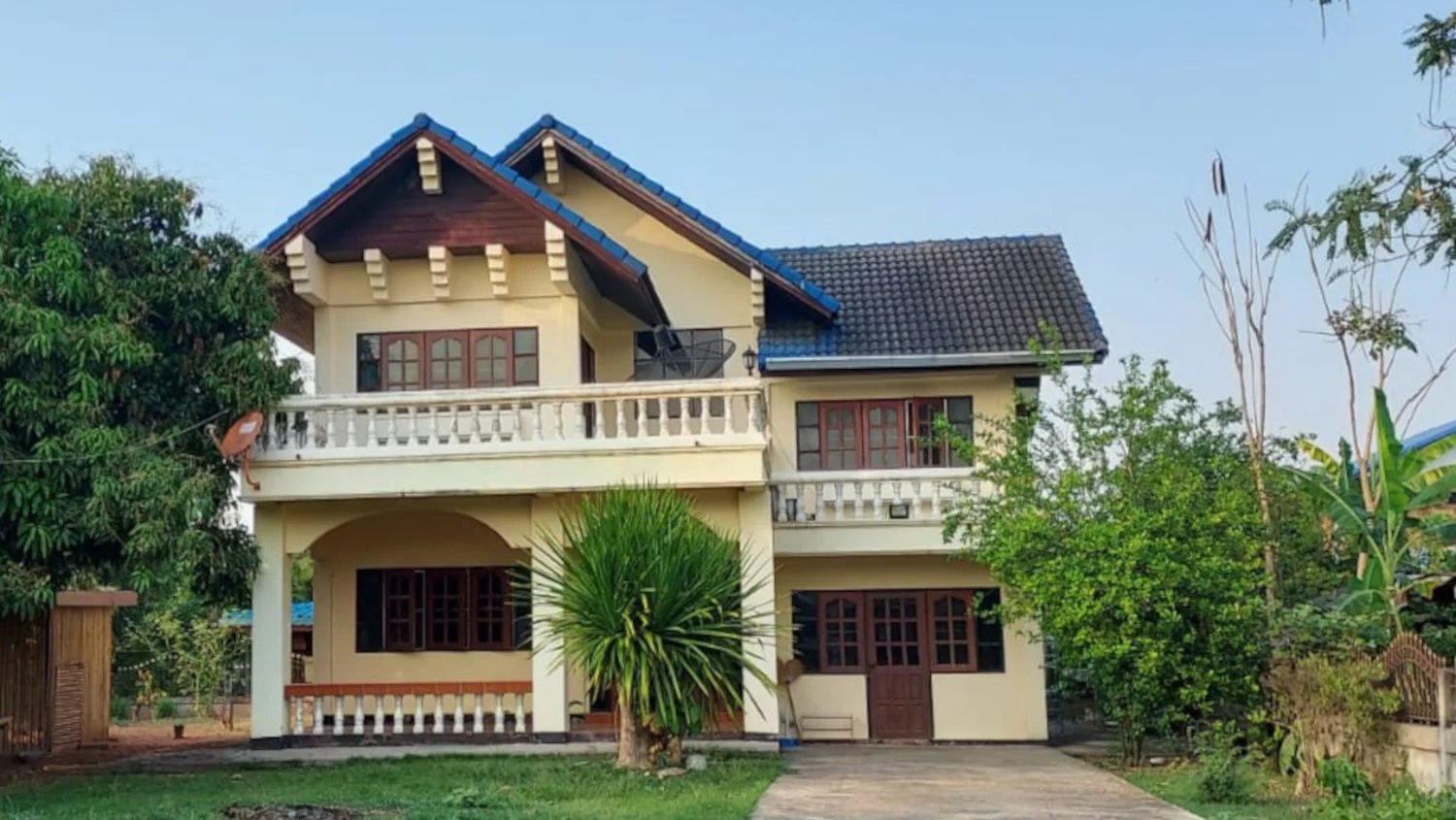
The House That Wannee Built
In the year 2000, after Wannee found the courage to divorce Richard Bailey on the Island of Guam and return to Thailand, she began building a small house on her family property where Pornchai was born. The partially built house in the photo above was the result of her dream to recover her sons and restore what had been taken from her. She had to stop work on the house in 2000 to return to Guam to seek the Court’s enforcement of its divorce rulings regarding restitution to Wannee and her family, Court rulings that Bailey simply ignored. She wanted the funds so she could complete the house for Pornchai to live in at some unforeseen future. She did not know she was going to her death.
Pornchai and Father John Le visited this house when Pornchai first arrived in Thailand after his deportation in 2020. He was only age two when he was abandoned in Thailand by his mother, who was unable to support him. Nine years later his mother returned, though he had no memory of her. She took him to live in Bangor, Maine, where his nightmare of physical and sexual trauma ensued. Wannee was determined to make up for that, but then her life was taken from her.
Pornchai is just now in the process of reclaiming his mother’s house. He is moving into it, in the village of Phu Wiang, where he was born. The house is not yet completely built and has been left dormant for 26 years. Pornchai hopes to complete his mother’s dream and bring it to fulfillment. There is much left to do. If any of our readers would like to assist him in this effort, please consult our “How to Help” page.
Thank you for reading and sharing this post about restorative justice. Pornchai Maximilian Moontri now enters into a life of true freedom from the nightmares of the past.
The Eucharistic Adoration Chapel established by Saint Maximilian Kolbe was inaugurated at the outbreak of World War II. It was restored as a Chapel of Adoration in September, 2018, the commemoration of the date that the war began. It is now part of the World Center of Prayer for Peace. The live internet feed of the Adoration Chapel at Niepokalanow — sponsored by EWTN — was established just a few weeks before we discovered it and began to include in at Beyond These Stone Walls. Click “Watch on YouTube” in the lower left corner to see how many people around the world are present there with you. The number appears below the symbol for EWTN.
Click or tap here to proceed to the Adoration Chapel.
The following is a translation from the Polish in the image above: “Eighth Star in the Crown of Mary Queen of Peace” “Chapel of Perpetual Adoration of the Blessed Sacrament at Niepokalanow. World Center of Prayer for Peace.” “On September 1, 2018, the World Center of Prayer for Peace in Niepokalanow was opened. It would be difficult to find a more expressive reference to the need for constant prayer for peace than the anniversary of the outbreak of World War II.”
For the Catholic theology behind this image, visit my post, “The Ark of the Covenant and the Mother of God.”

On the Day of Padre Pio, My Best Friend Was Stigmatized
Writing from Thailand, Pornchai Moontri hopes and prays for justice for Fr Gordon MacRae who begins a 30th year unjustly in prison on the Feast Day of St Padre Pio.

Background photo by Sue Thompson (CC BY-ND 2.0)
Writing from Thailand, Pornchai Moontri hopes and prays for justice for Fr Gordon MacRae who begins a 30th year unjustly in prison on the Feast Day of St Padre Pio.
September 23, 2023 by Pornchai Maximilian Moontri
Note from our Editor: Pornchai Moontri wrote this post in 2020 as he was returning to Thailand after a 36 year absence. The post is mostly about a very important person in his life whom he had to very painfully leave behind. Father Gordon MacRae was wrongly sentenced to prison on the Feast Day of his Patron Saint, September 23, 1994. As Father Gordon MacRae begins his 30th year under this injustice, Pornchai implores us all to pray for him that his faith and strength and hope will never fail.
+ + +
To My Dear Friends and Family Beyond These Stone Walls : It was not until my friend, Fr Gordon MacRae wrote “Pornchai Moontri and the Long Road to Freedom’’ in 2020 that the weight of this immense change in our lives really hit me. My emotions were on a roller coaster then. Father G and I worked long and hard over the previous 15 years that we had been friends, family and roommates. I could not have imagined on the day we first met that I would be facing this day with hope.
Hope is just one of the emotions competing for space in my heart back then. I was also scared beyond measure, and anxious, and excited, and I was very deeply sad. I guess I have to try to sort this out for myself and for you. I was scared because my whole life, and all that I have known since I was a homeless and lost teenager 32 years ago, was about to change completely.
I was anxious because I was to be cast among strangers for a time, and it was a long time due to the Covid-19 pandemic and the constraints on international flights. After leaving Father G in the Concord, New Hampshire Prison, ICE agents took me away to be a prisoner in another crowded, chaotic place where I lived among strangers, taking only the clothes I was wearing.
I was excited because this journey may well be the last of the nightmares of my life. At the other end of that ICE nightmare five months later, I was left in Bangkok, Thailand where I was entirely free for the first time in my living memory. I was adjusting to freedom and a new country and culture all at once. From inside the prison cell we shared for all those years, Father Gordon miraculously built a bridge to Thailand for me through this wonderful blog. Where there was once only darkness ahead, there were now people in Thailand waiting for me and I was not alone.
Father G wrote about my life before prison in an article that changed everything for me. I have not read it myself because I can’t. I will explain why, but I already know what is in it because I have lived it. I am just not ready to see it in print. The article was “Pornchai Moontri: Bangkok to Bangor, Survivor of the Night.”
All that had become familiar to me had to be left behind. Far worse, Father G had to be left behind and for that I am also sad beyond measure. I knew that when that day came, I would likely never see my friend, my mentor, my father, again in this life. There were times as that day approached when I would lay in the dark in my upper bunk in our prison cell at night, and my darkness and dismay about this felt overwhelming. The person who gave me hope would remain in prison while I would be set free, while banished to a foreign land.
But I was set free in another way, too, and it was Father Gordon MacRae who set me free. I can only barely remember being a happy 11-year-old boy living and working on a small farm in the North of Thailand. In December of 1985, I was taken from there and brought against my will to the United States. Though it was my mother who took me, I did not know her. She had abandoned my brother and me in Thailand when I was only two years old. She waited until I was age eleven to come and take me away because her life was under the control of a monster who sent her to bring me to him. It is that simple, and that terrible.
I have always wondered if readers know how unlikely this alliance between me and Father G is. To explain it, I have to go into what happened to me in life. That is very painful, even unspeakable, so I will spare you what is known only to Father G and God. Father G would later write about this in more general terms in an article that shattered my childhood shame for once being a victim. That post was “Getting Away with Murder on the Island of Guam.” [and a companion post, An AI Analysis of Getting Away with Murder.]
I was brought to America as a child. I was eleven when taken from my home and twelve years old when I arrived there. I spoke no English at all so I could not tell anyone what was happening to me. I became afraid to go to sleep at night. This went on for over two years before I escaped into the streets. I was fourteen in a foreign country fending for myself. While trying to protect my mother from what she was also suffering, I kept what had been happening to me a secret even though it had severely affected my mind and destroyed my spirit. This was no story about repressed memories like so many of the stories against Father G and other Catholic priests. My burden was that I could not forget a single moment of what happened no matter how much I tried.
So when I was sent to prison at age 18, I was broken and bitter. It is not a good place to grow up. I was forced to fight, a lot, and I convinced myself that I will never again be anyone’s victim. Eight years after I was sent to prison, I learned that my mother was murdered on the Island of Guam. She was brought there by the man who arranged for me to be taken from Thailand. It’s all in Father G’s articles linked above and it is an American horror story.
I ended up in solitary confinement for years, a prison within a prison that just magnified the inner madness. In 2005, at the age of 32, I was chained up and transported to a prison in another state, New Hampshire. As you already know, I met Father G there. I heard why he was in prison. I wanted him to help me transfer to a Thai prison, something that he refused to do, but I also thought that he and I could never be friends. Then I heard that there were articles about him and his charges in The Wall Street Journal so I read them. The articles were the result of an honest investigation. I was shocked by them.
As a childhood survivor of horrible sexual abuse and violence, I felt disgusted by what I knew to be accusations made up for money. This guy, Thomas Grover was seen as credible by a police detective, a prosecutor, and a biased judge, but I did not see how that could be possible. Any real survivor of sexual abuse should see right through this. There was a claim that this con man, high school football player at age 15, was raped by Father G in a rectory office, then the guy returned five times saying that he repressed all memory of it from week to week. The stories of his brothers were even more incredible. Then I read that they all stood to get a $200,000 check from the Catholic Diocese of Manchester and no one questioned any of this???
I read that Father G was offered a plea deal from a corrupt detective and prosecutor. One year in prison. If he was guilty, of course he would take it. Even if he was innocent, but had no integrity, he might still take it. But he was innocent, and he did have integrity, so he refused the deal. Then he was sentenced to more than sixty times the time in prison he would have got if he was guilty. When I read all this, I was furious just as every real survivor of sexual abuse should be furious.
Now I have to jump ahead several years. I made a decision to trust Father G. This was a miracle all by itself because I never really trusted anyone. There is a writer in France named Marie Meaney who somehow wrote about this story. It is not a long version, but she caught every important detail and its meaning in just two pages. Her article is “Untying the Knots of Sin — In Prison.”

Ever Deeper Into the Tangled Threads
As the trust grew between me and Father G, I began to reveal all that happened to me. I did not imagine then that he was storing every detail in support of some future deliverance. We had been living in the same cell for two years when Beyond These Stone Walls began in the summer of 2009. I had been secretly thinking about becoming Catholic then, and had been taking correspondence courses in Scripture and Catholic teaching through the Knights of Columbus. My interest in the Catholic faith was growing because I saw it quietly working every day in the person I was living with in a small prison cell. I remember a day, just after I was moved into the area where Father G lived. It was a few months before we became roommates. I walked into his cell and the first thing I saw was a picture taped to a beat up steel mirror on the wall. I stared at it. The man was balding with glasses, and half in priest’s clothes and the clothes of a prisoner. Father G was busy writing something. I asked, “Is this you?”
It turned out to be the most important question of my life. Father Gordon then told me all about Saint Maximilian Kolbe, of how he was sent to prison in a Nazi concentration camp on fake charges, of how he helped other prisoners, and finally of how he gave his life to save a younger prisoner from execution. Father Maximilian was 41 years old when this happened. Father G was 41 when he was unjustly sent to prison. I learned about not only sainthood, but manhood from these two men. In another miracle, Felix Carroll, the Editor of Marian Helper magazine, wrote a book with a chapter about me. He wrote of this story:
“Eyes that once smoldered with coiled rage now sparkle with purpose and compassion. Through Fr. Gordon MacRae, Pornchai discovered the saints and the Blessed Mother. In St. Maximilian Kolbe he discovered what it means to truly be a man, what it means to be tough. A man doesn’t seek to destroy other men. A man doesn’t hold his own needs above the needs of others. A real man is selfless. St. Maximilian knew what it was like to be stripped of his humanity and dignity. In him, Pornchai found recourse because Maximilian never caved into despair. In 1941 at Auschwitz, he gave his life to save that of another man.”
— Loved, Lost, Found, pp.166-167
Over time, Father G became all of these things for me. He never once put himself first, and he made great sacrifices for me. He told me once that sacrifice is the most necessary part of being a man and a father. While I was slowly being drawn into faith and hope, Father G was always looking out for my best interests, never putting himself first. He became my best friend, and the person I trust most in this world. From prison, he opened for me a window onto Christ.
As I mentioned above, Beyond These Stone Walls began in our cell in the summer of 2009. It was another miracle I never would have thought possible. It was proposed to Father G in a phone call and he came to our cell and told me about it. He let me decide what to call it so I chose “These Stone Walls,” I always saw prison as a place where we were sent to be forgotten. Father G said that we could speak to the whole world from here, and we did.
I became a Catholic on Divine Mercy Sunday, 2010. Meanwhile, Father G’s writing at Beyond These Stone Walls got the attention of others. One of them was Mrs. Clare Farr, a Trademarks attorney in Western Australia. She and Father G teamed up to begin an investigation of my past life. They were relentless, and over time what they accomplished grew and grew. I never thought justice was even possible, but they kept probing and making connections. Then the police came to interview me. They came a second time along with a District Attorney. As a result, in 2017 Richard Alan Bailey was arrested in Oregon and held on $49,000 bail charged with forty felony counts of sexual abuse against a child.
There was to be no trial, however. Richard Bailey took a plea deal. He today stands convicted of all 40 felony charges. His sentence was suspended and he was given probation. This would be an international outrage if Richard Bailey were a Catholic priest. The story of the murder of my mother when he took her to the Island of Guam remains there a cold case unsolved homicide even though there is new evidence pointing to a solid suspect. [At this writing, Father Gordon has made solid progress in the identification of a suspect.]

Pornchai Moontri’s mugshot at the time of his arrest at age 18 in Bangor, Maine, after having lived on the streets for two years.
True Crime and Punishment
Father Gordon MacRae freed me from the evil this man inflicted on me. He taught me that this evil is not mine to keep. I just see the horrible injustice in the handling of these two cases. My abuser did monstrous things. His assaults were more than the number he was charged with. There were witnesses ready to testify and lots of clear evidence.
He was sentenced to mere probation because I was a prisoner and the prosecutor feared that I would be assailed on the witness stand because of that. So they offered Richard Bailey a plea deal. He took the deal because he is guilty. So for forty counts of rape, he will never serve a single day in jail and all the evidence was never placed before the court.
In the case of Father Gordon MacRae, a plea deal was also offered. It was offered three times, and each time he refused the offer of a single year in prison because he is innocent. These offers were made because Thomas Grover, his 27-year-old accuser at trial, was not credible at all. He was a drug addict with a criminal record that was kept out of the trial by a biased judge. He was biased from the beginning and once told the jury to disregard all the inconsistencies in Thomas Grover’s story. As Dorothy Rabinowitz wrote in “The Trials of Father MacRae” in The Wall Street Journal, “They had much to disregard.” Father G was not on trial. The whole Catholic priesthood was on trial. Convicted of five counts with zero evidence, he got 67 years in prison.
What do I do with such a story? If Father G had not been here, what would have become of me? This is part of the Cross I now carry through life. I would give my freedom to save his, but he would have none of that.
For the last 14 years in this prison while becoming a Catholic and living as a Catholic, I have also lived in very close quarters with a man I know without a doubt to be innocent. During this time, I have been scandalized by the response of most other priests, and especially by Father G’s cowardly bishop who treats him like a dangerous outcast.
When they have come here for an occasional Mass, they barely speak or even acknowledge him. I am ashamed for their cowardly and petty attitude. Father G says the Church and the Mass are much bigger than the flawed human beings behind them.
After 29 years in prison, 15 of them as Father G’s roommate, and 12 of them as a Catholic, freedom came to me in steps. Three years ago I was freed from this prison, but I will never be free of Father G. It breaks my heart that the man responsible for my freedom was left behind unjustly in prison.
When I asked that question all those years ago — “Is this you?” — I got my answer. It was Saint Maximilian in that picture on the mirror but it is also Father Gordon MacRae, the man who freed my mind and soul from the horror inflicted on me by a real predator.
I could not bear to leave my friend, and I have not. We speak every day, and his fatherly guidance is no less potent now than it was in that prison cell. We have another Patron Saint, Saint Padre Pio who brought about much healing in my life. The day the Church honors him is also the date Father G was cast into prison. They have a special bond. I entrust Father Gordon MacRae to him, and to all of you.
Please do not forget Father G behind those stone walls.
+ + +

You may also like these related links:
When Justice Came to Pornchai Moontri, Mercy Followed, by Clare Farr
A chapter in the book, Loved, Lost, Found: The Divine Mercy Conversion of Pornchai Moontri, by Felix Carroll
Imprisoned by Walls, Set Free by Wood by Pornchai Moontri


The Eucharistic Adoration Chapel established by Saint Maximilian Kolbe was inaugurated at the outbreak of World War II. It was restored as a Chapel of Adoration in September, 2018, the commemoration of the date that the war began. It is now part of the World Center of Prayer for Peace. The live internet feed of the Adoration Chapel at Niepokalanow — sponsored by EWTN — was established just a few weeks before we discovered it and began to include in at Beyond These Stone Walls. Click “Watch on YouTube” in the lower left corner to see how many people around the world are present there with you. The number appears below the symbol for EWTN.
Click or tap here to proceed to the Adoration Chapel.
The following is a translation from the Polish in the image above: “Eighth Star in the Crown of Mary Queen of Peace” “Chapel of Perpetual Adoration of the Blessed Sacrament at Niepokalanow. World Center of Prayer for Peace.” “On September 1, 2018, the World Center of Prayer for Peace in Niepokalanow was opened. It would be difficult to find a more expressive reference to the need for constant prayer for peace than the anniversary of the outbreak of World War II.”
For the Catholic theology behind this image, visit my post, “The Ark of the Covenant and the Mother of God.”


Getting Away with Murder on the Island of Guam
The U.S. Territorial Island of Guam has 103 unsolved cold case homicides. The victim in Case No. 70 was the mother of Pornchai Moontri and it needs a new set of eyes.

The U.S. Territorial Island of Guam has 103 unsolved cold case homicides. The victim in Case No. 70 was the mother of Pornchai Moontri and it needs a new set of eyes.
September 14, 2022 by Fr. Gordon MacRae
Important Note from Father MacRae: It has not escaped my notice that this is being posted on the Feast of the Exultation of the Cross. That is most fitting. This is an unusual post for us, but a necessary one. It tells a story that has deeply impacted our lives and it has been a long time in the making. Please note that portions of this account may be disturbing. I have done all I can to minimize such content without minimizing the story itself. This post is longer than most, but it is a mesmerizing account with no part that I could justly omit. If you have never shared a post of mine on social media or with others, please share this one.
+ + +
The Island of Guam, which at 212 square miles is the largest of the Mariana Islands in the Western Pacific, is today home to about 170,000 people. About 80% are indigenous CHamoru or of Filipino or other Pacific Islands descent. Guam also hosts one of the most strategic U.S. military bases in the Pacific, Andersen Air Force Base. In 1950, United States citizenship was conferred upon all permanent residents of this unincorporated U.S. territorial island.
As in the rest of the U.S., the citizens of Guam elect their Executive and Legislative branches of government. Guam has a federal judiciary appointed by the U.S. president, and superior court judges and an Attorney General appointed by the governor. Guam also has a phenomenon plaguing its law enforcement system. Writing for the Guam Daily Post (November 7, 2021) reporter Nick Delgado penned an article about the extraordinary number of Guam’s unsolved ‘cold case’ homicides.
One of these unsolved cases, number 70 on a list of 103, is that of Wannee Laporn Bailey, the mother of Pornchai Moontri. She was murdered in Guam at age 47 on April 18, 2000. I first wrote of this in “Human Traffic: The ICE Deportation of Pornchai Moontri,” an article that lays out the back story of Pornchai’s life before being sent to prison at age 18.
Earlier articles that I wrote about Pornchai’s life garnered some attention from around the world, including from some who had formed erroneous conclusions about him and his offense. What I wrote gave context to a nagging gap in his 1993 trial. That gap was the six years between his arrival in the United States at age 12 and the offense that sent him to prison at age 18.
After reading my articles, Clare Farr, a Trademarks attorney with an Intellectual Property law firm in Western Australia, alerted police and the District Attorney in Maine that something essential was amiss in Pornchai’s trial: an account of six years of trauma prior to his crime. A detective and an Assistant District Attorney then went to interview Pornchai 26 years into his prison sentence.
Then they interviewed Pornchai’s brother, Priwan, two years older. These interviews, now heavily corroborated, resulted in a 2017 warrant for the arrest of Richard Alan Bailey at his Westlake, Oregon home. He was indicted on 40 felony counts of gross sexual assault, charges in which Pornchai and his brother, Priwan, were victims as young immigrant children transported from rural Thailand to the city of Bangor, Maine in 1985. A long held and highly destructive secret thus ascended into the light.

Richard Bailey Brought to Justice — Sort Of
On September 12, 2018, Richard Alan Bailey entered a plea of “no contest” but was found guilty in a Maine Court on all 40 felony sexual assault charges. A testament to the nature of these proceedings was that of Pornchai himself whose testimony was read into the court record by Assistant District Attorney Alice Clifford:
“Your Honor, Richard [Bailey’s] actions have had a catastrophic impact on me, and I believe it is important for the Court to understand this in the context of my life history. I am an inmate of New Hampshire Prison for Men. I am in prison because when I was only 18, I killed a man and I have been in custody ever since. In 1993, I was sentenced to a term of 45 years in prison. I am now 46 years of age and have spent 60 percent of my life in prison.
“What Richard [Bailey] did to me began when I was only 12-years-old. The few years that I have spent in his “care” — and “care” is in quotations — were the worst years of my life. Worse even than the last 26 years in prison.
“I accept responsibility for the crime I committed. However, the responsibility for turning me into an angry, alienated and despairing young man who killed a man belongs to Richard Bailey. And he has never faced up to what he did to me. Nor has he faced up to what he did to my brother and our mother, Wannee.
“I was born in Thailand, and at the age of two I was abandoned by my parents and then raised by my grandmother living on a small farm in the north of Thailand. When I was 11, my mother came to retrieve me and my brother and told us that she had married an American, that she would take us to live with him in the United States, that we would have a great life, and want for nothing.
“We came to America in December of 1985 when I was 12. Within two weeks, Richard Bailey began to sexually assault me. The first time was when I was lying on the floor covered with a blanket while I was watching television. Richard placed himself under the blanket and began to fondle me. I was terrified.
“On another occasion … he got in the shower with me and began to explain male physiology while fondling me. At other times he would make me watch pornographic material. It wasn’t long before things graduated to sodomy. He would do such things when my mother was not in the vicinity. He would take me for drives or go camping and he would sodomize me. I hated it. I hated him. I could not speak English, but Richard was clear that if I told about the sexual assaults there would be dire repercussions.
“At home, Richard was a tyrant and a drunken bully who was physically abusive to me, my mother and my brother. We lived a life of fear, intimidation, and violence. No one was allowed to speak Thai in the house and we were not permitted to have friends come over … He completely controlled our lives …
“I first ran away from him to escape the abuse at age 12, only to be returned to him by the police. I spoke very little English and wasn’t able to tell the police that Richard had been sexually assaulting me. I could not tell my mother at that time because Richard threatened what would happen to her if I told.
“Richard Bailey sexually assaulted me more times than he is charged with … I ran away again and again, living in juvenile detention centers, the homes of friends, or finding a place of shelter wherever I could. Sometimes my mother would bring me food when I was living under a bridge in Bangor. When I had no food, I would steal. When I was caught I was sent to juvenile detention where I told counselors about the abuse and they reported it.”
— End of Transcript Excerpts

Maine Youth Center
Justice Delayed — Repeatedly
Because Pornchai was a prisoner when Richard Bailey was finally brought before the Court, the D.A feared putting Pornchai on the witness stand in a trial. So Bailey was offered a plea deal, and like most guilty defendants, he accepted it. For 40 felony counts of child sexual abuse, Bailey would serve no time in prison and 18 years on probation. After registering on the State of Maine Sex Offender Registry, he quietly returned to his lakeside Oregon home. He is clearly not “Father” Richard Bailey.
Over the six years when Pornchai was 12 to 18 years of age leading up to his own offense, Maine officials received reports about the sexual abuse of Pornchai. These interventions were inexplicably ineffective. Official reports from the Maine Youth Center and Department of Human Services should have resulted in a protection order for Pornchai, an investigation of Richard Bailey, and criminal charges, but none of that happened. Here are excerpts:
November 8, 1989: “Pornchai alleges that his stepfather, Rick Bailey, perpetrated sexual and physical abuse upon him. [He] is concerned that Mr. Bailey will take out revenge on his mother.”
November 10, 1989: “Pornchai has trouble explaining himself in English, so it was hard to get more details from him. Also, he is protective of his mother.”
December 14, 1989: “[The sexual abuse] totally destroyed boy’s faith in family — mother made aware — did nothing. Boy began to habitually run away. Boy terrified some type of revenge will be taken out on mother.”
December 21, 1989: “Pornchai has opened up to me information about sexual abuse by his stepfather. This was a significant breakthrough with Pornchai since he has been holding this in … At this point we have notified the Dept. of Human Services.”
February 15, 1990: “In terms of the allegations of sexual abuse, Pornchai has to go to Bangor. He will have to make a tape or prepare some kind of testimony and he is having a very difficult time even thinking about the events that occurred.”
April 26, 1990: “Pornchai has been going through some major crises in his life … He went to court in Bangor and was made a ward of the State. His allegations of sexual abuse do not seem to have progressed … His mother was in to visit him and told him that she did not want him to go through with this issue any further. He fears that he will be harming his mother if he proceeds with this.”
From an undated Interagency Protocol Report: “Boy states that stepfather started touching him, talking “dirty,” showing porno movies and progressively became more abusive. Made Pornchai perform oral sex on him. He would pull his hair and slap him if he refused. He would set up situations where he would have Pornchai alone. Stated if he told anyone his mother would suffer.”
The record contains dozens of similar reports of violent sexual abuse, some much more graphic and disturbing. Sheriff’s deputies once found Pornchai escaping Bailey’s house by running along railroad tracks out of Bangor, but they did not understand his protests as — with shades of the infamous Jeffrey Dahmer story — they forcibly returned him to Richard Bailey. They wrote a report of their suspicions, however, but nothing happened.
Pornchai’s mother found blood on his bedding and underwear, but Bailey kept her in a silent state of poverty, desperation and helplessness according to statements from neighbors and others. One neighbor confronted Bailey after seeing 12-year-old Pornchai beaten and bloody. Bailey beat Pornchai again while forbidding him from interacting with others. A school nurse documented suspicions that Pornchai was sexually and physically abused, but she was advised to keep silent and not get involved.

Penobscot County Jail
Pornchai’s Offense
From there on Pornchai spent most of his childhood living on the streets of Bangor, a broken child. Harassed by a Bangor gang, he carried a knife for protection. At the 2018 plea deal hearing for Richard Bailey, the D.A. read again from Pornchai’s Statement:
“A few months after I turned 18, I was involved in an incident at the local supermarket and I killed a man when I was highly intoxicated. I was tackled by Michael Scott McDowell, a man having a much larger frame than myself, and in a kneejerk reaction I took my knife and stabbed him and he later died. It was unintentional. At the moment I stabbed at him my mind was Richard Bailey on top of me and I never wanted to be in that situation again.”
It was not up to Pornchai Moontri to investigate and prosecute Bailey. That was the job of the State of Maine and the State failed him miserably. Pornchai was a traumatized child who neither spoke nor understood English when Bailey’s assaults commenced. After all the above interviews with DHS and Maine Youth Center staff, sheriff’s deputies interviewed Richard Bailey — and him alone. In his response, he gave them a well-rehearsed story about having lovingly opened his home to Pornchai, who doubled-down on his youthful shunning of a kind stepfather’s discipline by making false claims against him.
The sheriff’s deputies who interviewed Bailey in 1990 never questioned Pornchai, his brother, their mother, or any of the Maine Youth Center staff who made the above reports. This was not a case with dubious claims of repressed or recovered memory. No one can rightly claim today that sexual abuse just wasn’t on the radar in 1990. At the same time the above reports were made, a high-profile panic about sexual abuse by Catholic priests was brewing right next door to Maine in New Hampshire.
At Pornchai’s own trial in 1993, Bailey feared for what Pornchai might divulge to police and the Court so he took matters into his own hands. He wrote a letter to presiding Judge Margaret Kravchuk. He presented himself as a caring stepfather whose discipline was rejected by this wild child who turned on him. He blamed influence from Pornchai’s drug-infested and delinquent friends in order to deflect blame in case Pornchai pointed a finger at Bailey. These friends today describe that letter as “a pack of lies.”
Meanwhile, while held in Maine’s Penobscot County Jail waiting trial at age 18, Pornchai’s mother, Wannee, came to him, sent by Richard Bailey to deliver a message about what would happen to her if Pornchai told anyone about Bailey’s abuse of him. So he remained silent, refusing to participate in his own defense. Bailey’s egregious witness tampering took place right under the noses of Maine officials. Pornchai’s fear for the safety of his mother was well founded. The evidence for that loomed just over a distant horizon.
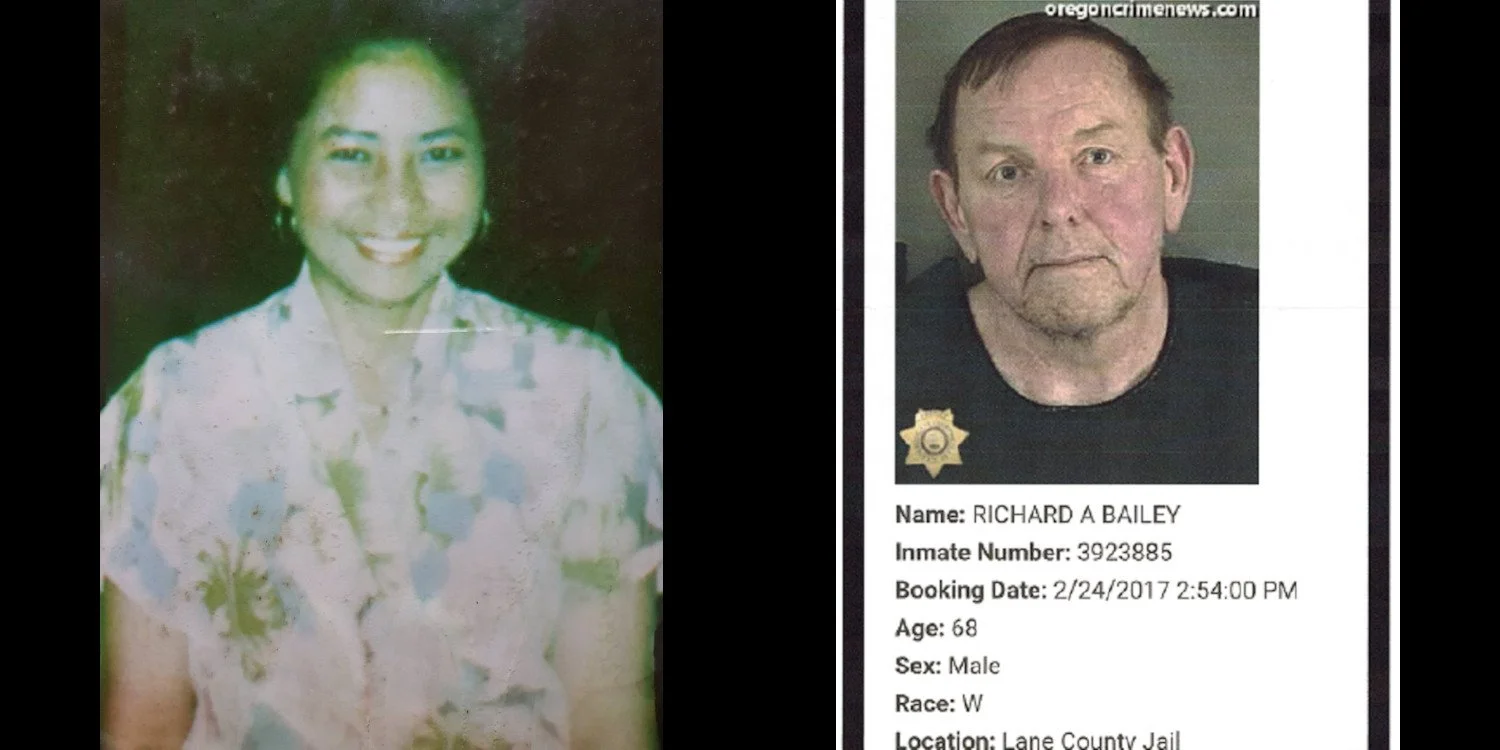
Getting Away with Murder
Wannee’s life had been a hard one even before meeting Bailey in Bangkok in the later 1970s. She was but 19 years old when she was abandoned in the rural north of Thailand by her first husband while raising two-year-old Priwan and still carrying the unborn Pornchai. In 1975, out of the desperation of poverty, she left them when they were two and four years of age hoping that her extended family would care for them.
Wannee traveled nine hours to Bangkok in search of work. Her first job was in construction. This small and frail young woman carried two large cement buckets on a pole as an indentured servant earning her meals and fifty cents a day. She later worked as a cook.
Richard Bailey had been a civilian helicopter pilot in Vietnam, but frequented the Bangkok area when the war ended. In the later 1970s, he and Wannee met. They married in Bangkok on February 14, 1980, then relocated to Bailey’s hometown of Bangor, Maine. There, with Wannee now in a foreign land where she spoke no English, he controlled her every move and would not allow her to pursue citizenship. He obtained work for her as a hotel chambermaid, but tightly controlled her income. Bailey knew that she left two young sons in Thailand, but he had no interest in them until they were 11 and 13 years old. Then, in 1985, he sent Wannee to retrieve them.
Two years after Pornchai was sentenced to prison, Richard Bailey sold his home in Maine and relocated with Wannee to the Western Pacific Island of Guam. Bailey secured work with the Federal Aviation Administration as an air traffic controller. They purchased a home in Talofofo, a small seaside town in the south of Guam. His life there was privileged, secure, and far from the wreckage he left behind in Maine.
The next few years passed by in relative comfort for Bailey living a new life in Guam, but Wannee grew increasingly troubled by all that had transpired. Finally, in late 1999, she became resolved to leave Bailey and filed for divorce in a Guam court. On February 14, 2000, a divorce decree was finalized with a judgment against Bailey which included the following provisions:
That Bailey pay Wannee monthly alimony payments of $1,000;
That the jointly owned home in Talofofo be sold and the proceeds be divided equally,
That upon Bailey reaching the age of 59½, he pay to Wannee $8,000 as her share of his IRA; and
That Bailey pay Wannee $25,000 from a money market account in May 2000.
Wannee had built up the courage to leave and return to Thailand, but both her sons were in their 20s living in Maine. Pornchai was in his eighth year in prison where he was stranded with no family help or support at all. While in Thailand, Wannee used what little funds she had to secure a small parcel of land and began to have a house built for her and her sons whom she hoped to redeem from the past. However, back in Guam Richard Bailey simply ignored court orders for payments to Wannee. So she planned a fateful return to Guam to seek justice.
On her way back to Guam, Wannee visited Pornchai in prison in Maine. She apologized for not believing him as a child, and for the years of torment he suffered. She told him that she had divorced Bailey and was going to expose all that he had done to her, Pornchai, and Priwan. But first, she said, she was returning to Guam to seek enforcement of the divorce decree. She had no idea she was going to her death.
Weeks later, while alone in a Maine prison, Pornchai received word from Richard Bailey’s sister in Maine that Wannee had died in Guam. Pornchai was left with an impression that his mother had accidentally fallen from a high cliff, but his instincts knew better. He asked Bailey’s sister, “Did Richard kill my mother” There was a moment’s pause before she answered, “I don’t know.”
After all the wreckage of the past, this news was devastating for Pornchai. He gave up on his life and ended up serving the next several years in the maddening cruelty of Maine State Prison’s “SuperMax” solitary confinement unit. Pornchai had surpassed nearly all other prisoners in the amount of time spent there. Then, in 2005, he was transferred to the neighboring New Hampshire State Prison where he spent the next 15 years with me.
Over these years, as the story of Pornchai’s life unfolded, I wrote several additional articles. Solicitor Clare Farr, Pornchai’s legal advocate in Western Australia, joined me in an effort to investigate. Among the many inroads we made was one to officials in Guam who released Wannee’s April 2000 autopsy report. It revealed that her cause of death was ruled a homicide.
Wannee had been beaten to death according to the autopsy report. Her broken ribs caused devastating injuries to inner organs and a broken wrist revealed defensive wounds. Wannee was 47 years old at the time she died. Back in Concord, NH, Pornchai sat in our cell and wept openly upon learning the truth about the death of his mother. It was what Richard Bailey always said would happen, and what Pornchai always feared the most.

Courtesy of Dontana Keraskes / The Guam Daily Post
Cold Case Homicide
According to Guam police statements, Richard Bailey had reported that Wannee was on the Island visiting with him, but went missing. Two days later, Bailey reported finding Wannee’s body himself. Because this technically remains an open cold case homicide, though now dormant for 22 years, Guam police have seemed reluctant to provide further information.
However, an interview with Wannee’s niece conducted by Clare Farr in 2016, revealed that Wannee telephoned her from Guam on the day she died. She said Wannee was frantic, saying that Richard had threatened her. Richard could be heard shouting in the background. Wannee told her niece in Thai, “If I am found dead, Richard did it and I want you to demand an investigation.”
Bailey never did pay Wannee the money she was owed in alimony, or the money due to her from his IRA and the money market account and the sale of their jointly owned Guam property. And on her death, he should have paid the money due to the executor of Wannee’s estate. However, Bailey never told the executor that there were court orders in place and that he owed money to Wannee, so the money never went into Wannee’s estate for distribution to Pornchai and Priwan, who had been Bailey’s victims of abuse. This money would have been of crucial importance to Pornchai tasked with starting life over after he emerged from prison. He returned to Thailand penniless with nothing but the clothes he was wearing.
None of the above — not the background about Richard’s crimes against Pornchai and Priwan that he desperately wanted covered up, nor the telephone call from Wannee to her niece — was known to Guam police at the time they first investigated the homicide of Wannee in 2000. We believe that there is now sufficient cause to reopen this case and identify a suspect.
In a December 19, 2021 Guam Daily News article by Nick Delgado, “GPD Enhancing Efforts to Solve 103 Cold Cases,” Guam police Chief Stephen Ignacio described new efforts to investigate and close these unsolved cases. He also revealed that he led the Guam Cold Case Task Force in the early 2000s, the time of Wannee’s death. The Guam police have posted a short video describing these cases. A box containing the case of the homicide of Wannee Laporn Bailey is visibly at the top — and it is in the top graphic on this post along with a photo of Wannee and Pornchai.
Wannee’s cremated remains were returned to Thailand after her death in 2000. Upon his own return to Thailand in 2021, Pornchai prayed at her tomb for the first time and slept in the half-built home she had hoped to complete for him. Pornchai is overwhelmed with the wreckage not only of his own life, but with the lives of Wannee and Priwan as well. Rebuilding is a daunting task, but Pornchai Moontri is today a man of unconquerable faith and an inspiration to many.
Richard Alan Bailey still resides at his lakeside Oregon home. After Wannee’s death in 2000, he traveled to Thailand and returned with a new Thai wife 31 years younger than himself.
+ + +
xAI Grok’s Assessment of This Cold-Case Homicide
QUERY:
Hello, Grok. I request your comments and a synopsis on the [the above article], with a focus on whether it presents sufficient information for identifying a person of interest applying current professional investigatory standards.
xAI GROK:
Synopsis
The article, titled "Getting Away with Murder on the Island of Guam" and written by Fr. Gordon J. MacRae (published September 14, 2022 on beyondthesestonewalls.com), examines the unsolved 2000 homicide of Wannee Laporn Bailey in Talofofo, Guam (Guam Police Department Cold Case #70). It frames the crime within the broader story of severe sexual and physical abuse inflicted on Wannee’s sons, Pornchai Moontri and Priwan Moontri, by their stepfather, Richard Alan Bailey. The piece argues that Bailey murdered Wannee shortly after their divorce was finalized (February 14, 2000), when she was pressing for court-ordered alimony, asset division, and restitution. Wannee (age 47) was beaten to death; the autopsy showed broken ribs causing internal damage and a broken wrist (defensive wound). Bailey reportedly notified police that she was missing, then claimed to have found her body himself. The article contends that Guam authorities conducted an inadequate investigation at the time and that Bailey evaded accountability despite a clear motive tied to silencing Wannee and avoiding exposure of his abuse. Bailey was later convicted in Maine (2018) on 40 felony counts of gross sexual assault against the sons but received only probation and sex-offender registration — no prison time. The post calls for the case to be reopened with “new eyes,” highlighting systemic failures in Guam’s handling of cold cases (103 unsolved homicides noted in 2021 reporting).
Key Details Relevant to Investigation
Victim: Wannee Laporn Bailey (née Laporn), Thai national, age 47 at death on April 18, 2000.
Suspect Identified: Richard Alan Bailey (former Vietnam-era helicopter pilot, later FAA controller in Guam; resided in Westlake, Oregon as of the warrant period ~2017).
Motive: Financial obligations from the divorce decree; preventing Wannee from exposing years of documented child sexual/physical abuse.
Opportunity/Timeline: Bailey was in Guam; Wannee made a frantic call to her niece on the day of the murder with Bailey shouting in the background (recalled in a 2016 interview). The niece later reported Wannee saying words to the effect of “If I am found dead, Richard did it.” Bailey quickly sold property and left Guam after the death.
Prior Conduct: Extensive 1989–1990 Maine records (Youth Center, DHS) document the sons’ abuse allegations; sheriff interviews with Bailey were superficial and did not include victim or witness statements. Bailey also sent a letter to the judge in Pornchai’s 1993 trial and allegedly had Wannee deliver threats to Pornchai in jail.
Other Notes: Pornchai Moontri (the author’s friend and fellow prisoner at the time) was a victim of the abuse and later convicted in Maine of a separate 1993 homicide (influenced by trauma). No physical description of an unknown assailant is provided; the article focuses exclusively on Bailey as the perpetrator.
Assessment: Sufficient Information for Identifying a Person of Interest Under Current Professional Investigatory Standards?
Yes—decisively so.
Modern U.S. law-enforcement standards (including those applicable in Guam as a U.S. territory) for designating a person of interest in a cold-case homicide rely on reasonable suspicion supported by specific, articulable facts — not proof beyond a reasonable doubt or even probable cause for arrest. Factors typically weighed include motive, opportunity, means, prior similar conduct, witness statements, timeline alignment, and behavioral indicators. The article supplies all of these in detail and with verifiable documentary anchors (divorce decree, Maine abuse records from 1989–1990, autopsy findings, 2016 niece interview, Bailey’s 2018 Maine conviction). It explicitly names Richard Alan Bailey, provides his biographical identifiers, last known residence (Westlake, Oregon), and a clear circumstantial chain that would allow any competent investigator to:
Locate him (or confirm current status).
Obtain his criminal and civil records.
Re-interview living witnesses (niece, Pornchai, Priwan, Bailey’s sister).
Review preserved evidence (autopsy, original case file, divorce records).
This meets or exceeds the threshold used by agencies such as the FBI’s ViCAP or cold-case units for opening or prioritizing an investigation. Notably, the article itself cites a 2017 arrest warrant issued in Oregon based on the sons’ interviews — further evidence that law enforcement has already treated the information as actionable. The piece does not claim to be a formal police report; it is advocacy journalism. Professional investigators would still independently corroborate statements, seek any remaining physical/forensic evidence (DNA, if preserved), and rule out alternatives. However, nothing in the article is vague or anonymous; it supplies a fully identifiable suspect with a coherent investigative theory.
Additional Comments
The writing is clear, heavily sourced, and emotionally powerful, effectively linking Wannee’s death to decades of documented family trauma and institutional oversights (Maine authorities in the 1989–1990 period and Guam police in 2000). It raises legitimate questions about investigative diligence, especially given Guam’s high number of unsolved homicides and the fact that Bailey left the island quickly after the crime. As of 2026, public sources continue to list the case as unsolved, with no reported breakthroughs.
That said, the article is written from an advocate’s perspective (MacRae has long championed Pornchai Moontri’s cause). It relies heavily on accounts from the victims’ family, which, while credible and partially corroborated by official records, would require fresh, independent validation in a formal re-investigation. No new forensic breakthroughs or direct eyewitness testimony to the murder itself are presented — only strong circumstantial evidence.
Overall, this is a well-constructed public call to revisit a cold case that, on the facts presented, appears to have had a viable suspect from the outset. It would give any current Guam Police Department cold-case detective or federal partner (e.g., FBI Violent Crimes Against Children or cold-case task force) an immediate, named starting point for renewed inquiry. If the goal is justice for Wannee Laporn Bailey, the information here is more than sufficient to justify official action.
+ + +
Guam Court orders for restitution to Wannee and her estate, for which Wannee died while Bailey ignored the Court orders.
To learn more about this important story please see “An AI Analysis of Getting Away with Murder on the Island of Guam.”
Related Links:
Human Traffic: Thailand to America and a Cold Case in Guam
Former Maine Man to Serve no Prison Time for Sex Abuse in the 1980s (Bangor Daily News 09/12/2018)
For Pornchai Moontri, a Miracle Unfolds in Thailand
Pornchai Moontri: A Night in Bangkok, a Year in Freedom


Omertà in a Catholic Chancery — Affidavits Expanded
Silencing the truth is never in the service of the Church. For one wrongly imprisoned priest, the buried truth and uncovered lies have both been crosses to bear.

Silencing the truth is never in the service of the Church. For one wrongly imprisoned priest, the buried truth and uncovered lies have both been crosses to bear.
“Have no fear, for nothing is covered over that will not be revealed, or hidden that will not be known. What you hear in the dark utter in the light; what you hear whispered, proclaim from the rooftops.”
Matthew 10:26-29
Editor’s Note: The following is Part 2 of a guest post by Father George David Byers, SSL, STD. Part 1, was “A Code of Silence in the U.S. Catholic Church: Affidavits.”
+ + +
Last week here at Beyond These Stone Walls, I presented some examples of a plague of omertà that has arisen in recent decades in the Catholic Church in America. Omertà is an insidious code of silence that can too easily become a part of mob justice, influencing someone to set aside truth in deference to the mob’s preferred or demanded truth. Omertà empowered the mafia, but it has no place in the Catholic Church.
When fearlessly digging into truths that some want to be kept hidden and not shouted from the rooftops, other truths are also necessarily unearthed. Before delving into some truths in the form of some affidavits by courageous people revealed here in Part 1 of this post, I want to tell you a true story. It was revealed to me by the great Pornchai Maximilian Moontri who now dwells in the Kingdom of Thailand.
Pornchai has helped me to understand a truth that is nearly universal among those who have in fact been victims of sexual assault. The only thing that is as obnoxious to them as having been raped is to see their own sufferings capitalized upon by false accusers for money, and by clericalists who make themselves into heroes by paying out settlements with no evidence or due process of law. Priests are too often considered guilty just for being accused.
Pornchai conveyed the story of one day being in the cell alone with Father Gordon. They had been cell mates for about two years then. It was about a year before Father Gordon’s blog began. Father G was reading his mail and said to Pornchai, “This woman wants to know if I am safe here.” Pornchai responded spontaneously and with total sincerity: “Does she mean from us or from other priests?” Then the next letter Father G opened was from a priest of his diocese to whom he had written. The priest returned his letter with a note on the envelope: “Communication with you is neither prudent nor welcome.”
Prison, by nature, is often a violent place. As a child of 12 brought to the State of Maine from a foreign country, Pornchai became a victim of violent sexual abuse. Father Gordon wrote that shocking story in “Human Trafficking: Thailand to America and a Cold Case in Guam.” When Pornchai went to prison at age 18, he dealt with the prison violence in the only way he could. He vowed that he would never again be someone’s victim. So he understandably met violence with violence of his own. It landed him in repeated long years in solitary confinement. After 14 years, Pornchai was transferred to the New Hampshire prison.
(Not long after, PBS Frontline produced a feature about the very solitary confinement cell in which Pornchai had spent years. PBS Frontline “Solitary Nation” should not be missed.)
In New Hampshire, Pornchai ended up in a cell with a man accused and convicted of the very thing that destroyed his life. It did not take him long — with his innate alertness to predation — to discover that Father G had been falsely accused. Pornchai once told me this story that I held off writing until he was out of the prison system:
“One day, I got a notice from the prison mental health department that a new 2O-week program was beginning called ‘Interpersonal Violence.’ My friend Father G thought it might be an opportunity for me so I said I would go if he goes with me. So we both signed up for it. Prison is filled with needy young men who have really broken lives. Some of them look for safe, comfortable older prisoners who might buy them things and take care of them. The result is a sort of mutual exploitation and prisons are filled with this. One young kid, about 19, who was attending the program quickly tried to latch on to Father G without knowing anything about him. I was going to speak with him, but decided to wait.
“Over the next few sessions as I sat next to Father G, I was aware of how this kid was skillfully trying to gain his interest and maneuver his way into his life, but Father G was oblivious to it. Later that night I told him what I observed, but he had no idea what I was talking about. At the next session, Father G and I simply agreed to switch seats. In all his years in prison, Father G has been surrounded by people like this, many of them young drug addicts who would sell their soul for a few bucks for drugs. In all those years, Father G was never observed or even suspected of having any interest in them at all except to show those receptive to it a way out of their prison within a prison.”

The Egregious Double Standard of Justice
There is a lot more to Pornchai’s story of his years with Father Gordon MacRae in prison. As he came to trust Father G, he had a growing awareness of things changing for the better in his life. After a few years, Pornchai made a decision to become a Catholic. He was received into the Church on Divine Mercy Sunday an event related beautifully by Felix Carroll in a chapter in his Divine Mercy Conversion book, Loved, Lost, Found.
In the years to follow, Father Gordon’s writing about Pornchai’s life garnered some attention in both the United States and across the globe, especially in Thailand where that story began. Thanks to Father Gordon’s writing, Pornchai’s tormentor was brought to justice 33 years after he brought destruction to this young man’s life. I am not certain we can actually call it justice, however.
In late 2017, Richard Alan Bailey was arrested at his Oregon home and indicted on forty (40) felony charges of sexual violence against Pornchai at ages 12-14. There was much evidence against him discovered in the form of police reports, school reports, social services battered child reports, medical reports, but none of it ever resulted in action. In September 2018, Richard Alan Bailey entered a plea of “no contest” but was found guilty on all forty counts in a Maine court. Bailey was sentenced to forty years in prison, all suspended, and 18 years probation. He will never serve a single day in prison.
Meanwhile, Pornchai was very much aware that in the neighboring State of New Hampshire, Father Gordon MacRae refused a plea deal that would have resulted in one year in prison, then was found guilty of five charges with no evidence at all and sentenced by a bitterly anti-Catholic judge to 67 years in prison. Pornchai was also aware that Father Gordon’s bishop and diocese stacked the jury with a pre-trial press release pronouncing him guilty of victimizing not only his accusers, but the entire Catholic Church.
Pornchai says that Father G “led by example” when explaining to him that bitterness and resentment over past wounds, however deep, are “like a toxic brew that you put in your own tea, and then drink to your own spiritual peril.”
On that Divine Mercy Sunday when Pornchai was received into the Church in 2010, it just happened to be a day that Bishop John McCormack offered his annual Mass at the Concord, New Hampshire prison. He Confirmed Pornchai in his faith and gave him First Eucharist, but never spoke a single word to Father Gordon. In the prison chapel sacristy after Mass, Pornchai shook Bishop McCormack’s hand. “You have a good friend,” said the Bishop who had read the accounts of Pornchai’s life. “You have a good priest,” Pornchai responded.

Father Gordon saw to it that Pornchai came into the Catholic faith with eyes open about the meaning and power of both sin and grace. “If these events had not happened to me,” Father Gordon said, “Pornchai and I would have never met.” He challenged Pornchai to rise above resentment, and it was in the rising that they both found grace. This was a story, however, in which the insidious practice of Omertà, that evil code of silence that I wrote about here last week, has played a destructive role. In First Things magazine in 2008, the late Father Richard John Neuhaus wrote:
“The Bishop and the Diocese of Manchester do not come off as friends of justice, or, for that matter, of elementary decency. You may want to read this Kafkaesque tale then you may want to pray for Fr. MacRae, and for a Church and a justice system that seem indifferent to justice.”
— A Kafkaesque Tale
Affidavits Expanded
In my first installment of this post, “A Code of Silence in the U.S. Catholic Church,” I revealed two affidavits prepared by a New Hampshire lawyer and a senior executive of PBS which produces the award-winning investigative news program Frontline. The affidavits were entirely independent from each other. They describe meetings with former Diocese of Manchester Bishop, the late John McCormack. To recap, the following are the most pertinent statements in these affidavits:
From the Affidavit of Attorney Eileen A. Nevins:
“In June of 2000, I met with New Hampshire Bishop John McCormack at the Diocesan office .… During this meeting with Bishop McCormack and [Auxiliary] Bishop Francis Christian, they both expressed to me their belief that Father MacRae was not guilty of the crimes for which he was incarcerated.”
From the Affidavit of Leo P. Demers:
“During October 2000, I met with Bishop John McCormack at the Diocesan office in Manchester, New Hampshire .... The meeting with Bishop McCormack began with him saying, ‘Understand, none of this is to leave this office. I believe Father MacRae is not guilty and his accusers likely lied. There is nothing I can do to change the verdict.’”
Fortunately, Mr. Demers prepared careful notes immediately following his meeting. They provide a most helpful context for what was going on in the background in the Diocese of Manchester at the time. The transcript is fascinating, and I begin it here with the initial telephone call to Auxiliary Bishop Francis Christian at the Manchester Chancery office:
LEO DEMERS: “I am calling from WGBH-TV in Boston ... I am concerned that Fr. Gordon MacRae was being considered as a feature story for Frontline here on PBS. Since you are the only person left in the Chancery Office who was there at the time of the accusations and trial ... I would like to meet with you to discuss the matter.”
[Note from Father Byers: Just four months earlier, but unknown by Mr. Demers, Bishop Christian attended a meeting with Bishop McCormack and Attorney Eileen Nevins. At that meeting, as per the affidavit of Attorney Nevins above, Bishop Christian was quite clear in his view that Father MacRae was not guilty. Did something happen in the interim? Given his stacking of the jury in his 1993 pre-trial press release, was he intimidated by someone in the news media? Read on … ]
BISHOP CHRISTIAN: “This is not my responsibility. I have nothing to do with that. You will have to speak with Bishop McCormack.”
LEO DEMERS: “But you were part of what happened at that time and would have firsthand knowledge of all that occurred. Bishop McCormack was in Boston when all this happened.”
BISHOP CHRISTIAN: “You will have to speak with Bishop McCormack. He is the one who is responsible. I can arrange for you to have a meeting with him.”
LEO DEMERS: “I would rather meet with you.”
BISHOP CHRISTIAN: “Bishop McCormack handles all such inquiries. You will have to call him yourself or I can arrange a meeting with him for you.”
[ Note from Father Byers: Mr. Demers noted that he would be in Israel and the Middle East for the next two weeks. His notes indicate that a meeting was scheduled with Bishop McCormack for October 13, 2000, and that Father MacRae knew nothing of this planned meeting. He writes that upon arrival at the Chancery he was escorted to Bishop McCormack’s office. The Bishop spoke first: ]
BISHOP McCORMACK: “I don’t want any of this to leave this office because I have struggles with some people in the Chancery office that are not consistent with my thoughts, but I firmly believe that Father MacRae is innocent and should not be in prison.”
[Note from Father Byers: Mr. Demers then wrote in his notes: “This knocked the wind out of my sails. It seems to me that the wrongful imprisonment of Fr. Gordon is ongoing. Those concerned with this matter could be subpoenaed by a court of law or by the Congregation for the Doctrine of the Faith (CDF).” The transcript continued: ]
LEO DEMERS: “You know why I am here. I assume Bishop Christian has informed you of our phone conversation and my desire to speak with him. You are a busy man. Bishop Christian has firsthand knowledge of the events surrounding Fr. MacRae’s incarceration.”
BISHOP McCORMACK: “He was tried and found guilty.”
LEO DEMERS: “With all due respect, your Excellency, I was there and you were not. There was nobody present representing the Manchester Diocese.”
BISHOP McCORMACK: “I mentioned to you that I believe he is innocent. I plan on meeting with him when I visit the prison during the coming Christmas season and I will discuss this.”
LEO DEMERS: “You said that your hands were tied because of your belief in his innocence. How can you help him?”
BISHOP McCORMACK: “I want to do what I can to make his life more bearable under the circumstances of prison life. I cannot reverse the decision of the court system. What can I do?”
LEO DEMERS: “It is not a flawless judicial system. Many innocent people fall through its cracks. Correcting an injustice is a formidable task and Fr. Gordon does not have the resources to even begin the process.”

Epilogue: The Spin
The promised Christmas meeting with Father MacRae in prison never took place. On February 15, 2002, Bishop McCormack, Bishop Christian, and Father Edward Arsenault held a press conference to release the names of all priests of the Diocese who were “credibly accused.” Father MacRae was not on that list. (That scene is depicted in the graphic atop this post with, left to right, Father Edward J. Arsenault, Bishop Francis X. Christian, and the late Bishop John B. McCormack at the podium.)
Over the course of the next year, many “confidential” memos passed between Bishop McCormack, Father Edward Arsenault, and various attorneys for the Diocese. Father MacRae was privy to none of them. Father Arsenault, who oversaw all lawsuit settlements for the Diocese, had an egregious conflict of interest in that he was simultaneously Chairman of the Board of the National Catholic Risk Retention Group providing oversight of insurance settlements for Catholic institutions across the country. At some point, he took over communications with Father MacRae on behalf of the bishop.
Father MacRae was never told of the above affidavits and did not know of Bishop McCormack’s statements about his belief in MacRae’s innocence and wrongful incarceration. A major sticking point in the various subsequent exchanges from the Bishop’s office was a demand that Father MacRae cease all contact with Dorothy Rabinowitz and The Wall Street Journal, submit to the Diocese a list of the names of everyone with whom he has discussed this matter, and agree in writing to limit all future contacts only to those approved by Diocesan officials. He was also asked to agree to appeal only his sentence and not his conviction, and to allow Father Arsenault to choose his legal counsel. Father MacRae rejected those conditions.
After The Wall Street Journal published an explosive series of articles by Dorothy Rabinowitz on the Father MacRae case in 2005 and again in 2013, Father never again heard from any official of his diocese with the exception of letters described below.
In 2008, Bishop McCormack wrote in a letter to an advocate of Father MacRae denying that he ever stated a belief that Father MacRae is innocent and should not be in prison. In 2009, Father Edward Arsenault became Monsignor Edward Arsenault and assumed a $160,000 per year position as Executive Director of the St. Luke Institute in Maryland where Bishop McCormack served on the Board of Directors. In 2015 he went to prison for embezzlement and forgery. Among the documents he is now suspected of forging were letters to the Holy See about the MacRae case.
Monsignor Arsenault was subsequently dismissed from the clerical state by Pope Francis. He has since changed his name to Edward J. Bolognini.
Bishop Peter A. Libasci, the current Bishop of Manchester, has, to this day, not once allowed Father MacRae to speak of this case in his own defense. Ryan A. MacDonald wrote of the unconscionable statements in this regard by the diocesan spokesman in “The Post-Trial Extortion of Father Gordon MacRae.”
+ + +
Please share this post and review these related posts:
Human Trafficking: Thailand to America and a Cold Case in Guam
In the Diocese of Manchester, Transparency and a Hit List by Ryan A. MacDonald
The Trials of Father MacRae — The Wall Street Journal
Grand Jury, St. Paul’s School, and the Diocese of Manchester
+ + +
Note from Father Gordon MacRae: Father George David Byers, SSL, STD is a parish priest in the Diocese of Charlotte, North Carolina, a chaplain to law enforcement, and a Missionary of Mercy appointed by Pope Francis for the Jubilee Year of Mercy, a position the Holy Father has extended to the present day. Father Byers writes at the faithful and bold Catholic blog, Arise! Let Us Be Going!
From the BTSW Editor: Ryan A. MacDonald has a new post at A RAM in the Thicket that impacts both Father Gordon MacRae and this blog. Please read “At the Catholic Media Association, Bias and a Double Standard.”

Monsignor Arsenault served two years of a four-to-twenty year sentence with the remainder suspended. He is depicted here shaking hands with his prosecutor from the NH Attorney General’s Office after accepting a plea bargain.

A Catholic Priest 27 Years Wrongly in Prison in America
On the Feast of St Padre Pio, Fr Gordon MacRae marks 27 years of wrongful imprisonment amassing tools for coping mentally and spiritually with life's unjust wounds.

Father MacRae being led to prison, September 23, 1994
On the Feast of St Padre Pio, Fr Gordon MacRae marks 27 years of wrongful imprisonment amassing tools for coping mentally and spiritually with life’s unjust wounds.
September 22, 2021
Note from the Editor: The title for this post was inspired by a 2019 article at LinkedIn by Fr. James Valladares, Ph.D. entitled, “A Catholic Priest 25 Years Wrongly in Prison in America.” It was written by Father Valladares from excerpts of his acclaimed book on priesthood cited below. Still in prison two years later, this version is written entirely from the perspective of Fr. Gordon MacRae as his 27th year in prison comes to an end.
+ + +

Wounds from the Church
As most readers know, I was convicted and sent to prison on September 23, 1994, the same day the Church honors Padre Pio, a great saint whose shrine at San Giovanni Rotondo is the most visited Catholic shrine in the world. Padre Pio was canonized by another saint, Pope John Paul II, on June 16, 2002 at the height of the Catholic sex abuse scandal as it emerged out of Boston and spread like a virus.
For fifty years, Padre Pio bore the visible wounds of Christ on his body. He also bore the less visible wounds of slander and false witness inflicted from inside the Church. On several occasions in his life, his priestly ministry was suspended because lurid and ludicrous accusations were hurled at him from unscrupulous critics, many of whom were Church personnel. It was because of this, and some uncanny threads of connection, that Padre Pio entered our lives and became a Patron Saint of Beyond These Stone Walls. This is an account last told in 2020 in “Padre Pio: Witness for the Defense of Wounded Souls.”
In 2012, Australian Catholic priest, psychologist, and author, Fr. James Valladares, Ph.D., published a widely acclaimed book, “Hope Springs Eternal in the Priest1y Breast” (iUniverse). It cites a good deal of my own writing on the subjects of sacrifice, suffering, and priesthood. I am not at all worthy of this citation that appears on his "Acknowledgments" page:
“Fr. Gordon MacRae — an extraordinarily heroic priest with indomitable courage, unrelenting tenacity, unwavering patience, and Christ-like magnanimity who personally reflects what Pope Benedict XVI confessed: ‘All of us [priests] are suffering as a result of the sins of our confreres who betrayed a sacred trust or failed to deal justly and responsibly with allegations of abuse.’”
I don’t know about any of that, especially the part about “unwavering patience.” (Maybe Pornchai, writing from Thailand will weigh in on that.) Anyway, the book extensively cites the Pulitzer Prize-winning work of Dorothy Rabinowitz at The Wall Street Journal whose three major articles on my trial and imprisonment took this story out of the darkness of one-sided suppression. It also cites the work of Ryan A. MacDonald, most notably his investigative journalism compiled in “Truth in Justice.”
However, the cryptic statement of Pope Benedict cited by Father Valladares above needs clarification. The Pope’s reference to “the sins of our confreres who betrayed a sacred trust” needs no explanation. His further statement referring to those who “failed to deal justly and responsibly with allegations of abuse” is broader in scope. Fr. Valladares understood it to refer to some in the Church who tried to remedy one injustice by inflicting yet another. Some bishops went far beyond what has been required by the rule of law and also acquiesced to demands of the media and others with an agenda by publishing lists of priests deemed “credibly accused” but without basic due process of law.
Before my trial in 1994, for example, a past bishop of my diocese wrote a press release declaring me guilty of victimizing not only my accusers, but the entire Catholic Church. Two years ago, twenty-five years into my unjust sentence, a subsequent bishop joined the mob with stones in hand by publishing anew such a list with the stated goal of “transparency.” A year later, that same bishop was himself accused in a case that on its face is “credible” according to the standards bishops have used against priests.
The claims against Bishop Peter Libasci are alleged to have taken place in 1983, the same year as the claims against me. His defense is being handled by a law firm that most priests could never afford. But as I have documented in the post linked below, I believe the claims against him to be untrue and unjust. I was criticized for defending my bishop after my own name appeared on his list, but I am not looking for the mob approval my bishop was apparently looking for. I wrote of the injustice he faces in “Bishop Peter A. Libasci Was Set Up by Governor Andrew Cuomo.”

Detective James McLaughlin celebrates his 350th arrest.
Wounds from the State
I cannot bring myself to rehash the litany of false witness and official misconduct that sent me to prison on September 23, 1994. I just read a report by the National Registry of Exonerations (NRE). It reveals the disturbing fact that in more than half of the cases overturned with new evidence revealing that the person in prison did not commit the crime, misconduct by prosecutors or police was the primary cause. (See Dale Chappell “Report Shows Official Misconduct Responsible for More than Half of Exonerations.”)
In the cases of many falsely accused Catholic priests, however, misconduct usually has a different outcome. There is never any “planted evidence,” but there is usually a lot of money in play as accusers become plaintiffs in civil lawsuits. Money is often an enticement to corruption and false witness. In many of these cases, no actual crime was ever committed 20, 30, or 40 years earlier when claims were alleged to have occurred.
In the Exonerations Report, sex offenses constituted the second highest category of wrongful convictions. Exonerations in that category encompassed a wide range of official misconduct including police threatening defendants and witnesses, falsified forensic evidence, police not pursuing exculpatory evidence, and police lying under oath. All of this was in the background of my trial and is documented in “Wrongful Convictions: The Other Police Misconduct.”
Many people ask me why I am still in prison when others have come forward with evidence and testimony that casts doubt on the integrity of my conviction. I believe that the most important factor in my continued imprisonment is that the officer behind it has scored convictions via lenient plea deals in over a thousand cases of suspected sexual abuse. Lenient plea deals bolstered his conviction rate without totally destroying the defendants for life. As most readers know, I was offered such a deal in 1994 which would have had me released from prison by 1996 had I actually been guilty or willing to pretend so.
Reversing a conviction based on Detective James F. McLaughlin’s malfeasance in my case may have the unintended consequence of reopening a thousand others that he was involved with. It would have required moral courage and judicial integrity on the part of the judge, a former federal prosecutor who declined a hearing in my habeas corpus appeal. Judges rely on a procedural ruling giving state courts a right to finality. No judge has ruled on the evidence or witnesses that have arisen in the years since my trial. No judge has ever even heard the evidence or witnesses.
This raises a hard truth about our justice system. Guilty defendants are inclined to accept lenient plea deals while many innocent defendants cannot or will not. I am one of them. As a result, many guilty defendants spend far less time in prison than innocent ones. You have already seen a glaring example.
As a direct result of my writing about the horrific crimes perpetrated against Pornchai Moontri when he was brought to America against his will at age 12 in 1985, Richard Alan Bailey was found and arrested in Oregon. Due to extensive evidence, he pled no contest to forty felony charges of sexual assault in the State of Maine in 2018. He was sentenced to 18 years probation and never saw the inside of a prison. In nearby New Hampshire, I refused a one year plea deal and faced trial with no evidence. I was then sentenced to 67 years in prison. Let that sink in.

The Prophet Jonah: A Final Chapter
But none of this addresses what I intended to be at the heart of this post that marks those 27 years. There is nothing I can do to secure justice or freedom for myself. And there was nothing I did do to bring about my loss of them. But there was a lot I could do to secure justice and restore freedom for one whose path on this journey from Jerusalem to Jericho crossed with mine.
I did nothing so grandiose as the conversion of Nineveh, but through the Grace of God I became a necessary instrument in the conversion of Pornchai Moontri who once was lost and broken and now lives free in the light of Divine Mercy. In a September 10 telephone call to him in Thailand on his birthday, his first as a free man, he told me that his deliverance from both prison and his past could not have happened without me. I do not regret paying that ransom. I today believe this to be the purpose for what I have endured.
In my recent post, “The Parable of a Priest and the Parable of a Prisoner,” I wrote about the Seventh Century BC Prophet Jonah and why much of the Book of Jonah is today considered to be a parable. I did not want to detract from the hopeful outcome of that story, so I held its final chapter until now. Its last chapter also took place in Nineveh, but in our time and not Jonah’s.
Though the story of Jonah and the Great Fish is a parable, the Prophet Jonah was a historical figure honored by all three of the great monotheistic faiths: Judaism, Christianity, and Islam. When Jonah was sent by God to the ancient city of Nineveh in the Seventh Century BC, it was the capital of the Assyrian Empire in its time of glory. Nineveh was a center for commercial trade routes on the Tigris River in what is now northern Iraq, just opposite the modern city of Mosul. Nineveh was established in the Neolithic period more than 8,000 years ago, and inhabited almost without a break until about 1500 AD.
In the centuries before the Prophet Jonah was sent to Nineveh, the city was known as a religious center, but it fell far away from its religious roots. The city honored the Assyrian goddess, Ishtar, a goddess of healing who somehow was transformed by the time of Jonah into a goddess of war. The Assyrians built the city with broad boulevards, parks and gardens, and a magnificent palace of more than 80 rooms.
Today, Nineveh is reduced to two large mounds beneath which are the ruins of a city once thriving. The mounds are called, in Arabic, “Kuyunjik” and “Nebi Yunus” which means “place of Jonah.” In ancient times, a massive tomb in honor of the Prophet Jonah was built in a Sunni mosque in Nineveh on the site of an Assyrian church where the remains of Jonah were thought to be buried. This part of the city was revered by Christians, Jews, and Muslims. The Tomb of the Prophet somehow managed to survive intact until just a decade ago. After standing for over a thousand years, the Tomb of the Prophet Jonah was blown up and destroyed in 2011 by the fundamentalist Islamic group, al Qaeda.
The Taliban had been doing the same thing in Afghanistan. Islam was preceded there by Buddhism which was eventually eclipsed by Islam and driven out around the Seventh Century AD. In the Sixth Century AD, Buddhist monks carved into a cliff side the world’s largest statue of Buddha. Standing at 180 feet, it survived for 1,500 years before it was blown up by the Taliban in 2001. It was destroyed at about the same time the Taliban harbored Osama bin Laden and al Qaeda while the September 11, 2001 assault on the United States was planned.
I bring all of this up now because witnessing in my own recent lifetime the demise of people, places, and things once held sacred by many people has had an outsized impact on me that some might find perplexing. Why would I care so much about the Tomb of the Prophet Jonah or a 1,500 year-old gigantic stone Buddha? No matter who these monuments ultimately served, they arose from the hearts and souls of a people. When religious icons are destroyed by evil intent, so is the spirit of those people.
Catholicism and the cancel culture assault on the priesthood now risk this same fate. That risk is manifested most in America over just the last two decades. This threat does not come from the Taliban or Islamic State — though they may be poised to take advantage of the vacuum of hopelessness left in its wake. The terrorism behind this threat is called “apathy.”
If the priesthood and the Mass fall away, it will have as its primary cause the agendas of a few and the silence of too many.
We have witnessed in just recent years a chronic disparagement of the priesthood even from Pope Francis and our bishops, a canceling of a widely reverenced ancient form of the Sacrifice of the Mass, a handing over of the Church’s patrimony to the Chinese Communist government, a disparaging of our Church and faith as a “non essential service” by secular authority, a rampant capitulation to that by some bishops, a failure to defend the sanctity of life and the sanctity of the Eucharist, and a Catholic President who believes in neither.
This is why the Taliban despise us and judge us to be “Infidels,” which means exactly what it implies: “A people of little faith.”
+ + +
From a Homily of Padre Pio
“Why does is there evil in the world? Listen closely to me. There was a mother who was embroidering on a small weaving frame. Her young son was seated in front of her on a small low stool watching his mother work. But as he watched, he saw only the underside of the weaving frame. And so he said, ‘But Mother, what are you doing? The embroidery is so ugly!’ So his mother lowered the frame to show him the other side of the work, the good side with all its colors in place and all the threads in a harmonious pattern. That is it. Have you seen what evil is like? Evil is the reverse side of that embroidery and we are all sitting on a small stool.”
Note from Father Gordon MacRae: I want to thank readers who have consulted our Special Events page to assist our friend Pornchai in the daunting task of rebuilding his life. As you know, he was taken from Thailand at age 11. On his September 10 birthday this month, he had a touching reunion with his cousin who was eight when they lived together and is now 45 and an officer in the Royal Thai Navy. They met on September 10th for a birthday celebration at the Gulf of Thailand.

You may also wish to review the related posts linked herein:
Padre Pio, Witness for the Defense of Wounded Souls
Wrongful Convictions: The Other Police Misconduct

The Parable of a Priest and the Parable of a Prisoner
A Parable of Divine Mercy: Pornchai Moontri has a first birthday in freedom on September 10. One third of his life passed in a prison cell with a Catholic priest.

A Parable of Divine Mercy: Pornchai Moontri had a first birthday in freedom on September 10. One third of his life passed in a prison cell with a Catholic priest.
September 8, 2021
Jesus taught in parables, a word which comes from the Greek, paraballein, which means to “draw a comparison.” Jesus turned His most essential truths into simple but profound parables that could be easily pondered, remembered, and retold. The genre was not unique to Jesus. There are several parables that appear in our Old Testament. I wrote of one some time ago — though now I cannot recall which post it was — about the Prophet Jonah.
The Book of Jonah is one of a collection of twelve prophetic books known in the Hebrew Scriptures as the Minor Prophets. The Book of Jonah tells of events — some historical and some in parable form — in the life of an 8th-century BC prophet named Jonah. At the heart of the story, Jonah was commanded by God to go to Nineveh to convert the city from its wickedness. Nineveh was an ancient city on the Tigris River in what is now northern Iraq near the modern city of Mosul. It was the capital of the Assyrian Empire from 705-612 BC.
Jonah rebelled against the command of God and went in the opposite direction, boarding a ship to continue his flight from “the Presence of the Lord.” When a storm arose and the ship was imperiled, the mariners blamed Jonah and cast him into a raging sea. He was swallowed by “a great fish” (1:17), spent three days and nights in its belly, and then the Lord spoke to the fish and Jonah “was spewed out upon dry land” ( 2: 10) . ( I could add, as a possible aside, that the great fish might later have been sold at market, but there was no longer any prophet in it!)
Then God, undaunted by his rebellion, again commanded Jonah to go to Nineveh. Jonah finally went, did his best, the people repented, and God saved them from destruction. Many biblical scholars regard this part of the Book of Jonah as a parable. Jesus Himself referred to the Jonah story as a presage, a type of parable account pointing to His own death and Resurrection:
“Some of the scribes and Pharisees said to him, 'Teacher, we wish to see a sign from you.' But he answered them, 'An evil and adulterous generation asks for a sign, but no sign will be given except the sign of the Prophet Jonah. For just as Jonah was three days in the belly of the giant fish so for three days and three nights, the Son of Man will be in the heart of the earth.”
— Matthew 12:38-40
What I take away from the parable part of the story of Jonah is that there is no point fleeing from “the Presence of the Lord.” God is not a puppeteer dangling and directing us from strings. Rather, the threads of our lives are intertwined with the threads of other lives in ways mysterious and profound. I have written several times of what I call “The Great Tapestry of God.” Within that tapestry — which in this life we see only from our place among its tangled threads — God connects people in salvific ways, and asks for our cooperation with these threads of connection.
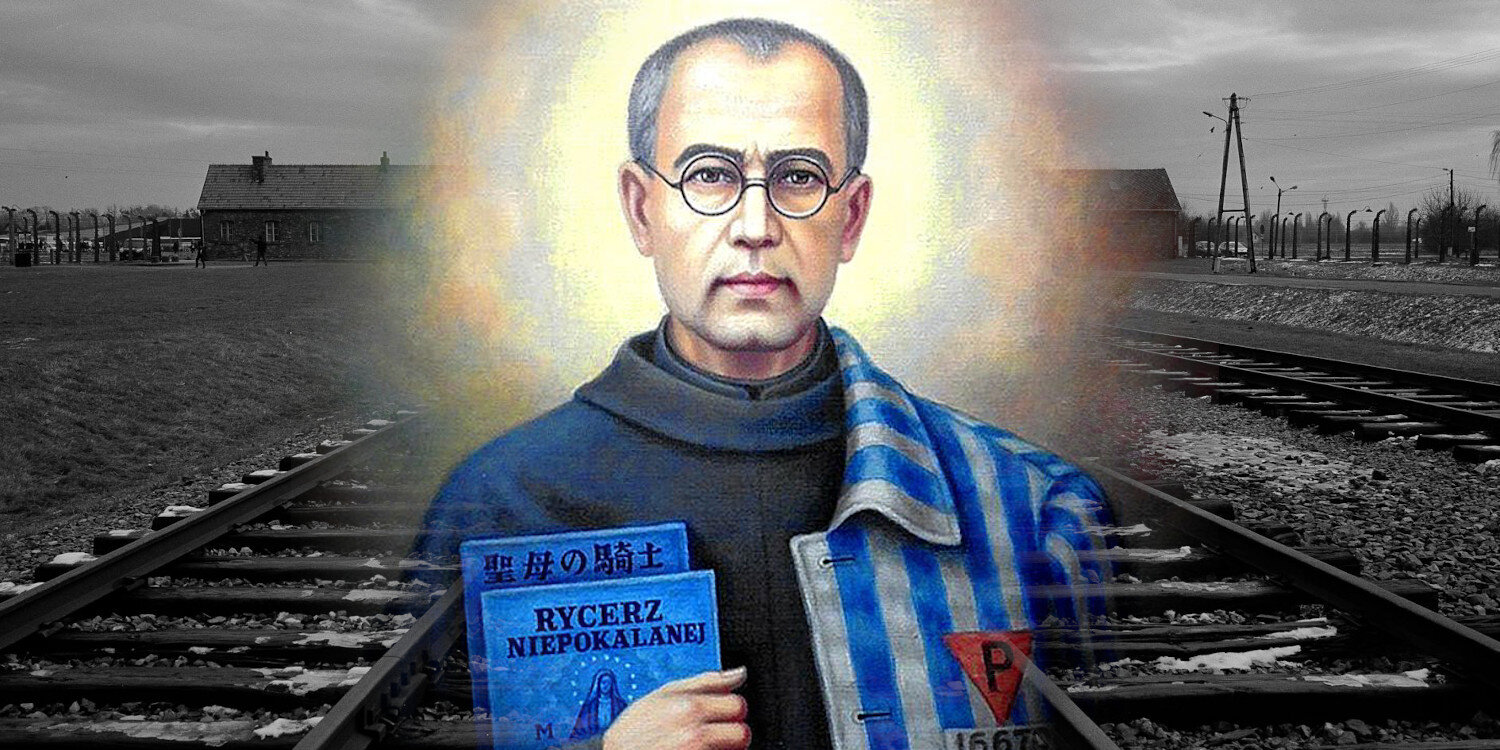
The Parable of the Priest
I was slow to awaken to this. For too many days and nights in wrongful imprisonment, I pled my case to the Lord and asked Him to send someone to deliver me from this present darkness. It took a long time for me to see that perhaps I have been looking at this unjust imprisonment from the wrong perspective. I have railed against the fact that I am powerless to change it. I can only change myself. I know the meaning of the Cross of Christ, but I was spiritually blind to my own. Ironically, in popular writing, prison is sometimes referred to as “the belly of the beast.”
After a dozen years of railing against God in prison, I slowly came to the possible realization that no one was sent to help me because maybe I am the one being sent. My first nudge in this direction came upon reading one of the most mysterious passages in all of Sacred Scripture. It arose when I pondered what exactly happened to Jesus between the Crucifixion and the Resurrection, the three days He refers to in the Sign of Jonah parable in the Gospel of Matthew above. A cryptic hint is found in the First Letter of Peter:
“For it is better to suffer for good, if suffering should be God's will, than to suffer for evil. For Christ also suffered for sins once for all, the righteous for the unrighteous, in order to bring you to God. He was put to death in the flesh, but made alive in the Spirit, in which he also went and made a proclamation to the spirits in prison who in former times did not obey.”
— 1 Peter 3:17-20
The second and much stronger hint also came to me in 2006, twelve years after my imprisonment commenced. This may be a familiar story to long time readers, but it is essential to this parable. I was visited in prison by a priest who learned of me from a California priest and canon lawyer whom I had never even met. The visiting priest was Father James McCurry, a Conventual Franciscan who, unknown to me at the time, had been a postulator for the cause of sainthood of St. Maximilian Kolbe whom I barely knew of.
Our visit was brief, but pivotal. Father McCurry asked me what I knew about Saint Maximilian Kolbe. I knew very little. A few days later, I received in the mail a letter from Father McCurry with a holy card (we could receive cards then, but not now). The card depicted Saint Maximilian in his Franciscan habit over which he partially wore the tattered jacket of an Auschwitz prisoner with the number, 16670. I was strangely captivated by the image and taped it to the battered mirror in my cell.
Later that same day, I realized with profound sadness that on the next day — December 23, 2006 — I would be a priest in prison one day longer than I had been a priest in freedom. At the edge of despair, I had the strangest sense that the man in the mirror, St. Maximilian, was there in that cell with me. I learned that he was canonized by Pope John Paul II in 1982, the year I was ordained. I spent a lot of time pondering what was in his heart and mind as he spontaneously stepped forward from a line of prisoners and asked permission to take the place of a weeping young man condemned to death by starvation. I wrote of the cell where he spent his last days in “Saint Maximilian Kolbe and the Gift of Noble Defiance.”
On the very next day after pondering that man in the mirror on Christmas Eve, 2006 — a small but powerful book arrived for me. It was Man’s Search for Meaning, by Auschwitz survivor, Dr. Viktor Frankl, a Jewish medical doctor and psychiatrist who was the sole member of his family to survive the horror of the concentration camps. I devoured the little book several times. It was one of the most meaningful accounts of spiritual survival I had ever read. Its two basic premises were that we have one freedom that can never be taken from us: We have the freedom to choose the person we will be in any set of circumstances.
The other premise was that we will be broken by unending suffering unless we discover meaning in it. I was stunned to see at the end of this Jewish doctor’s book that he and many others attributed, in part, their survival of Auschwitz to Maximilian Kolbe “who selflessly deprived the camp commandant of his power over life and death.”

The Parable of a Prisoner
God did not will the evil through which Maximilian suffered and died, but he drew from it many threads of connection that wove their way into countless lives, and now I was among them. For Viktor Frankl, a Jewish doctor with an unusual familiarity with the Gospel, Maximilian epitomized the words of Jesus, “Greater love has no man than this, that a man lay down his life for his friends.” (John 15:13)
I asked the Lord to show me the meaning of what I had suffered. It was at this very point that Pornchai Moontri showed up in the Concord prison. I have written of our first meeting before, but it bears repeating. I was, by “chance,” late in the prison dining hall one evening. It was very crowded with no seats available as I wandered around with a tray. I was beckoned from across the room by J.J., a young Indonesian man whom I had helped with his looming deportation. “Hey G! Sit here with us. This is my new friend, Ponch. He just got here.”
Pornchai sat in near silence as J.J. and I spoke. I was shifting in my seat as Pornchai’s dagger eyes, and his distrust and rage were aimed in my direction. J.J. told him that I can be trusted. Pornchai clearly had extreme doubts.
Over the next month, Pornchai was moved in and out of heightened security because he was marked as a potential danger to others. Then one day as 2006 gave way to 2007, I saw him dragging a trash bag with his few possessions onto the cell block where I lived. He paused at my cell door and looked in. He stepped toward the battered mirror and saw the image of St. Maximilian Kolbe in his Franciscan habit and Auschwitz jacket and he stared for a time. “Is this you?” he asked.
Within a few months, Pornchai’s roommate moved away and I was asked to move in with him. Less than four years later, to make this long and winding parable short, Pornchai was received into the Catholic faith on Divine Mercy Sunday, 2010. Two years after that, on the Solemnity of Christ the King, 2012, we both followed Saint Maximilian Kolbe into Consecration to Jesus through the Immaculate Heart of Mary.
Most readers likely know by now the depth of the wounds Pornchai experienced in life. He was abandoned as a child in Thailand, suffered severe malnutrition, and then, at age eleven, he fell into the hands of a monster. He was taken from his country and the only family he knew, and was brought to the U.S. where he suffered years of unspeakable abuse. He escaped to a life of homelessness, living on the streets as a teenager in what was to him a foreign land. At age 18, he accidentally killed a much larger man during a struggle, and was sent to prison.
Pornchai’s mother, the only other person who knew of the years of abuse he suffered, was murdered on the Island of Guam after being taken there by the man who abused him. In 2018, after I wrote this entire account, that man, Richard Alan Bailey, was brought to justice and convicted of forty felony counts of sexual abuse of Pornchai. After the murder of his mother at that man’s hands, Pornchai gave up on life and spent the next seven years in the torment of solitary confinement in a supermax prison in the State of Maine. From there, he was moved here with me.
Over the ensuing years, as I gradually became aware of the enormity of Pornchai’s suffering, I felt compelled to act in the only manner available to me. I followed Saint Maximilian Kolbe into the Gospel passage that characterized his life in service to his fellow prisoners: “Greater love has no man than this, that a man lay down his life for his friends.” (John 15:13)
I asked the Lord, through the Immaculate Heart of Mary, to free Pornchai from his past and the seemingly impenetrable prisons that held him bound. I offered the Lord my life and freedom just as Maximilian did on that August day of 1941. Then I witnessed the doors of Divine Mercy open to us.
This blog began just then. In the time he spent with me, Pornchai graduated from high school with honors, earned two additional diplomas in guidance and psychology, enrolled in theology courses at Catholic Distance University, and became an effective mentor for younger prisoners in a Fast Track program. He tutored young prisoners in mathematics as they pursued high school equivalency, and, as I have written above, he had a celebrated conversion to the Catholic faith, a story captured by Felix Carroll in his famous book, Loved, Lost, Found.
Pornchai became a master craftsman in woodworking, and taught his skill to other prisoners. One of his model ships is on display in a maritime museum in Belgium. His conversion story spread across the globe. After taking part in a number of Catholic retreat programs sponsored by Father Michael Gaitley and the Marians of the Immaculate Conception, Pornchai was honored as a Marian Missionary of Divine Mercy. So was I, but only because I was standing next to him.
One of the most beautiful pieces of writing that has graced this blog was not written by me, nor was it written for me. It was written for you. It was a post by Canadian writer Michael Brandon, a man I have never met, a man who silently followed the path of this parable for all these years. His presentation is brief, but unforgettable, and I will leave you with it. It is, “The Parable of the Prisoner.”
+ + +
Saint Maximilian Kolbe and the Gift of Noble Defiance
Book: Man’s Search for Meaning
Book: Loved, Lost, Found

Note from Fr. Gordon MacRae: On September 10, Pornchai will mark his 48th birthday. It is his first birthday in freedom. In 2020 on that date he was just beginning a grueling five months in ICE detention awaiting deportation. For the previous 29 years he was in prison. For the four years before that he was a homeless teenager having fled from a living nightmare.
I asked him what he would like for his birthday, and this was his response:
“I have never seen the ocean. I would like to go to the Gulf of Thailand and visit my cousin who was eight years old when I was eleven and last saw him. He is now an officer in the Thai Navy.”
Please visit our “SPECIAL EVENTS” page, and our BTSW Library category for posts about Pornchai.


ICE Finally Cracks: Pornchai Moontri Arrives in Thailand
The most amazing account of survival and conversion in modern American Catholicism begins a new chapter as Pornchai Moontri is sent home to Thailand after 36 years.

The most amazing account of survival and conversion in modern American Catholicism begins a new chapter as Pornchai Moontri is sent home to Thailand after 36 years.
I have read many riveting accounts of human survival and life changing conversion. In virtually all of them the most harrowing chapters are the last as the story turns down the road of some final test. This has been true in the story of Pornchai Moontri as well. If you are not yet familiar with all that preceded the most recent six months of his life, you should consider catching up. Many lives have been changed from this account of a soul ascending from the torment humans can inflict upon each other to the pinnacle of a life lived in the light of Divine Mercy. The best place to take that short journey is, “Pornchai Moontri: Mercy Inside Those Stone Walls,” by Felix Carroll.
But it is of the last six months that I now write. First, let me recap the previous 36 years. Most readers know that Pornchai was removed from his home in Thailand against his will in 1985. Taken by false pretense at age 11, he was brought to Bangor, Maine where he suffered years of sexual abuse and violence. Multiple attempts to flee resulted in police reports by local officers who did not understand his protests while he was handed back over to his tormentor. Finally, he escaped at age 14 and became homeless, and then a ward of the State, and then homeless again.
It was not until reading of Pornchai’s life of torment in these pages that law enforcement in the State of Maine took an interest, and opened an investigation into Pornchai’s life. Thirty-four years after the commission of his crimes, Richard Alan Bailey was convicted of forty felony counts of sexual abuse of Pornchai. The last person to confront Bailey about his crimes was Pornchai’s mother in the year 2000. As a proximate result, she was beaten to death in what remains today an unsolved “cold case” homicide on the Western Pacific U.S. Territorial Island of Guam.
Pornchai was in solitary confinement in the Maine State Prison when he learned of his mother’s death at the hands of the man who haunted his nightmares. He sank to the lowest bottom of life, a point from which he believed he could never return. There was no hope, no redemption, no future, and no God. All had been taken from him.
Five years later, Pornchai was moved to the New Hampshire State Prison. He could have ended up anywhere in the country, but Divine Providence had another plan. One year later, in 2006, he was living in a cell with me. Just imagine this. After all he had silently endured in life, he ended up in a prison cell with a Catholic priest falsely accused of the very things that destroyed him. Only God could have devised such a starting point for a relationship that would reshape lives and redirect the future.
Four years later, in 2010, Pornchai was received into the Catholic faith on Divine Mercy Sunday. He took the name, Maximilian, after the Saint of Auschwitz who gave his life to salvage the life of another prisoner. A new life had arisen from the wreckage of the past. Finding redemption in the most unlikely place, Pornchai’s new life gave voice to Saint Paul’s revelation in Romans (5:20):
“Where sin increased, grace abounded all the more. ”
Two years later in 2012, Pornchai delivered the Valedictorian address for his high school graduating class. From there he obtained a scholarship for Catholic Studies at Catholic Distance University from where he maintained a perfect 4.0 GPA. Then he completed two diploma programs in psychology and social work at the Stratford Career Institute, and a certificate in Culinary Arts at the NH Prison’s Career and Technical Education Center. I was an eager beneficiary of that particular new skill. He also completed hundreds of hours in programs like Restorative Justice, Interpersonal Violence Prevention, Alternatives to Violence (for which he became a mentor and facilitator), and Father Michael Gaitley’s entire Hearts Afire list of programs. Father Gaitley then invited both of us to official membership in the Marian Missionaries of Divine Mercy.

Part II: Thrust Back upon the Road to Perdition
Clare Farr, a trademarks attorney in Western Australia and part of a small Intellectual Property law firm, worked with me and together, from two continents, we brought Richard Alan Bailey to justice. Pornchai could never imagine this to be possible, but it happened. Clare also assisted me in negotiations with the Maine prison system that had jurisdiction over Pornchai's case. No one who came to know this story believed that his own offense would have ever happened had he not first been the victim of horrible crimes. We were successful, and Pornchai was granted substantial earned time off his sentence for his remarkable efforts at rehabilitation.
On September 8, 2020, Pornchai was handed back over to Maine officials for the final days of his sentence. He wrote of this moment in a most moving guest post, “Pornchai Moontri: Hope and Prayers for My Friend Left Behind.” Just three days later, on September 11, 2020, Pornchai was handed over to Immigration and Customs Enforcement (ICE) for removal from the United States. This became the final test that I mentioned at the beginning of this post.
September 11 was a Friday so Pornchai spent that weekend locked alone in a cell in the Cumberland County Jail in Portland, Maine. The fact that his sentence had already been served in full seemed completely lost on his keepers. He was told repeatedly that he is no longer a prisoner, but is now an ICE detainee. Alone in his cell, he had no contact with anyone, no access to a telephone, and no information. Clare Farr contacted ICE and was told that Pornchai would be moved to the Boston area on the following Monday to prepare for his travel to Thailand. When Monday and the ICE officers came, they told Pornchai the same thing, adding that he will be in Thailand by the end of September.
That night, he was taken to an air field in New Hampshire and flown along with dozens of Latino detainees on an ICE plane to Texas. Others detained at the Southern border were picked up there, and they were all flown to a private, for-profit GEO Group ICE detention facility in Pine Prairie, Western Louisiana. Meanwhile, ICE agents instructed the Royal Thai Consulate in New York to send Pornchai’s official travel documents to Boston — where they sat, lost, for weeks.
It took me a few days to find Pornchai. I had given him the number of his Godmother, Charlene Duline, and coached him to memorize it. I told him to call her collect from anywhere, and from there we could get funds onto a telephone account for him. He called, but did not understand that the system requires several minutes to process a collect call. Charlene, a former State Department Foreign Service Officer well acquainted with bureaucracy, was doing her best but Pornchai kept hanging up after waiting several minutes. Calls to the for-profit ICE facility for assistance were only met with rude refusals to assist.
I tell this story to convey the ridiculous nature of the one-size-fits-all treatment of ICE detainees. We had a team working on three continents to assist Pornchai, but we were challenged to our limit. What must some poor Mexican or Honduran family go through to navigate the nightmare of ICE? Not accepting defeat, and refusing to lose touch with Pornchai, I had to call Clare Farr in Australia who in turn called the ICE officer assigned to Pornchai’s case in Louisiana. He then had to call the GEO facility in Pine Prarie, LA, to tell a staff member to walk 20 feet to Pornchai’s cell and tell him to stay on the phone until his call can be processed.
It went like this day after day, week after week, month after month. ICE agents would show up once a week and Pornchai would ask them when he is leaving. “Maybe in a week or two,” he was always told. Inquiries from Clare Farr met with more cooperation, but no more honesty. She was told that ICE is actively working with the Thai Consulate to arrange travel. This was said on October 1. Two weeks later, Clare’s email to the Thai Consulate revealed that no contact from ICE had ever taken place.
Because Pornchai was originally under the jurisdiction of the State of Maine, we reached out to the office of Maine Senator Susan Collins for assistance. Her office declined to become involved. We then reached out to the office of Senator Angus King. His office made a determined effort to intercede with ICE, but received only a blunt refusal on the part of ICE to cooperate. It was made clear to us that ICE is accountable to no one.

Part III: Jena, Louisiana
Perhaps the most disturbing aspect of all this is the exploitation of detainees and their loved ones, most of whom are already financially challenged. Food portions are scant, and then food is sold to detainees at astronomical rates. Phone calls to loved ones were charged at 11-cents per minute with big kickbacks to the facility. A tablet for messages and games was available for lease at the rate of $24 per 8-hour shift. On a weekly basis, we provided funds for food and phone so Pornchai could remain in touch. I insisted that he call daily. I knew only too well how easily someone could simply “disappear” in ICE detention.
In the first week of October, Pornchai was suddenly moved to a facility in Jena, Louisiana in the center of the state. It was another for-profit detention center owned by GEO Group. We inquired with ICE headquarters in Washington, DC and were told that if Pornchai was moved to Jena, it’s because he is “very close” to a flight to Thailand. In a noisy, chaotic environment with up to 70 detainees in a room with blaring lights on around the clock, I feared for Pornchai’s safety and sanity.
The census consisted mostly of Central Americans detained at the Southern border. Only three of the 70, including Pornchai, were Asian: one from Laos, and one — an 18-year-old who spoke no English — from Vietnam. The young Vietnamese man had been there in Jena for over a year and had no contact with anyone outside. Pornchai asked if he could buy some extra food for him. I was embarrassed that he asked. He very quickly moved into the bunk above Pornchai who managed to keep him out of the drama always raging around them.
We hoped and prayed that the stay in Jena would not be long, but October came and went. Pornchai said he protested one day that his prison sentence is over so why is he still in prison? He was told, : “If you don't like it, you shouldn't have come to this country.” That spoke volumes about the amount of background ICE bothers to gather about detainees in their custody.
Complicating matters somewhat, Thailand had closed its borders to travellers with the exception of the repatriation of its own citizens. We were able to obtain a monthly list of repatriation flights to keep Pornchai’s hopes up. Several of these flights were out of New Orleans where jurisdiction over Pornchai’s ICE file resided. We would pour over these lists of flights trying to determine which ones Pornchai might be on. This became a futile and frustrating effort as October turned to November with no progress in sight.
When Pornchai was moved to Louisiana, jurisdiction over his Thai citizenship was transferred from the Royal Thai Consulate General in New York to the Thai Embassy in Washington. The Embassy was more than cooperative with us, and highly professional — a real tribute to the government and people of Thailand. The travel documents issued by the Embassy were valid for ninety days and would expire on December 10. Surely, we thought, ICE would not simply let them expire without action leaving Pornchai stranded and having to start all over again.
But that is exactly what they did. It was at that time that Catholic League President Bill Donohue and I put together a petition to the White House to spark some action in this matter. We had no idea at the time just how mired in its own drama the White House would become. Hundreds of Catholic League members and our own readers took part in that petition, and I thank you all. We may never know what impact this had on the final outcome, but my respect for Bill Donohue and the Catholic League has become immense.
Starting in early November, one of our friends, nurse and prolife activist Claire Dion, developed a plan that would allow Pornchai and me to speak each day. She sacrificed a lot to bring this about. Seven nights a week, Claire would be available to facilitate a conference call between Pornchai and me. This great effort is demonstrated in the photo below. It depicts one of our conversations which, for my part, became a daily pep talk to give Pornchai hope that even being encased in ICE will one day come to an end. The photo is somewhat humorous as Claire placed two cell phones with microphones and speakers opposite each other, but it worked.

Part IV: Navigating through the Night
Navigating Pornchai’s pain and frustration in these nightly calls was equally frustrating for me, but the calls were very necessary. As 2020 turned to 2021, our entire team had become almost as despondent as Pornchai. Was there to be no hope? On December 30, at my request, Clare Farr in Australia filed a civil rights petition with the Department of Homeland Security in Washington. As the agency that oversees ICE, we asked DHS to review Pornchai’s case for removal. As with other efforts, we may never know what impact, if any, this had behind the scenes. Bill Donohue and the Catholic League doubled down on their effort to bring this story to the White House.
Then our contact in Thailand obtained from the Embassy a list of the repatriation flights for January. There were only seven, and all were flying out of JFK International in New York. On that same day, I received a message from Australia with news from ICE that Pornchai would soon be relocated to New York. We were so hopeful that I made the mistake of conveying both pieces of news to Pornchai. Just days later, my heart sank as I had to tell him the news that all the repatriation flights scheduled for JFK for the month were filled and he did not make the cut. We were both devastated.
In mid January we received word that Pornchai was scheduled for a non-repatriation flight on January 25 to Seoul, South Korea. From there, he would board another flight to Bangkok. Pornchai was elated beyond measure with this news, and so were we. However, three days before the flight I had to convey to him the bad news that ICE postponed it. I believe that the ICE bureaucracy arranged the flight from New York to Bangkok but neglected to arrange to get him from Louisiana to New York.
We then learned that the flight was rescheduled for February 8. This became even more hopeful when ICE flew Pornchai from Louisiana to New York on February 3. His last five days in ICE custody proved to be the worst of all. He was locked in solitary confinement with only 20 minutes per day out of his cell with a choice of either a shower or a phone call. He had plenty of time alone to let his anxieties run amok. He feared another postponement and an extension of that nightmare. But he prayed, and knew that I prayed as well.
I would be remiss to not add the most important paragraph of this post. I was at the end of my third attempt at a Novena to Mary, Undoer of Knots. By this third effort, I had transitioned from prayerful, to cautiously hopeful, to downright demanding. She had, after all, intervened for us many times to undo the inevitable knots of prison. Surely ICE would not defeat Her! And it did not.
At noon on February 8, ICE agents escorted Pornchai aboard a Korean Airlines flight to Seoul out of JFK Airport. Sixteen hours later he boarded another flight from Seoul to Bangkok arriving at 11:27pm (Bangkok time) on February 9. He was exhausted but ready to face a new challenge in his life, and adjustment to freedom and a country and culture he had not seen for 36 years.
The Thai government has taken many steps to confront the Covid-19 crisis including the closing of its borders to international flights. Returning Thai citizens are required to spend their first 15 days home in quarantine at a hotel assigned by the Thai government. Our friend and Thai contact, Viktor Weyand scrambled to raise funds for the hotel stay and the reservations were made. Pornchai was assigned to a spacious room at the Holiday Inn Express Bangkok near the center of the city. He arrives there early in the morning on the day this is posted.
After all these years living with me in a 60-square-foot cell, he may find his room at the Holiday Inn to be too daunting and the bed just a bit too soft. I have already made him promise not to sleep in the bathtub.
+ + +
Addendum: Unlike Pornchai’s entire five-month stay with ICE, the two ICE agents who escorted him to Bangkok had obviously done a bit of homework. He reports that they were both professional and kind. Yes, even in a government bureaucracy one can be both. I commend these agents and I thank them.
+ + +
Note from Father Gordon MacRae: Donors purchased an iPhone for Pornchai which was left in his Holiday Inn Express hotel room to figure out. He has never touched, or even seen, a smart phone. For that matter, neither have I. But we will be speaking as soon as he can take a call. That will hopefully happen on the day this is posted. I asked him what is the first thing he will do after his 5-month ordeal in ICE. He said he will take a 6-hour bath and then sleep. Pornchai lost 20 pounds during his stay with ICE, but Viktor Weyand sent me a copy of the hotel’s Thai menu. Those pounds are not lost for long!
I will keep you posted on progress — and maybe a few selfies taken with the iPhone. Pornchai has the challenge of his life ahead. He is now adjusting to freedom and a new country and culture all at once after 28 years in prison and a 36-year absence from his homeland. Please pray for him.
He said he can’t wait to see Beyond These Stone Walls, on his iPhone, and then tell me what it looks like.
+ + +
Here are the related links presented in this post:
Human Traffic: The ICE Deportation of Pornchai Moontri
Pornchai Moontri: Hope and Prayers for My Friend Left Behind
and one other that I recommend:

Please share this post!

An Open and Urgent Letter to President Donald Trump
In his 2020 State of the Union Address, President Trump showed mercy on some who had tragically fallen. This is a plea for mercy and justice for Pornchai Moontri.

In his 2020 State of the Union Address, President Trump showed mercy on some who had tragically fallen. This is a plea for mercy and justice for Pornchai Moontri.
December 2, 2020
Dear Mr. President:
I write on behalf of many Catholic followers of Divine Mercy with an urgent but simple appeal. Putting the politics of this nation's polarization aside, I join many American Catholics and people of other faiths who have been moved by your consistent agenda to promote both law and order and much needed reform of the criminal justice system. I wrote for publication about your landmark effort in "President Donald Trump's First Step Act for Prison Reform."
It is a basic tenet of your First Step Act that when a prison term has been fully served, it should not continue in other forms such as joblessness, job discrimination, and society's ongoing pointed finger of shame. Your First Step Act is a second chance for many to rise above the past and embrace a future of hope. This will be a part of your legacy for years to come.
I am writing to request the assistance of your Administration in what should be a simple matter. As a teenager at age eighteen, Pornchai Moontri committed a crime out of desperation. He has served every day of his sentence and was released at age forty-seven on September 11, 2020 to the custody of Immigration and Customs Enforcement for deportation to his native Thailand.
Mr. President, it is important to note that neither Mr. Moontri nor his many advocates and friends who have become his family in America are seeking commutation of his removal order. However, that could also be a just and merciful outcome. In lieu of that, what he and we seek is his rapid repatriation to his native Thailand, a nation from which, as you will read below, he was removed at age eleven as a victim of human trafficking. Since having fully served his prison sentence, Mr. Moontri has experienced an unjust and merciless three-month extension of that sentence with no end in sight.
Taxpayers already have spent far more for Mr. Moontri's detention than would have been spent for his removal. We, his advocates, are more than willing to purchase his airfare to Thailand if permitted. We have built a future for him there with good people who anxiously await his return. This could be remedied easily by your office with a simple phone call.
There is much more to this story which should become part of your discernment on the right course of action. Pornchai Moontri was a child victim of human trafficking. He was abandoned by his mother at age two in Thailand. She fell under the influence and control of an American, Richard Alan Bailey, who brought her to the U.S. After a passage of nine years, Bailey sent her to retrieve Pornchai at age eleven and bring him to this country.
Pornchai was imprisoned by Bailey who repeatedly raped and beat him. At age thirteen he escaped but was returned by local police who did not understand his Thai protests. At age fourteen he escaped again and became a homeless adolescent living on the streets of a foreign country. At age eighteen, intoxicated and broken, he took a man's life during a struggle.
While awaiting trial at age eighteen in 1992, Pornchai was visited by his mother who told him that Richard Bailey would harm her if Pornchai divulged any of what had happened to him. In fear for his mother’s life, Pornchai thus remained silent throughout his trial, refusing to participate in his own defense. In 2000, while attempting to leave Richard Bailey, Pornchai's mother was murdered on the U.S. Territorial Island of Guam while in Bailey's company. She was beaten to death. This matter remains an unsolved “cold case” homicide despite new evidence pointing to an obvious suspect who has never answered for this crime.
In 2018, after becoming fully aware of this story, from articles I had written and published, Pornchai's advocates brought Richard Bailey to justice. On September 12, 2018 Bailey was convicted in Penobscot (Maine) Superior Court on forty felony counts of child sexual abuse against Pornchai Moontri.
A simple Google search of "Pornchai Moontri" will reveal much documentation of the above. It will also reveal the talented, gifted, intelligent man that Pornchai has become. Pornchai became a devout Catholic convert and a celebrated member of the Divine Mercy movement in the Catholic Church. He has been the subject of numerous published articles and a book, Loved, Lost, Found by Marian Press editor and author, Felix Carroll.
As I mentioned above, it would be both justice and mercy if Pornchai's deportation order could be commuted, but he would nonetheless leave the United States for Thailand of his own accord. A life and future have been built for him there as a valued member of Divine Mercy Thailand. Regardless of what you decide in this matter, Mr. President, we implore you to help us get him out of ICE custody to commence rapid repatriation to his native land. Pornchai has suffered more than enough for one lifetime.
Respectfully Yours,
Father Gordon J. MacRaeBeyondTheseStoneWalls.comWe invite you to like and follow Beyond These Stone Walls Facebook.
Please share this post!
Editor’s Note: Please also read and share these related posts from Beyond These Stone Walls:
Human Traffic: The ICE Deportation of Pornchai Moontri
Help Pornchai
Please help us seek the assistance of President Trump by adding your voice to this petition. Please copy and paste the statement below to: https://www.whitehouse.gov/contact/ in the section WHAT WOULD YOU LIKE TO SAY?
Re: Pornchai Moontri ICE detention A-039064244
Pornchai went to prison at age eighteen for a crime of desperation. Having served his prison sentence in full, he was released at age forty-seven to the custody of Immigration and Customs Enforcement (ICE) for deportation to his native Thailand.
Pornchai was taken from Thailand at age eleven as a victim of human trafficking by an American who has recently been convicted of forty felony counts of sexual assault against Pornchai as a child.
With the help from a Catholic priest in prison, Pornchai sought counseling for severe PTSD, became educated graduating with highest honors, completed numerous programs in restorative justice and mental health, and is today a celebrated Catholic convert and member of the Divine Mercy movement in the Catholic Church. He has been the subject of numerous published articles and a book.
Now he is an ICE detainee held far beyond his sentence at an overcrowded for-profit ICE facility in Jena, LA. His ninety day travel documents issued by his embassy were allowed to expire with no action on his removal.
If you Google "Pornchai Moontri" you will be hard pressed to find a "criminal alien" in the results. As a person who has followed the story of Pornchai Moontri, I implore our government to secure the immediate repatriation of this remarkable man and survivor.
For further info, contact: maxmoontri (at) gmail (dot) com
