“There are few authentic prophetic voices among us, guiding truth-seekers along the right path. Among them is Fr. Gordon MacRae, a mighty voice in the prison tradition of John the Baptist, Maximilian Kolbe, Alfred Delp, SJ, and Dietrich Bonhoeffer.”
— Deacon David Jones
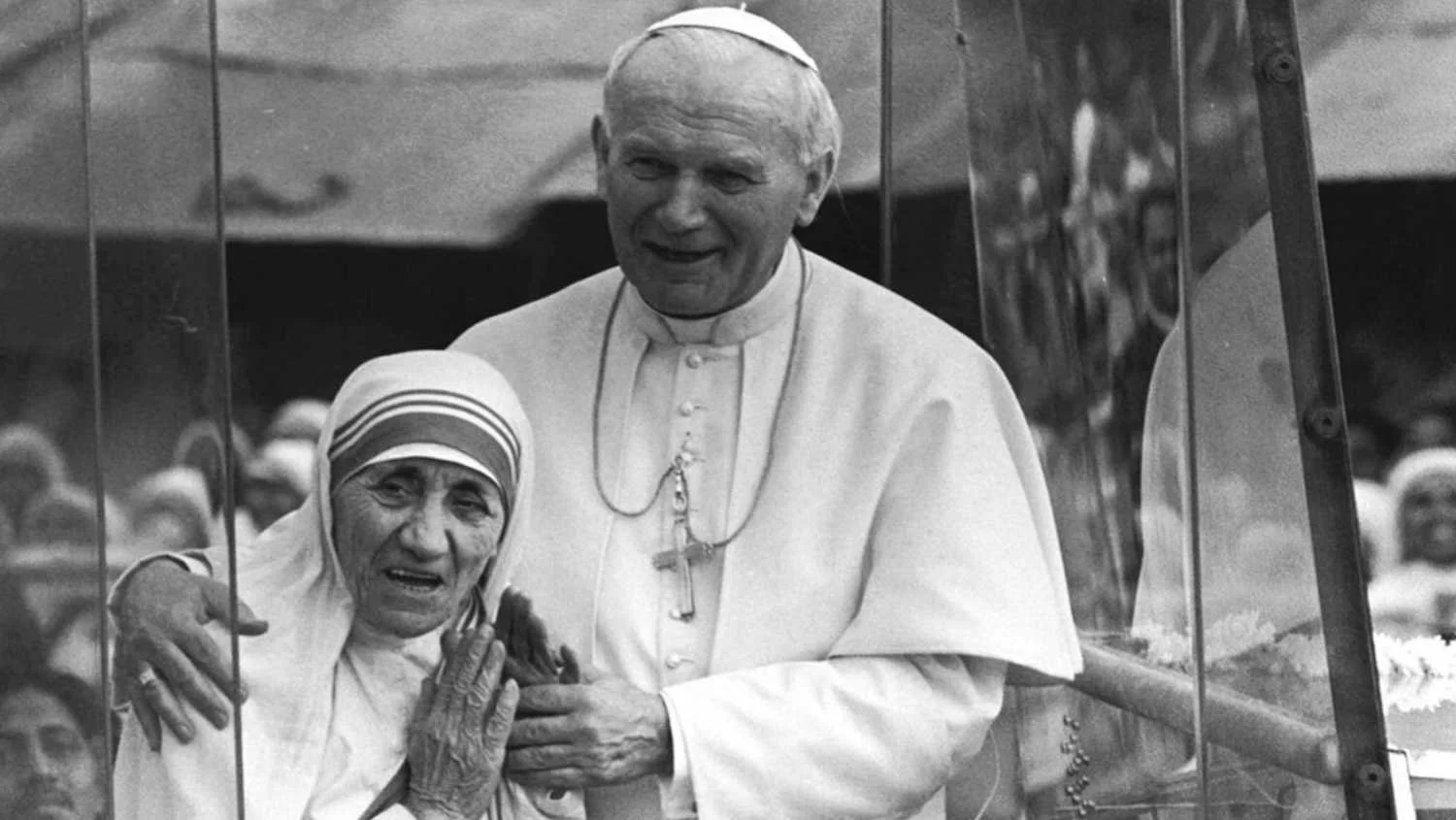
For Mother Teresa of Calcutta, Pentecost Illumined the Night
Discouragement is the deep spiritual valley of our age. For Mother Teresa of Calcutta, the Holy Spirit’s light came only at dawn in a long dark night of the soul.
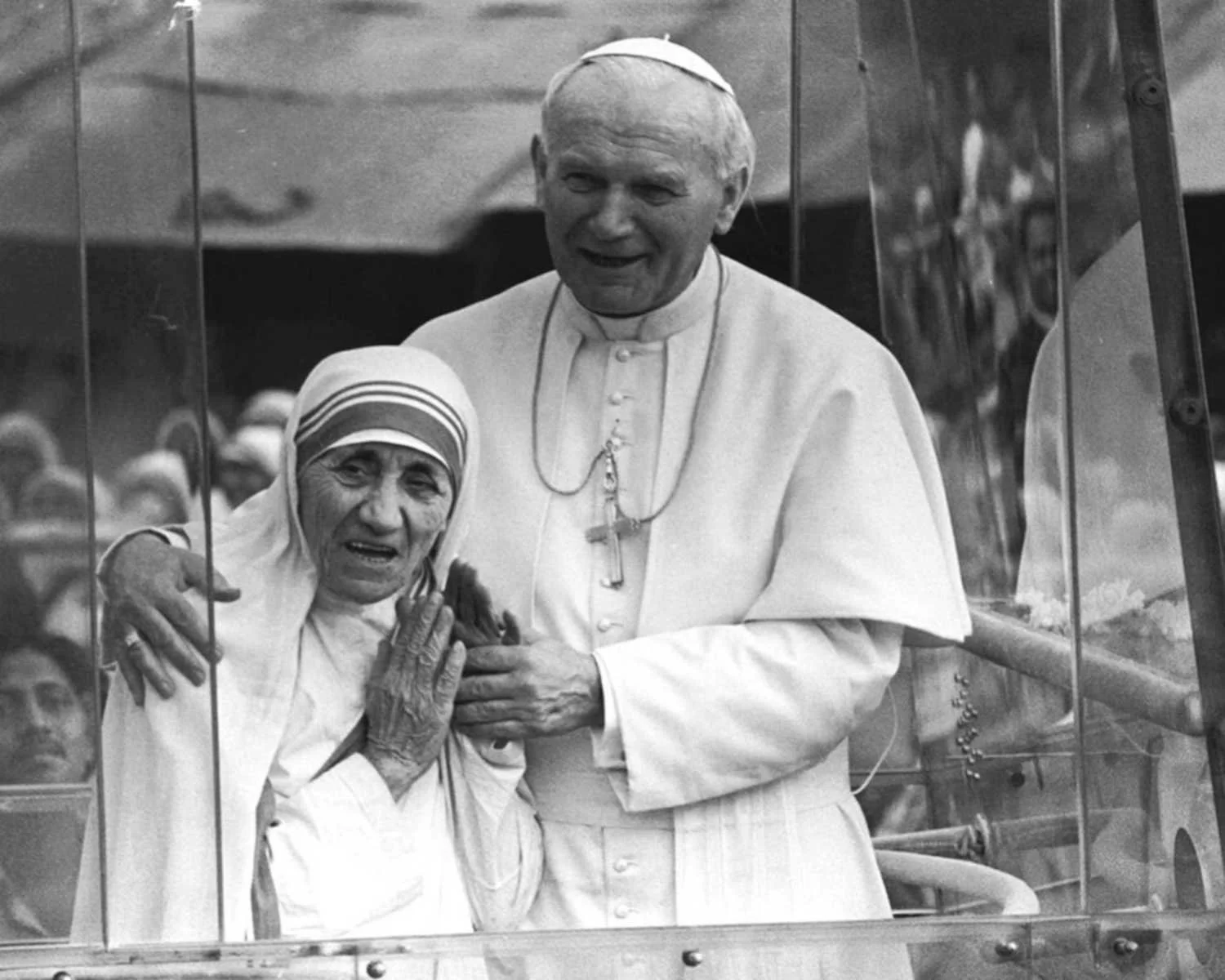
Discouragement is the deep spiritual valley of our age. For Mother Teresa of Calcutta, the Holy Spirit’s light came only at dawn in a long dark night of the soul.
May 13, 2026 by Father Gordon MacRae
I grew up a few miles north of Boston in an area known locally as the North Shore. Well, it is called that in print anyway. In conversation, it comes out something like, “the Noath Shoah.” I never knew that until I moved to another part of the country where people inexplicably pronounce the letter “R.” Anyway, I have lived in so many places since then that I have lost much of my Boston accent, but I can still translate it when I hear it.
There is an old North Shore saying, “Light finally dawns upon Marblehead.” I am not sure of its origin, but it makes logical sense. The seaside town of Marblehead is at the head of a deep harbor north of Boston, so the dawn’s early light is seen there a few seconds later than in other North Shore coastal towns. Its figurative meaning is that some reality that has been eluding us is now finally made clear.
Light finally dawned upon Marblehead today when I set out to write about Pentecost and ended up writing about Saint Mother Teresa of Calcutta. There is a connection that I had to spend some time ferreting out, and that is when the light finally dawned. I learned something important about her, and in the process, about myself.
But first, I know I am going to have a hard time dropping “Mother” from her name. “Saint” Teresa seems incomplete and already taken. So I guess that like Saint Padre Pio, she will be forever endowed with a title that has become a necessary part of her name. I am going to have to call her Saint Mother Teresa of Calcutta, and it has slowly caught on.
She was canonized on September 4, 2016, the eve of the date of her death in 1997. In life the person she was, the spirit she is, was eclipsed by the sorrowful mysteries of the poor to whom she devoted her life. The images of her presence among the poor, the disfigured, the utterly broken and rejected — even the despised — have always been part of the background landscape of my life as a priest, but to be honest I could never bring myself to linger on those scenes. They were just too painful. They always left me with a sense of inadequacy as a priest, afraid to look upon the broken too long lest I feel compelled to follow her lead.
I admired Mother Teresa’s presence at the peripheries of human suffering, but as a priest I admired it from too much of a safe distance. That troubles me today. I had to be compelled in priesthood to carry the cross of the outcast, a cross that brought me unwillingly to the scene of that post-resurrection appearance to Simon Peter in the Gospel of John.
“Truly, truly I say to you, when you were young, you fastened your own belt and walked where you would; but when you are old, you will stretch out your hands, and another will fasten your belt for you and carry you where you do not wish to go.”
— John 21:18
I have experienced those ominous words of John’s Gospel in a literal and terrifying way, but I found companions and some inner peace along the way as well. I wrote of one recently in “A Lesson From Saint Damien of Molokai, Leper Priest.” It was about how disappointment and discouragement have been part of my own dark night of the soul for thirty-two long years, and how Saint Damien of Molokai — whose feast day was observed on May 10 — taught me what my priorities must be in a life among prisoners.
And you know from many posts that I found other companions and mentors in Saint Maximilian Kolbe and Saint Padre Pio who have shown me by example that my life bound over by earthly powers must be lived out at the foot of Cross. In prison, others have joined me there, many others, but I remain in the dark.
Come Be My Light
Now I present this new friend at the foot of the Cross in the life of Mother Teresa of Calcutta, but I had to first shed all my assumptions about her. It is a little intimidating that she was awarded the Nobel Peace Prize in 1979 for her witness to the world’s broken, abandoned and poor. In life Mother Teresa was revered as a living saint. I just assumed that for her to be that person, to do the work that she did, Mother Teresa must have been given a gift of daily awareness of the light of supernatural grace that flowed within her and shined through her. Otherwise, I thought, she would just sink into dark desolation just as I have been known to do with far less in the way of grace to count on.
And when I do sink into that desolation, I sometimes stay for days, weeks, months, at one point in my imprisonment before Beyond These Stone Walls began, even years. And if my mail is any indication, many of you have had that same experience. Please, do not come to Beyond These Stone Walls because misery loves company. It really does not. Come here because together we can manage crosses of discouragement that alone might only elude us and crush our spirits. You cannot just go to Home Depot to buy a weed whacker to wipe out desolation. It is best to have someone show you how to use it.
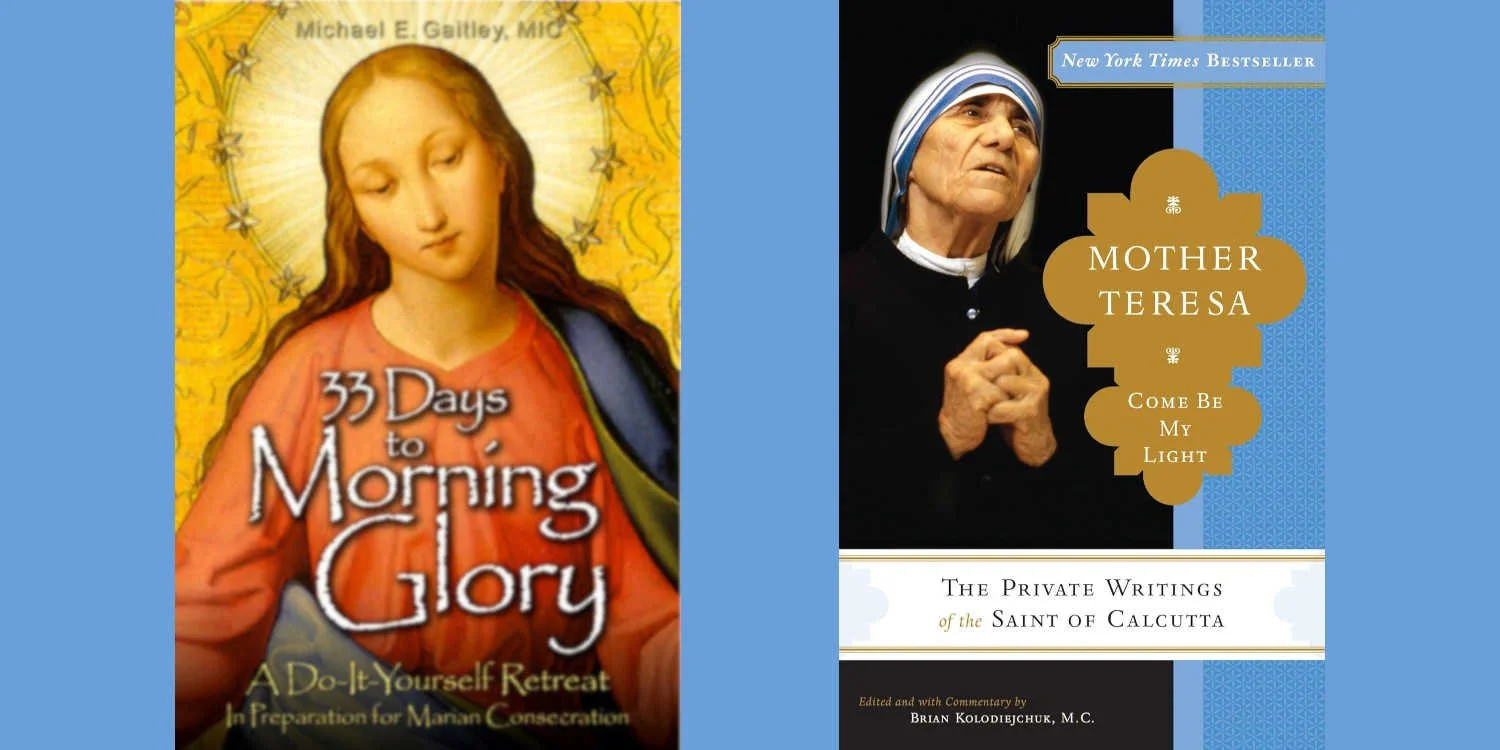
I was wrong about Mother Teresa, about my image of her basking in the reflected glow of the Holy Spirit. About a year after I started writing for this blog, I was given a copy of Mother Teresa’s Come Be My Light (Doubleday 2007) and my presumptions about her life in grace were quickly dispelled.
Some of the shallow secular media made a big deal of this book, presenting it as the latest Catholic scandal that the great Living Saint among us had long bouts of doubt and desolation. But for me she became human again, and an icon not so much of living grace, but of grace hard won through great spiritual struggle. Like Saint Maximilian Kolbe, she became someone I could let in, and learn from.
Centuries of Catholic art tend to depict the saints among us with halos, in a state of ecstatic pose before the True Presence. Mother Teresa’s own writings convey her struggle to survive spiritually in the present absence. In that, I can relate. In that, I find much hope. That sense of absence is something I have taken up in other posts (see “Priesthood in the Real Presence and the Present Absence”).
Through letters to her spiritual director, Come Be My Light is a guided tour of the interior life of this courageous woman whose heart “burned with the fire of charity” while at the same time experienced doubt and spiritual darkness in “a true dark night of the soul.” I began to do what she did, to pray not so much to be free of spiritual desolation, but to be free to serve even in the midst of it. Mother Teresa did that well. I get, at best, a C-minus, but I am still reading the book!
A part of it reminds me so much of something Canadian Catholic writer Michael Brandon wrote some time back in “All Things Turn to Good” at his Freedom Through Truth blog. While writing of the news of the failure of the justice system to pursue justice for me, Michael quoted another Saint Teresa, Saint Teresa of Avila, who once wrote, “God, if this is how You treat Your friends, it’s no wonder that you have so few.” When our friend, Pornchai Moontri, read that quote, it made him laugh. He had been having a hard time with discouragement over my plight, but the quote put it into perspective for him.
Do not read Come Be My Light in one sitting. Keep it on your night stand and read it prayerfully, a letter a day perhaps, or even reserved for moments in your own dark night. It has gotten me through many of my own. She is fast becoming the Patron Saint of “Get-off-your-priestly-arse-and-do-something-for-someone-instead-of-moping-about!”
The Advocate
There is a little side story to tell. While composing this post, I had left my copy of Come Be My Light in the prison library where I work, but I had only a Saturday afternoon to finish this post and get it into the mail. The library is closed on weekends so I had no way to retrieve the book. On Saturday morning, I remembered that Father Michael Gaitley had an entire section about the Marian consecration of Mother Teresa in his book, 33 Days to Morning Glory.
But I had left that book in the library as well! When I mentioned that to Pornchai, who was still here with me then, he said, “Well, there’s at least ten of them right here in this unit.” Then it struck me. How is it even possible that out of sixty prisoners in this one prison cell block, ten of them have completed 33 Days to Morning Glory and entered into Marian Consecration? That is one out of every six prisoners in our field of view. So all I had to do was walk to the cell next to mine and borrow the book. Duh!
When I did, I opened to the Table of Contents and was instantly reminded that three of my favorite saints comprise weeks two, three, and four of Father Gaitley’s 33 Days to Morning Glory, retreat. They are Saints Maximilian Kolbe, Mother Teresa, and John Paul II, and all are saints of the Twentieth Century.
I thought I had read this book cover to cover, but while looking at the Table of Contents to find the section on Mother Teresa, I unconsciously thumbed back two pages, and stopped on a name that jumped off the page at me. It was a short review of 33 Days by Father James McCurry, formerly Minister Provincial of the Conventual Franciscans, the order to which Saint Maximilian Kolbe belonged and the Vice Postulator for his cause for sainthood. How could I not have seen this before?
Many years ago, Father James McCurry came to visit me in prison. I had never previously met him, and today I cannot really explain what brought him here except a vague memory that he was passing through and heard of me through a friend of a friend. In the prison visiting room, Father McCurry asked, “What do you know of Saint Maximilian Kolbe?” It was a question that would change my life, and then change the life of Pornchai Moontri, and then others as well. I wrote of this first encounter with a Patron Saint in “The Parable of a Priest and the Parable of a Prisoner.”
So in searching for a section on Mother Teresa, she pointed me back to an old friend. The interconnections between everyone in this story are mind-boggling. Father McCurry wrote that the essence of Marian consecration is …
“St. Maximilian Kolbe’s mystical intuition about the interior life of Mary and the Holy Spirit in the life of a consecrant; Blessed Mother Teresa’s experience of Mary drawing us into her heart, where Jesus keeps repeating, ‘I thirst’; and St. John Paul’s understanding that consecration to Mary brings us to the source of merciful love — the Divine Mercy poised to transform the world.”
That is when the light finally dawned upon Marblehead! I realized that the world I am thrown into is in fact being transformed in spite of my protests about being here in the first place. Some around me — the poor, the outcasts, the discarded, the lepers, the criminals — are being transformed. How could it possibly have happened that one out of every six of these men around me in prison now lives a life consecrated to Jesus through Mary? How is it that the saints whose intercession I keep pursuing are already engaged in a work that has eluded me? Then I read in the Gospel:
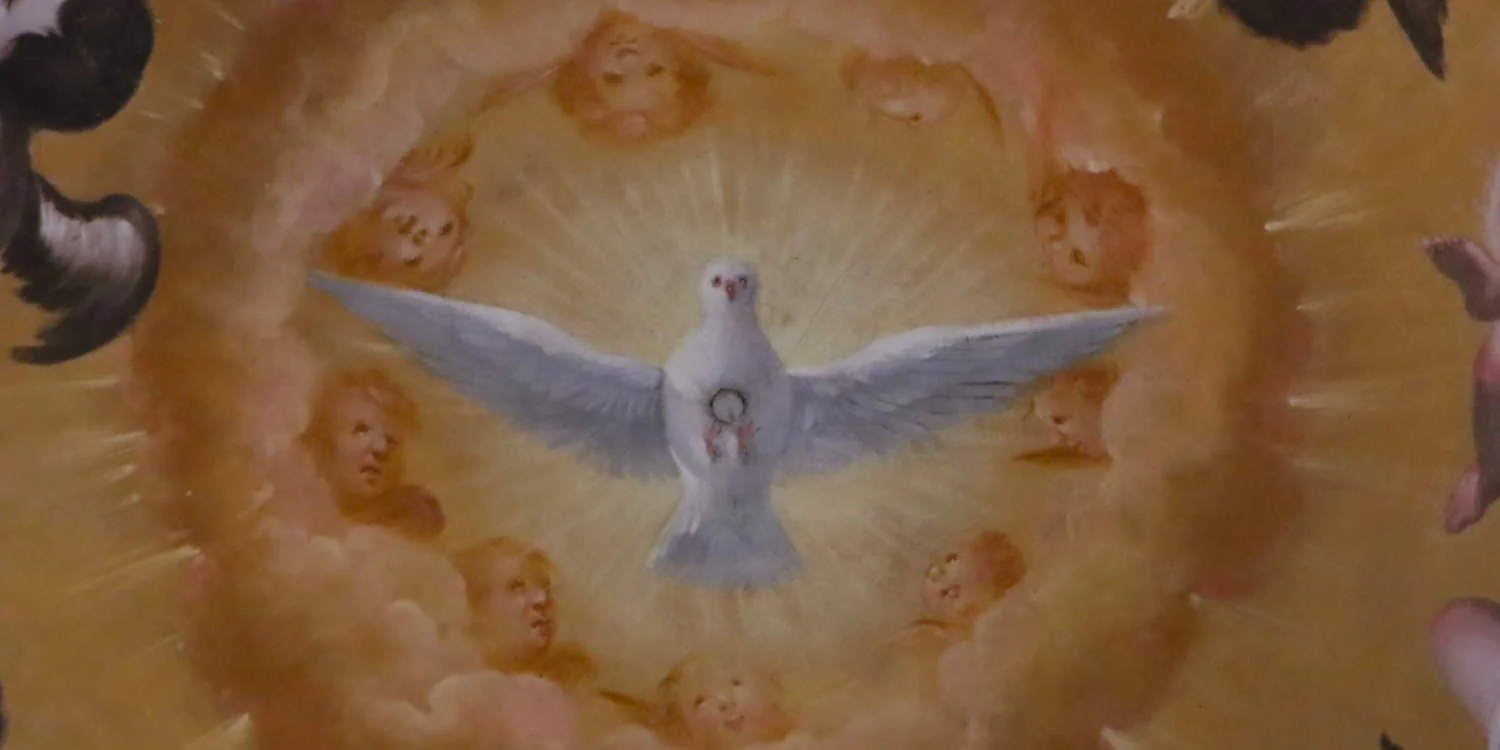
“I have told you this while I am with you. The Advocate, the Holy Spirit, whom the Father will send in my name, will teach you everything and remind you of all that I told you. Peace I leave with you; my peace I give you. Not as the world gives do I give it to you. Do not let your hearts be troubled or afraid.”
— John 14:25-28
This brings to light what Saint Mother Teresa of Calcutta learned in the dark. The Holy Spirit was her Advocate not in any obvious glory, but in desolation, and it was from there on the very edges of suffering humanity that she led countless souls to Christ, and witnessed to the world that the Lord hears the cry of the poor.
“It is beautiful to see the humility of Christ. This humility can be seen in the crib, in the exile in Egypt, in the hidden life, in the inability to make people understand him, in the desertion of his apostles, in the hatred of the Jews, and all the terrible suffering and death of his passion, and now in his permanent state of humility in the tabernacle, where he has rendered himself to such a small particle of bread that the priest can hold him with two fingers.”
— Mother Teresa of Calcutta
+ + +
Note from Father Gordon MacRae: We could extend the same invitation to Saint Mother Teresa that she extended to the Holy Spirit: Come Be My Light.
Thank you for reading and sharing this post about a great saint of our age. You may also like these related posts at Beyond These Stone Walls:
Lesson From Saint Damien of Molokai, Leper Priest
The Parable of a Priest and the Parable of a Prisoner

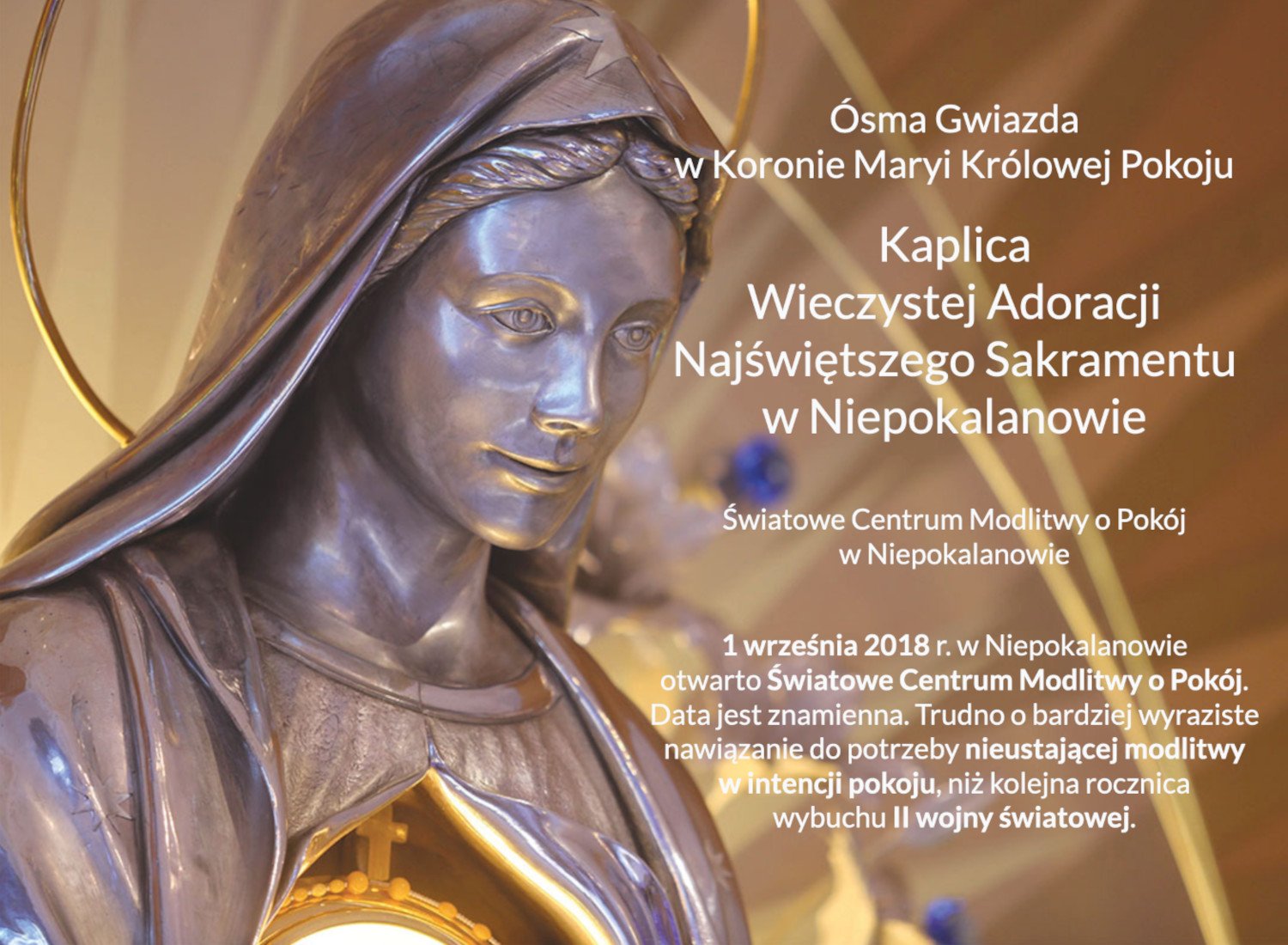

The Eucharistic Adoration Chapel established by Saint Maximilian Kolbe was inaugurated at the outbreak of World War II. It was restored as a Chapel of Adoration in September, 2018, the commemoration of the date that the war began. It is now part of the World Center of Prayer for Peace. The live internet feed of the Adoration Chapel at Niepokalanow — sponsored by EWTN — was established just a few weeks before we discovered it and began to include in at Beyond These Stone Walls. Click “Watch on YouTube” in the lower left corner to see how many people around the world are present there with you. The number appears below the symbol for EWTN.
Click or tap here to proceed to the Adoration Chapel.
The following is a translation from the Polish in the image above: “Eighth Star in the Crown of Mary Queen of Peace” “Chapel of Perpetual Adoration of the Blessed Sacrament at Niepokalanow. World Center of Prayer for Peace.” “On September 1, 2018, the World Center of Prayer for Peace in Niepokalanow was opened. It would be difficult to find a more expressive reference to the need for constant prayer for peace than the anniversary of the outbreak of World War II.”
For the Catholic theology behind this image, visit my post, “The Ark of the Covenant and the Mother of God.”

Finding Your Peace: Job and the Mystery of Suffering
The problem of evil and the pain of suffering plagued humanity from our beginning. How do we reconcile grace and hope in a loving God in the midst of suffering?

The problem of evil and the pain of suffering plagued humanity from our beginning. How do we reconcile grace and hope in a loving God in the midst of suffering?
January 31, 2024 by Fr Gordon MacRae
On the Fifth Sunday of Ordinary Time, ten days before Ash Wednesday this year, the assigned First Reading at Mass is from the Book of Job. It is Job’s lament against suffering, and the reading ends on a dismal note: “My days are swifter than a weaver’s shuttle; they come to an end without hope. Remember that my life is like the wind. I shall not see happiness again.” Job 7:6-7
In the Book of Job, you will have to suffer along with him through a lot more of his lament until you come to God’s response many chapters later. As I read the lament I marveled at how much of it I can relate to. As I wrote in a post just a week ago, my days are often faced without obvious hope. But I also marvel at how much I can relate to God’s response to Job.
I wrote a science post in 2022 entitled “The James Webb Space Telescope and an Encore from Hubble.” Longtime readers of this blog know of my enthusiasm for Astronomy and Cosmology. If I were God — and thank God I am not — I would have framed my answer to Job just as God did:
“Who is this that obscures divine plans with such words of ignorance? Where were you when I laid the foundations of the Earth? Have you ever in your life commanded the morning or shown the dawn its place? Can you bind the chains of the Pleiades, or loose the cords of Orion?”
— Job 38: 2,4,12,31
Job got the message. So did I, and it isn’t trite at all. The response of God was twofold: Number 1: I have a plan; Number 2: Trust in Number 1. It’s the trust part that I find difficult. His broader answer is found in all of Sacred Scripture as a whole. The Biblical characters are believers who take upon themselves the plan of God. They all suffer. Many suffer a lot. Their very lives are our evidence that there is a divine plan.
God takes the suffering of humankind seriously and personally. When He took our form, He suffered in every way we do, including the humiliation of rejection to the point of crucifixion and death. Remember His trial before Pontius Pilate when “The Chief Priests Answered, ‘We Have No King but Caesar’.”
Like me, many of you have, at one time or another in your life, found yourself upon the dung heap of Job.

The Most Dangerous Thing in Prison
While writing this post, I stumbled upon a scene in a TV drama. I’m not sure which one it was, but the scene was in a prison. A rough looking character had spent 20 years in prison on death row for a crime he did not commit. A younger man was telling him that his friends on the outside want to take up the death row prisoner’s case. “Tell them to stop!” the older man said. “Please don’t give me hope. The most dangerous thing in prison is hope.”
No doubt, that statement was perplexing for most viewers, but I readily understood it. It recalled some dismal feelings from a time when hope emerged in prison only to be cruelly shattered. The shattering of hope often feels worse than no hope at all. That’s the danger the prisoner was talking about.
For me, the shattering of hope began on September 11, 2001. Early that year, Dorothy Rabinowitz, a Pulitzer Prize-winning columnist for The Wall Street Journal took an interest in my trial and imprisonment, and the evidence of fraud and misconduct behind them. For my part, gathering and photocopying documents from prison is a very difficult task, but over the course of that year, I labored to send reams of requested documentation to Ms. Rabinowitz. Then, just as the story grew into real interest, the forces of evil struck hard.
As you know well, the terrorist attacks of 9/11 destroyed the Twin Towers of the World Trade Center in Manhattan. Their collapse damaged many of the surrounding buildings including the editorial offices of The Wall Street Journal on Liberty Street just across the World Trade Center Plaza.
Months passed while The Wall Street Journal relocated its offices to 1211 Avenue of the Americas. In early January 2002, a letter came from a member of the WSJ Editorial Board. All was lost. We had to start over. But I believed at the time that I could not start over. It seemed an overwhelming task. Hope was crushed along with the towers themselves.
The loss of thousands of lives added great weight to that sense of hopelessness. I could not possibly confront my personal loss in the face of so much human tragedy caused by so much human evil. I will never forget the nightmare I had after receiving that letter. I was inside World Trade Center Tower One when the first plane struck. It was collapsing all around me. The nightmare was long, real, and horrifying. At the end of the dream I was still alive, but regretfully so. I have never been a person who sees the world in terms of himself. I tried to convey that in a post about the horrors of that day, “The Despair of Towers Falling, The Courage of Men Rising.”
I just had to wait a bit before my own courage would rise again. By the time I recovered the resolve to start over in 2002, the Catholic clergy abuse scandal erupted in Boston just a few months after 9/11 to become another New England witch hunt that swept the nation. This made my hope, and The Wall Street Journal’s effort toward justice a much steeper climb. It has always struck me that the two stories — the hijacking of the planes that attacked Manhattan and the Pentagon on 9/11, and the collapse of the dignity and morale of Catholic priests — both began in my hometown of Boston just weeks apart.

Sorrow Needs a Panoramic View
I cannot tell you how to suffer. I do not even know how myself. I can only tell you that, along with most of you, I do suffer. Perhaps that means something as a starting point. Maybe those who know sorrow feel at some fundamental level that reflection on the experience from someone who also suffers means more than a smug and smiling Gospel of prosperity from some TV evangelist.
I don’t mean to pick on TV evangelists and God help me if I judge them harshly, but I have a hard time reconciling the trenches of suffering with the Gospel of prosperity that some of them proclaim. No one in prison listens to Joel Osteen. His word is for the brokers, not the broken; not the broken-hearted.
A sanitized TV version of grace and glory feels nothing but empty and shallow against the real deep sorrow of the trenches. I found myself in one of those trenches, and, like Job on his dung heap, I was dragged there kicking and screaming at God for its injustice. For a long time, I have wondered what I did to deserve this trashing of my freedom, my name, and worst of all, my priesthood. I do, after all, have a King other than Caesar!
So does Peggy Noonan. She was a White House speechwriter for President Ronald Reagan, and now she writes the “Declarations” column for The Wall Street Journal’s Weekend Edition. She is neck deep in the affairs of New York City and Washington, but she also has her finger on the pulse of that vast expanse of America that stretches from there to the Pacific.
Peggy Noonan’s January 27, 2018 column was entitled, “Who’s Afraid of Jordan Peterson?” Formerly associate professor of psychology at Harvard, Jordan Peterson has taught psychology at the University of Toronto for 20 years. Ms. Noonan wrote about a British TV report on his book, 12 Rules for Life: An Antidote to Chaos.
She was intrigued because the interviewer was critical of Professor Peterson for his resistance to adopting the new orthodoxy of political correctness. Ms. Noonan summarized that the interviewer tried to silence his …
“… scholarly respect for the stories and insights into human behavior — into the meaning of things — in the Old and New Testaments. Their stories exist for a reason, he says, and have lasted for a reason: They are powerful indicators of reality, and their great figures point to pathways.”
Those Biblical pathways, it turns out, are always through the dark woods of sorrow. As I have written before, Sacred Scripture — the story of God and us — is filled with irony. The characters that populate the Biblical stories experience transformations born of suffering and sorrow.
Why we suffer is a cosmic mystery, but it is so even for God. As Saint Paul wrote, “He humbled himself and became obedient to the point of death, death on a cross” (Philippians 2:8). With trust, suffering takes on a meaning far greater than itself.

God Sees Facebook Too
If I were Job this is how I could frame my own lament:
“I spent the last 29 years in a dark periphery of my own called unjust imprisonment. Such a plight can cause a man to focus entirely on himself and his own bizarre fate. Those without hope here live in a prison inside a prison.”
I want to tell you about something that happened after I wrote a post entitled “Left Behind: In Prison for the Apocalypse.” It was about my friend, Skooter, who left this prison eleven years ago to face a life alone. Saint Mother Teresa once wrote that poverty does not mean just a lack of money, or food, or housing. The deepest poverty on Earth, she wrote, is to live life with no one who cares about us, no one to walk with us in suffering or sorrow.
I will always remember the day Skooter left us. From a distance, Pornchai Moontri and I watched him walk out the door carrying his life in two trash bags, but with no idea where, or to whom he would go. His life was missing the infrastructure that so many in Joel Osteen’s audience might take for granted.
Skooter was a young prisoner whom I taught to read and write. When he left prison, I never heard from him again except through a cryptic third party “thank you” from another young man who found himself back inside.
I did not know what happened to Skooter, nor did I know what exactly prompted me to write that post about him five years after he fell into silence. The silence was not his choice. When prisoners leave here, they are barred from contacting anyone left behind.
I do not know what prompted me to do this, but months after I wrote that post about him, I decided to try to find Skooter to see if he might like to read it. I called a friend, Charlene Duline in Indiana, a retired State Department official who became Pornchai Moontri’s Godmother in his Divine Mercy conversion. Charlene looked for Skooter on Facebook (using his given name), but the search yielded no result. A few days later, for reasons I do not know, I asked her to try again.
Now obviously, I have no access to Facebook but a past editor started a page for Beyond These Stone Walls. I have never even seen it so I don’t have a clue how Facebook works. I only know that my posts are shared there and that about 4,000 people “follow” them there. So while I was on the telephone with Charlene, she did the search again, but this time it yielded one result. I asked her to send a “connect request” from me. Within seconds, the acceptance came back with this message:
“G, is this really you? Is this possible?”
It seemed so bizarre that we were actually communicating in real time. Charlene sent Skooter a short reply telling him that she was on the telephone with me at that moment. Skooter sent back a number and asked me to call it. All the telephones in this prison are outside. So in the frigid cold, I called that number.
Skooter answered, and what he told me was astonishing. Skooter had been through a terrible dark night. After leaving prison at age 25, he struggled to build the life that he never had. He was alone, but he worked hard. Life was looking just a little promising and hopeful, then a cascade of dominoes began to fall.
Months before my sudden Facebook message reached Skooter, he lost his job. His boss in a small construction company was charged with some sort of corruption that Skooter had nothing to do with, but he was the collateral damage. Losing his job with no ability to plan was catastrophic. Paying rent by the week in substandard housing — a plight faced by so many former prisoners — Skooter then lost his place to live.
Everything he owned, which wasn’t much, ended up in storage. Then, unable to pay his storage bill, he lost even that. Living in a homeless shelter, Skooter went to a Christian food pantry for some help. He was asked for an address and he said he did not have one. He was told that he needs an address before they can give him food. Skooter roamed the streets and despaired.
Early in the morning after a sleepless night in the cold, he walked into the woods feeling totally defeated. He brought a rope. I’m sorry, but there is just no comfortable way to tell this. Skooter hanged himself from a tree. A hunter came upon the scene and cut down Skooter’s unconscious body, but he was still alive.
The hunter left Skooter on the ground and called the police from a highway rest area pay phone. Skooter was taken to a hospital where he had a 48-hour emergency commitment in the psychiatric ward. This is all dismal, but the rest shook me to the core. When Skooter emerged from this nightmare, he went to a city library to keep warm. He learned that he can use a computer there for free.
Feeling alone and discarded, the very poverty that Saint Mother Teresa described above, something compelled him to open a Facebook account. It was at that moment that I was on a phone from prison talking with Charlene when we searched for Skooter for the second time and there he was. Skooter told me that as he sat there wondering what to do next, my “friend request” appeared on his screen.
The photo of Skooter (above) was taken at a friend’s home at Christmas before his dark night brought him into a dark forest. I have been where Skooter was. I wrote of “How Father Benedict Groeschel Entered My Darkest Night.” Now I have entered Skooter’s darkest night, and from inside these prison walls I walk with him through his pathways of suffering and sorrow. No one could today convince Skooter that God has no plan.
So, where were you when God laid the foundations of the Earth? Have you ever in your life commanded the morning or showed the dawn its place?
+ + +
Editor’s Note: Thank you for reading and sharing this post. You might like these other posts cited herein:
The James Webb Space Telescope and an Encore from Hubble
The Chief Priests Answered, ‘We Have No King but Caesar’

The Eucharistic Adoration Chapel established by Saint Maximilian Kolbe was inaugurated at the outbreak of World War II. It was restored as a Chapel of Adoration in September, 2018, the commemoration of the date that the war began. It is now part of the World Center of Prayer for Peace. The live internet feed of the Adoration Chapel at Niepokalanow — sponsored by EWTN — was established just a few weeks before we discovered it and began to include in at Beyond These Stone Walls. Click “Watch on YouTube” in the lower left corner to see how many people around the world are present there with you. The number appears below the symbol for EWTN.
Click or tap here to proceed to the Adoration Chapel.
The following is a translation from the Polish in the image above: “Eighth Star in the Crown of Mary Queen of Peace” “Chapel of Perpetual Adoration of the Blessed Sacrament at Niepokalanow. World Center of Prayer for Peace.” “On September 1, 2018, the World Center of Prayer for Peace in Niepokalanow was opened. It would be difficult to find a more expressive reference to the need for constant prayer for peace than the anniversary of the outbreak of World War II.”
For the Catholic theology behind this image, visit my post, “The Ark of the Covenant and the Mother of God.”