“There are few authentic prophetic voices among us, guiding truth-seekers along the right path. Among them is Fr. Gordon MacRae, a mighty voice in the prison tradition of John the Baptist, Maximilian Kolbe, Alfred Delp, SJ, and Dietrich Bonhoeffer.”
— Deacon David Jones
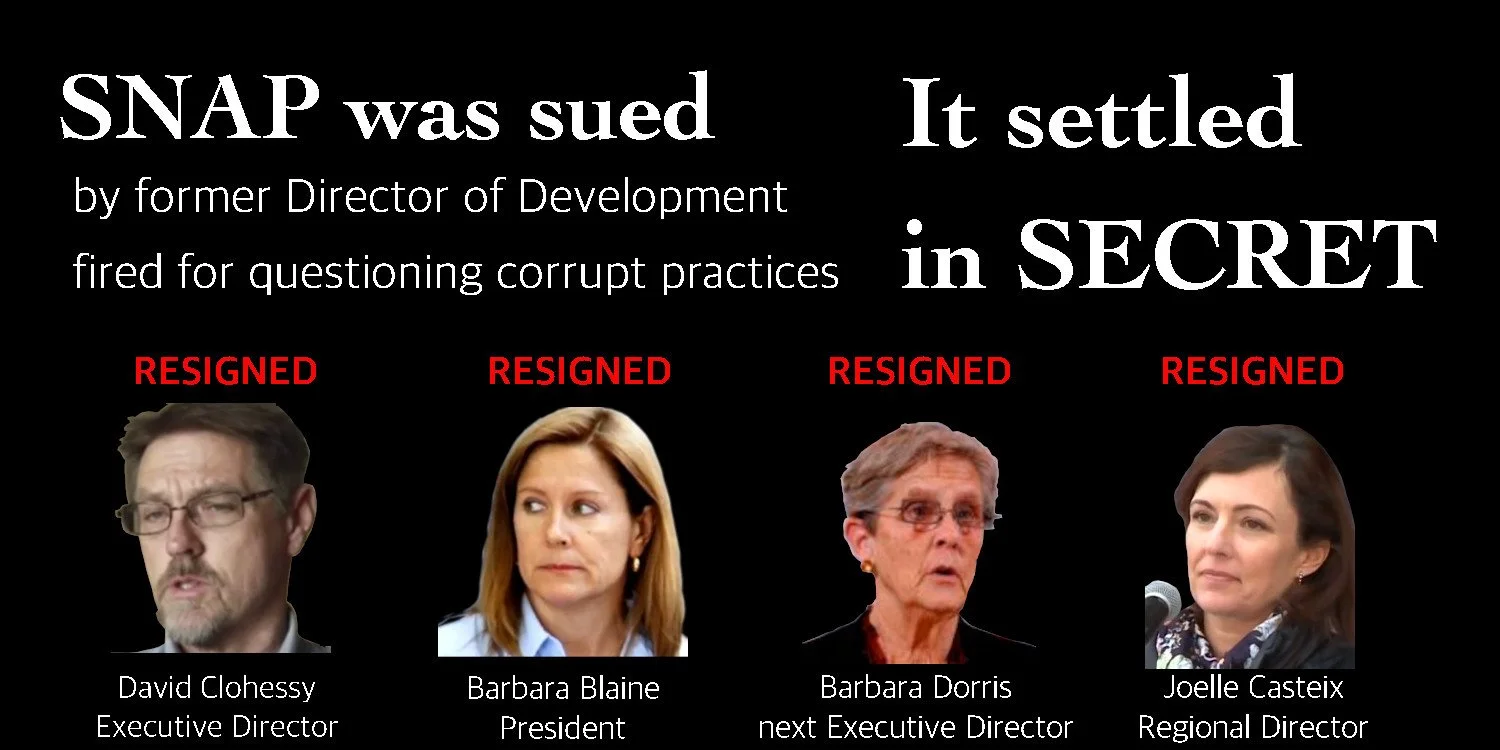
How SNAP Foisted McCarthyism Upon the Catholic Church
Generating fears, shameful to our ears, ruining careers; personal attacks, alternative facts, financial kickbacks: the rap of SNAP for a modern American witch hunt.
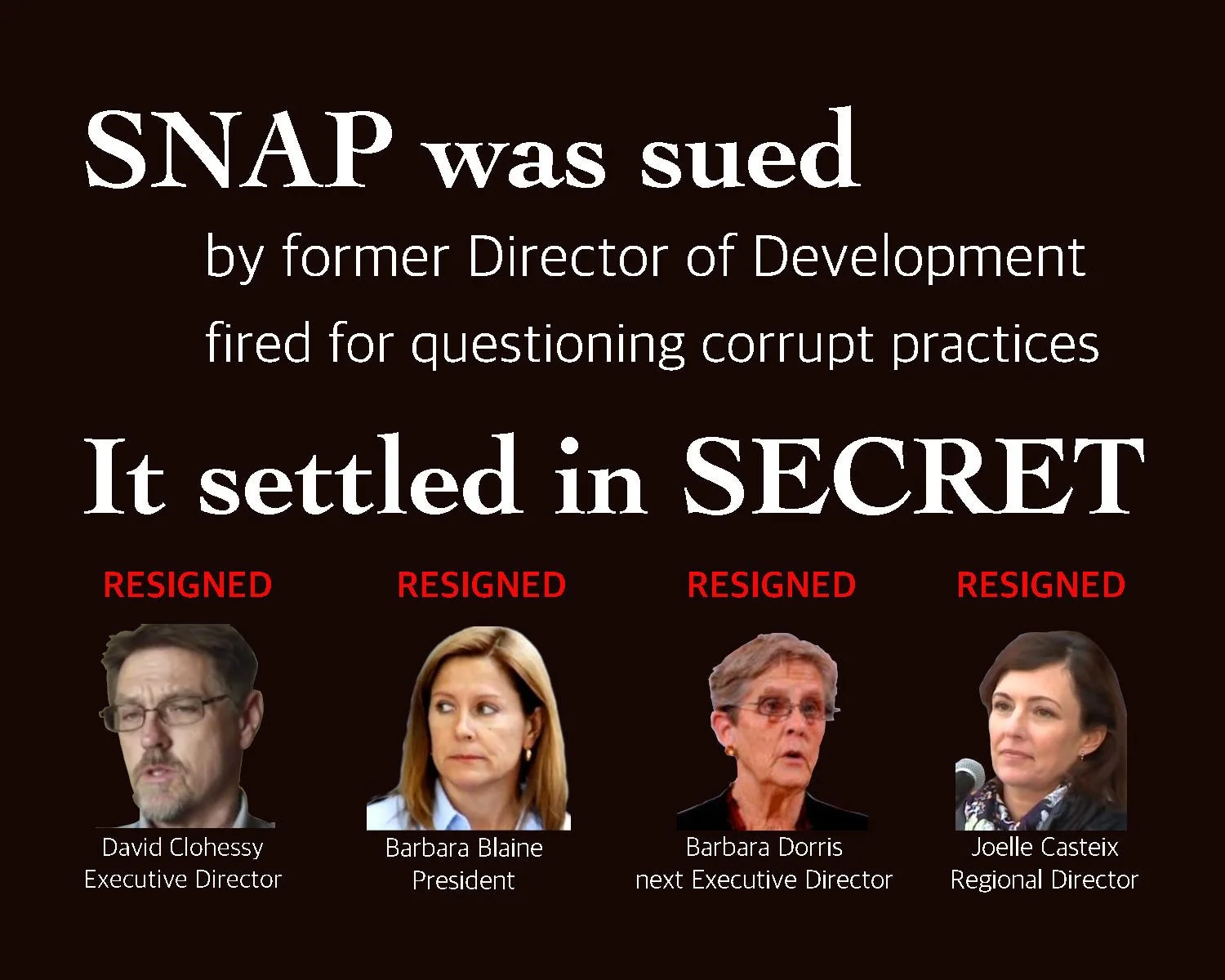
Generating fears, shameful to our ears, ruining careers; personal attacks, alternative facts, financial kickbacks: the rap of SNAP for a modern American witch hunt.
September 3, 2025 by Father Gordon MacRae
Ever so slowly awakening across America is a long-suppressed awareness of an ugly part of history that keeps repeating itself. There are prophets arising among us who are finding the courage to speak truth to power — in this case the power of mob justice. One of them is columnist Michelle Malkin whose article, “Fighting for the Falsely Accused” was sent to me some time ago.
Michelle Malkin tells the gruesomely familiar tale of former Fort Worth, Texas police officer, Brian Franklin. Convicted of the sexual assault of a 13-year-old girl in 1995, he spent the next twenty-one years in prison for a crime he had nothing to do with. As Ms. Malkin describes, “There were no witnesses. There was no DNA.” There was just one person’s word against another’s, and the jury — after lots of media hype — was conditioned to bring no skepticism to the heavily coached testimony of a distraught teen.
The sole evidence was a medical report of a physical examination concluding that the girl had in fact been sexually assaulted. That, and a claim that the assault occurred in the backyard of her biological father who was a friend of the police officer-suspect, was enough to satisfy prosecutors and a jury.
It was a prosecutorial perfect storm, and the fact that there was no other evidence, no DNA to test, no witnesses to the peripheral circumstances of the crime, left the defendant-turned-prisoner with nothing to satisfy the court’s demand for proof of actual innocence. So with no one having to “prove” Brian Franklin’s actual guilt, his imprisonment went on and on, passing two decades in the long, slow parade of lost time that struck home hard for me. “It’s the easiest crime to be falsely accused of,” Mr. Franklin says today.
Before reading any further, try to place yourself in Brian Franklin’s shoes for a moment. It’s easy to feel immune from the gravity of such injustice because we have no frame of reference for it happening to ourselves — or to a brother, a father, a son, a close friend, a parish priest — until it does. How would you defend yourself against such a charge when no evidence at all is needed to convict you?
After 21 years in prison — what Michelle Malkin described as “a harrowing 7,700 days of a life sentence” — Mr. Franklin had to fight for freedom even after newly discovered evidence emerged showing that the girl’s stepfather was the actual assailant. In a new trial 21 years after the first, Mr. Franklin was acquitted. He then had to fight again, that time for a declaration of actual innocence from a Texas court that would make him eligible for reparations for the 21 years of life stolen from him.
Over time, laws have been passed that make such exonerations very difficult to obtain. Judges in my own appeals have declined to even review newly discovered evidence because of laws that don’t require them to. Under current New Hampshire law, a convicted defendant has one year from the date of conviction to find and bring forward new evidence that might challenge it, an impossible task from prison.
In a majority opinion of the U.S. Supreme Court, Chief Justice William Rehnquist ruled that “actual innocence is not, in itself, a constitutional claim,” that would support a federal habeas corpus petition for a new trial. Rehnquist wrote for the majority court that innocent defendants in such cases can seek a political solution by asking for a pardon or sentence commutation from their governors. In the entire history of the State of New Hampshire, not a single such petition has ever been granted for a claimed sexual offense. As Brian Franklin said, “it’s the easiest crime to be falsely accused of,” and the most difficult from which to obtain justice once accused.
And as for reparations for the wrongly convicted, two decades ago, the New Hampshire Legislature, passed a law limiting reparations for wrongful imprisonment to a $20,000 cap regardless of how many years or decades a wrongfully convicted person spent in prison. It would cost more than that just to hire a lawyer to pursue such a claim for reparations.
The Catholic Rise of McCarthyism
In the case of Brian Franklin, he reports that he was sustained throughout those 21 lost years by the fact that, as Michelle Malkin wrote, “his family and church stood by him.” On the day this is posted, I awaken to my 11,286th harrowing day of a life sentence in prison for crimes that never took place at all. The things that sustained Brian Franklin have been largely absent from my experience and that of any other American Catholic priest so accused.
When a Catholic priest is accused, the first line of defense for a bishop and diocese is driven by lawyers and insurance companies and it has one goal: to get as much distance as possible from the accused. When I was accused, my bishop and diocese issued a press release that pronounced me guilty before jury selection in my trial. My diocese added to the published pre-trial statement that I also victimized the entire Catholic Church.
I don’t think anyone in the Diocese of Manchester would stand by that today, but they don’t stand against it either. I think that today they have a hard time explaining it so they just don’t even try, but I know exactly what happened, and it’s time to say it out in the open. In the current climate, few accused Catholic priests could have a fair trial in America. No convicted Catholic priest could be heard justly by an American appellate court or judge. No one in the Church or judicial system wants to admit this, but it is true, and we can learn why from a 1950s moral panic called “McCarthyism”.
Church officials, after getting their distance from the accused, leave it to the civil courts to sort out guilt or innocence. Maintaining a pretense about the integrity of the outcome, they remain blind or silent, or both, about the role played by money and the practice of mediated settlements in generating accusations. I described how this played out in my own diocese in my post, “David Clohessy Resigned SNAP in Alleged Kickback Scheme.”
From 1990 to the present, activists from SNAP — the Survivors Network of those Abused by Priests — carried out a highly effective campaign modeled after the community activism of Saul Alinsky and the tactics of ACORN, the radical Association for Community Organization for Reform Now. The activist campaign used public demonstrations and the news media to shame anyone who challenged or dissented in any way from the moral panic they promoted. The nature of the forces at work in this were described by The Wall Street Journal’s Daniel Henninger in “McCarthyism at Middlebury” (March 9, 2017):
“America’s campuses have been in the grip of a creeping McCarthyism for years. McCarthyism, the word, stands for the extreme repression of ideas and silencing of speech. In the 1950s, Republican Senator Joseph McCarthy turned his name into a word of generalized disrepute by using the threat of communism, which was real, to ruin innocent individuals’ careers and reputations.”
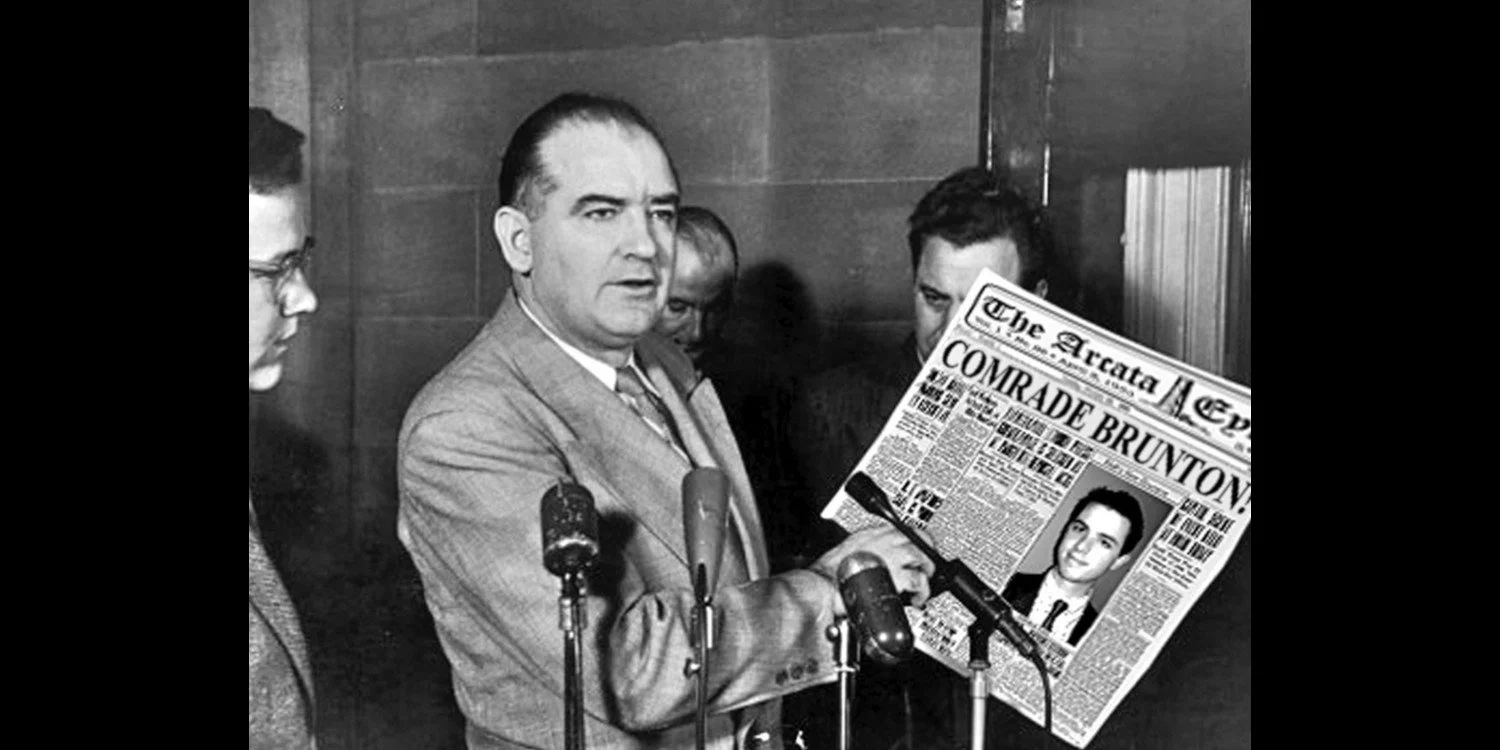
Just substitute “campuses” with “Catholics,” “Republican Senator Joseph McCarthy” with “SNAP’s David Clohessy,” and “the threat of communism” with “sexual abuse,” and the McCarthyist aura around the abuse narrative in the American Catholic church is clear.
That aura was created by SNAP, and maintained by its director, David Clohessy. Like Communism in the 1950s, sexual abuse is real, a fact harnessed by David Clohessy at SNAP and Terence McKiernan at Bishop Accountability to fuel the moral panic they created. It thus became a weapon for an open assault on the Catholic Church. In every media venue that would have them, SNAP stood ready to pounce on any bishop or Church official who called for even the most basic due process and civil liberties for Catholic priests so accused.
In “SNAP Implodes” in the March 2017 issue of the Catholic League Journal, Catalyst, Bill Donohue described how SNAP manipulated the media with picket signs and feigned “Holy Childhood” photos, and harmed the Church through what he called “the conspiratorial savaging of innocent priests.” I am one of them, and I thank Bill Donohue for this truth, and for having the courage to write it when few others would. Now it’s on you, dear reader. Please share this post. Shout it from the rooftops in the public square of your social media.
SNAP obliterated the lives, reputations, and civil rights of hundreds of merely accused priests by publicly shaming them as “predators” and “pedophiles.” They knew well that these terms carried the same force of shock and moral panic as the political panic that ensued when a charge of “communist” or “communist sympathizer” was leveled in the 1950s. The manipulation of those terms, and of a news media hungry for scandal, characterized and empowered the shaming, blackballing, and ruined lives of the McCarthy Era, the widely accepted model for the modern American witch hunt.
For a stark example of the power of those words to shock even judges and deny priests the basic rights of American citizens, see our recent post, “Judge Joseph Laplante, President Trump, and the Case of Father MacRae.”
Be Wary of Crusaders
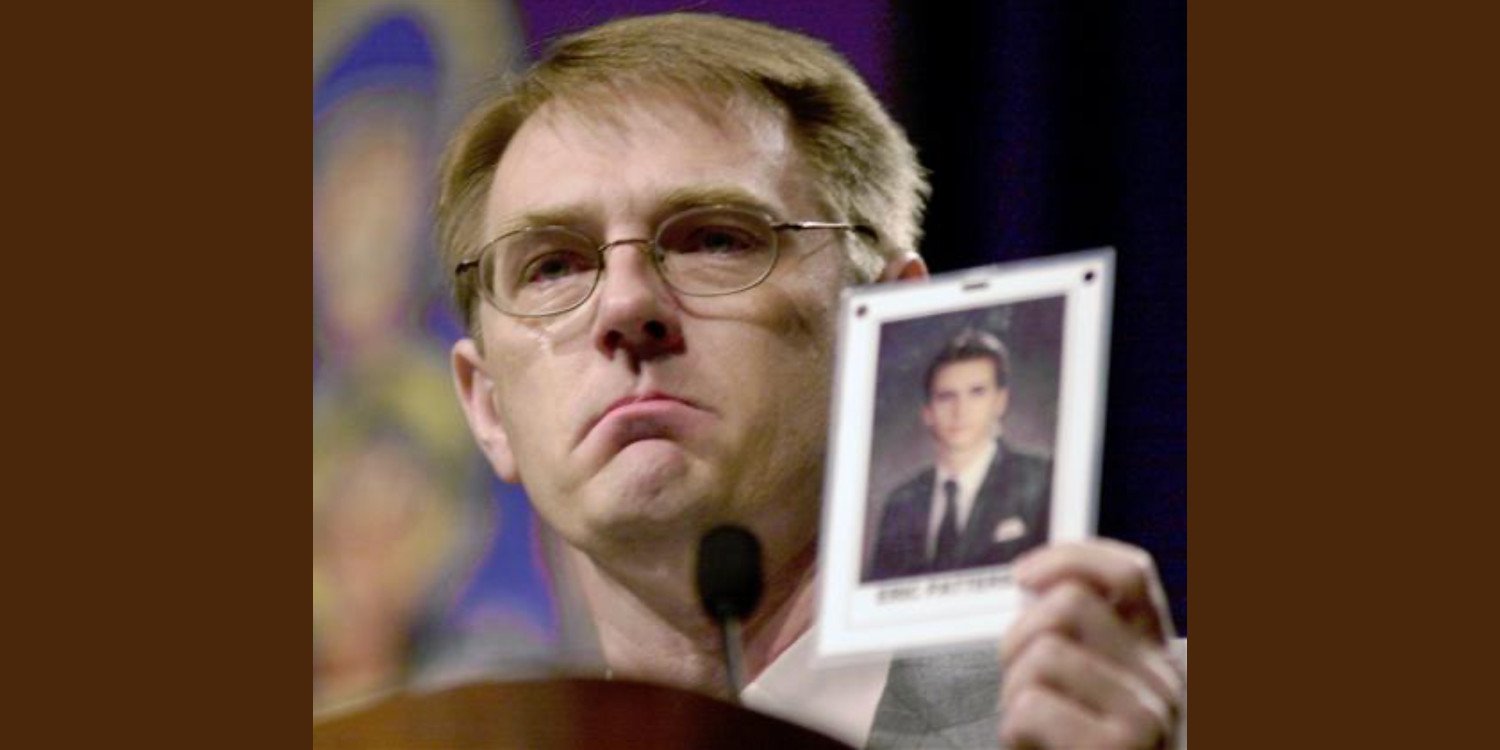
In the later 1980s and 1990s, SNAP had the terminology right. The scandal in the priesthood was first and foremost a story of homosexual predation and blackmail. But to maintain the moral panic, the language had to change to suit political correctness. The terminology did not sit well with the gay rights movement, so SNAP had to change its tactics and its language. Even the bishops went along with the new script, and to this day many Catholic commentators still stick to the “pedophile priest” story. I wrote about this in a 2011 post, “Be Wary of Crusaders The Devil Sigmund Freud Knew Only Too Well.” One sentence has often been quoted from it:
“It is a testament to the power of reaction formation [a classic Freudian defense mechanism] that an entire institution would now prefer the term ‘pedophile scandal’ to ‘homosexual scandal’ even when the facts say otherwise.”
David Clohessy was masterful at abusing the term and using its force of shock to manipulate the news media. SNAP activists labeled as “pedophile enablers” any person of conscience who called for the application of less outrage and more due process when a priest was accused.
Like an accusation of witchcraft in 1692 Massachusetts, or of being a Communist in 1955 Washington, “The P-Word” — pedophile — was fired like a bullet from an automatic weapon by SNAP activists with rancor and an intent to demean and disarm any skeptic asking for due process. The extent to which this one word was misused and manipulated was a key factor behind what writer, Ryan A. MacDonald wrote was “A Grievous Error in Judge Joseph Laplante’s Court,” another post that screams for justice and for both Church and State to take notice.
An example of the tactics of SNAP came from an activist writing under the name, “Neal Allen.” He seemed to stalk cyberspace for any positive comments or articles that called my own case into question, or presented a review of the facts. “Neal Allen” posted the same toxic comment everywhere, fired like a bullet calling me a “convicted pedophile,” and anyone writing in favor of my innocence a “pedophile enabler.”
Then it was discovered and exposed — by the heroic David F Pierre, of TheMediaReport.com — that “Neal Allen” does not even exist. It was a fake screen name used by a member of SNAP to give the impression that a mob was building to gang up on any dissenter from the attacks on me, on other priests, and the Church. Once “Neal Allen” was exposed as a fraud, he simply disappeared, but not before bullying lots of people into silent submission.
Now, from the recent lawsuits, resignations, and a kickback scandal within SNAP itself, it seems that none of this was ever about helping survivors or protecting children. It was just about money. In the name of nothing more redemptive than money, great, great harm has been brought upon the Church and priesthood.
The United States bishops going into their meeting in Dallas in 2002 were utterly terrified of Clohessy and SNAP, and the mesmerized news media that seemed to hang on their every word. When the USCCB invited David Clohessy and SNAP founder Barbara Blaine to address the 2002 U.S. Bishops Conference in Dallas in full view of the news media, the bishops had settled on a harsh reality that the best way to avoid being targeted by a witch hunt was to join it.
When it was over, and the “Zero Tolerance” language of the Dallas Charter was set in place, the late Father Richard John Neuhaus wrote in his masterful analysis, “Scandal Time,” that the bishops scrambled to the newspapers “to check their score.” Fr. Neuhaus was one of the few Catholic voices to speak out in conscience against this assault on the American priesthood, and in this he gets the posthumous last word from his essay, “Scandal Time”:
“Zero tolerance. One strike and you’re out. Boot them out of ministry. Of course, the victim activists are not satisfied, and, sadly, may never be satisfied. The bishops have succeeded in scandalizing the faithful anew by adopting a thoroughly unbiblical, untraditional, and unCatholic approach to sin and grace. They ended up adopting a policy that was sans repentance, sans conversion, sans forbearance, sans prudential judgment, sans forgiveness, sans almost everything one might have hoped for from the bishops of the Church of Jesus Christ.”
— Source: Richard John Neuhaus: A Life in the Public Square
+ + +
Editor’s Note: Please share this important post for the cause of justice for accused priests and the wrongfully imprisoned. This story needs greater exposure to take it out of the shadows for, sadly, most of our news media has avoided this aspect.
Don’t stop here. There is more to learn on this from Beyond These Stone Walls:
David Clohessy Resigned SNAP in Alleged Kickback Scheme
Be Wary of Crusaders! The Devil Sigmund Freud Knew Only Too Well
Judge Joseph Laplante, President Trump, and the Case of Father MacRae
A Grievous Error in Judge Joseph Laplante’s Court
From the Catholic League: Betrayed by Victims’ Advocates



The Eucharistic Adoration Chapel established by Saint Maximilian Kolbe was inaugurated at the outbreak of World War II. It was restored as a Chapel of Adoration in September, 2018, the commemoration of the date that the war began. It is now part of the World Center of Prayer for Peace. The live internet feed of the Adoration Chapel at Niepokalanow — sponsored by EWTN — was established just a few weeks before we discovered it and began to include in at Beyond These Stone Walls. Click “Watch on YouTube” in the lower left corner to see how many people around the world are present there with you. The number appears below the symbol for EWTN.
Click or tap here to proceed to the Adoration Chapel.
The following is a translation from the Polish in the image above: “Eighth Star in the Crown of Mary Queen of Peace” “Chapel of Perpetual Adoration of the Blessed Sacrament at Niepokalanow. World Center of Prayer for Peace.” “On September 1, 2018, the World Center of Prayer for Peace in Niepokalanow was opened. It would be difficult to find a more expressive reference to the need for constant prayer for peace than the anniversary of the outbreak of World War II.”
For the Catholic theology behind this image, visit my post, “The Ark of the Covenant and the Mother of God.”

Why this Falsely Accused Priest Is Still in Prison
Why are some innocent defendants kept in prison? Attorney Harvey Silverglate unmasks the perversion of justice when judges give finality more weight than justice.

Why are some innocent defendants kept in prison? Attorney Harvey Silverglate unmasks the perversion of justice when judges give finality more weight than justice.
August 30, 2023 by Fr Gordon MacRae
Preliminary Note: I first wrote this post in 2018. The entire landscape of my own situation has radically changed since then. On October 9, 2022, famed Boston civil rights Attorney Harvey Silverglate penned an Op-Ed for The Wall Street Journal entitled “Justice Delayed for Father MacRae.” He wrote of how any hope for my ongoing defense fell into silence for several years until early 2022. At that time, new evidence emerged that James F. McLaughlin, the Keene, New Hampshire police detective who choreographed the case against me in 1994 had been present on a secret list for police misconduct. The charge against him, which preceded my trial by a few years, was “falsification of records.” Since then a New Hampshire court has sealed his file and has, in a secret hearing, allowed his name to be removed from the public misconduct list. Others who have written of this matter have somehow uncovered other incidents of police misconduct by him including allegations of falsification of evidence, witness intimidation, destruction of tape-recorded evidence, and other examples of official dishonesty, all of which I have been accusing him of for the last 30 years. There are signs of an official coverup going on in New Hampshire, and until someone gets to the bottom of it, progress in my defense had once again fallen into silence.
Until now. Next week in these pages we will host an explosive Op-Ed by a Los Angeles documentary researcher who seems to have arrived, if not at the bottom line of what has actually gone on, then very near to it. She has described her Op-Ed as “the epic of all epic scandals.”
+ + +
In North Carolina in 1983, half brothers Henry Lee McCollum, 19, and Leon Brown, 15, were arrested and charged with a heinous crime, the rape, and murder of an 11-year-old girl. Public pressure to solve the case was intense. A lot of facts were overlooked because the police felt certain they had the right suspects. The two brothers were interrogated for hours on end, finally confessed, and then were sentenced to death.
But after an initial state appeal, the young men’s confessions were seen as coerced and vacated. They stood trial but were convicted again. Only the sentence changed. This time Henry Lee remained on death row while Leon, being still a minor, was sentenced to life in prison. Further attempts to appeal their case were rejected by judges citing the state’s interest in “finality,” a principle of law that often prevails over justice.
I often receive letters and comments from readers who may not know the history of my own attempts toward justice. The well-meaning comments suggest that I seek out the Innocence Project for assistance, or that I appeal to the New Hampshire Supreme Court, or file a habeas corpus petition in the federal courts.
I know that these readers would have to plow through a lot of past material on this site to get a sense of how strenuously we have tried all of the above. The Innocence Project has saved many lives, but before taking a case it usually requires the existence of irrefutable DNA evidence that would exonerate a prisoner.

Absence of Evidence Is Not Evidence
A conviction like mine is different. Because no crime ever actually took place — a truth that comes down to my word against an accuser’s word — there was no evidence and nothing to review except the accuser’s claims themselves. For reasons you might understand if you keep reading, emerging evidence of innocence, no matter how compelling, has so far been unable to prevail over the court’s interest in finality.
The sheer number of cases overturned with irrefutable DNA evidence do not seem to translate for judges into a concern that wrongful convictions are more common than they want to admit. Mistakes that are made when there is evidence do not compel judges to consider that mistakes are also made when there is none. How finality prevailed over justice in my own attempts at appeal was laid out in an important article by Ryan MacDonald, “A Grievous Error in Judge Joseph Laplante’s Court.”
The grievous error notwithstanding, Judge Laplante was not in error in his procedural handling of my habeas corpus appeal. He simply followed existing case law. One of the most egregious principles of law to come out of the United States Supreme Court in modern times was a 1993 decision in Herrera v. Collins.
Chief Justice William Rehnquist wrote in his majority opinion that “A claim of Actual Innocence is not itself a constitutional claim” that entitles a convicted defendant to federal habeas corpus relief. This also applies to death penalty cases. Actual innocence is not a bar to lawful execution.
Let that sink in. But first, back to half-brothers Henry Lee McCollum and Leon Brown in North Carolina: After being sent to prison for the heinous rape-murder charges, the two young men themselves became the victims of sexual and physical assaults.
In a bizarre twist, an older prisoner befriended them, stating his belief in their innocence. That prisoner, Roscoe Artis, had been convicted for a series of sexual assaults against women and was a suspect in at least one “cold case” homicide. It turned out that Mr. Artis believed in the innocence of Henry Lee McCollum and Leon Brown because he himself actually committed the crime for which they were in prison. He did not tell them this, however.
In 2014 — 31 years after being sentenced to prison — the case of Henry Lee, still not yet executed, was revisited by Sharon Stellato, an investigator for the North Carolina Innocence Inquiry Commission. She undertook a dogged pursuit of the actual evidence against them but found none. What she did find, however, was some DNA evidence from the crime scene that had never been tested.
It was enough — just enough — to overcome finality so a judge ordered it to be tested. It excluded Henry Lee and Leon from any involvement in the crime, and it convicted Roscoe Artis, the man who befriended and protected them in prison. It was also revealed that fingerprints found at the 1983 crime scene were not a match for either Henry Lee or Leon, a fact that the police never conveyed to defense attorneys. At ages 50 and 46, more than 30 years after they were sent to prison, Henry Lee and Leon were finally released.

Politics, Prosecutors, and Career Paths
About every other week or so, usually on a Friday afternoon, I am summoned to a prison office to open and sign for an item of legal mail. Anything sent to a prisoner that obviously comes from a court, a lawyer, or a law firm falls into this category. It simply means that unlike all other mail, the item is opened in my presence after I sign a log indicating that I accepted it.
Prisoners shudder when the P.A. system announces their names for legal mail. It is generally an omen of bad news for prisoners. Those who are guilty of their charged offenses — and yes, they are the vast majority — don’t mind so much. They expect little beyond the justice already meted out to them. But those who maintain their innocence brace themselves for a letdown, or another step toward bankruptcy, whenever their names are called.
It is one of the myths of prison that many prisoners claim to be innocent. The reality is just the opposite. Those who do so are taunted as “damn fools” by nearly all others. I spent my first few years here fending off a taunt by both prisoners and guards: ‘You could have been out of here in ONE YEAR if you took a deal? What an idiot!”
Much of the legal mail that I am summoned to pick up these days is from Harvey A. Silverglate, a well known civil rights and appellate defense lawyer in Cambridge, Massachusetts. Mr. Silverglate is author of the book, Three Felonies a Day: How the Feds Target the Innocent (Encounter Books 2009).
The foreword of the book is by Alan Dershowitz, a Harvard Law professor and a colleague and friend of the author. Both Misters Silverglate and Dershowitz appear frequently in the Boston and national media, and I have followed them for years.
In his Foreword, Alan Dershowitz presents with clarity a crucial point that I have made many times. Mr. Dershowitz writes:
“Prosecutors in other countries are civil servants who do not pander to the people’s understandable wish to be safe from crime ... in the United States, prosecutors are not only elected ... but the job is a stepping stone to a higher office as evidenced by the fact that nearly every congressman or senator who ever practiced law once served as a federal or state prosecutor. Winning becomes more important than doing justice.”
— Three Felonies a Day, p. xxv
It is also an important fact that prosecutors routinely move on to political appointments as judges. Judge Joseph Laplante, who declined to hear any evidence or testimony in my federal habeas corpus appeal, had a career as a federal prosecutor spanning twenty years before his appointment to the federal bench. Judge Laplante had been prosecutor in the NH Attorney General’s office at the time of my trial and first State appeal, and likely knew of Detective McLaughlin presence on the secret list of dishonest police.
Judge Arthur Brennan, who presided over my 1994 trial, was personal legal counsel to then-Governor Judd Gregg (1989-1992) when he received a political appointment to a judgeship just months before my trial. Judge Larry Smukler, who declined to hear my State habeas corpus appeal, also declined to provide any biographical information about his career trajectory for the official New Hampshire Law Directory.
The Acknowledgements section of Harvey Silverglate’s Three Felonies a Day is a virtual Who’s Who of many of the advocates for justice who have taken up my case. The names there include Dorothy Rabinowitz whose writings in The Wall Street Journal reopened my story in the important court of public awareness.
Also included there is Bob Chatelle, founder and president of the National Center for Reason and Justice which continues to feature my story and its appellate case files. Mr. Chatelle also hosts the Friends of Justice blog which links to many of my posts and has featured posts about my experience of justice.

Harvey Silverglate’s “Freedom Watch”
Mr. Silverglate, being a Massachusetts attorney, is not able to represent me in New Hampshire, but he generously sends me each installment in his series of articles called “Freedom Watch” published by WGBH News. I am most grateful for these informative glimpses into the inner function, and too often DYSfunction, of the criminal justice system. Mr. Silverglate has also long been a reader and supporter of Beyond These Stone Walls.
A recent article he sent was “When the Criminal Justice System Can’t Admit a Mistake: The James Rodwell Case.” He refers to this murder conviction as “a case that will not go away” because “too many people remain disturbed by the outcome.” Harvey Silverglate is one of them because …
[The] instinct that drives people to persevere when the system misfires is countered by the system’s self-protective reflex that makes it difficult to get judges to take a second, third or fourth look into a case, even when new and powerful evidence of a severe miscarriage of justice surfaces.”
This self-protective reflex, Mr. Silverglate says, has long roiled the justice system, producing “considerable disagreement between the two camps of judges — those who view finality as the ultimate goal, and others who deem justice to be paramount.” The central issue in the James Rodwell case, says Silverglate, is whether Mr. Rodwell actually committed the murder for which he has constantly maintained his innocence throughout 36 years in prison.
The sole evidence against him was the testimony of “two inmate thugs” who were treated favorably by prosecutors and police in exchange for their testimony. One of them claimed that Rodwell confessed to the murder while they occupied neighboring cells in a county jail where they were held pre-trial. Further, the district attorney’s office had since “lost” the entire file of its prosecution of this case.
Mr. Silverglate went on to describe the “remarkable display of clairvoyance” in a Superior Court judge who denied Rodwell’s latest appeal. The judge stated that “it is highly unlikely” that the ‘lost’ files contain evidence of prosecution deals afforded to inmate witnesses in exchange for their testimony.
This judicial clairvoyance struck a familiar note. When my own habeas corpus appeal came up against a wall of finality, Judge Joseph Laplante offered some clairvoyance of his own. While declining to hear from witnesses, including my accuser’s former wife, Judge Laplante attributed a motive for her to lie today about her ex-husband’s perjury: Thomas Grover was charged with felony domestic assault for punching her and breaking her nose before my trial — a charge conveniently dropped on the day my trial ended in a conviction.
Her bravely coming forward with the truth today was explained away by Judge Laplante who asserted that my defense could have called her as a witness at my 1994 trial, and could have tried to elicit the truth then. This assertion completely overlooks the fact that she may have been terrified of the man who had just broken her nose for questioning his truthfulness then. It is fascinating how all the credence afforded to victims of abuse and domestic violence is set aside when their testimony might right a judicial wrong.
Mr. Silverglate’s “Freedom Watch” article went on to describe some of the “far too many infamous cases where the indications are strong that justice misfired, but where the systemic preference for finality and the resistance to the confession of judicial error are strong.” One of these cases he cited is that against the Amirault family and the “witch trial” prosecution of them in the notorious Fells Acres Day Care Center case.
This story and others convey powerfully both the perversion of finality prevailing over justice and the perversion of justice when politics preside over a courtroom. In their book, Actual Innocence (New American Library, 2003) Innocence Project founders Barry Scheck and Peter Neufeld describe how the doctrine of “finality” is an obstacle to justice:
“Only the criminal justice system exempts itself from self-examination. Wrongful convictions are not seen as catastrophes, but as topics to be avoided... Finality is a doctrine that can be explained in two words when it comes to innocence tests: willful ignorance... The Innocence Project and other advocates have spent hundreds of hours just arguing against ‘finality’ doctrines that are used to block inquiries that no fair person would resist.”
— Actual Innocence, p. 320
For Harvey Silverglate, Advocate for Justice, “The key question is whether judges, clothespins firmly attached to noses, will continue to pretend that justice was done.” None of the rest of us are given clothespins.
+ + +
Note from Fr Gordon MacRae: Please share this post, and please return here next week for the “epic of all epic scandals.” You may also be interested to see some new evidence added to our Important Documents in the Fr Gordon MacRae Case. It is the evidence that appellate judges have declined to hear.
Affidavit of Former FBI Special Agent James Abbott
Dying in Prison in the ‘Live Free or Die’ State
News articles allege that Detective James McLaughlin falsified reports and/or evidence but this was kept hidden from the jury in the 1994 trial of Fr. Gordon MacRae.

News articles allege that Detective James McLaughlin falsified reports and/or evidence but this was kept hidden from the jury in the 1994 trial of Fr. Gordon MacRae.
July 13, 2022 by Charlene C. Duline
Editor’s Note: The following is a guest post by noted author, Charlene C. Duline. Retired from a distinguished career as a diplomat and Foreign Service Officer with the U.S. State Department, Ms. Duline served the United States in several nations across the African Continent, in East Pakistan and Panama, and at United Nations Headquarters in New York. She holds degrees in journalism and political science from Indiana University and a Master’s degree in International Public Policy from the Johns Hopkins School of Advanced International Studies in Washington, DC.
+ + +
I am outraged at the State of New Hampshire! Every citizen in the State should be! Recent news articles by Damien Fisher and Nancy West at InDepthNH.org have pulled the shroud of secrecy from a grave injustice. Few people in that State knew about a list formally called the “Exculpatory Evidence Schedule,” now better known as the “Laurie List.” The list was revealed in December 2021 by the New Hampshire Attorney General as a result of litigation filed by the American Civil Liberties Union of New Hampshire and the New Hampshire Center for Public Interest Journalism which remains a litigant seeking the full publication of that list.
The court-ordered release of the list of compromised police is based on a Supreme Court decision holding that if favorable exculpatory evidence has been knowingly withheld by the prosecution in a criminal case, the burden shifts to the State to prove beyond a reasonable doubt that the undisclosed evidence would not have affected the outcome of a trial. If such a violation occurred and the State failed to meet its burden, a defendant has been denied his right to present all favorable proofs and is entitled to a new trial or to have his convictions vacated altogether.
Former NH detective James McLaughlin, the shady detective who was instrumental in pursuing lie after lie about Fr. Gordon MacRae sending him to a long prison term in 1994, was prominent on the Laurie List for “Falsification of Records” and/or evidence. Over 28 years of wrongful imprisonment in the New Hampshire State Prison, MacRae has consistently asserted that the case against him was built on lies, cheating and distortions aided and abetted by a dishonest police officer.
Just as Innocence Project founder Barry Scheck predicted in his 2003 book, Actual Innocence, those assertions have since been ignored or explained away at higher levels of the justice system by judges with a clear bias in favor of police and against defendants — and this defendant in particular. Judge Arthur Brennan, the first New Hampshire judge to hear this case, told jurors to “disregard inconsistencies” in accuser Thomas Grover’s testimony. As The Wall Street Journal’s Dorothy Rabinowitz wrote in The Trials of Father MacRae, they had much to disregard.
In addition to new evidence and witnesses that other judges declined to hear, much of MacRae’s failed 2012 Habeas Corpus petition was about Keene, New Hampshire sex crimes detective James McLaughlin and the shady tactics he employed to generate claims, prosecute, and convict MacRae in 1994 paving a path to lucrative settlement deals from the Catholic Diocese of Manchester.
Now it turns out that McLaughlin was sanctioned on a secret Attorney General’s list for “falsification of records” in 1985, nine years before the trial of Father MacRae. Under a U.S. Supreme Court precedent, Brady v. Maryland, prosecutors were required to reveal that fact to Defendant MacRae and his legal counsel. They did not. This was especially egregious because a central issue in this case has been the falsification of police reports and witness tampering.
Since there were no consequences, McLaughlin continued what he did best. The record in this case is filled with post-trial witness statements that he threatened, intimidated, coerced and lied to witnesses, and falsified records. At least one witness today claims that this detective attempted to suborn his perjury with a monetary bribe. Judge Joseph Laplante, the New Hampshire federal judge who heard MacRae’s Habeas Corpus petition, ignored all of this and allowed none of these witnesses to testify under oath.
Few people know that Fr. MacRae was offered two plea deals before his trial and one during trial. He was told that if he would plead guilty he would receive only one year in prison. This honest man turned down the plea deals. The lengthy criminal rap sheet of 27-year-old accuser Thomas Grover includes multiple arrests for forgery, theft, burglary, drugs, and assault. He broke his future ex-wife’s nose when she questioned his perjury.
The jury never heard any of this. Neither did they hear that Thomas Grover several times received financial payments from his personal injury lawyer, advances on his expected windfall in his accompanying civil lawsuit — a practice that is forbidden by the rules of professional conduct for lawyers. Grover was awarded almost $200,000 for crimes that never took place. There are photos of him dancing with stacks of $50 bills.
At the trial, Judge Arthur Brennan warned MacRae that if he took the stand in his own defense, the judge would open the door for Thomas Grover’s brothers to testify to their own false claims in related civil lawsuits. Gordon MacRae was the only person never heard from in this trial. In a flimsy 1996 appeal represented by a public defender (because MacRae’s diocese refused to help him), MacRae was not even allowed to be present. At three attempts at a Habeas Corpus appeal before state and federal courts since this trial, neither MacRae nor any witness for his defense were permitted to give testimony. At no time has any court official allowed a single word from this defendant.
The man who actually controlled the Diocese of Manchester during much of MacRae’s sentence was Monsignor Edward J. Arsenault, now known as Edward J. Bolognini. He violated Church law regarding Father MacRae who was never told, despite repeated requests, what the Diocese conveyed to the Holy See in Rome about this matter. Arsenault was later dismissed from the priesthood after pleading guilty to stealing almost $300,000 from the Diocese and the estate of a deceased priest. He reportedly spent the stolen money in the company of a much younger gay musician.
At the time of his nearly $300,000 embezzlement, Arsenault held a $170,000 per year position as Executive Director of the St. Luke Institute for troubled priests in Maryland. He served only two years of a 20-year prison sentence before being released and his sentence vacated when an unnamed third party paid his entire restitution. Now a convicted felon with a new name, he today administers a lucrative contract for the City of New York.
I believe that Father MacRae’s bishop and diocese owe him apologies for their abandonment of him, their presumptions of guilt, their refusals to visit or even correspond with him for 28 years in prison where Father Gordon MacRae remains a priest. He offers Mass in his cell each week, and has been instrumental in saving lives and souls. One of them is the life and soul of my Godson, Pornchai Moontri, a conversion story beautifully told by Marian Helper Editor, Felix Carroll in the great Divine Mercy book, Loved, Lost, Found.

+ + +
Editor’s Note: Charlene Duline’s Godson, Pornchai Moontri, now residing in Bangkok, Thailand, was the subject of a stunning investigative report by Father Gordon MacRae:
“Getting Away with Murder on the Island of Guam”.
For additional information on Charlene Duline’s article, see the following:
AG Hides Some ‘Laurie List’ Names Hours After Release By Damien Fisher, InDepthNH.org
Famed Keene Cop Called Out for Federal Entrapment By Damien Fisher, InDepthNH.org
A Grievous Error in Judge Joseph Laplante’s Court By Ryan A. MacDonald
The Trial of Father MacRae: A Conspiracy of Fraud by Ryan A. MacDonald


A Grievous Error in Judge Joseph Laplante’s Court
Federal Judge Joseph LaPlante dismissed without testimony Fr Gordon MacRae’s recent hope for justice. No U.S. court has allowed this defendant to utter a single word.

Federal Judge Joseph Laplante dismissed without testimony Fr Gordon MacRae’s recent hope for justice. No U.S. court has allowed this defendant to utter a single word.
June 22, 2016 by Ryan A. MacDonald
Editor’s Note: The following is a guest post by Ryan A. MacDonald, author of “The Trial of Father MacRae: A Conspiracy of Fraud.”
I am not here to cast Donald Trump-like aspersions upon a judge whose decision I simply do not like. I have no doubt that Father Gordon MacRae would bar me from publishing here if I did. I am simply here to describe a grievous error that occurred in United States District Court in Concord, New Hampshire, and other facts that continue to trouble me greatly a year after I published an important article on this site: “Judge Joseph Laplante Denies Priest’s Appeal.”
Many people have come to believe that the 1994 prosecution and trial of Father Gordon MacRae, and subsequent appeals, have left an innocent man in prison and a gaping wound on the integrity of the criminal justice system. One issue that I and others simply cannot comprehend is that no one in this system — absolutely no one — has allowed this accused priest to utter a single word in his own defense.
After the prosecution rested its case in 1994 — with lots of theatrics but no evidence — Judge Arthur Brennan addressed MacRae directly, outside the presence of the jury. He cautioned MacRae against testifying in his own defense. If he did so, the judge warned, the door would be opened to allow other claims from Thomas Grover, his brothers, and others to come before the jury and taint its view of this case.
The public defender who minimally handled MacRae’s direct appeal in 1996 said that he was surprised by Judge Brennan’s warning, but could find no legal precedent to cite it as an appeal issue. At one point in the trial, Judge Brennan instructed the jurors to “disregard inconsistencies in Thomas Grover’s testimony.” As Dorothy Rabinowitz wrote in The Wall Street Journal, “they had much to disregard” (WSJ, “A Priest’s Story,” April 28, 2005).
In a sentencing hearing weeks after the trial, Judge Arthur Brennan sentenced MacRae to a term of 67 years in prison — more than thirty times the two-year maximum sentence proposed to MacRae pre-trial, deals that the priest rejected citing his innocence of the charges. During the sentencing phase, he was not permitted to say a single word in his own defense while the Judge berated him for observing his Constitutional right to a jury trial.
When sentencing MacRae, Judge Arthur Brennan offered some evidence and testimony of his own: “This court has heard clear and convincing evidence that you created child pornography of your victims.” In the entire trial, not a single word about child pornography was ever raised. Eleven years later, the lead detective in the case admitted to Dorothy Rabinowitz of The Wall Street Journal, “There was never any evidence of pornography.”
MacRae, in prison after the trial, was neither present nor represented by counsel as Thomas Grover and his brothers continued the fraud in civil court seeking lucrative settlements from the Catholic Diocese of Manchester. Everyone had a voice and a lawyer except Gordon MacRae.
And he was silenced yet again, not even permitted to be present, in his direct state appeal in 1996 when judges dismissed as “harmless error” the egregious testimony of a psychological expert that should not have been admitted at trial while MacRae’s defense was allowed no expert. As Innocence Project founders, Attorneys Barry Scheck and Peter Neufeld described in their book, Actual Innocence (Random House 2000):
“For an innocent person, the two most dangerous words in the language of the law are ‘harmless error.’ These are the magic words that appellate courts use to absolve police officers and prosecutors of misconduct.”

“Especially a Catholic Priest”
There was a lot to absolve. As The Wall Street Journal’s Dorothy Rabinowitz described (see “The Trials of Father MacRae,” May 13, 2013): “Those aware of the facts of this case find it hard to imagine that any court today would ignore the perversion of justice it represents.” I exposed some concrete examples of those perversions of justice in “The Trial of Father MacRae: A Conspiracy of Fraud.”
It is an inescapable fact of injustice that from 2012 to 2015 three additional judges and courts heard motions to revisit this trial, but dismissed them without permitting a single word of testimony from defendant Gordon MacRae or any of the witnesses who have come forward, some quite courageously.
On March 17, 2015, Judge Joseph Laplante heard oral arguments from attorneys Robert Rosenthal and Cathy Green representing the imprisoned priest, and Assistant Attorney General Elizabeth Woodcock for the prosecution. Neither Father MacRae nor any of the newly presented witnesses in this case were present, nor was any of their testimony heard. The arguments took just under two hours, a flash in time compared to the twenty-two years MacRae has thus far spent in wrongful imprisonment. On March 25, 2015, Judge Laplante dismissed the habeas corpus petition from going forward. There was to be no further hearing on testimony, merits or evidence.
Additionally, Judge Laplante declined to grant a Certificate of Appealability to bring this matter to the First Circuit Court of Appeals. This had the effect of forcing MacRae to fund an added appeal of the denial of a Certificate of Appealability. One full year later, in April of 2016, the First Circuit Court of Appeals declined to reverse the decision not to allow a further appeal. I held my pen until that decision was rendered.
I do not want to use limited space here to rehash what I wrote in “Judge Joseph Laplante Denies Priest’s Appeal.” I hope that after reading this article, you will go back to read it for yourselves for it lays out all the reasons why I believe this outcome to be an abuse of judicial discretion. Denying the Certificate of Appeal had the effect of bankrupting the defense of a man who has spent twenty-two years in prison for crimes that most observers today conclude never took place.

The Grievous Error
However, none of that addresses the error that I am here today to address. I have spent considerable time reading a transcript of that hearing and Judge Laplante’s ruling. A significant part of both troubled me greatly, and I know that it troubled Father MacRae as well. It simply did not concur with MacRae’s memory of this case, and his memory, according to Dorothy Rabinowitz, is “encyclopedic.” The error involves a point that was heavily stressed by Judge Laplante in both the transcript and his dismissal order. I will begin with the transcript. The speaker is Judge Laplante:
“Now, leaving [Thomas] Grover’s credibility aside, nothing that [new witnesses] say undermines what seems to be a very important piece of evidence in the underlying criminal trial which is that when [James] McLaughlin, a detective from Keene, confronted MacRae with these accusations, he didn’t deny them. He had a very unusual response, basically quibbling with [Detective] McLaughlin over the proper terminology to apply to a person who is sexually attracted to children under 14 or 15. I don’t even remember the terms right now, but he basically corrected the detective for using the word pedophile. He came up with a more correct term — a more precise term. Whether that was even correct is debatable. But it was a very unusual response. It wasn’t a denial. It wasn’t the type of conduct that one would expect one to undertake when accused in that way. Especially a Catholic priest … MacRae did not react in a manner one would expect of an innocent person.”
Now, the excerpt above reflects just two paragraphs of a 70-page court transcript, but it was an extensive part of the reasoning behind Judge Laplante’s two-page decision dismissing the federal habeas petition. What Judge Laplante described above is a claim that Detective McLaughlin confronted Father MacRae about the charges involving Thomas Grover, referred to MacRae as a “pedophile,” and then instead of simply denying it, MacRae supposedly corrected McLaughlin by telling him that the correct term is “hebophile.”
There is just one major problem here. It never happened! Detective James McLaughlin never once “confronted MacRae with these accusations,” nor did any of what Judge Laplante refers to above have any connection with the case at hand. This is an egregious perversion of justice.
When I read this I was very troubled. Father MacRae has been confined in a 96-square-foot cell for twenty-two years with very limited access to documents in this case and no access to online research. As the above scenario surfaced, his lawyers sent him a statement to sign stating that he never made any such admission to Detective McLaughlin, but “told him that someone who might be attracted to someone Grover’s age would be an ‘phebophile,’ not a ‘pedophile.’ “
MacRae was troubled because he has no memory of McLaughlin ever discussing any aspect of the Thomas Grover case with him. He simply assumed that someone (his own lawyers? the prosecutors?) who have access to transcripts, must have found such a reference somewhere.
But they did not. No such reference exists. In the case for which Father MacRae was indicted and faced trial, McLaughlin and the prosecutors brought secret indictments. This priest first learned of the very existence of this case on the night of May 5, 1993, the night that police showed up at his door to arrest him on charges that were then over a decade old. He had no subsequent or even previous discussion about these charges with McLaughlin.
So what is going on here? When I got to the bottom of it, the truth was spine-chilling in its gross manipulation of this defendant, but it had no connection whatsoever with Thomas Grover’s charges or this trial or the appeal of this case. Bear with me, please, for this is indeed a complex account.

Whack-a-Mole Justice Holds Court
In 1988, a full five years before Thomas Grover and his brothers concocted their scheme to accuse Gordon MacRae, Keene, NH sex crimes Detective James McLaughlin targeted a number of Catholic priests who had lived and worked in the Keene area. One of them was Father MacRae who was assigned in Keene from 1983 to 1987. In 1987 and 1988, on a leave from parish ministry, MacRae was Executive Director of a regional chemical dependency treatment center near Keene, and in 1989 he became Director of Admissions for the Servants of the Paraclete facility for troubled priests in Albuquerque, NM.
No one had come to Detective McLaughlin with a complaint about MacRae. He launched an exhaustive investigation based on a letter from state social worker, Sylvia Gale, claiming that MacRae was once a priest in Florida where he “molested two boys, one of whom was murdered and his body mutilated.” Dorothy Rabinowitz wrote about that contrived and slanderous account in “A Priest’s Story” (WSJ, April 27, 2005). The Florida story had no basis in fact. MacRae had never been a priest in Florida nor had such a crime ever occurred there. The social worker’s claimed source was an official of the Diocese of Manchester who later denied it. For Detective McLaughlin, however, it became probable cause to launch a moral panic.
On September 19, 1989, Father MacRae received a telephone call from his sister in the Boston area. Upset and angry, she informed him that she received a call from Detective McLaughlin in Keene who told her that he was investigating MacRae for creating pornographic photographs of Keene youths. She gave her brother the number that McLaughlin left, and of course, knowing there was no truth to the claim, the priest called that number.
This was all set up in advance. That particular telephone line into the Keene Police Department was automatically recorded so McLaughlin was not required to obtain a warrant to call and record the priest. A warrant would require evidence, and there was none. This was a fishing expedition. In this telephone call, McLaughlin accused MacRae of taking pornographic photos of 15-year-old Jon Plankey who was later described by McLaughlin as an employee of his in “a family owned business.” It was also later discovered that McLaughlin and Plankey had made similar claims against three others, one of them Timothy Smith, a local Protestant church choir director who was charged and pled guilty.
MacRae vehemently denied the claim. He did not know he was being recorded, but at some point he invited McLaughlin to search his earthly possessions which were still stored in New Hampshire. McLaughlin declined to search anything, but stated that Plankey’s claims would become part of a lawsuit against the Diocese of Manchester. MacRae insisted that no such photographs were ever taken and do not exist. He asked McLaughlin why he isn’t even interested in searching for them. The detective reportedly replied, “Because I know there will be nothing there. You probably gave them to another priest.”
The detective wrote a report about this telephone conversation. It was report file number 89-12196 dated September 19, 1989. In that report, McLaughlin wrote that he recorded the conversation. His report claimed that he and Jon Plankey listened to the tape together, and that “a transcript will be made of this tape.” MacRae states (above) that McLaughlin said, “You probably gave [the photographs] to another priest.” If true, McLaughlin omitted this from his report, but it would have been present on the tape and transcript. So, where are they? And where are the condemning photographs?
Also in that report, McLaughlin wrote that he asked MacRae if he is a “pedophile.” His report claims that MacRae corrected him saying, “the correct term would be ‘hebophile.’” MacRae says he has never even heard of this word. I have found a reference to that word in only two places: McLaughlin’s 1989 report, and a transcript of a 1988 Geraldo Rivera Show faxed to McLaughlin (described below).
Among the many people McLaughlin approached in 1988-1989 looking for someone to accuse MacRae were members of the Grover family. Their mother, Patricia Grover, was then a social worker for the state agency that investigates child abuse cases, a position in which she interfaced often with Detective McLaughlin and with Sylvia Gale, author of the bogus Florida letter. His 1988 report indicated that Mrs. Grover would interview her three adopted sons, Thomas, David, and Jonathan Grover, all in their early twenties. None voiced a complaint about MacRae. Five years later, when the prospect of money loomed, all three changed their minds at the same time. Demonstrating the role that expectations of money played in this case, there is hard evidence that McLaughlin conducted some of his investigation from the office of Attorney Robert Upton, Thomas Grover’s contingency lawyer.
In 1993, as MacRae prepared for trial in the Thomas Grover case, state prosecutors were required to turn over all police reports related to the priest. MacRae was shocked to learn of a vast 72-page 1988 report and the 1989 report of the taped phone call with the “hebophile” claim.
When Thomas Grover accused MacRae five years later in 1993, prosecutors attempted to introduce into the trial the Plankey claim from 1989 as so-called “404-B” evidence of “other bad acts.” The defense filed a motion to obtain the recordings referred to in McLaughlin’s 1989 report. Judge Arthur Brennan ordered the state to turn over all recordings that McLaughlin claimed in reports to have made. McLaughlin wrote in a sworn statement that the tapes were lost due to having been “recycled.” Judge Brennan also ordered him to turn over the transcript of the 1989 recording. McLaughlin claimed that due to a clerical error the transcript was never made. The 1989 tape recorded conversation detailed herein is well documented (see USDC-NM 1504, §§ 28-32).
I can only conclude today that McLaughlin knew the recording contained his comment, “You probably gave [the lewd photos] to another priest,” a statement that would have unmasked a vile prejudice that would have weighed heavily in the trial. So the recordings disappeared. So did the so called “404-B” evidence.
Eleven years after this trial, after claiming repeatedly and under oath that all the tape recordings of MacRae that McLaughlin referenced in his reports were “recycled” and cannot be produced, the detective mailed one of them to Dorothy Rabinowitz at The Wall Street Journal. It contained 45 minutes of Father MacRae sounding bewildered by the lurid accusations aimed at him, and his reference that he should talk to a lawyer, a request McLaughlin claims the priest never made.
This issue of tape recordings is very suspicious and has never been explained. McLaughlin claimed to have taped three phone conversations with MacRae, without his knowledge, and though there was no evidence obtained, McLaughlin attributed remarks to MacRae that the priest says he never made. Then all the tape recordings disappeared. The only witnesses to their existence or content are the detective and the priest. So why do the courts believe one over the other? Further, it seems that it was McLaughlin’s practice to tape record all conversations with accusers, but in this one case he produced not a single tape recording of any interview with the Grover brothers. In every other case of this sort he meticulously created recordings and preserved them as evidence. In some cases, including a claimant against another priest, McLaughlin arranged a polygraph for the accuser. None of this happened in the MacRae case. It should be noted here that MacRae himself underwent two voluntary polygraph examinations and passed them both.
There is more. It seems that the source of the “hebophile” term for which Judge Joseph Laplante dismissed MacRae’s petition may have been McLaughlin himself. Among the discovery obtained from the 1989 report about Jon Plankey’s claims of pornographic photos was a transcript faxed from the Geraldo Rivera Show to the Keene Police Department on November 14, 1988. The pages of the transcript were labeled by prosecutors in the discovery material as E-326 through E-331.
The topic of the “Geraldo” transcript that became part of Detective McLaughlin’s file was “The Church’s Sexual Watergate.” It contains this passage that someone at either Keene Police or the prosecutor’s office underlined and marked with a bold asterisk before sending it in pre-trial discovery in 1994. The transcript has nothing to do with the MacRae case, nor was he ever a part of it. It details a conversation between Geraldo Rivera and “Roland Lewis, Attorney for Church sex abuse victims”:
Geraldo: “Did there come a time, sir, when this priest was recognized to be a pedophile by the church and was taken to St. Luke’s Institute to be treated?”
Mr. Lewis: “They sent him to St. Luke’s Institute. He was kept there 12 weeks. During that time it was determined, according to their medical records, that he was a homosexual. We finally were able to obtain copies of those medical records. We have had them evaluated. They establish without question that he is a pedophile and a hebophile.”
Geraldo: “What’s a hebophile?”
Mr. Lewis: “It’s an abuser of adolescent children.”
Geraldo: “I thought that’s what a pedophile was. Help me.”
Mr. Lewis: “The preadolescent is primarily a pedophile. The adolescent is a hebophile.”
I wrote of this same transcript, and the role it played in the MacRae case, in “Truth in Justice: Was the Wrong Catholic Priest Sent to Prison?” It seems that someone has lifted the supposed 1989 telephone conversation between Father MacRae and Detective McLaughlin — mired in suspicions of misconduct over missing tapes and transcripts — implanted it into the unrelated trial involving Thomas Grover, then used it twenty-two years later to deny access to justice in Father MacRae’s appeals. If this is the state of criminal justice, it is only half right. It is criminal. But it isn’t justice.

Saint Thomas More returning the Livery Collar of his office and fealty to King Henry VIII
What Would Saint Thomas More Do?
On September 13, 2012, a full year before MacRae’s habeas corpus petition came before Judge Laplante, the annual “Red Mass” for the legal and law enforcement community took place at Saint Joseph Cathedral up in the Diocese of Manchester, New Hampshire. It was officiated by The Most Reverend Peter A. Libasci, Bishop of Manchester. Following the Mass, Bishop Libasci was a guest of honor as the New Hampshire Catholic Lawyer’s Guild held its annual awards dinner at the Radisson Hotel to honor the 2012 recipient of the St. Thomas More Award.
According to the Catholic Lawyer’s Guild invitation, the award is bestowed upon a Catholic lawyer or judge “who embodies the spirit of St. Thomas More in courage, dedication, integrity, civility, and compassion toward others.” On September 13, 2012 the St. Thomas More Award was presented by Bishop Libasci and the Catholic Lawyer’s Guild to The Honorable Joseph N. Laplante.
Saint Thomas More would have heard all sides. He would not, as so many have done, simply assume a priest’s guilt. He would not have made comments like “especially a Catholic priest.” He would not have presumed the existence of evidence he had never seen nor heard for himself. He would have gotten to the truth of the matter before tossing the case off his desk. He would not have allowed the continued judicial railroading of an innocent man.
+ + +
ADDENDUM JANUARY 26, 2022:

Police Misconduct: A Crusader Cop Destroys a Catholic Priest
Keene New Hampshire sex crimes detective James McLaughlin developed claims against a Catholic priest while suppressing exculpatory evidence and coercing witnesses.
+ + +
For more information on this story, please read these other articles by Ryan A. MacDonald:
The Wall Street Journal on the Case of Fr Gordon MacRae
The Trial of Father MacRae: A Conspiracy of Fraud
The Prison of Father MacRae: A Conspiracy of Silence
The Post-Trial Extortion of Father Gordon MacRae
Justice and a Priest’s Right of Defense in the Diocese of Manchester