“There are few authentic prophetic voices among us, guiding truth-seekers along the right path. Among them is Fr. Gordon MacRae, a mighty voice in the prison tradition of John the Baptist, Maximilian Kolbe, Alfred Delp, SJ, and Dietrich Bonhoeffer.”
— Deacon David Jones

I have Seen the Fall of Man: Christ Comes East of Eden
The Genesis story of the Fall of Man is mirrored in the Nativity. Unlike Adam at the Tree of Knowledge, Jesus did not deem equality with God a thing to be grasped.
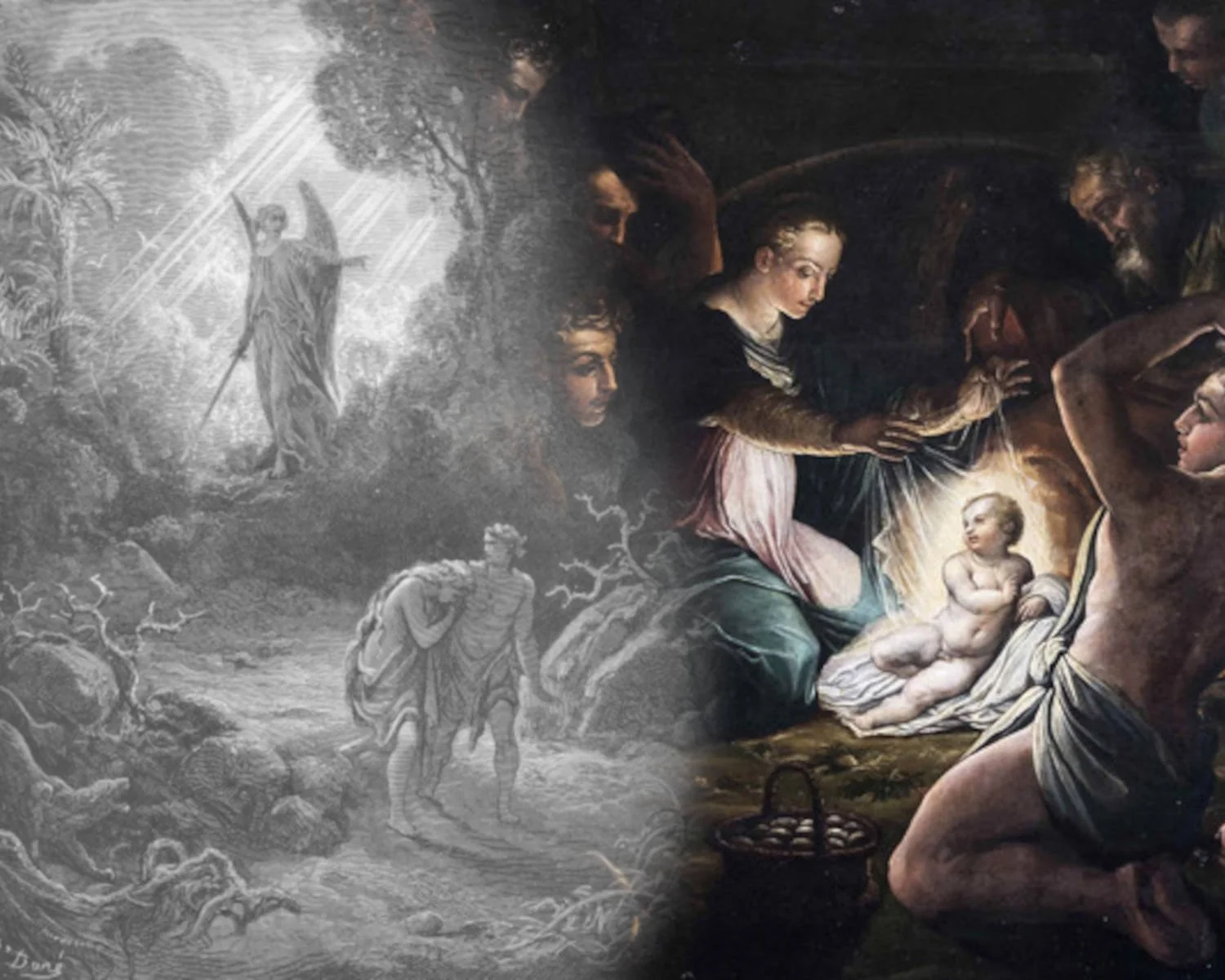
The Genesis story of the Fall of Man is mirrored in the Nativity. Unlike Adam at the Tree of Knowledge, Jesus did not deem equality with God a thing to be grasped.
December 17, 2025 by Father Gordon MacRae
Back in 2014, one of our readers sent me an article that appeared inCrisis Magazine, “Who will Rescue the Lost Sheep of the Lonely Revolution?” by the outstanding writer, Anthony Esolen. It is an admonitory parable about the lost sheep of the Gospel and the once-dead prodigal son of another parable. What exactly did Jesus mean by “lost” and “dead”?
Mr. Esolen raises questions about controversies I had been taking up in previous weeks, perhaps most notably in “Synodality Blues: Pope Francis in a Time of Heresy.” Some of my posts then had a focus on the Parable of the Prodigal Son, so central to the Gospel, but Esolen makes a point missing from the Synod debate:
“That is why you came among us, to call sinners back to the fold. Not to pet and stroke them for being sinners, because that is what you mean by ‘lost,’ and what you mean by ‘dead’ when you ask us to consider the young man who had wandered into the far country. The father in your parable wanted his son alive, not dead.”
In over thirty years in prison, I have seen firsthand the fall of man and its effects on the lives of the lost. No good father serves them by inviting them home then leaving them lost, or worse, dead; deadened to the Spirit calling them out of the dark wood of error. Mr. Esolen has seen this too:
“…you say your hearts beat warmly for the poor. Prisoners are poor to the point of invisibility… Go and find out what the Lonely Revolution has done to them. Well may you plead for cleaner cells and better food for prisoners, and more merciful punishment. Why do you not plead for cleaner lives and better nourishment for their souls when they are young, before the doors of the prison shut upon them? Who speaks for them?”
Here in prison, writing from the East of Eden, I live alongside the daily consequences of the Fall of Man. It will take more than a Synod on the Family to see the panoramic view I now see. Anthony Esolen challenges our shepherds: “Venturing forth into the margins, my leaders?… [Then] leave your parlors and come to the sheepfold.”
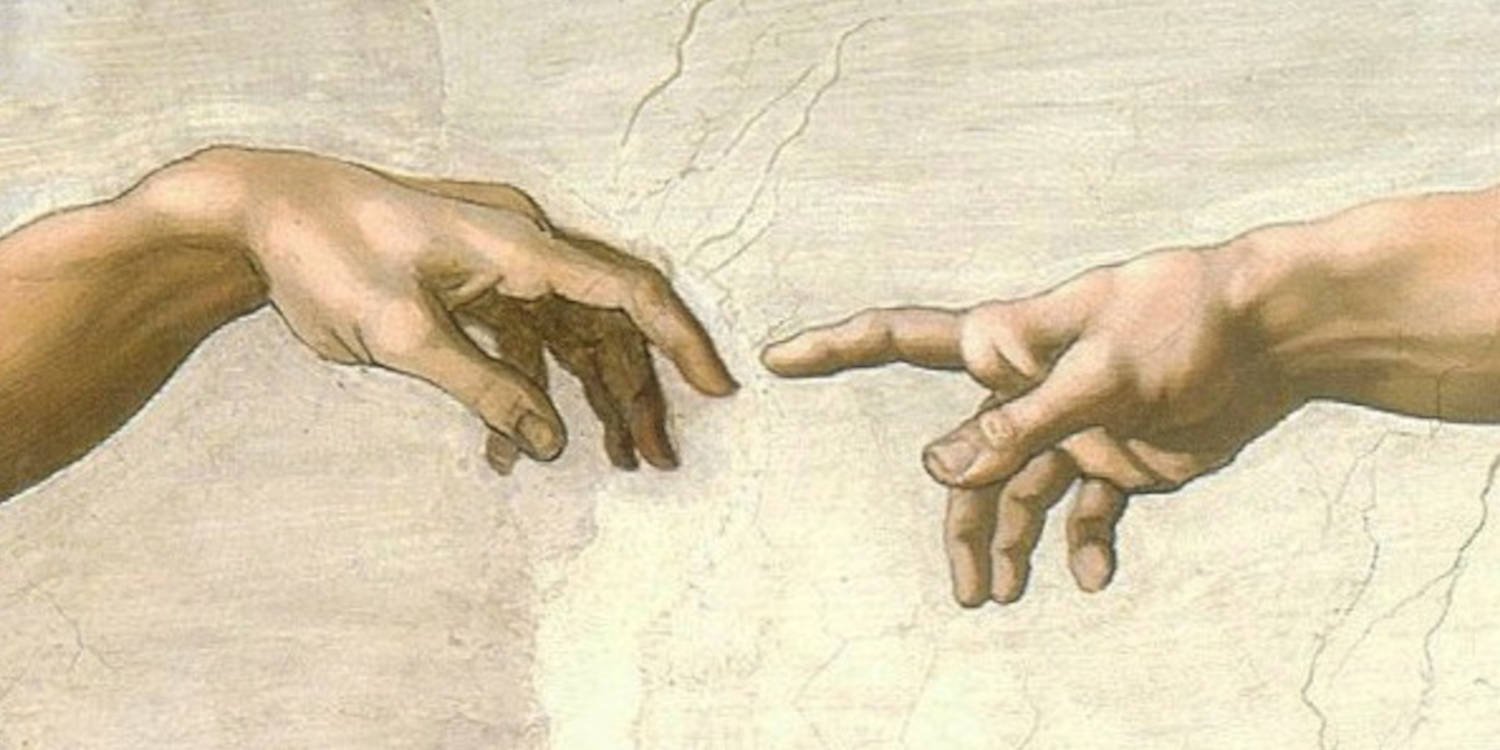
In the Image and Likeness of God
Adrift in synodal controversy, we might do well this Advent to ponder the Genesis story of Creation and the Fall of Adam. I found some fascinating things there when I took a good long look. The story of Adam is filled with metaphor and meaning that frames all that comes after it in the story of God’s intervention with Salvation History.
Accounts of man created from the earth were common in Ancient Near Eastern texts that preceded the Book of Genesis. The Hebrew name for the first human is “ha-Adam” while the Hebrew for “made from earth” is “ha-Adama” which some have interpreted as “man from earth.” Thus Adam does not technically have a name in the Genesis account. It is simply “man.” His actions are on behalf of all.
As common as the story of man from the earth was in the texts of Ancient Near Eastern lore, the Biblical version has something found nowhere else. In Genesis (2:7) God formed man from the ground “and breathed into his nostrils the breath of life.” And not only life, but soul, life in the image and likeness of God. The Breath of God, or the Winds of God, is an element repeated in Sacred Scripture in a pattern I once described in an article entitled “Inherit the Wind.” To save you some time, we just discovered this AI overview of it:
“Inherit the Wind: Pentecost and the Breath of God” refers to a theological theme, particularly from writer, Father Gordon MacRae, connecting the biblical concept of “inheriting the wind” (Proverbs 11:29, meaning futility/foolishness) with Pentecost, where the Holy Spirit arrives as wind (Ruah in Hebrew) and breath, bringing life, understanding, and new creation, contrasting worldly futility with spiritual fulfillment. It uses “wind” (a symbol of God’s Spirit) to explore how believers receive divine life, moving beyond empty pursuits to a deeper, shared faith, just as the Apostles understood each other’s languages at Pentecost.
The title, “Inherit the Wind: Pentecost and the Breath of God” draws a parallel between the empty “inheritance” of the world (wind) and the profound gift of the Spirit (wind/breath) at Pentecost, which brings true substance and unity.
It signifies that instead of pursuing futile worldly gains (“inheriting the wind”), believers receive God’s Spirit, which transforms them into new creations and empowers them to share the Gospel, effectively reversing the confusion of Babel.
Back to our Genesis account: God will set the man from earth in Eden. Then in the following verse in Genesis (2:8) God establishes in Eden what would become the very instruments of man’s fall: the Tree of Knowledge of Good and Evil and the Tree of Life. So what exactly was Adam’s “Original Sin?”
When I wrote “Science and Faith and the Big Bang Theory of Creation” I delved into the deeper meaning of the first words in Scripture spoken by God, “Let there be light” (Genesis 1:3). Saint Augustine in the Fifth Century saw in that command the very moment God created the angelic realm, a sort of spiritual Big Bang. What is clear is that spiritual life was created first and the material world followed. For all we know — and, trust me, science knows no better — “Let there be light” was the spark that caused the Big Bang.
You might note that the creation of light preceded the creation of anything in the physical world that might generate light such as the Sun and the stars. Saint Augustine then considered the very next line in Genesis (1:4), “God separated the light from the darkness,” and saw in it the moment the angels fell and sin entered the cosmos. It was only then in the Genesis account that construction of the material universe got underway.
When God created a man from the earth, a precedent for “The Fall” had already taken place. God then took ha-adama, Adam, and commanded him (2:16) to eat freely of the bounty of Eden, “but of the Tree of Knowledge of Good and Evil you may not eat, for in the day you eat of it, you shall die.” Die not in the sense of physical death — for Adam lived on — but in the spiritual sense, the same sort of death from which the father of another famous parable receives his Prodigal Son. “Your brother was dead, and now he is alive” (Luke 15:32).
The Tree of Knowledge of Good and Evil is what is called a “merism” in Sacred Scripture. It acts as a set of bookends which include all the volumes in between. Another example of a merism is in Psalm 139:2, “You know when I sit and when I stand.” In other words, “you know everything about me.” The Tree of Knowledge, therefore, is access to the knowledge of God, and Adam’s grasping for it is the height of hubris, of pride, of self-serving disobedience.
In the end, Adam opts for disobedience when faced with an opportunity that serves his own interests. From the perspective of human hindsight, man was just being man. In an alternate creation account in Ezekiel (28:11-23), God said to the man:
“You corrupted your wisdom for the sake of splendor, and the guardian cherub drove you out.”
God’s clothing Adam and Eve — who is so named only after The Fall — before expelling them is a conciliatory gesture, an accommodation to their human limitations. Casting them out of Eden is not presented solely as God’s justice, but also God’s mercy to protect them from an even more catastrophic fall, “Lest he put forth his hand and take [grasp] also from the Tree of Life” (Genesis 3:22).
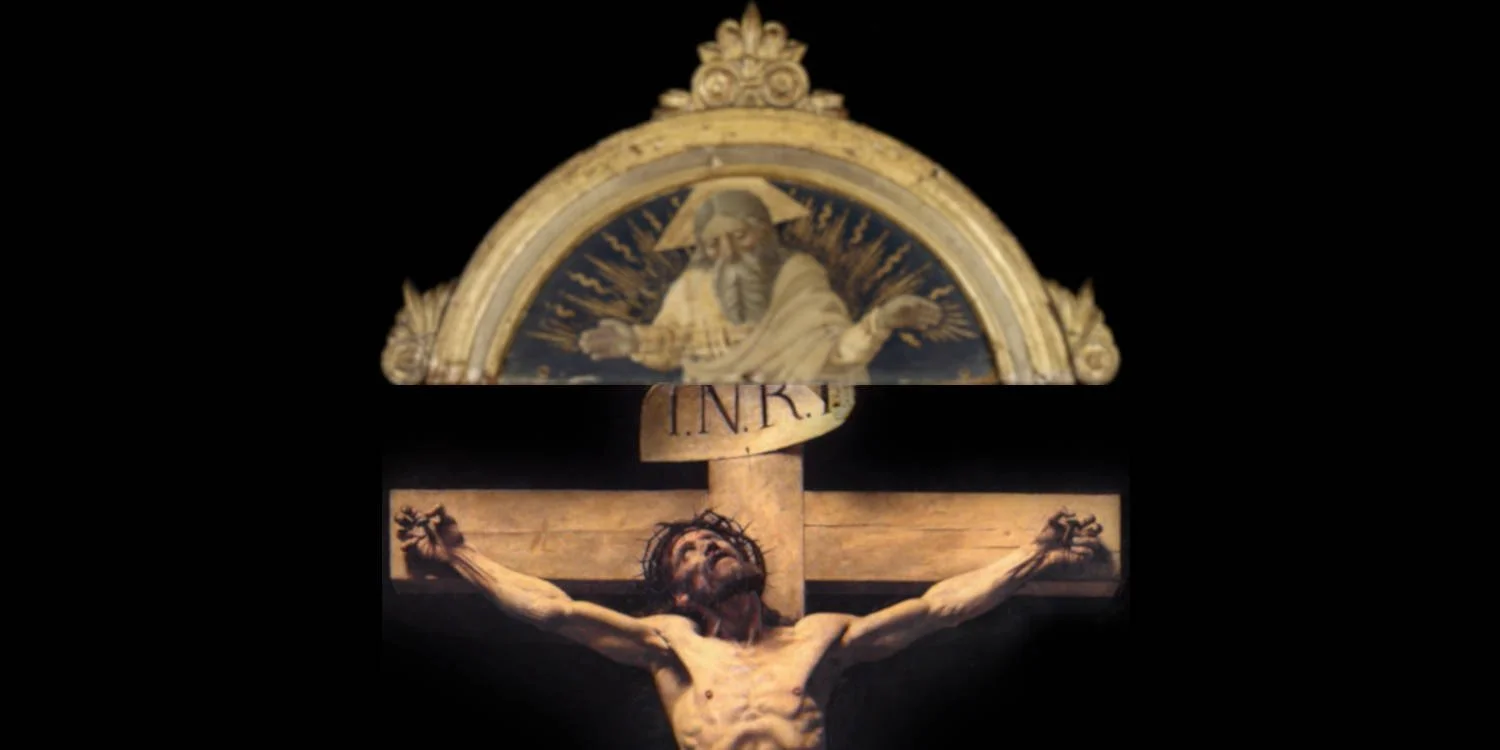
Jesus in the Form of God
The Church’s liturgy has always been conscious of the theological link between the fall of Adam and the birth of Christ. For evidence, look no further than the Mass Readings for the Solemnity of the Immaculate Conception. I also find a stunning reflection of the Eden story in a hymn from the very earliest Christian church — perhaps a liturgical hymn — with which Saint Paul demonstrates to the Church at Philippi the mission, purpose, and mind of Christ. “Let each of you look not only to his own interests, but also the interests of others. Have this mind among yourselves which was in Christ Jesus…”
“…Who though he was in the form of God did not deem equality with God a thing to be grasped at, but emptied himself, taking the form of a servant, being born in the likeness of men. And being found in human form he humbled himself and became obedient unto death, even death on a cross. Therefore God has highly exalted him and bestowed upon him the name which is above every other name, that at the name of Jesus every knee should bend, in heaven and on earth and under the earth, and every tongue proclaim to the glory of God the Father: Jesus Christ is Lord.”
— Philippians 2:3-11
The two accounts above — the story of Adam fallen from the image and likeness of God and expelled from Eden, and the story of Jesus in the form of God “being born in the likeness of men” — reflect the classic dualism of Plato. A Greek philosopher in the 3rd and 4th Century B.C., the essence of Plato’s thought was his theory of image and form. Forms or universalities in the spiritual realm had imperfect reflections in the material world.
Hence, Adam is in the image of God, and falls, but Christ is in the form of God. The verses recounted by Saint Paul in Philippians point to something of cosmic consequence for the story of the Fall of Man. Man, made from the earth in the image of God grasps to be like God, and falls from grace at Eden. At Bethlehem, however, God Himself traces those steps in reverse. He comes to earth taking the image and likeness of man, and sacrifices Himself to end man’s spiritual death.
The late Pope Francis summoned us to extend our gaze to the peripheries of a broken world. It is a cautious enterprise in a self-righteous world in a fallen state. Without a clear mandate from the Holy Spirit, we could lose ourselves and our souls in such an effort. Anthony Esolen expresses the danger well in the Crisis article cited above:
“Who speaks for the penitent, trying to place his confidence in a Church that cuts his heart right out because she seems to take his sins less seriously than he does.”
We can bring no one to Christ that way, but the caution should not prevent the Church from her mission to reach into the ends of the earth, to save sinners, and not just revel with the self-proclaimed already saved. Ours is a mission extended to the fallen.
I have seen the Fall of Man — where I now live I see it all around me — and so had the Magi of the Gospel who came from the East to extend to Him their gifts. “Upon a Midnight Not so Clear, Some Wise Men from the East Appear” is my own favorite Christmas post, and one I hope you will read and share in the coming days.
They represent the known world. They came to bend their knee in the presence of Christ in the form of God born in the likeness of men at Bethlehem. Even my own aching, wounded knee must bend for that!
+ + +
Note from Father Gordon MacRae: Thank you for taking the time to prayerfully read and share this post, which I hope draws us away from the dark wood of error toward the wood of the Cross and our Salvation. You may also like these related Yuletide posts from Beyond These Stone Walls:
Saint Gabriel the Archangel: When the Dawn from On High Broke Upon Us
The Ark of the Covenant and the Mother of God
Upon a Midnight Not So Clear, Some Wise Men from the East Appear

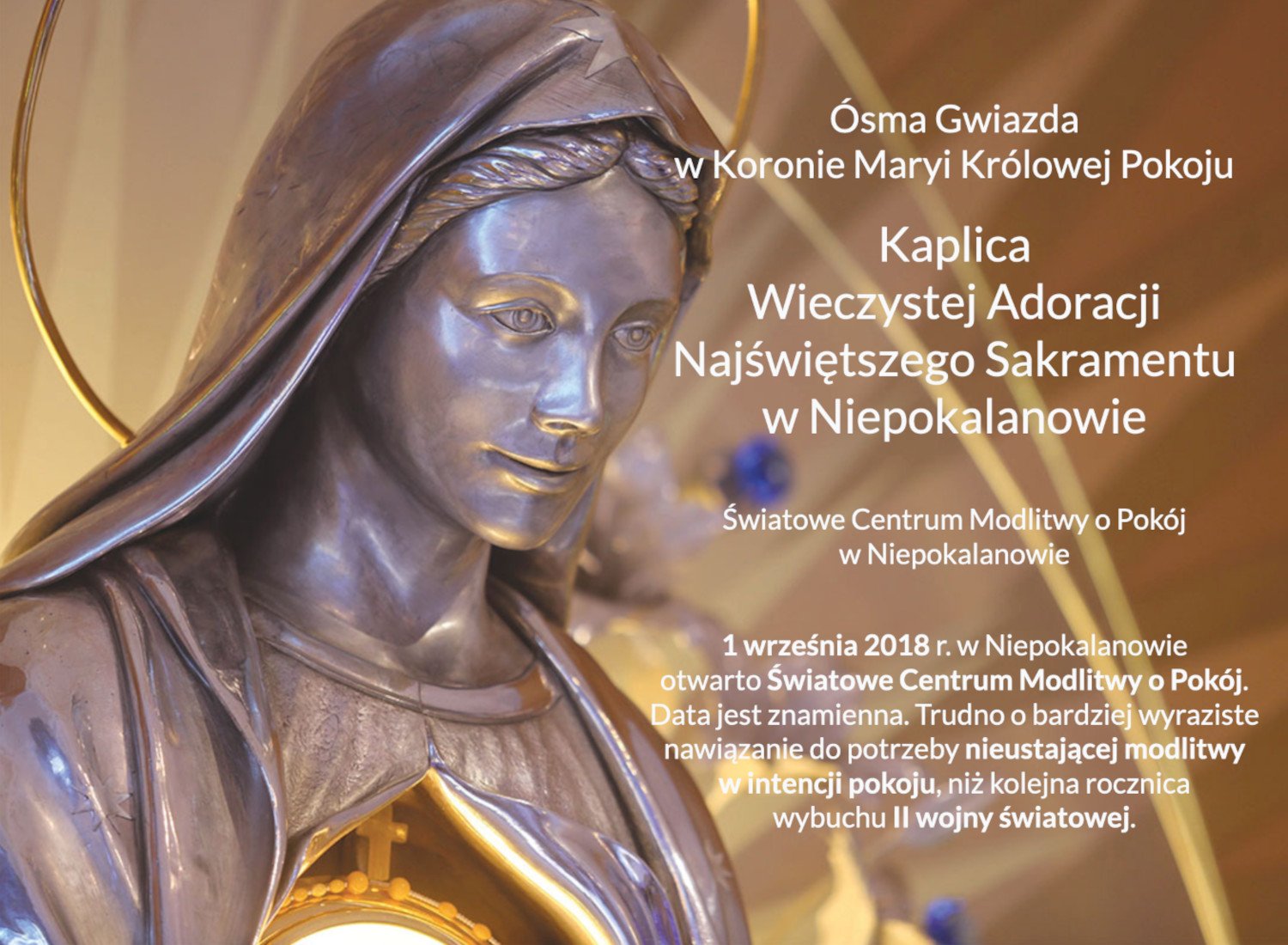

The Eucharistic Adoration Chapel established by Saint Maximilian Kolbe was inaugurated at the outbreak of World War II. It was restored as a Chapel of Adoration in September, 2018, the commemoration of the date that the war began. It is now part of the World Center of Prayer for Peace. The live internet feed of the Adoration Chapel at Niepokalanow — sponsored by EWTN — was established just a few weeks before we discovered it and began to include in at Beyond These Stone Walls. Click “Watch on YouTube” in the lower left corner to see how many people around the world are present there with you. The number appears below the symbol for EWTN.
Click or tap here to proceed to the Adoration Chapel.
The following is a translation from the Polish in the image above: “Eighth Star in the Crown of Mary Queen of Peace” “Chapel of Perpetual Adoration of the Blessed Sacrament at Niepokalanow. World Center of Prayer for Peace.” “On September 1, 2018, the World Center of Prayer for Peace in Niepokalanow was opened. It would be difficult to find a more expressive reference to the need for constant prayer for peace than the anniversary of the outbreak of World War II.”
For the Catholic theology behind this image, visit my post, “The Ark of the Covenant and the Mother of God.”

What Belongs to Caesar and What Belongs to God
Pharisees set a trap for Jesus with a query about paying tax to Caesar. Like much in the Gospel, this has a story on its surface and a far greater one in its depths.

Pharisees set a trap for Jesus with a query about paying tax to Caesar. Like much in the Gospel, this has a story on its surface and a far greater one in its depths.
Note from Father Gordon MacRae: One of the most frequent religious questions in the Google database of searches is also the Gospel at Mass for the 29th Sunday in Ordinary Time. With that question, the Pharisees laid out a trap for Jesus.
+ + +
Prisoners often come to my door with questions. Sometimes they simply don’t have the ability to search through the library for answers and sometimes they just assume that a guy my age must know at least something about almost everything. My friend, Pornchai Moontri, when he was here with me, used to sometimes chime in with answers of his own.
One day a prisoner asked me, “Do you know any Latin? Pornchai shot back, “Of course he does. Latin was his first language!” The implied meaning was that I am old enough to remember when Latin was spoken on the streets of the Roman Empire. The prisoner didn’t get the joke so he didn’t laugh. I got it, and I still look forward to my quid pro quo moment.
But Pornchai may not have been entirely wrong. I went to a public high school as a teen growing up on the North Shore of Massachusetts in the 1960s. (Yes, locals still call it the “Noath Shoah”). I graduated from Lynn English High School when I was only one month seventeen in 1970, and what I most remember about those years is Latin. At Lynn English I studied basic, intermediate, and advanced Classical Latin with Miss Ruggiero who also moderated the “Latin Club” of which I was a charter member.
Latin was not my first language, but I became proficient in my first language, English, only because I studied Latin. I owe a great debt to Miss Ruggiero because she was never satisfied with our merely learning the discipline of Latin declinations and conjugations. We also had to study in depth the setting in which it was spoken: the vast Roman Empire that had spread throughout the known world.

The Roman Empire
The Roman Empire lasted for only five centuries. One of them, the one we now call the First Century A.D. (Anno Domini, Latin for “the Year of the Lord”) includes the Roman occupation of Judea during the birth, life, death, and resurrection of Jesus, and the life of the Early Church.
The Empire began to spread from the city of Rome to the rest of Italy and neighboring regions to become the Roman Republic about 500 years before the birth of Jesus. In 49 B.C., Gaius Julius Caesar, a Roman military strategist and politician, prevailed in a civil war and became dictator of the Republic. He ruled for only five years when he was assassinated on the Ides of March (March 15). The month of July was named in his honor. Caesar’s longtime military deputy, Mark Antony, and Caesar’s grandnephew, Gaius Octavius, defeated Caesar’s assassins and rivals. Then they turned on each other. At the battle of Actium in 31 B.C., Octavius prevailed over a plot by Roman governor Mark Antony and the Egyptian princess, Cleopatra, Caesar’s former mistress who took up with Mark Antony. It’s one of the great soap operas of history.
In 27 B.C. the Roman Senate proclaimed Octavius to be the Roman Republic’s supreme leader giving him the title, “Augustus,” meaning “exalted or holy one.” Most historians cite 27 B.C. as the date the Roman Empire was born. Its first Emperor took his title and added “Caesar” in honor of his great-uncle, Julius.
Caesar Augustus thus meant, “Caesar the Exalted Holy Roman Emperor.” It was a title and not a name. Augustus was also given the titles, “Pontifex Maximus,” supreme head of the state religion, and “Pater Patriae,” Father of the Fatherland.
The month of August was named in the ancient Roman Calendar in honor of Caesar Augustus. It’s easy to see the Roman influence not only in the Latin language of the Church but in the religious titles later assigned by tradition to the papacy. It’s a crime against history to allow Latin to fade from Catholic Tradition, for Christianity transformed it from the language of Earthly powers to the language of the Church. I once wrote of the meaning of this loss in the life of the Church in “A House Divided: Cancel Culture and the Latin Mass.”
From 27 B.C. forward, “Caesar” became the title for a string of Roman rulers. Three are mentioned by name in our New Testament: Augustus, who reigned at the time of the birth of Jesus (see Luke 2:1); Tiberius, in whose fifteenth year as Emperor Jesus was baptized by John at the Jordan (Luke 3:1); and Claudius (Acts 18:2), who commanded that all Jews leave the city of Rome. Others, such as Caligula and Nero, are not mentioned by name but had a profound effect on early Christianity.
By the birth of Jesus, Augustus centralized power by turning to the Equestrian Order, Roman citizens with wealth, power, and property, and sustained their loyalty by appointing them governors over the various regions of Roman occupation. When Jesus was about 14 years of age, Tiberius succeeded Augustus as Emperor, and later appointed one of the Equestrian Order, Pontius Pilate, as governor of Judea.
In some ways in the early years of the advance of Rome into Palestine, the Jews saw it to their advantage. It was a chance to free themselves from the oppression of the Seleucids, the Greek dynasty under Antiochus IV Epiphanies who overtook the Jerusalem Temple in 167 B.C. and replaced the Torah in the Sanctuary with the cult of Zeus.
This is a story of great imperial oppression and Jewish resistance that is laid out in the First Book of Maccabees (1 Macc 8:1-6) which spoke positively of the advancing Romans and an alliance with the Jews to expel the Greek oppressors. It is the story of the Jewish Festival of Hanukkah. A century before the birth of Jesus, Rome became the dominant force in the Mediterranean region, having replaced the Hellenistic Greek influence that sought to destroy the Hebrew language and expression of faith.

Caesar and Christ
So when I came to the Gospel reading for the Twenty-ninth Sunday in Ordinary Time, I was struck by the answer Jesus gave to the religious scholars of his day, the Pharisees, who had set out to entrap him. Armed with a thorough knowledge of Hebrew Law, they asked Jesus if it is permissible for Jews to pay the census tax to Caesar.
The brief story that the Gospel tells in Matthew 22: 15-22 is a good story on its face, but if you are willing to venture a little deeper under into its depths, the result is fascinating. So sometime before or after you hear the Gospel for the 29th Sunday in Ordinary Time, invest a little of your own ordinary time for a careful reading of the rest of this post.
It is impossible to fully understand the dynamic in this account between Jesus and a group of Pharisees without some exploration of its setting. First, the story on the surface:
“The Pharisees went off and plotted how they might entrap Jesus in speech. They sent their disciples to him, with the Herodians, saying, ‘Teacher, we know that you are a truthful man and that you teach the way of God in accordance with the truth. And you are not concerned with anyone’s opinion, for you do not regard a person’s status. Tell us, then, what is your opinion: Is it lawful to pay the census tax to Caesar or not?’” The trap is set.
“Knowing their malice, Jesus said, ‘Why are you testing me, you hypocrites? Show me the coin that pays the census tax.’ Then they gave him the Roman coin. He said to them, ‘Whose image is this and whose inscription?’ They replied, ‘Caesar’s.’ At that he said to them, ‘Then repay to Caesar what belongs to Caesar, and to God what belongs to God.’ When they heard it, they marveled; and then they left him and went away.”
— Matthew 22: 15-22
Why were the Pharisees plotting against Jesus at all? It began in an earlier chapter of the Gospel, Matthew 12. The Pharisees challenged Jesus over his disciples plucking grain on the Sabbath because they were hungry. The chapter then culminates in his Sabbath Day healing of a man with a withered hand. Using the Pharisees’ own expertise in Hebrew Law and the Prophets, Jesus challenged them to consider the prophetic meaning of “I desire mercy, and not sacrifice” (quoting from the Prophet Hosea 6:6). Stymied by the challenge, “the Pharisees went out and took counsel against him on how to destroy him.” (Matthew 12:14).
The next encounter between Jesus and the Pharisees is the account of their question about whether the Hebrew Law permits Jews to pay a census tax to Caesar. When Jesus asked to see the coin that would be used, and then asks whose image is on this coin, he cut to the heart of their trap with one of his own.
The coin was a denarius stamped with the profile of the Emperor, Tiberius Caesar. The tax was deeply offensive to the Pharisees because of a law set forth in the Book of Exodus:
“You shall not make for yourself a graven image whether in the form of anything that is in heaven above, or that is on the earth beneath… You shall not bow down to them, or worship them.”
— Exodus 20:4-5
To pay a tax to Caesar using the coin of the realm, one engraved with Caesar’s image, was considered a direct affront to the Hebrew Law, and yet the Roman occupation required it and it was the price Jews paid for freedom from the oppression of the Greeks who committed a far more serious abomination: total desecration of their Temple. So paying it was an accommodation that the Jews begrudgingly obliged despite the Mosaic Law.
But what these Pharisees wanted to know from Jesus was not whether or not to pay the tax, but his opinion on whether it was in accord with the Law of Moses. The trap was set no matter how he answered. If his opinion was that it was lawful to pay, then it would be a public insult against the Law of Moses which could be used to discredit him. If he said it was not lawful to pay, then it would have been a public insult against Rome which could be used to accuse him of insurrection.
But in the end, Jesus trapped the entrappers by saying something that caused them first to marvel, and then to simply go away in silence. His trap had multiple tiers. The first was to play upon the word, “image.” The coin bore the image and likeness of Tiberius Caesar. Therefore, for Jesus, it belonged to him.
To pay the tax is simply to render to Caesar what belongs to Caesar. It would be a clearer violation of the law against graven images for a Jew to keep the coin. But the Pharisees would also see in this a subtle reference to a passage in Genesis with great authority:
“So God created man in his image; in the image of God he created him.”
— Genesis 1:27
Hence the second part of Jesus’ challenge: “Render to Caesar the things that are Caesar’s and to God the things that are God’s.”
This meant not just their obedience to the Law, but their very selves. The gist of the implication is even stronger. This higher duty, for Jesus, is incumbent not only upon these Pharisees, but even upon Caesar himself, and that was a revolutionary thought that put the Pharisee’s in a stupor.
For the Pharisees to challenge him in any way after this would have required their affirmation that Caesar is an ultimate authority that surpasses even the will of God. So they were left to marvel, and then they just left. This places an entirely new meaning on the accommodations to Caesar made by religious authorities of Jesus’ time — and perhaps even our own.
Somehow, between this scene in the Gospel of Matthew that is proclaimed at a Sunday Mass, and the Gospel of John that we will hear in Holy Week, came the final descent of faith and the cost of believing culminating in the scene before Pilate that became one of my most read Holy Week posts, “The Chief Priests Answered, ‘We Have No King but Caesar.’”
It was the ultimate accommodation to Caesar from which there is no return. As for the vast Roman Empire that tried to make its Emperor god, the successor of Peter remains in Rome to this day. The successor of Caesar is but a footnote on history.
+ + +
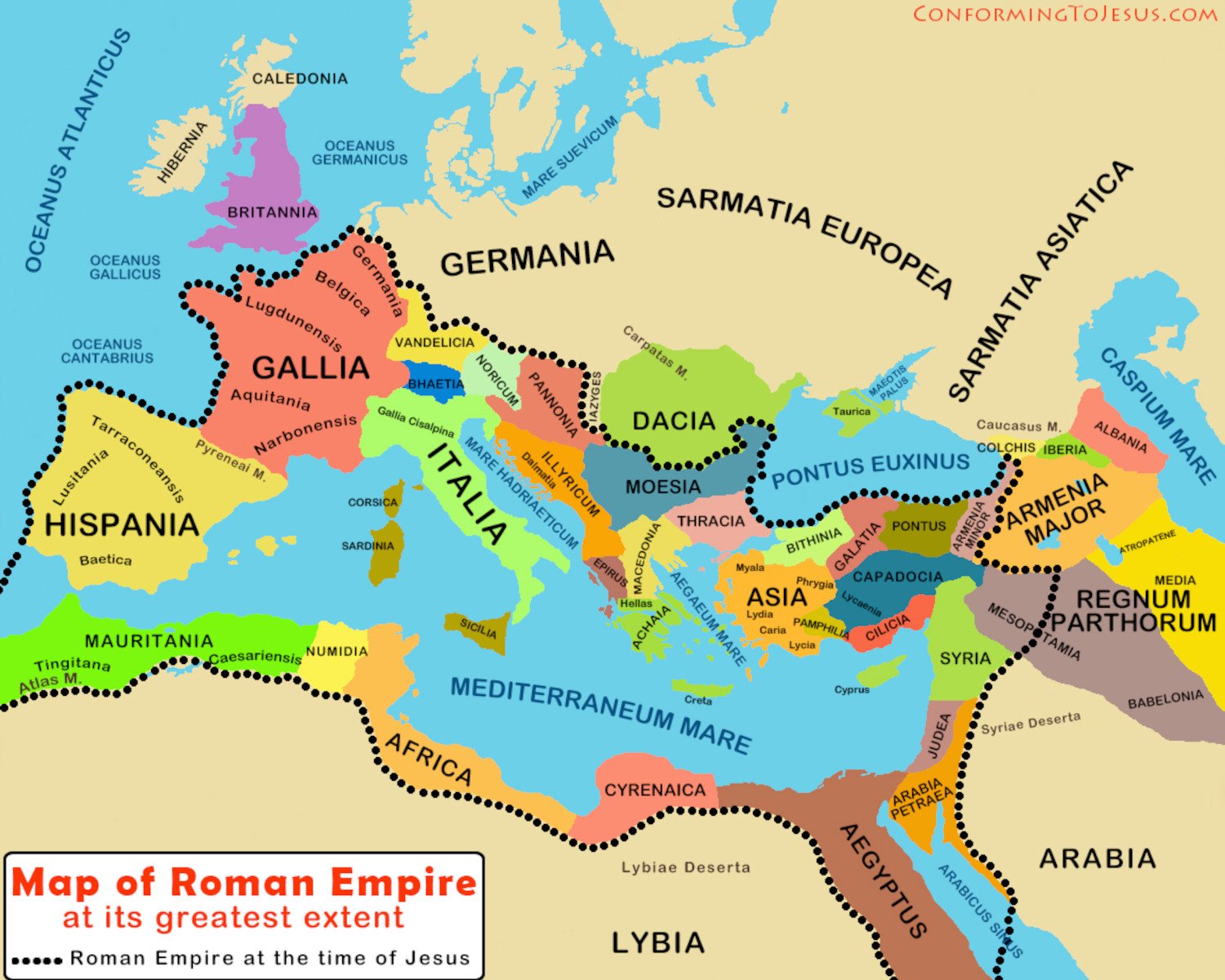
The dotted line in the map above marks the perimeter of the Roman Empire at the time of Jesus.
Note from Father Gordon MacRae: For more forays into the deeper wells of Scripture visit our collection of biblical posts, The Bible Speaks.
The Eucharistic Adoration Chapel established by Saint Maximilian Kolbe was inaugurated at the outbreak of World War II. It was restored as a Chapel of Adoration in September, 2018, the commemoration of the date that the war began. It is now part of the World Center of Prayer for Peace. The live internet feed of the Adoration Chapel at Niepokalanow — sponsored by EWTN — was established just a few weeks before we discovered it and began to include in at Beyond These Stone Walls. Click “Watch on YouTube” in the lower left corner to see how many people around the world are present there with you. The number appears below the symbol for EWTN.
Click or tap here to proceed to the Adoration Chapel.
The following is a translation from the Polish in the image above: “Eighth Star in the Crown of Mary Queen of Peace” “Chapel of Perpetual Adoration of the Blessed Sacrament at Niepokalanow. World Center of Prayer for Peace.” “On September 1, 2018, the World Center of Prayer for Peace in Niepokalanow was opened. It would be difficult to find a more expressive reference to the need for constant prayer for peace than the anniversary of the outbreak of World War II.”
For the Catholic theology behind this image, visit my post, “The Ark of the Covenant and the Mother of God.”