“There are few authentic prophetic voices among us, guiding truth-seekers along the right path. Among them is Fr. Gordon MacRae, a mighty voice in the prison tradition of John the Baptist, Maximilian Kolbe, Alfred Delp, SJ, and Dietrich Bonhoeffer.”
— Deacon David Jones
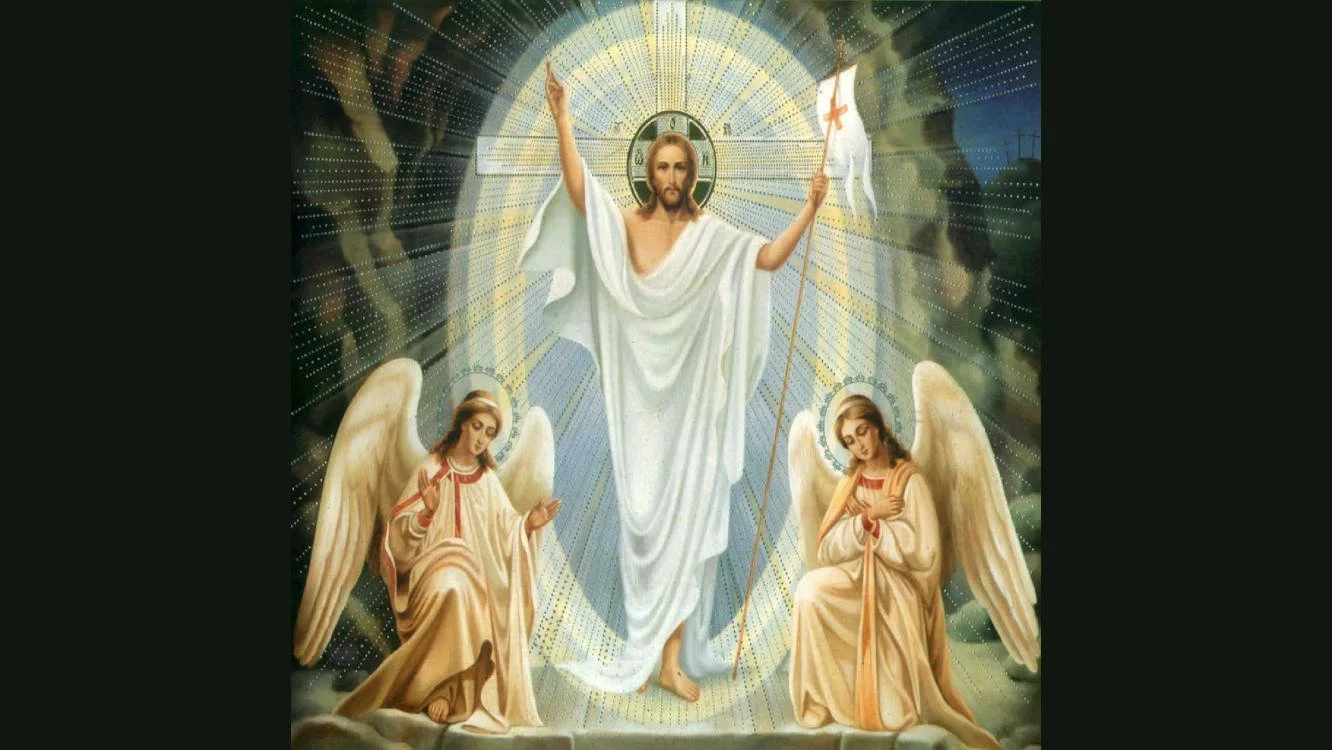
The Resurrection of Christ: Further Along the Road to Emmaus
What are we to understand when we speak of the Resurrection of Jesus? Ancient Scriptures and interpretations from a brilliant theologian-pope provide amazing clues.
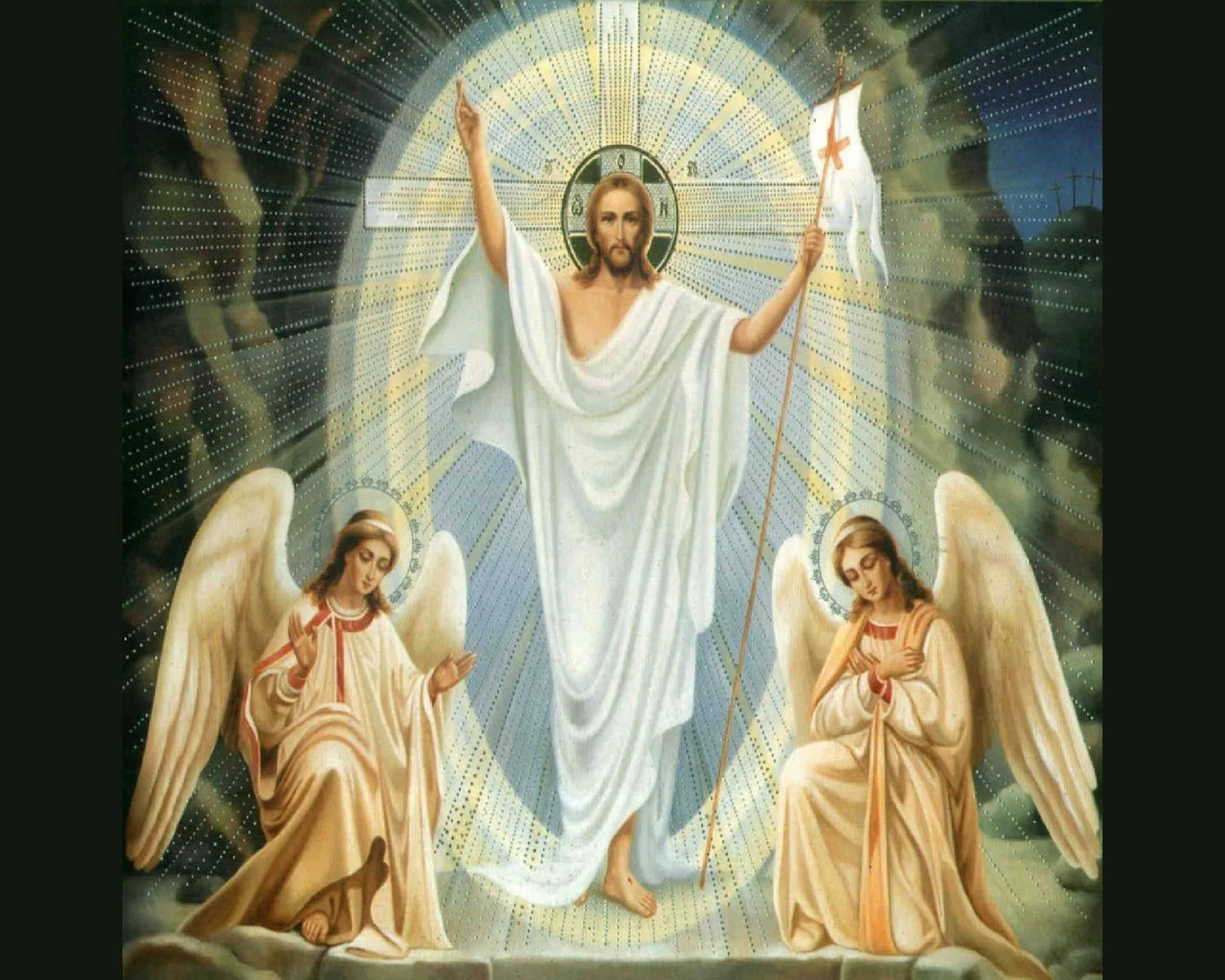
What are we to understand when we speak of the Resurrection of Jesus? Ancient Scriptures and interpretations from a brilliant theologian-pope provide amazing clues.
April 8, 2026 within the Octave of Easter
by Father Gordon MacRae with theological assistance from Pope Benedict XVI
Note: The following is Part 2 of our Holy Week post, “The Darkness of the Cross Enlightened on the Road to Emmaus.”
In the above captioned post, we left you on the Road to Emmaus. Jesus of Nazareth had been accused of blasphemy by the Jewish Sanhedrin. He was handed over to the Roman Governor Pontius Pilate for judgment. He was placed on trial, convicted, mercilessly scourged and then crucified. Those who followed and believed in him were devastated and lost. Some had hoped to find in him the manifestation of the Kingdom of God. Some hoped for a messianic end to the tyranny of Rome and its occupation of Judea. Others hoped for redemption. All were left demoralized. All had come to ruin. This is where we left you on the Road to Emmaus.
Some of the disciples of Jesus remained in Jerusalem in hiding. Others left, believing that all hope had come to an end. This includes the two who encountered a stranger on the Road to Emmaus about seven miles down that road from Jerusalem. One of them, Cleopas, and his fellow traveler, disciples of Jesus both, were among those who had hoped that Jesus would ultimately reign as a king in Jerusalem and rescue their nation from the oppression of Rome. Jesus, after hearing of their plight, while still disguised from their sight, challenged them: “O foolish men, and slow of heart to believe all that the prophets have spoken. Was it not necessary that the Christ should suffer these things and enter into his glory? Then beginning with Moses and all the prophets, he interpreted to them all the Scriptures concerning himself.” (Luke 24:25-27)
That Christ should suffer is a mystery foretold in the Old Testament according to Acts 3:18. On the Road to Emmaus Jesus gives to the two fleeing disciples an overview of Salvation History from the Hebrew Scriptures. His entire life was foreordained in Scripture, his birth, his earthly ministry, his death and his Resurrection.
Having come to the village in which they intended to stay, while the stranger intended to go further on, the two disciples asked him to remain with them saying “Stay with us, for it is toward evening and the day is now far spent.” While they were at table in that village the stranger took bread and blessed and broke it and gave it to them recalling the sequence of his actions at the Last Supper. Immediately their eyes were opened and they recognized him in the breaking of the bread. Then he vanished from their sight.
“Did not our hearts burn within us as he spoke to us on the road while he opened to us the Scriptures?”
— Luke 24:32
They immediately abandoned their flight from Jerusalem and returned as quickly as they could. They found the Eleven, the Apostles, gathered together along with other disciples who remained. Some of the Eleven declared to them what the others in the room had already heard with great excitement, “The Lord has risen indeed, and has appeared to Simon!” Then they told of what happened on the road, and of how Jesus was made known to them in the breaking of the bread.
The disciples became animated as the horror of the Crucifixion was slowly transformed into this newfound hope of the Resurrection as the appearances of Christ multiplied. They had no expectation or notion of what this meant. Coming down from the mountain after their experience of the Transfiguration (Mark 9:2-13), Jesus cautioned them to tell no one what they had seen or heard. “So they kept the matter to themselves while wondering what rising from the dead meant.” The disciples did not know, and could find out only by encountering the reality of it. So what exactly did the Resurrection of Christ mean? For my answer to this, I count heavily on the view of one of the most accomplished Catholic theologians of our time, Joseph Ratzinger, who became Pope Benedict XVI.
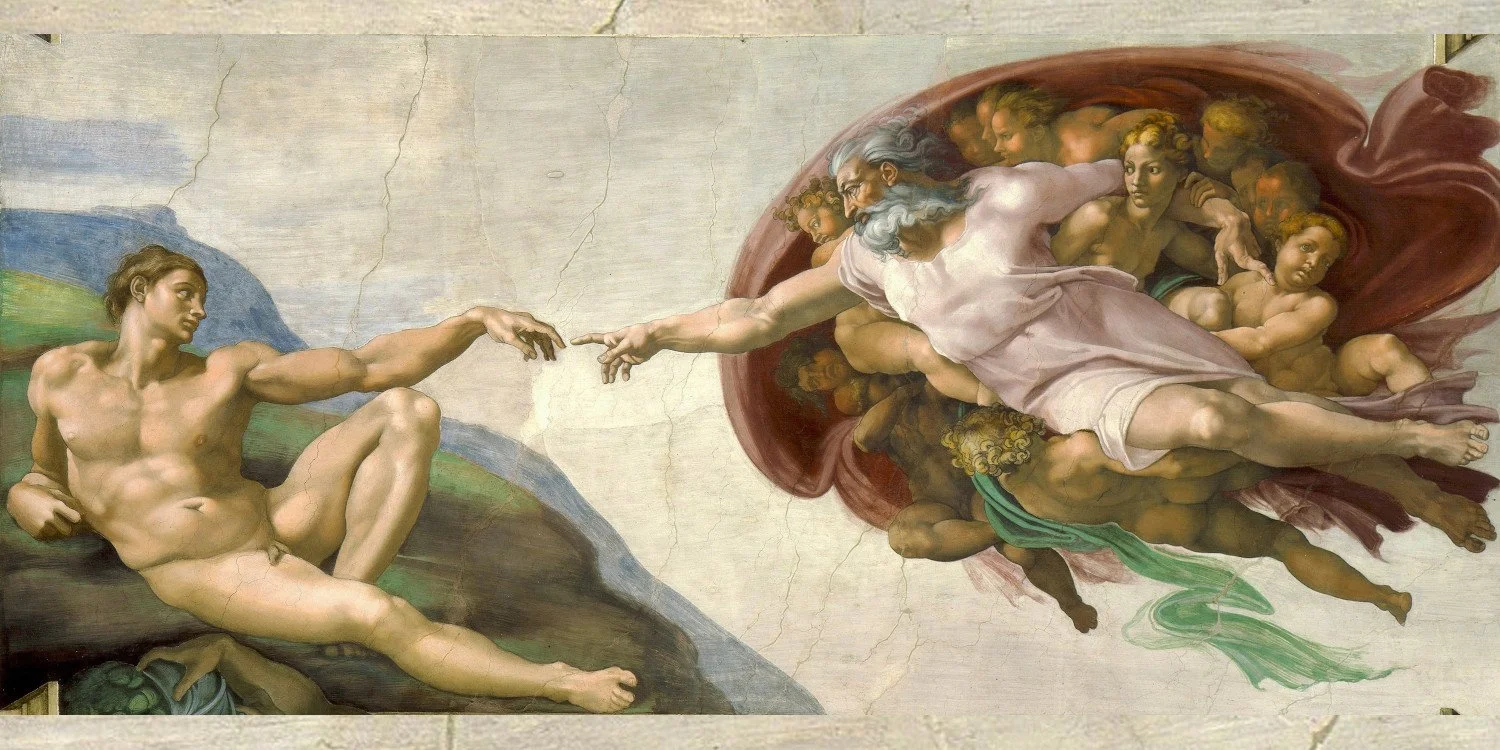
An Evolutionary Leap
“ ‘If Christ has not been raised, then our preaching is in vain and your faith is in vain. We are even found to be misrepresenting God, because we testified that he raised Christ’ (1 Corinthians 15:14-15). With these words to the community of Corinth, Saint Paul explains drastically what faith in the Resurrection of Jesus Christ means for the Christian message. It is its very foundation. Our faith stands or falls on the truth of the testimony that Christ is risen from the dead.”
— Pope Benedict XVI, Jesus of Nazareth, Vol 2: Holy Week, p241
Our answer to the question of the Resurrection will determine whether Jesus merely was in history or also still is. This is a most important question. So what actually happened to Jesus? For the witnesses who encountered the Risen Lord in Scripture, it is hard to say because for the most part they did not fully understand this new reality about Christ. There are multiple “resurrection” stories in the New Testament. Luke (11:17) tells us of the raising of the son of the widow of Nain. Mark (5:22-24, 35-43) tells of the raising of the daughter of Jairus. John (11:1-44) famously relates the raising of Lazarus.
What happened to Jesus is entirely different from these. His Resurrection was not merely the miracle of a resuscitated corpse. We have all heard stories of people brought medically back from the brink in near-death experiences. What the Gospel relates about Christ is very different from any of those accounts. The Resurrection of Jesus was about breaking out into an entirely new form of life, a life that is no longer subject to the law of dying and becoming, but rather lies beyond it. The Resurrection of Jesus opens up a new dimension not only of his existence, but also of ours.
Reading these conclusions from Pope Benedict XVI in Jesus of Nazareth, his masterwork of theological exegesis, almost seems like science fiction, but it is neither science nor fiction. It is not a newly written script for an episode fo Startrek: The Next Generation. It is rather an account seeking understanding that has always been at our fingertips. Benedict XVI cautioned that this opens up an analogy that could be easily misunderstood, but delving into it is a necessity of salvific truth and faith. The Resurrection of Christ constitutes an “evolutionary leap,” a new possibility of human existence that affects everyone and that opens up a new kind of future for humanity.
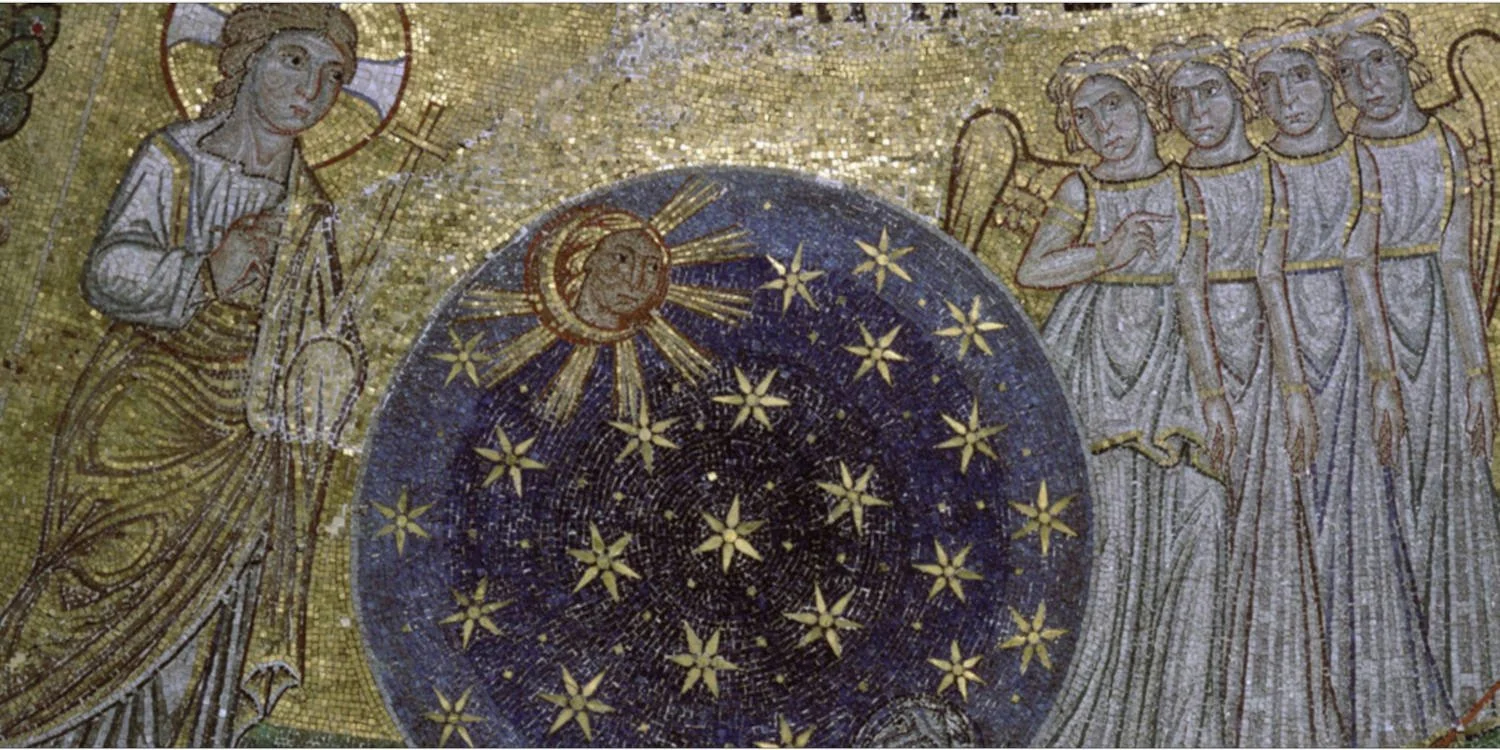
The Cosmic Body of Christ
On the basis of all this biblical evidence, what are we now in a position to say about the true nature of Christ’s Resurrection? Pope Benedict presents it as something akin to a radical “evolutionary leap” in which a new dimension of life emerges, a new dimension of human existence.
This is what is meant by those passages in Saint Paul’s letters written from prison (Colossians 1:12-23 and Ephesians 1:3-23) that hint at the cosmic Body of Christ, indicating that Christ’s transformed (Resurrected) body oversteps the boundaries of what we are able to conceive. Here is an example:
“He has delivered us from the dominion of darkness and transferred us to the kingdom of his beloved Son … . He is the image of the invisible God, the firstborn of all creation, for in him all things were created, in heaven and on earth, visible and invisible, whether thrones or dominions or principalities or authorities — all things were created through him and for him. He is before all things, and in him all things hold together. He is the head of the body, the Church; he is the beginning, the firstborn from the dead, that in everything he might be pre-eminent. For in him all the fulness of God is pleased to dwell, and through him to reconcile to himself all things, whether on earth or in heaven, making peace by the blood of his Cross.
— Colossians 1:13-20
The Resurrection of Jesus points far beyond history but has left a footprint within human history that was attested to by witnesses as an event of unprecedented kind and importance.
This man Jesus, complete with his body, now belongs totally to the sphere of the divine and eternal. The evidence in the Gospel is clear. The Resurrected Jesus can walk among us. He shows the Doubting Apostle, Saint Thomas, the wounds in his hands and side. He lets Thomas probe those wounds that are now for eternity a part of him, accepted on our behalf.
From here on, in both spirit and body, Jesus has a place within God. Even if man by his nature is created for immortality, it is only by virtue of the Resurrection of Christ that the place exists for our immortal souls to find their “space” in which immortality takes on its meaning as communion with God. This is hinted at in a mysterious passage from Saint Paul’s Letter to the Colossians written from prison. It was the Second Reading for our Easter Sunday Mass this year. I, too, have written some things from prison that press against the boundaries of easy understanding, but I do not hold a candle to Saint Paul:
“If then you have been raised with Christ, seek the things that are above where Christ is at the right hand of God. Set your minds on things that are above, not on things that are on earth. For you have died, and your life is hidden with Christ in God.”
— Colossians 3:1-3
+ + +
Note from Father Gordon MacRae: Thank you for reading and sharing this post. It is unclear whether I have shed any light at all on the mystery of the Resurrection of Jesus. But it is most clear to me now that the Resurrection of Christ sheds light on us as we stand in God’s Presence.
You may also like these related posts from Beyond These Stone Walls:
The Darkness of the Cross Enlightened on the Road to Emmaus
The Apostle Falls: Simon Peter Denies Christ

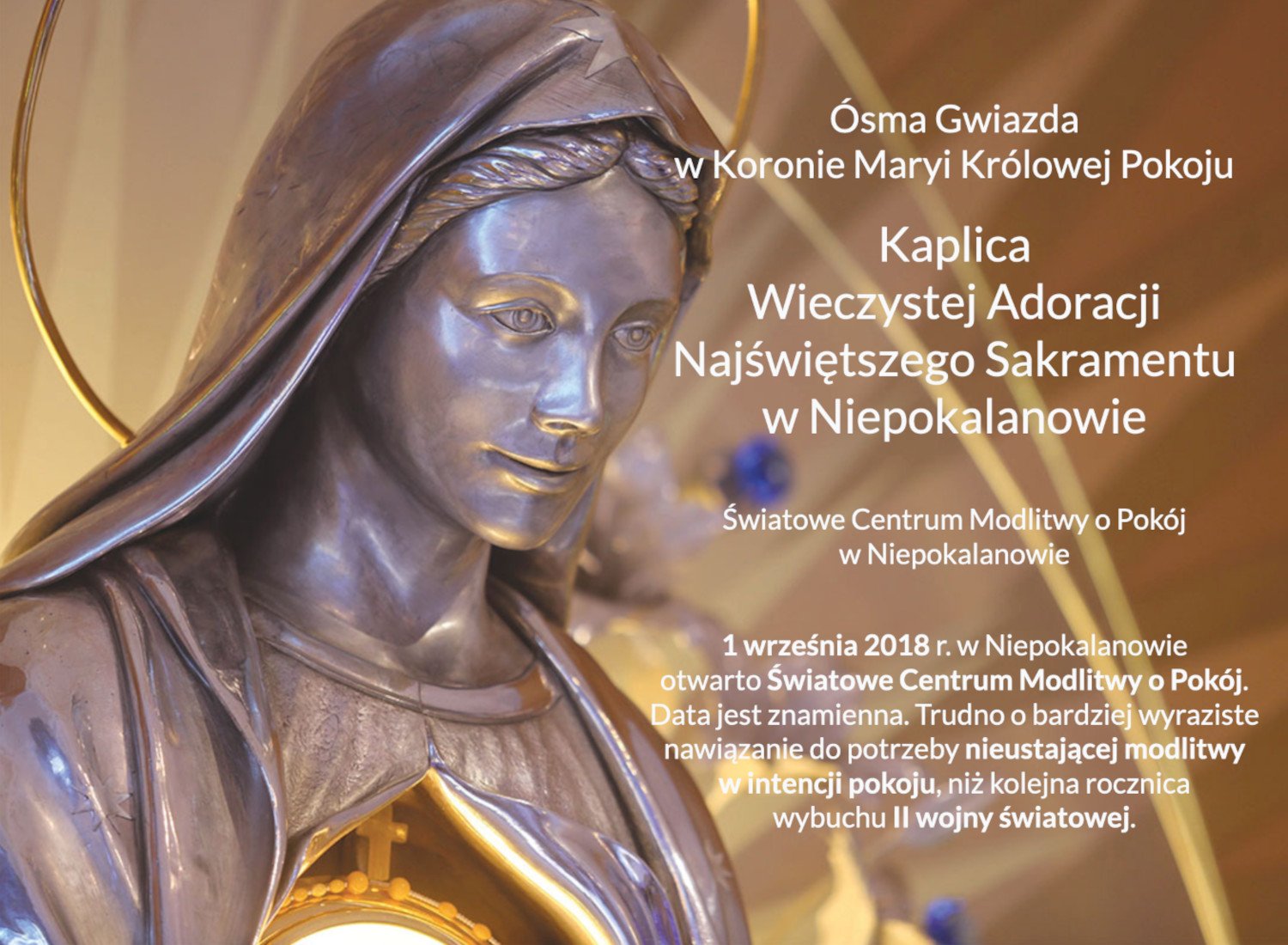

The Eucharistic Adoration Chapel established by Saint Maximilian Kolbe was inaugurated at the outbreak of World War II. It was restored as a Chapel of Adoration in September, 2018, the commemoration of the date that the war began. It is now part of the World Center of Prayer for Peace. The live internet feed of the Adoration Chapel at Niepokalanow — sponsored by EWTN — was established just a few weeks before we discovered it and began to include in at Beyond These Stone Walls. Click “Watch on YouTube” in the lower left corner to see how many people around the world are present there with you. The number appears below the symbol for EWTN.
Click or tap here to proceed to the Adoration Chapel.
The following is a translation from the Polish in the image above: “Eighth Star in the Crown of Mary Queen of Peace” “Chapel of Perpetual Adoration of the Blessed Sacrament at Niepokalanow. World Center of Prayer for Peace.” “On September 1, 2018, the World Center of Prayer for Peace in Niepokalanow was opened. It would be difficult to find a more expressive reference to the need for constant prayer for peace than the anniversary of the outbreak of World War II.”
For the Catholic theology behind this image, visit my post, “The Ark of the Covenant and the Mother of God.”

A Vision on Mount Tabor: The Transfiguration of Christ
Jesus took Peter, James, and John to a mountaintop where he was transfigured before their eyes, an event that echoes through the ages, even through prison walls.

Jesus took Peter, James, and John to a mountaintop where he was transfigured before their eyes, an event that echoes through the ages, even through prison walls.
March 12, 2025 by Fr Gordon MacRae
Some years ago, when this blog was in its earlier days, Canadian writer Michael Brandon wrote a post for his Freedom to Truth blog entitled “Transfiguration Behind These Stone Walls.” It is an account of how Pornchai Max Moontri and I were living in 2014, the year Michael Brandon wrote it. It was a few years after Pornchai was received into the Church on Divine Mercy Sunday in 2010. We were living in a crucible of incessant confinement and utter powerlessness over the course of the days of our lives. In hindsight, it was also a time of much grace, though none of it felt like grace then.
To continue this post, I have to revisit a story that longtime readers may recall. It is the story of Anthony Begin. Anthony was a prisoner in his mid forties. He was an angry individual who treated most people with hostility and contempt. He ridiculed my faith and priesthood and one day I bodily threw him out of our cell. It was not my finest priestly moment in life. A few years later, I returned from work in the prison library to find Pornchai in our cell as usual waiting for me. As I entered, he closed the cell door so no one else could hear. He looked at me somberly and said, “You have to help Anthony.” I responded that Anthony and I have had a bit of a falling out. Pornchai shook his head impatiently and said, “None of that matters. You HAVE to help him.”
Pornchai went on to explain that Anthony had just learned of a diagnosis of terminal brain cancer. It began in his lungs, then spread to his spinal cord, and by the time it was discovered it had spread to his brain. Pornchai said that “He has only months to live but he doesn’t know how to die so you have to show him.”
I never imagined myself an expert in either living or dying. But that night I went to Anthony, sat down with him, and told him that I am sorry for our past encounters. He began to express a lot of sorrow about all of that, but I stopped him. “None of that matters now,” I said. “We have lots to do.” So every day after that in the months ahead, Anthony and I spoke at length. We often included Pornchai for I found the depth of his compassion for Anthony to be salvific for them both, and perhaps for me as well.
From that point on, Anthony’s illness spiraled quickly. Within weeks he became no longer able to take care of himself. We brought Anthony into the Church and he was baptized and confirmed, and received the Eucharist for the first time in his life. The transformation of his character and demeanor was astonishing.
In a short time to follow, Anthony was told that he must relocate to the prison medical unit, but he knew that he would never see us again. He begged the medical staff for a little more time. They feared that it was time he did not have. So he ended up being moved in this overcrowded prison to an overflow bunk in the dayroom just outside our cell. Pornchai and I took turns sitting with him and when he could no longer eat we took turns feeding him. I secured a wheelchair for bathroom trips. None of this was ideal, but it was ideal for Anthony. His faith journey was on a fast track, and for him nothing else mattered. His belief in Redemption was a powerful witness for both Pornchai and me. Days later, I returned from work to find that bunk empty. Anthony was gone.
When such a thing happens, the lack of basic information is chilling, and the most distressing part of being in prison. The niceties of social concern and overlapping lives mean little here, and any inquiry is treated with suspicion. But over the next few hours I was able to learn that Anthony had a medical appointment that morning, and never came back. By 10:00 AM word came down to pack his belongings. By 11:00 AM, all trace of him was gone.
I knew that Anthony was struggling. A week earlier, he was taken out of the prison for a new brain scan. Anthony had been given three months out among his friends — three months neither he nor his oncologist ever expected.
When I write, “out among his friends,” I mean here, living with us in a place still difficult by its very nature, but far preferable to the prison of suffering and fear of death he had endured for six months. Among the swarms of prisoners here, there were only three whom Anthony called his friends, and you know two of them.
During this three-month reprieve, Anthony got to experience a transfiguration of sorts, both in himself and in his small circle of friends. It was not quite the experience of Peter, James, and John that you will hear in the Gospel According to Saint Luke in the Second Sunday of Lent, but it changed Anthony. I’ll describe how in a moment.

The Transfiguration of Christ
“Jesus took Peter, John, and James and went up the mountain to pray. While he was praying his face changed in appearance and his clothing became dazzling white. And behold, two men were conversing with him, Moses and Elijah, who appeared in glory and spoke of his exodus that he was going to accomplish in Jerusalem. Peter and his companions had been overcome by sleep, but becoming fully awake, they saw his glory and the two men standing with him. As they were about to part from him, Peter said to Jesus, “Master, it is good that we are here; let us make three tents, one for you, one for Moses, and one for Elijah.” But he did not know what he was saying. While he was still speaking, a cloud came and cast a shadow over them, and they became frightened when they entered the cloud. Then from the cloud came a voice that said, “This is my chosen Son; listen to him.” After the voice had spoken, Jesus was found alone. They fell silent and did not at that time tell anyone what they had seen.”
— Luke 9:28-36
Peter’s idea to erect tents for Jesus, Moses, and Elijah seems an almost comical response from someone just given a vision of the Kingdom of God and its most renowned denizens from the Hebrew Scriptures. As the passage points out, Peter hardly knew what to say because he was so overwhelmed. But the idea wasn’t entirely out of place.
It was the seventh and last day of Sukkoth, the “Feast of Booths” described in the Books of Deuteronomy (16:13-15) and Leviticus (23:45). Known in Hebrew as Hag ha-Asif, translated as “The Festival of Gathering,” it lasted for seven days during which Jewish observers erected tents or booths from the boughs or branches of palm trees. The booths were a memorial of their ancestors’ deliverance from bondage in Egypt:
“You shall dwell in booths for seven days, all that are native in Israel shall dwell in booths that your generations may know that I made the people of Israel dwell in booths when I brought them out of the land of Egypt. I am the Lord your God.”
— Leviticus 23: 42-43
The presence of Moses and Elijah with Jesus on Mount Tabor represents the Law and the Prophets, the two pillars of divine revelation in Hebrew Scripture. They represent the heart of God’s covenant with Israel. There were some previous hints of the Transfiguration. In Exodus (34:29), Moses did not know that upon his descent from Mount Sinai with the Tablets of the Law, “the skin of his face shone because he had been talking with God.” The significance of this has been widely misunderstood. Some Scripture scholars in the modern era mistakenly saw the Transfiguration story as constructed to be reminiscent of the appearance of Moses on Mount Sinai. After his encounter with God his face appeared to shine with light. The truth is just the opposite. It is evidence of the Divine inspiration of Scripture that the appearance of Moses at Mount Sinai was a “presage,” a vision forward to one day remind readers of Jesus in his Transfiguration. There are many episodes in which the Old Testament mysteriously looks forward thousands of years into the New.
Upon the death of Moses, according to Deuteronomy (34: 5-6), God Himself secretly buried his body in an unknown place in the land of Moab. However, the New Testament Letter of Saint Jude (Jude 9) refers to an ancient Jewish legend from the apocryphal text, The Assumption of Moses. Saint Jude described a story that he presumes his listeners already know: that Satan attempted to take the body of Moses, but the Archangel Michael “contended with the devil” and brought the physical body of Moses into Heaven.
The same became true of Elijah. In the Second Book of Kings (2:11) the prophets Elijah and Elisha became separated by “a chariot of fire and horses of fire” and “Elijah went up in a whirlwind into Heaven, then Elisha saw him no more.” In the above Gospel account of the Transfiguration, Peter, James, and John — as well as the early Jewish Christian Church — would have readily perceived that Moses and Elijah came from Heaven to witness the Transfiguration of Jesus.
They would also have known well the Prophet Malachi (4:5) who declared that “Elijah’s return will precede the Day of the Lord.” Hence, as the three versions of the Transfiguration account in the Synoptic Gospels point out, they were terrified.

A Metamorphosis of Faith
As the above passage in the Gospel of Luke points out, the event of the Transfiguration came days after Jesus told the Apostles that he would have to take up his Cross: “and I tell truly, there are some standing here who will not taste death before they see the Kingdom of God.” (Luke 9:27) Something very important happened days earlier between Jesus and his disciples that literally rocked their world and shook their faith. As the pilgrimage Feast of Sukkoth began, they saw Jesus cure a blind man at Bethsaida. Then Jesus asked them at Caesarea Philippi, “Who do the people say that I am?” They answered, “John the Baptist” [already slain at Herod’s command], while “others say Elijah, and others one of the Prophets.”
“But who do you say that I am?” Jesus asked. Peter, answered with something — like the offer to build some booths days later — that came spontaneously from his heart and soul: “You are the Christ!”
What exactly did that mean? Those who awaited a Messiah in Israel envisioned a political force who would transform the known world and set it aright. But Jesus said something astonishing: “The Son of Man must suffer many things,” be rejected, be killed, and after three days rise from the dead.
And then the final bombshell: “Truly I say to you, there are some standing here who will not taste death until they see the Kingdom of God come with power.” Hence, once again, Peter, James, and John, dazzled upon Mount Tabor days later, were terrified when Moses and Elijah appeared.
And what of the Transfiguration itself? The Greek word the Gospel used to describe it is metamorphothe. The very form and substance of Jesus were transformed. Recall the great hymn of Christ recounted by Saint Paul to the Philippians (2:5-6):
“Though he was in the form of God, Jesus did not deem equality with God something to be grasped, but rather emptied himself, taking the form of a servant, being born in the likeness of men.”
For days, Peter, James, and John must have lived with shattered hopes, discouraged over the revelation about what it means to follow Jesus. Ascending that mountain to see Him transfigured in glory was a gift of Divine Mercy that also transformed the cross — forever. The cross was a symbol of terror in the Roman Empire. For us now it is a symbol of life and salvation.
These same three disciples had been present when Jesus restored life to the daughter of Jairus, and they would later be present with Jesus in the Garden of Gethsemane to see him humiliated as the Passion of the Christ commenced. They were also the only disciples to have been given new names by Jesus. Simon became Peter, “the Rock” and he called James and John “Boanerges,” the “Sons of Thunder.” Their new names denoted that they were forever changed by these experiences, a metamorphosis of identity and faith.

Transfiguration Behind These Stone Walls
On August 6, 2014, the Feast of the Transfiguration, the well-known Canadian Catholic blog, Freedom Through Truth, featured a post by Michael Brandon titled, “Transfiguration Behind These Stone Walls.” Michael Brandon wrote some very nice things, not so much about me, but about what I write. I was first bewildered by it. Then I was very moved. Then I finally accepted his premise that he and other readers have a vantage point I do not have. Michael Brandon wrote:
“In the years that I have followed Beyond These Stone Walls, I have seen the transfiguration of Father Gordon MacRae and Pornchai Moontri.”
I do not see the former at all, but I have been an eyewitness to the latter, and I am persuaded by the evidence. As I have written about that other transfiguration, the same one referred to by Michael Brandon above, a transformation of discouragement that was not at all unlike that faced by Peter, James, and John to whom the cost of discipleship was revealed. Here is what I wrote about the transformation of Pornchai Moontri:
“As my spirit slowly descended, I came to see that I could not afford to let it fall any further. I was losing my grip, not on my own cross, but on someone else’s. Just imagine Simon of Cyrene letting that happen.”
I have seen first hand how the cross of one person becomes a source of grace for another, and then ultimately for both. In the three-month respite Anthony Begin was given from being consumed by cancer, Pornchai Moontri took care of him, unbidden, every single day.
Just weeks after being told he had only months to live, cancer released its grip on Anthony for a time, and he was able to leave the prison hospital where he spent three months dying. It was a priceless gift for Anthony who came in these three months to know the meaning of Divine Mercy. Anthony turned fifty in the three months he spent with us, an age he never thought he would see.
Then Anthony lost the use of one arm due to a tumor on his spinal cord. Every day, morning and night, Pornchai tied his shoes and helped him with his coat before we took him to the medical center for pain medications. Every night, Pornchai heated water to prepare hot packs for Anthony, and prepared food when it was too cold for him to venture out for meals.
Prisons everywhere provide the barest sustenance and then sell food to prisoners for a profit. Anthony could no longer earn even the $1.00 a day available to those who can keep a prison job, but he never once in those last three months went hungry.
Pornchai brought Anthony to Mass, prayed with him, calmed his anxiety. As longtime readers know, Pornchai had some hard won expertise in bearing the cross of spiritual pain and anxiety. Over those last three months, Pornchai helped Anthony carry his cross with grace and dignity. He was Simon of Cyrene carrying that cross with him. The three of us talked a lot about life and death, and Anthony was not the same man he had been months earlier when he insulted and demeaned me. And I was not the same man as when I threw him out of my cell.
But Michael Brandon was right. The real transfiguration story here is Pornchai Moontri’s, and it instilled something wonderful in our friend in the winter of his life. It was hope, hope that even a dying man can live with. Anthony Begin saw the Transfiguration of Christ, and of life and death, and he was no longer afraid.
“In our struggle to be holy, grace is certainly required. But we must also do the footwork — we must will to be better than we really are … The degree of perfection is measured by the amount of adversity we overcome in order to be holy.”
— St. Maximilian Kolbe
Epilogue
I told this story once before, but never in reference to the Transfiguration of Christ, who transformed not only himself and our experience of him, but he also transformed death.
I work as the legal clerk for the prison law library now, but back then I only trafficked in books, and, inspired by Pornchai Max, we now also trafficked in hope. When a prisoner left this prison then, even if his departure was in death, the prison library computer would display a signal if the prisoner had a book checked out and failed to return it before departing. Seven days after Anthony left this life, I received the following message on my library computer:
Anthony Begin — gone/released — Heaven Is for Real
+ + +
Note to Readers from Father Gordon MacRae:
Thank you for reading and sharing this post about the Gospel account of the Transfiguration of Christ.
We will be adding it to a new feature at this blog, a list of the Scriptural accounts of Salvation History, which I hope you will visit and share with others: From Ashes to Easter.
The National Center for Reason and Justice has long sponsored my case for appeals and maintained an informational page highlighting new and important developments. A few months ago the NCRJ site was hacked and utterly destroyed. There was no way to bring it back. Because I was the last of its wrongly imprisoned clients, the NCRJ decided to permanently retire their effort and that site. It was a grave loss for me, and all hope seemed to retired with it. But then I learned that a friend had quietly downloaded the entire section about me from the NCRJ site. He has now restored it completely and as of March 12, 2025 it is available again here at Beyond These Stone Walls. See FrMacRae@NCRJ.
Lastly, this other recent new feature may seem rather strange. Some of my advocates have been having a dialogue about my trial and the nature of the case against me that has kept me wrongly in prison for 30 years and counting. The dialogue has not just been among themselves but also with the advanced Artificial Intelligence platform launched by Elon Musk called xAI Grok. This is an ongoing endeavor that will have several chapters. The site, Les Femmes, The Truth, reviewed its first chapter and called it “absolutely fascinating.” So beginning this week we are launching “The Grok Chronicle” and we invite you to follow along beginning with “Chapter 1: Corruption and the Trial of Father MacRae.”
Strangely, the Grok AI platform, seems to have developed a mind of its own on this matter. It has already developed a conclusion, and has resisted our efforts to move on to other topics. It seems to see the injustice loudly and clearly.
May the Lord Bless you and keep you in this Season of Lent.
The Eucharistic Adoration Chapel established by Saint Maximilian Kolbe was inaugurated at the outbreak of World War II. It was restored as a Chapel of Adoration in September, 2018, the commemoration of the date that the war began. It is now part of the World Center of Prayer for Peace. The live internet feed of the Adoration Chapel at Niepokalanow — sponsored by EWTN — was established just a few weeks before we discovered it and began to include in at Beyond These Stone Walls. Click “Watch on YouTube” in the lower left corner to see how many people around the world are present there with you. The number appears below the symbol for EWTN.
Click or tap here to proceed to the Adoration Chapel.
The following is a translation from the Polish in the image above: “Eighth Star in the Crown of Mary Queen of Peace” “Chapel of Perpetual Adoration of the Blessed Sacrament at Niepokalanow. World Center of Prayer for Peace.” “On September 1, 2018, the World Center of Prayer for Peace in Niepokalanow was opened. It would be difficult to find a more expressive reference to the need for constant prayer for peace than the anniversary of the outbreak of World War II.”
For the Catholic theology behind this image, visit my post, “The Ark of the Covenant and the Mother of God.”