The Resurrection of Christ: Further Along the Road to Emmaus
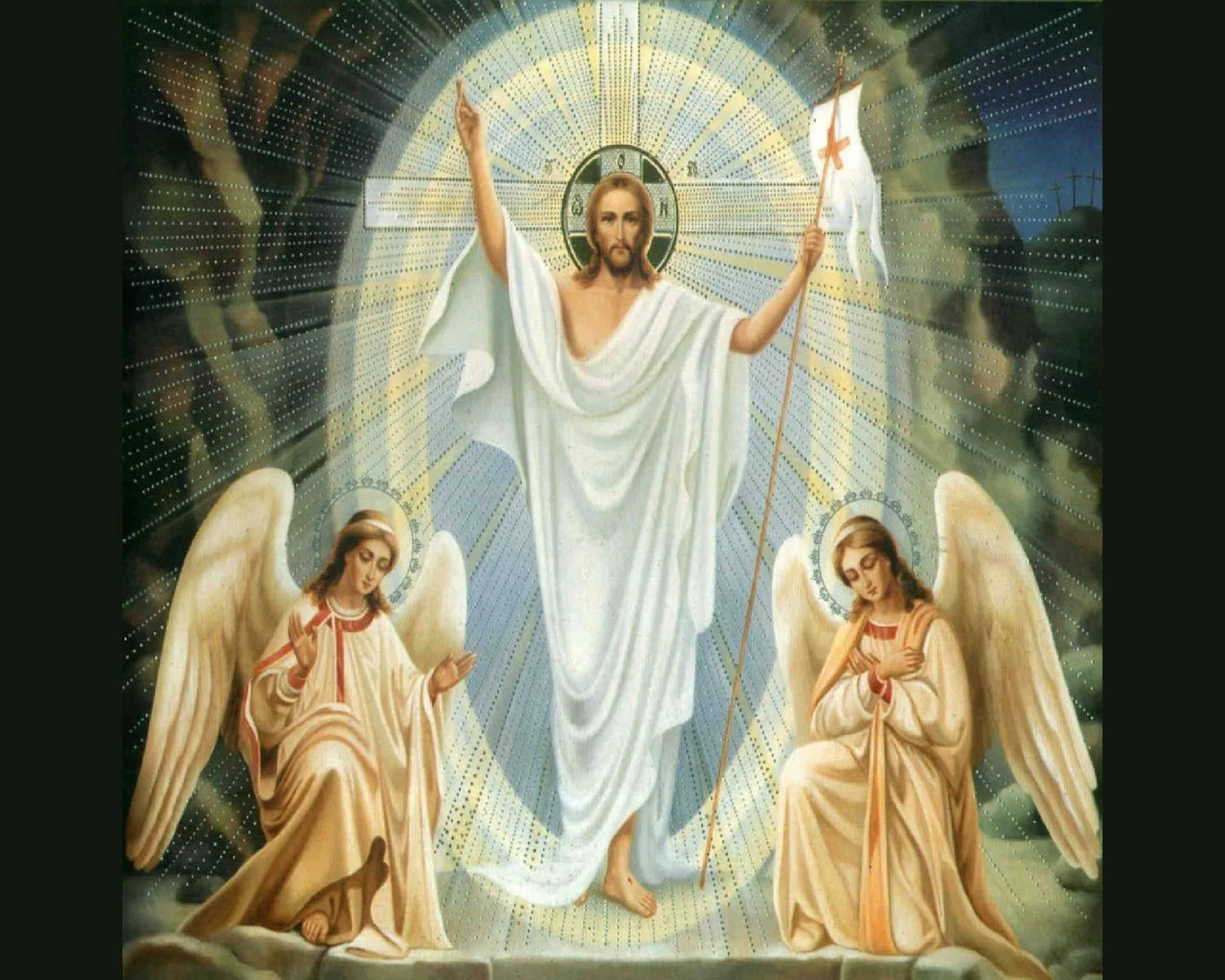
What are we to understand when we speak of the Resurrection of Jesus? Ancient Scriptures and interpretations from a brilliant theologian-pope provide amazing clues.
April 8, 2026 within the Octave of Easter
by Father Gordon MacRae with theological assistance from Pope Benedict XVI
Note: The following is Part 2 of our Holy Week post, “The Darkness of the Cross Enlightened on the Road to Emmaus.”
In the above captioned post, we left you on the Road to Emmaus. Jesus of Nazareth had been accused of blasphemy by the Jewish Sanhedrin. He was handed over to the Roman Governor Pontius Pilate for judgment. He was placed on trial, convicted, mercilessly scourged and then crucified. Those who followed and believed in him were devastated and lost. Some had hoped to find in him the manifestation of the Kingdom of God. Some hoped for a messianic end to the tyranny of Rome and its occupation of Judea. Others hoped for redemption. All were left demoralized. All had come to ruin. This is where we left you on the Road to Emmaus.
Some of the disciples of Jesus remained in Jerusalem in hiding. Others left, believing that all hope had come to an end. This includes the two who encountered a stranger on the Road to Emmaus about seven miles down that road from Jerusalem. One of them, Cleopas, and his fellow traveler, disciples of Jesus both, were among those who had hoped that Jesus would ultimately reign as a king in Jerusalem and rescue their nation from the oppression of Rome. Jesus, after hearing of their plight, while still disguised from their sight, challenged them: “O foolish men, and slow of heart to believe all that the prophets have spoken. Was it not necessary that the Christ should suffer these things and enter into his glory? Then beginning with Moses and all the prophets, he interpreted to them all the Scriptures concerning himself.” (Luke 24:25-27)
That Christ should suffer is a mystery foretold in the Old Testament according to Acts 3:18. On the Road to Emmaus Jesus gives to the two fleeing disciples an overview of Salvation History from the Hebrew Scriptures. His entire life was foreordained in Scripture, his birth, his earthly ministry, his death and his Resurrection.
Having come to the village in which they intended to stay, while the stranger intended to go further on, the two disciples asked him to remain with them saying “Stay with us, for it is toward evening and the day is now far spent.” While they were at table in that village the stranger took bread and blessed and broke it and gave it to them recalling the sequence of his actions at the Last Supper. Immediately their eyes were opened and they recognized him in the breaking of the bread. Then he vanished from their sight.
“Did not our hearts burn within us as he spoke to us on the road while he opened to us the Scriptures?”
— Luke 24:32
They immediately abandoned their flight from Jerusalem and returned as quickly as they could. They found the Eleven, the Apostles, gathered together along with other disciples who remained. Some of the Eleven declared to them what the others in the room had already heard with great excitement, “The Lord has risen indeed, and has appeared to Simon!” Then they told of what happened on the road, and of how Jesus was made known to them in the breaking of the bread.
The disciples became animated as the horror of the Crucifixion was slowly transformed into this newfound hope of the Resurrection as the appearances of Christ multiplied. They had no expectation or notion of what this meant. Coming down from the mountain after their experience of the Transfiguration (Mark 9:2-13), Jesus cautioned them to tell no one what they had seen or heard. “So they kept the matter to themselves while wondering what rising from the dead meant.” The disciples did not know, and could find out only by encountering the reality of it. So what exactly did the Resurrection of Christ mean? For my answer to this, I count heavily on the view of one of the most accomplished Catholic theologians of our time, Joseph Ratzinger, who became Pope Benedict XVI.
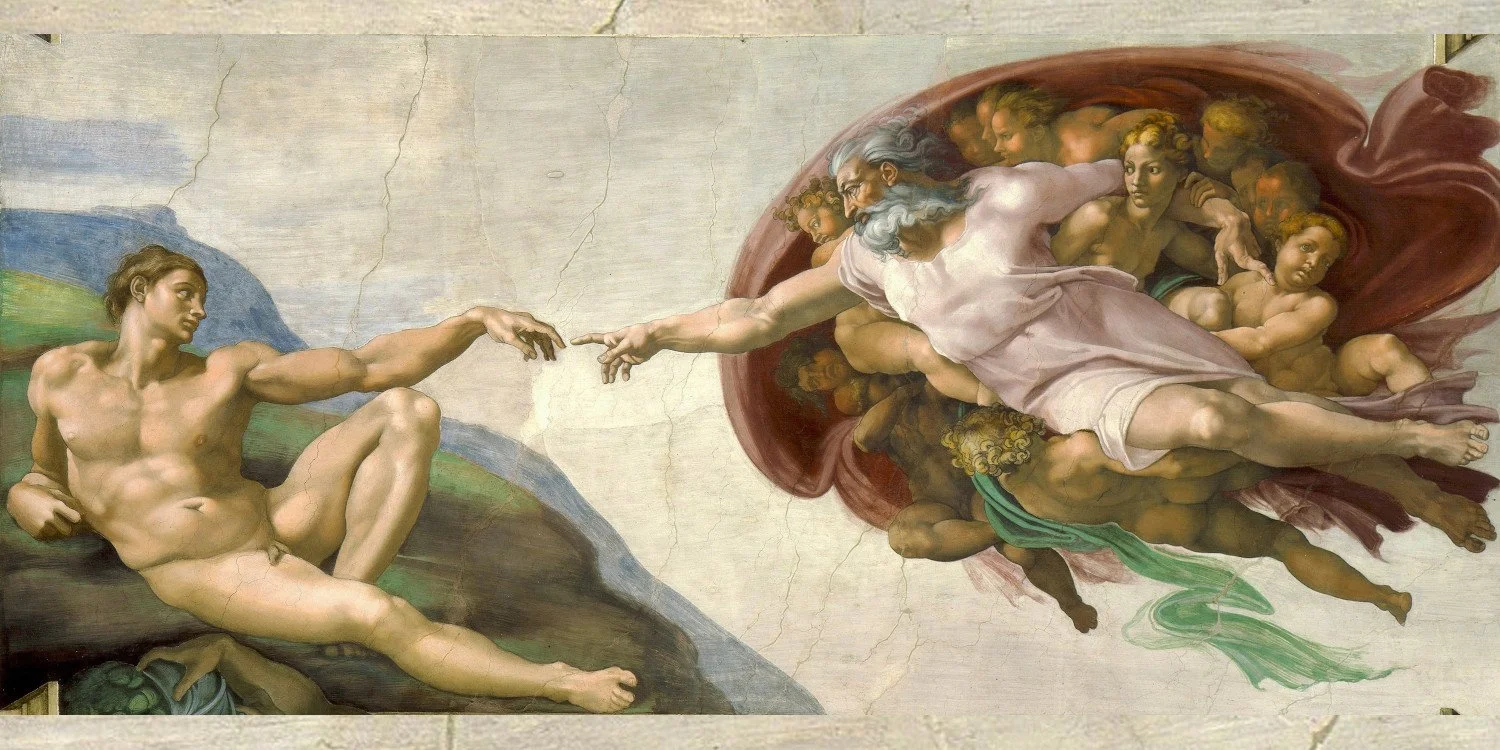
An Evolutionary Leap
“ ‘If Christ has not been raised, then our preaching is in vain and your faith is in vain. We are even found to be misrepresenting God, because we testified that he raised Christ’ (1 Corinthians 15:14-15). With these words to the community of Corinth, Saint Paul explains drastically what faith in the Resurrection of Jesus Christ means for the Christian message. It is its very foundation. Our faith stands or falls on the truth of the testimony that Christ is risen from the dead.”
— Pope Benedict XVI, Jesus of Nazareth, Vol 2: Holy Week, p241
Our answer to the question of the Resurrection will determine whether Jesus merely was in history or also still is. This is a most important question. So what actually happened to Jesus? For the witnesses who encountered the Risen Lord in Scripture, it is hard to say because for the most part they did not fully understand this new reality about Christ. There are multiple “resurrection” stories in the New Testament. Luke (11:17) tells us of the raising of the son of the widow of Nain. Mark (5:22-24, 35-43) tells of the raising of the daughter of Jairus. John (11:1-44) famously relates the raising of Lazarus.
What happened to Jesus is entirely different from these. His Resurrection was not merely the miracle of a resuscitated corpse. We have all heard stories of people brought medically back from the brink in near-death experiences. What the Gospel relates about Christ is very different from any of those accounts. The Resurrection of Jesus was about breaking out into an entirely new form of life, a life that is no longer subject to the law of dying and becoming, but rather lies beyond it. The Resurrection of Jesus opens up a new dimension not only of his existence, but also of ours.
Reading these conclusions from Pope Benedict XVI in Jesus of Nazareth, his masterwork of theological exegesis, almost seems like science fiction, but it is neither science nor fiction. It is not a newly written script for an episode fo Startrek: The Next Generation. It is rather an account seeking understanding that has always been at our fingertips. Benedict XVI cautioned that this opens up an analogy that could be easily misunderstood, but delving into it is a necessity of salvific truth and faith. The Resurrection of Christ constitutes an “evolutionary leap,” a new possibility of human existence that affects everyone and that opens up a new kind of future for humanity.
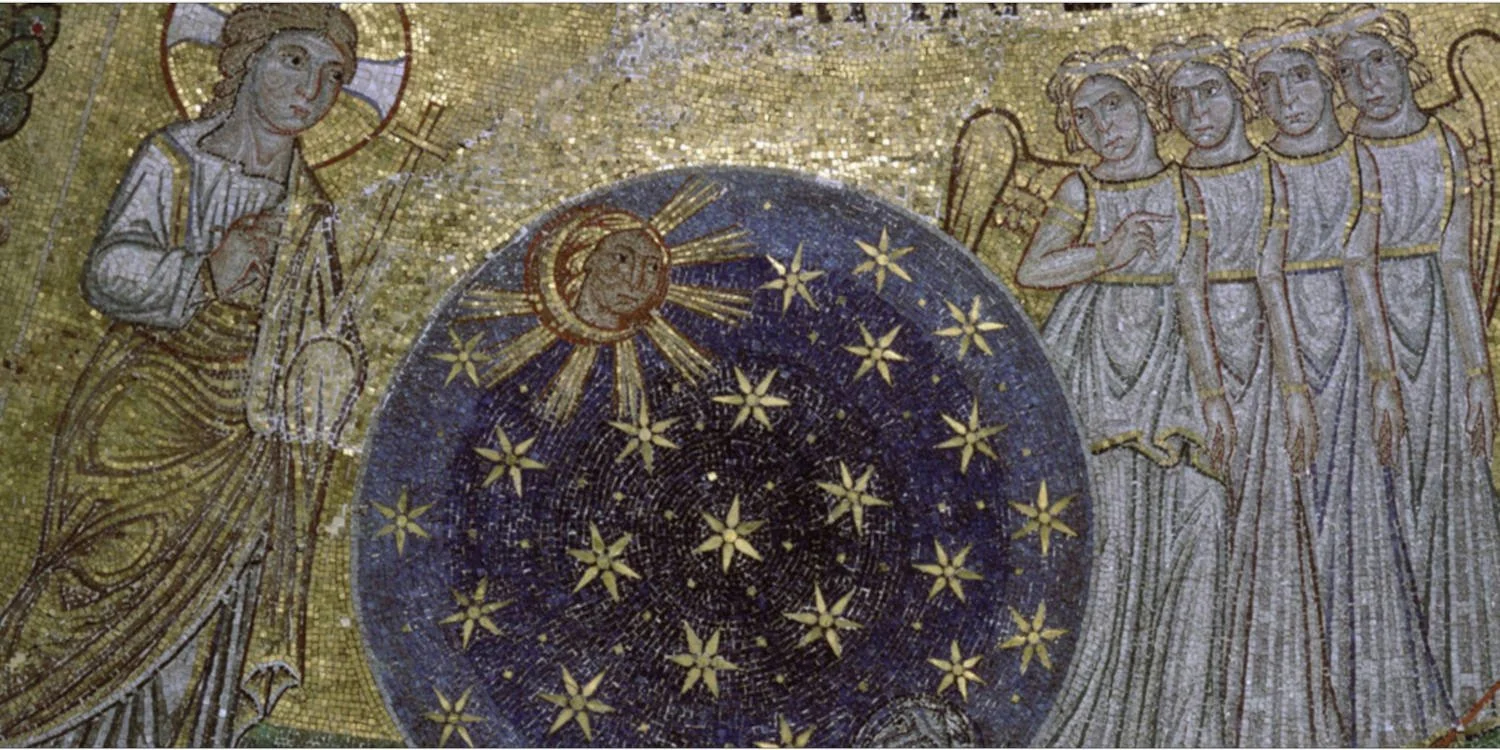
The Cosmic Body of Christ
On the basis of all this biblical evidence, what are we now in a position to say about the true nature of Christ’s Resurrection? Pope Benedict presents it as something akin to a radical “evolutionary leap” in which a new dimension of life emerges, a new dimension of human existence.
This is what is meant by those passages in Saint Paul’s letters written from prison (Colossians 1:12-23 and Ephesians 1:3-23) that hint at the cosmic Body of Christ, indicating that Christ’s transformed (Resurrected) body oversteps the boundaries of what we are able to conceive. Here is an example:
“He has delivered us from the dominion of darkness and transferred us to the kingdom of his beloved Son … . He is the image of the invisible God, the firstborn of all creation, for in him all things were created, in heaven and on earth, visible and invisible, whether thrones or dominions or principalities or authorities — all things were created through him and for him. He is before all things, and in him all things hold together. He is the head of the body, the Church; he is the beginning, the firstborn from the dead, that in everything he might be pre-eminent. For in him all the fulness of God is pleased to dwell, and through him to reconcile to himself all things, whether on earth or in heaven, making peace by the blood of his Cross.
— Colossians 1:13-20
The Resurrection of Jesus points far beyond history but has left a footprint within human history that was attested to by witnesses as an event of unprecedented kind and importance.
This man Jesus, complete with his body, now belongs totally to the sphere of the divine and eternal. The evidence in the Gospel is clear. The Resurrected Jesus can walk among us. He shows the Doubting Apostle, Saint Thomas, the wounds in his hands and side. He lets Thomas probe those wounds that are now for eternity a part of him, accepted on our behalf.
From here on, in both spirit and body, Jesus has a place within God. Even if man by his nature is created for immortality, it is only by virtue of the Resurrection of Christ that the place exists for our immortal souls to find their “space” in which immortality takes on its meaning as communion with God. This is hinted at in a mysterious passage from Saint Paul’s Letter to the Colossians written from prison. It was the Second Reading for our Easter Sunday Mass this year. I, too, have written some things from prison that press against the boundaries of easy understanding, but I do not hold a candle to Saint Paul:
“If then you have been raised with Christ, seek the things that are above where Christ is at the right hand of God. Set your minds on things that are above, not on things that are on earth. For you have died, and your life is hidden with Christ in God.”
— Colossians 3:1-3
+ + +
Note from Father Gordon MacRae: Thank you for reading and sharing this post. It is unclear whether I have shed any light at all on the mystery of the Resurrection of Jesus. But it is most clear to me now that the Resurrection of Christ sheds light on us as we stand in God’s Presence.
You may also like these related posts from Beyond These Stone Walls:
The Darkness of the Cross Enlightened on the Road to Emmaus
The Apostle Falls: Simon Peter Denies Christ

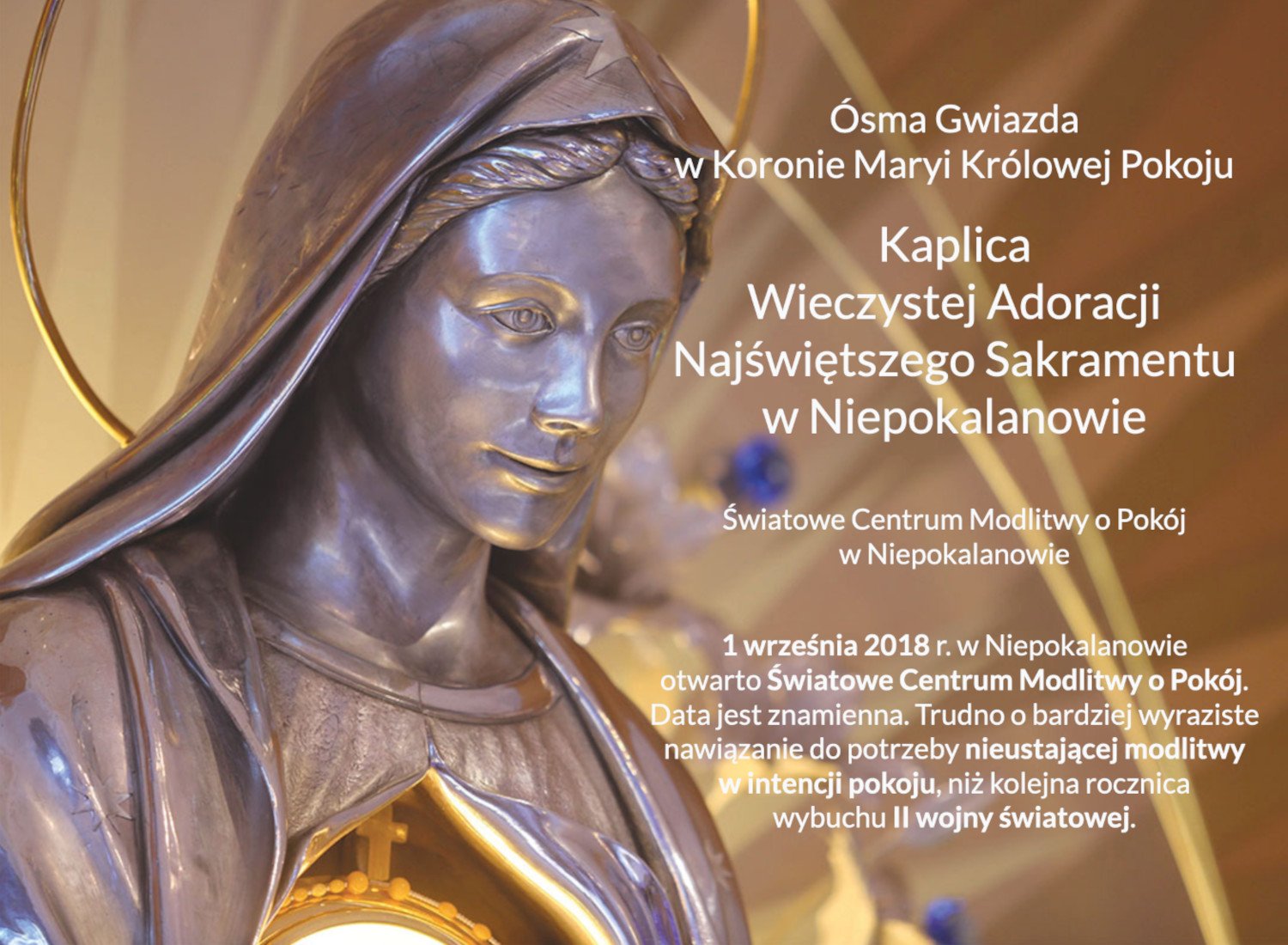

The Eucharistic Adoration Chapel established by Saint Maximilian Kolbe was inaugurated at the outbreak of World War II. It was restored as a Chapel of Adoration in September, 2018, the commemoration of the date that the war began. It is now part of the World Center of Prayer for Peace. The live internet feed of the Adoration Chapel at Niepokalanow — sponsored by EWTN — was established just a few weeks before we discovered it and began to include in at Beyond These Stone Walls. Click “Watch on YouTube” in the lower left corner to see how many people around the world are present there with you. The number appears below the symbol for EWTN.
Click or tap here to proceed to the Adoration Chapel.
The following is a translation from the Polish in the image above: “Eighth Star in the Crown of Mary Queen of Peace” “Chapel of Perpetual Adoration of the Blessed Sacrament at Niepokalanow. World Center of Prayer for Peace.” “On September 1, 2018, the World Center of Prayer for Peace in Niepokalanow was opened. It would be difficult to find a more expressive reference to the need for constant prayer for peace than the anniversary of the outbreak of World War II.”
For the Catholic theology behind this image, visit my post, “The Ark of the Covenant and the Mother of God.”