“There are few authentic prophetic voices among us, guiding truth-seekers along the right path. Among them is Fr. Gordon MacRae, a mighty voice in the prison tradition of John the Baptist, Maximilian Kolbe, Alfred Delp, SJ, and Dietrich Bonhoeffer.”
— Deacon David Jones

A Priest and Prisoner in the Light of Divine Mercy
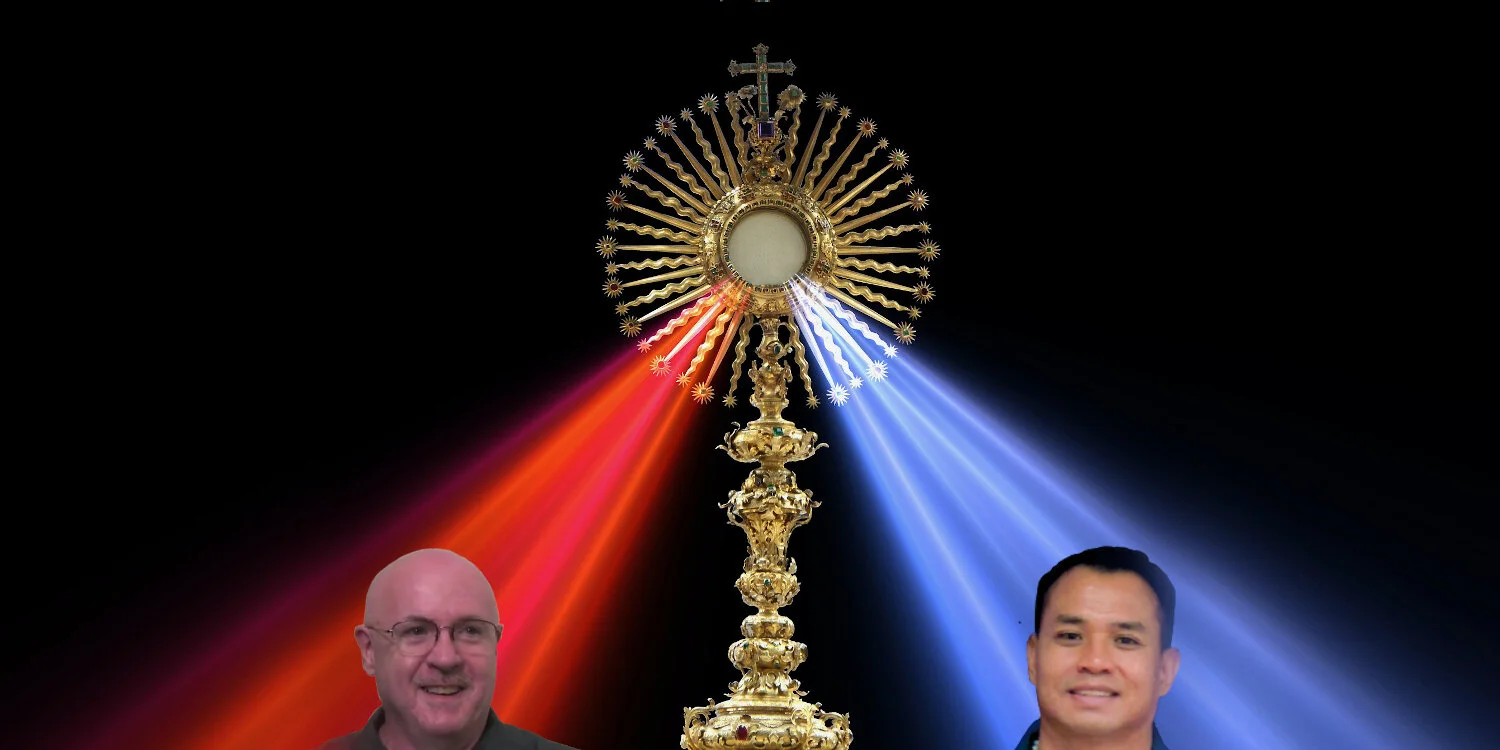
Fr Seraphim Michalenko, Fr Michael Gaitley, Fr Gordon MacRae, Marian Helper Editor Felix Carroll and Pornchai Moontri share the stage in a wondrous Divine Mercy drama.

Fr Seraphim Michalenko, Fr Michael Gaitley, Fr Richard Drabik, Fr Gordon MacRae, Marian Helper Editor Felix Carroll and Pornchai Moontri in a wondrous Divine Mercy drama.
As a young man, I depended far too much on my own resources. I recognize today in the humility of hindsight that they were never quite up to the task. But back then, I knew everything. What a dumbass I have since become! I now know nothing, and cannot write a single word except in the light of Divine Mercy. My life’s path recalls the words of Dante Alighieri as he opened his epic literary masterpiece, The Divine Comedy. His story begins in a dark forest on Good Friday in the year 1300:
“When I had journeyed midway upon our life’s path, I found myself within a shadowed forest, for I had lost the way that does not stray. How can I say what wood that was, that savage forest which even now in recall renews my fear? So bitter death is hardly more severe! But to tell the good I found there, I will also tell of the other things I saw.”
In my post two weeks ago, “Wrongful Convictions: The Other Police Misconduct,” I told of some of the other things I saw — a forest of dark things like corruption and deep injustice surrounded me once. Like Dante, I cannot tell of these — though they must be told — without the light of a profoundly wonderful grace I discovered amid all that suffering.
In many posts over time, I have told snippets of the story of Divine Mercy, of how it entered midway upon my life’s journey, and of how it dramatically transcended my prison walls. I have never before put it all together in a post, and I cannot pretend to do so now because it would fill a book. Perhaps one day, if I have the tools to do so, this story will become a book. For now, however, all I have is this humble blog.
What prompted this retelling of my Divine Mercy journey is the death of Father Seraphim Michalenko, MIC, who on this Earth became a driving force in the beatification and canonization of St. Maria Faustina and the promotion of her famous Diary. My friend, Marian Helper Editor Felix Carroll, published a moving eulogy which included this paragraph:
“Father Seraphim Michalenko, MIC, the world-renowned expert on the life and spirituality of St. Faustina — the man who smuggled photographic images of the pages of St. Faustina’s Diary out of Communist-occupied Poland in the 1970s and later documented her beatification and canonization miracles — died Thursday, February 11, 2021, from illness related to Covid 19. ... Side by side with Blessed Michael Sopocko, Pope St. John Paul II, and St. Faustina herself, Fr. Seraphim stands as a central figure who helped make the Divine Mercy message and devotion the greatest grassroots movement in the history of the Church.”
A few years ago, well into his eighties, Father Seraphim ventured from his home at the National Shrine of The Divine Mercy in Stockbridge, Massachusetts for a drive of several hours to Concord, New Hampshire. He came to offer Mass in prison, and to interview Pornchai Moontri and me about the substance and source of our Divine Mercy journeys as we passed through the dark wood of prison.
My story, which I have told before, begins in 1988. Father Richard Drabik, MIC was Provincial Superior of the Marians of the Immaculate Conception, a post from which he wrote the Preface for Divine Mercy in My Soul, also known as the Diary of Saint Faustina. You will find his Preface at the beginning of every copy of this mysterious book.
A few years later when he concluded his term as Provincial, Father Drabik was recruited to be a spiritual director for the Servants of the Paraclete Renewal Center for priests in New Mexico where I once served as Director of Admissions. Father Richard became my spiritual director for several years, and the finest one I ever had as a priest.

Grace Follows Even the Darkest Night
I will never forget the moment Father Richard stopped by my office one night early in April, 1993 to tell me that he would be leaving that week for Rome to take part in the Beatification of Sister Maria Faustina by Pope John Paul II on Divine Mercy Sunday. Father Richard invited me to write a private intention to be placed on the altar for the Mass of Beatification. Then I promptly forgot all about it.
Saint Faustina was later canonized by Pope John Paul II on Divine Mercy Sunday in 2000, a saint canonized by a saint. Now that I think of it, the saints who have had the most influence on my life as a priest and as a prisoner, and ultimately also on Pornchai Moontri’s life, were canonized by Pope John Paul II. Besides Saint Faustina they include Saint Maximilian Kolbe, Saint Padre Pio, and the Beatification of Mother Teresa.
I know the latter two do not retain their Earthly titles, but I cannot imagine calling them anything else. These influencers now also include Saint John Paul II himself who left a giant footprint on both the Church and my life as a priest.
I knew nothing of Saint Faustina when Father Richard made his request, and if he ever spoke of Divine Mercy in our sessions, I retained none of it. If memory serves, I did most of the talking in spiritual direction. I hope I have since learned to listen as well. Father Richard, like many at the National Shrine of The Divine Mercy, is still in contact with me. I hope he might be reading this.
A week or so after inviting me to write my intention for the Mass of Beatification in Rome, I had forgotten all about it. Father Richard stopped by my office again on the night before his departure and reminded me of it. I was especially busy with God only knows what. I told him I would bring it to him in ten minutes. I then grabbed a piece of note paper and quickly wrote this spontaneous prayer:
“I ask Blessed Faustina’s intercession that I may have the strength and courage to be the priest God wants me to be.”
I sealed my intention in a small envelope and brought it to Father Richard. I watched him tuck it into a pocket of his jacket, and thought no more of it. The Beatification of Saint Faustina was presided over by Pope John Paul II on Divine Mercy Sunday, the Sunday after Easter, but it was not yet called that. It was on the day of St. Faustina's Mass of Canonization, on April 30, 2000 during the Great Jubilee Year that Pope John Paul II declared in his homily that from hereon the Second Sunday of Easter will be the day of Divine Mercy.
But none of this meant anything to me. Today, it means everything to me. By the time Father Richard returned from Rome after the Mass of Beatification in 1993, I had been arrested on false charges from the distant past, and taken away. In 1994, after refusing multiple “plea deal” offers to plead guilty and serve one year in prison, I was sentenced to a term of sixty-seven years. That story is conveyed in the post cited above.
I spent the next twelve years in the dark forest of Dante’s Inferno. I heard from no one. I communicated with few. In all that time, I somehow retained an identity as a priest. Because I maintained my innocence, I spent all that time in punitive prison housing with eight men sharing each cell. An officer in that unit saw that I had a typewriter so he asked me to volunteer to type some inventory forms for him each week. After a few weeks he asked me if I wanted something in return. He meant extra food. I asked for the use of an empty storage room for one hour on Sunday nights to offer private Mass.

A Summons to Divine Mercy
It was not what this Sergeant expected to hear. He said he would have to present the unusual request to his own supervisor. Holy Week was coming up, and I hoped I might have an approval by Easter. It came a week too late. My first Mass in prison was offered in a storage closet on April 30, 2000, which I only later learned was the first official Divine Mercy Sunday and the day Saint Faustina was canonized.
That was year six, midway in my twelve years in darkness. Six years later, I was visited in prison by Father James McCurry, who is today the Minister Provincial of the Franciscan Friars Conventual of the Our Lady of the Angels Province. Unbeknownst to me at the time, he had also been a vice-postulator for the cause of sainthood for Saint Maximilian Kolbe who was canonized by Pope John Paul II in 1982, the year I was ordained. Father McCurry learned of me from some other priest. He was in the area and thought he would arrange a visit.
His first words in the visiting room, after introducing himself, were, “What do you know about St. Maximilian Kolbe?” I knew little beyond the fact that he offered his life to save that of another prisoner in the horror of Auschwitz. We talked about that but our visit was brief. He had to catch a plane. He said he would be sending me something. A week later, a small biography of Saint Maximilian arrived along with a card depicting him in both his Franciscan habit and his Auschwitz uniform.
By that time, I had been moved to slightly better prison quarters, perhaps thanks to the Sergeant who was impressed that I asked for a place to offer Mass instead of extra food. I put the image of Saint Maximilian on the battered steel mirror in my cell. Through tears, I realized that on that same day I was a priest in prison a day longer than I had been a priest in freedom. The darkness I felt was overwhelming. I would eventually write multiple posts about the impact this Saint has had on our lives, most notably “Saint Maximilian Kolbe and the Gift of Noble Defiance.”
Shortly after Saint Maximilian arrived on the mirror in my cell, Pornchai Moontri was sent here after fourteen grueling years lost in and out of solitary confinement in a Maine prison. I was bitter and he was broken. All hope had virtually died in our lives. Providence moved Pornchai from one place to another here, and then he ended up living with me. In his moving recent guest post, “Free at Last Thanks to God and You,” he recounted the day he first walked into my cell and saw the image of Saint Maximilian on the mirror. “Is this you?” he asked.
From that moment on, we were caught up in the grasp of Divine Mercy. As you know, Pornchai became a devout Catholic and was received into the Church on Divine Mercy Sunday, 2010. Knowing the importance of this conversion for him, I was compelled to set aside all the bitterness of false witness and wrongful imprisonment that I carried like a crushing cross in my own Calvary. Confronting the brokeness of Pornchai meant also confronting my own in the light of Divine Mercy, and it salvaged my life as a priest.
Pornchai Moontri was featured, as you know, in a profoundly wonderful book, Loved, Lost, Found: 17 Divine Mercy Conversions, by Marian Helper Editor Felix Carroll. Father Seraphim Michalenko brought the book to Thailand where he presented a retreat to Divine Mercy Thailand. He read them the chapter about Pornchai, and a future, long since thought to be hopeless, was born for him.
We were also invited to take part in a series of 33-Day retreats in Father Michael Gaitley’s “Hearts Afire” program beginning with “33 Days to Morning Glory.” As a result, dozens of other prisoners followed us on this path and many were converted. I will link to the most moving of their stories at the end of this post.
And Divine Mercy has not let up — not even for a moment. I just learned that in 1994, the year I was sent to prison, Relevant Radio host, Drew Mariani, produced a film along with the Marians entitled, “Time for Mercy.” Late last month, some 26 years later, Drew Mariani interviewed me in prison. The interview is available at our “Special Events” page.
+ + +
Note from Father Gordon MacRae: Please continue to celebrate Divine Mercy this year through these additional posts with inspiring true accounts of how Divine Mercy has impacted our lives:
Coming Home to the Catholic Faith I Left Behind by Michael Ciresi
I Come to the Catholic Church for Healing and Hope by Pornchai Moontri


The Passion of the Christ in an Age of Outrage
Prayerful observance of Holy Week is a challenge in a climate of pandemic restrictions and political outrage. Spend time with us this week Beyond These Stone Walls.

Prayerful observance of Holy Week is a challenge in a climate of woke ideology and political outrage. Spend time with us this week Beyond These Stone Walls.
Something timely and fascinating was unearthed in the days just before Holy Week in 2021. It actually began in 1960 near the Dead Sea in Qumran, an ancient Hebrew settlement in Jordan. Archeologists discovered fragments showing that caves there were used as a hide-out by Bar Kochba’s rebel army which staged a three-year revolt against the Roman occupation of Jerusalem from AD 132-135.
The 1960 discovery included Roman coins, arrows, and a fragment of parchment bearing sixteen verses in Hebrew from the Book of Exodus. In a deep cave in Wadi Haver, archeologists also discovered several of Bar Kochba’s letters on papyri and wood.
Sixty-one years later, on March 16, 2021 the Israeli government announced the discovery of dozens of Dead Sea Scroll fragments of Hebrew texts from the Prophets Zechariah and Nahum from an adjacent cave. The “Cave of Horrors,” as it is called, contained other evidence that it was used by followers of Bar Kochba to evade the Roman armies. The cave is located in the Judean desert about 262 feet (80 meters) below a cliff top.
The Bar Kochba rebellion took place about 60 years after the destruction of the Jerusalem Temple, an event predicted by Jesus during his triumphant entry into Jerusalem (Luke 19:28ff). In AD 70, Romans destroyed the Temple. The revolt of Bar Kochba was triggered 60 years later when Roman emperor Hadrian decided to erect a shrine to the mythological Roman god, Jupiter, upon the site of the Temple.
Emperor Hadrian came personally to Judea to put down the Bar Kochba revolt which ultimately cost the lives of over a half million Jews. The revolt was called the “Liberation of Jerusalem” by its adherents. It was led by Simon Ben Kosibah, known to the documents of the early Christian Church as Bar Kochba.
Hadrian and his General, Sextus Julius Severus, crushed the revolt by a long, slow starvation of the Jewish revolutionaries and their families who had been driven into the desert to take refuge in the desert caves. When it was all over, Hadrian destroyed what was left of Jerusalem. He then decreed that the whole Jewish nation should be barred, from that day forward, from entering the City of Jerusalem and its surrounding area so that “they may not even view from afar their ancestral home.”
Little is known today about the state of Christianity at the time of the Bar Kochba revolt. It was a time in which a break between synagogue and church was taking place for Jewish Christians. A succession of thirteen Jewish-Christian bishops ruled Jerusalem until the time of Hadrian. At the time of the first destruction of the Jerusalem Temple in AD 70, Simeon, son of Clopas, was Bishop of Jerusalem and was martyred there. The Second Century historian Eusebius, reported that between the martyrdom of Simeon and the Bar Kochba revolt, “many thousands of Jews had come to believe in Christ.”

A Revolution in the Soul
These remnants of a revolution seem an almost fitting discovery just before Holy Week in this of all years. I believe that the bones of Bar Kochba’s faithful Jewish and Jewish-Christian revolutionaries are calling to us from those caves. I have never written a Holy Week post like this before because we have never had a Holy Week like this before in our lifetimes. For the second year in a row, many Catholics face a drastic reduction in their ability to participate in the liturgy and Sacraments of their Faith.
The first time Holy Week was limited by fears of a pandemic — in Holy Week 2020 — Christianity was caught off guard on a global scale. We never imagined that the restrictions set in place by both civil and religious authorities would further impede our faith as we approach another Holy Week a year later. We never imagined that many of our spiritual leaders would continue their passive acceptance of the severe limits placed on our practice of faith. I wrote of this at the turn of the year in “A Year in the Grip of Earthly Powers.”
On what we today call “Passion Sunday,” Jesus entered Jerusalem as the triumphant Son of David, a title given to him by Sacred Scripture. As he entered the Holy City, he wept. It is notable that he did not weep over his knowledge that he enters Jerusalem to commence the Passion of the Christ. Saint Luke’s Passion Narrative makes clear that Jesus wept over Jerusalem and what he knew to be the coming destruction of the Temple and Holy City by Earthly Powers. He knew that many would lose their lives in revolt against it.
Many people in our era are just now awakening to a revolution in the soul as clarity dawns that demonic forces behind so-called “cancel culture” are using a pandemic to suppress our churches, our liturgy, our voices, and our communal values and expressions of faith. Many are also awakening to the reality that some — but certainly not all — of our religious leaders have acquiesced to this suppression, most by their silence, but some by outright endorsement of government-imposed shutdowns.
I have written of at least two instances in which the courts have overruled political impositions on Mass attendance and Catholic practice only to have the local Catholic bishop re-impose the same restrictions the courts had declared unconstitutional. I feel indebted to the many priests — and, in fairness, some bishops too — who have found courage in their fidelity to reject the modern version of one of my most memorable Holy Week posts: “The Chief Priests Answered, ‘We Have No King but Caesar’.”
That Whisper in the Ear of Judas
There is another force, also seemingly demonic in its origin, that has impinged upon our expressions of fidelity in the public square. I could sense it all around us throughout the last year and it has not abated. It has just festered and grown deeper within many of us as persons and as communities. I had a hard time putting a name on it until I saw it spelled out by one of my favorite columnists in The Wall Street Journal.
On March 9, 2021, political columnist Gerald F. Seib published a masterful analysis entitled “The Perpetual Outrage Machine Churns On.” You may not be able to read it without a subscription but I will give a brief summary of its evidence.
Two months after the January 6 events at the U.S. Capitol, prison-like fencing still surrounded the area. In Minneapolis, the trial of former police officer Derek Chauvin over the death of George Floyd — seemingly every horrid moment of it caught on national television — has commenced amid another round of protests. Innocent Asian Americans have suddenly become targets of physical and verbal assault across the nation. Four women at a Bed and Body Works store in Arizona erupted into a wild brawl. Eight persons were killed by a single gunman in a spa in Atlanta. Ten more were murdered while shopping in a Colorado supermarket.
This list of present day atrocities spawned by rage could go on for pages. There is an influence behind it. A master opportunist has been doing what he does best. In Holy Week 2020, I wrote “Satan at the Last Supper: Hours of Darkness & Light.” Its point was that the whisper into the ear of Judas at the Last Supper was preceded by other events. Before it happened, Satan entered into Judas (Luke 22:3) as Judas entered into a deal with the chief priests to betray Christ. His sin of greed left him vulnerable to the exploitation of Satan and his minions. That is always the case. The mere whisper in the dark is never enough. Through a long, slow, barely noticeable descent toward ever greater darkness, Satan finds an opportunity just as he found one in Judas Iscariot.
Our rage against the affairs of this world can also be a point of vulnerability. The great Christian writer, C. S. Lewis, described that path to spiritual destruction in his allegorical story, The Screwtape Letters (1940). He captures Satan instructing his nephew in the ways of spiritual warfare: “It is the cumulative effect of sin that draws the Man away from the Light and out into the Nothing ... The safest road to Hell is the gradual one, the gentle curves, soft underfoot, without turns, without signposts, without a roadmap. (The Screwtape Letters, p. 61)
Satan exploits fear, rage, even political contention and a pandemic to drive a wedge not only between persons, but within them. If your life of faith has been assailed by the world, the flesh, and the devil in this past year, we invite you to walk the Way of the Cross Beyond These Stone Walls this week.
We are posting on Monday of Holy Week instead of our usual Wednesday post day to present this special Holy Week post and a short list of six others for you to read and share in each day of Holy Week. The list begins in an hour of darkness and ends in the glory of Salvation.
+ + +
Satan at The Last Supper: Hours of Darkness & Light
Waking Up in the Garden of Gethsemane
The Chief Priests Answered, ‘We Have No King but Caesar’
Behold the Man, as Pilate Washes His Hands


Wrongful Convictions: The Other Police Misconduct
A new article by Ryan MacDonald, linked herein, spotlights police detective James F. McLaughlin who orchestrated the wrongful conviction of Father Gordon MacRae.
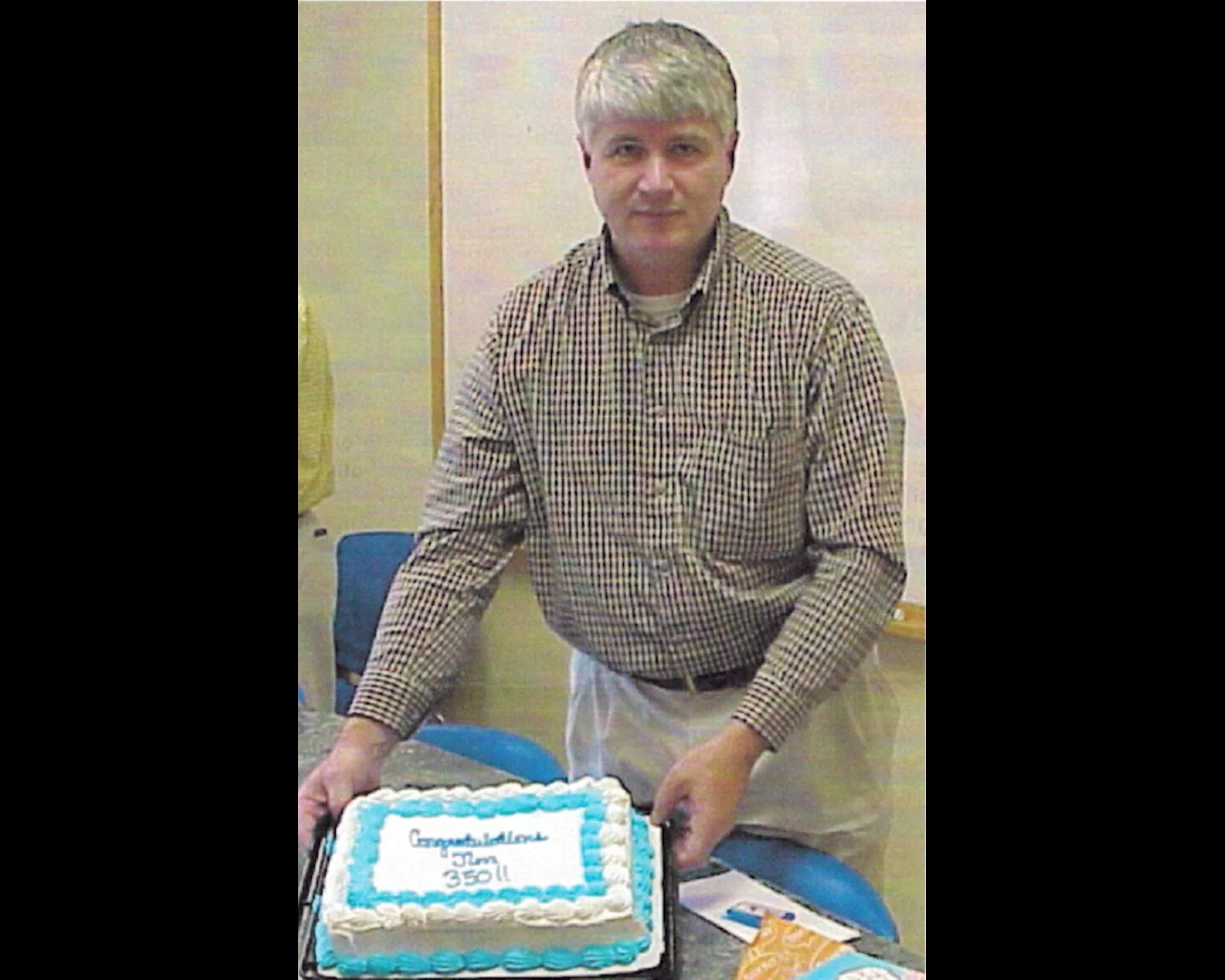
A new article by Ryan MacDonald, linked herein, spotlights police detective James F. McLaughlin who orchestrated the wrongful conviction of Father Gordon MacRae.
March 24, 2021
I read somewhere that the State of New Hampshire — the “Live Free or Die” State — has this nation’s second highest percentage of prisoners over the age of 55, second only to West Virginia. To be certain, the offenses that put most of them in prison did not occur at age 55, however. New Hampshire is also one of only three states with a “Truth in Sentencing” law. In effect it means there is no avenue to reduce a prison sentence based on rehabilitation.
I admit that I do have a vested interest in this subject. I will be 68 years old on April 9th. I was 29 when my fictitious crimes were claimed to have taken place. I was 41 when I was sent to prison for them. I could have been set free at age 43 had I actually been guilty or willing to pretend so.
I have already learned the hard way that growing older in prison is its own special cross. I severely sprained my right knee early this month. I’m not exactly sure how or why it happened. I awoke one morning with a painful knee. At almost age 68 in my 27th year in prison, that is not at all unusual. But me being me, I just ignored it. Later that morning I had to go to the commissary to pick up food and hygiene supplies that I ordered a week earlier.
The pickup process can be a little daunting. After 23 years in a place with very little “outside,” I love living on the top floor in a place where I can step out onto a walkway and see above prison walls into the forests and hills beyond. But this also involves stairs. Lots of them. Among the items I had ordered that day were a supply of bottled water because I had become a little dehydrated. My net bag was substantially heavier than usual.
Leaving the commissary, the walk across the long walled prison yard was no problem. The series of ramps to the upper levels left me huffing and puffing just a bit. But the final leg involves carrying the heavy bag up eight flights of stairs — 48 in all. Just a few steps from the top that day, my knee exploded. Now I use a cane — temporary, I hope — and a knee brace and lots of ice.
Police Brutality Is Overblown, but Not This

I have read that one of the common traits of the wrongfully convicted in prison is that they simply cannot let go of the injustice that befell them. For me, this injustice is as vividly felt today as it was on September 23, 1994.
But there comes a point at which it is no longer even about freedom. When freedom suddenly comes to a man who has spent more than a quarter century in prison, then freedom itself becomes an intimidating affair. We have seen this faced head-on in some recent posts about my friend, Pornchai Moontri. His imprisonment came to an abrupt end after 29 years on February 24, 2021.
Pornchai went to prison at age 18 after years forced into homelessness. Freedom brings lots of firsts for him. He has never driven a car, for instance, and has no frame of reference for how that would feel except to feel scary. I told him that driving became second nature to me as it will one day for him as well.
If I ever regain my freedom, I will likely find it to be less new and intimidating than Pornchai did at first, but I try not to set myself up for disappointment by thinking about it too much. However, being deprived of justice still remains a gnawing insult to both my psyche and my soul. I cannot help but ponder this and it has never relented. After 27 years it still leaves me fending off bitterness and resentment. Justice and freedom were stolen from me by a dishonest police officer.
I find it strange, but just and merciful, that even after more than 26 years unjustly in prison, people are still writing about it. In a thoughtful pair of posts written in France, Catholic writer Marie Meaney arrived at some boldly incisive conclusions after doing substantial research. Both are available in English at her blog, Cheminons avec Marie qui défait les nœuds (“Let Us Walk with Mary Who Unties the Knots”). Marie’s first article published in June 2019 was “Untying the Knots of Sin in Prison.” It was mostly about my friend, Pornchai Moontri, and how the knots of abuse were untied for him through a team effort.
Marie Meaney’s second article, published in November 2020, was a model of thoughtful, honest research. Its understated title was simply, “A Priest Unjustly Imprisoned.” It strikes me as highly ironic that most American Catholic writers — with the bold exception of Catholic League President Bill Donohue — go to great lengths to avoid any mention of this story lest they be targeted by the cancel culture crowd for whom questioning a claim of victimhood is a mortal sin. Meanwhile in France, a nation known for its anticlerical Catholic culture, my story is told with guns of truth blazing. Here is an excerpt from her excellent post:
“This same man had been accusing so many people of sexually abusing him ‘that he appeared to be going for some sort of sexual abuse victim world record’ according to (Thomas) Grover’s former counselor, Ms. Debbie Collet, who said that Grover never mentioned Fr. MacRae during their sessions — though pressure had been put on her by the Keene (NH) police to alter her testimony. This small, 20,000 inhabitant town had been assigned a detective, James F. McLaughlin, to uncover sex abuse cases.”
Please do not misunderstand me here. I am very much pro-law enforcement. I do not at all subscribe to the left’s notion that police brutality has been rampant in America. Hyped-up exceptions must not overcome the rule of law. You may be surprised to learn that most prisoners believe this as well. In the heat of the political left’s promotion of anti-police policies in 2020, I wrote of the danger this represents in “Don’t Defund Police. Defund Unions that Cover Up Corruption.”

Detective James F. McLaughlin
Marie Meaney was correct in her assertion that between 1988 and 1993, the time in which much older claims against me were probed, the City of Keene, New Hampshire, with a population of about 22,000 then, had a full-time sex crimes detective named James F. McLaughlin. He is now mercifully retired. A 2003 Boston Sunday Globe article by Carlene Hempel (“Hot Pursuit,” Nov. 23, 2003) described him as a detective who “focuses specifically on men interested in boys.” The news media, especially The Boston Globe, has since then gone to great lengths to separate the Catholic sexual abuse narrative from having anything to do with homosexuality.
Carlene Hempel reported that McLaughlin separated himself from his initial involvement with ICAC, the “Internet Crimes Against Children” Task Force. Instead, he decided to go it alone, but Hempel avoided writing about why. She infers something, however, in an interview with a former ICAC police trainer who spoke of McLaughlin more generically:
“Cops who ... operate outside the ICAC system put some people at risk. ... You can’t be posing as a 15-year-old and throw something out like, ‘I’m really questioning my sexual orientation and I wonder if someone out there can help me with that.’ That’s really leading, and in my opinion, entrapment.”
It was some time after my 1994 trial that McLaughlin took up the cause of Internet crimes. He made 1,000 arrests luring men to Keene, NH from other states in a process that many described as entrapment. In The Boston Globe article, McLaughlin said in his own defense that no judge has ever said that he has gone too far. That did not remain entirely true. In 2005, a federal judge reprimanded McLaughlin for sending child pornography to an online subject of his entrapment effort. At the time, McLaughlin’s supervisor said one of the scariest things I have ever heard from law enforcement. He told a reporter for The Concord Monitor, in an article that has since disappeared from the Internet, that, “It’s our job to ferret the criminal element out of society.”
Detective McLaughlin’s focus on Internet crimes involving men and teenage boys came well after the case he built against me. It is interesting that in her article from France, Marie Meaney mentioned my accuser at trial, Thomas Grover, who in the end was awarded close to $200,000 from the Diocese of Manchester for his easily identifiable lies. The problem with an accuser’s lies in the hands of a crusading sex crimes detective, however, is that they are easily covered up by finding witnesses willing to corroborate the accuser’s story. There were none here to be found, however. Consider this excerpt from a sworn statement of accuser Thomas Grover’s therapist, Debbie Collett:
“Thomas Grover never revealed to me that Gordon MacRae perpetrated against him. Mr. Grover spent a great deal of time being confronted (in therapy) for his dishonesty, misrepresentations, and unwillingness to be honest about his problems. Thomas Grover did reveal that he had been sexually abused, but named no specific person except his foster father. When asked if he meant Mr. Grover, he responded ‘yes, among others ...’ He accused so many people of sexual abuse that we thought he was going for some sort of sexual abuse victim world record. But he never accused Fr. MacRae.”
Of her experience with Detective James McLaughlin and his pre-trial investigation, Ms. Collett wrote:
“I was contacted by Keene Police detectives McLaughlin and Clarke ... I was uncomfortable with (the) repeated starting and stopping of the tape recorder when my answers to their questions were not the answers they wanted to hear ... I confronted them about this and their treatment of me which included coersion, intimidation, veiled and more forward threats of arrest ... McLaughlin said that he would personally come to my home, drag me out of it bodily if necesary, and force me to testify despite my information to him ... They presented as argumentative, manipulative, and threatening me via use of police power to get me to say what they wanted to hear.”
Perhaps the more important part of Debbie Collett’s statement is her assertion that it was recorded. Under court rules, the prosecution was required to turn over to the defense all material including any recorded interviews. Despite repeated references to tapes in police reports, however, none were ever provided. The recording of McLaughlin’s interviews with Debbie Collett simply disappeared.
In the article linked at the end of this post, Ryan MacDonald raises the issue of recorded interviews.
“Unlike his protocols in nearly all other cases, Detective McLaughlin recorded none of his interviews with claimants in the MacRae case. A reason for the absence of recorded interviews may become clear from a statement of Steven Wollschlager, a young man who accused MacRae during one of McLaughlin’s interviews, and then recanted, refusing to repeat his accusations to a grand jury. From his sworn statement:
’In 1994 before [MacRae] was to go on trial, I was contacted again by McLaughlin. I was aware at the time of the [MacRae] trial, knowing full well that it was all bogus and having heard all the talk of the lawsuits and money involved, and also the reputations of those making the accusations. ... During this meeting I just listened to the scenarios being presented to me. The lawsuits and money were of great discussion and I was left feeling that if I would just go along with the story I could reap the rewards as well.
’McLaughlin asked me three times if [MacRae] ever came on to me sexually or offered me money for sexual favors. [He] had me believing that all I had to do was make up a story about [MacRae] and I could reap a large sum of money as others already had. McLaughlin ... referenced that life could be easier with a large sum of money ... I was at the time using drugs and could have been influenced to say anything they wanted for money. A short time later after being subpoenaed to court, I had a different feeling about the situation.’ ”
Neither Steven Wollschlager nor Debbie Collett have ever been allowed to present their testimony in any appeal before the appeals were dismissed without hearings in State or Federal Courts.
In the photograph atop this post, Detective McLaughlin was honored by unknown entities for his 350th arrest while posing as a male teenager luring adults online to their arrest in Keene, New Hampshire. Less than one percent of these cases ever went to trial. The other 99 percent were resolved through lenient plea deal offers that defense attorneys urged their clients to take — even the ones whom they knew were not guilty.
I was never a part of McLaughlin’s Internet predator obsession, but his tactics and dishonesty leading up to that endeavor were very much a part of his case against me. Recently, journalist Ryan MacDonald was invited to submit an article on police and prosecutor misconduct for SaveServices.org. His February 20, 2021 article has since been republished at multiple other justice sites, including the National Center for Reason and Justice which continues to advocate for justice for me.
Ryan’s article is an eye-opener. Don’t miss “Police Investigative Misconduct Railroaded an Innocent Catholic Priest.”
+ + +
Editor's Note: Please share this important post, and if you have not done so already, please Subscribe to Beyond These Stone Walls.
You may also like the related articles referenced herein:
Untying the Knots of Sin in Prison
Don't Defund Police. Defund Unions that Cover Up Corruption
Police Investigative Misconduct Railroaded an Innocent Catholic Priest


For Pornchai Moontri, A Miracle Unfolds in Thailand
For a Thai citizen ID, Pornchai Moontri was brought to the place of his birth in Kong Kaen, then to Nong Bua Lamphu and the home and family he last saw 36 years ago.

Divine Providence: Pornchai Moontri was brought to northern Thailand for his Thai ID, and then to Nong Bua Lamphu and the family he was taken from 36 years ago.
I hope you have read Pornchai’s first guest post from Thailand, “Free at Last Thanks to God and You!” This unbelievable story of grace and Divine Mercy now seems to be just beginning long after I thought it was coming to an end. But before I delve into that, I need to comment on the photo atop this post.
To formally welcome Pornchai to Bangkok, Father John Le, SVD and friends treated him to a cruise on the Chao Phraya River, a shipping lane that runs through the center of Bangkok and is the port city’s lifeline. There is a wonderful, painful, seemingly miraculous story that was set in motion just after this photo was taken at the end of February, 2021.
Pornchai’s return to Thailand after a 36-year absence was coordinated by Yela Smit, a Co-Founder of the Catholic apostolate, Divine Mercy Thailand. Yela had worked out a plan with me for Pornchai’s housing after his release from the required hotel quarantine. However, just before being released from his gruesome 5-month ICE detention to travel to Thailand, our longer term housing plan fell apart due to illness.
As soon as that happened, Father John Le offered sanctuary to Pornchai for a time of adjustment and discernment. Father John is a Vietnamese priest and a member of the Missionary Society of the Divine Word. His principal ministry in Thailand is the resettlement of refugees. Though this change in plans seemed to be by “accident,” Pornchai could not be in better hands.
On March 29, 1973, after the U.S. signed the Paris Peace Treaty with North and South Vietnam, the last U.S. troops left Vietnam. The Paris Accord did little to end the bloodshed after the departure of American forces, however. The continued presence of North Vietnamese soldiers in South Vietnam dissolved the cease-fire agreement. Without the presence of U.S. troops, thousands of refugees fled South Vietnam and a looming communist slaughter. Many fled aimlessly in small, crowded boats. John Le, at age 15, was among the famous “Boat People” who shook the conscience of the Western World.
Father Le knows painfully well what it means to be a displaced person. I was deeply grateful when Yela told me that he and his religious community stepped up to offer sanctuary to Pornchai. I had the task of telling Pornchai about this by telephone while he was still trapped in ICE detention. I remember telling him that often such a sudden change in plans is divinely inspired and becomes a source of grace.
I had no idea then just how prophetic those words would become. The story that follows is just the latest thread in the tapestry of extraordinary graces in the epic Divine Mercy story of Pornchai Moontri.

A Return to the Painful Past
In a telephone conversation with me just before Pornchai’s flight to Thailand, Father Le said that Pornchai must obtain his official Thai citizen ID which he would have received at age 16 had he been in Thailand at that time. He said he would drive Pornchai eight hours north of Bangkok to the City of Khon Kaen where his birth records are located. From there, Father Le said, they would go further north to the Province of Nong Bua Lamphu.
Father John said that his Order sponsors a home and clinic there for Thai children suffering from HIV. I was shocked by this, not by the nature of this much needed apostolate, but by the location. It was from that very place that Pornchai was taken at the age of 11 and brought to the United States against his will 36 years ago. This is an incredibly painful memory for Pornchai, and among the most traumatic times of his life. Most readers know by now the full story of all that happened after, but if you have missed it, please don’t. The story is told at “Human Trafficking: Thailand to America and a Cold Case in Guam.”
Having been abandoned by his parents at age two, Pornchai was hospitalized with malnutrition. His mother had left Pornchai and his brother to go to Bangkok to find work. She was a mere teenager herself at the time. Bangkok is nine hours away by car, and she did not drive. No one knows how she got there. But once there, Pornchai’s mother, Wannee, fell under the control of a most evil man, Richard Bailey, an American and former helicopter pilot in Vietnam. Bailey took Wannee to the United States in 1978.
They settled in Bailey’s home town of Bangor, Maine. Bailey knew that Wannee had two small sons living with her family in Thailand, but he had no interest in them until they were ages 11 and 13. He then sent Wannee to Thailand to retrieve them. If you have read the above article, then you already know all that happened next. Pornchai was victimized in unspeakable ways, and forced into homelessness at age 13. Living on the streets with no parental guidance or assistance, he became embroiled in a drunken struggle at age 18, and went to prison.
While awaiting trial, Pornchai’s mother came to visit him. Sent by Richard Bailey she was instructed to warn Pornchai of what would happen to her if Pornchai told the court the truth. This compelled Pornchai into silence and he refused to offer a defense. After the trial, Bailey relocated with Wannee to the U.S. territorial Island of Guam. Six years later, in 1998 Wannee gained the courage to leave Bailey and confront him with what he had inflicted on her and on Pornchai and his brother. She filed for divorce. The Guam court ordered Bailey to pay her a settlement sum of $1,000 per month and half the sale of their jointly-owned home in Guam. Wannee then returned to her family in Thailand to attempt to rebuild her life.
Pornchai was in his sixth year in prison in Maine at that time. Back in Thailand, Wannee had begun to have a home built on a small parcel of land she owned in Nong Bua Lamphu. She was counting on funds ordered by the Guam court to complete the home that she intended to live in with Pornchai upon his release from prison. In 2000, when it became clear that Bailey simply ignored the court restitution orders, Wannee returned to Guam to seek their enforcement.
But before her return, she visited Pornchai in prison. She told him that she was living back in Thailand building a home for them both, and she apologized for the years of disbelieving him when he told her the truth. She said she was on her way back to Guam to seek the funds needed to complete the home. Pornchai never saw his mother again. The 2000 Guam autopsy report concluded that she had been beaten to death. Her death remains a “cold case” homicide despite new evidence that has not been investigated by Guam authorities who to date remain silent.

The Odyssey Runs Full Circle
After applying for Pornchai’s official Thai ID in the City of Khon Kaen, Father John Le drove him another 90 minutes to Nong Bua Lamphu. The home Pornchai lived in as a small child had been destroyed and another rebuilt on the same site. Over his absence of 36 years, the village of small farms and rice paddies had grown into a more modern town. Nothing was recognizable to Pornchai, but just being there held him spellbound.
Having lost his mother to Bangkok and Richard Bailey at age two, Pornchai had also lost all memory of her. Growing up in Nong Bua Lamphu, he came to believe that his Aunt MaeSin was his mother. MaeSin was 36 years old when Pornchai was removed from her home. She is 72 today. Pornchai also has a cousin there who was 15 when he last saw her. She is 52 today. Before leaving Nontha Buri with Father John, Pornchai and he located his cousin and called to tell her he is back in Thailand and will be coming to visit. He had no idea what to expect and neither did his cousin or aunt. His family there did not know about all that had happened to Pornchai beyond the mere fact that he had been in prison in America.
Father John took a photograph of their reunion, captured below. A lifetime of loss and sorrow for both was suddenly transformed into a moment of great joy. I cannot begin to describe the cascade of emotions Pornchai experienced in this photo. I have been talking with him by phone at the end of each day, and walked with him through these overwhelming events.
But our story gets even more overwhelming. Pornchai learned that his Mother’s remains had been returned to Thailand and were interred in a nearby Buddhist Temple cemetery. Pornchai and Father John went there and Pornchai offered prayers at his Mother’s tomb and that of his grandmother, whom he remembers with great fondness and deep respect. Pornchai has allowed us to share this sacred moment.

I called Pornchai at 10:00 PM Bangkok time at the end of his first day in MaeSin’s company. She had suggested to Pornchai that he sleep in the house next door which was empty. MaeSin does not speak English and Pornchai last spoke Thai at age eleven 36 years ago. Love, even after decades, speaks its own language, but some details became lost in translation. When I called Pornchai, he was sitting in the empty house that his mother was having built. It had sat empty for 21 years since her death in Guam.
When Wannee left Thailand to visit Pornchai in prison in 2000 and return to Guam to confront Richard Bailey about the court’s terms, she had no idea that she was going to her death. The house she was building in Nong Bua Lamphu still contained all her personal belongings. When I called Pornchai late that night, he was sitting on the edge of his bed, overcome with emotion while surrounded by his Mother’s meager Earthly possessions. Her clothes were still in the closet and dresser. A photo of her with Priwan, Pornchai’s older brother, was on the nightstand. Pornchai had not yet been born.
Pornchai sobbed as he sat amid the wreckage of a life — his own as well as his Mother’s. It took me a moment to connect the dots and realize where Pornchai was. The emotional impact of it struck me like a thunderbolt. Pornchai is still processing all this. So am I. I told him that Divine Providence brought him to that house to honor his mother. And so he must.
I think a lot about Wannee. She had no one to protect her in life but there is much we can do for her in death. I believe that she is precious in the hands of God whose Providence has led us all to this moment. I remain deeply troubled by the unfinished business on the Island of Guam where authorities have been unresponsive to new evidence and our inquiries. These latest events are for me a wake-up call reminding me that the odyssey of Pornchai Moontri, though having run full circle, remains incomplete.
Father John Le left Pornchai in Nong Bua Lamphu for a week while he attended a meeting with his Order. On Sunday, March 7, Father Ben, a member of the order, was sent to pick up Pornchai at MaeSin’s home and take him to a nearby Catholic Mass, his first entirely in Thai. On March 12, Father John returned to accompany Pornchai on the nine-hour drive back to the Divine Word Mission in Nontha Buri.
As we wander among these dangling threads behind the Great Tapestry of God, please pray for Pornchai that he will be strengthened in his faith as he confronts the brokenness of his past.
As for me, I have been privileged to walk with Pornchai through the wreckage left behind by someone else. At this juncture, I can only borrow from the great Robert Frost in Stopping by Woods on a Snowy Evening. I cannot yet retreat from this.
“I have promises to keep, and miles to go before I sleep.”
+ + +
Note from Father Gordon MacRae: We would be in dire straits right now without Father John Le and the Society of the Divine Word who now comprise our boots on the ground in Thailand. I am deeply moved by their amazing support of my friend at this critical time. If you wish to help, please see our “Special Events” page.
And please share this post, and these related posts referenced herein:
Free at Last Thanks to God and You!
Human Trafficking: Thailand to America and a Cold Case in Guam
+ + +

Please share this post!

Free at Last Thanks to God and You!
The following is our first guest post by Pornchai Moontri in Thailand with a message of thanks and hope for our readers Beyond These Stone Walls.

Left to right: Pornchai Moontri, Yela Smit, Father John Le, SVD, and behind them the one who brought them together.
The following is our first guest post by Pornchai Moontri in Thailand with a message of thanks and hope for our readers Beyond These Stone Walls.
Introduction by Father Gordon MacRae : I will be forever in debt to our readers who have opened their minds and hearts to the plight of my friend, Pornchai Max Moontri. The task now ahead of him is immense. It was an ordeal getting Pornchai out of prison. Now we face the task of getting prison out of Pornchai. He needs the help and prayers of all of us to conquer this adjustment.
If you have read Pornchai's traumatic history best captured in “Human Traffic: The ICE Deportation of Pornchai Moontri” — then you know that the last real home he knew was at age 11 before he was removed from Thailand. Fleeing from a nightmare existence in Bangor, Maine, he became a homeless teenager and then, at age 18, a prisoner.
For the last 29 years, his entire world consisted of a prison cell and a 300-yard walk to a woodshop where he became a proficient craftsman. Now he is dropped into the middle of Bangkok, Thailand. The adjustment ahead is immense.
Sensing his anxiety in a recent telephone conversation, I asked Pornchai what he is feeling and experiencing. What he said in response nearly brought me to tears. He said, “People have to understand that the only home I have ever had was in a prison cell with you.”
I choked on those words. In one sense, it is a testament to grace. Only Divine Mercy could make a prison cell feel like a home. But now Pornchai has the daunting challenge of leaving the traumas and trials of the past behind and living life in the light of Divine Mercy, a light that has captured him — has captured us both — in the great adventure of faith and hope.
I asked Pornchai to write candidly about this turning of the tide in his life. These are his words:

A Letter from Pornchai
To My Dear Friends Beyond These Stone Walls: I am at a loss for words, but I will try my best to tell you about where I am right now, and how I got here. A couple weeks ago, my friend, Father G, wrote about my return to Thailand after being away for 36 years. His Post was “Pornchai Moontri and the Long Road to Freedom.” It made me laugh in parts, and it also made me cry.
Father G left something out. This is something that I told him about in a phone call right after my first night in hotel quarantine solitary confinement. I have to first say that it was a lot nicer than my last stay in solitary confinement which lasted seven long years. Then I was sent to another prison where I ended up in a cell with Father G.
Sixteen years have passed since then. The story of all that happened in those years is filled, as Father G says, with pain and suffering but also with triumph. He says that he feels sad about my leaving, but more than anything, he says he feels “triumphant.” I feel that too, but I also feel deep gratitude. Both of those are sort of new to me.
I told Father G last week that as I lay on my bed in my first night in Bangkok on February 9 after 30 years in prison and a 25-hour flight to Bangkok, I was exhausted in every way you could think of, but I could not sleep. I was overwhelmed with many emotions. All I could think about was where I would be right now if I never met Father G.
There were so many “what-ifs” raging through my mind that night. What if Father G had never been sent to prison? What if he took the easy way out with the plea deal they tried to con him into 27 years ago? We would have never met. What if I was sent to some other state besides New Hampshire? What if Father G and I never ended up in the same place? What if he never started writing to the world Beyond These Stone Walls? What if all of you never even heard of me? What if Father G had been a weaker man? What if he moved away after all my efforts to block anyone from ever entering my life? If any one of those things happened, I know today, I would be lost forever.
Every one of these questions, and many more were answered in advance by God. My head was spinning that night as I thought of all the times in the last 16 years when I was turning down one road only to find Father G pointing me toward another. Prison also brought many low points in our story that could fill these pages and depress anyone reading them. That is the nature of prison, and 30 years of it means 30 years of low points.
Prison is a humiliating, empty, meaningless existence, but Father G and I changed that. As I lay sleepless in bed pondering my freedom in my first night in Bangkok, only the high points filled my mind. There are so many of them, too many to tell you about in a single post. You already know about many of them, but I will try to tell you again about the ones that changed my life the most.

The Sacrifice of Fatherhood
I will always remember the first time I walked into Father G’s cell before we became roommates. The first thing I saw was the mirror. There was a strange card with a balding man dressed half as a priest and half as a prisoner. I asked Father G, “Is this you?” That’s when I was introduced to Saint Maximilian Kolbe who became the source of how we lived as prisoners.
When Father G and I became roommates, I was not able to trust anyone. My life’s experiences imposed that on me. I would always be in my upper bunk so I could see anyone coming in and could get to them before they got to me. Life in homelessness on the streets followed by life in prison does this to you.
Once a week, late on Sunday nights after all the prisoner counts and the lights went out, Father G had this weird ritual. I would pretend to be asleep and would watch with one eye open. What on Earth is this strange guy doing? In a corner of the concrete countertop in our cell, he would set up a little book light, some books, and put something around his neck. Then he would take a round piece of bread and a few drops of something and hold them up before eating them.
So one day I asked him about this and he said he was offering Mass. Why? I asked him. He said that it is the one time and place where Heaven touches us. I asked him if I could also do it and he said, “Only if you agree to be the lector.” So Father G told me all about the Mass and I would from then on stay awake to join him. I would do the Mass readings as well. Without my knowing it, profound changes began to take shape inside of me.
Also in 2007, I was visited by agents from Immigration and Customs Enforcement who told me that I would be having a court hearing that could end with my deportation to Thailand. I was summoned to a place where video hearings are held in the prison. A Judge Shapiro told me that I am ordered deported to Thailand at the end of my sentence. I had nothing in Thailand, and no one. As Father G once wrote, I had no future, no hope, and no God. There was only Father G who never wavered.

Beyond These Stone Walls
And there were times when we became separated. Prison is set up to always demonstrate that we are powerless over our lives. We were sometimes pawns in what Father G described as “spiritual warfare.” Sometimes the agendas of others were imposed on us. One time, some unknown prison official added a note to Father G’s file saying that he has a history of violence. It was not at all true, but the note sat there for six years before some official spotted it and decided I should be moved away from him.
Such things are never reversed in prison, but he asked me to trust in God. I was forced to live with a transgender man while some gangster with a real history of violence was moved in with Father G. I prayed. Within 24 hours, it was exposed as a big mistake and I was moved back with Father G. Every time this sort of thing happened, and we were separated, it was reversed in just a few days. I began to feel that we had an invisible shield around us. Father G told me that our Patron Saints are our allies in spiritual warfare. I went from doubting this to very much believing it. I saw this with my own eyes.
When I was told that I must be deported to Thailand at the end of my sentence, it was hard for me to find any hope. I told Father G that in my own mind I had what I called “Plan B.” I thought my only option was to make sure that I never left prison. It was all I knew and I could not imagine another existence. Father G asked me to set “Plan B” aside because another plan will come along to take its place. He said, “We will just have to build a bridge to Thailand.” “Yeah, Right!” I thought. How are we going to do this from inside a prison cell? “Get real!”
Then one day in summer of 2009, Father G came into our cell after talking with someone on the telephone. He told me that someone asked him to write on a weekly basis for a blog from prison. I was sent to prison in 1992 and Father G in 1994. Neither of us knew what a blog was. He said it would be a sort of prison journal and people around the world would read it.
Father G found a British poem that he liked called “Stone Walls Do Not a Prison Make.” He said we need a name for this blog so I suggested “These Stone Walls” so that’s what we called it until I left in September. Then it became “Beyond These Stone Walls.” Father G would sit at his typewriter on a Saturday morning with no idea what to write, then he would type all afternoon and mail his posts to Father George David Byers for scanning.
We could never see the site, but we got a monthly report which was a total mystery to us. In the first month we had 40 readers. In the next month, four times that, then month after month it turned into many thousands in many countries. We could not figure this out. In my writing class, I wrote a poem about his constant “tap-tap-tap” in our cell every Saturday. Here it is:
“My roommate is a rabid writer.
Tap, tap. Tap, tap. Tap, tap, tap.
He types until my mind winds tighter.
Tap, tap. Tap, tap. Tap, tap, tap.
He never has an unpublished thought.
Tap, tap. Tap, tap. Tap, tap, tap.
He types and types til my nerves are naught.
Tap, tap. Tap, tap. Tap, tap, tap.
My roommate’s also a real good friend,
Tap, tap. Tap, tap. Tap, tap, tap.
And stays that way to the bitter end.
Tap, tap. Tap, tap. Tap, tap, tap.
And we all like the result, you see,
Tap, tap. Tap, tap. Tap, tap, tap.
Cuz some of what he types is ’bout me!”
TAP, tap. Tap, TAP, tap. Tap, TAP.”

Our Summons to Divine Mercy
From here on, my life began to change with what I once thought was just my own hard work. Not so. Today I see a powerful grace at work in that cell. I did not have a name for it then, but I do now. It’s called Divine Mercy. I was drawn to it like a moth to a flame.
In the time to follow, I earned my high school diploma with top honors. Then I earned two continuing education diplomas from the Stratford Career Institute in psychology and social work, and excelled in theology courses from Catholic Distance University. I became proficient in woodworking and model shipbuilding. You can see some of my work at “Imprisoned by Walls, Set Free by Wood.”
I never had much in life to brag about except maybe for one thing. Despite all the darkness, when I finally saw some light I walked toward it. I decided to become Catholic. Father G never even mentioned this to me. It was just the sheer force of grace. To honor him, I chose his birthday (April 9) as the date for my conversion, but the prison chaplain, a Catholic deacon, asked me to postpone it until the next day. It was Divine Mercy Sunday, something that would become the very center of my life.
Everything changed. Marian Helper Editor Felix Carroll read our blog (yes, it’s now “our” blog!) and he contacted me for an interview. He included my conversion story in his now famous book, Loved, Lost, Found: 17 Divine Mercy Conversions. You can read the chapter about me at “Pornchai Moontri: Mercy Behind Those Stone Walls.”
The book made its way to Thailand, and now, so have I. The bridge that I once thought was impossible was built right before my very eyes. I thank you, my friends, for I would not be here without you. It was your reading and sharing these writings around the world that made this story possible. You have been the instruments of a miracle.
+ + +
A Post Script from Father Gordon MacRae: I have been able to talk with Pornchai daily since his arrival in Thailand. This has helped much to ease him into this new chapter in his story. It is an immense task to go from 30 years in prison to a foreign land.
I have deeply felt gratitude to Yela Smit, Co-Chair of Divine Mercy Thailand, and Father John Le, SVD, from the Society of the Divine Word. Father John and his community have offered sanctuary to Pornchai to help in this transition. It is a great gift to which I have pledged some monthly support. Want to help? See how at our SPECIAL EVENTS page.
You may also want to read and share the posts referenced herein:
Getting Away with Murder on the Island of Guam
Please share this post!
A Few Bold Bishops in Defense of Religious Liberty
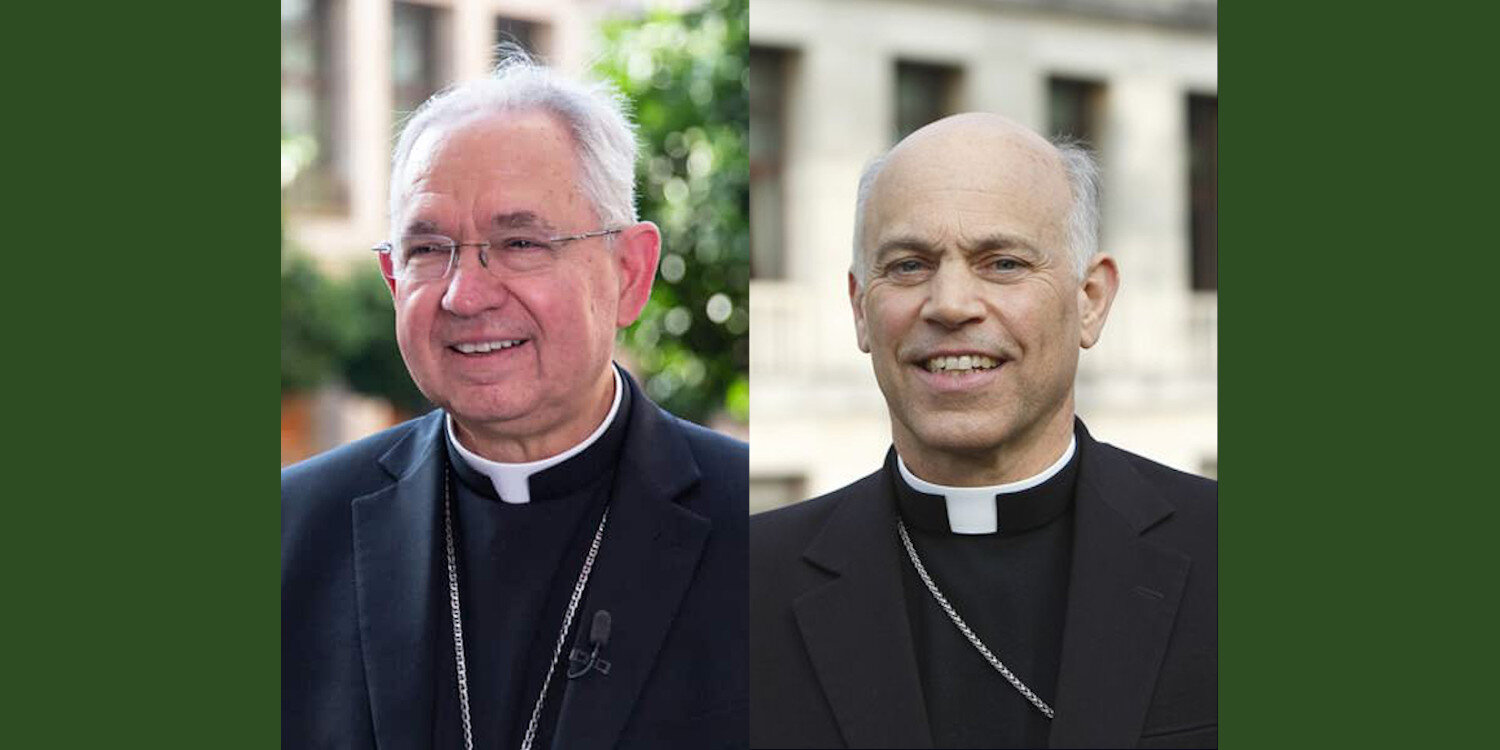
There are hopeful signs that some Catholic bishops are speaking boldly about the erosion of religious rights even while facing criticism for it from other bishops.

There are hopeful signs that some Catholic bishops are speaking boldly about the erosion of religious rights even while facing criticism for it from other bishops.
The Catho1ic World Report is a venerable old publication of Ignatius Press that is now only available as an online magazine. The publication recently posted through its Twitter account that Dr. Rachel Levine, President Biden’s nominee for the post of Assistant Secretary for Health and Human Services, is (or was) “a biological man who [now] identifies as a transgender woman.”
That mere statement of verifiable fact by a Catholic publication resulted in a charge of “hateful conduct” by Twitter and the suspension of its account. After the Catholic League for Religious and Civil Rights posted this story, I was one of many thousands who emailed Twitter in protest. My protest message charged that Twitter’s response poses a significant threat not only to religious liberty but to freedom of speech and freedom of the press as well, three of the fundamental rights defined in the First Amendment.
I have no delusion that my message to Twitter made a difference, but Twitter rescinded its suspension of CWR ’s account the next day. It nonetheless struck me after this affair that the tyranny of such suppression of rights and civil liberties is the result of two forces working in tandem with each other:
the noise of a few
and the silence of many.
The suspension of the Catholic World Report ’s Twitter account was the result of a single complaint by an LGBTQ activist. The reconsideration came as a result of a multitude of protests on the side of right. I am proud to have been one of them.
We live in a time in which the measure of our self-worth is not determined by our system of values or our moral fiber in living up to them for the greater good. As a culture, we have been lulled into a quest for social media “likes” and approval from those whose mission it is to discard and replace the truths we have long lived by. Any media source that does not uphold the sensitivities of identity politics and the progressive social agenda will find itself parked far outside the public square.
The Catholic World Report simply did what the news media is supposed to do. The news media has traditionally been dubbed, “The Fourth Estate,” its public role being a much needed checks and balance on government. CWR reported no falsehood, nor did it cast any aspersion on President Biden’s appointee to Health and Human Services. The Catholic publication simply pointed out that the nominee has a lifestyle that by implication may lend itself to bias against traditional moral beliefs and practices.
Then Twitter was allowed to do what the Chinese Communist Party does on a daily basis. It eliminated from public view information, regardless of its truth, that the progressive agenda does not want us lesser folks to see or hear. I hope I am not the only one who resents this. As a Catholic, as a writer — even as a condemned prisoner — I resent it with every fiber of my being.

Les Miserables
One of the most visited posts at Beyond These Stone Walls has had an effect that I never intended. It is “Les Miserables: The Bishop and the Redemption of Jean Valjean.” My post has been visited by countless high school students around the world who have used it as a source of “CliffNotes” when assigned a book report on the novel. I am glad to have been some service, but the novel itself is soaring. So is its musical rendition that has appeared on Broadway and in theaters across the globe. Bear with me. There is a point here and I am getting to it.
My post about Les Miserables above tells the story of Bishop Bienvenue (which means “Welcome” in the novel’s original French). Bishop Bienvenue is one of literature’s most noble characters. He seeks out the poor and downtrodden, sees himself primarily as a servant, and has no interest in amassing political clout or Earthly power in any other form. His encounter with ex-convict Jean Valjean sets the latter on a course toward his own noble future. The two are unforgettable literary characters.
Victor Hugo wrote and published Les Miserables in 1862. In the decades after the French Revolution and the rise of Napoleon, France entered a period of anti-clericalism. Bishops and priests were widely regarded with disdain. When Victor Hugo’s son read the manuscript for Les Miserables, he pleaded with his father to change the character of Bishop Bienvenue to someone the French might more easily see as noble. It is one of the ironies of French literature that Victor Hugo’s son wanted Bishop Bienvenue recast as a lawyer.
But Hugo defended his choice. He argued that Bishop Bienvenue may not represent a Catholic bishop that France has in real life, but rather he represents the bishop that France wants to have. I find a sort of parallel in this time of our own cultural revolution. Many Catholics struggle to maintain and nurture an identity as Catholics on a moral course against a more vocal majority speeding toward identity politics and a culture of open disregard for the value of human life.
The United States has now elected the second Catholic president in its history. He has described himself as a devout Catholic who carries a rosary in his pocket everyplace he goes. He has also also openly promoted unlimited and unrestricted access to abortion at any point in a pregnancy and has pledged to repeal the Hyde Amendment which for decades has spared taxpayers from being forced to violate their consciences by providing taxpayer funded abortions.
If such a situation existed in 1862, Victor Hugo’s Bishop Bienvenue would have as the least of his concerns the erosion of his social standing or political clout if he presented an apostate nominally Catholic leader with merciful but truthful fraternal correction. I described the problem that the current President brings to Catholics of conscience in a previous post, “Joe Biden, Cardinal McCarrick and the Betrayal of Life."
The mainstream media has played down this conflict while playing up the President’s Catholic identity. So the media never revealed a statement published by Los Angeles Archbishop Jose Gomez at the time of the President’s inauguration. With inherent charity and true moral leadership, Archbishop Gomez commended this President for his thoughtful concern for the plight of immigrants (a concern that I share after some experience with Immigration and Customs Enforcement).
Archbishop Gomez also spoke, and wrote, of this President’s unapologetic promotion of abortion, his threat against the Hyde Amendment — which he publicly supported until he ran for President — and his stated intent to codify into federal law the 1973 Supreme Court decision in Roe v. Wade so that it cannot be readdressed by the current or any other future Court. These, according to Archbishop Gomez, are the preeminent Catholic issues of our time.

Accommodations in the Garden of Good and Evil
The Washington Post accused the Archbishop of “assailing” the President over abortion rights. Michael Sean Winters of the National Catholic Reporter described the statement as “churlish.” I had to look up “churlish” since I hardly ever use the word. It means “surly” or “mean spirited,” the absolute opposite of the Archbishop’s demeanor or intent. NCR ’s Winters also wrote that Archbishop Gomez “threw cold water on the most Catholic Inauguration in history.”
Archbishop Gomez went on to add in his statement his “deep concern for the liberty of the Church and the freedom of believers to live according to their consciences.” This latter concern is heightened by some of the nominees our devout Catholic President has put forth. Foremost among these is Xavier Becerra, current Attorney General of California. He is passionate about expanded access to abortion and embyonic stem cell research. Beccera has been awarded One-Hundred percent ratings on reproductive rights by Planned Parenthood and NARAL.
In “Becerra Is a Threat to Life and Liberty” Bill Donohue wrote in the February 2021 issue of Catalyst that “Becerra is one of the cultural warriors” threatening to haul the Little Sisters of the Poor back into court again if they do not comply with a mandate to provide insurance coverage for contraception. In a previous issue of Catalyst, Bill Donohue wrote of the current President, “It is okay for Catholics to bludgeon the Little Sisters of the Poor so long as they carry a rosary.”
Of all the responses to the courageous statement of Archbishop Jose Gomez, however, the one from Chicago’s Cardinal Blase Cupich is the most troubling. As the elected President of the United States Conference of Catholic Bishops, Archbishop Gomez carefully framed his statement in accord with Catholic teaching, inc1uding Catholic social teaching. Using his Twitter account, Cardinal Blase Cupich publicly rebuked the Archbishop describing his statement as “ill considered.” He suggested that the statement should have been vetted before the entire body of bishops for discussion and a vote. I know of no other Catholic bishop who spoke against the statement. I applaud Archbishop Gomez for his fidelity.
And he is not alone. In an equally courageous statement, San Francisco Archbishop Salvatore Cordileone wrote forcefully against state and local government declarations that Catholic Mass is not an essential activity worthy of consideration.
Writing boldly for The Wall Street Journal, Archbishop Cordileone spoke truth to power in “California’s Unscientific Worship Ban.” The Governors of California and New York have been in lockstep with one another on this, a point I made recently in “A Year in the Grip of Earthly Powers.” Archbishop Cordileone described his long ordeal against civil authority at both the state and local level. He did not mince his words:
"Whether religious services are ‘essential’ isn’t a matter for government to decide ... In lifting California’s blanket ban on indoor worship (in a 6-3 decision), the high court rightly acknowledged the blatant unfairness of treating religious worship differently from secular activities such as shopping ... Such blatant disregard for the Constitution bodes ill for everyone. These next four years will be a time to coalesce around core ideals or continue to divide along ideological lines.”
Even as the pandemic lessened during the summer and many other activities opened up, the City of San Francisco doubled down on its bans for religious gatherings. All indoor worship was banned while even outdoor services were limited to no more than 12 participans. At the same time, the city government had nothing to say about street protests that were openly allowed to continue, and with some in the city’s government participating.
We who have faced this pandemic with a dismal sense of Les Miserables are empowered by the witness of Archbishops Gomez and Cordileone.
Bishop Bienvenue lives on.
+ + +
Note from Father Gordon MacRae: Please share this post, and if you have not already done so, please subscribe. It’s free, and we will only invade your inbox once per week. You may also like the related posts featured in this one:
Les Miserables: The Bishop and the Redemption of Jean Valjean

Please share this post!

Pornchai Moontri and the Long Road to Freedom
After 29 years in a U.S. prison, adjusting to the world is an immense challenge. Simultaneously adjusting to another country and culture is a task beyond measure.

After 29 years in a U.S. prison, adjusting to the world is an immense challenge. Simultaneously adjusting to another country and culture is a task beyond measure.
A few years ago, I was invited to write a review of the now famous prison film, The Shawshank Redemption. It is the most replayed film in television history. I combined the review into a story about the prison I am in for going on 27 years. My account, published at LinkedIn, is “The Shawshank Redemption and its Real World Revision.” I hope you will read it.
There is a profoundly sad development in the film — which is a must-see, by the way. The elder prison inmate-librarian, a beloved character played by the great actor, James Whitmore, is paroled after serving many decades. The transition from life in prison to life as a free man in some unnamed Maine city is just too jarring. He is an alien in the strangest of worlds, the free one, and he is suddenly alone — isolated — for the first time in forty years. The alienation and isolation are just too much, and he takes his own life.
News of the character “Brooks”’ terrible end reaches the prison and casts a pall over an already darkened existence for the inmates of Shawshank. One of them — the wrongly convicted Andy Dufresne decides that he cannot have such an end. So he begins a plan for escape that will take 20 years to complete. He breaks through a cell wall and crawls through three miles of foul stench in a sewer pipe. Such an end is a sort of metaphor for leaving prison in the real world. You can free a man from decades in prison, but its residual stench can follow him for years to come.
America has a prison problem. This nation imprisons more of its citizens than all 28 countries of the European Union combined. The United States has five-percent of the world’s population but twenty-five percent of the world’s prisoners. The only nations that impose more, and longer prison sentences are Third World countries.
Pornchai Moontri lost his freedom at age 18 on March 21, 1992. He was set free — after ICE tacked another five grueling months onto his sentence — on February 8, 2021, just weeks short of 29 years. He is now 47. The most formative and defining years of his adult life have been spent as a prisoner. And if you have followed the published account of his life, then you know that his prison began at age 11 when he was removed from Thailand. You will find that account, also published as a LinkedIn article, in “Human Trafficking: Thailand to America and a Cold Case in Guam.”
Just two weeks ago, I wrote the story of Pornchai’s five month post-prison stay in ICE detention and his return to Thailand. It ended rather abruptly because his final arrival was just hours before that post was published. Pornchai literally went from 29 years in shackles of one sort or another to standing in the lobby alone at the Bangkok Holiday Inn Express for his mandatory 15 days in quarantine required by the Thai government. We were notified at the last minute that we would have to arrange and prepay the hotel expenses. A few good friends and BTSW readers quickly mobilized to make short work of that obstacle.
The scene at the hotel check-in was both poignant and comical. On the day I write this, I was talking with Pornchai about the topic of this post, and he said, “Make sure you write about my first night in the hotel.” “All of it?,” I asked. “Don’t leave anything out,” he said. So here goes:
It was just after midnight on Monday into Tuesday Bangkok time, on February 9th. After a nearly 24-hour flight, and a brief appearance in the Bangkok Airport security area, the two ICE agents escorting Pornchai wished him well and left. Someone then escorted him to a waiting hotel van. Upon arrival, the driver let him out and said, “The check-in counter is just inside.” Pornchai was frozen in place and the driver looked puzzled. After a moment Pornchai said, “You mean ... I just go in by myself?” It had been 29 years since Pornchai entered a building unescorted.

Free in the City of Angels
In Thailand, Bangkok is called “Krung Thep,” meaning, “City of Angels.” It is a city that never sleeps, a city of 9.3 million souls. Imagine this scene. Pornchai was standing at the main entrance of an urban hotel with its dazzling lights, having to will himself to take the first step of freedom. He walked toward the light, through the doors, and into the brightly lit lobby. It was now about 1:00 AM, and even at that hour two smiling clerks awaited him behind a large counter. Pornchai had no luggage. He had nothing but the clothes he had worn during a grueling 24-hour flight.
“Sawasdee, Khun Pornchai,” said the clerk. Pornchai repeated from long dormant memory the traditional Thai greeting. The check-in went smoothly and he was given a keycard. He had no idea what it was for. Then the clerk said, your stay is in Room 3-8. The elevator is over there. Again, he was frozen in place. The clerk asked him a question in Thai and Pornchai answered with some embarrassment, “I’m sorry. I do not fully understand Thai.” The clerk then asked in English, “Is there anything more you need, Khun Pornchai?” He answered as he did the driver out on the street. “You mean ... I go by myself?”
Pornchai made it into the elevator. As the door closed, this was the moment when he first knew he was free. He stood still for a full thirty seconds wondering what to do. He had no living memory of ever being in an elevator in which he is the one to decide where it goes. Both exhilarated and intimidated, he pushed the “3” button and the elevator moved beneath his feet. When he arrived at Room 3-8, the door was locked. He had no idea how to get in. Then he remembered the keycard. “Maybe it’s this thing,” he thought. He put it in a slot upside down and nothing happened. So he tried again, and this time the door clicked open. He was utterly amazed.
Once inside the dark room, Pornchai began to feel along the walls for a light switch, but there wasn’t one. So he opened the door to let in some light. No light switch anywhere. Then he saw a slot near the door. “Maybe it’s this keycard,” he thought. So he inserted it and the lights came on. Then, finally, after 24 hours in flight and two more hours getting to this point, he had to use the toilet. I would usually spare you this, but he wants me to include it. He reached repeatedly behind him for a lever for the nicety of prison etiquette called “a courtesy flush.” It dawned on him that there was no one else anywhere nearby, another first for him.

But that did not solve the problem of flushing the toilet. After washing his hands he meticulously searched the room for anything that looked like it might flush the toilet. He found nothing. “Surely,” he thought, “the keycard doesn’t flush the toilet too!” So he went to get the keycard out of the wall, thus turning off the lights. Searching again in the dark, he could find no place on or near the toilet to plug in the keycard. But he refused to give up. He restored the lights and searched again. Finally, he spotted what looked like a logo on top of the tank. Do toilets have logos? It did not appear to have a button, but he had nothing to lose. So he reached out and touched the logo, and lo and behold, the thing finally flushed. Pornchai debated with himself whether he should tell me this story.
Pornchai took a quick shower, then collapsed in exhaustion on the bed. Both the room and the bed were larger than anyplace he had ever slept before, and the bed was far softer. He recalled his promise to me that he would not sleep in the bathtub. Thus began a fitful, anxious night, his first in freedom and his first in his homeland after an anguish-filled absence of 36 years. He had never before felt so alone.

Samsung to the Rescue
But we have friends in Bangkok, and they have long awaited Pornchai’s arrival. Yela Smit, a Bangkok travel agent, and Father John Le, a member of the Missionary Society of the Divine Word, dropped off some items for Pornchai that we had sent over there ahead of time. We purchased a small backpack and a change of clothes and pair of sandals often worn in Bangkok. We intended that Pornchai would carry this travel bag in flight, but every time we shipped it to him ICE would move him somewhere else just as it arrived. Then they would just ship it back to us. So we had it sent ahead of time to Yela to bring it to him. I also put together a box of items that would give him a sense of the familiar. This included some of his favorite books, a prayer book, the Saint Maximilian Rosary that BTSW reader Kathleen Riney made for him, and some of his treasured correspondence. Yela and Father John dropped these at the hotel as he slept.
They also brought him a new Samsung Galaxy smartphone loaded with an internet package. Yela sent me his number the day before, so by the end of his first full day in Thailand, we were able to speak. One of our Thailand contacts, Viktor Weyand, also connected with him on his first day there and every day since. Pornchai had never before touched, or even seen, a smart phone, but to my amazement it proved less of a challenge to him than the toilet. (Please don’t tell him I said that!)
A call from me was one of his first on the Samsung phone. I thought he might be elated to hear my voice, but he said, “Actually, I have been listening to you all afternoon.” He left me astonished when he said that he found his way into Beyond These Stone Walls and spent the whole day reading posts about himself, about me, and about some of our weird politics. He read the BTSW “About” page and spent two hours listening to the documentary interviews with me there. He was clearly a newborn fan of the world of information technology.
During my call the next day, I walked him through getting into the Gmail, Facebook, and LinkedIn accounts that our friends had set up for him over time. He was surprised to learn that he has over 600 Facebook “friends” most of whom are BTSW readers. Then came the real bombshell. I had him go to Bing.com and put his own name into the Search bar. The results were page after page of eye-popping affirmations of the good man he has become.
I asked him to do this search using Bing because I have found that Google, especially recently, seems to suppress some Catholic and other content with a conservative tone. I have never seen either Bing or Google, but before mentioning this to Pornchai I had a friend search his name on both. Clearly, the Bing search was fairer and more inclusive. Try it for yourself. Search "Pornchai Moontri" on both Bing and Google.
Pornchai had never before seen social media sites. Some of the followers of his Facebook page, Pornchai Maximilian Moontri, are men who had been in prison with him in both Maine and New Hampshire and are now free. All of them have struggled, but have been inspired by how Pornchai’s faith has inspired his journey and helped him face obstacles. One young man, John, was in Maine’s notorious “Supermax” solitary confinement prison with Pornchai 20 years ago. It did much damage to them both. John has written to me of how following Pornchai’s story has informed his own survival. Many others have said the same.

A Road with Many a Winding Turn
In the eleventh hour, just a week before Pornchai’s liberation from ICE and his flight to Thailand, the longer term plan we had for Pornchai’s housing diminished due to illness. Immediately, Father John Le, SVD, contacted me with an invitation for Pornchai to live with him and two other priests from his order in the city of Nontha Buri about one hour’s drive from the center of Bangkok.
Father Le’s principal ministry is the resettlement of Vietnamese refugees in Thailand. Father John is no stranger to the world of displaced persons. At age 15, he was one of the Vietnamese “Boat People” rescued at sea after fleeing a communist regime when American forces vacated Vietnam in the early 1970s. He made his way to Thailand and eventually became a Catholic priest. After twenty years of ministry in Papua New Guinea, his Order assigned him to Thailand six years ago.
In a recent phone conversation, Father John told me that he will soon drive Pornchai up to the northern city of Khon Kaen, an eight-hour drive, where Pornchai’s birth records are located. While there, they will obtain his official Thai citizen ID which he would have received at age 16 had he been in Thailand at that time.
From there, Father John said, they will spend a few days at his Order’s residence north of there where they manage a home and clinic for Thai children suffering from HIV. It is in the village of Nong Bua Lamphu.
This left me awestruck and speechless. It was in that very village that Pornchai lived as a young child with his extended family. He has shadowy memories of water buffalo and a rice paddy there. It was also from that very place that Pornchai was taken at age 11 setting in motion a long and traumatic odyssey from which he now returns full circle 36 years later.
For my part, my place in this amazing story is the most important thing I have ever done as a man and as a priest. The challenges ahead are many for me and for Pornchai, but I am left with no lingering doubt that the light of Divine Mercy has been a beacon of hope and trust for us both.
Sawasdee, my friends. Thank you for being here with us at this turning of the tide.
+ + +
Note from Father Gordon MacRae: I am most grateful to Yela Smit, Father John Le, and Viktor Weyand for helping to prepare a path for my friend’s long awaited journey home. On the day this is posted, Father John will pick up Pornchai from his required quarantine and they will drive together to Nontha Buri on the eastern side of the Bay of Bangkok. There, Pornchai will be a guest of Father John Le and two other priests from the Missionary Society of the Divine Word. Father John’s community struggles to meet its needs so I have pledged to assist by providing some modest room and board for Pornchai’s stay there. If you are inclined to assist as well, I explain how on our Special Events page.
You may also like these related posts referenced herein:
The Shawshank Redemption and its Real World Revision
Human Trafficking: Thailand to America and a Cold Case in Guam

Some of our friends nearby, who have helped to bring about Pornchai's transition, gathered for a Christmas prison visit last year. Here are left to right: Pornchai Moontri, Judith Freda of Maine, Samantha McLaughlin of Maine, Claire Dion of Maine, Viktor and Alice Weyand of Traverse City, Michigan, Father Gordon MacRae, and Mike Fazzino of Connecticut.
Please share this post!

It’s Lent. It’s Late. It’s Time to Find Our Way Home
Like no other time in history, forces in our culture are driving us toward a rapid retreat from God and the tenets of faith. Lent is our time to decide who we are.

Editor’s Note: In the photo above, Cardinal Timothy Dolan presides over Palm Sunday Mass in an empty Saint Patrick’s Cathedral.
Like no other time in history, forces in our culture are driving us toward a rapid retreat from God and the tenets of faith. Lent is our time to decide who we are.
Writing the "Blessed Among Us" column for the February 2021 issue of This Day: Dai1y Prayer for Today's Catho1ic, Robert Ellsworth penned the story of Maryknoll priest, Servant of God Francis X. Ford. I was looking for the Mass readings for the First Sunday of Lent when I came upon Father Ford's story. One sentence caught my eye: He died in prison on February 21, 1952.
That was one year before I was born. Francis Ford was one of the first Americans to join the newly founded Maryknoll missionary society just out of high school in Brooklyn, New York in 1912. After priesthood ordination in 1920, he joined the first group of four Maryknoll priests on a missionary journey to China. It was there that he died, 32 years later, in a Chinese prison.
Father Ford spent many years in Kaying, in southern China. During that time he witnessed the Chinese Catholic population there rise to over 20,000. He chose to remain there during World War II, but after the war, during China’s Communist Revolution, he was imprisoned for suspected espionage. He was never tried, but during his imprisonment he was starved, beaten, and paraded before mocking crowds anxious to please the Communist regime.
During that time, the Chinese Communist government confiscated farm lands and equipment of the Church and at all American-supported missions, including Fu Jen University at Peking.
Priests in the areas most affected by Marxism were working under extensive restrictions. Some restrictions were self-imposed by the priests to avert Communist persecution of their people.
Wholesale arrests took place beginning in December 1950 when the American bishop of Wuchow and 21 Maryknoll missionaries were imprisoned. The usual charge was suspicion of espionage. Throughout this persecution, Father Ford never wavered from his faith. He wrote from prison:
“Grant us, Lord, to be the doorstep by which the multitudes may come to Thee, and if ... we are ground underfoot and spat upon and worn out, at least we shall become the King’s Highway to pathless China.”
My first reaction to the story of Father Ford was to wonder what he may today think of the secret concordat signed by Pope Francis, and recently renewed, surrendering to the Chinese Communist government the authority to appoint Catholic bishops in effective abandonment of the Underground Church to which Father Ford gave his life.
But more on that in a future post. This one is about Lent and not politics. Well ... at the moment I actually have a hard time separating the two. Lent really is about politics, but only in the sense that conversion of the heart means putting — and keeping — our politics in their proper place. Politics are a means to an end — the end hopefully being a fair and just society functioning in defense of unalienable human rights.
But Lent is also about the End itself; our end. It asks some fundamental questions of us: Who are we? Where does our treasure lie? Where are we going spiritually? Are any of our recent struggles — to which we have given so much of ourselves and our attention “paving the King’s Highway” through a pathless humanity? Are the affairs that embroil us leading us and others to Christ?

Lost in a Lenten Wilderness
Since this post began with the story of an American priest who, though innocent, died in a Chinese prison, I am faced with the possibility that I, too, though innocent, may die in an American one. As the clock ticks into another Lent — my 27th in prison that feels more probable than possible. I am not sure what I am supposed to do with that probability. It is easy for us, as a society, to point to human rights abuses in China while the plank in our own eye blinds us to ourselves.
Stumbling into the story of Father Francis X. Ford was a gift to me. Just as in his Chinese prison, I, too, was beaten, starved, and paraded before humiliating mobs. None of that has happened lately. It was all long ago, but like Father Ford, it left me at a crossroads. I had to come, as he did, to accept my Cross as “pavement on the King’s Highway” for another. Like all of us, I ultimately came into this world from dust, and to dust I shall ultimately return. In the time and space in between, I have been assigned a task. As Saint John Henry Newman prayed, “I may never know it in this life, but I shall be told it in the next.”
I confess that I was bitter for a time. I wanted revenge even more than I wanted justice. I consumed it, and then it consumed me until the great mystery of Divine Providence placed my friend, Pornchai Moontri in my path. He never did or said anything to make me think this, but he was like an immovable roadblock that would not let me pass. His life events of abandonment, being used, and then discarded into years of solitary confinement left him alone in the fires of Gehenna, that ancient place of human sacrifice to a false god (2 Kings 23:10).
It was there that we met, and I came to see that my bitterness would be just the right ingredient that would push him over the edge, lost in the abyss forever. I cannot adequately describe this today, but I was mysteriously driven by grace into something that I once ascribed to Pope Benedict XVI as he left the papacy: I had to devote myself to “The Sacrifices of a Father’s Love.”
Fatherhood is waning in our culture, and the culture has a festering wound because of it. This absence is in no place more evident than in prison where eighty percent of the young men who land here grew up in fatherless homes. In Pornchai’s life, this wound was deeply felt. Abandoned by his first father, he was sacrificed to the fires of Gehenna by someone who exploited and abused him horribly, and then discarded him. Pornchai told me one day that I am the only person in his life to always act in his best interest.
I felt duty bound to make the sacrifices for Pornchai that others should have made, but did not. This became complicated. I had to all at once be his friend, his father, his priest, and a mirror of the Church that I had come to resent because it discarded me. I discovered that to accomplish what I was called to do, there could be no more “me.” In the process of sacrifice for another, my identity as a man and as a priest was restored. I cannot explain exactly how, but I never before in my life felt more like a father and a priest than the day Pornchai told me:
“I woke up today with a future when up to now all I ever had was a past.”
It was not long after this that Pornchai was received into the Church on Divine Mercy Sunday, 2010. He chose, as you know, the name Maximilian as his Christian name. He chose it in honor of my Patron Saint, Maximilian Kolbe, whose apostolic witness, and undaunted devotion to the Immaculate Heart of Mary was based on one immutable truth: “Love alone creates.”
You might recall that I began this post with the story of Father Francis X. Ford whose life I encountered as I searched for the Mass readings for the First Sunday of Lent. The Second Reading is from the First Letter of Saint Peter (3:18-22):
“Christ suffered for sins once, the righteous for the sake of the unrighteous, that he might lead you to God. Put to death in the flesh, he was brought to life in the Spirit. In it he also went to preach to the spirits in prison ...”

The Great and Terrible Adventure of Sacrificial Love
As much as we dislike suffering in any form, I have found that the mystery of Divine Providence sometimes causes suffering to make a surprising turn back onto itself. I wrote a post some time ago entitled, “Saint Maximilian Kolbe and the Gift of Noble Defiance.” The account of Saint Maximilian’s gruesome death in an Auschwitz starvation chamber is painful. At the very same time, it is also hopeful.
Without the spontaneous sacrifice Maximilian made to exchange his life for a young, condemned prisoner, that man would never again have known freedom. His children, grandchildren and great grandchildren would never have been born. On a wider scale, the thousands of others suffering in Auschwitz who heard of this story were themselves inspired to respond to evil and suffering with their own noble defiance. And wider still, the world would have been deprived of this powerful account of the sacrifice of a father’s love that has inspired millions.
My friend Pornchai was not drawn to the Catholic faith because of anything he heard or read. It was because of something he witnessed, something that never wavered. Shortly after he was received into the Church, Pornchai asked one of his notorious “upside down” questions. His head would pop down from his upper bunk in the dark of our prison cell so that he appeared upside down as he asked, “Should we ask God for a happy ending when Father Maximilian never had one?”
I was left to ponder that question for days before I could answer that “You, Pornchai are his happy ending.” I do not know if it was adequate, and I ponder it still, but in the mystery of suffering, immense good has come from this saint. It leaves me in a terrible spiritual quandary that I have written before. I despise prison. I still, after 27 years, feel pangs of bitterness for being falsely accused, and waves of resentment for, as Father Richard John Neuhaus once described, “a Church and a justice system that seem indifferent to justice.”
But I shudder to think of who and where Pornchai might be today had I not been here. God did not send me to prison. That was the work of greedy, lying men and corrupt officials. But then God did something with it that I could never have imagined. People write to me now, expressing concern that I must be heartbroken by my friend’s absence. I am not. I miss him, but behind that is an inexplicable sense of peace that the task given to me by God — a task that could be given to none other — has been fulfilled by the great gift of something that I did not even know was within me: the sacrifices of a father’s love.
I still hate prison, false witness, and corruption — perhaps now more than ever — but I cannot second guess this magnificent work of Divine Mercy. Our Church, like the world in which it lives, is permeated with the influence of evil. It is also filled with the sacrifices of its heroes like Father Francis X. Ford, Saint Maximilian Kolbe, and the enduring presence of selfless sacrifice extended back over 2,000 years.
It’s Lent. It’s late. It’s time to find our way home. As Saint Peter once asked of Christ — putting all politics aside — “to whom shall we go? You have the words of everlasting life.”
+ + +
Note from Father Gordon MacRae: Father Seraphim Michalenko, MIC, died on February 11, the Feast of Our Lady of Lourdes, at age 90 from Covid-19 complications. Father Seraphim was a priest of the Marians of the Immaculate Conception from the National Shrine of the Divine Mercy in Stockbridge, Massachusetts. He was also Vice-Postulator for the cause of sainthood for Saint Maria Faustina. He heroically smuggled her Diary out of Communist occupied Poland where it had been supressed. He then translated the Diary into English. Along with Saint John Paul II, Father Seraphim was globally considered to be one of the premier experts on Divine Mercy.
Father Seraphim was also a good friend to Pornchai Moontri and me. He came to this prison to interview both of us in 2014 during a retreat workshop on Father Michael Gaitley’s book Consoling the Heart of Jesus.
Pornchai and I invite you to help us honor Father Seraphim by reading and sharing this post written shortly after his visit with us: "Father Seraphim Michalenko on a Mission of Divine Mercy."
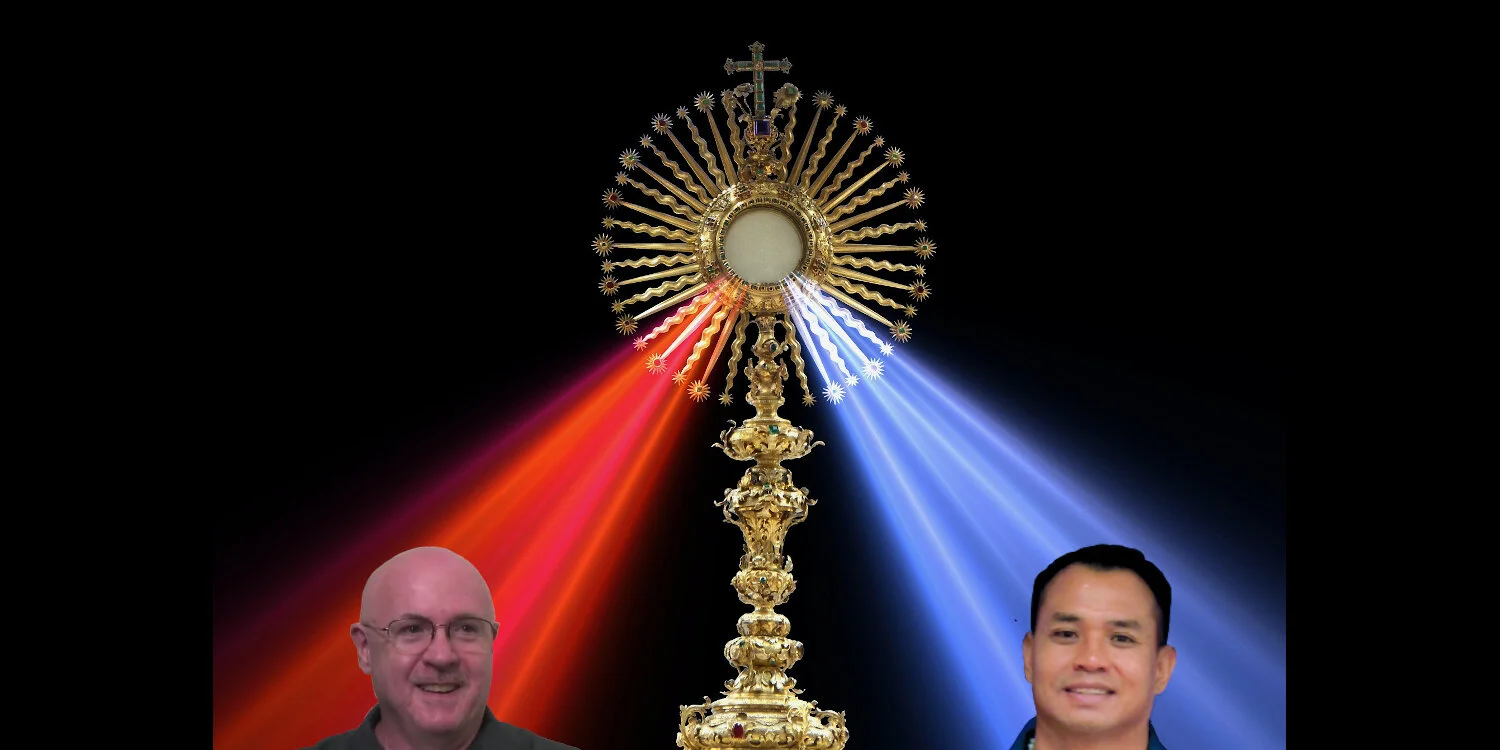
Please share this post!

ICE Finally Cracks: Pornchai Moontri Arrives in Thailand
The most amazing account of survival and conversion in modern American Catholicism begins a new chapter as Pornchai Moontri is sent home to Thailand after 36 years.

The most amazing account of survival and conversion in modern American Catholicism begins a new chapter as Pornchai Moontri is sent home to Thailand after 36 years.
I have read many riveting accounts of human survival and life changing conversion. In virtually all of them the most harrowing chapters are the last as the story turns down the road of some final test. This has been true in the story of Pornchai Moontri as well. If you are not yet familiar with all that preceded the most recent six months of his life, you should consider catching up. Many lives have been changed from this account of a soul ascending from the torment humans can inflict upon each other to the pinnacle of a life lived in the light of Divine Mercy. The best place to take that short journey is, “Pornchai Moontri: Mercy Inside Those Stone Walls,” by Felix Carroll.
But it is of the last six months that I now write. First, let me recap the previous 36 years. Most readers know that Pornchai was removed from his home in Thailand against his will in 1985. Taken by false pretense at age 11, he was brought to Bangor, Maine where he suffered years of sexual abuse and violence. Multiple attempts to flee resulted in police reports by local officers who did not understand his protests while he was handed back over to his tormentor. Finally, he escaped at age 14 and became homeless, and then a ward of the State, and then homeless again.
It was not until reading of Pornchai’s life of torment in these pages that law enforcement in the State of Maine took an interest, and opened an investigation into Pornchai’s life. Thirty-four years after the commission of his crimes, Richard Alan Bailey was convicted of forty felony counts of sexual abuse of Pornchai. The last person to confront Bailey about his crimes was Pornchai’s mother in the year 2000. As a proximate result, she was beaten to death in what remains today an unsolved “cold case” homicide on the Western Pacific U.S. Territorial Island of Guam.
Pornchai was in solitary confinement in the Maine State Prison when he learned of his mother’s death at the hands of the man who haunted his nightmares. He sank to the lowest bottom of life, a point from which he believed he could never return. There was no hope, no redemption, no future, and no God. All had been taken from him.
Five years later, Pornchai was moved to the New Hampshire State Prison. He could have ended up anywhere in the country, but Divine Providence had another plan. One year later, in 2006, he was living in a cell with me. Just imagine this. After all he had silently endured in life, he ended up in a prison cell with a Catholic priest falsely accused of the very things that destroyed him. Only God could have devised such a starting point for a relationship that would reshape lives and redirect the future.
Four years later, in 2010, Pornchai was received into the Catholic faith on Divine Mercy Sunday. He took the name, Maximilian, after the Saint of Auschwitz who gave his life to salvage the life of another prisoner. A new life had arisen from the wreckage of the past. Finding redemption in the most unlikely place, Pornchai’s new life gave voice to Saint Paul’s revelation in Romans (5:20):
“Where sin increased, grace abounded all the more. ”
Two years later in 2012, Pornchai delivered the Valedictorian address for his high school graduating class. From there he obtained a scholarship for Catholic Studies at Catholic Distance University from where he maintained a perfect 4.0 GPA. Then he completed two diploma programs in psychology and social work at the Stratford Career Institute, and a certificate in Culinary Arts at the NH Prison’s Career and Technical Education Center. I was an eager beneficiary of that particular new skill. He also completed hundreds of hours in programs like Restorative Justice, Interpersonal Violence Prevention, Alternatives to Violence (for which he became a mentor and facilitator), and Father Michael Gaitley’s entire Hearts Afire list of programs. Father Gaitley then invited both of us to official membership in the Marian Missionaries of Divine Mercy.

Part II: Thrust Back upon the Road to Perdition
Clare Farr, a trademarks attorney in Western Australia and part of a small Intellectual Property law firm, worked with me and together, from two continents, we brought Richard Alan Bailey to justice. Pornchai could never imagine this to be possible, but it happened. Clare also assisted me in negotiations with the Maine prison system that had jurisdiction over Pornchai's case. No one who came to know this story believed that his own offense would have ever happened had he not first been the victim of horrible crimes. We were successful, and Pornchai was granted substantial earned time off his sentence for his remarkable efforts at rehabilitation.
On September 8, 2020, Pornchai was handed back over to Maine officials for the final days of his sentence. He wrote of this moment in a most moving guest post, “Pornchai Moontri: Hope and Prayers for My Friend Left Behind.” Just three days later, on September 11, 2020, Pornchai was handed over to Immigration and Customs Enforcement (ICE) for removal from the United States. This became the final test that I mentioned at the beginning of this post.
September 11 was a Friday so Pornchai spent that weekend locked alone in a cell in the Cumberland County Jail in Portland, Maine. The fact that his sentence had already been served in full seemed completely lost on his keepers. He was told repeatedly that he is no longer a prisoner, but is now an ICE detainee. Alone in his cell, he had no contact with anyone, no access to a telephone, and no information. Clare Farr contacted ICE and was told that Pornchai would be moved to the Boston area on the following Monday to prepare for his travel to Thailand. When Monday and the ICE officers came, they told Pornchai the same thing, adding that he will be in Thailand by the end of September.
That night, he was taken to an air field in New Hampshire and flown along with dozens of Latino detainees on an ICE plane to Texas. Others detained at the Southern border were picked up there, and they were all flown to a private, for-profit GEO Group ICE detention facility in Pine Prairie, Western Louisiana. Meanwhile, ICE agents instructed the Royal Thai Consulate in New York to send Pornchai’s official travel documents to Boston — where they sat, lost, for weeks.
It took me a few days to find Pornchai. I had given him the number of his Godmother, Charlene Duline, and coached him to memorize it. I told him to call her collect from anywhere, and from there we could get funds onto a telephone account for him. He called, but did not understand that the system requires several minutes to process a collect call. Charlene, a former State Department Foreign Service Officer well acquainted with bureaucracy, was doing her best but Pornchai kept hanging up after waiting several minutes. Calls to the for-profit ICE facility for assistance were only met with rude refusals to assist.
I tell this story to convey the ridiculous nature of the one-size-fits-all treatment of ICE detainees. We had a team working on three continents to assist Pornchai, but we were challenged to our limit. What must some poor Mexican or Honduran family go through to navigate the nightmare of ICE? Not accepting defeat, and refusing to lose touch with Pornchai, I had to call Clare Farr in Australia who in turn called the ICE officer assigned to Pornchai’s case in Louisiana. He then had to call the GEO facility in Pine Prarie, LA, to tell a staff member to walk 20 feet to Pornchai’s cell and tell him to stay on the phone until his call can be processed.
It went like this day after day, week after week, month after month. ICE agents would show up once a week and Pornchai would ask them when he is leaving. “Maybe in a week or two,” he was always told. Inquiries from Clare Farr met with more cooperation, but no more honesty. She was told that ICE is actively working with the Thai Consulate to arrange travel. This was said on October 1. Two weeks later, Clare’s email to the Thai Consulate revealed that no contact from ICE had ever taken place.
Because Pornchai was originally under the jurisdiction of the State of Maine, we reached out to the office of Maine Senator Susan Collins for assistance. Her office declined to become involved. We then reached out to the office of Senator Angus King. His office made a determined effort to intercede with ICE, but received only a blunt refusal on the part of ICE to cooperate. It was made clear to us that ICE is accountable to no one.

Part III: Jena, Louisiana
Perhaps the most disturbing aspect of all this is the exploitation of detainees and their loved ones, most of whom are already financially challenged. Food portions are scant, and then food is sold to detainees at astronomical rates. Phone calls to loved ones were charged at 11-cents per minute with big kickbacks to the facility. A tablet for messages and games was available for lease at the rate of $24 per 8-hour shift. On a weekly basis, we provided funds for food and phone so Pornchai could remain in touch. I insisted that he call daily. I knew only too well how easily someone could simply “disappear” in ICE detention.
In the first week of October, Pornchai was suddenly moved to a facility in Jena, Louisiana in the center of the state. It was another for-profit detention center owned by GEO Group. We inquired with ICE headquarters in Washington, DC and were told that if Pornchai was moved to Jena, it’s because he is “very close” to a flight to Thailand. In a noisy, chaotic environment with up to 70 detainees in a room with blaring lights on around the clock, I feared for Pornchai’s safety and sanity.
The census consisted mostly of Central Americans detained at the Southern border. Only three of the 70, including Pornchai, were Asian: one from Laos, and one — an 18-year-old who spoke no English — from Vietnam. The young Vietnamese man had been there in Jena for over a year and had no contact with anyone outside. Pornchai asked if he could buy some extra food for him. I was embarrassed that he asked. He very quickly moved into the bunk above Pornchai who managed to keep him out of the drama always raging around them.
We hoped and prayed that the stay in Jena would not be long, but October came and went. Pornchai said he protested one day that his prison sentence is over so why is he still in prison? He was told, : “If you don't like it, you shouldn't have come to this country.” That spoke volumes about the amount of background ICE bothers to gather about detainees in their custody.
Complicating matters somewhat, Thailand had closed its borders to travellers with the exception of the repatriation of its own citizens. We were able to obtain a monthly list of repatriation flights to keep Pornchai’s hopes up. Several of these flights were out of New Orleans where jurisdiction over Pornchai’s ICE file resided. We would pour over these lists of flights trying to determine which ones Pornchai might be on. This became a futile and frustrating effort as October turned to November with no progress in sight.
When Pornchai was moved to Louisiana, jurisdiction over his Thai citizenship was transferred from the Royal Thai Consulate General in New York to the Thai Embassy in Washington. The Embassy was more than cooperative with us, and highly professional — a real tribute to the government and people of Thailand. The travel documents issued by the Embassy were valid for ninety days and would expire on December 10. Surely, we thought, ICE would not simply let them expire without action leaving Pornchai stranded and having to start all over again.
But that is exactly what they did. It was at that time that Catholic League President Bill Donohue and I put together a petition to the White House to spark some action in this matter. We had no idea at the time just how mired in its own drama the White House would become. Hundreds of Catholic League members and our own readers took part in that petition, and I thank you all. We may never know what impact this had on the final outcome, but my respect for Bill Donohue and the Catholic League has become immense.
Starting in early November, one of our friends, nurse and prolife activist Claire Dion, developed a plan that would allow Pornchai and me to speak each day. She sacrificed a lot to bring this about. Seven nights a week, Claire would be available to facilitate a conference call between Pornchai and me. This great effort is demonstrated in the photo below. It depicts one of our conversations which, for my part, became a daily pep talk to give Pornchai hope that even being encased in ICE will one day come to an end. The photo is somewhat humorous as Claire placed two cell phones with microphones and speakers opposite each other, but it worked.

Part IV: Navigating through the Night
Navigating Pornchai’s pain and frustration in these nightly calls was equally frustrating for me, but the calls were very necessary. As 2020 turned to 2021, our entire team had become almost as despondent as Pornchai. Was there to be no hope? On December 30, at my request, Clare Farr in Australia filed a civil rights petition with the Department of Homeland Security in Washington. As the agency that oversees ICE, we asked DHS to review Pornchai’s case for removal. As with other efforts, we may never know what impact, if any, this had behind the scenes. Bill Donohue and the Catholic League doubled down on their effort to bring this story to the White House.
Then our contact in Thailand obtained from the Embassy a list of the repatriation flights for January. There were only seven, and all were flying out of JFK International in New York. On that same day, I received a message from Australia with news from ICE that Pornchai would soon be relocated to New York. We were so hopeful that I made the mistake of conveying both pieces of news to Pornchai. Just days later, my heart sank as I had to tell him the news that all the repatriation flights scheduled for JFK for the month were filled and he did not make the cut. We were both devastated.
In mid January we received word that Pornchai was scheduled for a non-repatriation flight on January 25 to Seoul, South Korea. From there, he would board another flight to Bangkok. Pornchai was elated beyond measure with this news, and so were we. However, three days before the flight I had to convey to him the bad news that ICE postponed it. I believe that the ICE bureaucracy arranged the flight from New York to Bangkok but neglected to arrange to get him from Louisiana to New York.
We then learned that the flight was rescheduled for February 8. This became even more hopeful when ICE flew Pornchai from Louisiana to New York on February 3. His last five days in ICE custody proved to be the worst of all. He was locked in solitary confinement with only 20 minutes per day out of his cell with a choice of either a shower or a phone call. He had plenty of time alone to let his anxieties run amok. He feared another postponement and an extension of that nightmare. But he prayed, and knew that I prayed as well.
I would be remiss to not add the most important paragraph of this post. I was at the end of my third attempt at a Novena to Mary, Undoer of Knots. By this third effort, I had transitioned from prayerful, to cautiously hopeful, to downright demanding. She had, after all, intervened for us many times to undo the inevitable knots of prison. Surely ICE would not defeat Her! And it did not.
At noon on February 8, ICE agents escorted Pornchai aboard a Korean Airlines flight to Seoul out of JFK Airport. Sixteen hours later he boarded another flight from Seoul to Bangkok arriving at 11:27pm (Bangkok time) on February 9. He was exhausted but ready to face a new challenge in his life, and adjustment to freedom and a country and culture he had not seen for 36 years.
The Thai government has taken many steps to confront the Covid-19 crisis including the closing of its borders to international flights. Returning Thai citizens are required to spend their first 15 days home in quarantine at a hotel assigned by the Thai government. Our friend and Thai contact, Viktor Weyand scrambled to raise funds for the hotel stay and the reservations were made. Pornchai was assigned to a spacious room at the Holiday Inn Express Bangkok near the center of the city. He arrives there early in the morning on the day this is posted.
After all these years living with me in a 60-square-foot cell, he may find his room at the Holiday Inn to be too daunting and the bed just a bit too soft. I have already made him promise not to sleep in the bathtub.
+ + +
Addendum: Unlike Pornchai’s entire five-month stay with ICE, the two ICE agents who escorted him to Bangkok had obviously done a bit of homework. He reports that they were both professional and kind. Yes, even in a government bureaucracy one can be both. I commend these agents and I thank them.
+ + +
Note from Father Gordon MacRae: Donors purchased an iPhone for Pornchai which was left in his Holiday Inn Express hotel room to figure out. He has never touched, or even seen, a smart phone. For that matter, neither have I. But we will be speaking as soon as he can take a call. That will hopefully happen on the day this is posted. I asked him what is the first thing he will do after his 5-month ordeal in ICE. He said he will take a 6-hour bath and then sleep. Pornchai lost 20 pounds during his stay with ICE, but Viktor Weyand sent me a copy of the hotel’s Thai menu. Those pounds are not lost for long!
I will keep you posted on progress — and maybe a few selfies taken with the iPhone. Pornchai has the challenge of his life ahead. He is now adjusting to freedom and a new country and culture all at once after 28 years in prison and a 36-year absence from his homeland. Please pray for him.
He said he can’t wait to see Beyond These Stone Walls, on his iPhone, and then tell me what it looks like.
+ + +
Here are the related links presented in this post:
Human Traffic: The ICE Deportation of Pornchai Moontri
Pornchai Moontri: Hope and Prayers for My Friend Left Behind
and one other that I recommend:

Please share this post!

From Hong Kong to America Freedom Is under Siege
Is America ready to surrender free speech and other civil rights? A daring escape from Hong Kong and its encroaching Communist Chinese regime should raise alarms.

Is America ready to surrender free speech and other civil rights? A daring escape from Hong Kong and its encroaching Communist Chinese regime should raise alarms.
Just a few weeks before America shuddered in abhorrence over a post-election mob raid at the U.S. Capitol on January 6, 2021, something remarkable unfolded in Hong Kong. Two young Danes — Thomas Rohden, age 25, and Anders Storgaard, age 26 — choreographed a young democracy activist’s escape from Hong Kong. It’s a story worthy of a John le Carré novel. The story was first written in The Wall Street Journal as “A Hong Kong Dissident’s Daring Escape” (Jan. 13, 2021) by Editorial Page writer Jillian Kay Melchior, and it’s fascinating.
The two young Danes, in opposite political parties, belong to a group called the Danish China Critical Society. Its purpose is to raise awareness among Danish citizens about human rights abuses in Communist China. After meeting with some Hong Kong pro-democracy activists in Copenhagen last year, they remained in contact with Mr. Ted Rui, age 38, a Hong Kong legislator who has openly dared to protest legislation that threatens free expression for Hong Kong citizens.
Last summer, China imposed a new law on Hong Kong citizens that outlaws any form of dissent. Mr. Hui’s protests resulted in an arrest for which he was out on bail awaiting prosecution. He had begun to notice that he and some of his family were being followed since the arrest. Other members of the Hong Kong freedom movement have been assaulted. Though Mr. Rui had not yet been charged under China’s new dissent law, he knew that its penalty is life in prison.
A little history: Hong Kong island and the Kowloon Peninsula were ceded by China to become a British dependency in 1841 and 1860 respectively. Over the next 150 years, Hong Kong became a global financial center and one of the world’s largest trading ports.
An agreement signed by the British and Chinese governments in 1984 provided for China to resume sovereignty over Kong Kong and the region in 1997. The agreement was that Hong Kong would become a Special Administrative Region with its laws guaranteeing its citizens rights for a period of fifty years. The “One State - Two Systems” agreement remained in place until Beijing began to crack down on Hong Kong’s pro-democracy movement in recent years. The massive pro-democracy protests were sparked by a bill introduced in the Hong Kong legislature giving Beijing arrest and extradition authority in Hong Kong.
After Ted Hui was released on bail, Thomas Rohden and Anders Storgaard concocted a bold plan to host a fake climate change conference in Copenhagen and invite Mr. Hui in an effort to get him and his family to safety. Fearing that his telephone might be monitored, they never told him that the planned conference was not real when they invited him. He had already been considering finding a way to go into exile when the invitation came.
Postponing the exile plan, he told the Danes that Hong Kong courts wanted to review the climate change conference before Mr. Hui could accept the invitation to Copenhagen. The Danes put something together in haste while Mr. Hui booked flights for his wife and two children to go to London. Ted Hui arrived in Copenhagen ready to address climate change without ever even suspecting that the conference was a ruse. He was relieved beyond words that he and his family had escaped Chinese communist tyranny.
Beijing and Hong Kong were not amused. Beijing has asserted that its anti-dissent laws also apply to citizens of other countries who conspire to free Chinese residents. Rohden and Storgaard now must avoid travel to or through any country that has an extradition agreement with Beijing. The most important part of this story is Ted Hui’s reaction to his freedom:
“The message I want to take for the Danish people is not to take freedom for granted. Freedom is very fragile. It can go away in months or weeks. The hand of tyranny can extend very quickly, and can influence the world.”

The Rise of Socialism
The United States has just witnessed firsthand the need for a warning like Ted Hui’s, formerly of Hong Kong, that “freedom is very fragile.” Exactly as he has warned, “it can go away in months or weeks.” In the month since the mob attack at the U.S. Capitol, forces in this nation have shamed Americans using progressive ideology and the “cancel culture” pandemic to accept without dissent the open suppression of three foundational civil liberties guaranteed in the First Amendment: freedom of speech, freedom of the press, and religious freedom.
After years of denials by Facebook and Twitter that the platforms suppress conservative points of view, that suppression is now in the open and inflicted without apology. As information technology, these venues have also suppressed freedom of the press. Here is the example that comes most readily to mind: In October, 2020, the New York Post, this nation’s fourth largest daily newspaper, covered on its Front Page a potentially explosive story that has since emerged as both factual and with hard evidence and witnesses that back it up. That story was about the business practices of Hunter Biden, President Biden’s son.
Jack Dorsey, the CEO of Twitter, blocked the story from exposure through social media. Facebook CEO Mark Zuckerberg did so as well. The rest of the mainstream media, taking their marching orders from Twitter and Facebook, suppressed the story as fraudulent. It was not. The obvious reason for the suppression was the fact that the story emerged a month before an election, but it had little to do with the election. The business practice that was exposed in the story was an allegation that Hunter Biden had received millions in profit from foreign entities through “influence peddling” by selling access to his father during the administration of President Obama.
It was and is an ugly story involving three of the most politically contentious foreign enterprises now faced by President Biden’s administration: China, Russia, and the Ukraine.
My purpose in writing of this is not to denigrate the current president, nor is it to determine truth and falsehood. That is for the Justice Department to do. It turns out that the FBI has been investigating Hunter Biden for many months, and that investigation now includes allegations of multi-million dollar deals within China while his father was vice president. That said, Hunter Biden deserves, and should have, the full spectrum of due process rights afforded to him, but the suppression of news coverage is not one of those rights.
The arrogance of some in the mainstream media being what it is, admissions of culpability are as rare as the unnuanced truth. The story remains suppressed by most of the mainstream news media, but that is changing as the DOJ investigation can no longer be ignored or covered up. Under public pressure, Facebook and Twitter have finally stopped removing the story or suspending the accounts of those sharing it. U.S. foreign policy has been critical of the Chinese Communist government for its suppression of news, but I have been hard pressed to see the difference.
That is the real harm caused by media suppression of this story. Repressive regimes that balk at America’s claim of having a free press all know of it. The mob that attacked Washington all knew of it, and it lent fuel to their insistence that the election was not a free and fair election. Speaker Nancy Pelosi and Congressman Adam Schiff both knew about it even as they dismissed it as “Russian disinformation.”
The greatest harm has been to President Biden himself. This story will not go away. The fact of its pre-election suppression will cause it to expand and fester. It will haunt his term in office for the next year as he is drawn further into it. Freedom of the press has been abdicated in favor of a deeply partisan bias about the news we should be allowed to see and hear. The institution in our society that should act as a bipartisan government oversight for and by the people has openly betrayed that role. Freedom itself will suffer for it. So will we all.

The Assault on Freedom of Speech
The mob that assaulted the Capitol on January 6 — purportedly Trump supporters all — inflicted far more damage on Donald Trump and his presidency than any of his political enemies could accomplish. This mob attack at the heart of democracy was not an example of freedom of expression, but it is one of the core rights of our democracy —freedom of speech — that now suffers for it. And, again, so will we all.
Back in 2016, I wrote a pre-election post entitled, “Wikileaks Found Catholics in the Basket of Deplorables.” That seems almost a reserved and innocent time when compared with the unfathomable chasm between left and right that the four years hence have wrought. I had no frame of reference then for just how relatively fair Mrs. Clinton was being when she relegated a mere half of Trump voters to “a basket of deplorables.” There is now a highly charged and partisan effort to lump all 74 million Trump voters into that basket, keep them there, and silence them.
Blacklists are now emerging among publishers. Simon & Schuster just cancelled a forthcoming book by Senator Josh Hawley entitled, “The Tyranny of Big Tech.” Remember Mike Lindell? He’s the contagiously happy guy who sells pillows and “Dream Sheets” on TV. Exposed now as a Trump campaign donor, several large U.S. retail outlets have ordered his products pulled from their shelves. I could fill pages with similar examples of political suppression.
It is a credit to Hillary Clinton that she only called half of Trump supporters a “basket of deplorables” in 2016. The other half, she said with candid honesty, “are people who feel that the government has let them down, the economy has let them down, nobody cares about them; nobody worries about what happens to their lives and futures ... Those are people we have to understand and empathize with as well.”
President Biden should call upon Democrats to end this blood lust for Republicans who cannot in conscience embrace cancel culture, identity politics, and a partisan disregard for the most inherent civil right of all, the right to life. Our newly elected president did not get off to a good start when he called for unity and healing with the insistence that “We must end this uncivil war that pits red against blue.” It seems clearly to me right now to be rather the other way around.

Catholics Still in the Basket of Deplorables
There have been some unfortunate — scandalous is a better word — examples of the suppression of free speech even among Catholic leaders since the mob scene of January 6. A reader sent me a very troubling article from America magazine by Father James Martin, SJ entitled, “How Catholic Leaders Helped Give Rise to Violence at the U.S. Capitol” (Jan. 12, 2021).
The article is little more than a shameful attempt to use the events of January 6 to score political points against the author’s perceived theological and ideological enemies. I found it to be profoundly sad. Father Martin singled out Father James Altman, Father Ed Meeks, Father John Zuhlsdorf, Father Richard Heilman, Father Kevin Cusick, Bishop Richard Stika, Bishop Joseph E. Strickland, among others, to be examples of “priests and bishops who count themselves as pro-life (but) helped spawn a hate-filled environment that led to mayhem, violence and, ultimately, death.”
These names, and others like them, are the heroes of traditional Catholics and the Catholic pro-life community. They are deeply respected for speaking openly and with fidelity to Church teaching about the Holocaust of our time, the infanticide of 60 million aborted Americans who have no free speech rights of their own. By denigrating and accusing them so duplicitously, Father Martin scored some ideological points, but only within his own tribe — far left Catholics who would likely be far more comfortable in the U.S. Episcopal church. Frankly, no one else would even be reading America.
In his unfortunate America article, Father James Martin contributes to the atmosphere of tribalism that has so separated Americans in recent years. And clearly, he separates Catholics along the same sad partisan lines.
President Joe Biden’s greatest challenge may not be the conversion of Republicans to more progressive ideologies. It may well be the conversion of the progressive left to the tolerance and unity he rightly calls for. Trump is gone. The Democrats control the House and the White House and have the deciding tie-breaker vote in the Senate. But Portland, Seattle, and other-Democrat controlled cities are still rioting, as they did all last summer. CNN blamed it all on Donald Trump then, and is still calling these “peaceful protests.”
Portland, Oregon police reported that the “peaceful protesters came armed with pepper-ball guns, tasers and other electronic crowd control weapons, fireworks, rocks, and shields.” Some were armed with molotov cocktails, knives, batons, chemical spray, and crowbars. In Seattle, the January 20 “peaceful protesters” burned American flags and caused damage to an ICE headquarters. In Portland they carried signs reading, “We don’t want Biden. We want revenge!" They identified themselves as anarchists and antifa protesters responding to racism, fascism, and police brutality.
They also attacked the Democratic headquarters. Police made multiple arrests at the “peaceful protests.”
+ + +
Note from Father Gordon MacRae: Thank you for reading and sharing this post. You may also like a related post that is mentioned in the text above:
Wikileaks Found Catholics in the Basket of Deplorables
And for an example of media duplicity and coverup:
