“There are few authentic prophetic voices among us, guiding truth-seekers along the right path. Among them is Fr. Gordon MacRae, a mighty voice in the prison tradition of John the Baptist, Maximilian Kolbe, Alfred Delp, SJ, and Dietrich Bonhoeffer.”
— Deacon David Jones

Omertà in a Catholic Chancery — Affidavits Expanded
Silencing the truth is never in the service of the Church. For one wrongly imprisoned priest, the buried truth and uncovered lies have both been crosses to bear.

Silencing the truth is never in the service of the Church. For one wrongly imprisoned priest, the buried truth and uncovered lies have both been crosses to bear.
“Have no fear, for nothing is covered over that will not be revealed, or hidden that will not be known. What you hear in the dark utter in the light; what you hear whispered, proclaim from the rooftops.”
Matthew 10:26-29
Editor’s Note: The following is Part 2 of a guest post by Father George David Byers, SSL, STD. Part 1, was “A Code of Silence in the U.S. Catholic Church: Affidavits.”
+ + +
Last week here at Beyond These Stone Walls, I presented some examples of a plague of omertà that has arisen in recent decades in the Catholic Church in America. Omertà is an insidious code of silence that can too easily become a part of mob justice, influencing someone to set aside truth in deference to the mob’s preferred or demanded truth. Omertà empowered the mafia, but it has no place in the Catholic Church.
When fearlessly digging into truths that some want to be kept hidden and not shouted from the rooftops, other truths are also necessarily unearthed. Before delving into some truths in the form of some affidavits by courageous people revealed here in Part 1 of this post, I want to tell you a true story. It was revealed to me by the great Pornchai Maximilian Moontri who now dwells in the Kingdom of Thailand.
Pornchai has helped me to understand a truth that is nearly universal among those who have in fact been victims of sexual assault. The only thing that is as obnoxious to them as having been raped is to see their own sufferings capitalized upon by false accusers for money, and by clericalists who make themselves into heroes by paying out settlements with no evidence or due process of law. Priests are too often considered guilty just for being accused.
Pornchai conveyed the story of one day being in the cell alone with Father Gordon. They had been cell mates for about two years then. It was about a year before Father Gordon’s blog began. Father G was reading his mail and said to Pornchai, “This woman wants to know if I am safe here.” Pornchai responded spontaneously and with total sincerity: “Does she mean from us or from other priests?” Then the next letter Father G opened was from a priest of his diocese to whom he had written. The priest returned his letter with a note on the envelope: “Communication with you is neither prudent nor welcome.”
Prison, by nature, is often a violent place. As a child of 12 brought to the State of Maine from a foreign country, Pornchai became a victim of violent sexual abuse. Father Gordon wrote that shocking story in “Human Trafficking: Thailand to America and a Cold Case in Guam.” When Pornchai went to prison at age 18, he dealt with the prison violence in the only way he could. He vowed that he would never again be someone’s victim. So he understandably met violence with violence of his own. It landed him in repeated long years in solitary confinement. After 14 years, Pornchai was transferred to the New Hampshire prison.
(Not long after, PBS Frontline produced a feature about the very solitary confinement cell in which Pornchai had spent years. PBS Frontline “Solitary Nation” should not be missed.)
In New Hampshire, Pornchai ended up in a cell with a man accused and convicted of the very thing that destroyed his life. It did not take him long — with his innate alertness to predation — to discover that Father G had been falsely accused. Pornchai once told me this story that I held off writing until he was out of the prison system:
“One day, I got a notice from the prison mental health department that a new 2O-week program was beginning called ‘Interpersonal Violence.’ My friend Father G thought it might be an opportunity for me so I said I would go if he goes with me. So we both signed up for it. Prison is filled with needy young men who have really broken lives. Some of them look for safe, comfortable older prisoners who might buy them things and take care of them. The result is a sort of mutual exploitation and prisons are filled with this. One young kid, about 19, who was attending the program quickly tried to latch on to Father G without knowing anything about him. I was going to speak with him, but decided to wait.
“Over the next few sessions as I sat next to Father G, I was aware of how this kid was skillfully trying to gain his interest and maneuver his way into his life, but Father G was oblivious to it. Later that night I told him what I observed, but he had no idea what I was talking about. At the next session, Father G and I simply agreed to switch seats. In all his years in prison, Father G has been surrounded by people like this, many of them young drug addicts who would sell their soul for a few bucks for drugs. In all those years, Father G was never observed or even suspected of having any interest in them at all except to show those receptive to it a way out of their prison within a prison.”

The Egregious Double Standard of Justice
There is a lot more to Pornchai’s story of his years with Father Gordon MacRae in prison. As he came to trust Father G, he had a growing awareness of things changing for the better in his life. After a few years, Pornchai made a decision to become a Catholic. He was received into the Church on Divine Mercy Sunday an event related beautifully by Felix Carroll in a chapter in his Divine Mercy Conversion book, Loved, Lost, Found.
In the years to follow, Father Gordon’s writing about Pornchai’s life garnered some attention in both the United States and across the globe, especially in Thailand where that story began. Thanks to Father Gordon’s writing, Pornchai’s tormentor was brought to justice 33 years after he brought destruction to this young man’s life. I am not certain we can actually call it justice, however.
In late 2017, Richard Alan Bailey was arrested at his Oregon home and indicted on forty (40) felony charges of sexual violence against Pornchai at ages 12-14. There was much evidence against him discovered in the form of police reports, school reports, social services battered child reports, medical reports, but none of it ever resulted in action. In September 2018, Richard Alan Bailey entered a plea of “no contest” but was found guilty on all forty counts in a Maine court. Bailey was sentenced to forty years in prison, all suspended, and 18 years probation. He will never serve a single day in prison.
Meanwhile, Pornchai was very much aware that in the neighboring State of New Hampshire, Father Gordon MacRae refused a plea deal that would have resulted in one year in prison, then was found guilty of five charges with no evidence at all and sentenced by a bitterly anti-Catholic judge to 67 years in prison. Pornchai was also aware that Father Gordon’s bishop and diocese stacked the jury with a pre-trial press release pronouncing him guilty of victimizing not only his accusers, but the entire Catholic Church.
Pornchai says that Father G “led by example” when explaining to him that bitterness and resentment over past wounds, however deep, are “like a toxic brew that you put in your own tea, and then drink to your own spiritual peril.”
On that Divine Mercy Sunday when Pornchai was received into the Church in 2010, it just happened to be a day that Bishop John McCormack offered his annual Mass at the Concord, New Hampshire prison. He Confirmed Pornchai in his faith and gave him First Eucharist, but never spoke a single word to Father Gordon. In the prison chapel sacristy after Mass, Pornchai shook Bishop McCormack’s hand. “You have a good friend,” said the Bishop who had read the accounts of Pornchai’s life. “You have a good priest,” Pornchai responded.

Father Gordon saw to it that Pornchai came into the Catholic faith with eyes open about the meaning and power of both sin and grace. “If these events had not happened to me,” Father Gordon said, “Pornchai and I would have never met.” He challenged Pornchai to rise above resentment, and it was in the rising that they both found grace. This was a story, however, in which the insidious practice of Omertà, that evil code of silence that I wrote about here last week, has played a destructive role. In First Things magazine in 2008, the late Father Richard John Neuhaus wrote:
“The Bishop and the Diocese of Manchester do not come off as friends of justice, or, for that matter, of elementary decency. You may want to read this Kafkaesque tale then you may want to pray for Fr. MacRae, and for a Church and a justice system that seem indifferent to justice.”
— A Kafkaesque Tale
Affidavits Expanded
In my first installment of this post, “A Code of Silence in the U.S. Catholic Church,” I revealed two affidavits prepared by a New Hampshire lawyer and a senior executive of PBS which produces the award-winning investigative news program Frontline. The affidavits were entirely independent from each other. They describe meetings with former Diocese of Manchester Bishop, the late John McCormack. To recap, the following are the most pertinent statements in these affidavits:
From the Affidavit of Attorney Eileen A. Nevins:
“In June of 2000, I met with New Hampshire Bishop John McCormack at the Diocesan office .… During this meeting with Bishop McCormack and [Auxiliary] Bishop Francis Christian, they both expressed to me their belief that Father MacRae was not guilty of the crimes for which he was incarcerated.”
From the Affidavit of Leo P. Demers:
“During October 2000, I met with Bishop John McCormack at the Diocesan office in Manchester, New Hampshire .... The meeting with Bishop McCormack began with him saying, ‘Understand, none of this is to leave this office. I believe Father MacRae is not guilty and his accusers likely lied. There is nothing I can do to change the verdict.’”
Fortunately, Mr. Demers prepared careful notes immediately following his meeting. They provide a most helpful context for what was going on in the background in the Diocese of Manchester at the time. The transcript is fascinating, and I begin it here with the initial telephone call to Auxiliary Bishop Francis Christian at the Manchester Chancery office:
LEO DEMERS: “I am calling from WGBH-TV in Boston ... I am concerned that Fr. Gordon MacRae was being considered as a feature story for Frontline here on PBS. Since you are the only person left in the Chancery Office who was there at the time of the accusations and trial ... I would like to meet with you to discuss the matter.”
[Note from Father Byers: Just four months earlier, but unknown by Mr. Demers, Bishop Christian attended a meeting with Bishop McCormack and Attorney Eileen Nevins. At that meeting, as per the affidavit of Attorney Nevins above, Bishop Christian was quite clear in his view that Father MacRae was not guilty. Did something happen in the interim? Given his stacking of the jury in his 1993 pre-trial press release, was he intimidated by someone in the news media? Read on … ]
BISHOP CHRISTIAN: “This is not my responsibility. I have nothing to do with that. You will have to speak with Bishop McCormack.”
LEO DEMERS: “But you were part of what happened at that time and would have firsthand knowledge of all that occurred. Bishop McCormack was in Boston when all this happened.”
BISHOP CHRISTIAN: “You will have to speak with Bishop McCormack. He is the one who is responsible. I can arrange for you to have a meeting with him.”
LEO DEMERS: “I would rather meet with you.”
BISHOP CHRISTIAN: “Bishop McCormack handles all such inquiries. You will have to call him yourself or I can arrange a meeting with him for you.”
[ Note from Father Byers: Mr. Demers noted that he would be in Israel and the Middle East for the next two weeks. His notes indicate that a meeting was scheduled with Bishop McCormack for October 13, 2000, and that Father MacRae knew nothing of this planned meeting. He writes that upon arrival at the Chancery he was escorted to Bishop McCormack’s office. The Bishop spoke first: ]
BISHOP McCORMACK: “I don’t want any of this to leave this office because I have struggles with some people in the Chancery office that are not consistent with my thoughts, but I firmly believe that Father MacRae is innocent and should not be in prison.”
[Note from Father Byers: Mr. Demers then wrote in his notes: “This knocked the wind out of my sails. It seems to me that the wrongful imprisonment of Fr. Gordon is ongoing. Those concerned with this matter could be subpoenaed by a court of law or by the Congregation for the Doctrine of the Faith (CDF).” The transcript continued: ]
LEO DEMERS: “You know why I am here. I assume Bishop Christian has informed you of our phone conversation and my desire to speak with him. You are a busy man. Bishop Christian has firsthand knowledge of the events surrounding Fr. MacRae’s incarceration.”
BISHOP McCORMACK: “He was tried and found guilty.”
LEO DEMERS: “With all due respect, your Excellency, I was there and you were not. There was nobody present representing the Manchester Diocese.”
BISHOP McCORMACK: “I mentioned to you that I believe he is innocent. I plan on meeting with him when I visit the prison during the coming Christmas season and I will discuss this.”
LEO DEMERS: “You said that your hands were tied because of your belief in his innocence. How can you help him?”
BISHOP McCORMACK: “I want to do what I can to make his life more bearable under the circumstances of prison life. I cannot reverse the decision of the court system. What can I do?”
LEO DEMERS: “It is not a flawless judicial system. Many innocent people fall through its cracks. Correcting an injustice is a formidable task and Fr. Gordon does not have the resources to even begin the process.”

Epilogue: The Spin
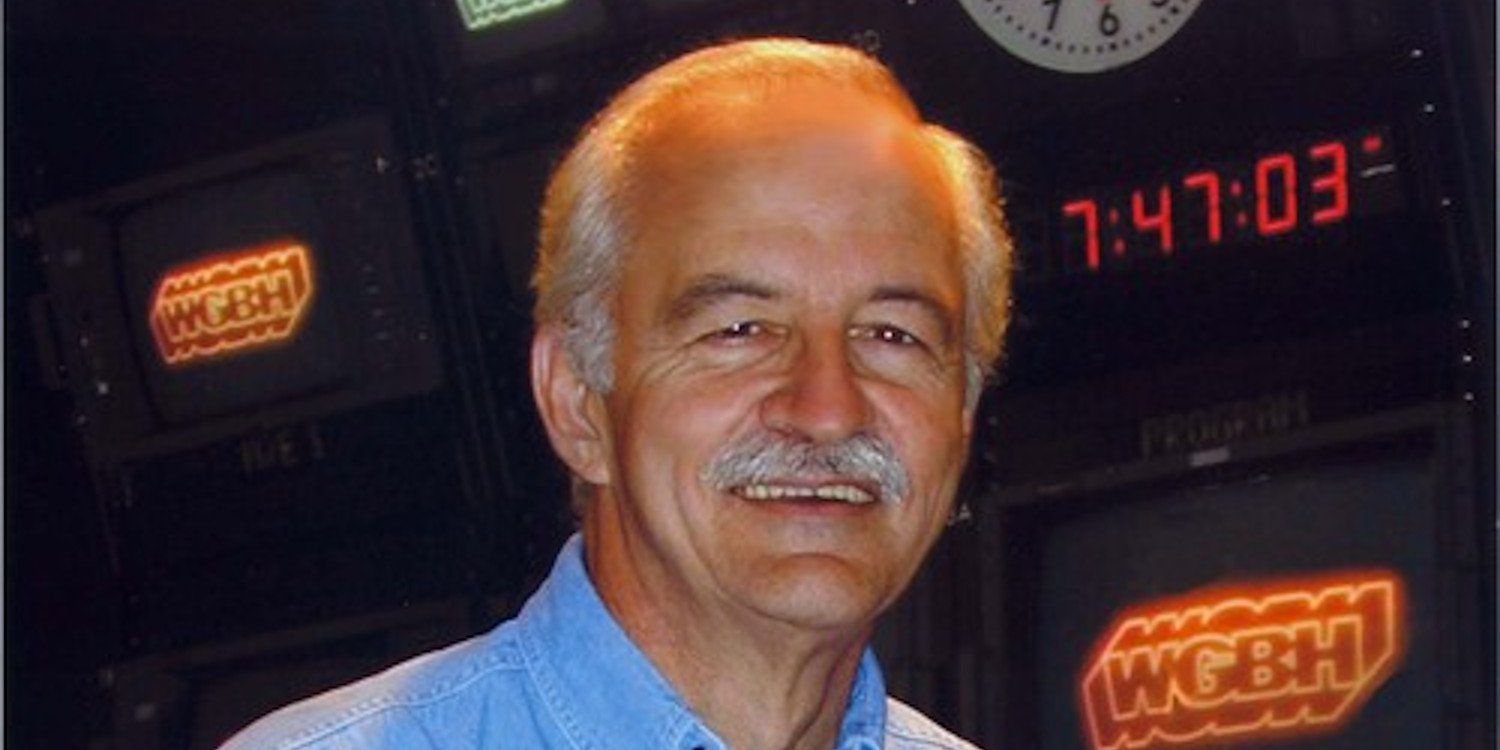
The promised Christmas meeting with Father MacRae in prison never took place. On February 15, 2002, Bishop McCormack, Bishop Christian, and Father Edward Arsenault held a press conference to release the names of all priests of the Diocese who were “credibly accused.” Father MacRae was not on that list. (That scene is depicted in the graphic atop this post with, left to right, Father Edward J. Arsenault, Bishop Francis X. Christian, and the late Bishop John B. McCormack at the podium.)
Over the course of the next year, many “confidential” memos passed between Bishop McCormack, Father Edward Arsenault, and various attorneys for the Diocese. Father MacRae was privy to none of them. Father Arsenault, who oversaw all lawsuit settlements for the Diocese, had an egregious conflict of interest in that he was simultaneously Chairman of the Board of the National Catholic Risk Retention Group providing oversight of insurance settlements for Catholic institutions across the country. At some point, he took over communications with Father MacRae on behalf of the bishop.
Father MacRae was never told of the above affidavits and did not know of Bishop McCormack’s statements about his belief in MacRae’s innocence and wrongful incarceration. A major sticking point in the various subsequent exchanges from the Bishop’s office was a demand that Father MacRae cease all contact with Dorothy Rabinowitz and The Wall Street Journal, submit to the Diocese a list of the names of everyone with whom he has discussed this matter, and agree in writing to limit all future contacts only to those approved by Diocesan officials. He was also asked to agree to appeal only his sentence and not his conviction, and to allow Father Arsenault to choose his legal counsel. Father MacRae rejected those conditions.
After The Wall Street Journal published an explosive series of articles by Dorothy Rabinowitz on the Father MacRae case in 2005 and again in 2013, Father never again heard from any official of his diocese with the exception of letters described below.
In 2008, Bishop McCormack wrote in a letter to an advocate of Father MacRae denying that he ever stated a belief that Father MacRae is innocent and should not be in prison. In 2009, Father Edward Arsenault became Monsignor Edward Arsenault and assumed a $160,000 per year position as Executive Director of the St. Luke Institute in Maryland where Bishop McCormack served on the Board of Directors. In 2015 he went to prison for embezzlement and forgery. Among the documents he is now suspected of forging were letters to the Holy See about the MacRae case.
Monsignor Arsenault was subsequently dismissed from the clerical state by Pope Francis. He has since changed his name to Edward J. Bolognini.
Bishop Peter A. Libasci, the current Bishop of Manchester, has, to this day, not once allowed Father MacRae to speak of this case in his own defense. Ryan A. MacDonald wrote of the unconscionable statements in this regard by the diocesan spokesman in “The Post-Trial Extortion of Father Gordon MacRae.”
+ + +
Please share this post and review these related posts:
Human Trafficking: Thailand to America and a Cold Case in Guam
In the Diocese of Manchester, Transparency and a Hit List by Ryan A. MacDonald
The Trials of Father MacRae — The Wall Street Journal
Grand Jury, St. Paul’s School, and the Diocese of Manchester
+ + +
Note from Father Gordon MacRae: Father George David Byers, SSL, STD is a parish priest in the Diocese of Charlotte, North Carolina, a chaplain to law enforcement, and a Missionary of Mercy appointed by Pope Francis for the Jubilee Year of Mercy, a position the Holy Father has extended to the present day. Father Byers writes at the faithful and bold Catholic blog, Arise! Let Us Be Going!
From the BTSW Editor: Ryan A. MacDonald has a new post at A RAM in the Thicket that impacts both Father Gordon MacRae and this blog. Please read “At the Catholic Media Association, Bias and a Double Standard.”

Monsignor Arsenault served two years of a four-to-twenty year sentence with the remainder suspended. He is depicted here shaking hands with his prosecutor from the NH Attorney General’s Office after accepting a plea bargain.

A Code of Silence in the U.S. Catholic Church: Affidavits
Silencing truth is never in service to the Church. No priest should ever have been sacrificed on the altars of tort lawyers, insurers, or a predatory news media.
Silencing truth is never in service to the Church. No priest should ever have been sacrificed on the altars of tort lawyers, insurers, or a predatory news media.
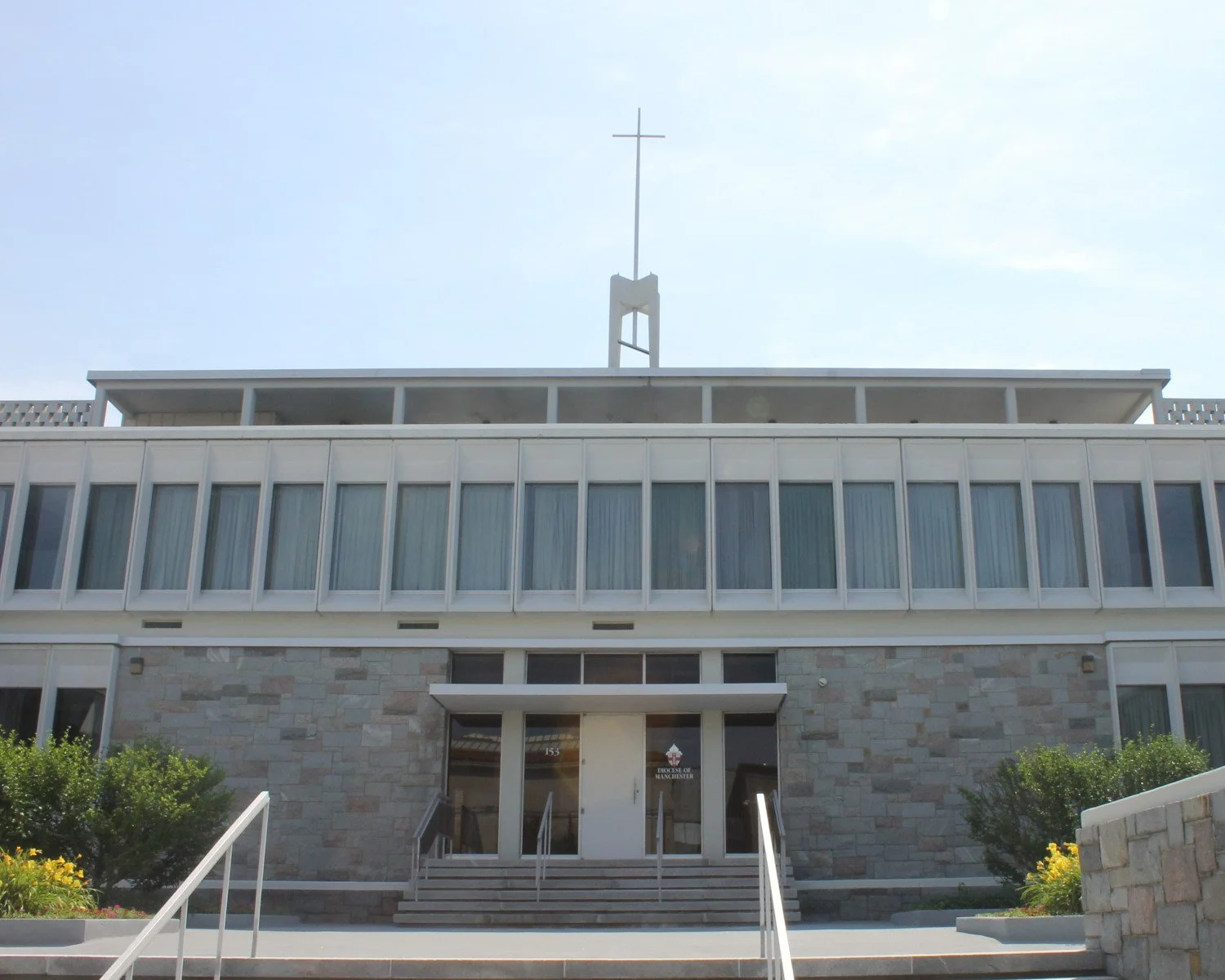
(Pictured above: The Chancery Office of the Roman Catholic Diocese of Manchester, New Hampshire.)
November 10, 2021
Editor’s Note: The following is Part 1 of a two-part post by Father George David Byers, SSL, STD, parish priest, chaplain to law enforcement, an accomplished theologian, and a Missionary of Mercy appointed by Pope Francis for the Year of Mercy, a position extended by the Holy Father to the present day. Father Byers writes of how a code of silence has inhibited justice in the case of Fr. Gordon MacRae.
+ + +
This post has spent a long time being written. I first wrote it, or rather one quite like it, a decade ago for my now retired blog, Holy Souls Hermitage. Its purpose now is to bring the abuse crisis full circle. It is about an ongoing abuse of power in the Church. It is about the replacement of one abuse with another.
The same abuse of power in which youngsters were abused is the same abuse of power in which guilty priests were moved from parish to parish with omertà, that evil code of silence. It is also the same abuse of power which, when caught out today, will feign heroism by throwing merely accused priests out of the priesthood or into prison with no presumption of actual innocence. It is the same abuse of power which will cover up actual innocence for the sake of self-referential self-congratulations, ad infinitum.
It is this self-referential element in the Church that Pope Francis once said he wants to bring to its knees in repentance and conversion to our Lord Jesus Christ. Just because actual cases of contemporary sexual abuse have wound down to zero, as they have today, does not necessarily mean that anything has changed. Until the abuse of power changes, it is all the same. It is manifested in omertà.
Omertà is a mafioso term with its origin in 13th Century Sicily. It refers to a code of silence practiced by the mafia, a highly organized crime syndicate with a strong hierarchy. In the 18th and 19th centuries, it spread to the United States. Of interest, the original meaning of omertà was connected to “humility.” To practice a code of silence required the humility to set aside one’s own truth in deference to the organization’s preferred or demanded truth. It has no place in a Catholic setting.

The Late John Brendan McCormack
Four years after Father Gordon MacRae was convicted in a sham trial and sent to prison, Auxiliary Bishop John Brendan McCormack of the Archdiocese of Boston was appointed by His Holiness Pope Benedict XVI to serve as Bishop of Manchester, New Hampshire. Complicating this story somewhat, Bishop McCormack passed away in a Manchester, New Hampshire Catholic nursing home just weeks before I began to write this article. From his prison cell, Father Gordon offered Mass for him. Father Gordon had some concern about the timing of this post, but the truth has its own life and must not be buried with anyone.
Bishop McCormack became a part of the code of silence practiced in his new diocese, but there were signs that he may not have been an entirely willing one, at least, not at first. Back in Boston, Bishop McCormack had been instrumental in seeking the administrative laicization of Boston priest and notorious abuser, Father John Geoghan. Later, Geoghan was brutally murdered in prison, in part due to the publicity that his dismissal from the clerical state brought about.
In 1998, at the time of Bishop McCormack’s appointment as Bishop of Manchester, he received a letter from Mr. Leo Demers, a senior official from WGBH-TV in Boston, a flagship production house for PBS public television. Mr. Demers revealed that he was present for much of the 1994 trial of Father Gordon MacRae. He expressed concern that this was not a fair trial and any dismissal from the priesthood could not justly be based upon its outcome.
Bishop McCormack responded that he was unfamiliar with the case, but is aware of no plan in the diocese to seek Father MacRae’s dismissal. He pledged to begin an investigation of the matter to determine what, if anything, he could do. There were also some media rumblings at the time. An organization known as the National Justice Committee worked with FOX News to review Father MacRae’s trial, but prison officials blocked these contacts. A Fox News representative appealed to then Governor Jeanne Shaheen, now U.S. Senator Jeanne Shaheen (D-NH) who responded:
“I understand your organization’s interest in the matter of Gordon MacRae, now an inmate in the NH prison, but I will not interfere with the decision not to allow media access to Mr. MacRae.”
— 1999 letter of Gov. Shaheen

The Wall Street Journal
It is likely that a file on the case was then sent from FOX News to The Wall Street Journal. Later in 1999, a correspondence ensued between Father MacRae and Dorothy Rabinowitz, a Pulitzer Prize-winning writer on the WSJ Editorial Board who opened an inquiry on the case. The Diocese of Manchester suddenly became much more interested in the fate of Father MacRae. Then, in 2000, Bishop McCormack was approached by New Hampshire attorney Eileen Nevins who also had been present throughout the MacRae trial. Ms. Nevins later produced the following sworn affidavit:
Affidavit of Eileen Nevins, Esq:
“My name is Eileen A. Nevins and I am an attorney licensed to practice in the State of New Hampshire and the Commonwealth of Massachusetts.
I met Reverend Gordon MacRae in the early 1980s when he was an associate priest assigned to Our Lady of the Miraculous Medal Parish in Hampton, New Hampshire.
On or about 1994, while still a law student, I became aware of charges of sexual misconduct filed against Gordon MacRae. I contacted his . . . attorney, Ron Koch, to offer my assistance in doing any legal research that may assist Father MacRae in New Hampshire.
Upon acting in a clerk capacity for Attorney Koch I became firmly convinced that the charges against Father MacRae were false and brought for financial gain.
I believe now as I believed during his trial that the charges against him are false and have assisted him however possible in obtaining further legal assistance to address the wrong against him. My belief is based on personal knowledge of the case against Father MacRae acquired during the investigation prior to his trial and my ongoing pursuit and review of the investigation into his situation subsequent to his trial and incarceration.
In June of 2000, I met with New Hampshire Bishop McCormack at the Diocesan office in Manchester, New Hampshire to discuss the possibility of the Diocese offering some financial assistance to obtain an appellate relief.
During this meeting with Bishop McCormack and [Auxiliary] Bishop Francis Christian, they both expressed to me their belief that Father MacRae was not guilty of the crimes for which he was incarcerated and that Bishop McCormack would consider offering some financial aid to assist with a legal defense.
In follow-up correspondence with the Bishop, I stated that it was my understanding that the Diocese would now consider financial aid to retain an attorney to assist in [Fr.] Gordon’s appeal.
I had been working with Dorothy Rabinowitz of The Wall Street Journal and she recommended Attorney Robert Rosenthal to assist with the appeal.
Due to the unforeseen events of clergy abuse scandals in Massachusetts and New Hampshire, the Bishop subsequently failed to act on his offer of assistance. It is my understanding that Bishop McCormack has transmitted Father MacRae’s case to the Vatican for disposition.”
Signed and sworn by Eileen A. Nevins, Esq. 18 October 2005.
Falling Towers and Fallen Hope
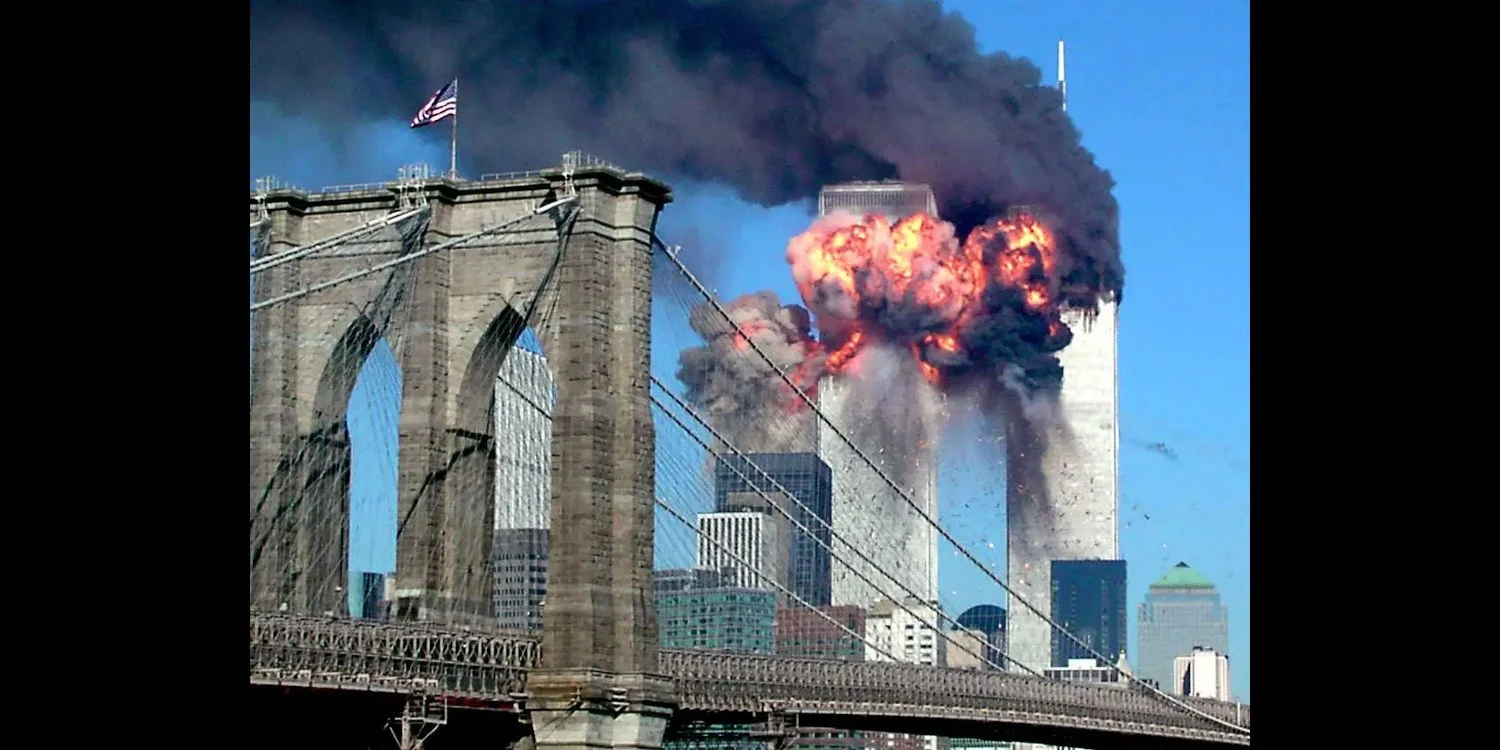
Father MacRae knew nothing about the above affidavit or the meetings it described until years after it was issued in 2005. In the interim, there were many setbacks and disappointments. After two years of gathering evidence from prison and submitting reams of documentation to The Wall Street Journal, the imprisoned priest learned that all had been destroyed along with The Wall Street Journal offices in the terrorist attacks of September 11, 2001.
He would have to start over, and he was not certain that he could. Meanwhile, a series of correspondence began between Father MacRae, Bishop John McCormack, and the Diocesan Moderator of the Curia and Delegate for Ministerial Conduct, Father Edward J. Arsenault.
Without ever telling Father MacRae of his stated belief in his innocence, Bishop McCormack and Father Arsenault appeared to make their offer of legal assistance contingent upon the priest’s assent to curtail his contacts with Dorothy Rabinowitz and The Wall Street Journal. This effort to sever any media contact was clear in a series of confidential memos between the Bishop and Father Arsenault. These memos were later released as part of an Attorney General grand jury report in the diocese in 2003. (In 2019, Father MacRae described this report and its consequences in “Grand Jury, St. Paul’s School, and the Diocese of Manchester.”)
The internal memos and the Bishop’s correspondence also set other conditions. Father MacRae was asked to agree to allow the Diocese to choose his legal counsel. He also had to agree that he would appeal only his sentence and not his convictions. Father MacRae refused these conditions, and then the matter went silent. The account of what transpired at this time was stunning. It was revealed by Ryan A. MacDonald in “The Prison of Father MacRae: A Conspiracy of Silence.” It was a classic example of omertà.
However, Attorney Nevins was not the only one with an affidavit. Enter Leo Demers, the PBS executive who earlier wrote to Bishop McCormack in 1998 with a concern about the fairness of Father MacRae’s trial. He, too, was summoned to a meeting with Bishop McCormack in 2000, six months after the Bishop’s meeting with Attorney Eileen Nevins. At the time, Mr. Demers was Director of Engineering for WGBH-TV in Boston which produced, among other PBS programming, the award-winning investigative journalism program, Frontline. This affidavit and the dialogue that follows is an eye-opener:
Affidavit of Leo P. Demers, Jr.
“The purpose of this affidavit at this time is to convey the context and substance of a meeting by me with Bishop John McCormack during which he expressed his belief in the innocence of the charges against Fr. Gordon MacRae that led to his conviction and subsequent imprisonment for the past twelve years.
My name is Leo P. Demers, Jr. and I have been a broadcast engineer in New England since 1962. I am a practicing Catholic.
I first met Reverend Gordon MacRae in the late 1970’s or early 1980’s when he was a Franciscan Friar in Novitiate training at the former St. Anthony’s Capuchin Friary in Hudson, New Hampshire.
During 1994, I visited Father MacRae in New Mexico where he was working in ministry. At that time Father MacRae informed me that criminal charges of sexual misconduct with a minor had been filed against him in New Hampshire.
I believe now, as I testified under oath during the sentencing phase of his trial in Keene, New Hampshire, that the charges against him are false.
During October 2000, I met with Bishop John McCormack at the Diocesan office in Manchester, New Hampshire. At the time, my employer, the WGBH Educational Foundation, wanted to produce a segment of Frontline. This production would have resulted in a national story about Father MacRae. Auxiliary Bishop Francis Christian arranged the meeting with Bishop McCormack.
I had contacted assistant Bishop Francis Christian from my office at WGBH to inquire about the story because he was the only person in the Manchester Chancery Office who was present during the time of the accusations against Father MacRae. Bishop Christian wanted nothing to do with my inquiry regarding Father MacRae but did offer to arrange a meeting with Bishop McCormack.
The meeting with Bishop McCormack began with him saying, ‘Understand, none of this is to leave this office. I believe Father MacRae is not guilty and his accusers likely lied. There is nothing I can do to change the verdict.’
I have recently learned that Bishop McCormack submitted an expert report to Rome. This report purportedly concludes that Father MacRae’s trial was fair and his sentence just. Further, this report avers that no avenue of appeal is available to Father MacRae. Since I have been in contact with various professionals representing Father MacRae, who are actively involved in investigating his case and prosecuting an appeal, I believe any expert opinion submitted by the Diocese of Manchester to be subject to challenge and serious defect.
I am motivated to submit this affidavit, obviously in disregard of any confidentiality requested by Bishop McCormack, because I cannot accept the inconsistency between Bishop McCormack’s statements to me regarding Father MacRae’s innocence and his submission of an expert report to the contrary that is in clear opposition to his stated belief.”
Signed and sworn by Leo P. Demers, 13 February 2005.

Those with Ears to Hear but Hear Not (Ezekiel 12:2)
Anyone familiar with all that remained hidden in this story might readily understand the hesitance of Auxiliary Bishop Francis Christian to be involved in that meeting with Leo Demers. It was Bishop Christian who penned a pre-trial press release of the Diocese which had the effect of stacking the jury against Father Gordon:
“The Church has also been a victim of the actions of Gordon MacRae just as these individuals have been. It is clear that he will never again function as a priest.”
Editing out any mention of mere allegations serves to mask the complete lack of any evidence behind this case. This point was made in yet another affidavit, that of FBI Special Agent Supervisor James Abbott, now retired. He had one of the more spectacular FBI careers in the Bureau’s history. David F. Pierre, Jr., Moderator of The Media Report, performed a public service when he analyzed and summarized the vast documentation on this case available at the website of the National Center for Reason and Justice. David F. Pierre’s summary is available at The Media Report under the title, “Alarming New Evidence May Exonerate Imprisoned Priest.” Among that evidence is an affidavit of Special Agent James Abbott who concluded:
“In the entirety of my three-year investigation of this matter, I found no evidence that MacRae committed these crimes or any crimes. Indeed, the only ‘evidence’ was [Thomas] Grover’s stories that have since been undermined by his family and others who surrounded him at the time he made his claims.”
There is a very necessary Part 2 to this post that will hopefully be forthcoming soon. There is much more to this story, and to the practice of omertà that fueled it. Fortunately — or perhaps not so much for those bent on blindly assuming this priest’s guilt — the Holy See has not seen fit to remove him from priesthood. At one point, officials there asked for copies of the affidavits contained herein. That speaks well of them. Perhaps omertà is not as widespread as some believe.
There has nonetheless been a grave injustice here. Whatever one might conclude about the case against Father Gordon MacRae, he has never been allowed a defense — not in his trial, not in any appeals, and not at all before the one person charged with the defense of truth: his bishop. Bishop John McCormack retired and now has passed away. Father Edward Arsenault became Monsignor Edward Arsenault, then went to prison for financial misdeeds. Now he has a new life and a new name, Edward J. Bolognini.
In 2011, Bishop Peter A. Libasci became Bishop of Manchester. Whatever story he might have inherited about this matter, he has never allowed himself to hear a single word from the imprisoned Father Gordon MacRae speaking in his own defense. Whether he has reviewed any of the vast evidence of fraud in this case is entirely unknown, but that would require an open mind.
In July, 2021, Bishop Libasci was himself accused of sexual abuse stemming from his ministry as a priest in the Diocese of Rockville Center, New York in 1983, the same year as the accusations against Father MacRae. Ironically, from his prison cell, Father MacRae has presented a spirited and rational defense, linked below, for why the case against his bishop is not “credible” at all.
+ + +
Editor’s Note: Next at Beyond These Stone Walls Father George David Byers will present Part 2 of this article. Father George David Byers holds a Licentiate in Sacred Scripture from the Pontifical Biblical Institute in Jerusalem and Rome, and a Doctor of Sacred Theology degree from the Pontifical University of St. Thomas Aquinas in Rome.
Please share this post. You may also wish to read the following:
Bishop Peter A. Libasci Was Set Up by Governor Andrew Cuomo
The Trials of Father MacRae by Dorothy Rabinowitz, WSJ


Pornchai Moontri, Citizen of the Kingdom of Thailand
Pornchai Moontri waited 29 years for the image atop this post. His citizenship in the Kingdom of Thailand and his life in Divine Mercy have now come full circle.

Pornchai Moontri waited 29 years for the image atop this post. His citizenship in the Kingdom of Thailand and his life in Divine Mercy have now come full circle.
November 3, 2021
High school and college students from Chile to China have accessed and downloaded one of my most-visited posts, “Les Miserables: The Bishop and the Redemption of Jean Valjean.” When I wrote it, I did not intend it to be a source for book reviews, but I'm happy to be of service. With over a century of reflection on this longest and most famous of Victor Hugo’s works, the redemption of a former prisoner and the Catholic bishop who set it in motion are what many people find most inspiring.
Jean Valjean is the main character in Victor Hugo’s 1862 novel, Les Miserables, about injustices in Nineteenth Century French society. At the time he wrote it, Hugo had been exiled by Emperor Napoleon to the Isle of Guernsey. Like the Amazon “woke” of today, Napoleon censored and suppressed many writers and their works.
After 19 years in prison for stealing a loaf of bread, Jean Valjean was condemned to live on-the-run with self-righteous Inspector Javert in constant pursuit. Near starvation himself, Valjean stole two silver candlesticks from the home of a Catholic bishop. When caught, the bishop stated that the police were misinformed: “The silver was a gift,” he said. That set in motion a story of two of literature’s most noble figures, Jean Valjean and Bishop Bienvenue.
One of the great ironies of the novel is something I wrote about in the above post. After reading a draft, Victor Hugo’s adult son wanted the character of the bishop replaced with someone whose honesty and integrity would seem more realistic in Nineteenth Century France. He wanted the bishop replaced by a lawyer.
I hope most of our readers have by now divested themselves of the notion that everyone in prison is a criminal. It is not true and has never been true. And I hope readers recognize that there is nothing more essential for someone emerging from prison than a sense that he or she belongs somewhere. Being lost without hope in prison only to become lost without hope in freedom crushes all that is left of the human spirit.
This is something that, 16 years ago, I vowed would not happen to my friend, Pornchai Moontri. We were faced with the prospect that he would emerge from prison, and in a foreign land, after nearly 30 years incarcerated for an offense committed as a youth, an offense that someone else set in motion. The clear and compelling evidence for that is laid out in my post, “Human Traffic: The ICE Deportation of Pornchai Moontri.”
You know the rest of what happened. It is terribly painful to read, but no one should let that story pass by. Pornchai’s “going home” was far more complicated than most. He had a home as a poor but happy eleven-year-old. Having been abandoned by his single parent mother at age two, he grew up with an aunt and cousins who lived a simple, but by no means privileged, life. They loved him, and that counts for an awful lot in life. Then at age eleven he was suddenly taken away by a total stranger.

Pornchai at age 12 just after his arrival in America, and just before the events of this post took place. To the right, Pornchai prays at the tomb of his mother for the first time upon his arrival in Thailand in March 2021.
Home Is Where the Heart Is, Even If Broken
If you have been a regular reader of these pages, then you already know the circumstances that took Pornchai Moontri, at age 11, from the rice paddies and water buffalo of his childhood in the rural north of Thailand to the streets of Bangor, Maine. America was dangled before him with a promise that he would never be hungry again. The reality was very different. He was a victim of human trafficking. His mother, the only other person who knew of the horrific abuse inflicted on him, was murdered.
At age 14, Pornchai escaped from his nightmare existence into life on the streets of Bangor, Maine, a homeless adolescent stranded in a foreign land. On March 21, 1992, at age 18, he was attacked in a supermarket parking lot for trying to drown his sorrows in a shoplifted can of beer. In the struggle, a life was lost and Pornchai descended into despair. He was sent to prison into the madness of long term solitary confinement. Then, 14 years later, broken and lost, he was moved to another prison and was moved in with me.
In 2020, Pornchai was taken away again from his home — this time “home” was the 60-square-foot prison cell that he shared with me for the previous 15 years. During those years he had a dramatic Catholic conversion and committed himself and his life to Divine Mercy. He graduated from high school with high honors, earned two additional diplomas, and excelled in courses of Catholic Distance University. He became a mentor for younger prisoners, and a master craftsman in woodworking.
After 29 years in prison since age 18, 36 years after being taken from his home at age eleven, after five months in grueling ICE detention despite all the BS promises of a “kinder, gentler President” in the White House, Pornchai was left in Bangkok, Thailand on February 9, 2021 at age 47.
Sitting in my prison cell one night in late September 2021, a tiny number “1” suddenly appeared above the message icon on my GTL tablet. Unlike your email, the GTL tablet system for sale to prisoners is all about enhancing the GTL Corporation, not the prison or the prisoner. At $150 for the tablet, $.40 for each short message, $1.00 for a photo attachment, and $2.00 for a 15-second video, it feels exploitive. But after 27 years without electronic communication, the sight of that tiny number at the icon makes my heart jump a bit.
The message was from Pornchai Moontri in Thailand. It had a 15-second video clip that I wish I could post for you. We will have to settle for my description. In a dark prison cell in Concord, New Hampshire, I reached for my ear phones hoping that the brief video also had audio. It did. When I opened it, I saw my friend, Pornchai seated at a table in the dark with a small cake and a few lit candles illuminating his face.
Several people stood around Pornchai chanting “Happy Birthday” in Thai. There was a unified “clap-clap-clap” after each of several verses of the chant. Then, surrounded by the family of his cousin whom he last saw when they lived as brothers at age 11 in 1985, Pornchai distinctly made the Sign of the Cross, paused, and blew out the candles. There was an odd moment of silence just then. A sense that some hidden grace had filled the room. His cousin looked upon him with a broad smile, captured in the images below.

In my own darkness many thousands of miles away from this scene, I choked up as I took in this 15-seconds of happiness. I miss my friend, but my tears were not of sadness. They were of triumph. This was Pornchai’s 48th birthday and his first in freedom from the heavy crosses of his past.

And the Sea Will Surrender Its Dead
With the help of a few readers who contributed to the cause, I sent Pornchai some birthday funds to enable him to travel a few hours away for a week at the Gulf of Thailand to see the ocean for the first time in his life, and to connect with his cousin, now an officer in the Royal Thai Navy. As children in 1985, they lived together in the village of Phu Wiang (pronounced “poo-vee-ANG”), the place of Pornchai’s birth in the far rural northeast of Thailand. This seaside reunion with his cousin after 36 years was like a balm on the pain of the past as though the sea had surrendered its dead.
As I write this post, Pornchai is back in Phu Wiang, a 9-hour drive from Bangkok, accompanied by Fr John Hung Le, SVD and Pornchai’s Thai tutor, Khun Chalathip. Since his arrival in Thailand in February of 2021, this is his third visit to the shadowy memories of the place he once knew as home. I described his traumatic first visit there accompanied by Father John — to whom I am much in debt.
Then there was a second trip, again nine hours north accompanied by Father John whose order’s Thai headquarters were just a few kilometers from Pornchai’s place of birth. It is mind-boggling to me that the Holy Spirit had previously drawn together all these threads of connection. That second visit was his second attempt to secure his National Thai ID. It is generally issued at age 16 in Thailand to ratify citizenship and entry into adulthood, but through no fault of his own, Pornchai was not present to receive it.
The first trip to apply for the Thai ID was met with bureaucratic disappointment. I described that first pilgrimage to home in, “For Pornchai Moontri a Miracle Unfolds in Thailand.” Discouraged, Pornchai was told that he will have to return at some future date while documents are again processed through Bangkok and the Thai Embassy in Washington.
The second journey seemed more hopeful. Pornchai was accompanied by not only Father John, but by someone I wrote about in “Archangel Raphael on the Road with Pornchai Moontri.” Pornchai was still told to come back later to apply again. He felt like the Tin Man standing before the Wizard of Oz pleading for his heart. Then, on October 11, 2021 the third pilgrimage was a success. Pornchai was elated to have the image atop this post, and so was I. It represents an accomplishment for which we both struggled for 16 years from inside the same prison cell where I sat that night watching the video of his first birthday in freedom.
That was 16 years together in a place not exactly known for happy endings, redemptive outcomes, and a state of grace. Pornchai and I handed our lives over to Divine Mercy. In the end, as you know if you have kept up, it turned out that even in prison Saint Paul was right. In a place “Where sin increased, grace abounded all the more.” (Romans 5:20)
+ + +
A Note from Fr. Gordon MacRae: Please visit our Special Events page for information on how to help me help Pornchai in the daunting task of reclaiming his life and future in Thailand after a 36 year absence. I am also doing all I can to assist Fr. John Hung Le, SVD, who delivers rice to impoverished families during the pandemic lockdown. Thailand’s migrant families have been severely impacted since the Delta variant emerged there.
You may also wish to read and share these related posts:
For Pornchai Moontri, a Miracle Unfolds in Thailand
Archangel Raphael on the Road with Pornchai Moontri
The Parable of a Priest and the Parable of a Prisoner
Don’t forget to visit our new feature Voices from Beyond.

Pornchai, Father John Le, and Pornchai’s Thai tutor Khun Chalathip after Mass at the village Church of Saint Joseph in Phu Wiang, Thailand, October 24, 2021.

The God of the Living and the Life of the Dead
The commemoration of our beloved dead on All Souls Day has roots in ancient Christian tradition, Faith in the God of Life in the land of the living survives death.
The commemoration of our beloved dead on All Souls Day has roots in ancient Christian tradition, Faith in the God of Life in the land of the living survives death.
Introduction from Fr. Gordon MacRae: In the last days of October 2020, I wrote a special post to commemorate All Souls Day and to honor our beloved dead. One reviewer called it “A tour de force of Sacred Scripture on the most crucial question of all time: the meaning of life and death.” I’m not sure it actually rises to that level, but I thought it was an okay post.
It was the last one published at These Stone Walls, the older version of this blog that one week later was taken down and then reborn anew as Beyond These Stone Walls. I wrote of how and why that happened in “Life Goes On, Behind and Beyond These Stone Walls.”
It was not planned this way, but my post to mark the commemoration of All Souls was published in the midst of a global pandemic just days before the most contentious U.S. presidential election of modern time. That was also the time in which my friend, Pornchai Moontri, had been handed over to ICE for a long and grueling ordeal leading up to deportation to his native Thailand.
For many readers, my All Souls Day post was relegated to a far back burner then so I have decided to rewrite it and post it anew. It is, after all, a matter of life and death. Please ponder it and share it with others.
Like all of you reading this, I, too, have been touched by death in ways that have changed my life. I once wrote of how death left me not only grieving, but entirely alone and stranded. It was a post about the essence of Purgatory and why it should not be feared. That post — which I highly recommend if you have ever been touched by death, is “The Holy Longing: An All Souls Day Spark for Broken Hearts.”
It is one of the mysteries of Sacred Scripture that certain concepts exist there in almost equal measure with their polar opposites. I wrote during Holy Week, 2020, of the presence of both good and evil at the same table in “Satan at the Last Supper: Hours of Darkness and Light.” Many readers expressed amazement at my revelation that the concepts of light and darkness are represented in Scripture in almost equal measure, but with light just only slightly more prevalent.
I was surprised, for this post, to discover that the same is true in the matter of life and death. I conducted some research into the various permutations of the word, “death” in Sacred Scripture. The terms, death, dead, die, died, and killed have a combined appearance for a total of 1,620 times in our Old and New Testaments. The same research into occurrences of the word, “life” included the terms, life, alive, living, lives and lived. The combined appearances of “life” totaled 1,621. Pro-life wins!
Our Scriptures, and especially their revelations in the words of Jesus who had … well … the “inside scoop,” not only give life and death almost equal weight, but place them on a continuum. This becomes most evident in a challenge of Jesus to the Sadducees who rejected any notion of an afterlife or resurrection:
“You are wrong, because you know neither the Scriptures nor the power of God … And as for the resurrection from the dead, have you not read what was said to you by God? ‘I am the God of Abraham, and the God of Isaac, and the God of Jacob.’ He is not the God of the dead, but of the living.”
Jesus was citing the Book of Exodus (3:1-6) and the story of Moses’ first encounter with God in the burning bush. By Yahweh’s self-description that he is the God of these Patriarchs who died long ago, Jesus brings his listeners to a conclusion that they must still live for God to still be their God. Their ongoing presence with God is the decisive precondition for future resurrection.
For Jesus, this ongoing presence of the soul with God is a continuation of the very life you know — but without the excess baggage. What must such a state be like? I sometimes hear from people who long to have some affirmation from their departed loved ones that they still exist. Do we really need such evidence? One of the most hopeful verses in all of Scripture comes from Saint Paul’s Letter to the Colossians, and it has an answer:
“If with Christ you died to the elemental spirits of the universe, why do you live as if you still belonged to the world?… If then you have been raised with Christ, seek the things that are above where Christ is seated at the right hand of God. Set your mind on things that are above, not on things that are on Earth. For you have died, and your life is now hidden with Christ in God.”
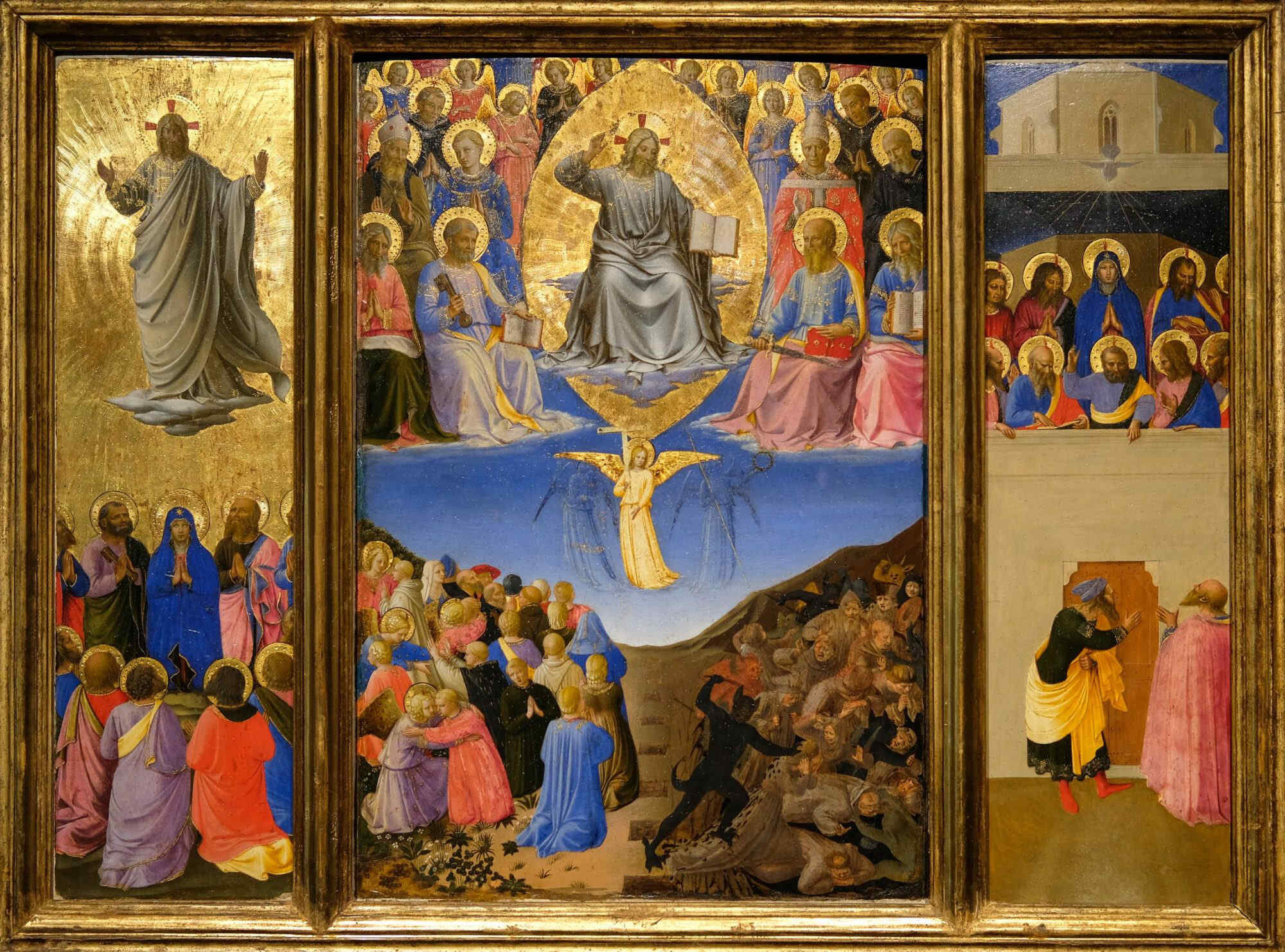
The Resurrection and the Life
There is another way to phrase what I wrote above: “For Jesus, this ongoing presence of the soul with God is a continuation of the very life you know…” It is also a continuation of the very life that knows you. It is that which is imparted in our ensoulment as being “in the image and likeness of God” (Gen. 1:26). In the Biblical account of creation, filled with rich theological meaning, “The Lord God formed man of dust from the ground and breathed into his nostrils the breath of life, and man became a living being” (Genesis 2:7). I wrote of this once in “Inherit the Wind: Pentecost and the Breath of God.”
What animates us, what makes us living beings in the image of God, is that which survives the body. In Biblical Hebrew, the word that is translated in English as “soul” is “nepeŝ.” A survey of its use throughout the Hebrew Scriptures shows that there is no adequate word in English that captures its meaning. In the Genesis account of the creation of man, it means the totality of the self, both one’s spiritual and physical being. The Prophet Jeremiah shows that we can prove our nepeŝ to be righteous (3:11), that we must not try to deceive our nepeŝ (37:9), or expose our nepeŝ to evil (26:19).
It is, for the Prophet Ezekiel, the source of our capacity for empathy; “To know the nepeŝ of the stranger” is to know how it feels to be a stranger (Ezekiel 23:9). It is the subject of human attributes of the heart (Psalm 139:14, Proverbs 19:4). It is also a source of our consciousness (Esther 4:13, Proverbs 23:7). There are 317 references to it in the Hebrew Scriptures. In the New Testament, it is that which, for Mary, “magnifies the Lord” (Luke 1:46).
Of interest, in the Greek of the New Testament, “nepeŝ” is translated as “psyche.” It is the source of one’s consciousness and life. Some Scripture scholars equate the “ego” of Freudian psychology as coming closer to the meaning of nepeŝ than any other word. It is the source of one’s self, one’s identity and self-awareness. It is what remains of the immortality lost in Eden and restored in Christ. Our nepeŝ survives our death.
To believe in God and not believe in the reality of our soul is folly. Hope, the assurance of salvation, is the anchor of the soul (Hebrews 6:19). The New Testament presentation of the immortality of the soul is not a new idea, but a radically new revelation of the meaning of life and salvation illuminated by the Resurrection of Jesus.
The word, “resurrection” appears only twice in Hebrew Scripture, and both are in the Second Book of Maccabees. When Eleazar and seven brothers were being tortured to death for their fidelity to God, one of the brothers proclaimed to Antiochus the king:
“I cannot but choose to die at the hands of men and to cherish the hope that God gives of being raised again by him. But for you there will be no resurrection to life.”
That account is also referenced in the Book of Daniel (3:16-18). It was written in about 150 BC during the emergence of a Messianic Age in Judaism. The other account found in Second Maccabees also presents Biblical support for the existence of Purgatory and the Spiritual Work of Mercy to pray and atone for the dead:
“The noble Judas (Maccabeus) took up a collection … and sent it to Jerusalem to provide for a sin offering. In doing this, he acted very well and honorably, taking account of the resurrection … therefore he made atonement for the dead that they might be delivered from their sin.”

Almost Heaven
Despite the famous song of John Denver, Heaven is not in West Virginia. Not even almost. I take the liberty of capitalizing it because what the Hebrew Scriptures refer to as “Heaven” and “the heavens” are two different places. The heavens refer to the ancient Semitic conception of the visible Universe. God is there, but only because He is everywhere. “Heaven,” on the other hand, refers to the dwelling place of God. In modern translation, it has 575 references in Sacred Scripture as opposed to 113 for “the heavens.”
There are multiple passages in both Testaments of Scripture that refer to Heaven as the dwelling place of God, but in some, the dwelling of God is said to be in the “Heaven of Heavens,” or in “the Highest Heaven” (see Deuteronomy 10:14, 1 Kings 8:27, and Psalm 148:4). Hebrew literature was influenced by the use of the Hebrew word, “ŝamāyim” for Heaven, though it is in the plural. There are obscure references to stages or levels of Heaven. Being a Jew educated in the traditions of the Pharisees, this conception was the basis for Saint Paul’s description (2 Corinthians 12:2) that he was taken up to the Third Heaven which is identified with Paradise:
“I know a man in Christ who fourteen years ago was caught up to the third Heaven – whether in the body or out of the body, I do not know. God knows. And I know that this man was caught up into Paradise.”
I wrote of the Scriptural use of the word “Paradise” some years ago in one of the most-read posts on Beyond These Stone Walls, “Dismas, Crucified to the Right: Paradise Lost and Found.” The Greek term, “Parádeisos, came into Greek from the Akkadian term for Paradise. It is used three times in the New Testament: here, in St. Paul’s reference to Heaven; In the Book of Revelations (2:7) as the eternal dwelling that awaits the saints; and in the above-cited link referencing the Gospel of St. Luke (23:43) and his account of the words of Jesus to the criminal who comes to faith while being crucified next to Him: “Truly I say to you, today you will be with me in Paradise.”
The same term, Parádeisos, appears in the Septuagint, the only surviving translation of the Hebrew Scriptures into Greek. The word, “Septuagint” means “seventy,” referring to the number of Greek translators of the Hebrew Bible who developed it in the Second Century B.C. It is sometimes referred to by its Roman numerals: The LXX. Back to my point, the word, “Parádeisos” makes its first Biblical appearance in Genesis 2:8. It was a reference to the original state of Eden before the Fall of Adam, a state restored to human souls on the Cross of Christ.
It is the inheritance of true discipleship, the qualities of which are described in the Judgment of the Nations (Matthew 25:31-46). One of them is that “when I was in prison you came to me.” If you are reading this, then you have fulfilled that tenet. Jesus told us that His Father’s House has many mansions. In his parting words to me, my friend, Pornchai Moontri, said that we will next meet there — and we will one day have a house there — and it will be more than 60-square feet!
Note from Father Gordon MacRae: Please share this post and join us in prayer for our beloved dead family and friends on All Souls Day and throughout November.
You may also wish to read and share these related posts:
The Holy Longing: An All Souls Day Spark for Broken Hearts


Please share this post!

The ‘Woke’ Have Commenced Our Totalitarian Re-Education
There are subtle and overt signs in our culture of a 'woke' agenda to revise our history, transform our values, and filter our ideas. Resistance is not yet futile.

There are subtle and overt signs in our culture of a ‘woke’ agenda to revise our history, transform our values, and filter our ideas. Resistance is not yet futile.
October 20, 2021
There is a new feature on the menu of Beyond These Stone Walls called “Voices from Beyond.” The photo atop the new page is a radio astronomy telescope from the Very Large Array National Radio Astronomy Observatory near Socorro, New Mexico. I chose the image because I spent some time studying there long ago. My adventure in radio astronomy was a happier time for me, but by “Voices from Beyond,” I didn’t mean quite that far beyond.
I meant the dozens of articles, editorials and other commentary about my situation and this blog that have been published in various other venues from the Prison Journal of George Cardinal Pell to The Wall Street Journal. We decided to collect some of them in one place, though it is a hefty task. We hope to add one or two examples each week. I hope you will check it out on occasion.
The “Voice” the new feature presents this week is that of Rod Dreher from The American Conservative for which he is an editor and major contributor. His commentary is about a “blood boiling” review of my trial by Dorothy Rabinowitz in The Wall Street Journal. We chose it even before I planned to write this post which also happens to feature the voice of Rod Dreher on a topic he calls “soft totalitarianism.” Coincidence is sometimes not very subtle.
Totalitarianism is an ideology in which all social, political, economic, intellectual, cultural and spiritual information is subordinated to a central authority. But before I get back to that and Rod Dreher, I must first explain what prompted this post. Even from behind these high walls, I see daily signs that our culture is being subtly molded to a radically revised agenda. It is chosen for us, and imposed on us, by an elitist few who require our conformity with it. Sometimes the nudge toward that agenda is so subtle that we barely notice and feel little pressure to resist.

“Woman, Behold Your Son.” (John 19:26)
Here’s a recent example that bows to the so-called “woke” cultural agenda to revise and impose new, and sometimes bizarre, language rules about gender. The American Civil Liberties Union has decided that the word “woman” no longer belongs in any reference to gender.
In a September 18, 2021 tweet about a pro-abortion quote from the late Supreme Court Justice Ruth Bader Ginsburg, the ACLU took it upon itself to edit out the word, “woman,” and replace it with “person” using editorial brackets. The ACLU, the guardian of civil liberties, also neutered the related pronoun from “her” to “their”:
“The decision whether or not to bear a child is central to a [person’s] life, to [their] well-being and dignity.”
Setting aside the fact that the ideology behind the Ginsburg quote disregards the “well-being and dignity” of the child’s life, the editing out of “woman” by the ACLU renders it ridiculous. Would any “person” other than a woman bear a child? Also, the gender neutral replacement pronoun, “their” instead of “her” adopts the rules of “wokeness” while discarding the rules of grammar. Is the denial of gender differences worth destroying the English language? Charles Cooke, writing at NationalReview.com, protested:
“[The ACLU] is an organization that once understood that even viewpoints widely considered odious deserved to be defeated in the marketplace of ideas, not with redaction tape. But it now seeks to retroactively alter the speech of public figures with whom it shares common cause to avoid offending those who deplore the idea that only women can have babies ... . This kind of thinking requires ‘the acceptance of the Soviet-esque idea’ that history ought to be revised to serve the current definition of ‘progress.’ ’’
The push now underway to eliminate gender distinctions is only just beginning, but the concerted effort to revise and replace the word “woman” only gets worse. The U.S. Justice Department under Attorney General Merrick Garland (who was President Obama’s last minute, mercifully defeated, nominee to the Supreme Court) made a notation in a brief filed to combat a new Texas abortion law by substituting “women” with “any individuals who become pregnant.”
The White House budget proposal also replaced the word “mothers” with “birthing people.” In a September bill, House Democrats defended the use of “birthing people” by saying that it “reflects the majority of people” who might seek an abortion citing that ...
“... it is intended to protect all people with the capacity for pregnancy — cisgender women, transgender men, non-binary individuals, those who identify with a different gender and others.”
It gets even worse. The distinguished British medical journal, The Lancet, published an article on problems with menstruation by replacing the word, “women” with “bodies with vaginas.” After some people whose bodies fit that description objected, Richard Horton, The Lancet Editor-in-Chief, defended this as an attempt to reach “maximum inclusivity of all people.”
How far will we go to allow these substitutions for traditional terms that, for thousands of years, have described our identities and distinctions as human beings? Sacred Scripture has 4,976 references to man or men and 710 references to woman or women. In a very popular post awhile back, “In the Absence of Fathers: A Story of Elephants and Men,” I wrote that the word, “father” appears 1,932 times in the Bible while the word “mother” appears 354 times. “Father” is how God identifies Himself. The differential is only because Scripture has its own inclusivity: Human-kind = “mankind” which was never understood as a value statement about gender differences.
Caving in to this redesign of language about our identities and faith requires our abandonment of both. It also demands that we radically re-edit and reinterpret Sacred Scripture, the story of our lives in the Presence of God. Are we prepared for this divisive adventure in nihilism, the belief that the destruction of our existing political, social, and religious institutions and traditions is necessary for a just society?

Like a Colonization of the Mind
“Totalitarianism” as both an ideology and a system of government is unique to the 20th Century. In its practice, people become wholly dependent on and subjugated to the whims of a political party. Among its typical features are a monopoly of media and mass communication, a centrally controlled economy, and an enforcement arm in service of the ideology itself and the party it represents. Every totalitarian system has begun with re-education on acceptable language and thought. As for enforcement, consider the recent U.S. Justice Department decision to send the FBI to investigate dissent over mask and vaccine mandates in local school districts.
The ruling ideology assumes control of the news, social media, and publishing, as well as radio and television broadcasting. Social media especially lends itself to totalitarian controls dictated by a “woke” agenda. Recent examples are too many to fit into a single post:
An elected president’s Twitter account was permanently suspended while he was still in office; Twitter, Facebook and most print and broadcast news media removed or suppressed content about evidence of influence peddling by the ethically-challenged son of a presidential candidate during an election season; Amazon removed books from its catalog based upon conservative political views; An editor of The New York Times was forced to resign upon the demands of a “woke” newsroom when he allowed a conservative Republican senator to publish an op-ed. This list could go on for many pages.
I experienced a personal example recently. Catholic author Ryan A. MacDonald wrote about it in these pages a week ago in “Fr Gordon MacRae in the Prison Journal of George Cardinal Pell.” When our editor published an article at the r/Catholicism page of Reddit, I was permanently banned by an unnamed Catholic moderator from future participation in the site. It was not because I am in prison nor was it because I am an accused priest. It was because the article called into question claims of victimhood that are considered sacrosanct for the far left, and never to be questioned.
In 2020, Rod Dreher responded to this not-so-brave new world by publishing a brave new book entitled, Live Not by Lies: A Manual for Christian Dissidents. In a review in Chronicles magazine (“The Soft Revolution,” September 2021) C. Jay Engels wrote:
“Dreher maintains that our soft totalitarianism is ‘metaphysical’ in the sense that it spreads like a colonization of the mind, infecting our everyday language and behavior, in turn shaping governmental policy ... . If we are to effectively resist, we must understand the crucial importance of religion. A vague resistance unmoored from that bedrock is not only incapable of endurance under totalitarian conditions ... . To cultivate cultural memory as a method of resistance demands that we rediscover, and spiritually dwell within, our Christian historical reality.”
Rod Dreher warning of “a colonization of the mind” captures exactly what I have written above about imposed gender-related language. It is intriguing that resistance requires cultural memory and assent to the truth that Western Culture is a product of Christian religion. I believe this to be true, and its most direct evidence is the vehemence with which the socialist left seeks to marginalize and diminish Christianity and its role in society.
In light of this, it is troubling that Pope Francis imposed severe restrictions on more traditional forms of liturgy, a deeply felt suppression of a tradition cherished by many that I wrote of in “A House Divided: Cancel Culture and the Traditional Latin Mass.”

“Islam Would Never Stay Silent!”
No one should feel helpless to respond in the face of all this, but response is a long effort that requires commitment. Rod Dreher described the necessity of regaining and maintaining our religion. Historical and cultural awareness of Christian traditions is our best and only hope for “woke” resistance. In the 20th Century, Pope John Paul II and President Ronald Reagan literally brought down history’s most oppressive totalitarian regime, the Soviet Union, through their teaching and promotion of Christian ideals.
I hope readers did not choose to skip over my recent post, “Left in Afghanistan: Taliban, Al Qaeda, ISIS-K, and Credibility.” It was a hefty dose of history, but only 30 years' worth. The catastrophic U.S. withdrawal from Afghanistan would have gone quite differently with a better understanding of that culture’s historical and religious context. Our culture marginalizes religion to its peril.
Islam is currently the fastest growing religious faith on the planet. That is so only because it has its own “woke” extremists who demand totalitarian compliance. I have to give the last word to Jamil Malik. That is not his real name. Jamil was Coptic Christian university student when he began writing to me after the famous public ISIS beheading of Coptic Christians on a beach in Libya in 2011. Due to the grave danger he faced for “visiting the websites of the infidels” he adopted a screen name. I have not heard from him for a decade. His last message to me was this:
“Americans and American Catholics seem divided over many issues, but they are mostly the issues of the elite while most of the rest of the world’s people struggle to survive and preserve their lives and freedoms and basic human rights.
“My struggling Christian friends in Iran and Syria have something to say to American Catholics ready to leave their faith over the latest demands of popular culture. I have friends who have been killed for their faith in just the last few months.
“Over here, Catholic priests are sacrificed by radical Islamic fundamentalists seeking revenge over the 1,000 year old Crusades. In America, priests are sacrificed by lawyers, the news media, and Catholic bureaucrats. Most Catholics stay passively silent. Islam would NEVER stay silent.’ ”
+ + +
Note from Fr Gordon MacRae: Please share this post and Subscribe to Beyond These Stone Walls. Remember to visit Rod Dreher's brief commentary at our new feature:
You may also like these related posts:
The Once and Future Catholic Church

Fr Gordon MacRae in the Prison Journal of George Cardinal Pell
Shunned by some Catholic media, wrongly imprisoned Fr Gordon MacRae appears prominently in the Prison Journal of Cardinal George Pell published by Ignatius Press.

Shunned by some Catholic media, wrongly imprisoned Fr Gordon MacRae appears prominently in the Prison Journal of Cardinal George Pell published by Ignatius Press.
Editor’s Note: The following is a guest post by Ryan A. MacDonald author of “Truth in Justice: Was the Wrong Catholic Priest Sent to Prison?”
+ + +
October 13, 2021
I was incensed recently to learn of the treatment one of Fr Gordon MacRae’s most important recent posts received from a purportedly Catholic online venue. His eye-opening post, “A Catholic Priest 27 Years Wrongly in Prison in America,” was typed, as he described it, “ten minutes at a time here and there” on whatever typewriter wasn’t already in use in the prison library where he works. He had to type half on one machine and the rest on another. He finished it seconds before a deadline for getting it into the mail on time.
And it was a blockbuster, shared to date about 5,000 times on Facebook alone. Some 800 members of Linkedin read it. Over the next week, thousands came to it from around the Globe, including many thousands in the United States. Many who read that post learned of Father G for the first time and were aghast at the story it told.
Then the heavy hammer of jaundiced Catholic judgment fell. With the help of a friend outside, that post was shared at the r/Catholicism community at Reddit which boasts some 129,000 members. A multitude of positive comments poured in, and then suddenly stopped. On September 28, Father MacRae received this message read to him in prison from his Gmail inbox. It was from the unnamed r/Catholicism moderator at Reddit:
“You are permanently banned from participating in r/Catholicism. You can still view and subscribe, but you won’t be allowed to post or comment. Due to the nature of your participation, we cannot permit you to continue participating in the r/Catholicism community.”
This suppression of a much respected voice in the public square is shameful and merciless. I cannot see any difference between this and recent decisions at Twitter, Facebook, and Amazon to cancel voices that do not stick to an established media narrative. The fact that this suppression was done in the name of a self-described Catholic community is an outrage, especially given the conditions under which this priest has to write.
Fr Stuart MacDonald, JCL, the Canon Law advisor for Beyond These Stone Walls, attempted to engage the r/Catholicism moderator with a statement that, despite his imprisonment, Fr MacRae is quite widely considered to be innocent of his charges, has not been dismissed from the clerical state, and has earned the respect of thousands of Catholics including priests and bishops.
Father MacDonald’s intervention was simply ignored.

The Prison Journal of George Cardinal Pell
Now contrast this treatment with that from another prominent Catholic voice in the public square, that of Cardinal George Pell. Formerly the Cardinal Archbishop of Sydney, Australia, Cardinal Pell had been appointed by Pope Francis to serve as Prefect of the Secretariat for the Economy of the Holy See and the Vatican Council of Cardinals, a body of eight close advisors to the pope.
Then, like Father MacRae, Cardinal Pell was tragically accused of “historic” sexual abuse alleged to have occurred decades earlier in Australia. Also like Father MacRae, he was convicted in a sham trial without evidence despite a multitude of inconsistency and fraud surrounding his trial. This, too, was a case shamelessly tried in the media before it ever got to a court of law. The 78-year-old prelate was convicted and sentenced to six years in prison on March 13, 2019. It was, as was the Father MacRae trial, a case of prosecutorial “Trophy Justice.”
On November 3, 1170, King Henry II raged in public against Thomas Becket, Archbishop of Canterbury. The latter had rightly challenged the King’s claim to ultimate authority over Catholic affairs and the discipline of priests. When the King asked aloud, “Will no one rid me of this turbulent priest?” four of his guards took it upon themselves to murder Becket during Mass in the Canterbury Cathedral.
Not that much has changed in a thousand years. Unlike most other Catholic journalists, I am no longer going to make any reference to the “abuse crisis” in the Church. It is now the “accuse crisis” in the Church. Any priest can be “gotten rid of” by a mere accusation of uncorroborated sexual impropriety dating back decades. It is, as Father MacRae described in a stand-out article at Linkedin, “A Weapon of Mass Destruction: Catholic Priests Falsely Accused.”
Many thinking people long suspected, and now know without a doubt, that Cardinal George Pell was entirely innocent of the claims against him. Following a first failed appeal, he served 13 months in the harshness of prison in solitary confinement before sanity returned to Australian justice. Finally, in a unanimous 7-to-0 decision, he was exonerated by the Australian High Court. The victory was not just his alone, but that of the entire Church too long held hostage by the “accuse crisis.”
During his time in prison, Cardinal Pell kept a journal that today has been hailed as a masterpiece of prison writing in the ranks of Saint Paul of Tarsus, Dietrich Bonhoeffer, Father Walter Ciszek, and Saint Thomas More. Archbishop Charles Chaput described the Pell journal with clarity:
“Two lessons emerge from this astonishing work. The first is the length to which a hate-filled judicial process will go against an innocent man. The second is the power of a good man’s endurance in the face of humiliation and poisonous deceit.”
Echoing that long before even hearing it, Father MacRae wrote from his own prison cell his first of several articles about this story in defense of Cardinal Pell. He said he wonders today if Cardinal Pell was even aware of his first post about the state of Australian justice: “Cardinal George Pell Is on Trial and So Is Australia.”
Today back in Rome, Cardinal Pell might understandably have every reason to want to distance himself from the grave injustice that befell him, and from the “accuse crisis” in the Church that ensnared him and paved the way for his wrongful conviction. In this, he was not alone. I don’t think there was anyone, except perhaps the Cardinal himself, who pondered and prayed over this injustice more than the wrongly imprisoned Fr Gordon MacRae. So what a shock it was to him when he learned that while in prison Cardinal George Pell had pondered his plight as well.
The following is an excerpt from Prison Journal Volume 2 by George Cardinal Pell (Ignatius Press, 2021):

From the prison cell of Cardinal Pell - Friday, 2 August 2019:
“By a coincidence, today I received from Sheryl [Collmer], a regular correspondent from Texas, a copy of the 15 May 2019 post on the blog These Stone Walls written by Fr Gordon MacRae. The article was entitled, “Was Cardinal George Pell Convicted on Copycat Testimony?” Fr MacRae was convicted on 23 September 1994 of paedophilia and sentenced to sixty-seven years in a New Hampshire prison for crimes allegedly committed around fifteen to twenty years previously. The allegations had no supporting evidence and no corroboration.
“It is one thing to be jailed for five months. It would be quite another step up, which I would not relish, to spend another three years if my appeal were unsuccessful. But we enter another world with a life sentence. Australia is not New Hampshire, and I don’t believe all the Australian media would blackball the discussion of a case such as MacRae’s.
“The late Cardinal Avery Dulles, SJ, whom I admired personally and as a theologian, encouraged Fr MacRae to continue writing from jail, stating, ‘Someday your story and that of your fellow sufferers will come to light and be instrumental in a reform.’ Fr MacRae recounts the extraordinary similarities between the accusations I faced and the accusations of Billy Doe in Philadelphia, which were published in Australia in 2011 in the magazine, Rolling Stone. Earlier this year, Keith Windschuttle, editor of the quality journal, Quadrant, publicized the seven points of similarity, pointing out that ‘there are far too many similarities in the stories for them to be explained by coincidence.’ [See Keith Windshuttle, ‘The Borrowed Testimony that Convicted George Pell.’ Quadrant, 8 April 2019].
"The author of the 2011 Rolling Stone article was Sabrina Rubin Erdely, no longer a journalist, disgraced and discredited. In 2014 she had written, and provoked a storm which reached Obama’s White House, about ‘Jackie’ at the University of Virginia, who claimed she was gang-raped at a fraternity party in 2012 by seven men. As MacRae points out, ‘The story was accepted as gospel truth once it appeared in print.’ [Note: Rolling Stone later retracted the article in April, 2015]. Jackie’s account turned out to be a massive lie. A civil trial for defamation followed; the seven students were awarded $7.5 million in damages by the jury; and Rolling Stone was found guilty of negligence and defamation.
“The allegations behind the 2011 Rolling Stone article, published in Australia, have also been demolished as false by, among others, Ralph Cipriano’s ‘The Legacy of Billy Doe’ published in the Catalyst of the Catholic League in January-February 2019.
“No one realized in 2015, when the allegations against me were first made to police, that the model for copycat allegations, or the innocent basis for the remarkable similarities, was also a fantasy or a fiction.
“I am grateful to Fr MacRae for taking up my cause, as I am to many others. These include in North America George Weigel and Fr Raymond de Souza and here in Australia Andrew Bolt, Miranda Devine, Gerard Henderson, Fr Frank Brennan, and others behind the scenes.
“I will conclude, not with a prayer, but with Fr MacRae’s opening quotation from Baron de Montesquieu (1742) [from BTSW ‘About’],
‘There is no crueler tyranny than that which is perpetrated under the shield of law and in the name of justice.’”
— George Cardinal Pell, Prison Journal Volume 2, p. 58-60
+ + +
Editor’s Note: Please share this important post from Ryan A. MacDonald. After the harsh condemnation Fr MacRae received from rCatholicism at Reddit, he and we were grateful to learn that a recent article from Beyond These Stone Walls received a commendation in the October 2021 issue of Catalyst, the Journal of the Catholic League for Religious and Civil Rights. The citation was for “exposing with clarity the double standard applied when priests are accused.” The article receiving the citation was: Bishop Peter A. Libasci Was Set Up by Governor Andrew Cuomo
You may also like these other posts from Ryan A. MacDonald:
The Trial of Father MacRae: A Conspiracy of Fraud
The Prison of Father MacRae: A Conspiracy of Silence
The Post-Trial Extortion of Father Gordon MacRae
You may also wish to see our new feature on the BTSW Menu: Voices from Beyond.
+ + +
Note from Father Gordon MacRae: Readers may recall that Father Stuart A. MacDonald, JCL, is the volunteer Canon Law advisor for Beyond These Stone Walls. He was also the subject of a post in July, 2021 entitled “Fr Stuart MacDonald and Our Tabloid Frenzy about Fallen Priests.” Father Stuart has since received the approval of his bishop to commence a doctoral degree program in Canon Law. We want to congratulate Father Stuart in this important development and the recognition of his expertise for which we hope to soon be a beneficiary. Please keep Father Stuart in prayer as he pursues this exhaustive program in addition to his parochial ministry.

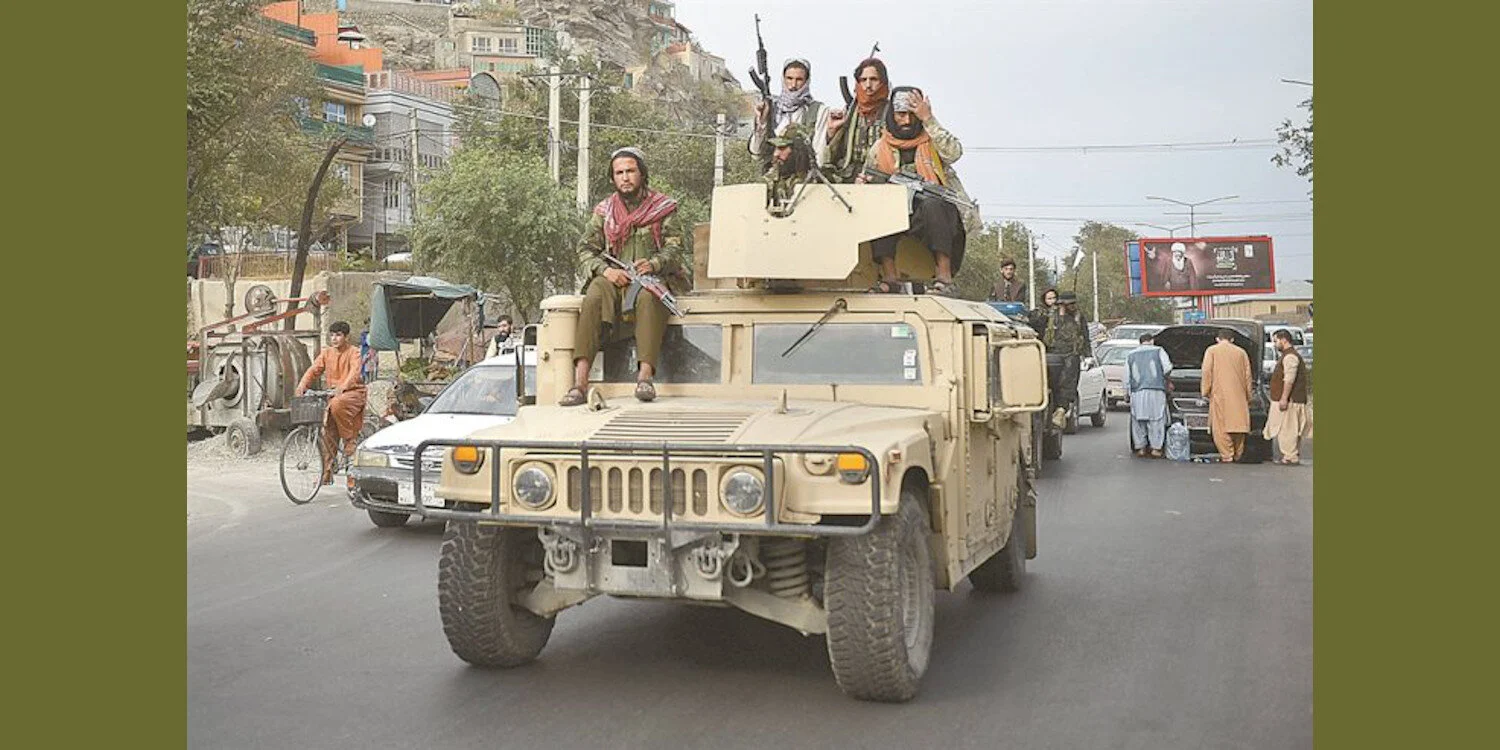
Left in Afghanistan: Taliban, al Qaeda, ISIS-K, Credibility
In a frenzied flight from Afghanistan the U.S. left behind Americans, allies, $80 billion in weapons of war, some hard won credibility, and a leadership vacuum.

In a frenzied flight from Afghanistan the U.S. left behind Americans, allies, $80 billion in weapons of war, some hard won credibility, and a leadership vacuum.
October 6, 2021
The late author, Tom Clancy was widely considered to be a master of the Cold War techno-thriller. I once wrote about his first novel, The Hunt for Red October (Putnam, 1984), which kept me awake for a few nights as a young priest in 1985. President Ronald Reagan sent it to the top of the bestseller lists when he famously described it as "Unputdownable." I wrote about Tom Clancy and that book shortly after his untimely death in October 2013. My post, which found a wide audience among his millions of readers, was “Tom Clancy, Jack Ryan, and the Hunt for Red October.”
Tom Clancy instilled in me a high regard for history as a lens to the present. I have since digested 23 of Tom Clancy’s historical novels — some 15,000 pages — about foreign policy, its impact on history, or history’s impact on it. But it was a sequel to The Hunt for Red October that first drew me into the necessity of seeing the present with eyes that have gazed upon the past.
And it was that same sequel that opened my eyes about Afghanistan. The Cardinal of the Kremlin (Putnam, 1988) was set toward the end of the Soviet Union’s decade-long occupation of Afghanistan from 1979 to 1989, and the struggle of the Afghan people to be rid of that invasion force. Everything that is happening in Afghanistan today has its roots in that decade. The Taliban were never mentioned in the book, nor were al Qaeda, Islamic State, or ISIS-K. None of them existed yet, but the seeds of all of them were firmly planted and flourishing as a result of that decade and all that followed.
On Christmas Day, 1979, Soviet forces invaded Afghanistan. They quickly won control of the capital, Kabul, and other important regions. The Soviets executed the Afghan political leader and installed in his place a puppet government led by a faction more amenable to Soviet control. Wide rejection of that government by the Afghan people led to civil war. A man named Osama bin Laden, a Saudi multimillionaire, established a training camp in the mountains of Afghanistan for rebels fighting the Soviet forces.
The 1980s also saw increased friction between the United States and the Soviet Union resulting mainly from the invasion of Afghanistan in 1979. President Ronald Reagan, elected in 1980, greatly increased American military capabilities. The Soviets viewed him as a formidable foe committed to subverting the Soviet system. In his 1985 State of the Union address, President Reagan called the USSR an “Evil Empire,” and vowed to root out and destroy any political movements that supported the Soviet Union. He was much aided in this effort by Pope John Paul II who single handedly saved Poland from Soviet domination.

The Rise of the Taliban
In the mid-1980s, resistance to the Communist government and the Soviet invaders grew throughout Afghanistan. Some ninety regions in the country were commanded by guerrilla leaders who called themselves “mujahideen,” meaning “Muslim holy warriors.” The mujahideen resented the Soviet presence and its puppet government. By the mid-1980s the U.S. was spending hundreds of millions of dollars each year to aid these Afghan rebels based in Pakistan in their war to expel the Soviet Union from Afghanistan. Up to 1.3 million people died in their struggle against the occupation.
Then in 1989, the Soviets withdrew from Afghanistan leaving in their wake a leadership vacuum in a country wracked by civil war. From a distance, over the decade to follow, the United States continued to provide funds and weapons to the mujahideen rebels. Afghanistan was now without solidifying leadership, and nature abhors a vacuum. From the rubble of war, chaos, and a rudderless nation, the Taliban were born.
The Taliban movement was created in 1994 in the southern Afghan city of Kandahar by Mohammed Omar, a senior Muslim cleric (called a mullah). The name, “Taliban” simply means “student.” It refers to the movement’s roots in the fundamentalist Islamic religious schools. For many youth in war-torn Afghanistan, religious indoctrination was the only education they received.
Even that limited education was available only to young men. As the Taliban rose to power in 1994, the movement imposed a strict Islamic fundamentalism on the nation. Secondary schools for girls were closed and girls were barred from receiving education beyond a rudimentary level. Music and dancing were banned outright. Public works of art were destroyed. I wrote recently in these pages of an infamous example. In 2001, as al Qaeda was plotting against the United States, the Taliban blew up a 180 foot stone statue of Buddha that had been carved into an Afghan mountainside where it stood for 1500 years.
Many of the Taliban laws alarmed human rights groups and provoked worldwide condemnation. The Taliban strictly enforced ancient customs of purdah, the forced separation of men and women in public. Men were required to grow full beards. Those who did not comply, or could not comply, were subjected to public beatings.
Women were required to be covered entirely from head to toe in burkas while in public view. Those who violated this were often beaten or executed on the spot by the Taliban religious police. Women were also forbidden from working outside the home. Having lost hundreds of thousands of men to war, this left many widows and orphans in dire poverty.
As the Taliban movement grew in size and strength, it recruited heavily from the mujahideen, the anti-Soviet freedom fighters who were funded and armed in part by the United States. The Taliban gave a new national identity to the thousands of war orphans who were educated in only two fields of study: strict fundamentalist Islamic interpretation of the Quran and ancient tribal beliefs and practices — and war.

The Rise of Al Qaeda
By the late 1990s, in the absence of a government, the Taliban had taken control of all of Afghanistan with the exception of a small opposition force known as the Northern Alliance. Most other countries did not recognize the Taliban regime as a legitimate government, thus further isolating Afghanistan and its people from oversight and connection with the world community.
From that pinnacle of power, the Taliban also provided safe harbor to Osama bin Laden and al Qaeda, formed in 1980s Afghanistan to help repel the Soviet invasion. Osama bin Laden had a single goal: to incite a global holy war called, in Arabic, a jihad. The term, al Qaeda is Arabic for “base” or “base camp.” For its founder and adherents, it would become the base from which worldwide Islamic revolution and domination would be launched.
Over the course of the Soviet occupation from 1979 to 1989, Osama bin Laden and al Qaeda trained, equipped, and financed 50,000 mujahideen warriors from 50 countries. Saudi Arabian nationals comprised more than fifty percent of the recruits. Saudi Arabia’s strict interpretation of Islam motivated many young men to come to the defense of Afghanistan and the Muslim world against Western “infidel” influences.
When the Soviet Union withdrew from Afghanistan in 1989, Osama bin Laden returned to his original goal for al Qaeda: to overthrow Muslim or Arab regimes that he considered to be too tolerant of Western influence. Bin Laden envisioned replacing these regimes with a single Muslim empire organized around Islamic “Sharia” law. He targeted the United States and other Western nations because he saw them as obstacles to his cause by becoming political allies with the Muslim nations he considered to be corrupt.
From 1991 to 1996, with the Taliban in control of Afghanistan, bin Laden quietly built al Qaeda into a formidable international terrorist network with cells and operations in 45 countries. Training camps were established in Sudan, and by 1992 most of al Qaeda’s operations were relocated there. From that base, attacks on U.S. troops and U.S. interests were launched in Yemen and Somalia and at a joint U.S.-Saudi military training base in Saudi Arabia. Osama bin Laden was especially angered by the presence of U.S. military in Saudi Arabia.
Bowing to pressure from the Saudi and U.S. governments, al Qaeda and bin Laden were expelled from Sudan in 1996 and returned to Afghanistan. He formed a mutually beneficial relationship with the Taliban while plans for a direct assault on the United States took shape. The September 11, 2001 attacks, which killed nearly 3,000 Americans on U.S. soil, were described recently in these pages in “The Despair of Towers Falling, the Courage of Men Rising.”
In response, the United States declared war on terrorism, the first declaration of war against a concept instead of a country. While Taliban leaders rejected U.S. demands to surrender bin Laden, the U.S. began aerial bombings of terrorist training camps and Taliban military positions in October, 2001. Ground troops of the Northern Alliance, meanwhile, continued their front-line offensive against Taliban forces in northern Afghanistan with help in the form of funds and weapons from the United States.

The U.S. Withdrawal From Afghanistan
The Taliban lost its hold on Afghanistan in November, 2001 when the Northern Alliance, aided by U.S. bombardments, captured the capital, Kabul. The Taliban surrendered its traditional stronghold of Kandahar in December 2001. A decade after the Soviets left, the United States now occupied Afghanistan and drove out the Taliban.
Around the world, a global anti-terrorism effort was underway resulting in the arrests or deaths of over 1,000 al Qaeda operatives and another 3,000 members of peripheral terrorist networks. One third of al Qaeda’s leadership was either dead or in custody. In May, 2011, U.S. Special Forces operatives killed Osama bin Laden at a house in Islamabad, Pakistan where he had been hiding in plain sight. Al Qaeda lost a general but gained a martyr.
Twenty years later, seven months into his term in office, the administration of President Joe Biden announced an end to the 20 year U.S. military presence in Afghanistan. It will be one of the great ironies of history that the U.S. left Afghanistan just as it was found in 2001 — with the Taliban in complete control. Just days after President Biden assured both nations that it is highly unlikely the Taliban will ever again rise to power in Afghanistan, they took complete control of the country in a matter of days — even before the U.S. departure was completed.
Wall Street Journal columnist and former presidential speech writer, Peggy Noonan — no fan of Mr. Biden’s predecessor — had written some flattering prose about the new tone in Washington led by an empathetic gentleman in the White House. In the aftermath of this catastrophic withdrawal from Afghanistan, however, she wrote, “The Afghan Fiasco Will Stick to Biden” (WSJ, September 4, 2021):
“August left a lingering, still head-shaking sense of ‘This isn’t how we do things.’ We don’t make up withdrawal dates that will have symbolism for photo-ops with the president looking determined on the anniversary of 9/11; we don’t time epic strategic decisions around showbiz exigencies. We wait for the summer fighting season to pass; we withdraw in the winter when Taliban warriors are shivering in their caves.
“We don’t leave our major air base in the middle of the night — in the middle of the night! — without even telling the Afghan military. We don’t leave our weapons behind so 20-year-old enemies can don them for military play-acting and drive up and down with guns and helmets. We don’t fail to tell our allies exactly what we are doing and how we are doing it — they followed us there and paid a price for it. We don’t see signs of an overwhelming enemy advance and treat is as a perception problem as opposed to a reality problem. We don’t get the U.S. military out before the U.S. citizens and our friends.”
— WSJ, Sep 4, 2021
In regard to Ms. Noonan’ s sentence, “We don’t leave our weapons behind,” the London Times composed a basic inventory of what was left behind in Afghanistan in addition to a number of Americans and allies who are still there and still in jeopardy. Scattered across Afghanistan in several former U.S. military depots — and now in the hands of the Taliban — are the following:
“22,174 American armored military humvees [like the one featured atop this post], 42 trucks and SUVs, 64,363 machine guns, 358,000 military grade assault rifles and millions of rounds of ammunition; 162,043 military grade night vision goggles and military radios; 126,295 pistols, 176 heavy artillery weapons, 100 helicopters including 33 Blackhawks, four c-130 transport planes, 60 other fixed-wing aircraft, and lots of ammunition for a total cost of eighty billion dollars in advanced military assets.”
There was a lot more left behind in Afghanistan. Peggy Noonan and other writers spoke of a humiliating transformation in this U.S. departure. The U.S. set a deadline for leaving, but somehow the “leaving” seemed more like an expulsion with the Taliban dictating the terms. In the end, America fled, taking only as many citizens and allies as conveniently possible while leaving many more behind. Senator Tom Cotton said that the U.S. left behind 1,000 Afghan allies who were fully veted to come to the United States, while taking 1,000 Afghan about whom the U.S. knows nothing.

The Rise of ISIS-K
Then a new terror group emerged on the scene. ISIS-K, also known as Islamic State Khorasan, managed to smuggle a suicide bomber into Hamid Kara airport in Kabul. The explosion killed ten U.S. marines, two U.S. army sergeants, and a U.S. Navy medic along with 95 Taliban soldiers. ISIS-K is a mortal enemy of the Taliban and has extreme hostility to the United States.
The “K” in its title refers to Khorasan, a once powerful Muslim territory that spanned Afghanistan, Turkmenistan, Pakistan, and Iran. Both the U.S. and the Taliban knew that ISIS-K was operating and planning attacks in Afghanistan. In May, 2021, ISIS-K bombed a Kabul school for girls. The group accuses the Taliban of growing “soft” on imposing Islamic “Sharia” law. Since then, the Taliban capitulated by banning all secondary education for Afghan girls.
In House and Senate hearnings, Generals Miley and McKenzie said that they recommended leaving between 2,500 and 3,500 troops in Kabul to maintain control over the evacuation and assure that Americans would not be left behind. They were overruled by the White House.
In response to the ISIS-K killing of 13 U.S. soldiers, President Joe Biden warned that “we will hunt you down and you will pay.” But without boots, eyes, and ears on the ground in Afghanistan now, that was easier said than done. Days later, the Pentagon and the President told the nation that a U.S. drone strike successfully killed ISIS-K terrorists. They said the reprisal was well vetted and “a righteous strike.”
It took several days for the truth to come out. The U.S. drone missile instead struck a white Toyota Corolla killing three innocent adults and seven children ranging in age from two to 15, all trying to flee Kabul and the Taliban.
Then our national attention was turned quickly once again to the other human disaster, the one at the Southern Border. While all eyes had been on Afghanistan, some 16,000 people amassed under and around a bridge in Del Rio, Texas. There was some gruesome footage of men on horseback chasing down and coralling desperately fleeing Haitians. The footage was not what it first seemed, but it was nonetheless a disturbing indictment of current policy.
An embarrased President Biden reacted with a declaration that the buck stops somewhere else. He vowed that the massively overwhelmed Border Patrol “will be held responsible and will pay.” It was the same thing he said when ISIS-K killed 13 U.S. soldiers in Kabul.
Rules for leadership are universal, and America is no exception. Nature abhors a vacuum, and fills it with chaos.
+ + +
Editor’s Note: Please share this post, and if you haven’t already, please Subscribe to Beyond These Stone Walls. You may also like these related posts from Father Gordon MacRae:
Christians and The Crusades of Islamic State
The Despair of Towers Falling, the Courage of Men Rising
Tom Clancy, Jack Ryan, and the Hunt for Red October
+ + +


A Catholic Priest 27 Years Wrongly in Prison in America
On the Feast of St Padre Pio, Fr Gordon MacRae marks 27 years of wrongful imprisonment amassing tools for coping mentally and spiritually with life's unjust wounds.

Father MacRae being led to prison, September 23, 1994
On the Feast of St Padre Pio, Fr Gordon MacRae marks 27 years of wrongful imprisonment amassing tools for coping mentally and spiritually with life’s unjust wounds.
September 22, 2021
Note from the Editor: The title for this post was inspired by a 2019 article at LinkedIn by Fr. James Valladares, Ph.D. entitled, “A Catholic Priest 25 Years Wrongly in Prison in America.” It was written by Father Valladares from excerpts of his acclaimed book on priesthood cited below. Still in prison two years later, this version is written entirely from the perspective of Fr. Gordon MacRae as his 27th year in prison comes to an end.
+ + +

Wounds from the Church
As most readers know, I was convicted and sent to prison on September 23, 1994, the same day the Church honors Padre Pio, a great saint whose shrine at San Giovanni Rotondo is the most visited Catholic shrine in the world. Padre Pio was canonized by another saint, Pope John Paul II, on June 16, 2002 at the height of the Catholic sex abuse scandal as it emerged out of Boston and spread like a virus.
For fifty years, Padre Pio bore the visible wounds of Christ on his body. He also bore the less visible wounds of slander and false witness inflicted from inside the Church. On several occasions in his life, his priestly ministry was suspended because lurid and ludicrous accusations were hurled at him from unscrupulous critics, many of whom were Church personnel. It was because of this, and some uncanny threads of connection, that Padre Pio entered our lives and became a Patron Saint of Beyond These Stone Walls. This is an account last told in 2020 in “Padre Pio: Witness for the Defense of Wounded Souls.”
In 2012, Australian Catholic priest, psychologist, and author, Fr. James Valladares, Ph.D., published a widely acclaimed book, “Hope Springs Eternal in the Priest1y Breast” (iUniverse). It cites a good deal of my own writing on the subjects of sacrifice, suffering, and priesthood. I am not at all worthy of this citation that appears on his "Acknowledgments" page:
“Fr. Gordon MacRae — an extraordinarily heroic priest with indomitable courage, unrelenting tenacity, unwavering patience, and Christ-like magnanimity who personally reflects what Pope Benedict XVI confessed: ‘All of us [priests] are suffering as a result of the sins of our confreres who betrayed a sacred trust or failed to deal justly and responsibly with allegations of abuse.’”
I don’t know about any of that, especially the part about “unwavering patience.” (Maybe Pornchai, writing from Thailand will weigh in on that.) Anyway, the book extensively cites the Pulitzer Prize-winning work of Dorothy Rabinowitz at The Wall Street Journal whose three major articles on my trial and imprisonment took this story out of the darkness of one-sided suppression. It also cites the work of Ryan A. MacDonald, most notably his investigative journalism compiled in “Truth in Justice.”
However, the cryptic statement of Pope Benedict cited by Father Valladares above needs clarification. The Pope’s reference to “the sins of our confreres who betrayed a sacred trust” needs no explanation. His further statement referring to those who “failed to deal justly and responsibly with allegations of abuse” is broader in scope. Fr. Valladares understood it to refer to some in the Church who tried to remedy one injustice by inflicting yet another. Some bishops went far beyond what has been required by the rule of law and also acquiesced to demands of the media and others with an agenda by publishing lists of priests deemed “credibly accused” but without basic due process of law.
Before my trial in 1994, for example, a past bishop of my diocese wrote a press release declaring me guilty of victimizing not only my accusers, but the entire Catholic Church. Two years ago, twenty-five years into my unjust sentence, a subsequent bishop joined the mob with stones in hand by publishing anew such a list with the stated goal of “transparency.” A year later, that same bishop was himself accused in a case that on its face is “credible” according to the standards bishops have used against priests.
The claims against Bishop Peter Libasci are alleged to have taken place in 1983, the same year as the claims against me. His defense is being handled by a law firm that most priests could never afford. But as I have documented in the post linked below, I believe the claims against him to be untrue and unjust. I was criticized for defending my bishop after my own name appeared on his list, but I am not looking for the mob approval my bishop was apparently looking for. I wrote of the injustice he faces in “Bishop Peter A. Libasci Was Set Up by Governor Andrew Cuomo.”

Detective James McLaughlin celebrates his 350th arrest.
Wounds from the State
I cannot bring myself to rehash the litany of false witness and official misconduct that sent me to prison on September 23, 1994. I just read a report by the National Registry of Exonerations (NRE). It reveals the disturbing fact that in more than half of the cases overturned with new evidence revealing that the person in prison did not commit the crime, misconduct by prosecutors or police was the primary cause. (See Dale Chappell “Report Shows Official Misconduct Responsible for More than Half of Exonerations.”)
In the cases of many falsely accused Catholic priests, however, misconduct usually has a different outcome. There is never any “planted evidence,” but there is usually a lot of money in play as accusers become plaintiffs in civil lawsuits. Money is often an enticement to corruption and false witness. In many of these cases, no actual crime was ever committed 20, 30, or 40 years earlier when claims were alleged to have occurred.
In the Exonerations Report, sex offenses constituted the second highest category of wrongful convictions. Exonerations in that category encompassed a wide range of official misconduct including police threatening defendants and witnesses, falsified forensic evidence, police not pursuing exculpatory evidence, and police lying under oath. All of this was in the background of my trial and is documented in “Wrongful Convictions: The Other Police Misconduct.”
Many people ask me why I am still in prison when others have come forward with evidence and testimony that casts doubt on the integrity of my conviction. I believe that the most important factor in my continued imprisonment is that the officer behind it has scored convictions via lenient plea deals in over a thousand cases of suspected sexual abuse. Lenient plea deals bolstered his conviction rate without totally destroying the defendants for life. As most readers know, I was offered such a deal in 1994 which would have had me released from prison by 1996 had I actually been guilty or willing to pretend so.
Reversing a conviction based on Detective James F. McLaughlin’s malfeasance in my case may have the unintended consequence of reopening a thousand others that he was involved with. It would have required moral courage and judicial integrity on the part of the judge, a former federal prosecutor who declined a hearing in my habeas corpus appeal. Judges rely on a procedural ruling giving state courts a right to finality. No judge has ruled on the evidence or witnesses that have arisen in the years since my trial. No judge has ever even heard the evidence or witnesses.
This raises a hard truth about our justice system. Guilty defendants are inclined to accept lenient plea deals while many innocent defendants cannot or will not. I am one of them. As a result, many guilty defendants spend far less time in prison than innocent ones. You have already seen a glaring example.
As a direct result of my writing about the horrific crimes perpetrated against Pornchai Moontri when he was brought to America against his will at age 12 in 1985, Richard Alan Bailey was found and arrested in Oregon. Due to extensive evidence, he pled no contest to forty felony charges of sexual assault in the State of Maine in 2018. He was sentenced to 18 years probation and never saw the inside of a prison. In nearby New Hampshire, I refused a one year plea deal and faced trial with no evidence. I was then sentenced to 67 years in prison. Let that sink in.

The Prophet Jonah: A Final Chapter
But none of this addresses what I intended to be at the heart of this post that marks those 27 years. There is nothing I can do to secure justice or freedom for myself. And there was nothing I did do to bring about my loss of them. But there was a lot I could do to secure justice and restore freedom for one whose path on this journey from Jerusalem to Jericho crossed with mine.
I did nothing so grandiose as the conversion of Nineveh, but through the Grace of God I became a necessary instrument in the conversion of Pornchai Moontri who once was lost and broken and now lives free in the light of Divine Mercy. In a September 10 telephone call to him in Thailand on his birthday, his first as a free man, he told me that his deliverance from both prison and his past could not have happened without me. I do not regret paying that ransom. I today believe this to be the purpose for what I have endured.
In my recent post, “The Parable of a Priest and the Parable of a Prisoner,” I wrote about the Seventh Century BC Prophet Jonah and why much of the Book of Jonah is today considered to be a parable. I did not want to detract from the hopeful outcome of that story, so I held its final chapter until now. Its last chapter also took place in Nineveh, but in our time and not Jonah’s.
Though the story of Jonah and the Great Fish is a parable, the Prophet Jonah was a historical figure honored by all three of the great monotheistic faiths: Judaism, Christianity, and Islam. When Jonah was sent by God to the ancient city of Nineveh in the Seventh Century BC, it was the capital of the Assyrian Empire in its time of glory. Nineveh was a center for commercial trade routes on the Tigris River in what is now northern Iraq, just opposite the modern city of Mosul. Nineveh was established in the Neolithic period more than 8,000 years ago, and inhabited almost without a break until about 1500 AD.
In the centuries before the Prophet Jonah was sent to Nineveh, the city was known as a religious center, but it fell far away from its religious roots. The city honored the Assyrian goddess, Ishtar, a goddess of healing who somehow was transformed by the time of Jonah into a goddess of war. The Assyrians built the city with broad boulevards, parks and gardens, and a magnificent palace of more than 80 rooms.
Today, Nineveh is reduced to two large mounds beneath which are the ruins of a city once thriving. The mounds are called, in Arabic, “Kuyunjik” and “Nebi Yunus” which means “place of Jonah.” In ancient times, a massive tomb in honor of the Prophet Jonah was built in a Sunni mosque in Nineveh on the site of an Assyrian church where the remains of Jonah were thought to be buried. This part of the city was revered by Christians, Jews, and Muslims. The Tomb of the Prophet somehow managed to survive intact until just a decade ago. After standing for over a thousand years, the Tomb of the Prophet Jonah was blown up and destroyed in 2011 by the fundamentalist Islamic group, al Qaeda.
The Taliban had been doing the same thing in Afghanistan. Islam was preceded there by Buddhism which was eventually eclipsed by Islam and driven out around the Seventh Century AD. In the Sixth Century AD, Buddhist monks carved into a cliff side the world’s largest statue of Buddha. Standing at 180 feet, it survived for 1,500 years before it was blown up by the Taliban in 2001. It was destroyed at about the same time the Taliban harbored Osama bin Laden and al Qaeda while the September 11, 2001 assault on the United States was planned.
I bring all of this up now because witnessing in my own recent lifetime the demise of people, places, and things once held sacred by many people has had an outsized impact on me that some might find perplexing. Why would I care so much about the Tomb of the Prophet Jonah or a 1,500 year-old gigantic stone Buddha? No matter who these monuments ultimately served, they arose from the hearts and souls of a people. When religious icons are destroyed by evil intent, so is the spirit of those people.
Catholicism and the cancel culture assault on the priesthood now risk this same fate. That risk is manifested most in America over just the last two decades. This threat does not come from the Taliban or Islamic State — though they may be poised to take advantage of the vacuum of hopelessness left in its wake. The terrorism behind this threat is called “apathy.”
If the priesthood and the Mass fall away, it will have as its primary cause the agendas of a few and the silence of too many.
We have witnessed in just recent years a chronic disparagement of the priesthood even from Pope Francis and our bishops, a canceling of a widely reverenced ancient form of the Sacrifice of the Mass, a handing over of the Church’s patrimony to the Chinese Communist government, a disparaging of our Church and faith as a “non essential service” by secular authority, a rampant capitulation to that by some bishops, a failure to defend the sanctity of life and the sanctity of the Eucharist, and a Catholic President who believes in neither.
This is why the Taliban despise us and judge us to be “Infidels,” which means exactly what it implies: “A people of little faith.”
+ + +
From a Homily of Padre Pio
“Why does is there evil in the world? Listen closely to me. There was a mother who was embroidering on a small weaving frame. Her young son was seated in front of her on a small low stool watching his mother work. But as he watched, he saw only the underside of the weaving frame. And so he said, ‘But Mother, what are you doing? The embroidery is so ugly!’ So his mother lowered the frame to show him the other side of the work, the good side with all its colors in place and all the threads in a harmonious pattern. That is it. Have you seen what evil is like? Evil is the reverse side of that embroidery and we are all sitting on a small stool.”
Note from Father Gordon MacRae: I want to thank readers who have consulted our Special Events page to assist our friend Pornchai in the daunting task of rebuilding his life. As you know, he was taken from Thailand at age 11. On his September 10 birthday this month, he had a touching reunion with his cousin who was eight when they lived together and is now 45 and an officer in the Royal Thai Navy. They met on September 10th for a birthday celebration at the Gulf of Thailand.

You may also wish to review the related posts linked herein:
Padre Pio, Witness for the Defense of Wounded Souls
Wrongful Convictions: The Other Police Misconduct

The Despair of Towers Falling, the Courage of Men Rising
The smoke of Satan billows still 20 years after September 11, 2001, but the courage of the men and women aboard Flight 93 is also an enduring legacy of that day.
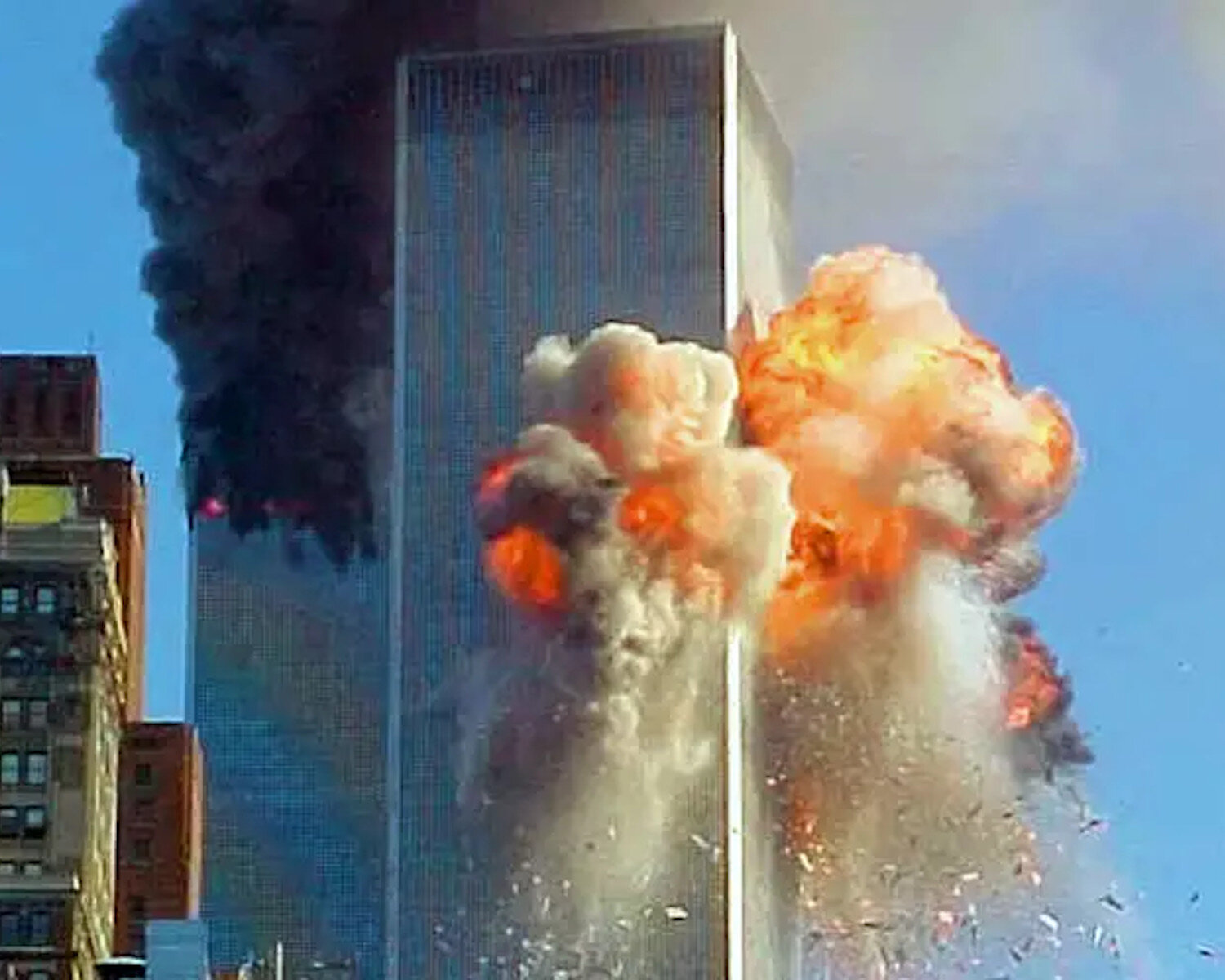
The smoke of Satan still lingers 25 years after September 11, 2001, but the courage and sacrifices of many are the enduring legacy of that day.
September 15, 2021
“Are you guys ready? OK. Let's roll!” You may know these words but you may not know the name of the man who spoke them. Todd Beamer said these words to his fellow passengers, Jeremy Glick, Mark Bingham, and Tom Burnett aboard United Airlines Flight 93 on September 11, 2001. All four were athletes who found themselves aboard this fateful flight. There is no indication that they had ever met before that day. They knew their plane had been taken over by hijackers, and like most they became resolved to let it all play out as was the case with most hijack flights during the 1970s.
But as they and other passengers around them made cellphone calls to family and others that morning, they quickly learned of the devastation unfolding in Manhattan and Washington at the Twin Towers and the Pentagon. The lights went on in their minds. This flight was now under the control of terrorists and was destined to crash into some as yet unknown building in Washington to kill everyone aboard and to maximize the loss of life in the nation’s capital. Its ultimate goal was to humiliate and crush the spirit of America.
The clock was ticking as most passengers were subdued by the terror. Knowing the inevitable fate of Flight 93, the four men, led by Todd Beamer made a decision to thwart the terrorist plan and retake control of their plane. None of them were pilots, but it seems in their noble defiance that they set that detail aside. Todd organized the others into a rudimentary plan to wage war against the terrorists who were armed with knives and what turned out to be a fake bomb while these heroic men were not armed at all. Todd prayed Psalm 23 aloud, “Though I walk through the valley of the shadow of death, I fear no evil for Thou art with me with Thy rod and Thy staff that give me courage.” “OK. Let’s roll,” he said. Over the next seven minutes, the flight recorder caught the sound of intense struggle as the four men fought the terrorists and crashed their way through the cockpit door. Flight 93, intended to be used as a weapon to kill everyone aboard and hundreds more in Washington was crashed into the ground in Shanksville, Pennsylvania.
It took a few days for that day to be accurately pieced together. So this is posted on the twentieth anniversary of their heroism. Todd Beamer and his comrades set their survival aside to save the lives of unknown hundreds.
The following is an account of that day that I first wrote on its tenth anniversary. It is told from a most unusual perspective, and I have rewritten it on this twentieth anniversary of 9/11. Please share it in honor of Todd Beamer, Jeremy Glick, Mark Bingham, Tom Burnett and the passengers of Flight 93, the only flight to be denied its intended target that day.

In memory of Todd Beamer
+ + +
I was ten years old on November 22, 1963, the day President John F. Kennedy was assassinated by Lee Harvey Oswald in Dallas, Texas. Fifty-eight years later, every detail of what I was doing as the news unfolded on that infamous day remains vividly engraved in my mind’s eye. That day and the days of infamy to follow play in my mind like videos I’ve seen a thousand times.
Every generation seems to have these “imprinted” events, some more catastrophic than others. The generation just behind mine remembers what they were doing when Pearl Harbor was attacked. Others a bit younger than me remember the great Northeast Blackout of 1965, and the 1968 assassination of Rev. Martin Luther King.
September 11, 2001 was like all of those days combined. Whenever I ask anyone about it, I get an account not only of the terror, but also of the normal activities of a day underway for those who witnessed it. It seems the closer to Ground Zero we were — emotionally or physically — the more vivid the imprinted memories of these events.
For me, the losses of that day were compounded by prison in ways difficult to explain. One of the most troubling events in the aftermath of what has become universally known simply as “9/11” came about six months later.
A weekly Catholic newspaper had published an article on prisons, and the folly of a system in which punishment alone prevails at the expense of rehabilitation. One letter to the editor in response was from the wife of a prison guard. She wanted to set the public straight that prisoners are a vile bunch and most defy rehabilitation. Her most vivid example was a claim that prisoners all over the country cheered for the terrorists on 9/11.
It was the sort of thing I hear often quoted by prison staff, especially at contract time. Prisons and prisoners are portrayed as inhuman and dangerous with most prison staff taking their lives in their hands every day they go to work. In twenty-seven years in prison, this has not been my experience with the vast majority of prisoners. And, the prison guard’s wife’s account notwithstanding, it certainly wasn’t my experience in prison on 9/11.
It is true that there are dangerous men in prison. Some are sociopaths; some are seriously mentally ill; some are just evil in their very core; but all combined they constitute a small minority of the one-size-fits-all prison environment. In my experience, twenty percent of prisoners should never leave prison if public safety is any consideration. Many of them don’t even want to leave. Their attitudes and behaviors are largely shaped by forces within them that allow no consideration for others.
Their sheer numbers and impact are dwarfed, however, by the eighty percent of prisoners who have but a singular goal: to atone for their mistakes, and to rejoin their families and communities as responsible and contributing members of society. Prisons are designed, built, and managed to contain the former group, however, and everyone else pays a price for that.
The biggest price prisoners had to pay in the wake of the terrorist attacks is having to live with the popular notion that most prisoners sided with the 9/11 terrorists, and would terrorize you themselves if given half a chance. Perhaps the best evidence against this notion was the true reaction of prisoners to the events of September 11, 2001.

Pearl Harbor in Manhattan
It was a Tuesday morning that began like any other. In this prison, every cell is at least “double bunked,” meaning that everyone has at least one roommate, and sometimes as many as seven. After nearly six years in an eight-man cell, I was moved just a year earlier to a prison unit with but two per cell. After years spent in the crucible of the prison’s “inner city,” it was like a move to the relative calm of the suburbs.
On September 11,2001, my roommate was Bob, a 37-year-old prisoner who is now long since a free man. With cups of instant coffee in hand that morning, Bob and I both stood for the day’s first prisoner count at 0730. After the count, Bob took his coffee to a table outside the cell while I prayed morning prayer from my breviary. Like most prison roomates forced to survive in a tiny space, Bob and I fell into a routine we could live with after a few months. Bob didn’t have a job in the prison — there are far more prisoners than available jobs — and I worked on the afternoon shift — back then in the prison programs office. So it became a sort of unspoken routine that Bob had some solitude every afternoon while I worked, and I had some space in the mornings to pray and write. Before either of us was moved to that cell, solitude was unheard of. Most people don’t really value solitude until they lose it.
After the count, I reached over to turn on the morning news on my small television. It was 8:48 AM. Both CNN and FOX had the same silent image on the screen: smoke pouring from a giant gash in the North Tower of the World Trade Center in Manhattan. Our TVs have no speakers so I reached for my headphones, then heard the fluttering voice of a commentator in a helicopter hovering nearby:
“We are just currently getting a look at the World Trade Center. Something has happened here . . . flames and an awful lot of smoke from one of the towers . . . This is easily three quarters of the way up . . . whatever has occurred has just occurred, within minutes . . . We’ll keep you posted.”
I tuned in just two minutes after some sort of plane struck the building. The camera cut to a more distant scene. “Wow, that’s a lot of smoke,” I thought. “Hey Bobby,” I called, “take a look at this.” Bob stepped back into the cell from reading his Stephen King book at a table just outside. “Look at this,” I said again, as I angled my small TV for Bob to see. Bob grew up in New Jersey, just across the Hudson River from Manhattan. The scene on my screen — minus the smoke and flames — was one he had seen a thousand times.
Bob stared at the screen, and asked me what happened. The news commentators were just then saying that a plane flew into the North Tower. Commercial passenger jets would never be in the air space above Manhattan, so we both assumed this was a small, private plane that veered badly off course. Then I saw a close-up of the gash in the building. It seemed awfully big for a small plane to have caused it.
The news would only slowly unfold, and when it did, it was devastating. At 7:59 AM, American Airlines Flight 11 took off from Logan International Airport in Boston, bound for Los Angeles. It had a two-man flight crew, nine flight attendants, and 81 passengers — five of whom were al Qaeda terrorists armed with pepper spray and box cutters.
No one outside that plane knew what was happening when at 8:14 AM an air traffic controller’s instruction to climb to 35,000 feet went unanswered. No one knew that Mohamed Atta and four other terrorists had already stabbed two flight attendants and a passenger, and used pepper spray and the threat of a ficticious on-board bomb to subdue the rest.
The plane turned due south. Twelve minutes later, it began a rapid descent toward South Manhattan. At 8:46 AM, it flew into the North Tower of the World Trade Center killing all 92 passengers and crew on board, and many others inside that building.
Oblivious to all of this from my vantage point, fourteen minutes passed as the CNN commentators pondered what sort of plane it might have been. Bob and I were riveted to the screen, feeling rather than seeing the lights slowly go on in our awareness. This wasn’t an accident.
Then at exactly 9:02, I spotted another plane. From CNN’s camera angle, it seemed to drift casually into view. The CNN commentator seemed not to notice it as she droned on about the North Tower. What was clearly a commercial airlines jet swept into the scene. I pointed to it on the screen, and said loudly “This shouldn’t be there.” I heard Bob whisper, “I know” when the plane disappeared behind the South Tower followed by an immense fireball exploding through the other side. “It’s an attack,” I said. “It’s a terrorist attack!”
It took some time for the story to unfold. Just one minute before American Airlines Flight 11 took off from Boston, United Airlines Flight 175 also departed Logan Airport bound for Los Angeles on another runway. It carried nine crew members and 56 passengers, five of them al Qaeda terrorists about to hijack that plane. Both planes were Boeing 767s.
At 8:51 AM, United 175 deviated from its flight path and New York air traffic controllers learned they could not contact its crew. At 8:58, it veered toward Manhattan. Four minutes later, I and thousands of other viewers spotted it on CNN’s live TV feed. I remember a split second of denial — perhaps the last moment of ignorant bliss this nation has seen — as that plane disappeared behind the South Tower and out of view. Then at 9:02 its enormous fireball emerged from half way up the building, and brought reality back home again.
Within moments, my cell was filled with people. Silent men in forest green prison uniforms, young, middle aged, and old, all staring at me. They knew that I had just seen what they saw, and none of them wanted to see any more of it alone. Then there were several guards, and it dawned on me for the first time that prisoners have televisions while prison guards do not — at least not while they are at work. “What’s happening?” they wanted to know. In they squeezed to stare at my screen.
Everyone standing in my doorway and crowded into my cell hoped against hope to hear the same thing. That this was some bizarre accident that could likely never happen again. Instead, I looked up and said, “This is a terrorist attack, and it isn’t over. Hundreds of people have just been killed, and those buildings are filled with people. This is going to be the worst disaster our country has ever seen. The world we knew just changed.”
I felt a little as though I was in that long remembered scene from childhood as Walter Cronkite explained what just happened in Dallas that November 22nd when I was ten. On this September day, you could hear a pin drop as I recounted to others in my cell the events of that morning and repeated what was known up to that moment. It came as a shock to realize that less than thirty minutes had passed since I closed my breviary and reached for my TV’s ON button.
And it was true that there was more coming. It would be awhile before we learned that at 8:20 AM, American Airlines Flight 77 departed Washington’s Dulles Airport, also bound for Los Angeles. It was a Boeing 757 with six crew and 58 passengers. Five of them were al Qaeda terrorists. At 8:54 AM its transponder beacon was deactivated.
At 9:37 AM, exactly 35 minutes after the South Tower was struck in Lower Manhattan, American Airlines Flight 77 slammed into the west side of the Pentagon between corridors four and five, piercing the E, D, and C Rings and entering the B Ring. All 64 people aboard the plane, and many inside the Pentagon itself, were killed instantly.
I suddenly became aware of a transformation among the people crowded into my small cell. There were no longer prisoners and prison guards. There were only men in the face of an alarming new enemy and a common resolve.
Just four minutes before that first Boeing 767 struck the North Tower in Manhattan, United Airlines Flight 93 bound for San Francisco departed Newark Airport. It carried seven flight crew and 37 passengers. Five of them were al Qaeda terrorists. Cell phone calls to family members of the passengers wove together a chilling account of how passengers became aware of the other attacks, and then confronted the terrorists aboard their own flight, now heading for a selected target in Washington, DC. In the ensuing, heroic struggle between the passengers and the terrorists, United Flight 93 slammed into the ground at 10:02 AM in a field in Shanksville, PA, 20 minutes out from Washington. We could only imagine ourselves aboard that plane, and, in fact, many prisoners wished they were.
Then in Manhattan, the Twin Towers collapsed. The knowledge that hundreds of police, fire fighters, EMTs and rescue workers, there to help only to be crushed to death, caused both prisoners and guards to turn from my television and place their faces in their hands. America was under siege, and we were men. We could see it only from a distance, and we were powerless to answer.
The mood in prison throughout that day and in the days to follow was eerily somber. It was one characterized first and foremost by shame — the shame of being in prison at a time when families needed the comfort of their fathers, their husbands, their brothers, their sons; the shame of being detained while their country was being attacked.
In the days, weeks, and months to follow, the prisoners I knew would have given anything to go to help sort through rubble at Ground Zero, to clear out debris from the Pentagon, or to kneel in prayer at Shanksville, PA. As the very notion of freedom and an open society were under attack, the least of the free longed for a chance, any chance, to serve, to protect, to make amends.
I, for one, took this very personally. I grew up in sight of Logan Airport in Boston from where some of these flights were hijacked. This began at home — my home, our home, while our backs were turned. As the news unfolded that this was the work not of a hostile government, or some organized crime cartel, but rather the actions of religious believers waging jihad — holy war — against us, we had no category for it; no terms of understanding with which to make sense of it.
And then within weeks of 9/11, for Catholics, at least, revelations of a jihad of another sort roared out of Boston and spread across the U.S. News of decades-old abuses — some of them unspeakable, but some of them also untrue — were repackaged by the news media for eyes already clouded with suspicion for the religious terrorists in our midst.
Two decades have passed, and we still struggle with trading civil liberties for security, due process rights for safety in a free society edging toward becoming less so. To our nation’s credit, we have declared our unwillingness to blame all of Islam for the crimes of its twisted and radical few. But while refusing to allow Islam to be reflected in the acts of its lunatic fringe, we’ve tolerated — even cultivated — a virulent anti-Catholicism that holds the Church in contempt for not acting in 1965 as it would in 2005.
If America truly believes that the answer to jihad is to abandon our own faith, and our fidelity as Catholics, then the war is over. The 9/11 terrorists have already won.
+ + +
Note from Father Gordon MacRae: If you have not already done so, please subscribe to Beyond These Stone Walls. We promise to haunt your inbox only once per week. Please also visit our Special Events page.


The Parable of a Priest and the Parable of a Prisoner
A Parable of Divine Mercy: Pornchai Moontri has a first birthday in freedom on September 10. One third of his life passed in a prison cell with a Catholic priest.

A Parable of Divine Mercy: Pornchai Moontri had a first birthday in freedom on September 10. One third of his life passed in a prison cell with a Catholic priest.
September 8, 2021
Jesus taught in parables, a word which comes from the Greek, paraballein, which means to “draw a comparison.” Jesus turned His most essential truths into simple but profound parables that could be easily pondered, remembered, and retold. The genre was not unique to Jesus. There are several parables that appear in our Old Testament. I wrote of one some time ago — though now I cannot recall which post it was — about the Prophet Jonah.
The Book of Jonah is one of a collection of twelve prophetic books known in the Hebrew Scriptures as the Minor Prophets. The Book of Jonah tells of events — some historical and some in parable form — in the life of an 8th-century BC prophet named Jonah. At the heart of the story, Jonah was commanded by God to go to Nineveh to convert the city from its wickedness. Nineveh was an ancient city on the Tigris River in what is now northern Iraq near the modern city of Mosul. It was the capital of the Assyrian Empire from 705-612 BC.
Jonah rebelled against the command of God and went in the opposite direction, boarding a ship to continue his flight from “the Presence of the Lord.” When a storm arose and the ship was imperiled, the mariners blamed Jonah and cast him into a raging sea. He was swallowed by “a great fish” (1:17), spent three days and nights in its belly, and then the Lord spoke to the fish and Jonah “was spewed out upon dry land” ( 2: 10) . ( I could add, as a possible aside, that the great fish might later have been sold at market, but there was no longer any prophet in it!)
Then God, undaunted by his rebellion, again commanded Jonah to go to Nineveh. Jonah finally went, did his best, the people repented, and God saved them from destruction. Many biblical scholars regard this part of the Book of Jonah as a parable. Jesus Himself referred to the Jonah story as a presage, a type of parable account pointing to His own death and Resurrection:
“Some of the scribes and Pharisees said to him, 'Teacher, we wish to see a sign from you.' But he answered them, 'An evil and adulterous generation asks for a sign, but no sign will be given except the sign of the Prophet Jonah. For just as Jonah was three days in the belly of the giant fish so for three days and three nights, the Son of Man will be in the heart of the earth.”
— Matthew 12:38-40
What I take away from the parable part of the story of Jonah is that there is no point fleeing from “the Presence of the Lord.” God is not a puppeteer dangling and directing us from strings. Rather, the threads of our lives are intertwined with the threads of other lives in ways mysterious and profound. I have written several times of what I call “The Great Tapestry of God.” Within that tapestry — which in this life we see only from our place among its tangled threads — God connects people in salvific ways, and asks for our cooperation with these threads of connection.
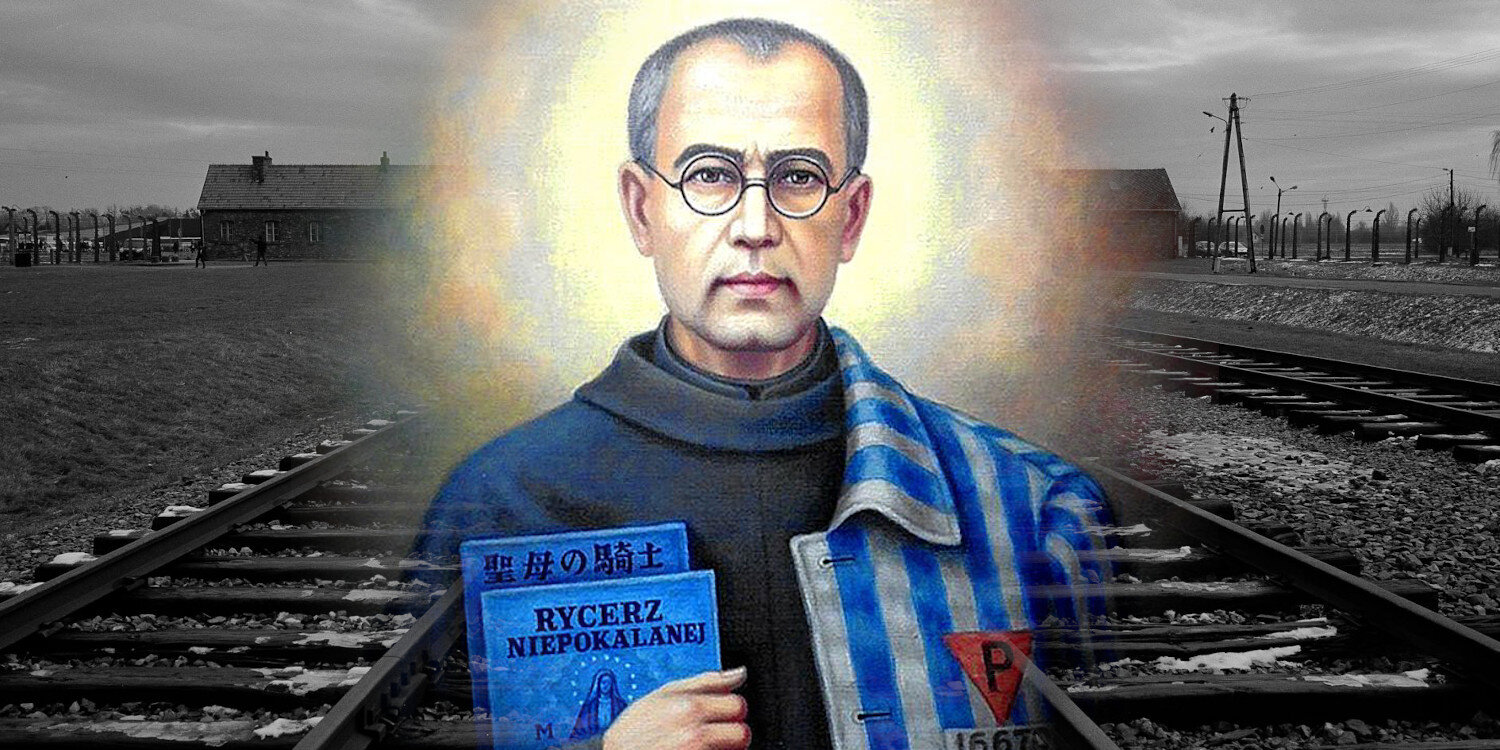
The Parable of the Priest
I was slow to awaken to this. For too many days and nights in wrongful imprisonment, I pled my case to the Lord and asked Him to send someone to deliver me from this present darkness. It took a long time for me to see that perhaps I have been looking at this unjust imprisonment from the wrong perspective. I have railed against the fact that I am powerless to change it. I can only change myself. I know the meaning of the Cross of Christ, but I was spiritually blind to my own. Ironically, in popular writing, prison is sometimes referred to as “the belly of the beast.”
After a dozen years of railing against God in prison, I slowly came to the possible realization that no one was sent to help me because maybe I am the one being sent. My first nudge in this direction came upon reading one of the most mysterious passages in all of Sacred Scripture. It arose when I pondered what exactly happened to Jesus between the Crucifixion and the Resurrection, the three days He refers to in the Sign of Jonah parable in the Gospel of Matthew above. A cryptic hint is found in the First Letter of Peter:
“For it is better to suffer for good, if suffering should be God's will, than to suffer for evil. For Christ also suffered for sins once for all, the righteous for the unrighteous, in order to bring you to God. He was put to death in the flesh, but made alive in the Spirit, in which he also went and made a proclamation to the spirits in prison who in former times did not obey.”
— 1 Peter 3:17-20
The second and much stronger hint also came to me in 2006, twelve years after my imprisonment commenced. This may be a familiar story to long time readers, but it is essential to this parable. I was visited in prison by a priest who learned of me from a California priest and canon lawyer whom I had never even met. The visiting priest was Father James McCurry, a Conventual Franciscan who, unknown to me at the time, had been a postulator for the cause of sainthood of St. Maximilian Kolbe whom I barely knew of.
Our visit was brief, but pivotal. Father McCurry asked me what I knew about Saint Maximilian Kolbe. I knew very little. A few days later, I received in the mail a letter from Father McCurry with a holy card (we could receive cards then, but not now). The card depicted Saint Maximilian in his Franciscan habit over which he partially wore the tattered jacket of an Auschwitz prisoner with the number, 16670. I was strangely captivated by the image and taped it to the battered mirror in my cell.
Later that same day, I realized with profound sadness that on the next day — December 23, 2006 — I would be a priest in prison one day longer than I had been a priest in freedom. At the edge of despair, I had the strangest sense that the man in the mirror, St. Maximilian, was there in that cell with me. I learned that he was canonized by Pope John Paul II in 1982, the year I was ordained. I spent a lot of time pondering what was in his heart and mind as he spontaneously stepped forward from a line of prisoners and asked permission to take the place of a weeping young man condemned to death by starvation. I wrote of the cell where he spent his last days in “Saint Maximilian Kolbe and the Gift of Noble Defiance.”
On the very next day after pondering that man in the mirror on Christmas Eve, 2006 — a small but powerful book arrived for me. It was Man’s Search for Meaning, by Auschwitz survivor, Dr. Viktor Frankl, a Jewish medical doctor and psychiatrist who was the sole member of his family to survive the horror of the concentration camps. I devoured the little book several times. It was one of the most meaningful accounts of spiritual survival I had ever read. Its two basic premises were that we have one freedom that can never be taken from us: We have the freedom to choose the person we will be in any set of circumstances.
The other premise was that we will be broken by unending suffering unless we discover meaning in it. I was stunned to see at the end of this Jewish doctor’s book that he and many others attributed, in part, their survival of Auschwitz to Maximilian Kolbe “who selflessly deprived the camp commandant of his power over life and death.”

The Parable of a Prisoner
God did not will the evil through which Maximilian suffered and died, but he drew from it many threads of connection that wove their way into countless lives, and now I was among them. For Viktor Frankl, a Jewish doctor with an unusual familiarity with the Gospel, Maximilian epitomized the words of Jesus, “Greater love has no man than this, that a man lay down his life for his friends.” (John 15:13)
I asked the Lord to show me the meaning of what I had suffered. It was at this very point that Pornchai Moontri showed up in the Concord prison. I have written of our first meeting before, but it bears repeating. I was, by “chance,” late in the prison dining hall one evening. It was very crowded with no seats available as I wandered around with a tray. I was beckoned from across the room by J.J., a young Indonesian man whom I had helped with his looming deportation. “Hey G! Sit here with us. This is my new friend, Ponch. He just got here.”
Pornchai sat in near silence as J.J. and I spoke. I was shifting in my seat as Pornchai’s dagger eyes, and his distrust and rage were aimed in my direction. J.J. told him that I can be trusted. Pornchai clearly had extreme doubts.
Over the next month, Pornchai was moved in and out of heightened security because he was marked as a potential danger to others. Then one day as 2006 gave way to 2007, I saw him dragging a trash bag with his few possessions onto the cell block where I lived. He paused at my cell door and looked in. He stepped toward the battered mirror and saw the image of St. Maximilian Kolbe in his Franciscan habit and Auschwitz jacket and he stared for a time. “Is this you?” he asked.
Within a few months, Pornchai’s roommate moved away and I was asked to move in with him. Less than four years later, to make this long and winding parable short, Pornchai was received into the Catholic faith on Divine Mercy Sunday, 2010. Two years after that, on the Solemnity of Christ the King, 2012, we both followed Saint Maximilian Kolbe into Consecration to Jesus through the Immaculate Heart of Mary.
Most readers likely know by now the depth of the wounds Pornchai experienced in life. He was abandoned as a child in Thailand, suffered severe malnutrition, and then, at age eleven, he fell into the hands of a monster. He was taken from his country and the only family he knew, and was brought to the U.S. where he suffered years of unspeakable abuse. He escaped to a life of homelessness, living on the streets as a teenager in what was to him a foreign land. At age 18, he accidentally killed a much larger man during a struggle, and was sent to prison.
Pornchai’s mother, the only other person who knew of the years of abuse he suffered, was murdered on the Island of Guam after being taken there by the man who abused him. In 2018, after I wrote this entire account, that man, Richard Alan Bailey, was brought to justice and convicted of forty felony counts of sexual abuse of Pornchai. After the murder of his mother at that man’s hands, Pornchai gave up on life and spent the next seven years in the torment of solitary confinement in a supermax prison in the State of Maine. From there, he was moved here with me.
Over the ensuing years, as I gradually became aware of the enormity of Pornchai’s suffering, I felt compelled to act in the only manner available to me. I followed Saint Maximilian Kolbe into the Gospel passage that characterized his life in service to his fellow prisoners: “Greater love has no man than this, that a man lay down his life for his friends.” (John 15:13)
I asked the Lord, through the Immaculate Heart of Mary, to free Pornchai from his past and the seemingly impenetrable prisons that held him bound. I offered the Lord my life and freedom just as Maximilian did on that August day of 1941. Then I witnessed the doors of Divine Mercy open to us.
This blog began just then. In the time he spent with me, Pornchai graduated from high school with honors, earned two additional diplomas in guidance and psychology, enrolled in theology courses at Catholic Distance University, and became an effective mentor for younger prisoners in a Fast Track program. He tutored young prisoners in mathematics as they pursued high school equivalency, and, as I have written above, he had a celebrated conversion to the Catholic faith, a story captured by Felix Carroll in his famous book, Loved, Lost, Found.
Pornchai became a master craftsman in woodworking, and taught his skill to other prisoners. One of his model ships is on display in a maritime museum in Belgium. His conversion story spread across the globe. After taking part in a number of Catholic retreat programs sponsored by Father Michael Gaitley and the Marians of the Immaculate Conception, Pornchai was honored as a Marian Missionary of Divine Mercy. So was I, but only because I was standing next to him.
One of the most beautiful pieces of writing that has graced this blog was not written by me, nor was it written for me. It was written for you. It was a post by Canadian writer Michael Brandon, a man I have never met, a man who silently followed the path of this parable for all these years. His presentation is brief, but unforgettable, and I will leave you with it. It is, “The Parable of the Prisoner.”
+ + +
Saint Maximilian Kolbe and the Gift of Noble Defiance
Book: Man’s Search for Meaning
Book: Loved, Lost, Found

Note from Fr. Gordon MacRae: On September 10, Pornchai will mark his 48th birthday. It is his first birthday in freedom. In 2020 on that date he was just beginning a grueling five months in ICE detention awaiting deportation. For the previous 29 years he was in prison. For the four years before that he was a homeless teenager having fled from a living nightmare.
I asked him what he would like for his birthday, and this was his response:
“I have never seen the ocean. I would like to go to the Gulf of Thailand and visit my cousin who was eight years old when I was eleven and last saw him. He is now an officer in the Thai Navy.”
Please visit our “SPECIAL EVENTS” page, and our BTSW Library category for posts about Pornchai.
