“There are few authentic prophetic voices among us, guiding truth-seekers along the right path. Among them is Fr. Gordon MacRae, a mighty voice in the prison tradition of John the Baptist, Maximilian Kolbe, Alfred Delp, SJ, and Dietrich Bonhoeffer.”
— Deacon David Jones

Stones for Pope Benedict and the Rusty Wheels of Justice
Following revelations about possible deliverance after 28 years of wrongful imprisonment, hope is hard to come by, but it was not so for Saint Maximilian Kolbe.

Following revelations about possible deliverance after 28 years of wrongful imprisonment, hope is hard to come by, but it was not so for Saint Maximilian Kolbe.
February 9, 2022
“This prisoner of the State remains, against all probability, staunch in spirit, strong in the faith that the wheels of justice turn, however slowly.”
— Dorothy Rabinowitz, “The Trials of Father MacRae,” The Wall Street Journal, May 13, 2013
When this blog was but a year old back in 2010, my friend and prison roommate, Pornchai Moontri, was received into the Catholic faith. He was 36 years old and it was his 18th year in prison. Everyone who knew him, except me, thought his conversion seemed quite impossible. Pornchai does not have an evil bone in his body, but his traumatic life had a profound effect on his outlook on life and his capacity for hope. There is simply no point in embracing faith without cultivating hope. The two go hand in hand. We cannot have one without the other.
To sow the seeds of hope in Pornchai, I had to first reawaken hope from its long dormant state in my own life as a prisoner. I am not entirely sure that I have completed that task. It seems a work in progress, but Pornchai’s last words to me as he walked through the prison gates toward freedom on September 8, 2020 were, “Thank you for giving me hope.” I wrote of that day in “Padre Pio Witness for the Defense of Wounded Souls.”
A decade earlier, back in April of 2010, Pornchai entered into Communion with the Catholic Church on Divine Mercy Sunday. On the night before, he asked me a haunting question. It was what I call one of his “upside down” questions. As he pondered what was to come, his head popped down from his upper bunk so he appeared upside down as he asked it. “Is it okay for us to hope for a happy ending when Saint Maximilian didn’t have one?” Pornchai had a knack for knocking me off the rails with questions like that.
Before responding, I had to do some pondering of my own. Our Patron Saint lost his earthly life at age 41 in a Nazi concentration camp starvation bunker. His death was followed by his rapid incineration. All that Maximilian Kolbe was in his earthly existence went up in smoke and ash to drift in the skies above Auschwitz, the most hopeless place in modern human history.

Retroactive Guilt and Shame
What I am about to write may seem horribly unpopular with those harboring an agenda against Catholic priests, but popularity has never been an important goal for me. In recent weeks, the news media has trumpeted a charge launched by a commission empowered by some Catholic officials in Germany. The commission’s much-hyped conclusion was that Pope Benedict was negligent when he did not remove four priests quickly enough after suspicions of abuse forty-one years ago in 1981. Some of my friends have cautioned me to stay out of this. Perhaps I should listen.
But I won’t. At what point do we cease judging men of the past for not living up to the ideals and politically correct sensitivities of the present? Merely asking that question puts me in the crosshairs of our victim culture, but it also forces me to ask another. Go back just another forty-one years and you will find yourself amid the hopelessness of 1941 as the children of Yahweh suffered unspeakable crimes in Germany and Poland. Where do we draw the line of historic condemnation? Should the German Church stop with Joseph Ratzinger in 1981?
The condemnation of Pope Benedict called for by some media and German officials today should be seen through the lens of history. It is a part of our hope as Catholics and as human beings that neither Pope Benedict nor the German people would act today as they did — or allowed to be done — forty or eighty years ago. The real target of such pointless inquiry and blame was not Pope Benedict, but rather hope itself.
I think we have to be clear in our response which should include something about the splinters in our eyes and the planks in the eyes of those pointing misplaced fingers of blame. Perhaps the moral authority that chastises Pope Benedict today in Germany doth protesteth too much. A new book by historian Harald Jähner, Aftermath: Life in the Fallout of the Third Reich, 1945-1955 marshals a plethora of facts and critical skills of historical writing to portray the postwar “country’s stubborn inclination toward willful delusion.”
Thank you for indulging my brief tirade. Catholic League President Bill Donohue also came to the defense of Pope Benedict by shedding some light of historical context on the matter.

Hope Is Its Own Fulfillment
But back to Father Maximilian Kolbe. On the day of Pornchai’s Baptism, I responded to his question. I told him, “YOU are Maximilian’s happy ending!” Eighty-one years after his martyrdom at Auschwitz, the world honors him while the names of those who destroyed him have simply faded into oblivion. No one honors them. No one remembers them. God remembers. Their footprint on the Earth left only sorrow.
St. Maximilian Kolbe is the reason why I was compelled to set aside my own quest for freedom — which seemed utterly hopeless the last time I looked — in order to do what Maximilian did: to save another.
In all the anguish of the last two years as deliverance and freedom slowly came to Pornchai Moontri, the clouds of the past that overshadowed him began to lift. My prayer had been constant, and of a consistently singular nature: “I ask for freedom for Pornchai; I ask for nothing for myself.”
I am no saint, but that is what St. Maximilian did, and it seemed to be my only path. But since then that 2013 quote atop this post from The Wall Street Journal's Dorothy Rabinowitz has once again become my reality. As you know if you have been reading these pages in recent weeks, a frenzy of action and high anxiety has surrounded the recent release of the New Hampshire ‘Laurie List,’ known more formally as the Exculpatory Evidence Schedule. If you somehow missed the earthquake that struck from Beyond These Stone Walls in January, I wrote about it in Predator Police: The New Hampshire ‘Laurie List’ Bombshell.
I am most grateful to readers for making the extra effort to share that post. It was emailed by Dr. Bill Donohue to the entire membership of the Catholic League for Religious and Civil Rights. It indeed came as a bombshell to me and to many. Just as the frenzy began to subside, Ryan MacDonald stirred it up again in his brilliant analysis with a very pointed title: “Police Misconduct: A Crusader Cop Destroys a Catholic Priest.”
I am not entirely sure that “destroys” is the right term to use, but I understand where he is coming from. To survive twenty-eight years of wrongful imprisonment means relegating a lot of one’s sense of self to the ash heap of someone else’s oppression. Many of those who spend decades in prison for crimes they did not commit lose their minds. Many also lose their faith, and along with it, all hope.
I have to remind myself multiple times a day that nothing is a sure thing anymore — neither prison nor freedom. I keep asking myself how much I dare to trust hope again. To quote the late Baseball Hall of Famer, Yogi Berra, this all feels “like deja vu all over again.”
Deja vu is a French term which literally means “to have seen before.” It is the strange sensation of having been somewhere before, or having previously experienced a current situation even though you know you have not. It is a phenomenon of neuropsychology that I have experienced all my life. About 15 percent of the population has that experience on occasion.
A possible explanation of deja vu is that aspects of the current situation act as retrieval cues in the psyche that unconsciously evoke an earlier experience long since receded from conscious memory, but resulting in an eerie sense of the familiar. It feels more strange than troublesome. I have a lifelong condition called Temporal Lobe Epilepsy (TLE) which makes me prone to the experience of deja vu, but no one knows exactly why.

When Disappointments of the Past Haunt the Present
This time, my deja vu is connected to real events of the past, and the origin of my caution about current hope is found there. If you have read an important post of mine entitled “Grand Jury, St. Paul’s School, and the Diocese of Manchester,” then you may recall this story. In 2003 and 2004, the New Hampshire Attorney General conducted an intense one-sided investigation of my diocese, the Diocese of Manchester. When it was over, the former Bishop of Manchester signed a blanket release disposing of the privacy rights of priests of his diocese.
In 2021, when I wrote the above post, New Hampshire Judge Richard B. McNamara ruled that the 2003 public release of one-sided documents should have been barred under New Hampshire law because it was an abuse of the grand jury system and it denied basic rights of due process to those involved.
At the time this all happened in 2003, a Tennessee lawyer and law firm cited in a press statement that what happened in this diocese was unconstitutional. I contacted the lawyer who subsequently took a strong interest in my own case. He flew to New Hampshire twice to visit me in prison. I sent him a vast amount of documentation which he found most compelling. After many months of cultivated hope, he sent me a letter indicating that he would soon send a Memorandum of Understanding that I was to sign laying out the parameters under which he would represent me pro bono because I have not had an income for decades.
I waited. I waited a long time, but the Memorandum never came. Without explanation or communication of any kind, the lawyer and the hope he brought simply faded away. Letter after letter remained unanswered. It was inexplicable. It was at this same time that Dorothy Rabinowitz and The Wall Street Journal published a two-part exposé, A Priest’s Story, on the perversion of justice that became apparent in their independent review of this matter. Those articles were actually published a few years after they were first planned. This was because the reams of supporting documents requested and collected by the newspaper were destroyed in the collateral damage of the terrorist attacks in New York of September 11, 2001.
Then in 2012, new lawyers filed an extensive case for Habeas Corpus review of my trial and imprisonment. It is still available at the National Center for Reason and Justice which mercifully still advocates for justice for me. However that effort failed when both State and Federal judges declined to allow any hearing that would give new witnesses a chance to testify under oath.
Now, in 2022 in light of this new ray of hope, some of the people involved in Beyond These Stone Walls have expressed frustration with my caution and apparent pessimism. I have not been as enthused as they have been over the hope arising from the current situation. Hope for me has been like investing in the stock market. Having lost everything twice, I am hesitant to wade too far into the waters of hope again.
I know only too well, however, that hope at times such as these is like that which both Pornchai Moontri and I once found in our Patron Saint. I wrote about it in “Saint Maximilian Kolbe and the Gift of Noble Defiance.”
So in spite of myself, I am now aboard this new train of hope and must go where it takes me. That, for now, is the best that I can do. My prayer has not changed. I ask for nothing for myself, but I will take whatever comes.
I thank you, as I have in the past, for your support and prayers and for being here with me again at this turning of the tide. I will keep you posted, but it won’t be quick. Real hope never is.
+ + +
Note from Fr. Gordon MacRae:
Thank you for reading and sharing this post. Please visit our newest addition to the BTSW menu: The Wall Street Journal. You may also wish to visit these relevant posts cited herein:
Predator Police: The New Hampshire ‘Laurie List’ Bombshell
Police Misconduct: A Crusader Cop Destroys a Catholic Priest


February Tales and a Corporal Work of Mercy in Thailand
This tapestry by Fr Gordon MacRae links the Roman origin of February, a Gospel account of the Presentation of Jesus, and the grace of a mission of mercy in Thailand.

This tapestry by Fr Gordon MacRae links the Roman origin of February, a Gospel account of the Presentation of Jesus, and the grace of a mission of mercy in Thailand.
I was sixteen years old for almost all of my senior year in high school growing up on the North Shore (aka, “Nawth Shoah”) of Boston in 1969. I was a full year younger than most of my class. There are many events that stand out about that year, but one that I remember most was an adventure in British literature that I found in The Once and Future King, the classic novel of the Arthurian legend by T.H. White first published in 1939.
In my inner city public high school, The Once and Future King was required senior year reading. Most of my older peers groaned at its 640 pages, but I devoured it. The famed novel is the story of King Arthur, the Sword in the Stone, the Knights of the Round Table, and the quest for the Holy Grail — all based on the 16th medieval Morte d’Arthur by Sir Thomas Mallory in the 16th Century. By the time I was half way through it at 16, I had completely forgotten that I was forced to read it and obliged to resent it.
I found a worn and tattered copy over 40 years later in the prison law library where I am the legal clerk. I took it back to my cell for a weekend to see if it held up against the test of time. It did so admirably, and I devoured it for the second time in my life. I was astonished by how well I remembered the plot and every character. I was reunited with my favorites, the Scottish knights and brothers from the Orkney Islands, Gawaine, Agravaine, Gareth and Gaheris. A few days after I began to read it anew, I came upon one of the popular Marvel X-Men movies and noted that the evil Magneto was also reading that same book in his prison cell.
The backdrop of my first reading of the book at age 16 in 1969 was the chaos of my teenage life in a troubled inner city high school. Protests and riots against the Vietnam War were daily fare. I was just then beginning to take seriously the Catholic heritage to which I previously gave only Christmas and Easter acknowledgment. The Once and Future King was set in a time when the Church and the agrarian society of our roots lived in rhythmic harmony.
The Church’s liturgical year is itself a character always lurking in the background of the story. Too many of its signs and wonders have since been sadly set aside. I don’t think we are better off for that experiment and I remember wondering at sixteen whether we might one day regret it. That day is today.
In the story, Arthur was crowned king on the Solemnity of Pentecost. But it was on February 2nd, the Feast of Candlemas that Arthur drew the sword from the stone to become King Arthur. We don’t call it Candlemas any longer, but the day has a fascinating history. The Mass of Blessing of Candles takes place on the 2nd of February. Today we call it the Presentation of the Lord recalling the Purification of Mary forty days after Christmas as she brought the newborn Christ to Simeon in the Gospel (Luke 2:22-35). It was the fulfillment of a ritual law set down in the Book of Leviticus (12:1-8). The purification was strictly a faithful fulfillment of the law and had no connection to moral failures or guilt:
“And his father and mother marveled at what was said about him; and Simeon blessed them and said to Mary his mother, 'Behold, this child is set for the falling and rising of many in Israel, and for a sign that is spoken against (and a sword will pierce through your own soul also), that thoughts out of many hearts may be revealed!”
— Luke 2:33-35

Midwinter Light
In ancient Rome in the time before Christ, February marked the old Roman feast of Lupercalia in honor of the mythological god of flocks and shepherds. The legend began with the mythical founders of Rome, the twin brothers Romulus and Remus. Abandoned at birth and left — with shades of the story of Moses — to float in a basket down the Tiber River, Romulus and Remus were discovered and raised by a wolf, according to legend.
The Latin word for wolf is “lupus” and the Feast of Lupercalia is derived from it. The Lupercalia celebration began with a parade of torches. Two boys, representing Romulus and Remus, would be smeared with the blood of a goat and then chase people through the streets with a sheath of the sacrificial goat’s skin. It was a symbol of purification of the flocks and fields and the village itself. The goat skin was called, in Latin, a “februa.” The month of February takes its name from that word.
The torch festival marking Lupercalia was absorbed into the Christian liturgical celebration of Candlemas honoring the Presentation of Jesus in the Temple. It was first celebrated by the Byzantines over 1,500 years ago. February 2nd also marked the center of the seasons in an ancient agrarian culture. Sitting halfway between the December solstice and the spring equinox, it is the exact astronomical midpoint of winter. That is also, by the way, why it became Groundhog Day. In older times it was believed to be the day the forest awakened and hibernating animals rose to rejoin the land of the living. An old Scottish verse links Groundhog Day to Candlemas:
“If Candlemas Day be dry and fair,
The half o'winter's come and mair.
If Candlemas Day be wet and foul,
The half o'winter was gone at Youl.”
At Candlemas, the liturgical celebration included the blessing of candles for use in the liturgy for the rest of the year. The symbolism of the emergence of light in the mid-point of winter is clear. On February 3rd, the day after Candlemas, the Church honors Saint Blaise with a tradition of blessing throats using the newly blessed candles. According to tradition, Saint Blaise saved a child from choking on that day in the 3rd Century AD.

The Candles We Lit in Thailand
I struggled a lot in 2021. I struggled with sickness. I struggled with faith. A review of my post titles for 2021 is evidence for how much I struggled with priesthood, prison, people, the pandemic, and even the Pope. From what I have been hearing and reading all this past year, many of you struggled with these very same things. I hope and pray that you are all spared from prison among your struggles, but I also know that prison can take many forms.
We began 2021 with a post about struggling entitled “A Year in the Grip of Earthly Powers.” Toward the very end of the year, I wrote what I believe was the most important post of 2021 at the start of Advent. Posted on December 1, 2021, it was “A Struggling Parish Builds an Advent Bridge to Thailand.”
Father Tim Moyle and the people of St. Anne Parish in Mattawa, Ontario surprised me with a haunting proposition. From one of the smallest, most financially struggling parishes in an outpost of the timberlands of Catholic Canada, Father Tim and some of his parishioners had been reading Beyond These Stone Walls over the course of 2021. They were deeply moved by the plight of our friend, Pornchai Moontri and especially by Father John Hung Le, SVD from the Missionary Society of the Divine Word who, despite his own pressing needs, gave a home and welcome to Pornchai.
Father John and Father Tim are selfless and courageous men of deep faith. Their example made me proud to have become, through Pornchai, a part of their respective worlds. The grace of the threads of connection that grew out of our struggles behind these prison walls is truly amazing when I step back to see the whole of the tapestry that has been forming. This started with a November 2021 email message from Father Tim to Father John. I get chills just reminiscing that I was a part of this:
“To Fr. John: I am following up the email that Fr. Gordon MacRae sent you regarding my desire to connect my parish with your ongoing ministry in Thailand. It has been my conviction that parishes like the one I pastor here in Mattawa, Canada should connect with a ministry like yours by offering financial and spiritual support for your good efforts. Fr. Gordon writes glowingly of your work with the Vietnamese refugees of Thailand and of course your support of Pornchai Moontri speaks volumes of the evident goodness of your character.
“St. Anne’s Parish in Mattawa, Ontario where I currently minister isn’t wealthy by any standard and our own needs are great. So I cannot promise a great deal of money for your efforts, but I will be asking my parishioners this Advent to step forward and work with me to collect funds for your ministry among some of the poorest of the poor. I will point out to the parish that if we expect God to bless our fundraising effort to save our church, we need to be acting in helping others who are far worse off than we are.”
This just blew me away! It also silenced my Litany of Rumination over my own struggles for they pale by comparison. At Christmas, I received this message from Fr. Tim Moyle:
“Dear Fr. Gordon: The people of St. Anne’s Parish have been deeply involved with various fundraising efforts throughout Advent to support the Refugee Assistance Foundation managed by Father John Hung Le, SVD in Thailand. We have raised $5,100 which represents four times the usual support we receive for the upkeep of our parish. We will forward this amount to Father John’s ministry after the first of the New Year. I thank you for your assistance with this opportunity for my parish to connect with the real needs of the wider Church.”
Many of the Vietnamese people of Thailand are migrant workers living there legally but stranded and barred from employment throughout this long pandemic. They have nothing, and there is no social net to catch them. Father John’s tireless effort IS the social net.
Through the Special Events page that we set up at Beyond These Stone Walls, our readers contributed an additional $4,200 which we have added to the amount raised by Father Tim Moyle’s parish. Father John is surprised and deeply moved by this outreach. This combined amount in U.S. dollars equals nearly 300,000 Thai baht, the unit of currency in Thailand. With this amount, Father John has been able to purchase and distribute much needed food and medical supplies to a large number of families struggling far more than most of us can or should ever imagine. I just received this message from Father John: “We plan to provide each refugee community a medicine cabinet. There are 15 communities that we are serving. Each community has around 20 to 30 families. This would help them in time of common illness.”
Thanks to these funds, Father John has also been able to provide a memorable Christmas to the Thai children in his Order’s HIV clinic in Nong Bua Lamphu Province evident in the photo atop this section.
We will end this post with several photos of Father John Le and Pornchai working with other volunteers to gather and distribute food to these refugee families. Thanks to you and the people of St. Anne Parish in Mattawa, these images speak volumes about the mercy you have shown and the grace that is given back in return.
Thank you for stepping up to the plate. You and Father Tim and his parish have together hit a home run. I wonder now if there is a somewhat less struggling parish out there in need of a Lenten project. Hope springs eternal!
+ + +

Note from Fr. Gordon MacRae: On February 2, 2021, I had to tell Pornchai Moontri that his long awaited flight to freedom was cancelled for the third time by ICE officials. This news was devastating, and I had no news to give him hope except the Light of Christ and Truth of Divine Mercy. One week later, on February 8, 2021, after five grueling months in ICE detention, Pornchai boarded a flight to South Korea and then from there to Bangkok. I wrote about his traumatic departure and merciful arrival in a post that is very much worth visiting anew. It is “Pornchai Moontri and the Long Road to Freedom.”
I also want to thank readers who have read and shared our hopeful “Bombshell” posts of the last two weeks. I do not yet know how or when this hopeful news will develop further, but it won’t be quick and it won’t be without a struggle. I have a little experience with struggles.
Here are our last two posts in case you missed them:
Predator Police: The New Hampshire ‘Laurie List’ Bombshell by Fr. Gordon J. MacRae
Police Misconduct: A Crusader Cop Destroys a Catholic Priest by Ryan A. MacDonald
May the Lord Bless you and keep you. Fr. G


David Clohessy Resigned SNAP in Alleged Kickback Scheme
David Clohessy, activist director of the Survivors’ Network of Those Abused by Priests (SNAP), resigned after a SNAP employee sued citing a lawyer kickback scheme.

David Clohessy, activist director of the Survivors’ Network of Those Abused by Priests (SNAP), resigned after a SNAP employee sued citing a lawyer kickback scheme.
We do not have many headlines like this one at Beyond These Stone Walls. It has the look and feel of descending into tabloid journalism, but when the headline is true, there is just no higher road to take. This is a story that must be told.
And I am not the first to tell it. David F. Pierre, Jr., author of several books including Sins of the Press and host of TheMediaReport.com published a report entitled, “Lawsuit by Ex-SNAP Insider Exposes Lawyer Kickback Schemes.” And to the surprise of many, the left-leaning, usually SNAP-friendly National Catholic Reporter broke the story first in an by NCR Editor Dennis Coday, “Sex Abuse Advocacy Group SNAP Sued by Former Employee.”
One day later, The National Catholic Register carried the story by Catholic News Agency writer, Kevin Jones entitled, “Did SNAP Receive Kickbacks for Suing the Church?” All three versions of the story have been sent to me by multiple BTSW readers who asked me to write about it. A week after these accounts emerged, SNAP’s longtime Executive Director, David Clohessy, has mysteriously resigned. This is a development of immense importance in the arena of Catholic Priests Falsely Accused, one of David F. Pierre, Jr.’s most revealing books.
I have an angle on this story that none of the other accounts have, and I’ll get back to that, but first the story itself. In a lawsuit filed in the Circuit Court of Cook County, Illinois, Gretchen Rachel Hammond, SNAP’s former Director of Development, charged that she was terminated from her position after discovering what many have long suspected. The lawsuit alleges…
“… that SNAP routinely accepts financial kickbacks from attorneys, and in exchange for the kickbacks, SNAP refers survivors as potential clients to [these] attorneys, who then file lawsuits … against the Catholic Church. These cases often settle, to the financial benefit of the attorneys and, at times, to the benefit of SNAP, which has received direct payments from survivors’ settlements.”
The named defendants in the lawsuit are [the now-resigned] SNAP President Barbara Blaine, the now-resigned Executive Director David Clohessy, and “Outreach Director” Barbara Dorris who declined to comment for the NCR article. The lawsuit alleges that SNAP claims non-profit federal tax exempt status as an organization with the purpose of providing “support for men and women who have been sexually victimized by members of the clergy [with] moral support, information and advocacy,” while in reality it is a commercial operation “motivated by its directors’ and officers’ personal and ideological animus against the Catholic Church.”

Follow the Money
The lawsuit alleges that SNAP and its directors received substantial ‘contributions’ from the same attorneys to whom they refer clients, as much as 81 percent of SNAP’s annual budget in some years. In 2007, a full 38 percent of SNAP’s income for that year came from one “prominent Minnesota attorney who represents clergy abuse survivors.” That attorney is alleged to have provided $169,716 in kickbacks to SNAP in 2007, and $415,000 in 2008. The lawsuit claims that lawyers in California, Chicago, Seattle and Delaware also made major “donations,” some of them in six figures.
Former SNAP official Gretchen Rachel Hammond concludes in her lawsuit that “SNAP does not focus on protecting or helping survivors — it exploits them.” She alleges that SNAP leaders ordered her “not to reveal to anybody that SNAP received donations from attorneys.” She also alleges that in 2011 and 2012, SNAP leaders “concocted a scheme to have attorneys make donations to a front foundation” to conceal “attorneys’ kickbacks” to the organization.
The lawsuit alleges a pattern of collusion between plaintiff lawyers and SNAP officials to maximize publicity for the purpose of fueling bigger payouts while SNAP “callously disregards the real interests of survivors.” It claims that attorneys gave SNAP the drafts of plaintiff claims and other privileged information to generate sensational press releases.
In 2009, at the invitation of Bill Donohue, I wrote a feature article for Catalyst, the Journal of the Catholic League for Religious and Civil Rights entitled “Due Process for Accused Priests.” The article researched and exposed the practice of mediated settlements and SNAP’s demands to eliminate statutes of limitations for suing Catholic institutions — and only Catholic institutions — decades after civil laws allowed.
Up until that time, I had been spared SNAP’s pattern of public attack and character assassination, but my Catalyst article put me squarely on SNAP’s radar screen. Catholic writer Ryan A MacDonald — in “Why Do SNAP and VOTF Fear the Father Gordon MacRae Case” — quoted a comment by SNAP Director David Clohessy describing me as “a dangerous and demented man.”
On August 6, 2009, RenewAmerica.com writer Matt C. Abbott gave David Clohessy a soapbox for a rebuttal to my article which Mr. Abbott titled, “Imprisoned Priest, Clergy Abuse Survivor Clash.” Seeming to be in fear of the very exposure that the present lawsuit against SNAP now brings, Mr. Clohessy laid out a wildly false set of defensive statements and accusations: “The burden is on the victims, not the accused priests to prove these cases,” he wrote.
At the same time, Clohessy was well aware, and went on to describe, that the vast majority of the claims brought against priests are settled out of court with no findings of fact at all. Clohessy blamed this practice on the bishops who, he wrote, “insist on group settlements” because “they are scared to defend themselves in court.”
Clohessy knew very well that the machinery of making decades-old claims followed by financial compensation depended on asking few questions before writing lucrative checks. Still, he claimed that “many victims desperately want and could benefit from having their ‘day in court’ to expose not just their predator, but those who shielded and protected him.”
Now, according to Ms. Hammond’s lawsuit, it seems that David Clohessy’s annual salary and SNAP’s annual bottom line depended on keeping the machinery of blanket settlements going. In his landmark book, Catholic Priests Falsely Accused David F. Pierre, Jr. described the quality of due process and distinguishing true from false claims in my own diocese:
“In 2002, the Diocese of Manchester, New Hampshire, faced allegations from 62 individuals. Rather than spending the time and resources looking into the merits of the accusations ‘Diocesan officials did not even ask for specifics such as the dates and specific allegations for the claims,’ New Hampshire’s Union Leader reported. ‘Some victims made claims in the past month, and because of the timing of the negotiations, gained closure in just a matter of days.’ ‘I’ve never seen anything like it,’ a pleased and much richer plaintiff attorney admitted.”
— Catholic Priests Falsely Accused, p. 80
Two of the reporters covering this story — Dennis Coday for the National Catholic Reporter and Kevin Jones for Catholic News Agency — do a disservice to the cause of truth and justice in their reporting of it. They both refer repeatedly to SNAP’s (and the lawyers’) clients as “sex abuse victims” or “sex abuse survivors.”
It is true in some cases, of course, but it is true in most cases only if one accepts SNAP’s and the lawyers’ mythology that the claims against priests for which clients received blanket settlements were demonstrably true, and were measured and tested in some form of investigation. Most were not. Simply throwing money at an accuser does not constitute due process or a determination of truth. Some have been victims of little more than their own greed.
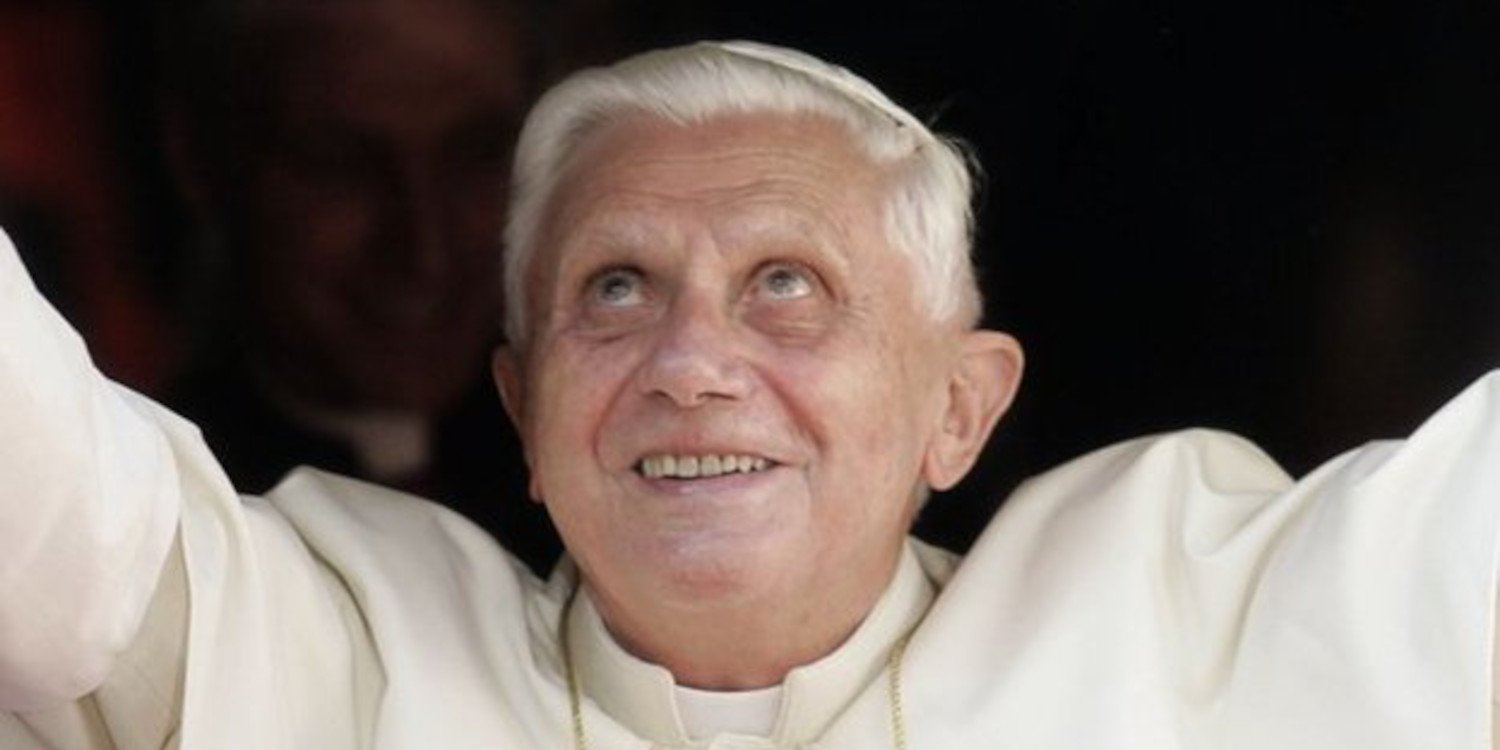
Pope Benedict’s ‘Crimes against Humanity’
SNAP successfully generated and manipulated a climate of outrage to fuel accusations and keep the money flowing. It was a climate few Catholic leaders had the courage to challenge, but one did. In his series of columns entitled “Scandal Time” in First Things magazine, Father Richard John Neuhaus tried to call upon American Catholics to put the brakes on the outrage fueled by SNAP:
“Priests, too, are to be deemed innocent until proven guilty. In the current climate of outrage, we need to be reminded of that truth again. … News reports claiming that a certain number of priests have been charged with abuse and that the claims were settled out of court must not be interpreted to mean that the priests are guilty. Some of them insisted and insist that they are innocent, but bishops were advised by lawyers and insurance companies that a legal defense against the charges would cost much more than settlement out of court.”
Scandal Time, by Richard John Neuhaus, April 2002
After Father Richard John Neuhaus published this cautionary statement, the bishops of the United States met in Dallas in 2002. Under the watchful eyes of a scandal hungry media, the bishops invited two “victim-activists” to address the conference that resulted in the Dallas Charter and the undoing of any priest accused. They were David Clohessy and SNAP president, Barbara Blaine.
SNAP’s national director, David Clohessy previously worked for over a decade for ACORN (Association of Community Organization for Reform Now), a group with aggressive, manipulative, and confrontational activism modeled after the tactics of 1960’s radical Saul Alinsky. Keeping the money flowing depended on creating and maintaining sufficient moral panic.
In August, 2011, the Catholic League published what should have been an explosive document if it had been given fair treatment in the news media. “SNAP Exposed” described in detail the ways David Clohessy and SNAP coached accusers in framing claims in order to maximize and manipulate media coverage.
One of the many egregious examples was SNAP’S recommendation for accusers and their lawyers to “display holy childhood photos” before news cameras adding, “If you don’t have holy childhood photos, we can provide you with photos of other kids that can be held up for the cameras.”
A month later, seemingly in retaliation for exposing the truth, SNAP co-opted a radically left legal activist group, the New York-based Center for Constitutional Rights, to file a “Crimes Against Humanity” charge against Pope Benedict XVI with the International Criminal Court at The Hague.
And in seeming retaliation for my 2009 article, “Due Process for Accused Priests,” I became an unwitting pawn in the attack on the Pope. David Clohessy and the Center for Constitutional Rights used an untrue and thoroughly debunked claim against me to bolster the charge against Pope Benedict. In her courageous article “Oscar Hangover Special: Why ‘Spotlight’ Is a Terrible Film,” journalist JoAnn Wypijewski unmasked the shame of this tactic in her in-depth coverage of the film, “Spotlight”:
“The film’s advertisement for SNAP, the Survivors Network for those Abused by Priests, … elides SNAP’s belief that wrongful prosecutions are a minor price to pay in pursuit of its larger mission, something the newspaper didn’t much concern itself with either as it collected its Pulitzer for service in the public interest; something even the Center for Constitutional Rights disregarded in 2011 when it joined with SNAP to file a grotesque brief to the International Criminal Court demanding “investigation and prosecution” of the Vatican for crimes against humanity.
“The CCR brief failed, but its unchallenged acceptance of accusations, anonymous complaints, prosecution arguments, grand jury reports, commission findings with no benefit of cross examination and no recognized rights of the accused is breathtaking, especially when one considers that CCR was simultaneously and courageously arguing on behalf of Guantanamo detainees …
“To CCR’s shame, Father MacRae is specifically mentioned in that brief, with respect to allegations of videotape (that is, child porn), which prosecutors threw in at sentencing but for which there is no evidence, according to the lead detective in the case cited by [The Wall Street Journal’s Dorothy] Rabinowitz.”
When I learned of this grave injustice, I tried to write to the Center for Constitutional Rights — It seemed a prophetic sign that its headquarters is located at 666 Broadway in Manhattan — but there was never a response. I wrote of the final outcome of CCR’s shameful complicity with SNAP in a BTSW post, “The International Criminal Court has Dismissed SNAP’s Last Gasp.”
Perhaps I was premature. SNAP’S last gasp now seems to be the current lawsuit by one of its own directors. David Clohessy has claimed that his resignation has nothing to do with the current lawsuit exposing SNAP’s alleged financial kickbacks from clients’ lawyers.
It now remains to be seen whether David Clohessy and SNAP will follow their own advice about out-of-court settlements, and allow this lawsuit to go to a full and open trial before a civil jury.
And perhaps a RICO investigation — the government’s acronym for Racketeering Influenced and Corrupt Organizations — might also now be in order.
As I come to the end of this post, it has just been announced that SNAP founder, Barbara Blaine, has also tendered her resignation. In her brief statement she insists that it has nothing to do with the lawsuit which she says has no merit “like all the other lawsuits” against SNAP. [See the report on David F. Pierre, Jr.’s TheMediaReport.com: SNAP Founder and President Barbara Blaine Now Resigns As Pressure Mounts From Multiple Lawsuits.]

Editor’s Note: David Clohessy and Barbara Blaine ultimately settled the lawsuit by Gretchen Rachel Hammond for an undisclosed amount after demanding and receiving a signed nondisclosure agreement.

Police Misconduct: A Crusader Cop Destroys a Catholic Priest
Keene New Hampshire sex crimes detective James McLaughlin developed claims against a Catholic priest while suppressing exculpatory evidence and coercing witnesses.

Keene New Hampshire sex crimes Detective James McLaughlin developed claims against a Catholic priest while suppressing exculpatory evidence and coercing witnesses.
Editor’s Note: The following guest post by Ryan A. MacDonald is a response to Fr. Gordon MacRae’s recent, “Predator Police: The New Hampshire Laurie List Bombshell.”
January 26, 2022 by Ryan A. MacDonald
Last week, Fr. Gordon MacRae wrote here about the manipulation of facts and witnesses in his 1994 trial on charges brought forward by former Keene, NH Detective James McLaughlin. This manipulation included allegations that he coerced and threatened a witness, Debra Collett, to alter her first-hand testimony because it did not agree with his bias. Another witness, a former accuser of Father MacRae who recanted, alleged that McLaughlin presented him with a proffered bribe to concoct a false claim against MacRae and conspired to attempt perjured testimony before a grand jury.
These are very serious allegations. They were uncovered years after the trial by former FBI Special Agent James Abbott who conducted a three year investigation of this case. Mr. Abbott obtained signed statements from these witnesses and others that became part of a habeas corpus petition seeking to free Father MacRae from an unjust imprisonment.
As MacRae’s post linked above points out, New Hampshire judges at both state and federal levels overlooked these allegations, and declined to allow an evidentiary hearing to permit these witnesses to testify under oath. From a political standpoint, this may be business as usual in New Hampshire. From a justice standpoint, it is most disturbing.
At the start of 2022, advocates for Father MacRae learned that former Detective James McLaughlin appears on a newly published list of police officers with professional misconduct or credibility issues previously held in secret personnel files. The list had been held in secret for years by the NH Attorney General, but a recent legal decision required its public release. Formally called the “Exculpatory Evidence Schedule,” the list is also known as the “Laurie List” for the NH Supreme Court case that initiated it.
It came as no surprise to discover Detective McLaughlin on this list for a 1985 incident of “Falsification of Records.” That was nine years before MacRae’s trial. Over fifty years ago, the U.S. Supreme Court ruled in Brady v. Maryland that state and federal prosecutors are required under the Due Process Clause of the U.S. Constitution to reveal to defendants and legal counsel all exculpatory evidence uncovered in the investigation of a case.
The failure of prosecutors to reveal the “falsification of records” charge against Detective McLaughlin was a violation of what is known as the “Brady Rule” that can and should overturn a conviction. As a minimum, it constitutes new evidence that can reopen a case for judicial review of the entire case.
Advocates first learned of this Brady violation from an article published at InDepthNH.org by Damien Fisher entitled, “AG Hides Some ‘Laurie List’ Names Hours After Release.” The article, though largely accurate, contained some misinformation. It described MacRae as a “former” Catholic priest which is not accurate. It also cited that MacRae “claimed that McLaughlin offered to pay cash to one of his accusers.” That claim was not made by MacRae, but by the accuser himself who recanted in a signed statement obtained by former FBI Agent James Abbott.

Politics and Prosecution
The New Hampshire Center for Public Interest Journalism, which publishes InDepthNH.org, is continuing its lawsuit seeking full and unredacted disclosure of the “Laurie List” in its entirety. A more recent article by Damien Fisher, “Famed Keene Cop Called Out for Federal Entrapment” (January 11, 2022) detailed a clear case of entrapment by McLaughlin. The article describes the original “Laurie List” charge of “Falsification of Records” by McLaughlin as “Falsification of Evidence.”
Noted Boston lawyers Harvey Silverglate and Alan Dershowitz are long-time associates in the cause of preservation of our civil rights and civil liberties. Mr. Dershowitz wrote the Forward for Silverglate’s acclaimed 2009 book, Three Felonies a Day: How the Feds Target the Innocent. The following is an excerpt:
“Our system of investigation and prosecution is unique in the world. We [in America] have politicized the role of prosecutor, not only at the federal level but in all of our states and counties as well. Nowhere else are prosecutors (or judges) elected. Indeed, it is unthinkable in most parts of the world to have prosecutors run for office, make campaign promises and solicit contributions. In the United States, prosecutors are not only elected but the job is a stepping stone to higher office as evidenced by the fact that nearly every congressman or senator who ever practiced law once served as a prosecutor. Winning becomes more important than doing justice.” (p. xxv)
There were two prosecutors at Father Gordon MacRae’s 1994 trial. One inexplicably took his own life several years later after the first articles challenging this case appeared in The Wall Street Journal and were published along with the items in our Documents page at a site that preceded MacRae’s blog. The lead prosecutor was Bruce Elliot Reynolds. At the time of the high profile trial, he used its notoriety to campaign for another Assistant County Attorney in his office who was running to unseat the incumbent. In New Hampshire, a County Attorney is equivalent to a District Attorney in other states.
There was a lot that went on behind the scenes of this trial. The lead prosecutor was reined in by the judge for sensational media statements about the trial which could (and did) taint the jury pool. The trial drew lots of local news coverage. As it got under way, Mr. Reynolds was chastised by Judge Arthur Brennan for wearing his campaign button before news cameras.
On the day after the trial, for reasons unknown, Reynolds was fired by the winner of the election, the incumbent against whom he was campaigning. Sometime later, Reynolds decided to run for County Attorney himself. His campaign cited his “vigorous” prosecution of Father Gordon MacRae as his most significant “tough on crime” career achievement. Mr. Reynolds was then exposed for some sort of tax matter, dropped out of the race, and left the state. He relocated to the State of Wisconsin.
Prior to the trial, Reynolds sent a letter to MacRae’s defense counsel which laid out terms for a strikingly lenient plea deal for a sentence of one to three years in prison if MacRae would simply plead guilty. He refused this offer because he is not guilty. He refused a similar offer in the middle of trial when the offer was reduced to one-to-two years. The prosecutor asked what it would take to get MacRae to take the deal. His lawyer’s answer: “The dismissal of charges because he is innocent.”
It seemed clear throughout pretrial motion hearings and the trial itself that the real prosecution of this case was carried out by Detective James McLaughlin, the sole sex crimes detective among the 25 or so officers in the Keene, NH Police Department. An account of how Detective McLaughlin investigated this matter is laid out in “Wrongful Convictions: the Other Police Misconduct.”

A Conspiracy of Fraud
This trial was a classic example of why the blending of politics and the justice system often defeats justice. The trial was not about arriving at the truth. It was all about winning, at any cost, because political aspirations and careers were at stake. In no other arena but the political could a prosecution accept without question testimony from a grown man who claimed that he was sexually assaulted five times by a Catholic priest a dozen years earlier at age 15, but returned to be assaulted again and again for a total of five times because he repressed all memory of the vicious assaults from week to week.
Only political blindness could deny and obfuscate the fact that a $200,000 settlement from a Catholic diocese is a possible enticement for perjury and fraud. As Alan Dershowitz observed above, “Winning becomes more important than doing justice.” Such an arena requires the work of an unethical crusader to mold and shape a case toward that end. In Detective James McLaughlin, the State had just such a crusader.
At the “Documents” section on this site is a three-part case history which was the result of substantial research. It includes a most telling document entitled, “United States District Court: Gordon J. MacRae v. James F. McLaughlin, et al.” It requires a little background. Prior to the 1994 MacRae trial, the suppression of evidence and one-sided media coverage was so great that Father MacRae felt his only recourse was to file a lawsuit of his own. It lays out the bold but simple truth of this matter. No one refuted even one of its many claims.
The lawsuit was upheld and survived several attempts to have it thrown out, but in the end it had to be dismissed without prejudice — meaning without a judicial ruling — when MacRae was convicted at trial. He could only bring the lawsuit again if the underlying convictions were resolved. This document lays out perhaps the most chilling factual abuse of police power in this or virtually any other case. It is well worth a review.
Prior to this trial MacRae voluntarily took, and conclusively passed, two polygraph examinations with a noted expert. Some of Detective McLaughlin police reports made allusions to the possible creation of child pornography by MacRae. At the time of his sentencing, Judge Arthur Brennan cited this, claiming that “This Court has heard clear and compelling evidence that you created pornography of your victims.” This never surfaced at all during the trial, but the ugly accusation at sentencing was later used for a purely evil endeavor. It was used by SNAP, the Survivors Network of those Abused by Priests, to bolster a crimes against humanity charge targetting Pope Benedict XVI at the International Criminal Court at The Hague.
Mercifully the effort failed. Eleven years later in 2005 Dorothy Rabinowitz at The Wall Street Journal questioned Detective McLaughlin about the nature and substance of that evidence. “There was never any evidence of child pornography,” he admitted. In this entire matter, that was the only time McLaughlin told the truth.
During the trial, two court observers reported spotting a woman in the gallery giving hand signals to Thomas Grover to begin crying during his testimony. It came after he testified that he was unaware of any plan to sue the Catholic Church. He was asked by MacRae’s counsel to reveal to whom he went first with his accusations: the police or a lawyer. At this point, Ms. Pauline Goupil (now Pauline Goupil Vachon) was observed from the gallery signalling Grover to cry. He was riveted upon her for his entire testimony. At that point she was seen placing her fingers below her eye and then down her cheek in a pantomime of crying. In response, 27-year-old Grover wept loudly and at length. The two witnesses who observed it reported it to the defense counsel who then approached the bench. Judge Brennan cleared the jury from the court and called Ms. Goupil to the stand. She identified herself as a therapist retained by Thomas Grover at the behest of his attorney. All treatment records of Mr. Grover were to be reviewed by the defense pretrial, but neither Pauline Goupil’s records nor the fact of her treatment of Grover were revealed.
Hard evidence surfaced pretrial that Detective McLaughlin conducted some of his one-sided investigation, not from his Keene police office, but from 60 miles away in the law office of Robert Upton, the personal injury lawyer who brought a lawsuit on behalf of Thomas Grover and obtained a $200,000 settlement from the Diocese of Manchester. Family members of Grover revealed years later that Grover was coached to “act crazy” before the jury, to appear vulnerable, and to commit perjury in regard to some of his testimony. When asked who did this coaching, their answer was Pauline Goupil and Detective McLaughlin. These family members, the former wife and stepson of Thomas Grover, were also barred from giving testimony under oath. The two people who observed Pauline Goupil’s courtroom witness tampering were also barred from testifying.

A public debt is owed to the NH Center for Public Interest Journalism which publishes InDepthNH.org. The Center continues an open lawsuit contending that the new law that only partially released the “Laurie List” does not protect the public right to know its extent.
In a 2003 Concord Monitor article — now apparently removed from the Internet — fellow Keene, NH officer Sgt. Hal Brown defended McLaughlin’s shady tactics and actions:
“It’s our job to ferret the criminal element out of society.”
I believe Father MacRae would today agree with me that those are very scary words!
Be Wary of Crusaders! The Devil Sigmund Freud Knew Only Too Well
+ + +
Editor’s Note: Please share this important post on your social media.
You may also be interested in these related articles:
Predator Police: The New Hampshire ‘Laurie List’ Bombshell
Police Investigative Misconduct Railroaded an Innocent Catholic Priest

Several years after sentencing Father Gordon MacRae to life in prison, Judge Arthur Brennan was arrested in Washington, DC in 2011 during a protest in which he tried to occupy the US Capitol Building.

Predator Police: The New Hampshire ‘Laurie List’ Bombshell
Detective James McLaughlin shows up on a previously secret list of dishonest police for falsifying records. In 1994 he falsified the case against Fr Gordon MacRae.

Detective James McLaughlin shows up on a previously secret list of dishonest police for falsifying records. In 1994 he falsified the case against Fr Gordon MacRae.
January 19, 2022
I was hoping to find someone else to write this, but information happened fast and time is critical. So I will write it myself even though I have an obvious conflict of interest. At this writing I am in my 28th year of unjust imprisonment. In that time, every avenue of appeal has been exhausted with no hope for justice. All resources for further appeals are also exhausted. And, frankly, so am I.
Many well-meaning friends and readers have nonetheless urged me in recent years to continue to explore and pursue any means to address what seems for most a clear injustice. My 67-year prison sentence — after rejecting plea deal offers to serve one year — just doesn’t sit well with fair-minded, rational people. That seems especially so given that if I were in fact guilty or at least willing to pretend so in 1994, I would have left prison 26 years ago.
From seemingly out of nowhere, a new development has arisen at the start of 2022. I am told that it has the potential to either right a wrong and set me free or simply fade away like all previous endeavors that left me to die in prison. I had come to accept that latter reality. My focus in the last two years, like that of my friend and patron, St. Maximilian Kolbe, was to set someone else free. I am proud of that accomplishment. It is all I have to show for this injustice. Then, at the very close of 2021, a bombshell exploded on New Year’s Eve.

The New Hampshire LEACT Commission
I received a message that day from an old friend, Joseph Lascaze. Like Pornchai Moontri, Joseph went to prison at age 18. Also like Pornchai, he accomplished something extraordinary in that time. After a few aimless years lost in an aimless prison system, Joseph fought against many obstacles to educate himself. Over those years, he became a close friend to both me and Pornchai. Prison is not a good place to grow up, but Joseph did, and in spite of all obstacles he became an exemplary citizen and gifted young man.
Joseph was released in 2019 and is today the “Smart Justice Campaign Manager” for the New Hampshire Chapter of the American Civil Liberties Union (ACLU). He also serves by invitation of NH Governor Christopher Sununu on the Governor’s LEACT Commission (Law Enforcement Accountability, Community, and Transparency). Joseph has been well received and even honored by New Hampshire law enforcement for his candor and unprecedented contributions to this Commission.
Among many other projects, Joseph has worked with LEACT to make public a previously secret document held by the NH Attorney General entitled the “Exculpatory Evidence Schedule.” It is more popularly known as the “Laurie List” named for the judicial ruling that created it. The ACLU, along with several NH media outlets, sued the state under the Freedom of Information Act to make the list public.
Joseph’s New Year’s Eve message was read to me by another friend who noted that Joseph attached an article he urgently wanted me to see. The article, by Damien Fisher at InDepthNH.org, was “AG Hides Some ‘Laurie List’ Names Hours After Release.” In short, the ACLU lawsuit settlement dictates that the secret ‘Laurie List’ is now to be a public list.
The potential bombshell for me is this: It turns out that Keene, NH Detective James F. McLaughlin, who choreographed the case against me in 1994, was sanctioned and placed on the list for “Falsification of Records” in 1985, nine years before my trial. Another recent InDepthNH article by Nancy West,entitled “AG Removes 28 Names From ‘Laurie List’ of Dishonest Police Outside the Law,” describes what this development potentially means:
“Officers placed on the list sustained discipline for dishonesty, excessive force, or mental illness in confidential personnel files .... If a criminal defendant finds out that such evidence existed, even many years later, he or she can petition the court for a new trial or try to have the charges dropped altogether.”
InDepthNH, November 24, 2021
More than a half century ago, the U.S. Supreme Court ruled in ‘Brady v. Maryland’ that criminal defendants must receive all exculpatory evidence or their conviction could be overturned or vacated entirely.

The Suppression of Exculpatory Evidence
Needless to say, neither I nor my defense were made aware of the 1985 falsification of records infraction against Detective McLaughlin before my trial. But that was certainly not the only suppression of exculpatory evidence. In multiple police reports prepared by McLaughlin before trial — reports which steered the prosecutor’s case — McLaughlin made repeated references to tape recorded phone calls and interviews from which he made specific claims.
Some of the subjects on those tapes claimed that McLaughlin grossly misquoted them or included statements that they never made at all. Despite a court order to turn those recordings over to my defense, every one of them disappeared before trial. McLaughlin claimed, for example, that a specific tape was “recycled” and a transcript that his report referred to was never made due to a “clerical error.” Years later, McLaughlin sent that same tape to The Wall Street Journal despite the fact that it contained none of what he said it contained. Writing in The Wall Street Journal in 2005, Dorothy Rabinowitz addressed this:
“On the police tape, an otherwise bewildered-sounding Fr. MacRae is consistently clear about one thing — that he in no way solicited [anyone] ... for sex or anything else. ‘I don’t understand,’ he says more than once, his tone that of a man who feels that there must, indeed, be something for him to understand about the charge and its causes that eludes him. . . . He listens as the police assure him that he can save all the bad publicity. ‘Our concern is, let’s get it taken care of, let’s not blow it out of proportion. You know what the media does,’ they warned. He could avoid all the stories, protect the church, let it all go away quietly.”
A Priest’s Story Part 1: The trial, April 27, 2005
There was no evidence at all in the case brought against me in 1994. In New Hampshire — as in many states since the 1980s — no evidence is needed to convict someone accused of a sexual offense. No evidence was admitted at my trial beyond the word of 27-year old accuser, Thomas Grover, a man with a criminal record who stood to gain $200,000 for making the claim.
The story of how that trial unfolded has received much attention over the years. Dorothy Rabinowitz, a Pulitzer-prize winning member of The Wall Street Journal Editorial Board, published two major articles on my trial and its back story in 2005 and a third in 2013 entitled “The Trials of Father MacRae.”
These articles sparked some national interest, but no one could have predicted the tidal wave of accusations against Catholic priests that arose in 2002 and continued until the present day. Other media — including most in the Catholic media — decided to look the other way in any case of injustice against a priest.
Seeking justice has been a steep uphill battle. In 2009, at about the same time this blog began, a new investigator began a fresh look at the case. A decorated career FBI Special Agent Supervisor, he ended his investigation in 2012 concluding, bluntly:
“In my three year investigation of this matter, I found no evidence that MacRae committed these crimes or any crimes. Indeed, the only ‘evidence’ was the statements of Thomas Grover which have been discredited by those who were around him at the time including members of his own family.”
Affidavit of former FBI Special Agent Supervisor James Abbott, Ret.

Alarming New Evidence Alarmingly Ignored
When no evidence is needed to put a man in prison there is no evidence to dismantle or challenge. Nonetheless, Mr. Abbott’s investigation uncovered many things, including allegations of misconduct by Detective James McLaughlin. New witnesses were interviewed and they bravely came forward to write and sign statements in the case. Their evidence is profiled by David F. Pierre at The Media Report under the title, “Alarming New Evidence May Exonerate Imprisoned Priest.”
Among the many statements described and quoted there is one from Steven Wollschlager obtained by the Investigator. Steven, facing a drug charge, described being summoned to the office of Detective McLaughlin where, he alleges, he was offered a direct monetary bribe in exchange for a fabricated accusation against me. He was given $50 in cash and told that “a large sum of money” could be obtained in a civil suit. “Life could go a lot easier for you with a large sum of money,” McLaughlin allegedly said.
Steven wrote that the detective “knew I was using drugs at the time and could have been influenced to say anything for money.” Enticed by the prospect, Steven agreed to come up with a fabricated claim. He then received a summons to appear before a Grand Jury to help bring a new indictment. It was a testament to his integrity that his conscience, instead of the proffered bribe, became his guide. He decided that he could not do this “to someone who only tried to help me.” He was then told to go away because “we won’t be needing anything more from you.”
I write that these witnesses “bravely” decided to come forward because some of them were threatened by Detective McLaughlin before my trial. One witness, former drug abuse counselor Debra Collett who treated Thomas Grover, denied that he accused me during therapy sessions as he alleged. She described being “bullied,” “coerced,” “overtly threatened” by this detective when she would not say what he wanted to hear. “I will come to your house and physically drag you out of it,” she was told.
Ms. Collett described that the entire interview was recorded, but that tape, like other exculpatory evidence, “disappeared” before my trial. It is shocking that judges reviewing my appeals declined to even hear from these witnesses. Innocence Project founders Barry Scheck and Peter Neufeld described how such misconduct by police was sometimes covered up by judges. From their acclaimed book, Actual Innocence:
“For 64 percent of DNA exonerations analyzed by the Innocence Project, misconduct by police or prosecutors played an important role in the convictions. Lies, cheating, distortions at the lower levels of the system are excused at the higher ones.”
Barry Scheck, Actual Innocence, p. 225
That is exactly what happened when my habeas corpus appeal and its accompanying memorandum of Law was filed in 2012. One judge after another summarily declined to hold any hearing that would give these witnesses a chance to go on record. One possible reason for this is that Detective McLaughlin has brought forward hundreds of cases with an almost 100-percent conviction record through offers of lenient plea deals.
I believe judges are reluctant to deal with the “Pandora’s Box” of challenged convictions if this officer’s challenged integrity becomes public. I wrote more about this in a March 2021 post, “Wrongful Convictions: The Other Police Misconduct.”
I was entirely demoralized by the judicial lack of regard for truth and due process in this story. A witness, who directly accused a sworn officer of offering a bribe to suborn perjury before a grand jury has been simply ignored and silenced. I saw no further path if judges can willfully decline to hear such testimony.
So my attention turned then to assisting my friend, Pornchai Moontri, whose plight was even more brutally unjust than my own. I made a promise to him, to myself, and to God that I would use whatever time I had left in life to do all I could to bring forward the truth of his situation and free him.
With help from readers, I did just that. The person who arranged for him to be brought here from Thailand at age 11 — only to be horrendously exploited and sexually abused — was found and brought to justice in 2018. He pled “no contest” to forty felony charges of sexual assault of a minor in Penobscot (Maine) Superior Court in September 2018, but was sentenced (are you sitting down?) to zero prison time and 18 years probation.
I had no reason left to expect anything even remotely resembling justice from our justice system. But then, yet another ray of hope surfaced just at the dawn of a new year.
I do not know what to do. The prospect of possibly emerging as a free man after over 27 years unjustly in prison is daunting. The very infrastructure of my life has long since disintegrated. Even in prison I remain a priest, but in freedom I doubt that my bishop would do anything to help me. I will be 69 years old in April, 2022. At the age at which most people plan for retirement, I would be faced with starting life anew. But how? Where? Would I now be required to sacrifice priesthood for freedom?
It will be many months before there is clear direction on what comes next. I will keep you posted ... .
+ + +
ANNOUNCEMENTS:
Please visit our new “Documents” section in the Navigation Bar for more information about this story. Please also share this post. You may be interested in the following relevant posts:
Wrongful Conviction: The Other Police Misconduct
The Trials of Father MacRae by Dorothy Rabinowitz
The Trial of Father MacRae: A Conspiracy of Fraud by Ryan MacDonald

LEACT commissioners include, from left, Rep. David Welch, Joseph Lascaze, John Scippa, Hanover Police Chief Charlie Dennis, and Lt. Mark Morrison of Londonderry.

For The Lovely Bones Author Alice Sebold, Justice Hurts
Acclaimed author Alice Sebold was traumatized by a violent rape at age 18 and then again 40 years later when she learned that an innocent man went to prison for it.

Acclaimed author Alice Sebold was traumatized by a violent rape at age 18 and then again 40 years later when she learned that an innocent man went to prison for it.
January 12, 2022
Some years back, in an earlier version of this blog, I had a practice of honoring writers whose works carried me through long holiday weekends of extended confinement. I called it “The Stuck Inside Literary Award.”
Among the great writers I cited were Graham Greene for The Power and the Glory, J.R.R. Tolkien for The Lord of the Rings, Patrick O’Brian for Master and Commander (and 21 other titles in his Aubrey-Maturin Series), Taylor Caldwell for Dear and Glorious Physician, Fr. Michael Gaitley for The Second Greatest Story Ever Told, Tom Clancy for The Hunt for Red October (and 22 other titles in his Jack Ryan Series), and Alice Sebold for The Lovely Bones.
These books and writers took me out of prison for journeys into history, adventure, espionage, mythology, Sacred Scripture, and, in that last on my list, a journey into a traumatized writer’s soul. I cannot fathom today what exactly brought me to read The Lovely Bones by Alice Sebold. A New York Times Book Review described it as the story of a 14-year-old girl, a victim of rape and murder, who narrates the tale from Heaven while pondering the fate of her family, her friends, and her killer.
I was in equal measure horrified and hopeful. I suppose that was partly out of empathy. I was living in prison with someone who had been such a victim. For 15 years I prayed and hoped to restore for my friend some of the humanity, safety, trust, and well being that had been taken from him. He did not die, but sometimes he wished he had. His soul had nonetheless been nearly slain and I was his last hope to restore that too. But it was ultimately this review by Ron Charles in the Christian Science Monitor that caused me to take up The Lovely Bones:
“Don’t start The Lovely Bones unless you can finish it. The book begins with more horror than you can imagine, but closes with more beauty than you could hope for ... Alice Sebold has done something miraculous here.”
I was skeptical, but at the time I was also seeking a breakthrough for my friend. How could any writer take such a story and turn it into something redemptive? I had friends whose life experiences included sexual trauma and some of them also read The Lovely Bones on my recommendation. One described it as “mesmerizing.” Katherine Bouton at the New York Times Book Review wrote that Alice Sebold treated an “almost unthinkable subject with a kind of mysterious grace.” One friend told me that she found healing and peace in it.
So I brought it back from the prison library one day and read it, stunned and mesmerized, over one long weekend in 2017. I could not put it down. Then I wrote this brief review of it in a 2017 post:
“During the seemingly endless Independence Day week in July, we were all trapped in an eight-man cell and locked in with no outside at all for several days. And they were very hot days. Suffice it to say, it was an ordeal.
“But it was made far less so by a riveting book that took me far beyond my own woes. The book is The Lovely Bones by Alice Sebold. I have since suggested this novel to some who could not read it — at least, not yet. I have never before come across an author who can take a topic as spiritually brutal as the loss of a child and turn it into an awe-inspiring tale of redemption.
“It’s a tough story about the rape and murder of a 14-year-old girl who narrates the account from Heaven. It is not easy to read — at least, not in its beginning, and it was made more difficult still by my knowledge that the author is herself a survivor of rape as a young adult.
“From the sheer depths of such pain and loss, Alice Sebold has crafted an astonishing novel that finds light in the darkest of places. I don’t want to say more. The recipient of my ‘These Stone Walls annual Stuck Inside Literary Award’ is Alice Sebold for The Lovely Bones. I bow in humble awe of both her burden and her gift.”

Alice Sebold’s “Lucky” Memoir
But now I must say more, for Alice Sebold’s story has taken turns even darker still. After reading The Lovely Bones, I ordered a copy of Sebold’s acclaimed memoir, Lucky (Little, Brown & Company, 1999). I had already known, from the jacket of her novel about her trauma at age 18. I wanted to understand the writer who could create that fictitious tormented teenage girl in The Lovely Bones and place her in a state of redemption while leading her readers there as well.
“Lucky” did not spare me at all. The first dozen pages were a courageous but horrific account of the brutality suffered by Sebold in real life during one night on an innocent walk in a Syracuse, New York park. I shook with rage as I forced myself to read what she had endured and somehow survived. She chose “Lucky” as her title for the memoir because that was what police said to her as she recounted the crime. She was “lucky” because a previous rape victim had been murdered.
Just days earlier, I had spent an all-nighter in my cell with my friend and roommate as he articulated through sobs, for the first time in his life, the horror inflicted on him as a 12-13 year-old child brought to America from Thailand against his will. The degrading humiliation of violent sexual assault occurred as many as 40 times before he escaped to a life of homeless despair at age 14.
Because I wrote about that story, his abuser was finally brought to justice in 2018, but one could hardly call it “justice.” After a plea of “no contest” to forty felony counts of rape, that man was sentenced to zero time in prison and eighteen years probation. Then he returned to his lakeside Oregon home. Let that sink in.
I shook with rage then too. Though my friend was not murdered, his mother was. It happened on the Island of Guam when she learned of what he suffered and resolved to expose the perpetrator. You have read this story. I wrote it myself in “Human Trafficking: Thailand to America and a Cold Case in Guam.”
Ms. Sebold was a freshman at Syracuse University when her brutal attack took place. Perhaps the most chilling scene in Lucky came six months later when she spotted her rapist walking happily along a downtown Syracuse street. They made eye-contact, and he smiled as he walked toward her. “Don’t I know you from somewhere?” he said. As I read, I found myself willing her to run and scream. There was a police officer nearby, but Alice was silently frozen in time and space before fleeing. Of this scene, she wrote:
“I knew him but I could not make myself speak. I needed all my energy to focus on believing that I was not under his control again. . . He had no fear. It had been nearly six months... since I lay under him in a tunnel on a bed of broken glass. He was laughing because he had gotten away with it, because he had raped before me, and because he would rape again. My devastation was a pleasure for him.”
Lucky, p. 103
She turned a corner as she quickly walked away, then she looked over her shoulder to see him nonchalantly chatting with the police officer. She was to have a seminar that afternoon with the famous author, Tobias Wolff. She fled toward the school to tell him that she could not attend. When she explained that she was going to the police, he wisely advised her to “Remember everything!” Recounting this, she wrote that she had read Wolff’s own story in This Boy’s Life, and learned from it. I read it too, and learned the same lesson Alice learned . . .
“ That memory could save, that it had power, that it was often the only recourse of the powerless, the oppressed, or the brutalized.”
Lucky, p. 106
I was stricken by this. After over 27 years as a wrongly convicted prisoner, I felt a strange solidarity with Alice as I read of her ordeal. I was willing her to not shrink from that awful night, not to suppress its pain, but rather to imprint upon her memory every detail. As our readers know, another famous writer once impressed the same upon me as she wrote in “The Trials of Father MacRae” (Dorothy Rabinowitz, The Wall Street Journal, May 13, 2013):
“MacRae has no difficulty imagining any possibility, fitting for a man with encyclopedic command of the process that brought him to this pass: every detail, every date, every hard fact. Still, after two decades this prisoner of the State remains, against all probability, staunch in spirit, strong in the faith that the wheels of justice turn, however slowly.”

When Justice Itself Is Raped
The year was 1981. After talking with Tobias Wolff, Alice went immediately to the campus library where she laid out in writing and a sketch every detail of what she experienced and saw on the street that day. University and City of Syracuse Police arrived. There was a quick dispute about jurisdiction, then Syracuse police headed to the location of the sighting to effect an arrest. “We’re gonna get this puke,” vowed one of the officers.
In her memoir, Lucky, Alice Sebold gave the suspect — soon to be a defendant — a pseudonym, Gregory Madison. His real name was Anthony Broadwater, an African American man. He was 21 then and is 62 today. Charged with rape, robbery and assault after eyewitness identification by Sebold, Broadwater entered a plea of not guilty and maintained his innocence throughout the hasty two-day trial but was convicted by a judge. He had waived his right to a jury trial. Beyond the eyewitness identification, the only other evidence against him was a hair sample taken from the crime scene. After conviction, he was sentenced to 25 years in prison.
By the time the case went to trial, Sebold was 19 and Broadwater was 22. As he was led off to prison, Alice was finally paroled from her own prison. She was finally free of the post-traumatic reaction when approached by any young black man. She could finally walk the streets of Syracuse without constantly checking over her shoulder. Anthony Broadwater spent the next 16 years in the notorious New York State Prison system serving brutal time in Attica and Sing Sing. A convicted sex offender, it was now his turn to look over his shoulder, every moment fearing the harsh reprisals that often come to those in prison deemed guilty of such crimes. It was now Anthony’s turn to be traumatized.
There was just one problem: Anthony Broadwater was entirely innocent of this crime, or any crime. He had no connection at all with the vicious rape of Alice Sebold. As a young african American man, a population grossly over-represented in America’s prisons, Broadwater lacked the resources to successfully fight a wrongful conviction. His only asset was his own inner integrity. He was denied parole five times because he would not admit guilt.
Decades after the horrible crime that now had two victims, forensic science formally rejected the legitimacy of hair analysis as evidence of guilt. The only other evidence was Alice Sebold’s eyewitness identification, but a big red flag was ignored by police. After the chilling scene of spotting the man she believed to be her rapist from twenty feet away on the street that day, Alice later picked the wrong man out of a police lineup from just ten feet away. The police, believing that they had their suspect, simply ignored the lineup snafu.
The scene on the street, recounted from Sebold’s memoir cited above, turned out to be a grave misunderstanding that required a parallax view — a view of the same scene from another angle. It turned out that Mr. Broadwater was not looking at or calling out to Alice Sebold, but rather was looking past her calling to the young police officer standing about twelve feet behind her. He was the officer she saw him chatting with as she fled down a side street in terror. When this case was revisited forty years later, the officer, long since retired, verified that he knew Mr. Broadwater and recalled that conversation with him.
The unjust tragedy to befall Anthony Broadwater was not only sixteen years of unjust imprisonment, but rather the twenty-two years that followed. He lived those years in another kind of prison, victimized yet again by having his name and identifying information on the draconian public sex offender registry. This prevented him from ever securing meaningful employment, public acceptance, or even secure housing. He was turned away from every job he applied for, and worked only odd jobs and hauling debris. Desperate, he registered for vocational classes in HVAC but was barred from campus. Mr Broadwater recounted those years:
“It’s hard to have that stigma on your back. Hard and shameful. You don’t want to be introduced to anybody. To this day, I can count on two hands how many people have invited me into their house.”
Anthony Broadwater went to prison in 1981 and was exonerated at the end of November 2021. The story was first reported in The Post Standard at Syracuse.com by staff reporter Douglass Dowty. His moving article, “Behind the ‘Lucky’ exoneration: 2 lives filled with pain and a man’s 40-year fight for justice” swept the country in the weeks before Christmas.
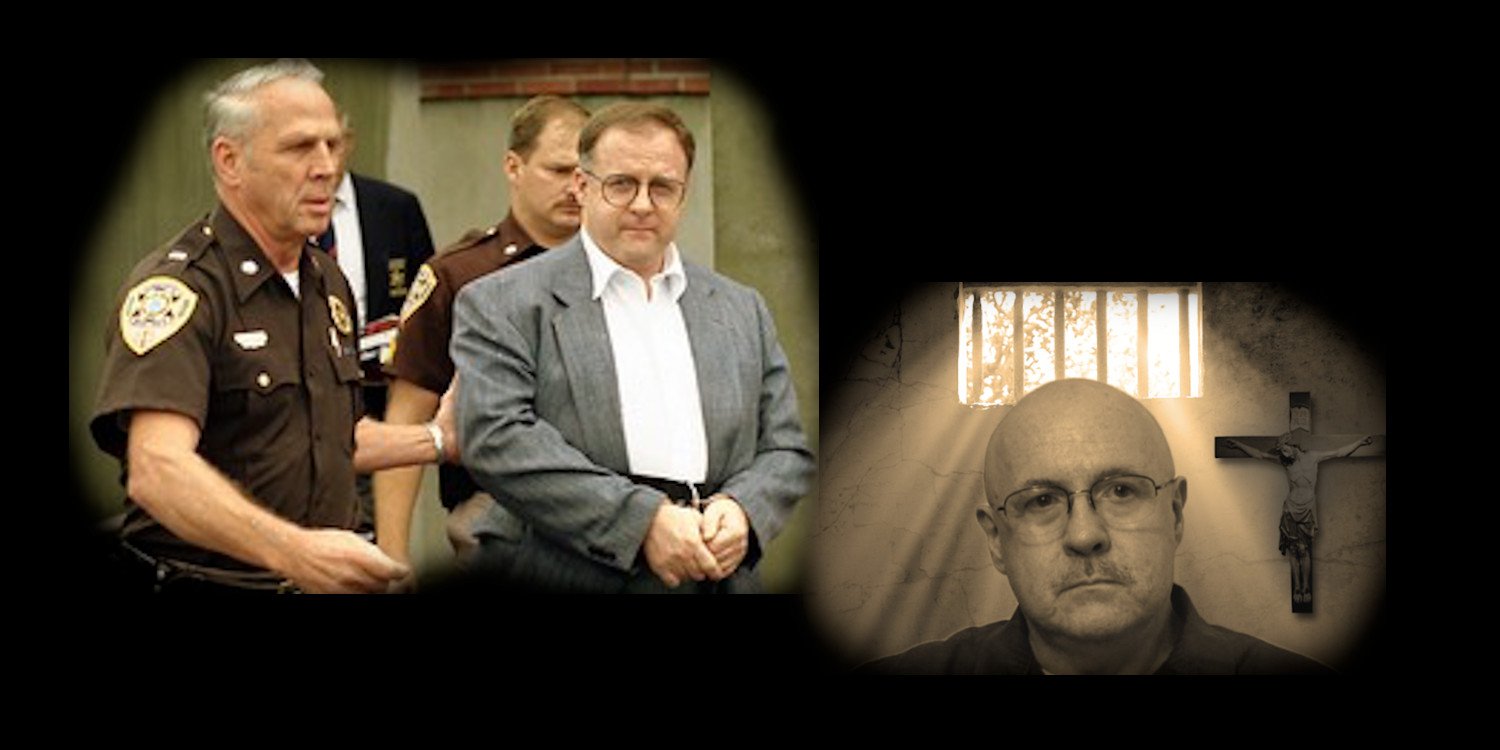
My Own Parallax View
What am I to make of this story? As a wrongfully convicted man who has served over 27 years in prison for a crime that never took place, I am torn in my empathy for both victims of this tragedy. I am horrified by what happened to Anthony Broadwater, but we are losing our humanity if we are not at least equally horrified by what happened to Alice Sebold.
None of this was her fault and I do not see what she could have done differently. It is not up to a traumatized 18-year-old to solve and investigate crime. This egregious failure of the justice system is not her’s to grieve. But grieve she does. Putting the now discredited junk science of hair analysis before the jury was not her fault. The wrongful eyewitness identification was not her fault. In cases that have resulted in irrefutable DNA exoneration, some 70-percent involved convictions based upon faulty eyewitness identification. This was — or should have been — well known to police in 1981. In “U.S. v. Wade,” a 1967 case, Supreme Court Justice William Brennan wrote:
“The vagaries of eyewitness identification are well known; the annals of criminal law are rife with instances of mistaken identification.”
A part of my own grief over this story is that Alice Sebold has been victimized once by the unknown rapist who so devastated her life; once by the false notion over 40 years that she has been safe from this evil attacker only to learn that he could have been lurking in the near distance for all that time; and finally a third victimization from living with the knowledge that her testimony so grievously harmed an innocent man because all investigation ended when she pointed in her trauma at the wrong guy.
I have also been where Anthony Broadwater has been. I am, in fact, there right now. I know from his grueling experience that the same fate would befall me if I ever left prison without being exonerated. At age 69, I too would be forced onto a lifelong public registry of shame. As such, I would never be allowed to serve, or even identify, as a priest. My bishop and the wider Church would exercise their one-size-fits-all solution, and simply discard me forty years after my own claimed offenses which never actually happened at all. Even when prison is over, it is never truly over. This is why our “ABOUT” page proclaims:
“There is no crueler tyranny than that which is perpetrated under the shield of law and in the name of justice.”
+ + +
Urgent note to readers: Next at Beyond These Stone Walls we will unveil a bombshell revelation that could deeply impact Father Gordon MacRae and the remainder of his life and priesthood.
You may also like to visit these relevant posts at Beyond These Stone Walls:
Wrongful Convictions: The Other Police Misconduct
Walking Tall: The Justice Behind the Eighth Commandment
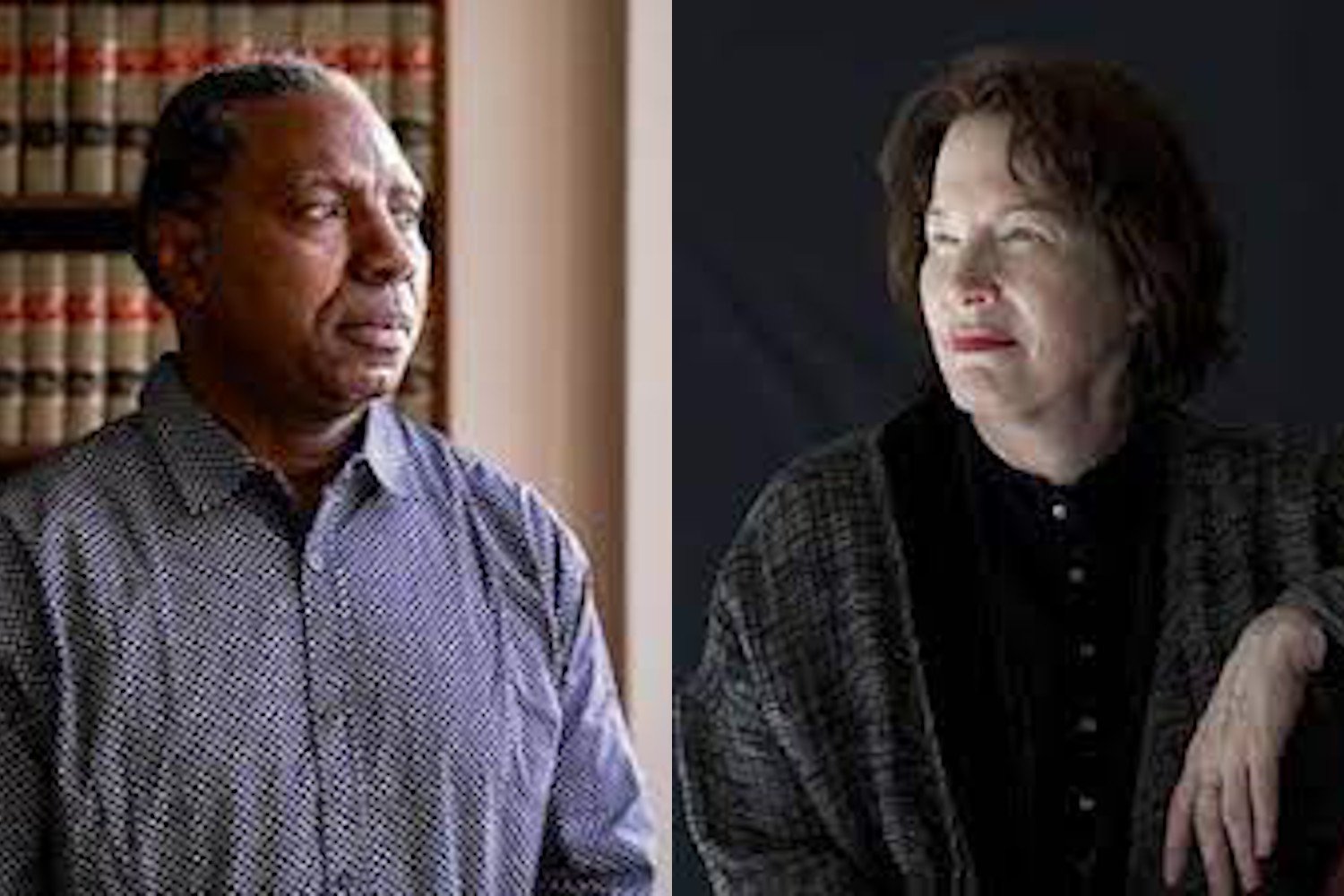

In 2022: Epiphany, Pro-Life Progress, Papal Paradox
If you are burdened by the affairs of Church and State in this age,take a knee and prepare for an epiphany. The Way of the Lord calls forth life and liberty.

If you are burdened by the affairs of Church and State in this age, take a knee and prepare for an epiphany. The Way of the Lord calls forth life and liberty.
January 5, 2022
Instead of yet another failed New Year resolution, I am planning on having another epiphany in 2022. I admit that I have had the same plan at the start of every New Year leading up to this one since about 1994, but my expectation that this will be “the” year of my epiphany is simply what we call “hope.” Despite the struggles all around us, there were little glimmers of that hope in recent years, but the politics of this age are oppressive and heavy. Like most of us who struggle today, my spirit is occupied with many heavy things.
The word, Epiphany comes from the Greek, “epiphaneia” meaning, “appearance” or “manifestation.” When used as a noun, it usually refers to a spiritual enlightenment, an understanding that comes about through a sudden intuitive realization. I once wrote of such an epiphany that was especially popular with Star Trek fans. You need not be one to appreciate it, and it might even surprise you. I wrote it as a Linkedin article entitled, “Gene Roddenberry and Captain Kirk’s Star Trek Epiphany.”
Used in the upper case, however, Epiphany refers to an event: the revelation to the Magi, led by a star to Bethlehem, that Jesus Christ is Savior. It is an event described in the Gospel According to Matthew (2:1-12). In the Eastern Church the event of Epiphany recalls instead the Baptism of Jesus and God’s revelation about Him (Matthew 3:13-17). Epiphany has been observed in the Roman Rite on the Sixth of January since A.D. 194. This year it has been dislodged by its proximity to the Sunday obligation. It marks the last of the Twelve Days of Christmas. I wrote of its history and meaning in “Upon a Midnight Not So Clear, Some Wise Men from the East Appear.”
The world we live in has changed dramatically since the dawn of the Twentieth Century. I was shocked to read recently that the average life span of a man in 1900 was between 35 and 40 years of age. In the decades to follow, despite two world wars and a number of plagues, the average life span has been slowly extending. I wonder if there is a corollary between our longer life span today and our tendency to drift away from God under the pressures of this culture.
In a recent post, I wrote of an event in my life that occurred in March of 1992. In that post, I called it my “Great Comeuppance.” In looking back over the three decades since, I realize that the event, though only a moment in time, had an enormous impact on my life and my priorities for living. The post was life-changing and important — important to me, anyway. I hope you will read it if you missed it. It was “To Christ the King through the Immaculate Heart of Mary.”
If and when you read that post, please read to the end. The 1992 event it describes connects to another chapter in my life decades later. It took me some time to put this together, but that event was an awakening of sorts and that is why I now refer to it as an epiphany. Over the ensuing years, I can see in hindsight how that event had a power that altered many things in my life, including my perception of my cross of unjust imprisonment which commenced just two years later. Those who read that post found the connection between its beginning and its end to be remarkable.

In Support of the Cause of Life
I had been a priest for ten years when the event described in that post took place in the back seat of a car. One of the most evident changes that came as a result was my activism in the Catholic pro-life cause. It was another epiphany, a Great Awakening that many are now seeing despite the narcissistic tendencies of our time.
During all of my seminary training, and in the first ten years of my priesthood, I had little regard for the pro-life cause. I was not antagonistic to it, but it never had a place on my inner radar. I remember blocking dedicated pro-life activists from placing their literature in my parish vestibule because I believed that it had nothing to do with what was happening in the liturgy of the Church. When I look back on that now, I cannot make sense of how I could not have seen the importance of their mission and message. It has everything to do with what is happening in the liturgy of the Church.
When the lights finally came on, I saw the truth stripped of all its politics and self-serving rhetoric about “reproductive rights.” I saw the folly of Roe v. Wade and it struck me like lightning. Our interference in the development of human life was captured in an eye-opening op-ed in The Wall Street Journal entitled “The Obsolete Science behind Roe v. Wade” by Dr. Grazie Pozo Christie, diagnostic radiologist and policy advisor for the Catholic Association.
Dr. Christie lent scientific justification to the conclusion of conscience which my epiphany had set in motion. She pointed out that the development of medical knowledge has reached a heightened awareness since Roe v. Wade was decided in 1973. Ultrasound technology was in its own infancy then.
“Today, three-dimensional ultrasound images have put a human face on the person once dehumanized as a mere clump of cells. Perfectly apparent now, to the justices sitting on today’s court as well as the public, are the liveliness and humanity of babies at 15 weeks of gestation. They have proportions of a newborn. The major organs are formed and functioning, and although the child receives nutrients and oxygen through the mother’s umbilical cord, the baby swallows and even breathes, filling the lungs with amniotic fluid and expelling it. The heart is fully formed, its four chambers working hard with the delicate valves opening and closing.”
— Dr. Grazie Pozo Christie, WSJ.com
No one can read Dr. Christie’s brief article and not also see the great spiritual decline that Roe v. Wade has set in motion in our culture. Several years ago, as a direct result of my own epiphany that opened my eyes to the truth, I wrote of how this decline has blinded us to the horror that Roe v. Wade produced.
That post, though only about five years old now, will seem a bit dated. It analyzed several television series that were most popular among young adults then. In each of these shows, the protection of life was a central theme while in reality abortion became disconnected from our personal and collective conscience.
In Support of Authentic Catholic Identity
As a Catholic priest, even one in the most difficult of trials, I never saw myself as being in rebellion with Rome, and I am not so now. But I am perplexed. Not long ago, I wrote a post entitled, “The Once and Future Catholic Church.” Its intention was to bring hope to faithful Catholics who feel alienated by the trends of today that seem to suppress what were once authentic and deeply held expressions of faith for many. Fidelity to the tenets of our faith, and to the Chair of Peter, is central to both faith and priesthood.
I am not “more Catholic than the Pope,” and do not presume to question him on orthodoxy. But sometimes timing is most important. I cannot help but wonder what was behind Pope Francis using the backdrop of Christmas to further alienate traditional Catholics with new and more divisive restrictions on an expression of faith that many hold dear, the Sacrifice of the Mass in the language that served the Church for two millennia: Latin.
In 1947, after two years of rebuilding following World War II, the Catholic population of the world was between 340 and 380 million. Today it stands at nearly 1.2 billion, and certainly the suppression of the Latin Mass is a concern for only a small percentage. But the largest percentage — upwards of seventy percent — is not concerned with the Mass at all because they are not at all practicing their faith. So why suppress what for centuries was seen as a valid expression of that faith?
In 1947, Pope Pius XII published the 15,000 word encyclical, Mediator Dei, in which he warned against false mysticism, quietism, naturalism, and adherence to exaggerated notions about the liturgy. He opposed using the vernacular in the Mass in place of Latin. In a 1947 radio address, he warned Catholics against “uniformity that seeks to regiment all apostolic works into one kind.”
In January, 1975, well after the Second Vatican Council concluded, the Congregation for Divine Worship sent notice to the world’s bishops that the celebration of the Mass, whether in the vernacular or in Latin, must adhere to the rites set forth in the New Order of Mass authorized by Pope Paul in 1969. Clearly, the point of Rome’s contention was not the use of Latin, but rather the extraordinary form of the Mass.
Today in Germany, a progressive expression of Catholicism has taken hold to the point of being virtually unrecognizable as Catholic. There has been much ink spilled on the necessity and hope of avoiding a liberal-progressive Catholic schism in Europe. I have read that this looming threat weighs heavily upon Pope Francis. I am not a rebel, but I am still perplexed. Despite this looming threat of a progressive schism in Europe, it seems that all the efforts of Pope Francis at suppressing rebellion and promoting conformity are aimed at Traditional Catholics.

A Great Schism v. A Great Awakening
This leaves many priests who care in a state of conflict. We are in solidarity, not only with the authority of the Pope, but also with the thousands of devout Catholics who feel wounded and alienated by this inexplicable suppression. A few priests have privately corrected me saying that Pope Francis has the authority to determine rubrics for the sacrifice of the Mass. Of that, I have no doubt nor do I have a challenge.
This is not about authority, however. It is about the Church’s need for a Chief Shepherd with the heart of a shepherd. Cardinal Joseph Ratzinger, prior to his pontificate taught us that the Holy Spirit does not choose the Pope so much as guides the conclave that makes that choice. Pope Francis began his pontificate with a summons to seek out the alienated along the periphery of the Church, not to create more of them. Where did that go?
There have been other periods of Church history in far worse sin and error pining. What is known as the “Great Schism” in the Western Church began with the contested election of Pope Urban VI in 1378. The cardinal electors, dismayed by his erratic behavior, withdrew their obedience and declared Urban’s election invalid because it was made under the duress of rioting in Rome. They then elected a new pope, Clement VII. Urban retaliated by excommunicating Clement and his followers and by creating a college of cardinals of his own. Now there were two popes.
Then Clement moved to Avignon under the protection of the King of France. This elevated the schism to a frenzy of political alliance determined by the political preferences of the secular rulers concerned. It was impossible to distinguish between the Church in the modern world and the modern world in the Church. During the half-century the schism lasted, a number of solutions were proposed including the resignations of both popes, but both refused. In 1409, Cardinals from both sides held a convocation at Pisa only to elect yet a third pope in contention with the other two.
Finally, the Council of Constance (1414-18) resulted in the resignation or deposition of the three contending popes and the election of Pope Martin V — who reigned from 1417 to 1431 — receiving universal recognition. The scandal of the schism gave temporary impetus to a conciliar theory of church government based on consensus regarding the politics of the day. This intensified calls for reform that eventually led to the Protestant Reformation.
What does all this have to do with my hoped-for epiphany in 2022? It is pointless to allow the politics of our time to stand between us and the source and summit of faith — the true Presence of Christ in our midst. We have just passed through yet another Christmas season of alienation between opposing political factions, and it sometimes appears that governance in the Church embraces one faction over another.
When Christ returns will He find faith on Earth? The answer to that will have a lot more to do with our individual and collective epiphany than our politics.
+ + +
Announcements:
This post will be placed in our “Catholic Spiritual Life” and “Catholic Pro-Life” Categories in the BTSW Public Library. Please visit there for past titles of interest. We also invite you to visit our “Voices from Beyond” page for the latest addition.
You may be interested in reading and sharing some of the following titles linked in this week’s post:
Gene Roddenberry and Captain Kirk’s Star Trek Epiphany
Upon a Midnight Not So Clear, Some Wise Men from the East Appear

2021 Saw Challenges to Life, Liberty, Even Laughter
The Year of Our Lord 2021 in review: a second pandemic wave worse than the first, wide political divisions, many losses, some regrets and even a few funny moments.

The Year of Our Lord 2021 in review: a second pandemic wave worse than the first, wide political divisions, many losses, some regrets and even a few funny moments.
December 29, 2021
As I conducted a reality check over this “2021 Year End” post, I felt rather hard pressed to put the word “laughter” in its title. I don’t know about you, but I did not encounter much this past year that caused me to even smile let alone laugh out loud. I considered just reposting our first post of 2020, “A Year in the Grip of Earthly Powers.” It resonated with more readers than most subsequent posts, and not much has changed since then in the landscape of our lives. If anything, the climate feels worse.
But as the year wore on, I found myself laughing a little at life in spite of it all. Also in January 2021 I wrote, “Pandemic in Prison: When the Caged Bird Just Can't Sing.” It described how difficult it is to write a weekly post where I live, and how the seemingly never-ending pandemic turned “difficult” into a high-endurance obstacle course. That post's top image — created by our excellent volunteer graphic designer— made me laugh anew so I am using it to top this post about our year in review. It is also fitting, as you will read below, because this year two “Catholic” venues barred me from ever posting at their sites.
So given that I am the caged bird in question, the graphic above is a reminder that letdowns and obstacles should not suppress our ability to smile. However, canary yellow is not my color. I might have preferred a cardinal to a canary, but some might think that a bit pretentious. I also laughed when I proofread this post. I had mistyped “Year End” and referred in the first paragraph to my “Rear End” post. I want to put 2021 behind me, but I’m glad I caught the error.
Despite many obstacles, we published 52 posts in 2021. I wrote most of them while others were by our friends, Fr George David Byers in North Carolina, Fr Stuart MacDonald and Fr Tim Moyle in Ontario, Fr Andrew Pinsent in the U.K., Ryan MacDonald in New York, and two by Pornchai Moontri in Thailand.
My apologies in advance for all the links, but a year in review is just that. I want to profile the four posts you seemed to like the most. That short list will be interspersed with four others that I think deserve a second view. The criteria for your top choices will be an algorithm composed of the post's number of readers at the time it was posted, the number of times it was shared on social media, and the number of times it has been revisited during the course of the year.
My own choices have more to do with how much time was spent in reading, writing and research to produce some posts with limited resources made even more limited in this pandemic. By the way, at the expense of sounding political, have you noticed that “pandemic” is the word, “panic” with a “dem” inserted in the middle?

Life and Liberty Beyond These Stone Walls
By a wide margin, your choice for the most important post of 2021 was “Biden and the Bishops: Communion and the Care of a Soul” published on July 7. It remains the number one most widely read and revisited post of the year. The Catholic League e-blasted it to its members and hundreds of readers printed off a PDF of it to send to their bishops. Two U.S. bishops wrote to thank me for writing it. In twelve years of writing, that has never happened before.
I fear, however, that the major point of that post became shrouded in the heat of our bipolar politics. The U.S. bishops ended up avoiding any political fallout at their annual meeting in Baltimore by avoiding any real clarity on the subject after Pope Francis cautioned them not to politicize the Eucharist. But sidestepping the questions raised was also a political statement. The bottom line of that post is that our bishops have a sacred duty to care for the souls of all, including Catholic politicians who openly support a pro-abortion agenda.
Receiving the Eucharist while promoting abortion, sans repentance, places a soul in grave spiritual danger. On this, Scripture and Church law could not be clearer as laid out in that post and in Canon Law. In the aftermath of my post and the U.S. Bishops’ meeting, President Biden quoted Pope Francis claiming that he called Biden “a good Catholic” and told him to “keep receiving Communion.” That has not been verified, and whatever you think of Pope Francis, I do not believe it is accurate.
It is ironic that new state laws in Texas, Mississippi, and Arizona might now serve as a catalyst for a stronger defense of life from the U.S. Supreme Court while our bishops — who ought to be our collective guardians of morality on the right to life — shrunk from such an expectation. There was another pro-life post that I wrote earlier in 2021. It was widely acclaimed by many in the pro-life community who read it, but it was not otherwise widely read. Some may have been daunted by its detailed but important historical view. From my perspective, a nation that fails to understand history is doomed to repeat it. That post, published on May 19, 2021, was “The Last Full Measure of Devotion: Civil Rights and the Right to Life.”
By a wide margin, your choice for one of the most important posts of 2021 was a boost to my spirit. Posted on September 22, 2021 it was, “A Catholic Priest 27 Years Wrongly in Prison in America.” That post was shared over 5,000 times on social media and became a featured post at the National Catholic Register news aggregator, The Big Pulpit. It was also one of several of our posts this year chosen for promotion by the Catholic League for Religious and Civil Rights. If you are not yet a member, please subscribe to this much needed effort. More than any other Catholic organization in the cause of Religious Liberty, the Catholic League has our backs.
But alas, that September 22 post was followed just two weeks later with my being “permanently banned” from posting or commenting by the unnamed Moderator of the r/Catholicism community at Reddit which boasts nearly 130,000 members none of whom even know of the ban. Then, just another week later, the Catholic Media Association declined this blog’s membership after inviting Catholic blogs to apply. Writer and media critic, Ryan MacDonald wrote of this at our new “Voices from Beyond” menu item under the not-so-subtle title, “At the Catholic Media Association, Bias and a Double Standard.”

Should a Vocation to Priesthood Be Perilous?
The state of Catholic priesthood was the focus of twelve of my posts in 2021, and two more by our Canon Law advisor, Fr Stuart MacDonald. Now a doctoral candidate in Canon Law, Father Stuart’s expertise shined brightly in “Bishops, Priests, and Weapons of Mass Destruction” published to wide acclaim on May 26. Just two weeks later, we published my post about a controversial priest in “Catholics to Fr. James Altman: ‘We Are Starving Out Here.’”
Father Altman brought some much needed prophetic witness to the assault on priesthood that has emerged not only in our culture, but, sadly, also in some corners of our Church. The Internet footprint of that post was as broad as that of Father Altman himself. The post was read by thousands and shared on social media nearly 4,000 times.
Father Altman was set aside with his priestly faculties withdrawn by his bishop, not because of any moral failure or impediment, but because of his tone. He never spoke a word contrary to Church teaching. Since then, removing priests from ministry without just cause seems to have become fashionable and has taken a bizarre and tyrannical turn. In some dioceses, bishops are suspending priests who decline to be vaccinated on legitimate moral and conscience grounds — even those who have natural immunity from already having and recovering from Covid.
This all highlights something that Catholic League President Bill Donohue asserted in an appearance on NBC’s Today Show in 2005 in a discussion about my own case: “There is no segment of the U.S. population with less civil liberties protection than the average American Catholic priest.”
A twist in the matter of the rights of accused priests came up near the end of July when I wrote, “Fr Stuart MacDonald and Our Tabloid Frenzy About Fallen Priests.” Once accused of virtually anything, a priest has a very steep climb to restore his life and priesthood. Ryan MacDonald reframed the “Catholic Abuse Crisis” this year as the “Catholic Accuse Crisis.” I think it is a much more accurate term. Anyone who wants to be rid of any priest for any reason has found a potent weapon of Mass destruction. In no other venue in America can a person lose his good name, his housing, his livelihood based solely on an unproven 30-year-old claim brought for financial gain.
The bigger twist came this year, however, with my post, "Bishop Peter A. Libasci Was Set Up by Governor Andrew Cuomo." I have no doubt that Bishop Libasci, Bishop of Manchester, New Hampshire, is entirely innocent. Unlike any accused priest, however, he remains in office with his rights and priestly faculties intact.

A Long Farewell, but Not Goodbye
The first five months of 2021 were overshadowed by the immense trial of ICE detention for Pornchai Moontri. He was trapped in a huge, overcrowded warehouse filled with detainees who had illegally crossed the U.S. southern border. Sleeping seventy to a room, with overhead lights blazing around the clock and unbearable noise, Pornchai’s spirit was fraying while I did all I could to get him out of there. Finally, in early February, five months after leaving this prison, Pornchai was flown to Thailand. I wrote of this ordeal, and the triumph of his trust in Divine Mercy in “ICE Finally Cracks: Pornchai Moontri Arrives in Thailand.”
This was the closing of one long chapter in our story and the beginning of another. All our carefully crafted plans for support and housing for Pornchai fell apart in the eleventh hour just a day before he boarded his deportation flight. My own trust in Divine Mercy and Divine Providence were heavily taxed by that point. Then, mysteriously from seemingly out of nowhere, in stepped Fr. John Hung Le, SVD, a Vietnamese missionary from the Society of the Divine Word. On the morning of Pornchai’s flight, Father John contacted me with an offer to provide support and a home for Pornchai upon arrival in Bangkok.
As a teenager in the 1970s, Father John was himself a stranded refugee, one of the infamous “Boat People” forced to flee Vietnam after the fall of Saigon. Today he is a priest of heroic virtue, selflessly providing food and sustenance to Vietnamese migrant worker families scattered across Thailand with no ability to earn an income during the global pandemic. But the threads of the Tapestry of God kept intertwining beyond these stone walls.
As Advent began, Fr. Tim Moyle and the people of St. Anne Parish, one of the poorest Catholic parishes in Canada, reached out to me with an Advent project to assist Father John and his people half a world away. I wrote of this profound example of the Gospel of the Widow’s Mite (Luke 21:1-4) in “A Struggling Parish Builds an Advent Bridge to Thailand.” The good people of Mattawa, Ontario made a great difference. There are many other parishes that are struggling less, and many other opportunities to make such a difference. Lent is coming. Just sayin’.
That post above was not the most read of the year, but for me it was one of the most important posts. It came into being because Fr. Tim Moyle in Ontario had been following Beyond These Stone Walls all year. He was deeply moved by our stories about Pornchai’s progress and his good fortune, brought about by Divine Providence, to become connected to the refugee work of Fr. John Hung Le, SVD.
We devoted nine posts in 2021 to Pornchai’s odyssey. Two of them were written by Pornchai himself who now merits his own Category under “Pornchai Moontri” in the BTSW Public Library. The several posts about him tell a deeply moving and magnificent story of suffering and Divine Providence that has gained notice all over the world. My own favorite among these posts is one I wrote on April 14. It was a real-life version of the Book of Tobit entitled "Archangel Raphael on the Road with Pornchai Moontri." And there is a dog involved, and the story is beautiful.

+ + +
Note from Father Gordon MacRae: It is with profound thanks and admiration that I commend Fr. Tim Moyle and the good people of St. Anne Parish in Mattawa, Ontario for their sacrifice and mission of mercy this past Advent. And I hold in equal measure our readers who also responded to this Corporal Work of Mercy. It is not too late to visit our SPECIAL EVENTS page.
I just received this message from Fr. Tim Moyle writing from Mattawa, Ontario:
“Dear Father Gordon and Father John: I just wanted to drop you both a note to tell you that we have reached the $5000 mark in contributions from our parishioners in support of John’s missionary work in Thailand. We will forward the funds shortly after the start of the New Year to allow for any last minute contributions that have yet to be received.
My deepest appreciation to both of you for being so instrumental in focusing my parishioners needs on something beyond our local concerns. It has served as an excellent opportunity for them to appreciate the world-wide reach of our Church, as well as our obligation to support those areas in the world most in need of our assistance. I cannot think of a better Christmas gift to have presented to my community than to have their eyes opened to the realities of our universal ministry as Catholics so that they can truly live out their obligations to the least among us… a requirement for salvation for all who carry the names Christian and Catholic. Thank you so very much for becoming such effective ministers of God’s mercy and love. Wishing you both all the blessings of this festive season of hope.”
Many of our BTSW Readers also took part in this effort and added over $4,500 to the sacrifices of the people of Mattawa. $2,500 of this was earmarked by donors to be added to what was raised for Father John’s Refugee Assistance Foundation, and $2,000 was earmarked to assist with the special challenges faced by Pornchai Moontri while assimilating into his homeland after 30 years in a U.S. prison, 15 of them with me. I am beyond thankful for the response to this effort.
With Blessings for the New Year, Father Gordon MacRae

(Clockwise from upper left in the photos above: Saint Anne Church in Mattawa Ontario, Father Tim Moyle in Mattawa, Father Gordon MacRae in Concord NH, and Father John Hung Le SVD in Bangkok. All collaborating this season for an Advent of the Heart.)

The Ark of the Covenant and the Mother of God
A theological expedition into Salvation History reveals a startling truth about the Ark of the Covenant in the Old Testament and the identity of Mary, Mother of God.

A theological expedition into Salvation History reveals a startling truth about the Ark of the Covenant in the Old Testament and the identity of Mary, Mother of God.
December 21, 2021
Most long time readers of these pages might guess my favorite among the canonical Gospels. Back in 2019, I wrote a post entitled “St. Luke the Evangelist, Dear and Glorious Physician.” In part, it profiled a 1959 book by Taylor Caldwell that I read at age 21 during my novitiate year as a Capuchin. Several years later, life took me in another direction to diocesan priesthood, and then down darker roads that seemed to have a will of their own. These were roads of betrayal and false witness that sent me ever further from the dream of my vocation to priesthood as I first envisioned how it would be.
That story is told in small snippets in multiple places. One day, I will compose the whole story. For this post, suffice it to say today that one book always stood out in the back of my mind as a story of Divine Providence that very much influenced my life. It was Dear and Glorious Physician, the 1959 novel by Taylor Caldwell on the life of Saint Luke. It was Taylor Caldwell's Magnum Opus, forty years in the making, and a masterpiece of Catholic literature.
Two years after I first wrote about the book, I saw it in a library catalog from Ignatius Press. I was looking for a copy of Prison Journal Volume 2 by George Cardinal Pell when I spotted a reprint of Dear and Glorious Physician and decided that I could afford another $22.00. Forty-seven years after my first reading of it, I am reading it again for Advent in honor of St. Luke. Dear and Glorious Physician is indeed a masterpiece.
Among the four New Testament evangelists, Saint Luke provides the most theologically nuanced information about the identity of Mary and her role in Salvation History. The Gospel of Luke is unique. He is the only Gentile author to compose a New Testament book and the only evangelist to write a sequel — the Acts of the Apostles which begins where Luke’s Gospel narrative ends.
Luke’s intended audience on the surface included Gentile Christians throughout the Mediterranean world. I write “on the surface” because Luke writes a fascinating narrative beneath the obvious one. A deeper reading reveals a secondary audience, the Diaspora, the dispersion of Jews living outside of Palestine since the Babylonian exile of the sixth century BC.
In subtle echoes of the Old Testament, Luke reaches into ancient times recalling the most sacred imagery for the people of Israel. Nowhere is this more evident in Luke’s Gospel than in his Infancy Narratives about the Annunciation to Mary and her Visitation to Elizabeth which is the Gospel for the Fourth Sunday of Advent.

The Ark of the Covenant
That narrative requires some understanding of the most treasured and sacred object for Israel in the Old Testament, the Ark of the Covenant. First, I need to clarify what is meant by a “Testament.” In relation to Scripture, the word is a Latin translation by St. Jerome of the Hebrew “berit” and the Greek, “diathēkē.” Both words refer to a kinship bond with obligations between connected parties. It is the master theme of Sacred Scripture, and in that sense, the word “Covenant” captures better than “Testament” the meaning and intent of what we call the Old and New Testament.
I recently read in a secular commentary that Christianity is the only religion that includes the entire Sacred Scriptures of another religion, Judaism. That is not accurate. Christianity is not a replacement of Judaism, but rather a continuation of it. The Gospel According to St. Luke makes this most clear in Luke’s treatment of the Ark of the Covenant.
The Ark was a chest constructed in the time of Moses as described in the Book of Exodus (25:10-26). It was constructed of acacia wood, a tree that grows nowhere but in the southern district of Palestine in the Jordan Valley. Acacia appears in Scripture in three places: the Books of Exodus (Ch 25-27, 30) and Deuteronomy (10:3) in reference to the construction of the Ark, and in a prophecy of Isaiah (41:19) who states that in the messianic restoration of Israel, Yahweh will make acacia grow in the desert. This is significant.
The desert in Scripture is highly symbolic of exile and wandering. It is a place of demons, a place where mankind becomes lost. To make acacia grow there is symbolic of God bringing the Ark of the Covenant even there. This is why the Gospel gave John the Baptist the title of “A Voice in the Wilderness” in fulfillment of a prophecy of Isaiah (40:2-5):
“A voice cries in the wilderness ‘Prepare the way of the Lord, make straight in the desert a highway for our God ... and the glory of the Lord shall be revealed.’”
Inside the Ark of the Covenant — also called the “Ark of Testimony” and the “Ark of the Presence” — was placed the stone tablets of the Decalogue, the Ten Commandments inscribed by Yahweh and given to Moses on Mt. Sinai after the Exodus from slavery in Egypt. As such, the Ark was believed by all of Israel to be the Tabernacle of the Presence of Yahweh.
The Ark was elaborately designed according to specifications issued to Moses by Yahweh. The acacia was covered inside and out by gold plating. At the four corners of the Ark were rings of solid gold to permit gilded acacia poles to carry the Ark so human hands would not touch it. Its lid was a solid gold slab that formed the “kapporet,” the seat of atonement along with two cherubim of beaten gold facing each other (Exodus 25: 17-22). The two golden cherubim formed a footstool for the Hidden Lord.
The Ark was the place of the Lord’s intimate presence among his people, and it became the most cherished object in Israel. It was secured in the Holy of Holies, the Tabernacle where Moses conversed with the Lord (Numbers 7:89). The Ark was carried into the Promised Land of Canaan appearing in the Books of Joshua (3:3; 3:11), Judges (20: 27), and First Samuel (4: 3,11). During a struggle with the Philistines, it was captured and carried off (1 Samuel 4: 11).
The Philistines suffered seven months of earthquakes and plague before returning the Ark to the Israelites. Out of fear of human contact with it, the Ark was kept in Kiriath-Jearim for 20 years in the home of Abinadab and his son, Eleazar, both consecrated with responsibility for the Ark. Then, about 1,000 years before the Birth of the Messiah, it was returned to David who placed it prominently in a Tabernacle in his established capital, Jerusalem (2 Samuel 6:2ff).
Later, David’s son, Solomon, enshrined the Ark in the Jerusalem Temple where it remained for 400 years until the Fall of Jerusalem to the Babylonians in 586 BC. The Second Book of Maccabees (2:5-7) refers to the Ark saved from destruction by the Prophet Jeremiah and hidden on Mount Nebo “until God gathers His people together again, and shows His mercy.”

Mary, the New Ark of the Covenant
In the Book of Revelation (11:19) the Ark of the Covenant appears again, this time in the Celestial Temple in fulfillment of the prophecy of Jeremiah. This vision of the Ark leads immediately in Revelation to the vision of the Woman Clothed with the Sun who was with child (Rev. 12:1). The image is that of Mary, presented as Mother of the Messiah and spiritual Mother of Israel, the New Ark of the Covenant.
I alluded to this earlier in an Advent post, “To Christ the King through the Immaculate Heart of Mary.” In the first two chapters of his Gospel, Saint Luke strings together some of the most beautiful traditions from both Testaments (Covenants) about the nature of the Ark of the Covenant. In subtle language, he leads the careful reader to a conclusion about Mary herself: that she, as “Theotokos,” the Bearer of the Presence of God, is thus the Ark of God’s New Covenant while the Ark of the Old Covenant prefigures a more wonderful Ark to come, the Mother of the Messiah.
Luke draws upon a tradition from the Old Covenant setting up a subtle but significant parallel between Mary’s Visitation to Elizabeth (Luke 1:30-45) and David's encounter with the Ark of the Covenant (2 Samuel 6:2) about 1000 years earlier. Consider these passages:
In Luke 1:39: “In those days, Mary arose and went with haste into the hill country to a city of Judah.” In Second Samuel 6, David arose and went in haste to the same place to receive the Ark of the Covenant.
In Luke 1:41: “When Elizabeth heard Mary’s greeting, the child leaped in her womb.” In Second Samuel 6:16, David danced with joy in the presence of the Ark. In the Gospel of Luke, Elizabeth asks of Mary, “Who am I that the Mother of my Lord should come to me?” (Luke 1:43). In Second Samuel (9:8), David, who prefigures the coming Messiah, is then asked by the son of Jonathan, “Who am I that you should look upon someone such as me?” In Luke, Mary stays at the house of Zechariah and Elizabeth for three months. In Second Samuel (6:11), David stays in the house of Obed-edom three months.
These opening narratives from Luke have a multitude of such parallels with which Luke draws faithful Jews of the Diaspora who were familiar with the Old Covenant into the New. Finally, in Luke’s sequel, the Acts of the Apostles, Mary is present with the Apostles at Pentecost as the Holy Spirit calls forth the newborn Church. This provides a fulfillment of the declaration of Jesus from the Cross establishing Mary in the unique role of Motherhood over the whole Church:
“When Jesus saw his mother and the disciple whom he loved, he said, ‘Woman, behold your son.’ Then he said to the disciple, ‘Behold your Mother.’ From that hour, the disciple took her into his home.”
— John 19:26-27
+ + +
From the vision of Saint John:
“Then God’s temple in Heaven was opened and the Ark of his covenant was seen within his temple; and there were flashes of lightning, loud noises, peals of thunder, heavy hail, and the Earth quaked. And a great sign appeared in Heaven, a woman clothed with the sun, with the moon under her feet, and on her head a crown of twelve stars. She was with child.”
— Rev. 11:19 - 12:2
+ + +
O come, O come, Thou Lord of might,
Who to Thy tribes on Sinai's height
In ancient times did give the Law
In cloud and majesty and awe
O come, Thou rod of Jesse's stem,
From every foe deliver them
That trust Thy mighty power to save
And give them victory over the grave
Rejoice! rejoice! O Israel
To Thee shall come Emmanuel!
+ + +
Special Announcements:
If you like this excursion into Sacred Scripture, please visit our collection of BTSW Sacred Scripture posts, From Abraham to Easter for other titles that make Scripture come alive.
Our Voices from Beyond feature has an article by Father Gordon MacRae and Felix Carroll on the work of Mary behind those stone walls. Father G says, “Don’t let the top graphic on that post scare you away.”
You may also wish to visit these related posts:
St. Gabriel the Archangel When the Dawn from On High Broke Upon Us


To Christ the King Through the Immaculate Heart of Mary
The Solemnity of the Immaculate Conception and the Feast of Our Lady of Guadalupe are both set during Advent. They are harbingers of the greatest story ever told.

The Solemnity of the Immaculate Conception and the Feast of Our Lady of Guadalupe are both set during Advent. They are harbingers of the greatest story ever told.
December 8, 2021
For most of my life as a priest, I treated the visions at Lourdes, Fatima and other elements of our collective beliefs about Mary and the saints with entrenched skepticism. I considered myself to be a sort of scientist-priest. All knowledge had to be sifted by the scientific method using concepts such as objective scientific study with experiments that can be replicated in a laboratory.
Armed with studies of cosmology and astrophysics, and degrees in behavioral science, my inner world was both predictable and provable. I scoffed inwardly at the pious notion that the Mother of God has appeared in visions to some of the poorest people in some of the most unlikely places on this planet. I also, to my shame today, dismissed openly the notion that the wounds borne by Padre Pio were anything but psychosomatic evidence of an intense psychological focus on Christology.
Then came my Great Comeuppance. It was 1992 and I was living in New Mexico where I was Director of Admissions at a facility for spiritually and psychologically troubled priests. During those years I made regular pilgrimages to the Very Large Array, the National Radio Astronomy Observatory in the high desert of Socorro.
In 1992, I was visited by two priest friends, one from Maine and one from New York. I wanted to bring them to the desert observatory but they wanted to visit a Catholic shrine in the opposite direction north of Santa Fe where some sort of Marian miracle had once supposedly taken place there. I was not the one driving which really irked me all by itself — so their votes prevailed.
Sitting in the back seat of the car as we approached the shrine, I scoffed in silence and arrogantly dismissed their interest as spiritually immature fluff. What happened next I have never really been able to articulate with any clarity. I was stricken with a momentary inward vision of how small I am next to the immense power of grace that God has bestowed upon Mary.
It lasted only a moment. I could not see her with my eyes, but she became a momentary presence in the deep recesses of my mind. I could not have withstood more than a moment. And like an intense light, it left me with an echo of itself that has never left me. It cast me then into a state of inexplicable interior collapse. It was not fear, but rather overwhelming awe. It lingers nearly three decades later.
There was nothing about that experience that gave me any sense that I am anyone special, for I am not. Instead, it forced me to reinventory the tools necessary to see and encounter life as it is, and not as I would have it. I was wrong to think that the required tools of life are all intellectual, and I was wrong to think that I had them. Up until that day, I was missing the most essential of receivers and didn’t even know it.
Radio waves fill the atmosphere, but without a receiver, they remain silent. A spiritual life is our receiver. We ignore it, or just go through the motions, to our spiritual peril.
There have been other instances when I felt that I had been spoken to. I described two of those instances in two special posts that left me feeling that it just makes more sense to believe than not. Newer readers may not have seen those posts. They were: “A Shower of Roses” and “A Corner of the Veil.”

Inmates Pornchai Moontri (left) and Fr. Gordon MacRae (right) make their consecration to Jesus through Mary on Nov. 24, 2013, the Solemnity of Christ the King, in New Hampshire State Prison for Men. They pray to become instruments in Mary’s “immaculate and merciful hands for bringing the greatest possible glory to God.”
An Encounter with Christ the King
In a post some months ago, “The Parable of a Priest and the Parable of a Prisoner,” I wrote of the years I spent in empty exile in prison before anything like a spiritual life began to manifest itself. For twelve years, from 1994 to 2006, I did little more than survive here with no sense of a purpose for the heavy cross I carried. As that post linked above reveals, my friend, Pornchai Moontri, spent those same twelve years in prison in the torment of solitary confinement in the neighboring state of Maine. In 2006, our lives converged.
From there, looking back with hindsight, it seems as though our parallel lives were meant to cross. Today, I am certain of that. As our lives converged, we were set — apparently by “accident” on a path that led Pornchai to a Divine Mercy conversion and led both of us to a relationship with a persistent Patron Saint. St. Maximilian Kolbe entered our lives in prison in mysterious ways, and then led us on a path to the Immaculate Heart of Mary.
I would have scoffed at and dismissed such a story thirty years ago, but now I cannot because it has captured me in far greater ways than any unjust prison sentence. Over the course of our long walk along the path of Divine Mercy, other events began to unfold in our lives leading me to believe that everything that happened to me — though evil in and of itself — was somehow hijacked by Divine Mercy to bring about a great and wondrous good.
About sixty miles from this prison, Fr. Michael Gaitley, MIC, had been working on a book called “33 Days to Morning Glory.” It’s a self-directed retreat program that Father Gaitley used to develop a superb DVD presentation for a course in Divine Mercy which culminates in consecration of the self to Jesus through the Immaculate Heart of Mary. The very language of this would likely have turned me away as a younger priest. My theology was far beyond such pious nonsense. That was all before my Comeuppance, however.
I did not know Father Gaitley then. Had never even heard of him. But because I had been writing about our story and Pornchai’s conversion, someone at the National Shrine of the Divine Mercy in Stockbridge, Massachusetts took notice. As Father Gaitley’s 33 Days to Morning G1ory began to sweep the country with profound popularity, someone at the Shrine suggested that this retreat should be offered in a prison. Then they chose this prison, and invited me and Pornchai Moontri.
You likely know elements of this story from past posts about it, but there is a point that I must stress. Pornchai and I had, at the time, been through a series of grave disappointments and discouragement. It seemed at the time that prison was winning the battle for our souls and we felt powerless to interrupt it. We declined the invitation. In the days to follow, St. Maximilian Kolbe intervened, and we reluctantly agreed, but with my usual skepticism. There was, however, a nagging inner sense that we were being led to something of great importance.
It was the fall of 2013. The “33 Days” retreat ended with Mass in the prison chapel on the Solemnity of Christ the King on November 24 that year. It ended with our consecration to Christ through the Immaculate Heart of Mary, a consecration I have renewed ever since on the Solemnity of Christ the King. Here is Fr. Michael Gaitley’s Consecration Prayer that we used:
“I,_____, a repentant sinner, renew and ratify today in your hands, O Immaculate Mother, the vows of my Baptism. I renounce Satan and resolve to follow Jesus Christ even more closely than before. Mary, I give you my heart. Please set it on fire with love for Jesus. Make it always attentive to His burning thirst for love and for souls. Keep my heart in your most pure Heart that I may love Jesus and the members of His body with your own perfect love. Mary, I entrust myself to you: my body and soul, my goods, both interior and exterior, and even the value of all my good actions. Please make of me, of all that I am and have, whatever most pleases you. Let me be a fit instrument in your immaculate and merciful hands for bringing the greatest possible glory to God. If I fall, please lead me back to Jesus. Wash me in the blood and water that flow from His pierced side, and help me never to lose my trust in this fountain of love and mercy. With you, O Immaculate Mother, you who always do the will of God, I unite myself to the perfect consecration of Jesus as he offers Himself in the Spirit to the Father for the life of the world. Amen.”

The Immaculate Conception
Why should anyone enter into such a personal consecration of the self? I have renewed this consecration on the Solemnity of Christ the King every year since 2013. Each time, I was carried back to that strange day at a New Mexico shrine in 1992 when Mary Herself knocked on the door of my soul. I have no other way to put it. Like Mary, I have since pondered these things in my heart (Luke 2:13), and they took over my heart.
The answer to why we should make such a consecration rests in the very identity of the Immaculate Conception. It is not a mere coincidence that at Mass for the Immaculate Conception, the Church chooses as the proclamation of the Gospel St. Luke’s account of the Annunciation (Luke 1:26-38). I wrote of the same passage in “St. Gabriel the Archangel: When the Dawn from On High Broke Upon Us.”
In that exchange between the Angel of the Annunciation and Mary, Gabriel, one of the Angels who stands in the Presence of God, refers to Mary with a term never before used in all of Sacred Scripture. Never before had an angel referred to a human being with a title and not a name: “Hail, Full of Grace, the Lord is with you” (Luke 1:28). When translating the New Testament Greek into Latin, St. Jerome interpreted the Greek title used by Gabriel as “gratia plena” which, in English is rendered “full of grace.” No English words can fully capture the meaning of the original Greek.
The term in St. Luke’s original Greek is “kecharitōmenē,” a title unique in Sacred Scripture. It refers to a vessel that is, and always has been, filled with divine life. St. Maximilian Kolbe developed a fascinating identification of the Holy Spirit as the “Uncreated Immaculate Conception” and of Mary as the “Created Immaculate Conception,” living in an interior union, from the first moment of her existence, a “union of essence” with the Holy Spirit.
Some Catholics (I was once one of them) and some fundamentalist Protestant Christians rebel against such an interpretation as assigning a state of divinity to Mary. That is not the case. Another Greek phrase used of Mary by the Church Fathers is “Theotokos,” the “bearer of God,” a term that identifies Mary as the New Ark of the Covenant. It makes complete sense that God, from the moment of Mary’s bodily existence, created within her a union with the Holy Spirit. The same Protestant Christians also stress vehemently the inerrancy of Sacred Scripture. There is simply no other way to interpret what the Archangel Gabriel says to Mary — and says to us about Mary — in Luke Chapter One: “Kecharitōmenē” — one who lives in a union of essence with the Holy Spirit. Among all human beings, Mary lives a unique existence in the Presence of God.
At the beatification Mass for Maximilian Kolbe on October 17, 1971, Saint Pope Paul VI addressed this: “A mysterious communion unites Mary to Christ, a communion that is documented convincingly in the New Testament ... The Church is faithful to honor Mary, her most exceptional daughter and her spiritual Mother.”
Our Patron and friend on this path, St. Maximilian Kolbe, gave Mary another name: The Immaculata. He honored her with his life, and he handed over that life in the horror of Auschwitz to free another prisoner. While writing this post, I spoke by telephone with Pornchai Moontri in Thailand who also has been pondering.
He told me that he knows he would not be free today — in every sense of that word — if not for me. And it troubles him greatly, he said, that I remain unjustly in prison. He is wrong about this. If Pornchai is free, so am I. I know without a doubt today that the powerful grace instilled in my heart was for this singular purpose. I know this for two reasons. On the Solemnity of Christ the King in 2013, when Pornchai and I first entered into Marian consecration, Marian Helper magazine editor Felix Carroll wrote of it in “Mary Is at Work Here”:
“The Marians believe that Mary chose this particular group of inmates to be the first. That reason eventually was revealed. It turns out that one of the participating inmates was Pornchai Moontri who was featured in last year’s Marian Press Title, Loved, Lost, Found: 17 Divine Mercy Conversions.”
However, the strongest hint came as I pondered all of this in my heart. It came as somewhat of a bombshell. I did a deep dive into the events I describe here and realized with astonishment that the inexplicable event I experienced at a New Mexico shrine in 1992 is what set this story in motion. It was during Holy Week in 1992. Just days before, some 2,000 miles away in Bangor, Maine, a desperate teenager fleeing a horror inflicted on him committed the act of despair that would send him to prison. Fourteen years later, our paths merged, and set us upon a road to Divine Mercy.
+ + +
A Note to readers from Fr. Gordon MacRae: Please share this post, and please visit our “Special Events” page to assist with an important Advent project and mission of Divine Mercy. This was the subject of my important Advent post, “A Struggling Parish Builds an Advent Bridge to Thailand.”
Marian Helper Editor, Felix Carroll invited me to write for the Jubilee Year of Mercy in 2016. That article, “The Doors That Have Unlocked,” is the featured post this week at “Voices from Beyond.”
+ + +
“O Come, Thou Key of David, come,
And open wide our heavenly home,
Make safe the path that sets us free,
And leads us on the road to liberty.
Rejoice! Rejoice! O Israel
To Thee shall come Emmanuel”
+ + +

Photo by Dennis Jarvis