“There are few authentic prophetic voices among us, guiding truth-seekers along the right path. Among them is Fr. Gordon MacRae, a mighty voice in the prison tradition of John the Baptist, Maximilian Kolbe, Alfred Delp, SJ, and Dietrich Bonhoeffer.”
— Deacon David Jones

The Holy Spirit and the Book of Ruth at Pentecost
Events at the coming of the Holy Spirit in Acts of the Apostles have roots deep in Salvation History. In the traditional Hebrew Pentecost, the Book of Ruth is read.

Events at the coming of the Holy Spirit in Acts of the Apostles have roots deep in Salvation History. In the traditional Hebrew Pentecost, the Book of Ruth is read.
May 24 , 2023 by Fr Gordon MacRae
(Note: The graphic above depicts Ruth and Naomi preparing to depart Moab to venture down to Bethlehem.)
Shannon Bream, host of Fox News Sunday, is a lawyer by training having earned her Doctor of Law degree at a prestigious Florida law school. Prior to that, she graduated magna cum laude from Liberty University in Lynchburg, Virginia, a school founded in 1971 by evangelist Jerry Falwell. Not surprisingly, Ms. Bream has been well informed by her alma mater, and has written several books with an evangelical biblical perspective. Her titles to date include, The Women of the Bible Speak, The Mothers and Daughters of the Bible Speak, and The Love Stories of the Bible Speak.
One of the heroic women of the Biblical literature Ms. Bream wrote about in the first of those titles is Ruth, heroine of the Book of Ruth. It is a brief but remarkable story. In Jewish tradition, its author was the Hebrew judge Samuel. Although the book is descriptive of the period “when the judges ruled” (1:1), scholars have variously argued for its oral tradition in the time of the monarchy of King David (10th to 8th century BC), in the postexilic era (5th to 4th century BC), or somewhere in between the two.
The Book of Ruth tells of a family from the ancient town of Bethlehem in Judah that takes refuge in the country of Moab during a famine. While there, the sons of the Judean family marry Moabite women. When the father and the two sons die from unknown causes, the bereaved mother, Naomi, determines to return to her ancestral home in Bethlehem. She urges her daughters-in- law, Ruth and Orpah, to remain in Moab with their own people.
Orpah remains, but Ruth discerns that her duty of devotion to her deceased young husband also extends to his bereaved mother, Naomi, who is now widowed and alone. So Ruth insists on accompanying Naomi to Bethlehem. The story provides a moving quote of Ruth that over the centuries has found its way into the popular music of Christian liturgy:
“Wherever you go, I shall go. Wherever you dwell, I shall dwell there also. Your people will be my people, and your God shall be my God too. Wherever you die, I shall die, and there shall I be buried beside you.”
— Ruth 1:16-17
In Bethlehem, Ruth’s beauty, devotion and kindness soon attract the attention of Naomi’s near kinsman Boaz, (2:l-4:12). Despite the fact that Ruth is a foreigner, Boaz, a Jew, marries her, and by an act of Divine Providence she becomes the great grandmother of King David, of whose lineage Jesus was born. This is noted in the genealogy at the beginning of Saint Matthew’s Gospel. It’s an odd inclusion in the genealogy:
“... and Nahshon the father of Salmon, and Salmon the father of Boaz by Raihab, and Boaz the father of Obed by Ruth, and Obed the father of Jesse, and Jesse the father of David the King.”
— Matthew 1:4-6
It was highly unusual for any genealogy to add the name of the maternal line in Sacred Scripture, but both Ruth and the small and inconspicuous Book of Ruth have an outsized influence and footprint on the faith of Israel and Pentecost. It is evidence of the Spirit of God guiding Salvation History across millennia. I must remember that when I am bowed low by whatever cross I happen to carry in this time. The Great Tapestry of God has threads I can only see from the back in another life.

Pentecost and a Bigger Picture
As a story, the Book of Ruth provides an account of the series of events that led up to the inclusion of a Moabite in the ancestry of King David, and one thousand years later, of Joseph, spouse of Mary, and, by extension and adoption, Jesus. The story’s emphasis on the fact that Ruth is a foreigner, her acceptance by the people of Bethlehem despite this fact, her place in the genealogy of King David, and the acceptance of the book as part of the Hebrew canon all suggest a deeper and more complex purpose.
So it comes as no surprise that the Book of Ruth is read in the Hebrew observance of “Shavuot,” known in English as the Feast of Weeks or Pentecost. It is one of three pilgrimage festivals requiring a pilgrimage to Jerusalem for its observance. In the Hebrew calendar, Shavuot falls on the Sixth day of Sivan, the day after the conclusion of seven weeks — the fiftieth day after Passover. Hence the name, “Pentecost,” from Greek, “pentekoste” meaning fiftieth day.
In later Old Testament times, the Festival of the Harvest also became associated with the giving of the law to Moses upon Mount Sinai which, by tradition, also took place on the Sixth Day of Sivan. Because of the association with the giving of the Torah, a tradition evolved among Jews to honor Shavuot with an all-night vigil called the “Tikkun for Shavuot Eve.” It included readings from the first and last verses of each weekly Torah reading, a selection of Psalms, paragraphs from the six Orders of the Krishnah, a list of the 613 precepts of Moses, and the Book of Ruth.
It was for the observance of the Hebrew Pentecost that Mary, Mother of the Lord, and the Apostles were present in Jerusalem for the events that would become the Christian Pentecost (Acts 2: 1-47) the fiftieth day after the Resurrection of Jesus. It was the descent of the Holy Spirit among them. It was the birth of the Church.
When Beyond These Stone Walls began in the summer of 2009, I had no idea that I would still be writing posts from prison for it in 2023. I wrote about many things, but a priority for me was to write posts about Sacred Scripture with a focus on some of the Sunday Gospel readings which many readers seemed to like.
But I have run into an unforeseen problem. I have tried to research and write special posts at major feasts such as Christmas, Easter, and Pentecost but in 2023 I am faced with writing about the same Scriptures again and again. I do not have the luxury of looking out at a congregation gathered for Mass to adjust the length of my homily by the number of people I see yawning or dropping off.
Writing at Pentecost has been one of my biggest challenges. For one thing, Pentecost always comes at or near the anniversary of my priesthood ordination which I also feel obliged to mention in a post. It would be an insult to Catholics if I ignore my own ordination. In 2022, Pentecost fell on June 5th which was also my 40th anniversary of priesthood. So for the first time I combined the two subjects into one post. The next few paragraphs are an excerpt from “Forty Years of Priesthood in the Mighty Wind of Pentecost”:
It is interesting that the word for both wind and breath in Hebrew is ‘ruah,’ and the term in Hebrew for the Holy Spirit is ‘ruah ha-Qodesh.’ It simultaneously means the Spirit of God, the Wind of God, and the Breath of God. The same term is used in the story of Creation (Genesis 1:1-2) :
“In the beginning, God created the heavens and the earth. The earth was without form and void and darkness was upon the face of the deep; and the Spirit of God, ‘ruah ha-Qodesh,’ was moving over the waters.” (Genesis 1:1-2)
And the term was used again in Genesis 2:7 as God breathed the Spirit into the nostrils of Adam, and again in the Resurrection appearance of Jesus to the Apostles, “He breathed on them and said, ‘Receive the Holy Spirit.’” (John 20:22)
When I look back on forty years of priesthood, most of them in exile, imprisoned souls were reached through no merit of my own. In spite of myself, the Wind of God took me up in its vortex, and I am simply blown away by it.

The Great Gifts of the Spirit
“Lord, I am ready to go with you to prison and to death.”
— Peter at the Institution of the Eucharist, Luke 22:33
In Genesis 11:1-9 is related the story of a great tower erected in the land of Shinar in Babylon. The great Tower of Babel was left unfinished because Yahweh confounded the speech of the builders so they could not comprehend each other. The city was thenceforth called “Babel” which is the etymology of our word, “babble,” a term for incomprehensible speech. The story was an imaginative attempt to account for the origin of the diversity of languages.
The tower is today recognized as a “ziggurat,” a towering pyramid of successively recessed levels of stone. For the Babylonians, its purpose was ceremonial as a “cosmic mountain,” symbolic of the Earth itself. Its height was seen as a way to God as described in Genesis 11:4, a tower that “could reach to the heavens.”
As in many such stories, there is both a literal history behind it and an interpretation of it in the mind of the Ancient Near East. The tower became in time the story of God’s scattering of the human race into diverse languages. The story of Pentecost in Acts 2:5-12 has “men from every nation under heaven” in a multitude that came together and were bewildered as each heard the witness of the Apostles in their own languages.
They were “Parthians and Medes, Elamites and residents of Mesopotamia, Judea and Cappadocia, Pontus and Asia, Phrygia and Pamphylia, Egypt and Libya, and Cyrene, and parts of Rome, Jews and Greeks alike, Cretans and Arabs.” They were the known world of that time, all the nations of Northern Africa and the Middle East surrounding the Mediterranean Sea, literally the Sea of Middle Earth. Each heard of the mighty works of God in their own languages (Acts 2:5-12). For some, it was an answer to the divisions of our Babel-ing.
But others only mocked, accusing the Apostles of drunkenness: “they are filled with new wine.” Then came the great discourse of Peter (Acts 2:14-36) which began with a spirited defense of the Apostles:
“Men of Judea, and all who dwell in Jerusalem, let this be known to you and give ear to my words. These men are not drunk as you suppose for it is only the third hour of the day.” And then Peter spoke from the Prophet Joel, and in the end, a great multitude came to believe and were received into the Church.
This was Peter filled with the Spirit and fortitude, the same Peter who, just 54 days earlier at the Last Supper vowed to the Lord that he would go with him to prison and to death. It was the same Peter who just a day later fell to the lower depths of Golgotha to deny three times that he even knew Him.
In my life as a priest, the wind of Pentecost has been more like a Category Five storm than the gentle breeze of the Spirit I once envisioned priesthood to be. After graduation with a double major in psychology and philosophy from St Anselm College in New Hampshire in 1978, I enrolled in a four year post-graduate degree program in theological studies at St. Mary Seminary and University in Baltimore, Maryland from 1978 to 1982. Summers and between semesters were spent in a three-year counseling internship for the Baltimore County Police Crisis Intervention Unit. It was an education in human suffering.
One of my seminary professors was a young priest named Fr Ronald Rolheiser, OMI, a popular Catholic author who taught courses in Scripture and spirituality. Forty-one years later, just as I started this post, I discovered Father Rolheiser again in the pages of Give Us This Day, a monthly prayer and liturgical guide published by Liturgical Press in Collegeville, Minnesota. He had a brief reflection on Pentecost that I have been trying to decipher. Here is a segment:
“The Christian paschal cycle has five distinct moments: Good Friday, Easter Sunday, the Forty Days, the Ascension, and Pentecost. These were five moments in Jesus’ life as he moved through his death, his resurrection, his forty days of post-resurrection appearances, his ascension, and his sending of the Holy Spirit. ... The five interpenetrating moments in Jesus’ life that stretch from Good Friday to Pentecost invite us to always: Name your deaths; Claim your births; Mourn what you lost; Don’t cling to what you had but let it ascend. If we do this, Pentecost will happen in our lives. We will receive a new spirit for the life that we are, in fact, living.”
— Fr Ron Rolheiser, OMI, “Pentecost Will Happen”
+ + +
Note from Fr Gordon MacRae: Thank you for reading and sharing this Pentecost post with its challenges to let the Spirit of Truth and Grace dwell within us. You may also like these related posts:
Forty Years of Priesthood in the Mighty Wind of Pentecost
Priesthood, The Signs of the Times and The Sins of the Times
+ + +
Please note that Pentecost ends the Easter Season. We will be removing our Holy Week Retreat as a menu option, but we will include it from henceforth as a Library Category of posts. It was well received among readers, and I thank you.
+ + +
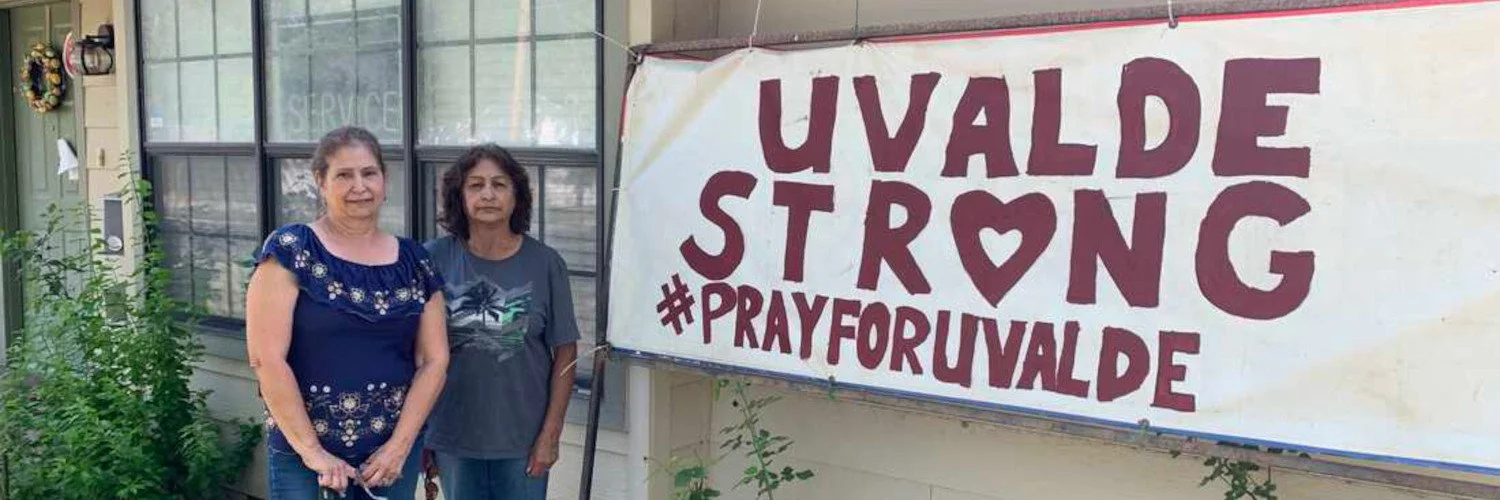
Personal Intention from Fr Gordon MacRae: May 24, 2023 marks one year since the tragic losses of life in Uvalde, Texas. Please pray for the people of this deeply wounded community and for the healing of this community's broken hearts.
+ + +
Our Adoration Chapel founded by Saint Maximilian Kolbe will remain at Beyond These Stone Walls. Jesus came to us through Mary, and now we may reciprocate. Thank you for spending time in Eucharistic Adoration. Please also offer a prayer for me because I am the only one among us unable to see the Chapel.

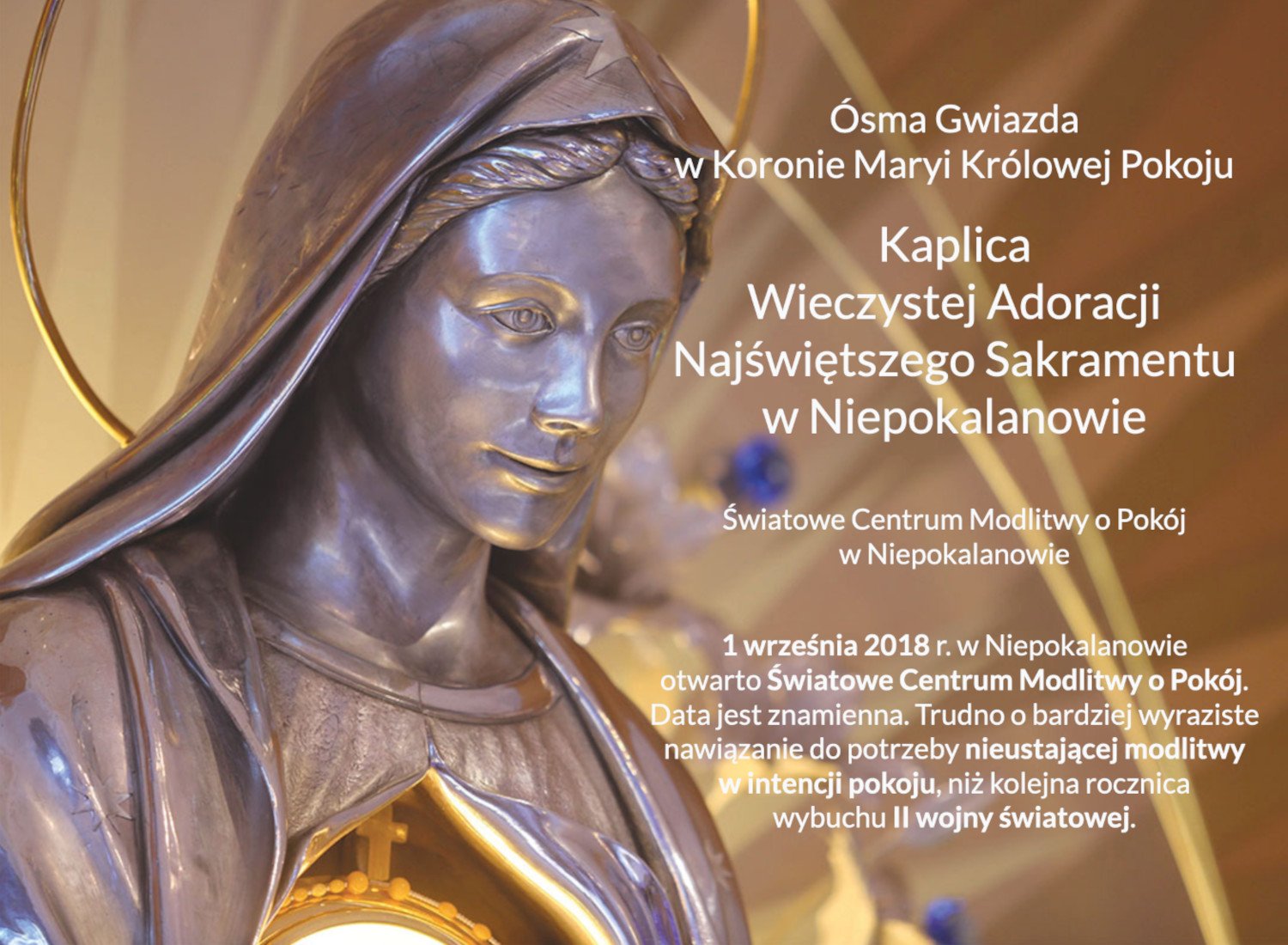

The Eucharistic Adoration Chapel established by Saint Maximilian Kolbe was inaugurated at the outbreak of World War II. It was restored as a Chapel of Adoration in September, 2018, the commemoration of the date that the war began. It is now part of the World Center of Prayer for Peace. The live internet feed of the Adoration Chapel at Niepokalanow — sponsored by EWTN — was established just a few weeks before we discovered it and began to include in at Beyond These Stone Walls. Click “Watch on YouTube” in the lower left corner to see how many people around the world are present there with you. The number appears below the symbol for EWTN.
The following is a translation from the Polish in the image above: “Eighth Star in the Crown of Mary Queen of Peace” “Chapel of Perpetual Adoration of the Blessed Sacrament at Niepokalanow. World Center of Prayer for Peace.” “On September 1, 2018, the World Center of Prayer for Peace in Niepokalanow was opened. It would be difficult to find a more expressive reference to the need for constant prayer for peace than the anniversary of the outbreak of World War II.”
For the Catholic theology behind this image, visit my post, “The Ark of the Covenant and the Mother of God.”
Click or tap here to proceed to the Adoration Chapel.

OpenAI, ChatGPT, HAL 9000, Frankenstein, and Elon Musk
Science Fiction sees artificial intelligence with a wary eye. HAL 9000 stranded a man in space. Frankenstein's creation tried to kill him. Elon Musk has other plans.

Pictured above Elon Musk, HAL 9000 and Frankenstein’s creation.
Science Fiction sees artificial intelligence with a wary eye. HAL 9000 stranded a man in space. Frankenstein’s creation tried to kill him. Elon Musk has other plans.
May 17, 2023 by Fr Gordon MacRae
Nineteen Sixty-Eight was a hellish year. I was 15 years old. The war in Vietnam was raging. Battles for racial equality engulfed the South. Senator Robert F. Kennedy was assassinated on his way to the presidency. Reverend Martin Luther King, Jr was assassinated in a battle for civil rights. Riots broke out at the Democratic National Convention in Chicago and spread to cities across America. Pope Paul VI published “Humanae Vitae” to a world spinning toward relativism. Hundreds of priests left the priesthood just as the first thought of entering it entered my mind. It was the year Padre Pio died. Two weeks earlier he wrote “Padre Pio’s Letter to Pope Paul VI on Humanae Vitae.” Forty-five years later, it became our first guest post by a Patron Saint.
After being a witness to all of the above in 1968, I sat mesmerized in a Boston movie theater for the debut of 2001: A Space Odyssey. The famous film sprang from the mind of science fiction master, Arthur C. Clarke and his short story, The Sentinel, published in 1953, the year I was born. The fictional story was about the discovery of a sentinel — a monolith — one of many scattered across the Cosmos to monitor the evolution of life. In 1968, Earth was ablaze with humanity’s discontent. It was fitting that Arthur C. Clarke ended his story thusly:
“I can never look now at the Milky Way without wondering from which of those banked clouds of stars the emissaries are coming. If you will pardon so commonplace a simile, we have set off the fire alarm and have nothing to do now but wait.”
— The Sentinel, p. 96
The awaited emissaries never came, but most of humankind’s hope overlooked the One who did come, about 2,000 years earlier, the only Sentinel whose True Presence remains in our midst.
Life in 1968 was traumatic for a 15-year-old, especially one curious enough to be attuned to news of the world. The movie, 2001: A Space Odyssey, was a long, drawn out cinematic spectacle, and a welcome escape from our chaos. It won an Academy Award for Best Visual Effects as space vehicles moved silently through the cold black void of space with Blue Danube by Johann Strauss playing in the background. Entranced by it all, I did what I do best. I fell asleep in the movie theater.
I awoke with a start, however, just as Commander David Bowman (Keir Dullea) was cast adrift into the terrifying blackness of space by the ship’s evolving artificial intelligence computer, HAL 9000. Commander Bowman struggled to regain entry to his ship in orbit of one of Jupiter’s moons before running out of oxygen. “Open the pod bay doors, HAL,” he commanded through his radio. “l’m sorry, Dave, I’m afraid I can’t do that,” came the computer’s coldly inhuman reply.
Throughout the film, HAL 9000 was an ominous presence, an evolving artificial intelligence that was crossing the Rubicon to conscious self-awareness and self-preservation. Inevitably, HAL 9000 evolved to plot against human affairs.
Stanley Kubrick wrote the screenplay for 2001: A Space Odyssey in collaboration with Arthur C. Clarke. Their 1968 vision of the way the world would be in 2001 was way off the mark, however. Instead of manned missions to the moons of Jupiter in 2001, al Qaeda was blowing up New York.

A Step Forward or Frankenstein’s Monster?
There were no computers in popular use in 1968. They were a thing of the future. As a high school kid I had only a manual Smith Corona typewriter. Ironically, my personal tech remains stuck there while the civilized free world dabbles anew in artificial intelligence. I would be but a technological caveman if I did not read. So now I read everything.
With recent developments in artificial intelligence, we too are on the verge of crossing the Rubicon. The Rubicon was the name of a river in north central Italy. In the time of Julius Caesar in the 1st century BC, it formed a boundary between Italy and the Roman province of Cisalpine Gaul. In 49 BC the Roman Senate prohibited Caesar from entering Italy with his army. To get around the edict, Caesar made his famous crossing of the Rubicon. It triggered a civil war between Caesar’s forces and those of Pompey the Great.
Today, “to cross the Rubicon” has thus come to mean taking a step that commits us to an unknown and possibly hazardous enterprise. Some think uncontrolled development of artificial intelligence has placed us at such a point in this time in history. Some believe that we are about to cross the Rubicon to our peril. We can learn a few things from science fiction which anticipated these fears.
Also in 1968, another science fiction master, Philip K. Dick, published “Do Androids Dream of Electric Sheep?” It became the basis for the Ridley Scott directed film, Blade Runner, released in 1982, the year I became a priest. The film, like the book, was set in a bleak future in Los Angeles. Harrison Ford was cast in the role of Rick Deckard, a police officer — also known as a “blade runner” — whose mission was to hunt and destroy several highly dangerous AI androids called replicants.
At one point in the book and the film, Deckard fell in love with one of the replicants (played by Sean Young), and began to wonder whether his assignment dehumanized himself instead of them.
In 1818, Mary Shelley, the 20-year-old wife of English poet Percy Shelley, wrote a remarkable first novel called Frankenstein. It was an immediate critically acclaimed success. It evolved into several motion pictures about the monster created by Frankenstein (which was the name of the scientist and not the monster). The most enduring of these films — the 1931 version with Boris Karloff portraying the monster (pictured above) — was the stuff of my nightmares as a child of seven in 1960.
The subhuman monster assembled by its creator from body parts of various human corpses took on the name of its maker, and then sought to destroy him. The novel added a word to the English lexicon. A “Frankenstein” is any creation that ultimately destroys its creator. History tells us that our track record is mixed in this regard. Human creations are the source of both good and evil, but every voice should not have the same volume lest we become like Frankenstein. Just look at the violence through which some in our culture strive to eradicate our Creator.

Truthseeking AI
Writing for The Wall Street Journal (April 29-30, 2023) technology columnist Christopher Mims described the primary source for artificial intelligence in “Chatbots Are Digesting the Internet” : “If you have ever published a blog, or posted something to Reddit, or shared content anywhere else on the open web, it’s very likely you have played a part in creating the latest generation of artificial intelligence.”
Even if you have deleted your content, a massive database called Common Crawl has likely already scanned and preserved it in a vast network of cloud storage. The content by us or about us is organized and fed back to search engines with mixed results. In the process, AI programs itself and can do so with as much preconceived bias as its original human sources. You have likely already contributed to the content that artificial intelligence programs are now organizing into this massive database.
Writing for The Wall Street Journal on April 1, 2023, popular columnist Peggy Noonan penned a cautionary article entitled, “A Six-Month AI Pause?” Ms. Noonan raised several good reasons for pausing our already overly enthusiastic quest to create and liberate artificial intelligence. Her column generated several published letters to the editor calling for caution. One, by Boston technologist Afarin Bellisario, Ph.D warns:
“AI programs rely on training databases. They don’t have the judgment to sort through the database and discard inaccurate information. To remedy this, OpenAI relies on people to look at some of the responses ChatGPT creates and provide feedback. ... Millions of responses are disseminated without any scrutiny, including instructions to kill. ... People (or other bots) with malicious intent can corrupt the database.”
James MacKenzie of Berwyn, PA wrote that “The genie is out of the bottle. Google and Microsoft are surely not the only ones creating generic AI. You can bet [that] every capable nation’s military is crunching away.” Tom Parsons of Brooklyn, N.Y. raised another specter: “Ms. Noonan offers a compelling list of reasons to declare a moratorium on the development of AI. What are the odds that the Chinese government or other malign actors will listen?”
The potential for AI to be — or become — a tool for good is also vast. In medicine, for example, an AI system relies on the diagnostic skills of not just one expert, but “thousands upon thousands all working together at top speed,” according to The Wall Street Journal. One study found that physicians using an AI tool called “DXplain” improved accuracy on diagnostic tests by up to 84-percent. Some AI developers believe that AI should be allowed to learn just as humans learn — by accessing all the knowledge available to it.
In the “Personal Technology” column of a recent issue of The Wall Street Journal, Columnist Joanna Stern wrote, “An AI Clone Fooled My Bank and My Family” (April 29-30, 2023). Ms. Stern wrote about Synthesia, a tool that creates AI avatars from the recorded video and audio supplied by a client. After recording just 30 minutes of video and two hours of audio, Synthesia was ready to create an avatar of Joanna Stern that looked, sounded and acted convincingly like her. Then another tool called ElevenLabs, for a mere $5.00 per month, created a voice clone of Ms. Stern that fooled both her family and her bank. The potential for misuse of this technology is vast, not to mention alarming.

Photo by Daniel Oberhaus (2018)
Elon Musk Has a Better Idea
Elon Musk has been in the news a lot for his attempts to transform Twitter into a social media venue that gives all users an equal voice — and all points of view, within the bounds of law, an equal footing. He has been criticized for this by the progressive left which became accustomed to its domination of social media in recent years. For at least the last decade, Elon Musk has tried to steer the development of artificial intelligence. He was a cofounder of OpenAI, but stepped back when he denounced its politically correct turn left. ChatGPT evolved from OpenAI, but Musk warns of their potential for “catastrophic effects on humanity.”
In early 2023, Elon Musk developed and launched a venture called “TruthGPT” which he bills as “a truth-seeking Al model that will one day comprehend the universe.” Meanwhile, he has called for a six-month moratorium on the development of AI models more advanced than the latest release of GPT-4. “AI stresses me out,” he said. “It is quite dangerous technology.” He is now attracting top scientific and digital technology researchers for this endeavor.
According to a report in The Wall Street Journal, Mr. Musk became critical of 0penAI after the company released ChatGPT late in 2022. He accused the company of being “a maximum profit company” controlled by Microsoft which was not at all what he intended for OpenAI to become. He has since paused OpenAl’s use of the massive Twitter database for training it.
As a writer, I set out with this blog in 2009 to counter some of the half-truths and outright lies that had dominated the media view of Catholic priesthood for the previous two decades. From the first day I sat down to type, even in the difficult and limited circumstances in which I must do so, writing the unbridled truth has been my foremost goal. I am among those looking at the development of artificial intelligence with a wary eye, and especially its newest emanations, OpenAI and ChatGPT.
As I was typing this, a friend in Chicago sent me evidence that St Maximilian Kolbe, the other Patron Saint of this site, was deeply interested in both science and media. As a young man in the 1930s, he built a functioning robot. I was stunned by this because I did the same in the mid l960s. Maximilian Kolbe died for standing by the truth against an evil empire. I think he would join me today in my support for Elon Musk’s call for a pause on further development of AI technology, and for his effort to build TruthGPT.
Those who die for the truth honor it for eternity.
+ + +
“I know I’ve made some very poor decisions recently, but I give you my complete assurance that my work will be back to normal.”
— HAL 9000 to Mission Commander David Bowman after he regained control of the ship and began a total system shutdown of the AI computer
+ + +
Note from Fr Gordon MacRae: Thank you for reading and sharing this post. You may also like these related posts from Beyond These Stone Walls :
Saint Michael the Archangel Contends with Satan Still
The James Webb Space Telescope and an Encore from Hubble
Cultural Meltdown: Prophetic Wisdom for a Troubled Age by Bill Donohue

The Creation of Adam by Michelangelo (detail)

The Eucharistic Adoration Chapel established by Saint Maximilian Kolbe was inaugurated at the outbreak of World War II. It was restored as a Chapel of Adoration in September, 2018, the commemoration of the date that the war began. It is now part of the World Center of Prayer for Peace. The live internet feed of the Adoration Chapel at Niepokalanow — sponsored by EWTN — was established just a few weeks before we discovered it and began to include in at Beyond These Stone Walls. Click “Watch on YouTube” in the lower left corner to see how many people around the world are present there with you. The number appears below the symbol for EWTN.
Click or tap here to proceed to the Adoration Chapel.
The following is a translation from the Polish in the image above: “Eighth Star in the Crown of Mary Queen of Peace” “Chapel of Perpetual Adoration of the Blessed Sacrament at Niepokalanow. World Center of Prayer for Peace.” “On September 1, 2018, the World Center of Prayer for Peace in Niepokalanow was opened. It would be difficult to find a more expressive reference to the need for constant prayer for peace than the anniversary of the outbreak of World War II.”
For the Catholic theology behind this image, visit my post, “The Ark of the Covenant and the Mother of God.”

Justice Clarence Thomas: When a News Story Becomes the News
Despite known threats against Supreme Court justices, an April CNN report revealed the home address of the elderly mother of Supreme Court Justice Clarence Thomas.

Despite known threats against Supreme Court justices, an April CNN report revealed the home address of the elderly mother of Supreme Court Justice Clarence Thomas.
May 10, 2023 by Fr. Gordon MacRae
Hours after I began this post, I was forced to abandon it and start over. Just as I sat before my typewriter, popular FOX News host Tucker Carlson was fired from the network for reasons that I am certain will be clearer but no less controversial by the time this is posted. On the same day, CNN Morning News host Don Lemon was also fired, but entirely unrelated to the FOX News story. Both events shook the world of cable television news media.
Whatever the reasons behind them, however, they could not possibly rise to the clear and present danger posed from a violation of journalistic standards that stayed mostly off the rest of the media radar in recent weeks. The only reference I have seen to its seriousness was in an April 21, 2023 column by James Taranto in The Wall Street Journal entitled, “Justice Thomas and the Plague of Bad Reporting.”
James Taranto is the WSJ Editorial Features Editor. His column that day was a very good report about some very bad journalism. It took a complex development and systematically presented it in clear prose. If you cannot see it due to the WSJ pay wall, I want to present some of its highlights. Its subject was U.S. Supreme Court Justice Clarence Thomas and a short list of supposed “ethics violations” touted in some news venues with lots of partisan spin. Mr. Taranto, especially critical of coverage in two Washington DC media venues, wrote: “The Washington Post and ProPublica commit comically incompetent journalism. But by stirring up animus, they increase the risk of a tragic ending.”
The “risk of a tragic ending” refers to some related coverage at CNN. Among the published claims from ProPublica was a charge that the 92-year-old mother of Justice Clarence Thomas has been living rent free in a property formerly owned in part by Thomas but sold in 2016 to longtime friend, Harlan Crow. When Justice Thomas sold his one-third interest in the property, at a substantial loss, he was required to report the sale, but did not. It was an oversight. A source said that Thomas erroneously believed he did not have to report the sale because he sold it at a loss and none of the entities involved had a case before his Court.
Mr. Taranto went on to explain that the oversight is a rather common one. Justices Ruth Bader Ginsburg, Stephen Breyer and Ketanji Brown Jackson had all committed the same oversight which in each case was corrected by simply filing an amendment to the respective year’s report. That same simple correction should have been afforded to Justice Thomas as well, but instead ProPublica pounced on the story in April, presenting it as a gross violation of judicial ethics. It was an oversight that could have been easily corrected within the rules, but that did not stop The Washington Post from also hyping the story for partisan reasons.
The story, as later reported by CNN, was that, as part of a negotiated $133,363 sale price of the home and property in 2016, then 85-year-old Leola Williams, the mother of Justice Thomas, was given an occupancy agreement by the buyer to be able to remain in her home rent free for the rest of her life. She remained responsible for property taxes and insurance. The occupancy agreement was with her and not with Justice Thomas who sold the modest home at a loss to a company owned by longtime friend, Harlan Crow. Ms. Williams is now 92 years of age.

Ethics and Common Sense at CNN
It is perhaps providential that Harlan Crow’s first name is not “Jim.” It did not take long for the political left to turn this story into a scandal, though with some difficulty. Something terribly nefarious was imagined lurking beneath the fact that a white billionaire might offer such a gesture of mercy to an elderly black woman. Former ProPublica president Richard Tofel wrote of this on Twitter: “Can’t imagine how any reasonable person could distinguish this from Crow giving Thomas cash every month.”
In publishing this story on Monday, April 17,2023, CNN followed this “incompetent reporting” by “increasing the risk of a tragic ending.” The potential tragic ending was this: The CNN report also published the home address of the now 92-year-old mother of Justice Clarence Thomas. That was the only real scandal in this story. With help from a friend, I published the following comment on James Taranto’s Wall Street Journal column:
“In 2022, I was invited by the Pew Research Center to participate in its Survey of Journalists about the state of journalism and news reporting in America, both broadcast and print. One result was a widely expressed dismay by journalists that journalistic ethics are routinely compromised in favor of partisan politics. Apparently, the participating journalists have not done enough to counter this concern.
“The most disturbing part of Mr.Taranto’s column is a revelation that CNN reported the address of the elderly mother of Justice Clarence Thomas. There can be no acceptable explanation for this dangerous and irresponsible setting aside of journalistic ethics in favor of one-sided political gain. The news department at CNN is under new management. Viewers were assured that there would be changes in the way news is presented there. We were promised news with less opinionated partisan influence.
“Whoever at CNN published the address should be fired. Whoever provided oversight to allow this to happen should also be fired, especially in light of other attempted attacks and harassment at the homes of other Supreme Court justices. After this serious breach of ethics, I am deleting CNN from my television channel list until CNN can live up to its promise. This is the only way consumers of the news can speak truth to power. Actions like this at CNN tell me that power takes precedence over truth.”
— Gordon J. Mac Rae, The Wall Street Journal, April 22, 2023

A Jarring 2020 Flashback
This was really all about Roe v. Wade and it could easily be interpreted as a reminder to those off the rails that reprisals are now called for. Addressing a crowd of angry pro-abortion supporters in March 2020, then Senate Minority Leader Chuck Schumer (D-NY) leveled threats against two Supreme Court Justices:
“We know what’s at stake. Over the last three years, women’s reproductive rights have come under attack in a way we haven’t seen in modern history. Republican legislatures are waging a war on women, and they’re taking away fundamental rights. I want to tell you, Gorsuch, I want to tell you Kavanaugh, you have released the whirlwind and you will pay the price. You won’t know what hit you if you go forward with these awful decisions!”
— Senate Minority Leader Chuck Schumer (D-NY)
We all saw the jeering protesters lobbing threats at the homes of conservative Supreme Court justices. Early in the morning of June 8, 2022, two weeks before the leaked decision on Roe v. Wade was formally published, U.S. marshals arrested an armed man trying to break into the home of Justice Brett Kavanaugh. He told police that he had begun “thinking about how to give his life purpose” so he decided to kill Justice Kavanaugh after finding his address on the internet. All of this was known to CNN before publishing the address of the 92-year-old mother of Justice Clarence Thomas.
I know that CNN is not the only news venue that packages news along partisan lines. According to media expert, Alex S. Jones in his 2010 book, Losing the News (Oxford Press). “CNN and MSNBC have shifted their focus from news to opinion in pursuit of FOX News’s highly successful mix of news and advocacy.” In the month before this breach of ethics at CNN, its ratings had soared 35-percent since the New York indictment of former president Donald Trump. Its audience base was already highly charged. And it goes without saying that if Donald Trump had said in public what Senator Chuck Schummer said on the steps of the Supreme Court, that story would have eclipsed all other news.
A March 26, 2023 You Gov poll of trust in broadcast news services asked respondents to address two questions: 1) which of the following TV networks do you watch to keep up with the news? And 2) Which TV networks do you most trust for news? The combined results were definitive: Fox News 41%; ABC News 24%; CNN 22%; CBS 22%; NBC 21%; MSNBC 18%.
Whether our readers agree with the partisan spin of any of these news networks is beside the point. There is clearly a ratings war going on, and networks that have trailed in ratings have also suffered a decline in advertising dollars, the networks’ sole source of income. Most viewers who consistently choose one network over another tend to do so not just because they want the news, but also because they want their own belief system to be affirmed. This was the number two complaint among journalists in the recent Pew Research Center Survey of Journalists in which I and this blog were invited to participate.
Taking part in that survey is not a bragging point. If anything, it made me realize how much I am also a slave to a news service and its fundamental frame of mind. The blending of news and opinion is a toxic but alluring mix. Once I became conscious of this, I have tried to view news networks with opposing views, but it hasn’t been easy. Two years after the election of 2020, one of these networks remains dedicated to 24-hour coverage of “get Trump at any cost.” Another seems wedded to the idea that we are all unrepentant racists. When I leave a news program feeling angry and riled, just imagine how an already fired-up mob is responding.
At least one cooler head has prevailed. After reading the above column and two recent sequels by The Wall Street Journal’s James Taranto, I am convinced that the ethics claims against Justice Clarence Thomas are entirely contrived and reported along partisan lines to support a strictly partisan bias.
Along those same lines, the Gallup Poll now reports that 70% of Democrats, 27% of Independents, and only 14% of Republicans say they have a great deal or a fair amount of trust and confidence in the current state of journalism.
Have an opinion? I would love to hear it, but please don’t shoot the messenger!
+ + +
Two final notes from Fr. Gordon MacRae:
Forty-four years ago on May 11, 1979, my friend Father Joseph Sands was murdered in the rectory of St. Rose of Lima parish in the town of Littleton, New Hampshire. The years to follow revealed that this troubling story had many mysterious tentacles into the case that sent me to wrongful imprisonment. Ryan A. MacDonald untangled those tentacles in “The Story Buried Under the Fr. Gordon MacRae Case.”
On a very different note, Sunday May 14 is Mothers Day in the United States. It is a day to honor our mothers, both living and deceased. I would like to think that after all these years of injustice, I managed to bring some poetic justice to my mother in “Mothers Day Promises to Keep, and Miles to Go Before I Sleep.”


The Eucharistic Adoration Chapel established by Saint Maximilian Kolbe was inaugurated at the outbreak of World War II. It was restored as a Chapel of Adoration in September, 2018, the commemoration of the date that the war began. It is now part of the World Center of Prayer for Peace. The live internet feed of the Adoration Chapel at Niepokalanow — sponsored by EWTN — was established just a few weeks before we discovered it and began to include in at Beyond These Stone Walls. Click “Watch on YouTube” in the lower left corner to see how many people around the world are present there with you. The number appears below the symbol for EWTN.
Click or tap the image for live access to the Adoration Chapel.
The following is a translation from the Polish in the image above: “Eighth Star in the Crown of Mary Queen of Peace” “Chapel of Perpetual Adoration of the Blessed Sacrament at Niepokalanow. World Center of Prayer for Peace.” “On September 1, 2018, the World Center of Prayer for Peace in Niepokalanow was opened. It would be difficult to find a more expressive reference to the need for constant prayer for peace than the anniversary of the outbreak of World War II.”
For the Catholic theology behind this image, visit my post, “The Ark of the Covenant and the Mother of God.”

Canon Law Conundrum: When Moral Certainty Is Neither Moral Nor Certain
Convoluted moral justification is employed by Jesuits of the USA Central and Southern Province to publish a list of priests with ‘credible’ allegations of abuse.

The Stoning of Saint Stephen by Rembrandt
Convoluted moral justification is employed by Jesuits of the USA Central and Southern Province to publish a list of priests with ‘credible’ allegations of abuse.
May 3, 2023 by Michael J. Mazza, JD, JCD
Introduction by Fr. Gordon MacRae: It is an honor and a privilege to publish this important guest post by Michael J. Mazza, JD, JCD, (pictured below at the Vatican) a highly regarded canon lawyer, civil attorney, and law professor with broad experience in the canonical defense of Catholic priests. His post is a sequel of sorts to my post in these pages last week, “Follow the Money: Another Sinister Grand Jury Report.” His post introduces us to a newly articulated standard for removing priests from ministry adopted by a Jesuit Province in the United States. It is a standard that left me shuddering over the rapid decline of due process rights for priests. Like other such draconian standards, I fear its use will spread like a virus.
Back in August, 2019, Ryan A. MacDonald wrote a featured post for Beyond These Stone Walls entitled “In the Diocese of Manchester, Transparency and a Hit List.” It has been one of our most widely read posts of recent years and continues to be so. Ryan wrote about the injustice of publishing names of accused priests when the basis for deeming a claim to be ‘credible’ is a standard of justice not employed or even recognized in any other legal forum. It essentially means that an allegation of abuse is only “possible,” but not necessarily “probable.” It should be the beginning of a Church investigation, but it has widely become the end.
This is a standard that is now employed by nearly every bishop in every diocese, and it is rapidly spreading throughout the Church. Michael Mazza’s post to follow understandably has a bit more ‘legalese’ than usually comes from my typewriter, but it is a brilliant eye-opener.
There was a smoldering cloud just above my head as I three times read the Jesuits’ confounding justification for censuring and removing priests. In a word, it is mind-boggling.
This post shines a much needed light on the need for canonical justice and advocacy for accused priests. It is highly recommended to us by Fr. Stuart MacDonald, a frequent Beyond These Stone Walls contributor and a candidate for the Doctorate in Canon Law. Please share this post widely, especially among the priests you know.

When Moral Certainty Is Neither Moral Nor Certain
Two months ago the Jesuits USA Central and Southern Province released an updated registry of Jesuits with “credible allegations of sexual abuse of a minor.” As a canonical advocate representing priests accused of misconduct, I was involved in one of the cases referenced. Given the requirements of canon law and my professional duties, I am limited in what I can say about the case. What I can discuss — in fact, what I feel I must rectify — is the grievous error of law contained in the Jesuit Province’s published statement, a mistake that despite my best efforts has gravely damaged the reputation of a good priest and respect for the rule of law in the Church.
The most problematic part of the statement appears in its first paragraph:
“For the purposes of this list, a finding of credibility of an allegation of sexual abuse of a minor is based on a belief, with moral certitude, after careful investigation and review by professionals, that an incident of sexual abuse of a minor or vulnerable adult occurred, or probably occurred, with the possibility that it did not occur being highly unlikely. ‘Moral certitude’ in this context means a high degree of probability, but short of absolute certainty. As such, inclusion on this list does not imply the allegations are true and correct or that the accused individual has been found guilty of a crime or liable for civil claims.”
It is difficult to know where to begin with an analysis of this confounding passage. Did the event happen or not? We are told on the one hand that being included on the list “does not imply the allegations are true and correct.” At the same time, however, we are told that “after careful investigation” and “review by professionals,” the allegation has been determined “with moral certitude” to have “occurred or probably occurred.” In fact, the statement says the possibility that the events did not occur “is highly unlikely.”
While such a confusing statement may appear to have been crafted by two opposing camps of a drafting committee, the real world consequences of it were clear, especially because it was accompanied by the usual invitation for victims of abuse to come forward. The news was reported as a “shock” to the students at the university where the priest had been a popular professor, leaving some brokenhearted and in tears. A theology professor said the news had “shaken” him and his colleagues, with one priest colleague concluding thus: “It’s mind-boggling that anyone would do such a thing, period end of story.”
Conclusions like these are not surprising. What is surprising — and what ought to be profoundly disturbing to those who value the rule of law — is that they have no legal basis whatsoever. Like so many of his priestly brethren in the USA accused of canonical crimes these days, the priest at issue was never given the benefit of a trial during which he could have defended his innocence. Instead, the priest was on the receiving end of what is known in canon law as a “preliminary investigation,” a technique under canon 1718 of the 1983 Code of Canon Law that is designed solely to determine whether there is sufficient indicia to warrant the launching of a full-blown canonical process. Only after this formal process, whether judicial or administrative, may a penalty be inflicted or declared. And it is only through this formal process that “moral certainty” — the canonical equivalent of “beyond a reasonable doubt” — may be achieved under the law.
An analogy may prove helpful here. Suppose that Mary, a juror in a domestic abuse trial, learns of allegations that John abused Jane. Mary hears from Jane, the only witness at the trial, about the details of her charge. Mary knows only that John denies the accusation, but does not hear from him because John is not present at the trial. In fact, neither John nor his defense counsel is even invited to the trial. If Mary nevertheless arrives at John’s guilt “beyond a reasonable doubt,” in spite of the fact that John was not allowed to exercise his natural human right to self-defense, what would we say about Mary’s judgment?
All analogies limp, and several objections could immediately be raised with respect to this one. Just because there were no other witnesses does not mean that there was no abuse, a sin and a crime that is horrible and was often covered up in the past, especially in ecclesial circles. While these statements are certainly true, summarily dismissing valid concerns about violations of the due process rights of accused clerics is not a solution to the sex abuse crisis. On the contrary, it only perpetuates a continuing injustice and creates an atmosphere of fear, mistrust, and division within the ecclesial community. That is not a sustainable path forward.
It needs to be emphasized that a canonical preliminary investigation is typically performed by an individual (most often but not always a former law enforcement official) whose only job is to assemble indicia substantiating an allegation. The investigator then presents these indicia to a review board, generally constituted by lay people (at least some of whom are to have experience in law or psychology), who make a recommendation to the religious superior or bishop about whether a full-blown canonical investigation should be initiated.
In some ways, the work of a review board is similar to that of a grand jury. Grand juries, like review boards, are supposed to act as shields against arbitrary, unfounded, and malicious accusations of wrongdoing by ensuring that serious accusations are brought only upon the considered judgment of a representative body acting according to the rule of law. Grand juries, like review boards, do not decide whether the accused is guilty; they merely decide whether there is probable cause to believe that a crime occurred and probable cause to believe that the person accused committed that crime. In short, grand juries, like review boards, decide only whether there is enough evidence to proceed to the next stage in the judicial process.
This is because of the deliberately one-sided nature of grand jury proceedings. Only the prosecutor — not the defense — gets to address the grand jury. All of the important safeguards of justice are saved for the real trial that comes only after the grand jury has performed its important task. Nevertheless, all this means that in a very real way the life and reputation of a fellow citizen are in the hands of the grand jurors. Indictments, like recommendations from review boards, often receive press coverage in which these legal niceties are overlooked, meaning that the reputation of the person accused is harmed and his life thrown into turmoil.
Many accused priests never get a trial, “period end of story.” Nevertheless, their lives are thrown into turmoil, beyond any doubt. What do we make of subsequent decisions by accused clerics to abandon the fight, or to leave religious life and/or the active priesthood? One could certainly infer guilt from it, and many people do just that. But isn’t it also possible that there are other reasons for such momentous decisions? With no forum to clear their names, and in spite of repeated and consistent denials of the charge — and the lack of any criminal proceedings or any record from a related civil trial — isn’t it at least possible that some clerics simply despair of ever clearing their names and just decide to move on with their lives as best they can?
Catholics should be very wary of making judgments about their fellow human beings. We have been cautioned against it by Our Lord himself (see, e.g., Mt. 7:1-3). In fact, as legal scholar James Q. Whitman has shown in his 2016 book The Origins of Reasonable Doubt, the original basis for the “beyond a reasonable doubt” standard was to encourage reluctant jurors to reach guilty verdicts when the evidence pointed strongly in that direction. Why were they reluctant? Because they feared judging their neighbors, both because of the possible vengeance of the guilty person’s relatives in this world and because of their belief in being judged in the next world.
None of what has been stated in this article is unknown to the American bishops — or, even more importantly, to their lawyers. In fact, in November 2000 the United States Conference of Catholic Bishops issued an insightful commentary on the American criminal justice system entitled “Responsibility, Rehabilitation, and Restoration: A Catholic Perspective on Crime and Criminal Justice.” That statement, as of this writing, is still available on the USCCB website. Issued less than two years before the Dallas Charter, the document criticizes notions such as “zero tolerance” and “simplistic solutions such as ‘three strikes and you’re out,’” with the latter being labelled specifically as a “slogan of the moment.” The paper goes on to quite rightly assert that “crime, corrections, and the search for real community require far more than the policy clichés of conservatives and liberals.”
Notwithstanding such statements, real harm is happening to real men on a daily basis in this country in the name of “transparency.” Perhaps few priests in America know the pain that such sloganeering can inflict as Father Gordon MacRae. Incarcerated for almost three decades after a trial described as “Kafkaesque” by Fr. Richard John Neuhaus. Fr. MacRae not only steadfastly maintains his innocence, but from his prison cell faithfully maintains his website “BeyondTheseStoneWalls.com,” dedicated to drawing attention to the plight of his brother priests and the dangers wrought by violations of the right to due process. MacRae’s case stands as an especially stark example of how pre-trial public statements from his diocese prejudiced his cause, defamed him, and likely helped lead to his wrongful conviction.
In summary, it is essential to note that judging cases involving allegations of child sexual abuse is an enormously painful and difficult process for all involved: the accuser, the accused, and all those involved in the case. Decisions one way or the other can be life-altering. They are not made any easier by those who comment upon them without a firm understanding of both the facts and the applicable law. While legal processes do not come with a guarantee of infallibility, they are a time-tested tool used throughout the centuries for the determination of facts. Legal principles such as moral certainty, the presumption of innocence, and the duty to refrain from unfairly violating someone’s right to a good name are, likewise, bedrock principles of any society. We neglect these valuable tools at our peril.
+ + +
About the Author: Michael J. Mazza, JD, JCD graduated summa cum laude in 1999 from Marquette University Law School in Milwaukee where he was Editor in Chief of the Law Review. He subsequently clerked for the Hon. John L. Coffey on the 7th Circuit Court of Appeals in Chicago. After 20 years in civil law practice, Michael began studies in canon law at the Pontifical University of the Holy Cross in Rome from where he graduated magna cum laude in 2021 with a license in canon law (JCL)
In 2022, Michael successfully defended his thesis for the Doctorate in Canon Law (JCD). His topic was also the topic of an excellent article published in the Tulsa Law Review: “Defending a Cleric’s Right to Reputation and the Sexual Abuse Scandal in the Catholic Church.”
Michael is today an adjunct professor of canon law at Marquette University and at Sacred Heart Seminary and School of Theology outside of Milwaukee, Wisconsin. He also represents clients in need of canonical counsel, especially accused priests. If any priest needs canonical assistance Michael can be reached through his website at www.CanonicalAdvocacy.com or by email at mjmazzajdjcd@pm.me.
+ + +
Note from Fr. Gordon MacRae: I am most grateful to Professor Mazza for this alarming but important chapter in the cause of justice and due process for priests. You may also like to read and share these related posts from Beyond These Stone Walls :
Follow the Money: Another Sinister Sex Abuse Grand Jury Report by Fr. Gordon J. MacRae
Bishops, Priests and Weapons of Mass Destruction by Fr. Stuart MacDonald, JCL
In the Diocese of Manchester, Transparency and a Hit List by Ryan A. MacDonald
Priests in Crisis: The Catholic University of America Study by Fr. Gordon J. MacRae


The Eucharistic Adoration Chapel established by Saint Maximilian Kolbe was inaugurated at the outbreak of World War II. It was restored as a Chapel of Adoration in September, 2018, the commemoration of the date that the war began. It is now part of the World Center of Prayer for Peace. The live internet feed of the Adoration Chapel at Niepokalanow — sponsored by EWTN — was established just a few weeks before we discovered it and began to include in at Beyond These Stone Walls. Click “Watch on YouTube” in the lower left corner to see how many people around the world are present there with you. The number appears below the symbol for EWTN.
Click or tap here to proceed to the Adoration Chapel.
The following is a translation from the Polish in the image above: “Eighth Star in the Crown of Mary Queen of Peace” “Chapel of Perpetual Adoration of the Blessed Sacrament at Niepokalanow. World Center of Prayer for Peace.” “On September 1, 2018, the World Center of Prayer for Peace in Niepokalanow was opened. It would be difficult to find a more expressive reference to the need for constant prayer for peace than the anniversary of the outbreak of World War II.”
For the Catholic theology behind this image, visit my post, “The Ark of the Covenant and the Mother of God.”

Follow the Money: Another Sinister Sex Abuse Grand Jury Report
Targeting Holy Week and Easter, Maryland Attorney General Anthony Brown released a grand jury report on unproven decades-old claims of abuse by Catholic priests.

Targeting Holy Week and Easter, Maryland Attorney General Anthony Brown released a grand jury report on unproven decades-old claims of abuse by Catholic priests.
April 26, 2023 by Fr. Gordon MacRae
In Baltimore, Maryland, excluding the rest of the state, there were 1,018 victims of gun violence in 2022. Of that number, 338 are classified as homicides in Baltimore City alone. There have been 80 additional homicides in the first three months of 2023. The State of Maryland currently has 74 unsolved cold case homicides. And yet, the Maryland Attorney General invested vast resources in a grand jury report released this year just as Catholics the world over prepared to honor Holy Week and Easter. The Wall Street Journal carried the story on Holy Thursday by journalists Scott Calvert and Jon Kamp headlined: “Baltimore Archdiocese Long Allowed Abuse of Children, AG’s Report Says.” The article opened with a paragraph now painfully familiar to U.S. Catholics:
“BALTIMORE — Scores of priests and other people affiliated with the Archdiocese of Baltimore sexually abused hundreds of children over more than 60 years, and church officials often protected the perpetrators while keeping their crimes a secret, Maryland’s attorney general said in a new report.”
News coverage of the recent grand jury indictment of former President Donald Trump by New York City District Attorney Alvin Bragg has illuminated the grand jury process with lots of commentary by legal minds. You have likely heard it said that “a grand jury could indict a ham sandwich.” It means that a grand jury is an entirely one-sided prosecutorial affair. There is no cross-examination of witnesses, no testimony from the accused, often even no testimony from an accuser, and no defense of any kind. If the legal process stops there, as it did in the Maryland Grand Jury Report, accusations alone are the end of the road. Due process of law and the Bill of Rights are rescinded.
The WSJ article went on to point out that of the 156 alleged priestly perpetrators whose names came before this grand jury with accusations dating back to 1940, no one was indicted. Most of the subjects of the report are either long ago deceased or the statute of limitations has long since expired for any legitimate legal prosecution. Anyone who would dismiss this as “just a legal loophole” does not understand the U.S. justice system at all. These rules of due process were not adopted by the Founders to inhibit justice, but to protect it. Some allegations in the report stretch back more than 70 years with not a single claim that is less than two decades old. The report makes no effort to distinguish between allegation and proven conviction.
The WSJ article eventually got to the real agenda behind this story. On the same day the report was released, the Maryland legislature passed a bill that, if signed into law, will eliminate the statute of limitations for sexual abuse claims — not for criminal prosecutions, but solely for civil claims to result in deep-pocket lawsuits for monetary settlements. Maryland Attorney General Anthony Brown has orchestrated a great gift to the state’s tort lawyers each of whom will now stand to amass upwards of forty percent of every settlement or jury award. This is not about real abuse or real victims of abuse.
The legislation caps settlements or damage awards for private institutions at $1.5 million per claim. A lawyer who extorts such settlements could pocket up to $600,000 for each claim filed from hereon. Public institutions — such as public schools which receive a vastly larger number of abuse claims — are typically exempt from such legislation. The bill’s foremost target is the Catholic Church, an unjust reality that I once wrote about in a centerpiece article for Catalyst, the Journal of the Catholic League for Religious and Civil Rights, entitled, “Due Process for Accused Priests” (July/August 2009).

How an Attorney General Becomes a Governor
The Maryland Grand Jury Report is a mirror image of a similar report published in 2018 by then Pennsylvania Attorney General Josh Shapiro who, in 2022, was predictably elected Governor. I wrote of that report and its shocking historical precedent in, “Attorney General Josh Shapiro and Joseph Goebbels in ‘The Reckoning.’”
After its initial shock value, and after its political rewards were reaped, the 2019 Pennsylvania Grand Jury Report was widely exposed as a slanted and deeply unjust application of law. I expect the same will follow closer examination of the Maryland report. One journalist who has dismantled the credibility of the former is David F. Pierre, Jr., moderator of The Media Report and the author of four published books on the sexual abuse narrative in the Catholic Church. His most recent, The Greatest Fraud Never Told, is subtitled, False Accusations, Phony Grand Jury Reports, and the Assault on the Catholic Church. Here is an excerpt:
“No other episode in the Catholic Church sex abuse story has more epitomized the reality of ‘groupthink’ mentality than the Pennsylvania grand jury report.... Attorney General Josh Shapiro stood before an enormous throng of national and international media to make the incredible claim that ‘over 300 priests’ in Pennsylvania had sexually abused ‘over 1,000 children’ in the last several decades while Church officials ‘did nothing’ and ‘covered it all up’.”
— The Greatest Fraud Never Told, p. 34
Dave Pierre went on to describe how ‘every action by Shapiro was a masterful stroke of public relations media exposure to enhance his own public profile’ as he prepared to run for higher office:
“Shapiro called a local poster company to create a new, official-looking seal to be placed behind him as he broadcast his grand jury report to the world. Whereas the official seal of his office displayed ‘Commonwealth of Pennsylvania’ along the top and ‘Office of the Attorney General’ along the bottom, Shapiro not only flipped them, but replaced the words with ‘Attorney General Josh Shapiro’ so everyone across the globe could now easily see his name behind his head as he stood at the podium.”
— The Greatest Fraud Never Told, p. 34
The Democratic Party has since thrown Josh Shapiro’s name out as a potential future White House contender. In just about every jurisdiction where a similar grand jury report was constructed and released to the public slamming the Catholic Church, the exploitation of an upward political trajectory was its unstated goal. David Pierre went on in his book to ask a most important question: “Were the claims from Shapiro’s grand jury report actually true?” “In a nutshell,” he wrote, “No, not at all.” He offers a simple explanation of what a grand jury is and does:
“A ‘grand jury report’ is simply a report written by government attorneys with a predetermined outcome. The folks in the [grand jury] are merely a formality, window dressing to make the entire matter legal. The jury does not actually investigate a case, question witnesses, or scrutinize all sides of a story. It simply listens to one-sided proceedings orchestrated by prosecutors. There is no fact-checking, no cross examination, and no due process.”
— The Greatest Fraud Never Told, p. 35

How Grand Jury Reports Defeat Justice
Multiple states have had grandstanding prosecutors harboring political ambitions propelled forward with sensationalized grand jury reports that singled out the Catholic Church and priesthood as some sort of special arena of historical child sexual abuse. But as my title implies, we should follow the money for an understanding of what drives this.
New Hampshire, the state from which I write, has been no exception. In 2003, a grand jury report here caused much damage to the state of due process for priests accused when the local Catholic bishop waived the rights of all the accused without their knowledge.
But when a New Hampshire attorney general went on to apply the same to a grand jury report on a local prestigious prep school with an alumni list that looks like a Who’s Who of Washington insiders, a local judge blocked publication of that grand jury report. In so doing, the judge acknowledged that a similar grand jury report on my diocese, the Diocese of Manchester, should never have been published regardless of a Bishop’s signature waiving our due process rights.
NH Superior Court Judge Richard B. McNamara explained why in his Order entitled, “Re, Grand Jury, No. 217-2018-CV-00382.” This is a story that I wrote about in a widely read 2019 post, “Grand Jury, St. Paul’s School, and the Diocese of Manchester.”
The following are pertinent excerpts from Judge McNamara’s Order:
“The grand jury is one of the oldest institutions of Anglo American law, and to some extent, one of the most problematic. The United States Supreme Court recently rejected the traditional view of the grand jury as an arm of the courts, describing it as a separate institution that has not been ‘textually assigned’ to any of the three branches of government described in the federal Constitution.
“The original purpose of the grand jury was not only to increase the number of criminal prosecutions but to enhance the King’s authority and indirectly to increase revenue for the Crown which received the property forfeited by persons accused of crimes. But by the 17th Century, English grand juries had begun to act as an institution that could shield the innocent from unfounded charges. By the time of the American Revolution, English law characterized the grand jury as one of the principal protections against arbitrary government prosecution.
“Yet by the middle of the 19th Century there was no longer a consensus regarding the value or appropriate function of the grand jury.... The late 19th Century concern that grand juries were inquisitorial procedures that pose a threat to individual liberty was reflected in language that the Constitution did not require states to institute felony prosecutions by grand jury and suggested that the earliest grand juries were little more than a mob.
“The prevailing view of the federal courts is that grand juries have no common law authority to make accusations against individuals falling short of an indictment... A grand jury report that does not result in an indictment but references supposed misconduct results in a quasi-official accusation of wrongdoing drawn from secret ex parte proceedings in which there is no opportunity available or presented for a formal defense.
“The Florida Supreme Court described a grand jury report finding a public official guilty of wrongdoing without affording him a trial as ‘not far removed from, and no less repugnant to traditions of fair play, than lynch law.’ (Report of Grand Jury, 93 So. 2d 99, 102 (Fla. 1957).
“In the public mind, accusation by report is indistinguishable from accusation by indictment and subjects those against whom it is directed to the same public condemnation ... as if they had been indicted. An indictment charges a violation of a known and certain public law, and is but the first step in a long process in which the accused may seek vindication through exercise of the right to a public trial, to a jury, to counsel, to confrontation of witnesses against him, and, if convicted, to an appeal. … A [grand jury] report, on the contrary, is at once an accusation and a final condemnation. Its potential for harm is incalculable.
“[This] Court respectfully disagrees with the [2003] decision to approve the [New Hampshire] Diocese-OAG Agreement [which] fulfilled none of the traditional purposes of the common law grand jury. Rather than investigation of crime, the report is a post hoc summary of information the grand jury considered, but did not indict on.
“Mark Twain famously said that a lie is half way around the world while the truth is putting on its shoes. In an internet age, he might have added that the lie will forever outrun the truth as search engines become ever more efficient. An allegation of wrongdoing or impropriety based upon half-truths, illegally seized evidence or rumor, innuendo or hearsay may blight an individual’s life indefinitely.
“Accordingly, the Court DENIES the Office of the Attorney General Motion. The Attorney General may not produce any report that contains any material produced to the grand jury through subpoena or testimony or that is characterized as a ‘Grand Jury Report.’”
— Presiding Justice Richard B. McNamara August 12, 2019
Just two weeks before Judge McNamara issued that Order and published it, Bishop Peter A. Libasci of the Diocese of Manchester, of his own accord, published a list of 73 priests who had been accused and condemned in the 2003 Diocese of Manchester Grand Jury Report. Most of the priests on the list were long since deceased. None of them were afforded constitutional due process. Bishop Libasci cited “transparency” as his motive for publishing this list.
The motive of Maryland Attorney General Anthony Brown for releasing his one-sided report as Catholics observed Holy Week and Easter seems clear. What is less clear is the legal basis for such a report and especially for widely publishing it. The Maryland Attorney General’s Grand Jury Report should be seen in light of all of the above.
A lot of people, primarily lawyers and claimants, will profit greatly from this latest official state government travesty of justice, but it should not be the basis for whether or how you exercise your faith, or your membership in this Mystical Body that we call a Church. It should also never be the source of your own determination of any priest’s guilt or innocence.
This story is, as David F. Pierre Jr. has described it, The Greatest Fraud Never Told.
+ + +
To our readers: Thank you for reading and sharing this important post. Next week at Beyond These Stone Walls it is our privilege to welcome an internationally known expert in Canon Law on due process crisis in the priesthood. It is an excellent sequel to this post.
You may also be interested in these related links that beg to be read and shared:
Attorney General Josh Shapiro and Joseph Goebbels in ‘The Reckoning’
Grand Jury, St Paul’s School, and the Diocese of Manchester


The Eucharistic Adoration Chapel established by Saint Maximilian Kolbe was inaugurated at the outbreak of World War II. It was restored as a Chapel of Adoration in September, 2018, the commemoration of the date that the war began. It is now part of the World Center of Prayer for Peace. The live internet feed of the Adoration Chapel at Niepokalanow — sponsored by EWTN — was established just a few weeks before we discovered it and began to include in at Beyond These Stone Walls. Click “Watch on YouTube” in the lower left corner to see how many people around the world are present there with you. The number appears below the symbol for EWTN.
Click or tap the image for live access to the Adoration Chapel.
The following is a translation from the Polish in the image above: “Eighth Star in the Crown of Mary Queen of Peace” “Chapel of Perpetual Adoration of the Blessed Sacrament at Niepokalanow. World Center of Prayer for Peace.” “On September 1, 2018, the World Center of Prayer for Peace in Niepokalanow was opened. It would be difficult to find a more expressive reference to the need for constant prayer for peace than the anniversary of the outbreak of World War II.”
For the Catholic theology behind this image, visit my post, “The Ark of the Covenant and the Mother of God.”

For the Soul of a Nation: In Defense of Religious Liberty
The Catholic League for Religious and Civil Rights and the present U.S. Supreme Court are all that stand in the way of the gradual annihilation of religious liberty.

The Catholic League for Religious and Civil Rights and the present U.S. Supreme Court are all that stand in the way of the gradual annihilation of religious liberty.
April 19, 2023 by Fr. Gordon MacRae
Early in 2023, a global Internet tracking service reported that there are more than two billion active websites, 600 million of which are blogs publishing over 2.5 billion posts per year — including this one. Back in 2010 when this blog was in its infancy with a much smaller readership, a site called The Crescat reviewed a variety of blogs it categorized as Catholic blogs.
A moderator divided them into further categories and asked for reader input to sort them out. Somehow, this blog showed up on The Crescat’s radar, but it defied easy description. I wrote about everything. So in the end we were given the dubious distinction of “Best Under-Appreciated Catholic Blog.”
I do not look for recognition in writing, but that may not seem evident when publishing a single weekly post that competes for readers with about 50 million other weekly posts. I also never called this blog a “Catholic blog.” It has no Imprimatur, no Nihil Obstat, and no official recognition from any official Catholic institution, but neither do any other Catholic blogs.
As a writer, I have to earn Catholic “street cred” the hard way. “Street cred” is a term I hear a lot in my present environment. It refers to “street credibility.” In prison it is considered a standard of personal integrity, a sort of consistency of being. Having pulled oneself up from the school of hard knocks translates into a badge of honor for some and a cause for disdain for others. The Catholic Writers Guild invited this blog’s participation while the Catholic Media Association rather bluntly refused it.
“The School of Hard Knocks” is a literary term defined by The American Heritage Dictionary as, “the practical experiences of life, including hardships and disappointments that temper and educate a person.” It isn’t easy for a priest — even one in prison — to claim such a thing, but in recent years some priests could be considered for this distinction. For a Catholic priest, being falsely accused and unjustly in prison is like the postgraduate level of the school of hard knocks.
This blog has always struggled against tidal forces to survive. So you might understand my surprise a few years back when readers of Our Sunday Visitor cited Beyond These Stone Walls as “The Best of the Catholic Web” in the area of Spirituality. Then Catholic Culture gave it highest marks for content, excellence, and fidelity. Then About.com awarded it second place in the category of Best Catholic Blogs. Being where I am, I did not even know about some of this. Do they not know from whence I write?
But for me, the “street cred” with the most impact has come from the Catholic League for Religious and Civil Rights, the largest, most influential, and most visible organization dedicated to the defense and preservation of religious liberty. Catholic League President Bill Donohue has repeatedly recognized this blog as a source of credible Catholic witness in dark times. And Bill Donohue himself has recently been cited by the Catholic Herald in the U.K. as one of the top religious leaders in the U.S.
On a dozen occasions recently, Bill Donohue and the Catholic League have cited and promoted posts from Beyond These Stone Walls sending tens of thousands of readers to this site. Each cited post covered some aspect of religious liberty or controversial currents in the Church that impact religious freedom. These posts are now collected on the page, “Cited by the Catholic League.”

Image Credit: Collection of the Supreme Court of the United States
A Growing Culture of Hostility to Religion
On July 21,2022, Supreme Court Justice Samuel Alito spoke at the University of Notre Dame Religious Liberty Summit in Rome. This excerpt of his address, published in The Wall Street Journal (August 4, 2022) exemplifies the dire importance of our attention to the state of religious freedom. From Justice Samuel Alito:
“I am reminded of an experience I had in a museum in Berlin. One of the exhibits was a rustic wooden cross. A woman and young boy were looking at this exhibit. The young boy turned to the woman, presumably his mother, and said, ‘Who is that man?’ The memory has stuck in my mind as a harbinger of what may lie ahead for our culture. The problem that looms is not just indifference to religion; it is not just ignorance about religion. There is also growing hostility to religion.
“A dominant view among legal academics is that religion does not merit special protection. A liberal society, they say, should be value-neutral, and therefore it should treat religion just like any other passionate personal attachment — like rooting for a favorite sports team, pursuing a hobby, or following a popular artist or group. Now I think we would all agree that in a free society, people should be free to pursue those avocations. But do they really merit the same protection as the exercise of religion?”
— Supreme Court Justice Samuel Alito, July 21, 2022
In a different recent address, Vice President Kamala Harris cited the Declaration of Independence. She emphasized that the document “guarantees all Americans the right to liberty and the pursuit of happiness.” But there was an intentional glaring omission. The Vice President conspicuously left out the most fundamental of inalienable rights, the Right to Life. It is a right rooted in religious liberty, recognizing both life and religious freedom as rights given by God and not simply by the whim of government.
I have strong reason to now believe that the Catholic League for Religious and Civil Rights and the current United States Supreme Court are all that stand in the way of the annihilation of the Right to Life and Religious Liberty in America. A Catholic League annual membership fee is a small price to pay for lending your name in defense of the most basic of our unalienable rights, the right to practice and profess your faith even in a secular world.
I admit to having a vested interest in this. More than any other voice, the Catholic League for Religious and Civil Rights has treated me with open-minded justice and fairness. The Catholic League has also advocated for my friend, Pornchai Moontri as he languished in ICE detention for five grueling months during the pandemic in 2020 and 2021. To great effect, Bill Donohue and the Catholic League petitioned the White House to move Pornchai’s case forward from the bureaucracy in which it was stalled.

A Movement Defending Parental Rights
The Catholic League has also recently distinguished itself as a staunch defender of parental rights. One of my posts cited and recommended this year was “Disney’s Disenchanted Kingdom versus Parental Rights.” That post was about the production of a documentary sponsored by the Catholic League entitled, “Walt’s Disenchanted Kingdom” which has received wide acclaim.
In a recent news release, Catholic League President Bill Donohue described some of its accolades. The film was just one entry among films from 22 nations in the L.A. International Short Film Festival. “Walt’s Disenchanted Kingdom” was nominated for six categories and won in four of them awarding it Best Documentary, Best Editing, Best Sound Design, and an Honorable Mention for Best Trailer. The latter three awards were in a broader field than just the documentaries alone. They were judged the best of all films presented to the International Film Festival. “Walt’s Disenchanted Kingdom” is now also nominated for Best Documentary and Best Poster Design at The Prisma Film Festival in Rome, Italy.
Some on the political left have remained stubbornly tone deaf to the assault on parental rights that the Disney franchise has recently embraced. Parental demands to be heard have upended the political spectrum in Virginia and Florida and are now spreading across the playing field of U.S. politics. To suggest that religion does not belong in that arena may be a fair assessment, but Religious Liberty as an unalienable right certainly does belong in the political sphere, and so does parental rights.
More recent examples of the tone deaf politics arising out of the debate over Parental Rights in Education have come from two prominent New York House Democrats. House Minority Leader Hakeem Jeffries (D-NY) characterized the Parental Rights in Education bill in Congress thusly: “Extreme MAGA Republicans don’t want your child to learn about the LGBTQ+ experience.” He deserves our thanks for making our point so succinctly. Rep. Alexandria Ocasio Cortez (D-NY) described the Parental Bill of Rights as “fascism,” adding, “Our children need urgent and aggressive educational solutions. When we talk about progressive values, I can say what my progressive value is: It is freedom over fascism.”
There is not much left to say after that. They have made our point for us. Please consider lending your voice to the Catholic League efforts to preserve and protect our freedoms. You may become a member or subscribe for free email news releases at: www.catholicleague.org.
Bill Donohue’s new book, War on Virtue: How the Ruling Class Is Killing the American Dream, was published yesterday and is available on Amazon and Sophia Institute Press.
+ + +

A Message to Our Readers from Fr. Gordon MacRae
In recent months, a number of readers have suggested that I compile some of our past posts into a series of published books. I think the popularity of the Prison Journal by George Cardinal Pell raised this idea among some of our readers. I have been moved beyond words that I had a substantial presence in the late Cardinal Pell’s Prison Journal Volume Two.
I am also moved by the Journal itself and the many similarities in our respective prison experiences. The late Cardinal Pell and I responded to prison in much the same way, boldly facing the absence of anything that supports our faith or our priesthood. It is amazing how important something becomes when you can no longer have it. Cardinal Pell's Prison Journal is a legacy for the whole Church. So is his final message which was one of our posts recommended by the Catholic League: “The Vatican Today: Cardinal Pell’s Last Gift to the Church.”
The exoneration of Cardinal Pell was the answer to a prayer. At the time of his exoneration by Australia’s highest court, he had spent just over 400 days in unjust imprisonment. At the time I was storming Heaven for his freedom, I marked 10,000 days and nights in prison. Australia’s justice system is not the same as in the United States. A release based on wrongful conviction here is very hard won. An effort to review my case and restore my freedom is still underway. My faith and my priesthood are also still intact, and they inform and empower my survival.
Compiling past posts into my own version of a Prison Journal like Cardinal Pell’s is not possible, however. I have no access at all to the online world or to income, and that has been so for a much longer period of time. I cannot even see and have never seen this blog. I have no access to almost 14 years of writing published at this site. With severe restrictions on space, I have no access to printed copies of past writings. I have only a list of titles and I reference them only on memory.
But perhaps we have done the next best thing. When These Stone Walls, the prior version of this blog, evolved into Beyond These Stone Walls in 2020, we added the BTSW Public Library with multiple categories. We have slowly been restoring past posts to add them to the respective categories. Some of our categories have considerably more posts than others. This is because I pay more attention to some category subjects than others. Because I have abiding interest in Sacred Scripture, for example, I have written many posts about it.
The BTSW Public Library is set up like an ordinary library’s card catalog except that it is digital. Each category has a title and top image. Once you tap or click on either one, you will enter that category to scroll through a list of images and titles for each post. When you find a post that interests you, just tap or click on the image. When you close it, you will remain in the same category to peruse it further if you wish.

Abuse of the Abuse Crisis
The newest Category in our Library is “Abuse of the Abuse Crisis.” This is an important Category for me because it contains posts about how others have magnified and exploited the abuse crisis in the priesthood for their own ends and agendas. There has been no shortage of people who — out of vindictiveness or greed or just anti-Catholic bias — have used our crisis to tear down the priesthood and your faith. The posts in Abuse of the Abuse Crisis tell a riveting story about the costs of such abuse not only to the Church’s financial future, but to our lives as priests and your lives as Catholics. Real abuse has made us all ashamed, but the amount of fraud and bias is an outrage.
My interest in developing this special Library Category came from an experience with watching CNN a few years ago. A CNN commentator told the world that During a protest at the Vatican, 100,000 victims of sex abuse by priests were refused an audience with the Pope.” I was alerted to this story from several readers so, to the extent I was able, I looked more closely under the hood.
It turned out that SNAP, the Survivor’s Network of Those Abused by Priests, did in fact stage a “victims’ protest” near the Vatican. The number of people present was about 40 — of which more than half were media people invited in advance to the photo op. The actual protesters were very few, and actual victims fewer still. By the time the story reached CNN, 40 became 100,000. I sent this story to Bill Donohue at the Catholic League and he followed it with a protest of his own. CNN apologized and promised to be more vigilant with its facts.
We must not accept such distortions blindly just because they appear in the news media. A post at this new category, second from the top, also addressed this same story. The SNAP-sponsored trip to Rome later became part of an employee lawsuit against SNAP in which the organization was exposed for fraud, a lawyer kickback scheme, and misused donor funds — some of which paid for a high end junket at first class hotels for this protest in Rome. I expect 100,000 people will now visit my Abuse of the Abuse Crisis page. Well ... maybe it will be closer to 40, but you might understand how such numbers are easily confused.
There are other important additions. You may have noticed the “Documents” feature in the menu at Beyond These Stone Walls. You will find there some important documents in the case against me and also a section with documents on the Pornchai Moontri story. Both sets of documents have been equally visited and l consider both to be of great importance to the cause of justice. Over 16 years of listening to the constant tap-tap-tap of my typewriter, Pornchai more than earned an honored place at this blog.
We have recently added a new item atop the documents section in my own case. It was recently prepared for a legal review through a new set of eyes. The document is entitled “Synopsis of the Case.”
Finally, for those who want to help me personally, and/or contribute to maintaining this blog or aiding me in support of Pornchai Moontri and Fr. John Hung Le, we have added access to a Zelle Account in addition to our existing PayPal Account. Zelle is easier and less expensive to use, but presently only available in the United States. Please visit our “Contact and Support” page or “Special Events” for further information.
Thank you for coming here. May the Lord Bless you and keep you.

The Eucharistic Adoration Chapel established by Saint Maximilian Kolbe was inaugurated at the outbreak of World War II. It was restored as a Chapel of Adoration in September, 2018, the commemoration of the date that the war began. It is now part of the World Center of Prayer for Peace. The live internet feed of the Adoration Chapel at Niepokalanow — sponsored by EWTN — was established just a few weeks before we discovered it and began to include in at Beyond These Stone Walls. Click “Watch on YouTube” in the lower left corner to see how many people around the world are present there with you. The number appears below the symbol for EWTN.
Click or tap the image for live access to the Adoration Chapel.
The following is a translation from the Polish in the image above: “Eighth Star in the Crown of Mary Queen of Peace” “Chapel of Perpetual Adoration of the Blessed Sacrament at Niepokalanow. World Center of Prayer for Peace.” “On September 1, 2018, the World Center of Prayer for Peace in Niepokalanow was opened. It would be difficult to find a more expressive reference to the need for constant prayer for peace than the anniversary of the outbreak of World War II.”
For the Catholic theology behind this image, visit my post, “The Ark of the Covenant and the Mother of God.”

Divine Mercy Reunites Pornchai Moontri and His Brother
Midway on life’s arduous path, Divine Mercy entered the lives of Pornchai Moontri and Fr. Gordon MacRae. When the road led to Thailand, Divine Mercy was there too.

Midway on life’s arduous path, Divine Mercy entered the lives of Pornchai Moontri and Fr. Gordon MacRae. When the road led to Thailand, Divine Mercy was there too.
April 12 , 2023 by Fr. Gordon MacRae
Pornchai Moontri entered the Catholic faith on Divine Mercy Sunday in 2010. To some who knew him, it was a most unlikely conversion story but it was a transformation in his very core. This story is my story as well. The Lord asked me to be an instrument in restoring life and hope to this prisoner even while in prison myself. Though Pornchai now lives on the far side of the world from me, he is still very much a part of my life and the life of this blog. His most recent post for these pages was the very moving “Elephants and Men and Tragedy in Thailand.”
As most readers of this blog know, Pornchai (which in Thai means “Blessing”) was my roommate for 16 years in the draconian confines of this prison. Out of both necessity and deprivation, we became each other’s family. Pornchai was not just a transient along the twists and turns of my life. I learned over time that our paths crossed for a divinely inspired reason.
With new information, I won a reprieve for Pornchai who was released after 29 years in prison. I did my best to accompany and support him through a gruesome five-month ordeal in ICE detention at the height of a global pandemic. He finally emerged free in Bangkok, Thailand on February 24, 2021 with nothing but the clothes he was wearing. The life he vaguely remembered before he was taken as a child of eleven was gone. Because of the posts I wrote about us, a small group of devout Catholics who formed Divine Mercy Thailand recruited Father John Hung Le and Khun Chalathip, a benefactor of Father John’s refugee work, to give Pornchai shelter. Mary herself chose them for this task just as she chose me.
That is not an exaggeration. It might seem strange to someone not versed in Catholic spiritual life, but at some point I became aware that through the intercession of Saint Maximilian Kolbe in both our lives, The Immaculata involved herself in a special way in Pornchai’s life and well being. Then she involved me through intricately woven threads of actual grace over time.
In 2022, in “Divine Mercy in a Time of Spiritual Warfare,” I wrote of the compelling signs of Mary’s interventions in our lives. After Pornchai’s conversion to the Catholic faith, we took part in the “33 Days to Morning Glory” retreat written by Marian Fr. Michael Gaitley who would become a friend to us. Depicted atop this post, our Consecration to Jesus through the Immaculate Heart of Mary took place in 2013 on the Solemnity of Christ the King.
I once mistakenly believed that this path was all about me and my priesthood in exile, but the truth was confirmed for me when Marian Helper magazine published “Mary Is at Work Here” in 2014. The article by Felix Carroll includes these startling paragraphs:
“The Marians believe that Mary chose this particular group to be the first [invited to Marian Consecration]. The reason eventually was revealed. It turned out that one of the participating inmates was Pornchai Moontri who was featured in last year’s Marian Press title, Loved, Lost, Found: 17 Divine Mercy Conversions. (See the Chapter entitled “Pornchai Moontri”) .
“Pornchai experienced a dramatic conversion in no small part due to a friendship formed with fellow inmate and cellmate Fr. Gordon MacRae who chronicles their lives in his celebrated website, Beyond These Stone Walls. Fr. Gordon joined Pornchai in the Consecration and called it 'a great spiritual gift.' It opened a door to the rebirth of trust during a dark time for both men. Great suffering requires great trust.”

From Dante’s Inferno to Purgatorio
Many readers already know the most painful parts of this story. Pornchai and his brother, Priwan, were two and four years old respectively when they were abandoned in rural Thailand by a young mother desperate to find work to provide for them. She traveled to Bangkok where she fell under the control of an evil man. She was but a teenager. Nine years later, when her sons were ages 11 and 13 with no memory of her, they were taken from Thailand to the United States where they both became victims of sexual and physical violence.
Pornchai and Priwan became homeless adolescents fending for themselves in a foreign land in the mid-1980s, and they became separated. I and others investigated this story, wrote about it, and ultimately, with God’s grace, brought their abuser to justice. In September 2018, thirty years after his ruinous offenses, Richard Alan Bailey was convicted in Maine of 40 felony counts of child rape.
I discovered that at some point their mother learned the truth, but when she vowed to seek justice for her sons, she was murdered. This account is told in an article that may shake your faith in the justice system but strengthen your faith in Divine Providence. It is, “Getting Away with Murder on the Island of Guam.”
In the sixteen years in which Pornchai lived in a bunk just above me in the Concord, New Hampshire prison, the first few years were a bit rough. Looking back, Pornchai today says that the rough part was all him. He never set out to harm anyone, but in a Maine prison at age 18, facing a dark future alone, Pornchai vowed to never again become someone’s victim. He kept people away with a constant state of anger. As a result, he spent the next seven years alone with his raging thoughts in the cruel madness of solitary confinement.
When Pornchai could be held in solitary no longer, the State of Maine decided to just get rid of him. He was chained up in a van and taken to another prison in another state. He could have been taken anywhere, and he had no idea where he was going, but he landed just one state away in New Hampshire. He ended up in a familiar place solitary confinement.
When he emerged months later, Pornchai could have been sent to any of three New Hampshire prisons each with multiple housing units reflecting varying levels of security. By some mysterious grace, he was moved in with me. It was providential that just before his arrival in New Hampshire,The Wall Street Journal published its first articles about my plight. Somehow, Pornchai read them.
The context for this story is essential. Understandably, Pornchai trusted no one. Just imagine his inner struggle when he learned that he was now to live in a prison cell with a Catholic priest convicted of sexual abuse. Others told me to sleep with one eye open, but it did not take long for Pornchai to learn that I was not at all like the man who destroyed his life.
When I offered Mass in my cell late at night, it was Pornchai who was sleeping with one eye open. He watched me, and later he questioned me. When I told him about the Mass he asked if he could stay awake for it. I taught him to read the Mass readings and I explained the Eucharist along with a restriction that he cannot receive the Body of Christ unless he came to believe. Did he dare to believe in anything good in this world?
Pornchai and I lived in the same cell for two years before I began writing from prison. When we spoke about an invitation I received to write for this blog, I told Pornchai that it might somehow find its way around the world to Thailand. I did not actually believe that myself, but that is exactly what happened.
Here is Pornchai’s perspective on the first year of this blog given to me in a recent phone call to Thailand:
“When I was living in the bunk above Father G he would sometimes hand some typed pages up to me. Sometimes I thought they were interesting. Sometimes they kept me awake, and sometimes they just put me to sleep. But one time — I don’t remember the post — Father G included some paragraphs from the book, Dante’s Inferno. [It’s the first part of a three-part book, The Divine Comedy, by Dante Alighieri in 1307]. When I read the passage, I thought, “This is the story of my life!” Father G found it and here it is:
“Midway on my life’s journey, I went astray from the straight path and woke to find myself alone in a dark wood. How shall I say what wood that was? I never saw so drear, so rank, so horrible a wilderness! Its very memory gives shape to fear. Death could scarce be more bitter. But since it came somehow to good, I will recount all that I found revealed there by God’s grace. How I came to it I cannot rightly say, so drugged and loose with sleep had I become when I first wandered from the True Way. But at the far end of that valley of evil, whose maze had sapped my heart with fear, I found myself upon a little hill, and there I lifted up my eyes...”
— Dante, The DivineComedy: Inferno, 1307
“Living with Father G., I thought I had finally left hell and now I was in Purgatory with him. I came to trust him. He was the only person in my life who always looked out for my best interest and never put his own first. So now I turn this story back over to Father G.”

From Dante’s Purgatorio to Paradiso
Learning from this blog about what we both faced in this prison without support or family, some readers came to our aid. Thanks to their modest gifts of support, we were suddenly eating a little better and were able to purchase things that made life here a little easier. The slow and tedious passage of time in prison sped up. I made a promise to Pornchai that he would never again be abandoned and stranded in life. I can only say that I am filled with gratitude, not only to our readers, but to God and our Mother Mary, the Immaculata, under whose mantle Saint Maximilian Kolbe led us both. He ratified a covenant with us when Pornchai was received into the Church on Divine Mercy Sunday in 2010. There was now meaning in all the injustice I had endured.
I began to write posts that would reach around the world to navigate a path home for Pornchai. There were small miracles of connection, one after another, and the lights of Divine Mercy began to illuminate both of our exiled souls. This story was not without setbacks and challenges, however.
In 2017, Pornchai and I became separated. It came at a most stressful time just as we learned that Pornchai must be deported to Thailand immediately upon leaving prison. I knew that the few years we had left together were crucial for his well being. What happened next was a miracle. There is no other explanation for it.
On July 17, 2017, I was summoned from my work in the prison law library. I was handed a few plastic bags and was told that I have one hour to unravel my life from the 23 years I had spent in that punitive and confining building and move to another place. I asked that Pornchai also be called from his work to help me. I was shaken, and did not want him to return that day just to find me inexplicably gone. As Pornchai helped me pack, our despondence was like a dark cloud. Prison has no knowledge of Divine Mercy and places no value on human relationships.
An hour later, we wheeled a small cart out of that building, across the long walled prison yard, up a series of ramps, and then in between some other buildings to a housing unit called Medium South. I knew about it, but I had never before seen it. A gate in the high wall opened up, and in we went.
I felt like Dorothy Gale having just crashed in the Land of Oz after a tornado uprooted our lives. After 23 years locked in with no outside at all — 13 of them with Pornchai — this new place was built around a park-like setting with outside access nearly around the clock. And there were flowers! People I knew came running down to carry my things. I was led to the top floor from where I could see over the walls into forests and hills beyond.
Then came this wonderful scene’s collision with a broken heart. From there, I watched as Pornchai passed all alone back through that gate down below, possibly never to be seen again by me again. Friendship means nothing in prison bureaucracies. We were powerless to change this and I was powerless to decline this move. On the next day after a sleepless night, I learned that Pornchai was also moved — but somewhere else. Our faith was shaken and it began to crumble.
Pornchai was moved to another unit. We both knew that no one ever returns from there. Not ever! Over the next two weeks I prayed daily asking Saint Maximilian, our Patron Saint ,to bring this before the Heart of Mary for a word to her Son. Surely, she could undo this knot. After all, it was upon her word that He changed water into wine at the wedding feast at Cana (John 2:1-10).
On the following Sunday, Pornchai was able to attend a Catholic Mass in the prison chapel. We had only a minute to speak after Mass. I asked him to trust, and to hand this over to our Mother. Pornchai just nodded in silence. Then I picked up a Missalette and saw a prayer, the Memorare. I asked Pornchai to pray with me:
“Remember, O most gracious Virgin Mary, that never was it known that anyone who fled to your protection, implored your help, or sought your intercession was left unaided. Inspired with this confidence, we fly unto you, O Virgin of Virgins, our Mother. To you do we come, before you we stand, sinful and sorrowful. O Mother of the Word Incarnate, despise not our petition, but in your mercy, hear and answer us. Amen.”
Each day to follow was under a dark cloud. Three days later, on a Wednesday afternoon, I returned from my work in the prison law library. As the gate to Medium South slid open, another prisoner was waiting for me. I usually sit on a bench there for a few minutes before climbing up the 52 stairs to my cell, but the person standing there told me I was needed up there right away.
I arrived to find Pornchai unpacking and moving into the bunk above me where, just a few hours earlier, some other prisoner lived. The smile on Pornchai’s face told the story. “How did this happen?” I asked. Pornchai said, “I think you already know.” He had no explanation. He said he was suddenly called to an office and told to pack and move to Medium South, Pod 3-Bravo, Cell 4. He had no idea the address was mine until he got there and saw my possessions in the 60-square-foot cell.
We were able to spend the next three years becoming ready, and we were ready. Pornchai remained my roommate until September 8, 2020 when he was handed over to ICE for deportation to Thailand. There was another miracle yet to come, and I wrote of it in “For Pornchai Moontri, A Miracle Unfolds in Thailand.”

Epilogue : A Prodigal Son and His Older Brother
It has long been my mission in life to restore the life of another person stranded in the twists and turns of this story. After an absence of 38 years, Pornchai’s brother, Priwan has been saving and hoping to travel to Thailand. For the first time since they were taken away in 1985, he will be reunited with Pornchai in Thailand. Priwan’s flight departs Boston on Divine Mercy Sunday arriving in Bangkok on the day after.
Priwan cannot remain there, but he wants to restore his Thai citizenship and the identity that was taken from him as Pornchai had already begun to do. Priwan will spend a month with Pornchai, the first time they have been together since the tragedy of their lives separated them 38 years earlier. I have promised to help, and that is my other prayer.
Mary is still at work here, and I am still in her service.
+ + +


Left: Pornchai greets his brother Priwan in the company of Khun Chalathip, his Thai tutor, upon arrival at the Bangkok International Airport. Right: Having arrived with clothing from the state of Maine, Priwan needed to find something more suitable to Thai weather. It was 113℉ that day. (Photos by Father John Hung Le, SVD)
Note from Fr. Gordon MacRae:
Thank you for reading and sharing this Divine Mercy story. To help me in this Corporal Work of Mercy, or to support Beyond These Stone Walls, please see our “Contact and Support” page. You may also wish to read these related posts:
Divine Mercy in a Time of Spiritual Warfare
Elephants and Men and Tragedy in Thailand
Loved, Lost, Found: The Chapter on “Pornchai Moontri”
For Pornchai Moontri, A Miracle Unfolds in Thailand
And you must not miss...
Getting Away with Murder on the Island of Guam
+ + +
And available until Pentecost:

The Eucharistic Adoration Chapel established by Saint Maximilian Kolbe was inaugurated at the outbreak of World War II. It was restored as a Chapel of Adoration in September, 2018, the commemoration of the date that the war began. It is now part of the World Center of Prayer for Peace. The live internet feed of the Adoration Chapel at Niepokalanow — sponsored by EWTN — was established just a few weeks before we discovered it and began to include in at Beyond These Stone Walls. Click “Watch on YouTube” in the lower left corner to see how many people around the world are present there with you. The number appears below the symbol for EWTN.
Click or tap the image for live access to the Adoration Chapel.
The following is a translation from the Polish in the image above: “Eighth Star in the Crown of Mary Queen of Peace” “Chapel of Perpetual Adoration of the Blessed Sacrament at Niepokalanow. World Center of Prayer for Peace.” “On September 1, 2018, the World Center of Prayer for Peace in Niepokalanow was opened. It would be difficult to find a more expressive reference to the need for constant prayer for peace than the anniversary of the outbreak of World War II.”
For the Catholic theology behind this image, visit my post, “The Ark of the Covenant and the Mother of God.”

Simon of Cyrene Compelled to Carry the Cross
Simon of Cyrene was just a man coming in from the country to Jerusalem for the Passover when his fated path intersected the Way of the Cross and Salvation History.

Simon of Cyrene was just a man coming in from the country to Jerusalem for the Passover when his fated path intersected the Way of the Cross and Salvation History.
Holy Week 2023 by Fr. Gordon MacRae
I first wrote about Simon of Cyrene in Holy Week, 2010. While restoring that post, I ended up completely rewriting it. It led me almost immediately to a vivid example of the descent of this world at a time when faith invites us to ascend to Eternal Life. We are all going to die. It is an ordinary part of life. But don’t just die. Set out now for home. The only true path to life leads “To the Kingdom of Heaven through a Narrow Gate.”
A single sentence about Simon of Cyrene in each of the Synoptic Gospels conveys a wealth of meaning with a roadmap to the way home. Several readers told me privately and in comments that they were struck by these last few sentences in a recent post that mentioned Pornchai Moontri. In “God in the Dock: When Bad Things Happen to Good People,” I wrote,
“It was upon reading [a] passage from Pope Benedict that Pornchai made his decision to journey with me from the Exodus, through the desert, to the Promised Land toward which we, in hope, are destined. Faith never rescued us from our trials, but it taught us to carry one another's cross like Simon of Cyrene. That is the key to Heaven. Even in suffering and sorrow, it is the key to Heaven.”
Under the weight of Earthly Powers, this world loses sight of our true destiny while the great masses of people focus only on what they have stored up in this life. When a bank fails those whose treasury contains little more than money in life, people panic, some even commit suicide. It's a tragedy unfolding before our very eyes in the weeks leading up to Holy Week.
I turn 70 years old on Easter Sunday this year. It haunts me to reflect on how much the values of this world have changed in my lifetime. While researching this post about Simon of Cyrene, I came across a reference to The Greatest Story Ever Told, a 1960 United Artists film production of the life of Jesus from his birth to his Resurrection. Today, many of the woke denizens of Hollywood might shun such a project, but in 1960 it drew an enormous cast of Hollywood stars clamoring to be part of 'it.
Some of the film industry's most stellar actors were cast, some surprisingly in even minor roles: Max von Sydow portrayed Jesus, Dorothy McGuire was Mary, Claude Rains was Herod the Great, Jose Ferrer was Herod Antipas, Charlton Heston was John the Baptist, Telly Savalas was Pontius Pilate. He shaved his head for the role and never grew his hair back again. This is why he was bald when he played the famous NYPD detective, Kojak. David McCallum was Judas Iscariot. The list of Hollywood stars goes on and on.
The great John Wayne was cast as a captain of the Roman Centurions who professed his belief in Jesus at the foot of the Cross, as depicted in the top graphic on this post. John Wayne became a Catholic not long after this film. Today, his grandson is a Catholic priest in California.
Simon of Cyrene was portrayed by Sidney Poitier who three years later won an Academy Award for his portrayal of a drifter who became a handyman for a community of nuns in Lillies of the Field. He was an interesting choice to play Simon of Cyrene. In New Testament times, Cyrene was a major city in Northern Africa with a large Jewish population in what is present day Libya. It was the home of Lucius, a prophet and teacher of Antioch mentioned in Acts 13:1, and of Simon, a man who ventured to Jerusalem for the Passover but found himself in the wrong place at the wrong time or, depending on your perspective, in the right place at the right time.

Weep Not for Me, Jerusalem
My first inkling to learn about Simon of Cyrene was during Holy Week in 2000, nine years before this blog began. An old friend planning a visit to the Holy Land asked me to write a prayer that he promised to leave in a crevasse in the famous Western Wall. Known popularly as the “Wailing Wall,” it was built by Herod the Great (who was not so great, really!). That section of wall was all that remained standing after the destruction of the Jerusalem Temple by the Romans in 70 AD. Known in Hebrew as “ha-Kotel ha-Maaravi,” it is today one of the holiest pilgrimage sites in the Holy Land.
According to the Midrash, a collection of ancient rabbinic scholarship, the Wall survived the destruction of the Temple because the Shekhinah, the Divine Presence, rests there. My friend left my handwritten prayer in a crevasse in that Wall. Just a day later, during a historic pilgrimage to the Holy Land, Pope John Paul II left his own prayer in that same place in the Wall. I recall hoping that his was not blocking mine!
On that same day, just beyond the city walls, my friend came upon a tourist area where a photographer was capitalizing on the presence of the Pope. He tried to coax my friend into picking up a mock cross and carrying it for a photograph. My friend was appalled by the disconnect between what happened at Calvary 2000 years earlier and what was happening in that present scene. He refused to pick up the cross.
Reflecting on the scene upon his return from Jerusalem, my friend wrote to me in prison asking, “What can you tell me about Simon of Cyrene?” His question took me to a single sentence in each of the Synoptic Gospels from which I felt compelled to unpack some hidden meaning. It turned out that there was much to unpack.
Jesus, denounced by the Chief Priests, tried and condemned before Pilate, was mercilessly scourged to the point of near death. Roman soldiers tasked with his crucifixion feared that he may die before the ascent of Golgotha while bearing history's heaviest cross. Roman law allowed soldiers to press Jews into service for Rome so they forced a passerby to assist the “King of the Jews” as recounted in all three of the Synoptic Gospels:
“As they went out, they came upon a man of Cyrene, Simon by name; this man they compelled to carry the cross.”
— Matthew 27:32
“And as they led [Jesus] away, they seized one Simon of Cyrene, who was coming in from the country, and laid on him the cross to carry it behind Jesus.”
— Luke 23:26
“And they compelled a passer-by, Simon of Cyrene who was coming in from the country, the father of Alexander and Rufus, to carry his cross.”
— Mark 15:21

Sidney Poitier as Simon of Cyrene in The Greatest Story Ever Told
He Was There When They Crucified My Lord
Crucifixion was entirely unknown in Jewish history until the Roman occupation of Palestine in 31 BC. Sacred Scripture, however, contained echoes of the sacrifice to come. Some 2,000 years before Jesus ascended Calvary bearing his Cross, Abraham was summoned by God to sacrifice his son, Isaac in the land of Moriah (Genesis 22).
Israelite tradition (2 Chronicles 3:1) identifies Moriah as the site of the future Jerusalem Temple. What became Golgotha or Calvary was one of its foothills. Obedient but brokenhearted, Abraham placed upon his son the wood for his sacrifice and together they climbed Mount Moriah.
Isaac asked his father, “Where is the lamb for the sacrifice?” Abraham answered, “God will provide himself the lamb for the offering, my son” (Genesis 22:8). In the end, an Angel of the Lord stayed Abraham’s hand, and his obedience became the basis for God’s covenant with Israel. Two millennia later, in that same place, God Himself did provide the lamb for the sacrifice. Hence, in our Liturgy, Jesus is the “Lamb of God who takes away the sins of the world.”
Crucifixion was a common form of capital punishment among Persians, Egyptians, and Romans from the 6th century BC to the 4th century AD. The punishment was ritualized under Roman law which required that a criminal be scourged before execution. The accused had to carry the entire cross or just the crossbeam from the place of scourging to the execution. Crucifixion was abolished in 337 AD by Emperor Constantine out of respect for the emergence of Christianity in the Roman Empire. Jews carried out their own form of capital punishment by stoning, but the Romans forbade such executions when they occupied Palestine. This is why Jesus was handed over to Pilate for trial.
The gruesome punishment of crucifixion was reserved by the Romans for criminals, seditionists, and slaves. Roman law forbade the crucifixion of a citizen for any crime. Saint Paul, who was a Roman citizen, could not be crucified so he was martyred by Emperor Tertullian, likely by beheading, in 60 A.D.
When Pilate had Jesus scourged, he may have instructed his tormentors to go beyond the usual torture hoping to convince the Sanhedrin and the mob that scourging was punishment enough. That plan failed when the crowd, spurred on by the Chief Priests, shouted “Crucify Him!”
However Jesus had been beaten so severely that Roman soldiers doubted that he could carry his cross the entire distance to Calvary alone. Note that I use the terms “Golgotha” and “Calvary” interchangeably. They are one and the same place. Golgotha is a Greek translation from an Aramaic word meaning “Place of the Skull,” a name likely derived from the fact that many executions were carried out there. “Calvary” is derived from “calvaria,” the Latin translation of Golgotha.
A condemned man was then led through the crowds to the place of crucifixion. Just as today, most of the people in the crowds assumed that an all-powerful and righteous state has justly condemned a real criminal to punishment, so many joined in the mocking and humiliation even if they knew nothing of the accused or the alleged crime. It was part of the ritual. Along the way, the condemned was forced to carry his cross — or at least the crossbeam upon which his arms would be tied and his hands or wrists nailed (see John l9:l7).
In 1994, the year I was sent to prison, archeological remains of a crucified man were discovered intact near Jerusalem. It was the first evidence of what actually took place in a typical Roman crucifixion.
It is unclear from the Gospel passages above exactly what part of the Cross was imposed upon Simon of Cyrene. Luke’s Gospel refers to Simon carrying the Cross behind Jesus, a position which also came to be symbolic of discipleship. It is likely that Jesus, like other condemned, carried the crossbeam upon which he would be nailed, while Simon may have carried the vertical beam or the rear of the entire Cross.
I learned from Mel Gibson’s famous film, The Passion of the Christ, that Simon of Cyrene is the person in the Gospel to whom I can most relate. I did not pick my cross willingly, nor do I willingly carry it. I did not see it as a share in the Cross of Christ at first. Few of us ever do.
The Passion of the Christ portrayed with power what I have always imagined must have become of Simon of Cyrene. Something stirred within him compelling him to remain there. He became a part of the scene, setting his own journey aside. The lights went on in Simon’s soul and he became compelled not just from Roman force, but from deep within himself.
Note that Saint Mark alone mentions that Simon of Cyrene had two sons, Alexander and Rufus. The Gospel implies that both became well known to the early Church. Being the earliest of the Gospels to come into written form, Mark addressed his Gospel to Gentile Christians in Rome. So did Saint Paul in his Letter to the Romans. Mark was with Paul at the time he was imprisoned in Rome so he was likely aware of Simon’s profound transformation as a witness to the Crucifixion and Saint Paul’s knowledge of his sons, Rufus and Alexander cited in Saint Mark’s Gospel.
Hence in the concluding verses of Paul’s Letter to the Romans Paul wrote: “Greet Rufus, eminent in the Lord, and also his mother who is a mother to me as well” (Romans 16:13).
+ + +
Note from Fr. Gordon MacRae: Thank you for reading and sharing this post which is now on our list of Holy Week posts for our sponsored Holy Week Retreat. It is not too late to follow the Way of the Cross this week by pondering and sharing our


The Eucharistic Adoration Chapel established by Saint Maximilian Kolbe was inaugurated at the outbreak of World War II. It was restored as a Chapel of Adoration in September, 2018, the commemoration of the date that the war began. It is now part of the World Center of Prayer for Peace. The live internet feed of the Adoration Chapel at Niepokalanow — sponsored by EWTN — was established just a few weeks before we discovered it and began to include in at Beyond These Stone Walls. Click “Watch on YouTube” in the lower left corner to see how many people around the world are present there with you. The number appears below the symbol for EWTN.
Click or tap the image for live access to the Adoration Chapel.
The following is a translation from the Polish in the image above: “Eighth Star in the Crown of Mary Queen of Peace” “Chapel of Perpetual Adoration of the Blessed Sacrament at Niepokalanow. World Center of Prayer for Peace.” “On September 1, 2018, the World Center of Prayer for Peace in Niepokalanow was opened. It would be difficult to find a more expressive reference to the need for constant prayer for peace than the anniversary of the outbreak of World War II.”
For the Catholic theology behind this image, visit my post, “The Ark of the Covenant and the Mother of God.”

A Personal Holy Week Retreat at Beyond These Stone Walls
Each year since 2010, Fr Gordon MacRae composed from prison a special Holy Week post. These posts follow the Way of the Cross creating a personal Holy Week retreat.

Each year since 2010, Fr Gordon MacRae composed from prison a special Holy Week post. These posts follow the Way of the Cross creating a personal Holy Week retreat.
March 29, 2023 by Fr. Gordon MacRae
As many of our readers know, this blog began in controversy in 2009. It was born out of a challenge from the late Cardinal Avery Dulles to rise above suffering and consider its legacy. Many posts in this Prison Journal have been about the injustices that I and other priests have faced. But in the weeks before his death in December 2008, Cardinal Dulles sent a series of letters to me in prison. He challenged me to dig deeper into my own passion narrative. Cardinal Dulles wrote:
“Someone might want to add a new chapter to the volume of Christian literature from those unjustly in prison. In the tradition of Dietrich Bonhoeffer, Fr Alfred Delp, Fr Walter Ciszek, and Saint Paul, your writing, which is clear, eloquent and spiritually sound, will be a monument to your trials.”
And so in preparation for Holy Week in 2010, I began to make a concerted effort to set aside my own unjust plight for a time to write a post about the ascent to Calvary. Then I repeated that effort year after year, with each post presenting a different scene in the Passion of the Christ.
Taken as a whole, these Holy Week posts now form a complete Way of the Cross. Some readers have found them to be inspiring. So this year we have collected our Holy Week posts, not in the order in which they were written, but in the order in which they appear in the Gospel narrative. They become, for some readers, a personal Holy Week retreat.
We invite you to make these posts a part of your Holy Week and Easter observance. We will retain them at our “Holy Week” page until Pentecost, the conclusion of the Easter Season:
The Passion of the Christ in an Age of Outrage
Overshadowing Holy Week with forced pandemic restrictions and political outrage recalls the Bar Kochba revolt of AD 132 against the Roman occupation of Jerusalem.
Satan at the Last Supper: Hours of Darkness and Light
The central figures present before the Sacrament for the Life of the World are Jesus on the eve of sacrifice and Satan on the eve of battle to restore the darkness.
Waking Up in the Garden of Gethsemane
The Agony in the Garden, the First Sorrowful Mystery, is a painful scene in the Passion of the Christ, but in each of the Synoptic Gospels the Apostles slept through it.
Behold the Man, as Pilate Washes His Hands
‘Ecce Homo,’ an 1871 painting of Christ before Pilate by Antonio Ciseri, depicts a moment woven into Salvation History and into our very souls. ‘Shall I crucify your king?’
The Chief Priests Answered, ‘We Have No King but Caesar’
The Passion of the Christ has historical meaning on its face, but a far deeper story lies beneath where the threads of faith and history connect to awaken the soul.
Simon of Cyrene Compelled to Carry the Cross
Simon of Cyrene was just a man on his way to Jerusalem but the scourging of Jesus was so severe that Roman soldiers feared he may not live to carry his cross alone.
Dismas, Crucified to the Right: Paradise Lost and Found
Who was Saint Dismas, the Penitent Thief, crucified to the right of Jesus at Calvary? His brief Passion Narrative appearance has deep meaning for Christians.
To the Spirits in Prison: When Jesus Descended into Hell
The Apostles Creed is the oldest statement of Catholic belief and apostolic witness. Its Fifth Article, that Jesus descended into hell, is a mystery to be unveiled.
Mary Magdalene: Faith, Courage, and an Empty Tomb
History unjustly sullied her name without evidence, but Mary Magdalene emerge from the Gospel a faithful, courageous, and noble woman, an Apostle to the Apostles.
The Eucharistic Adoration Chapel established by Saint Maximilian Kolbe was inaugurated at the outbreak of World War II. It was restored as a Chapel of Adoration in September, 2018, the commemoration of the date that the war began. It is now part of the World Center of Prayer for Peace. The live internet feed of the Adoration Chapel at Niepokalanow — sponsored by EWTN — was established just a few weeks before we discovered it and began to include in at Beyond These Stone Walls. Click “Watch on YouTube” in the lower left corner to see how many people around the world are present there with you. The number appears below the symbol for EWTN.
Click or tap here to proceed to the Adoration Chapel.
The following is a translation from the Polish in the image above: “Eighth Star in the Crown of Mary Queen of Peace” “Chapel of Perpetual Adoration of the Blessed Sacrament at Niepokalanow. World Center of Prayer for Peace.” “On September 1, 2018, the World Center of Prayer for Peace in Niepokalanow was opened. It would be difficult to find a more expressive reference to the need for constant prayer for peace than the anniversary of the outbreak of World War II.”
For the Catholic theology behind this image, visit my post, “The Ark of the Covenant and the Mother of God.”

In the Live Free or Die State, Justice Has a Ray of Hope
For this wrongly convicted priest, The Wall Street Journal, The Media Report and the Catholic League have breathed new life into a dying pursuit of truth and justice.

For this wrongly convicted priest, The Wall Street Journal, the Catholic League and The Media Report have shined new life into a dying pursuit of truth and justice.
March 22, 2023 by Fr. Gordon MacRae
“Do not go gentle into that good night. Old age should burn and rave at close of day. Rage, rage against the dying of the light.”
The acclaimed Welsh poet Dylan Thomas died in 1953, the year I was born. “Do Not Go Gentle into that Good Night” was one of his best-known poems. The death he railed against within it was his father’s and not his own. I, for one, have never feared death. For persons of real faith, death is not the dying of the light, but rather light’s rebirth. I have much more feared the dying of the truth. It is that alone against which I rage.
I turn 70 years old on April 9th this year. Friends in the real world tell me that 70 is the new 50 but my arthritic knee and recently dislocated shoulder do not agree. Prison is a sort of twilight zone of distorted time. I was 29 and a priest for only one year when my fictitious crimes are alleged to have taken place. I was 41 when first accused and placed on trial for them. After I three times refused to plead guilty and serve one year in prison, Judge Arthur Brennan imposed a sentence of 67 years. As it stands, I will be eligible for release at age 108.
I will not, of course, outlive this sentence. That is why my friend, Father George David Byers and I had a recent phone conversation about what happens if and when I die here. It was prompted by my ambulance ride to Concord Hospital last summer with a cardiac event that turned out to be pericarditis — inflammation of the pericardium, the membrane that surrounds the heart. I am told by one physician that it is now a suspected side effect of the mRNA Covid vaccine.
As a child, my mother often reminded me of the necessity of always having clean underwear lest I am run over by a car and my family might be embarrassed. The cardiac event was not really scary so much as inconvenient. What passed through my mind while chained up in the back of that ambulance was how much I had yet to do, how much I had yet to write, and how unprepared I am for death because the truth may die with me. I never even gave a thought to my underwear. Sorry, Mom.
A part of my concern, and that of Father Byers, is one of the other heartaches of life in this prison. I have no access to the Sacraments, and neither does anyone else here. The private Mass in my cell late on Sunday nights is the only Mass offered here for at least the last three years. A Capuchin priest who voluntarily came here for Mass for over 25 years died in 2019. A priest from the Portland, Maine diocese used to come here monthly to visit me and hear my confession. Then all visits were shut down for two years due to Covid. I just learned that he died in 2021. He was my age.
In the annals of both Church and State, this all sounds horrible, I know, but it does have some ironic moments. New Hampshire Governor Chris Sununu was interviewed on FOX News last month. The rumor is that he might be preparing a run for the White House. He made a big deal about being governor of a State whose motto is “Live Free or Die.” Ironically, my ambulance ride took place just days after Charlene Duline published her feisty article about me titled, “Dying in Prison in the Live Free or Die State.”
But death was not meant to be for me that night in July, 2022. My condition was treatable over the next several months, and I have mostly recovered. I have also once again adjusted to the reality that my release from prison was also not meant to be. At least not then, and at least not that way. So I had to get back to the hard work of seeking justice. It was either that or surrender to its absence.

New Hampshire Politics
That said, I have a plea for our readers. Please do not write to Governor Sununu asking for my pardon. The State cannot pardon someone who is not guilty of the crime in the first place. New Hampshire has not pardoned a prisoner since the Civil War, and will certainly not break that hallowed tradition for an imprisoned Catholic priest as the nation gears up for a presidential election with this state’s Governor as a likely contender. The pardon process brings far more heat than light anyway. In going on 29 years here, I have never seen it succeed for anyone.
The Democratic National Committee just stripped New Hampshire of its “First in the Nation Primary” awarding the first event to South Carolina. Since 1920, New Hampshire has held onto the first-in-the-nation presidential primary. Since then, candidates campaigning for votes have attracted tremendous amounts of attention and money to New Hampshire every four years. Critics have charged that this was out of proportion with the state’s numbers, racial diversity, and fundamental political importance.
Now that the Democratic Party has rearranged that schedule, the New Hampshire Governor pledges to buck the edict and hold the State’s primary first anyway. The nation’s eyes will all be on New Hampshire as this dramatic standoff unfolds in 2024. I do not wish to be a part of its background entertainment.
There are many in U.S. prisons who are wrongfully convicted. By Christmas, 2021, after more than 28 years into my imprisonment, I resigned myself to the seemingly impenetrable fate that this State imposed upon me. Then, unexpectedly, I received a message on the first day of 2022 that there is a possible new path to restore justice. I outlined it in one of my first posts of 2022 and will link to it again at the end of this one. The post was, “Predator Police: The New Hampshire ‘Laurie List’ Bombshell.”
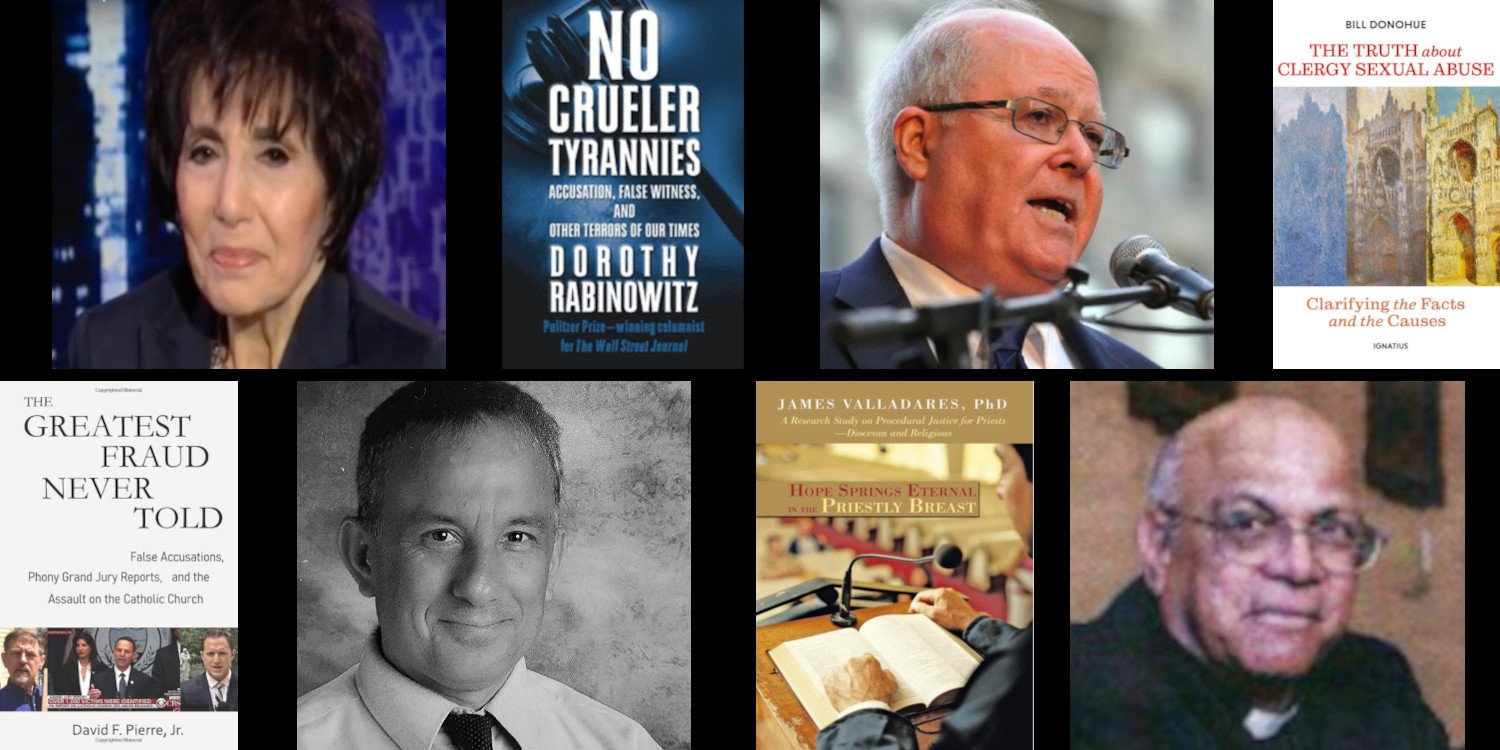
Defenders of the Truth
Back in 2012, just a few years after I began writing from prison for an earlier version of this blog, Australian priest and writer, Fr. James Valladares, Ph.D., published a book about procedural justice for priests who had been accused. He predicted that the priesthood scandal that spread from the United States poses the greatest threat to the traditional Catholic understanding of priesthood since the Protestant Reformation. That prediction was certainly supported years later by findings described in my recent post, “Priests in Crisis: The Catholic University of America Study.”
Father Valladares titled his 2012 book, Hope Springs Eternal in the Priestly Breast. Nearly one-third of the book is about this blog and its revelations about the phenomenon of falsely accused priests. There is much within its pages that will be very familiar to long-time readers of this blog. In addition to my own earlier writings, the book strongly profiles the work of Ryan A. MacDonald, David F. Pierre, Jr. at The Media Report, Bill Donohue at the Catholic League, and especially Dorothy Rabinowitz at The Wall Street Journal.
Most readers of this blog know that one of the most formidable sources for exposing and resuscitating the truth has been The Wall Street Journal. The nation’s largest, most influential newspaper published two major articles in my regard in 2005, another in 2013, and a fourth in 2022. The first three were written by Dorothy Rabinowitz, a Pulitzer Prize-winning writer on the WSJ Editorial Board. The fourth, written in 2022, was “Justice Delayed for Father MacRae” by Boston civil rights and criminal defense attorney Harvey A. Silverglate.
One observer noted that The Wall Street Journal has devoted more column space to this story than to that of any Nobel laureate. I do not know how to respond to that except with gratitude. I would not be writing today if not for the courage of Dorothy Rabinowitz and the Journal’s unrelenting pursuit of truth and justice.
Among our newer features on this blog is a page dedicated to the coverage of this story. It begins with a brief but compelling five-minute video interview with Dorothy Rabinowitz that should not be missed along with the full text of each of the WSJ articles on this story collected in one place. The page is entitled, The Wall Street Journal on the Case of Fr. Gordon MacRae.
While perusing that page, you will note that two of the WSJ articles are followed by commentary from David F. Pierre, Jr., founder and moderator of The Media Report. David is a Catholic layman and a journalist in his own right. He literally took on Goliath when he began writing and publishing against the tide of media narratives claiming without evidence that the Catholic Church has been some sort of special locus of child sexual abuse.
Since then, David has published four books laying out his Herculean accomplishments to expose the whole truth of the story behind the scandal that other media would not cover. David, like the Biblical David, is a man of great courage and integrity. In coming months, we plan to create a BTSW Library page collecting his posts written for this blog, and highlighting each of his books. His most recent post was The Media Report: Catholic Priests Falsely Accused.
Finally, and by no means least among the heroic efforts of media figures, the truth owes a debt to Dr. William Donohue, President of the Catholic League for Religious and Civil Rights. Under his leadership, this organization dedicated to religious liberty — the largest in the world — has been relentless in its support of the truth. This includes the truth about the case against me. In coming weeks I plan to present a post highlighting the importance of the work of the Catholic League on the frontlines of Religious Liberty, and increasingly endangered rights in our culture.
In the Acknowledgments section of his 2012 book, Hope Springs Eternal in the Priestly Breast, Father Valladares cited each of the persons I have mentioned in this post:
“Ms. Dorothy Rabinowitz, Mr. Harvey A. Silverglate, Mr. Ryan A. MacDonald, Dr. William Donahue, Mr. David F. Pierre, Jr., all of whom I have never met, but whose candid, forthright, persuasive writings have served as an added impetus in the pursuit of this vital research.”
+ + +
Next week in these pages: “A Holy Week Retreat at Beyond These Stone Walls.”
Note from Fr. Gordon MacRae: Please share this post, and please visit our newer pages in honor of those who have so honored us by shining new life into my pursuit of truth and justice:
The Wall Street Journal on the Case of Fr. Gordon MacRae
The Truth about Clergy Sexual Abuse
David F. Pierre, Jr. at The Media Report
Hope Springs Eternal in the Priestly Breast
Predator Police: The New Hampshire ‘Laurie List’ Bombshell
+ + +

The Eucharistic Adoration Chapel established by Saint Maximilian Kolbe was inaugurated at the outbreak of World War II. It was restored as a Chapel of Adoration in September, 2018, the commemoration of the date that the war began. It is now part of the World Center of Prayer for Peace. The live internet feed of the Adoration Chapel at Niepokalanow — sponsored by EWTN — was established just a few weeks before we discovered it and began to include in at Beyond These Stone Walls. Click “Watch on YouTube” in the lower left corner to see how many people around the world are present there with you. The number appears below the symbol for EWTN.
Click or tap here to proceed to the Adoration Chapel.
The following is a translation from the Polish in the image above: “Eighth Star in the Crown of Mary Queen of Peace” “Chapel of Perpetual Adoration of the Blessed Sacrament at Niepokalanow. World Center of Prayer for Peace.” “On September 1, 2018, the World Center of Prayer for Peace in Niepokalanow was opened. It would be difficult to find a more expressive reference to the need for constant prayer for peace than the anniversary of the outbreak of World War II.”
For the Catholic theology behind this image, visit my post, “The Ark of the Covenant and the Mother of God.”