“There are few authentic prophetic voices among us, guiding truth-seekers along the right path. Among them is Fr. Gordon MacRae, a mighty voice in the prison tradition of John the Baptist, Maximilian Kolbe, Alfred Delp, SJ, and Dietrich Bonhoeffer.”
— Deacon David Jones

If Night Befalls Your Father, You Don’t Discard Him! You Just Don’t!
There is another scandal in the Catholic Church just under the radar. It is what happens after Father is accused, and it would never happen if he were your father.

There is another scandal in the Catholic Church just under the radar. It is what happens after Father is accused, and it would never happen if he were your father.
February 28, 2024 by Fr Gordon MacRae
Back in the summer of 2011 in Massachusetts, Independence Day brought dismal news for devoted Catholics already bent under the millstone of scandal. On that morning I turned on New England Cable News to learn that a forty-two year old Massachusetts priest ordained only six years, had taken his own life. It was heartbreaking, and I know his family must have been devastated. However, I feared that far too many in his other family — the Catholic Church — had so steeled themselves against the relentless tide of painful news that such a tragedy was just part of another news day. That was an even greater tragedy. If you have never read my article, “The Dark Night of a Priestly Soul,” about the suicide of a priest I knew, please do. I wish this priest, and his diocesan family had read it. It may have helped him to seek another way to deal with whatever immense pain brought him to this horrific act. I have been where he was in the final moments of his life. I wrote about surviving that painful day in “How Father Benedict Groeschel Entered My Darkest Night.”
I do not know the particular anguish of that young priest in 2011. He died sometime the previous Saturday night after celebrating Mass and then ministering to a family in a hospital emergency room where he was a chaplain. When he did not show up for his Mass that Sunday morning, someone went in search of him. In between was the darkest night of his own priestly soul. Please, please pray for him. Though this was a major news story in 2011, I am sparing his family from reliving this again in 2024.
Some thirty American Catholic priests have taken their own lives since priests became a favorite target of the news media, of S.N.A.P., and of Satan himself. I have personally known eight of them, and three others who were murdered. A psychiatrist friend who has been conducting research on the priesthood told me that it is extraordinary that I have known 11 priests who were either murdered or died by their own hand. He said that I have been hanging out with the wrong crowd — or, if you read the Gospel, the right one.
I do know this: simply casting off the most wounded among our priests has been the sin of the Church, and it is a sin that would not happen in our own families. The late Cardinal Avery Dulles wrote of this in one of his last letters to me before his death in December 2008:
“Thank you for keeping me informed about the great scandal of the failure of the Church to support her priests in their time of need. Someday your story and that of your fellow sufferers will come to light and will be instrumental in a reform. I am sure that in the plans of Divine Providence your ministry of suffering is part of your priestly vocation.”
No corporate bottom line would dictate whether we care for our fathers, our grandfathers, our brothers, or our sons, but lately in the Church in America, it does, and it has compounded The Scandal. Christ came into the world to call forth a community’s soul, not a corporate sole. One bishop I know wrote in a whining missive to Rome that if he helped one accused priest in his diocese he would fear an uproar. At least the bishop was honest. His response toward a brother left beaten on the side of the road was moved by fear.
The problem was strictly American back then. But it has since spread to other parts of the world where the same draconian and terminal measures have been imposed upon priests who are merely accused without due process leading to their being simply discarded — sometimes on the streets with no place to go. I fear sometimes that the Catholic Church in America is becoming far more American than Catholic. America is a disposable culture that does not abide problems, and the Church has come to reflect this ugly side of America. Not long ago, Pope Francis derided our “cancel culture,” then he proceeded to cancel the careers of many priests and bishops who did not fall immediately into his ideological plan. The stewards of our faith have capitulated to cancel culture.

For full article tap image.
Disposable Priests in a Disposable Culture
There are priests who, for various reasons, are not assigned to ministry. Under a tenet of Canon Law (Canon 1722) a bishop, with just cause, may forbid a priest from the exercise of public ministry for a period of time, but he remains a priest. For seven years before I was accused and faced trial in 1994, I was not assigned by my bishop and diocese. For the first two years, I was director of a drug and alcoholism treatment center, and vice-president of the New Hampshire Association of Chemical Dependency Service Providers. But I was still very much a priest living under obedience to the authority of my bishop. I celebrated Mass and other sacraments. For the following five years I served in ministry to other priests as Director of Admissions in a residential psychological and spiritual renewal center for Catholic priests and religious.
Even now, in my 30th year in prison for a crime that I insist never took place, I witness to the Gospel and to the Mission of the Church every day in conditions that most priests cannot imagine. That is not a boast. Who would boast of such a thing? I celebrate the sacraments, as you know, and I am still a priest.
A priest may also petition the Holy See for voluntary removal from the clerical state, known popularly as “laicization.” Some years ago this blog had a comment from a man who left ministry as a priest to marry. As far as the Church was concerned, he remained a priest and entered into a civil, but invalid marriage. He reported that he was only recently granted his petition for laicization so that he may now have his marriage blessed by the Church. For reasons that are both sound and prudent, the Church has never been in any hurry to return a priest to the lay state.
One of the most destructive fallouts of the sex abuse scandal in the American Church has been the reality of involuntary laicization. When enacting the 2002 Dallas Charter for the Protection of Children and Young People, the US Bishops quoted a statement of Pope John Paul II in his address to American cardinals on April 23, 2002: “There is no place in the priesthood or religious life for those who would harm the young.” Some American bishops have used that statement to seek forced laicization of accused priests under Canon 290, by judicial sentence or by a special act of the Pope. Prior to the Dallas Charter, such a permanent and unappealable removal from the priesthood was exceedingly rare. After the Charter, there was a wave of involuntary laicizations, and some believe they have done irreparable harm to the very Catholic theology of priesthood.
From a practical standpoint, forced laicization — popularly but erroneously called “defrocking” in the media — might satisfy some vindictive urges in certain victim groups, but it does nothing to prevent any possible victimization. It merely discards a priest with problems, or an innocent one falsely accused, upon the dung heap of Job with no support, no supervision, and no accountability because of claims that are decades old and often unsubstantiated. Families do not discard their fathers, sons, or brothers, and the Church should not discard her priests.

A Puritan Response to Sin
The Bishops’ Charter failed to add a qualifying statement of Pope John Paul II to the American cardinals summoned to Rome in 2002:
“At the same time . . . we cannot forget the power of Christian conversion, that radical decision to turn away from sin and back to God, which reaches to the depth of a person’s soul and can work extraordinary change.”
By omitting the most important part of the Pope’s statement, the U.S. Bishops adopted a punishment with no allowance for repentance. In an essay for Homiletic & Pastoral Review (“Sex Abuse and Anti-Catholicism“) Ryan A. MacDonald wrote:
“The Puritan founders of New England would approve of the purging of the priesthood now underway in Western Culture, for it is far more Calvinist than Catholic.”
In a landmark article in America magazine, “The Rights of Accused Priests” (June 21, 2004), the late Cardinal Avery Dulles issued a stinging rebuke of the bishops. What follows are some excerpts:
“The United States bishops have taken positions at odds with [their own] high principles.”
“Under intense pressure from various survivors’ networks, they hastily adopted, after less than two days of debate, the so-called Dallas Charter . . . ”
“In their effort to . . . restore public confidence in the Church as an institution and to protect the Church from liability suits, the bishops opted for an extreme response.”
“The dominant principle of the Charter was ‘zero tolerance’ . . . Having been so severely criticized for exercising poor judgement in the past, the bishops apparently wanted to avoid having to make any judgements in these cases.”
Cardinal Dulles went on to address the often near impossibility of judging the truth of allegations against priests without investigation, and the inherent injustice of taking actions that brand a priest as guilty before such investigation. He then outlined the rights of priests under Canon Law, and how the Charter and current policies ignore or even destroy those rights. I urge every priest and every Catholic to read Cardinal Dulles’ article.
I am not a canon lawyer, and I have only limited training in Church Law. What I have learned has been from experience, and my own experience has been a crash course in fending off what I believe is a seriously flawed and unjust process faced by many accused priests who simply did not commit the crimes.
To highlight how flawed this process is, I would like to reproduce a letter I received in 2002 from a prominent priest, canon lawyer, and professor of Canon Law at a leading Catholic University. I am printing the entire letter, but without his name since I have not asked his permission to print his name. I will let his letter speak for itself:
“Dear Father MacRae:
Don’t ever discount the real spiritual good accomplished by your words at Beyond These Stone Walls. You make people like me, with consciences dulled by repetitious prevalence of procedural abuses, face our responsibilities to protest and to act. You make it personal and compelling.
I want to pass along some bad news. You may already be aware of it, since you seem very well informed, but, if not, at least it will give you occasion to reflect. It seems that the Congregation for the Doctrine of the Faith has turned to ‘penal dismissals from the clerical state’ as a routine solution to the cases being sent by American bishops after preliminary investigations. The decrees of dismissal are not subject to appeal or review.
The procedural injustice of this practice is obvious.
In the preliminary investigation process, the accused priest has no opportunity to defend himself. The cases are sent by bishops to CDF sometimes with an expectation that they will instruct the diocese to proceed with a canonical trial for dismissal or allow the accused priest to remain [in the priesthood] in a penitential state but removed from public ministry. Instead, the CDF seems to be taking this drastic and terminal action based solely on the information provided by a bishop in the preliminary investigation — often when the priest is accused of abuse alleged to have occurred thirty years ago or more.
I don’t want to discourage you or any petitions to the Holy See on your behalf. Quite the contrary, I would urge any and all possible interventions.
Think about the implications if this shameful result should fall on you. It is really an empty juridical gesture with no practical consequences. You remain a priest. No one can take that away. You can pray, and you can celebrate the Holy Eucharist validly, absolve or anoint in emergencies, and, I presume, you could continue your very valuable ministry of consciousness raising. What I am trying to say is please do not be discouraged or lose hope if this awful expedient is aimed at you.”

Ganging Up on the Already Down
To date, at least, that final chapter of my nightmare has not taken place. But the Church must be made aware — you must be made aware — of the inherent injustice of “piling on” that occurs when most priests are accused.
When I faced trial in 1994, I was entirely on my own against an assault on three simultaneous fronts. First, I faced a criminal trial, a highly sensationalized and problematic one that Ryan A. MacDonald recently described in these pages in “Judge Arthur Brennan Sentenced Father Gordon MacRae to Die in Prison.”
Very few priests earn a salary or have access to funds that would assure a fair trial. I certainly did not, but my diocese issued a letter to my attorneys instructing them: “To the extent he is without funds, he should contact the public defenders’ office.” The cost of my defense would have been but a tiny fraction of the cost of mediated settlements.
Secondly, simultaneous to a criminal defense and preparing for trial, I also faced civil lawsuits naming both me and my diocese as defendants. The accusers were represented by their contingency lawyers, and both they and their lawyers had a clear financial stake in the outcome. My diocese was represented by a high profile law firm seeking, from day one, the quietest path to settlement that would generate the least publicity. With my meager assets dissolved in only partial funding of a criminal defense, I was not represented at all against the civil claims. When I protested the possibility of a settlement without substantiation, my accusers and their lawyers simply dropped me as a defendant so that I would no longer have any standing in the matter.
Lastly, from the moment I was accused, I faced a trial-by-media that set an impossible boundary between me and justice. The accusers had contingency lawyers who were relentless spokespersons for their feigned “victimization.” My diocese had a spokesperson who advocated for the distance the diocese was motivated to obtain from me. As I faced trial in 1994, knowing that I maintained my innocence, and knowing that I was not represented at all as settlement negotiations ensued in the background, my bishop and diocese issued a press release stating:
“The Church has been a victim of the actions of Gordon MacRae just as these individuals. It is clear that he will never again function as a priest.”
— Press Release of the Diocese of Manchester, September 6, 1993
My attorneys protested this to deafened ears. With that public statement came the end of my civil rights to a presumption of innocence and a fair trial. Throughout the trial, the local news media cited that statement. The jurors in my trial read the statement. To pretend that this scenario represents justice requires far more skill in the art of pretense than I have ever been capable of.
And it’s even worse still, today.
The Bishop Accountability website publishes every sordid detail about every money-driven claim taking no responsibility whatsoever for whether their information is true or corroborated. The site administrators publish the names and lurid details claimed of every accused priest while removing the names of all accusers. In some instances, this amounts to aiding and abetting them in the commission of the crimes of fraud and larceny.
And now, as is clear from the canonist’s dismal letter above, if the accused priest cares anything at all about preserving his priesthood then he must also hire a canon lawyer to defend himself against yet another tier of simultaneous judicial processes: the possibility of canonical dismissal from the priesthood.
If night befalls your father, you don’t discard him! You just don’t!
+ + +
Note from Fr Gordon MacRae: Thank you for reading and sharing this important post. Please consider these related posts from Beyond These Stone Walls:
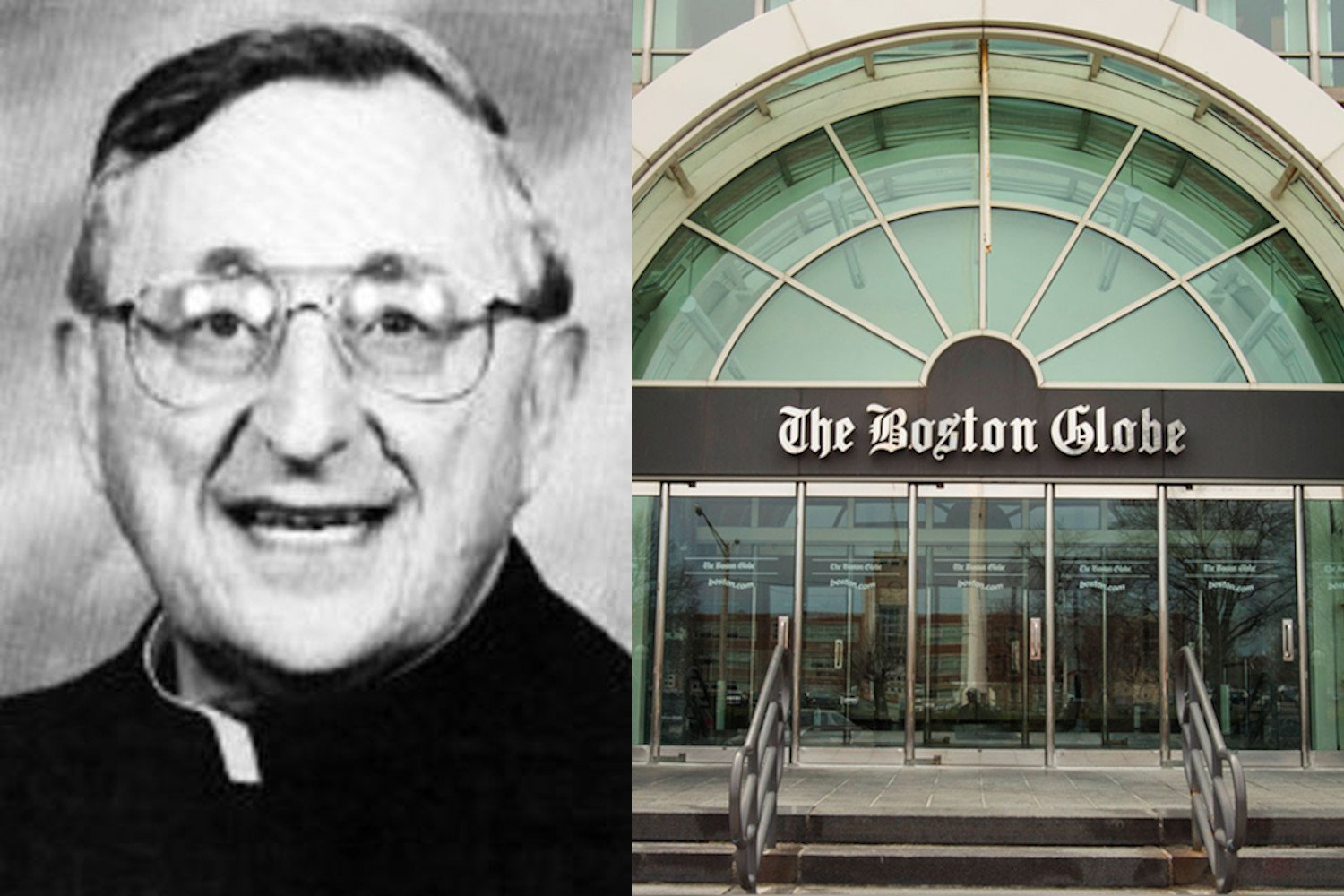
The Exile of Father Dominic Menna and Transparency at The Boston Globe
Priests in Crisis: The Catholic University of America Study
Our Bishops Have Inflicted Grave Harm on the Priesthood
When Priests Are Falsely Accused: The Mirror of Justice Cracked



The Eucharistic Adoration Chapel established by Saint Maximilian Kolbe was inaugurated at the outbreak of World War II. It was restored as a Chapel of Adoration in September, 2018, the commemoration of the date that the war began. It is now part of the World Center of Prayer for Peace. The live internet feed of the Adoration Chapel at Niepokalanow — sponsored by EWTN — was established just a few weeks before we discovered it and began to include in at Beyond These Stone Walls. Click “Watch on YouTube” in the lower left corner to see how many people around the world are present there with you. The number appears below the symbol for EWTN.
Click or tap here to proceed to the Adoration Chapel.
The following is a translation from the Polish in the image above: “Eighth Star in the Crown of Mary Queen of Peace” “Chapel of Perpetual Adoration of the Blessed Sacrament at Niepokalanow. World Center of Prayer for Peace.” “On September 1, 2018, the World Center of Prayer for Peace in Niepokalanow was opened. It would be difficult to find a more expressive reference to the need for constant prayer for peace than the anniversary of the outbreak of World War II.”
For the Catholic theology behind this image, visit my post, “The Ark of the Covenant and the Mother of God.”

A Devil in the Desert for the Last Temptation of Christ
The Gospel according to St Luke tells the story of Jesus, revealed to be Son of God, led into the desert to be tested by the devil who does not give up easily.

The Gospel according to St Luke tells the story of Jesus, revealed to be Son of God, led into the desert to be tested by the devil who does not give up easily.
February 21, 2024 by Fr Gordon MacRae
Note from Fr Gordon MacRae: If you were present at Catholic Mass for the First Sunday of Lent, then you heard the Gospel Proclamation about the demonic temptation of Christ in the desert. I have discovered much more to that story, and it is manifested here in a Church that still wanders in the desert. Lest we wander too far into the desert wilderness, please read on.
+ + +
In my estimation, one of the best movies about Catholic life in America taking a wrong turn has been deemed by some to be a bit rough around the edges. Robert DeNiro portrays Los Angeles Monsignor Desmond Spellacy, and Robert Duvall is cast as his brother, LAPD homicide detective Tom Spellacy in the 1981 film, True Confessions. The film is from a novel of the same name by John Gregory Dunne based on the famous Los Angeles “Black Dahlia” case of 1947.
DeNiro’s character, Monsignor Desmond Spellacy is a priest of the Archdiocese of Los Angeles in the late 1940s at the epicenter of the power politics of a church beginning to succumb to the world in which it thrives. Amid corruption while being groomed to become the next Archbishop, the Monsignor nonetheless clings to an honest spiritual life just starting its inevitable fraying at the edges as he is dragged ever deeper into a tangled web of deceit.
Robert Duvall portrays his older brother, Tom Spellacy, an honest and dedicated — if somewhat cynical — L.A. homicide detective whose investigation of the murder of a prostitute brings him ever closer to the perimeter of an archdiocese circling the wagons. Charles Durning portrays the thoroughly corrupt owner of a large construction firm bidding for church building projects. Having just been awarded Catholic Layman of the Year by Monsignor Spellacy, he is also a suspect in the murder investigation that a lot of people want quietly swept under a rug.
Those wanting to influence and sideline Tom’s investigation come up with evidence — a photograph — that his Monsignor-brother also knew the murdered girl, but the photograph is entirely benign. Still, it’s enough to make a lurid case for guilt by association leaving Tom in a quandary about pursuing an investigation that will destroy his innocent brother’s career. The film ends with the case solved, but Monsignor Spellacy banished to a small parish in the California desert, his hopes for political advancement in the Church destroyed.
That the film — and the priesthood of Monsignor Spellacy — ends in the desert is highly symbolic. The image has ancient roots into our Sacred Scriptures, and especially into the Book of Leviticus. This book is comprised of liturgical laws for the Levitical priesthood reaching back to 1300 BC as Moses led his people through a forty-year period of exile in the Sinai desert. Some of the ritual accounts it contains are far more ancient.
In a recent Christmas post, “Silent Night and the Shepherds Who Quaked at the Sight,” I wrote that the troubles of our time are the manifestation of spiritual warfare that has been waged in the world since God’s first bond of covenant with us. Before that bond, we were doomed. Since that bond, reestablished by God again and again, there is hope for us. We remain oblivious to spiritual warfare to our own spiritual peril. We live in a very important time in God’s covenant relationship with us. The Birth of the Messiah and His walking among us are equidistant in time between our existence now in the 21st Century AD and Abraham’s first encounter with God in the 21st Century BC.

Our Day of Atonement Begins
The Gospel according to St Luke (4:1-13) is also set in the desert as the Day of Atonement begins for all humankind. Revealed in Baptism as the Son of God …
“Filled with the Holy Spirit, Jesus returned from the Jordan and was led by the Spirit into the desert for forty days to be tempted by the devil.”
— Luke 4:1
The scene has roots in an ancient ritual for the Day of Atonement described in Leviticus 16:5-10. Aaron, the high priest …
“Shall take from the congregation of the people of Israel two male goats for a sin offering .... Then he shall take the two goats and set them before the Lord at the tent of meeting; and Aaron shall cast lots upon the two goats, one for the Lord and the other lot for Azazel. And Aaron shall present the goat upon which the lot fell for the Lord, and offer it as a sin offering, but the goat upon which the lot fell for Azazel shall be presented alive before the Lord to make atonement over it, that it may be sent away into the desert wilderness to Azazel …”
— Leviticus 16:5,7-10
This describes the ritual for purification known in Hebrew as Yom Kippur, or the Day of Atonement from Leviticus Chapter 16. The ritual reaches far beyond Moses into the time of God’s first covenant with Abraham some 2000 years before the Birth of the Messiah.
There are two goats mentioned in the ritual: One for sacrifice, to Yahweh, and the other — the one bearing the sins of Israel — is “for Azazel.” This name appears only in Leviticus 16 and nowhere else in Scripture. The name is believed to be that of a fallen angel and follower of Satan who haunts the desert wilderness. Some scholars believe Azazel to be the being referred to as “the night hag” haunting the desolate wilderness, in Isaiah 34:14.
The Latin Vulgate translation of the Bible called the second goat “caper emissarius,” (“the goat sent out”). An English translation rendered it “escape goat” from which the term “scapegoat” has been derived. A scapegoat is one who is held to bear the wrongs of others, or of all. The symbolism in the Gospel of Jesus being led by the Spirit into the desert to face the devil is striking because Jesus is to become, by God’s own design, the scapegoat for the sins of all humanity.
In the Gospel for the First Sunday of Lent, Jesus is described as “filled with the Holy Spirit.” This term appears in only three other places in Scripture, all three also written by Saint Luke. In the Book of Acts of the Apostles (6:5) Stephen, “filled with the Holy Spirit” was the first to be chosen to care for widows and orphans in the daily distribution of food. Later in Acts (7:55) Stephen, “filled with the Holy Spirit gazed into heaven and saw the glory of God” as he became the first Martyr of the Church.
The witnesses who approved of the stoning of Stephen “laid their cloaks at the feet of a young man named Saul” (Acts 7:58) whose radical conversion to become Paul would build the global Church.
Also in Acts (11:24) Barnabus is filled with the Holy Spirit as he founded the first Church beyond Jerusalem for the Gentiles of Antioch. The sense of the term “filled with the Holy Spirit” in Saint Luke’s passages alludes to the hand of God in our living history.
In our first Sunday Gospel for Lent, Jesus, filled with the Holy Spirit, “having returned from the Jordan,” is led by the Spirit for forty days in the desert wilderness. The Gospel links this account to His Baptism at the Jordan at which He is revealed as “Son of God.” This revelation becomes a diabolical taunt, and knowing that Jesus has fasted becomes the devil’s first temptation: “If you are the Son of God, turn this stone into bread.” Jesus thwarts the temptation, and the taunt with a quote from the Hebrew Scriptures (Deuteronomy 8:3), “Man does not live by bread alone (but by everything that proceeds from the mouth of God.”)
The symbolism is wonderful here. Like the Father in the Parable of the Prodigal Son — also from Luke (15:11-32) — God had two sons. In the Book of Exodus (4:21-22) Israel is called God’s “first-born son”:
“The Lord said to Moses, ‘When you go back to Egypt, see that you do before Pharaoh all the miracles which I have put in your power, but I will harden his heart so that he will not let the people go. And you shall say to Pharaoh, ‘Thus says the Lord, Israel is my first-born son, and I say to you, let my son go that he may serve me. If you refuse to let my son go, I will slay your first-born son’.”
It was the fulfillment of this command of God that finally broke the yoke of slavery and caused Pharaoh to release Israel from bondage. But, as in the Parable of the Prodigal Son, Israel was not faithful and spent forty years wandering in the desert as a result of this son’s infidelity. In the Gospel of Luke, the Second Person of the Most Holy Trinity assumed the humanity of the first son, and was led by the Spirit into the desert to save us in the Second Exodus, our release from the bondage of sin and death.

Clerical Scandal and the Scandal of Clericalism
The second temptation is the lure of political power. In a single instant, the devil showed Jesus all the kingdoms of the world and said, “I shall give you all this power and glory for it has been handed over to me… all this will be yours if you worship me.” This has been the downfall of many, including many in our Church. Jesus again quotes from Scripture, “It is written, you shall worship the Lord your God and serve him alone” (Deuteronomy 6:13). This Gospel revisits the lure of political power immediately after the Institution of the Eucharist:
“A dispute arose among them, which of them was to be regarded as the greatest. And he said to them, ‘The kings of the Gentiles exercise lordship over them, and those in authority over them are called benefactors. But not so with you. Rather let the greatest among you become as the youngest, and the leader as one who serves… I am among you as one who serves.”
— Luke 22:24-26
The Greek in which this Gospel was written used for the word “leader” the term “hēgoumenos.” Its implication refers especially to a religious leader. The Letter to the Hebrews (13:7) uses the same Greek term for “leaders,” and it is not their power which is to be emulated, but their faith to the extent to which they reflect Christ:
“Remember your leaders, those who spoke to you the word of God, consider the outcome of their life, and imitate their faith. Jesus Christ is the same yesterday and today and forever.”
— Hebrews 13:7-8
Though it doesn’t generate the media’s obsession with sexual scandals, hubris and self-centeredness have been a far greater problem in our Church, and are the underlying catalyst for almost all other scandals, sexual, financial, and reputational. This culture has led Church leaders into the temptation of Earthly Powers, and too many have been eager participants. Some refer to this as “clericalism,” and in my opinion the best commentary on it was a brief article by the late Father Richard John Neuhaus in First Things entitled, “Clerical Scandal and the Scandal of Clericalism.”
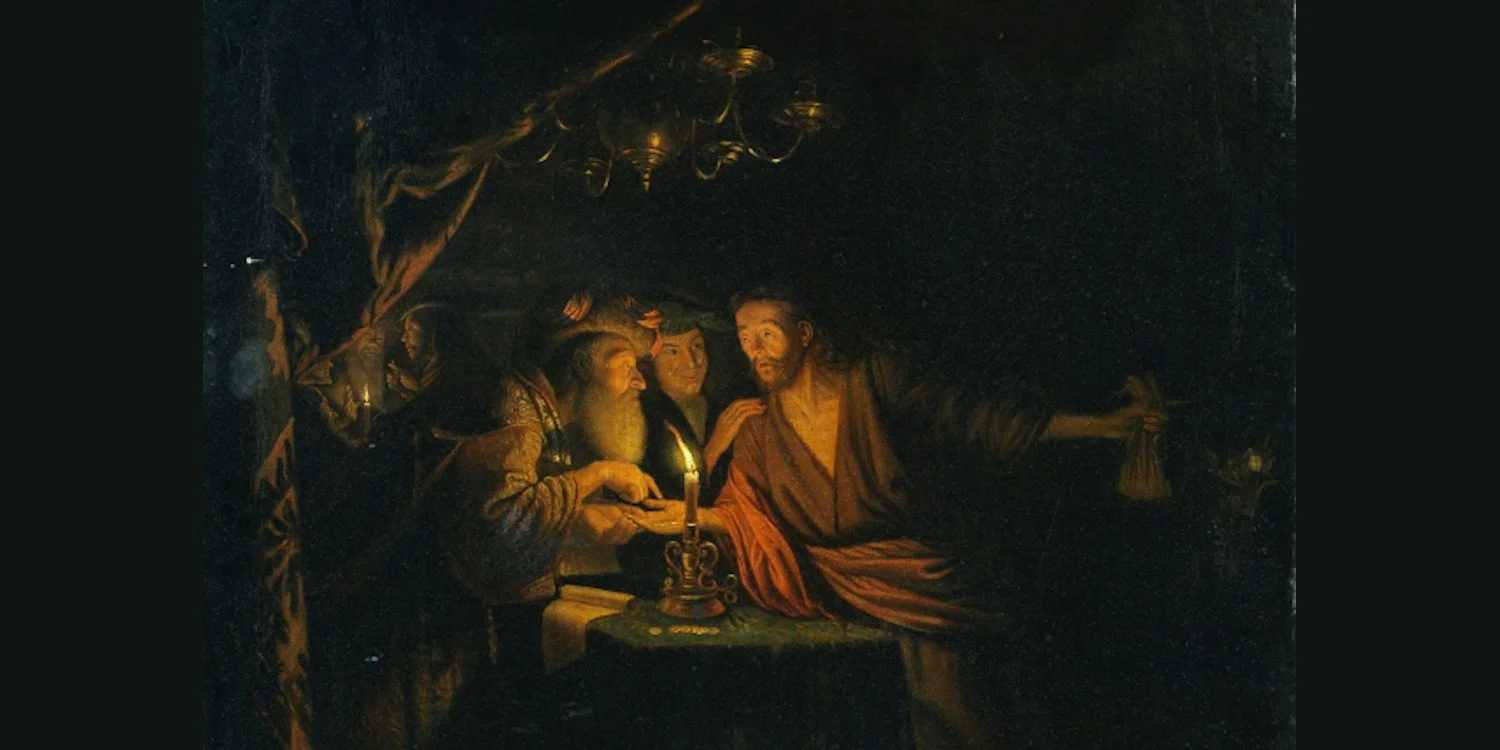
The Payment of Judas Iscariot
Catholicism in America thrived when it had to earn its dignity. Once it became politically accepted, it went on in this culture to become comfortable, and its leaders (“hēgoumenos”) perhaps a bit too comfortable. Religious authority and the sheer masses of believers spelled political power. The pedestals upon which we stood grew in height with every clerical advance, and our bishops stood upon the highest pedestals of all with palatial trappings more akin to the courts of Herod and Caesar than the Cross of Christ the King, the same yesterday, today, and forever.
It is no mystery why, as the height of our pedestals grew, so did our scandals. This is perhaps why Jesus offered to us the way to pray “Lead us not into temptation, but deliver us from evil.” It is because He alone could be led by the Spirit into the desert of temptation and emerge without dragging along behind Him the evil He encountered there.
As the last temptation of Christ unfolded in the Gospel for the First Sunday of Lent, it is now the devil, in a final effort, who dares to quote and distort the Word of God. He led Jesus to Jerusalem, and to the parapet, the highest point of the highest place, the Temple of Sacrifice. And now comes his final taunt:
“If you are the Son of God, throw yourself down from here, for it is written, ‘He will give his angels charge of you, to guard you,’ and ‘On their hands they will bear you up, lest you strike your foot against a stone’.”
— Luke 4:9-11
This devil of the desert takes up the argument of Jesus, the Word of God, quoting Psalm 91 (11-12). The taunt to test God and “go your own way” is far deeper than the mere words convey. In Jerusalem, the devil will take hold of Judas Iscariot (Luke 22:3) leading to the trial before Pilate and the Way of the Cross. In Jerusalem, the powers of darkness, first encountered here in the desert, are mightily at work: “This is your hour, and the power of darkness.” (Luke 22:53)
The Church in the Western world has entered a time of persecution but thus far the institutional response — having traded the Gospel for “zero tolerance” in a quest for scapegoats to cast out into the desert to Azazel — does not bode well for the faith of a Church built upon the blood of Her martyrs.
Perhaps, as the Spirit leads us into this desert, it is our vocation, and not that of our leaders, that is essential. Perhaps it is not clerical reform that is needed so much as a revolution — a revolution of fidelity that can only be lived and not just talked about. We will not find the Holy Spirit in a revolution that manifests itself in blessing sin or in any politically correct acquiescence to same-sex unions and other moral distortions of our time. Those who abandon their faith in a time in the desert were leaving anyway, just waiting for the right excuse. To use the behavior of leaders to diminish and then abandon the Sacrament of Salvation is to cave to the true goal of Azazel. He could not lure Christ from us, but he can lure us from Christ and he is giving it a go.
The devil finally gives up in the desert scene of the Last Temptation of Christ in Luke Chapter 4. But the devil is not quite done. Luke’s Gospel tells that he will return “at a more opportune time.” Satan finds that time not in an effort to test Jesus, but rather to test his followers. He targets Judas Iscariot in the last place we would ever expect to find the devil: “Satan at the Last Supper: Hours of Darkness and Light.”
+ + +
Note from Father Gordon MacRae: Please share this post to help place it before someone at a crossroads.

The Eucharistic Adoration Chapel established by Saint Maximilian Kolbe was inaugurated at the outbreak of World War II. It was restored as a Chapel of Adoration in September, 2018, the commemoration of the date that the war began. It is now part of the World Center of Prayer for Peace. The live internet feed of the Adoration Chapel at Niepokalanow — sponsored by EWTN — was established just a few weeks before we discovered it and began to include in at Beyond These Stone Walls. Click “Watch on YouTube” in the lower left corner to see how many people around the world are present there with you. The number appears below the symbol for EWTN.
Click or tap here to proceed to the Adoration Chapel.
The following is a translation from the Polish in the image above: “Eighth Star in the Crown of Mary Queen of Peace” “Chapel of Perpetual Adoration of the Blessed Sacrament at Niepokalanow. World Center of Prayer for Peace.” “On September 1, 2018, the World Center of Prayer for Peace in Niepokalanow was opened. It would be difficult to find a more expressive reference to the need for constant prayer for peace than the anniversary of the outbreak of World War II.”
For the Catholic theology behind this image, visit my post, “The Ark of the Covenant and the Mother of God.”

In a City on a Hill: Lent, Sacrifice, and the Passage of Time
Sacrifice is at the very heart of being a priest and being a Catholic. This Lent, restoring sacrifice is the key to being a Church in a sinful and broken world.
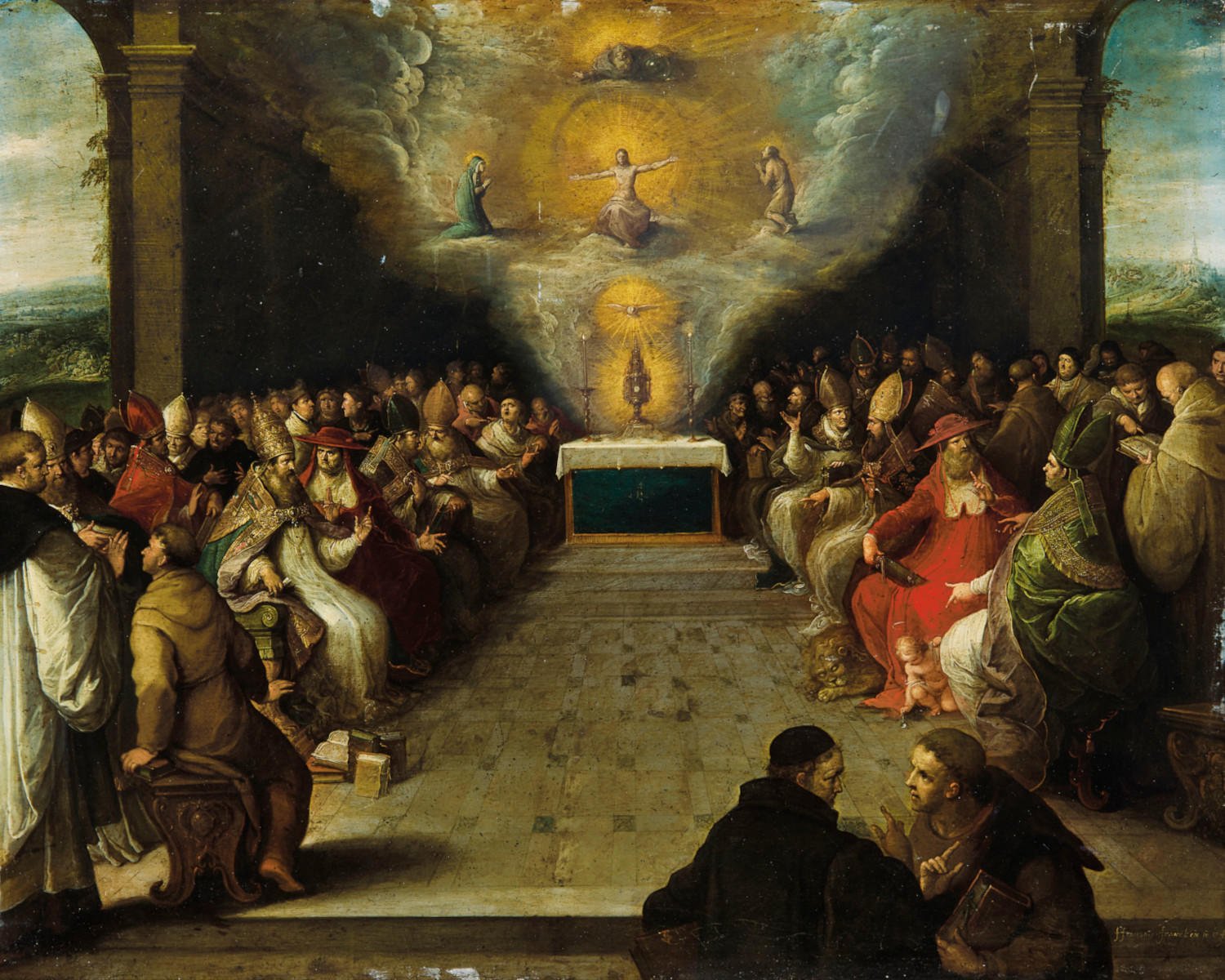
Sacrifice is at the very heart of being a priest and being a Catholic. This Lent, restoring sacrifice is the key to being a Church in a sinful and broken world.
“Put your lamp upon a stand so that others who enter may see the light.”
— Luke 8:16
Most of our readers know that I have a full time job in this prison. I work as a legal clerk in the prison's law library, the last bastion for the poor who seek justice, that every prison is mandated to maintain. I earn $2.00 per day in this position. Early last week I was walking across the large library and was stopped by two young men seated at a table. “What is Fat Tuesday?” one of them asked. I explained that it is the day before Ash Wednesday, and the day that people may indulge in things that they are about to give up. They both looked perplexed. “What is Ash Wednesday?” the other asked. So I responded that it is the first day of Lent. The next question was predictable. “What is Lent?” they both asked. So I explained to them that Lent is a time of personal penance in which Christians discipline themselves toward higher goals in life by making sacrifices.
It is a challenge to have to couch religious terms in secular language so that I not run afoul of the purely secular nature of a law library. But these guys were fascinated by these concepts. So I sat down and explained it a bit further. I was inspired by the depth of their interest, but also saddened that they had never before heard any of this in life. I promised that on their next library day, I would explain Lent and sacrifice a bit further.
Today, Ash Wednesday, I mark 10,736 days and nights in prison. I didn’t tally this with scratch marks on my cell wall, and I don’t actually keep an ongoing count in my head. I won’t wake up tomorrow and tell myself it’s the start of day number 10,737. At least, I hope I won’t. That would be really awful. But two or three times a year I pull out my calculator and tally the days I have been in this place. I’m not even sure of why we do this, but everyone here does. When my friend Pornchai Moontri was here with me, he told me one day that he was observing day number 7,275 in prison. Others of our friends have been “inside” a lot less time. Recalling this on Ash Wednesday 2024 makes me want to rejoice in my friend’s freedom.
Sometimes I discover some strange coincidences when I count the days. For example, my 5,000th day in prison was also my 26th anniversary of priesthood ordination. The numbers don’t mean much except to convey a sense of the drama of time as it plays out in such a place.
Time is experienced differently here than anywhere else. Back in 2012 The New Yorker Magazine had a very good article by Adam Gopnik entitled “The Caging of America” (Jan. 22, 2012) about our ominous and burgeoning prison system. He wrote that “a prison is a trap for catching time” and described the trap thusly:
“It isn’t the horror of the time at hand but the unimaginable sameness of the time ahead that makes prisons unendurable for their inmates… That’s why no one who has been inside a prison, if only for a day, can ever forget the feeling. Time stops. A note of attenuated panic, or watchful paranoia — anxiety and boredom and fear mixed into a kind of enveloping fog.”
It is not a pretty picture, and I think the pain of living in prison is experienced proportionately to one’s mental capacity. Prison is the one place on Earth where intellect is a handicap, and possibly even a source of deep personal anguish. I took on “A Day Without Yesterday:” Father Georges Lemaitre and The Big Bang a while back because I feared my brain cells might atrophy from lack of use.
Perhaps I am in good company in this suspension of time. A great comment by my friend Carlos Caso-Rosendi mentioned that God lives in the ”nunc stans,” a place where there is no passage of time at all. Carlos is exactly right that God lives outside of time. Psalm 90 gives a hint of this, and it’s a good Ash Wednesday message:
“You turn man back to dust and say ‘Turn back, O children of men!’ For a thousand years in your sight are as yesterday when it is past, or as a watch in the night.”
— Psalm 90:3-4
I know the feeling. My time here has not been experienced as thousands upon thousands of days, but as one very long day still awaiting its final sunset, a sort of long Lent with no Easter in sight — except, perhaps, in hope. I guess it’s really that way for all of us. Without hope, there can be no Easter, only Lent. The reverse is also true. To be a Catholic Christian is to live in hope despite all appearances to the contrary.

A City on a Hill
I’m showing my age, but I can hear Roger McGuinn from The Byrds intoning the musical version of Ecclesiastes (3:1): “For everything there is a season and a time for every purpose under heaven.” I don’t mean to lecture you, but “doing time” — “doing Lent” — qualifies me to write about both. This Lent is our time to ponder freedom, and what we do with it, and all the dire threats to it.
It’s a time to wake up, a time to take stock of who and what we are, and most importantly of what we are becoming. It’s a time to measure our civic duty as Catholic members of the human race in this place at this time. It’s a time to account for what it means to live as humans are meant to live, in God’s image and likeness in a society and culture we are supposed to add to and not just take from. It’s a time to discern whether we as Catholics shape our culture more than it shapes us. Even a prisoner can enter into that discernment.
I once wrote of one vivid example that happened here, and I feel driven to write of it again for it is astonishing. It’s a typical prison story with a very atypical outcome. It involved my friend, Joseph. One of Joseph’s many disputes with other prisoners erupted into a fight. Both were hauled off to spend some time in “the hole.” Months later Joseph emerged first, then a week later, his enemy. News of their ongoing combat spread throughout the prison, and the peer pressure was intense. “Fight — Fight — Fight” was the sole message they heard from both friends and foes. The prison was abuzz with the inevitable. Joseph ducked all my efforts to intervene. This was about a month after our friend, Pornchai Moontri, whom everyone here admired, was received into the Church on Divine Mercy Sunday in 2010.
Seated in the prison chow hall one day, Joseph awaited his opponent for the big scene. Pornchai was sitting with me as usual as hundreds of prisoners poured in for dinner and a show. I decided I would have no choice but to try diplomacy. Then Pornchai suddenly stood up. In the presence of hundreds of anticipating prisoners, Pornchai walked to the door to meet up with Joseph’s enemy.
I groaned as I saw diplomacy fly right out the window. Then Pornchai gestured to the young man to follow him. Together they walked to the table where Joseph was seated. With all eyes riveted upon this scene, we could hear a pin drop. They sat down, and the three of them had a conversation. I watched from across the hall as Pornchai spoke and the two enemies stared at their shoes.
I don’t think the Treaty of Versailles entailed such drama and a sense of impending doom. Then suddenly — in the sight of all — the three of them stood up. Joseph and his enemy shook hands, gave each other a fraternal smack on the back, then parted company. The war ended and a treaty was struck. I was very proud of Pornchai. Gandhi could not have done better.
There is a Gospel declaration for the age we live in, and Pornchai exemplified it that day. It’s a worthy goal for Lent for all of us who have been waiting for some light in the darkness while sometimes forgetting that we are the ones who are supposed to bring it:
“You are the light of the world. A city on a hill cannot be hidden. Nor does anyone light a lamp and put it under a bushel, but on a stand where it gives light to all in the house.”
— Matthew 5:14-15
+ + +
Important announcement from Father Gordon MacRae:
Some fights must continue despite Lent. Our dear friend Claire Dion in the State of Maine is in a fight that she cannot allow herself to set aside or retreat from. She has long assisted me and Pornchai Moontri in this prison and beyond. Claire had a distinguished career as an obstetrics nurse. Forty-four years ago she delivered my oldest niece, Melanie. In her retirement she became a dedicated prolife activist. In recent weeks Claire has been diagnosed with stage 4 lung cancer and additional tumors on her spinal cord and pelvic area. As I write this, she is receiving her first dose of radiation treatment in an effort to shrink the largest of the tumors which is causing her immense pain. She is offering some of that pain for me, but I will never be worthy of it. In coming weeks she will begin to also undergo intensive chemotherapy. The goal is not to cure the cancer, for it has no known cure, but it is hoped that its inevitable route will slow down and enable her to live life as she has known it for as long as possible. No one who knows Claire can understand how or why she is facing lung cancer. She has never used tobacco products in her entire life. In fact, she has never been known to inhale anything but clean air and the grace of Divine Mercy.
Claire is a woman of deep faith, and she has handed her life over to the care of God and service to us. She wants to continue helping as long as she is able. Please keep Claire and her family in your prayers.
+ + +
My own fight continues.
Readers also know that I too am in a fight from which I must not retreat. There is no foe here for my friend Pornchai to meet at the door and talk some sense into. It is an attack not just on me, but on the entire priesthood and our Church.
Ryan A. MacDonald, who has been a courageous ally for truth in this fight, has revised and updated an article he wrote some 12 years ago. His updates shed new light on what has gone on in this fight, and this week he has decided to put that light on a stand for all to see. It is published at our “Voices from Beyond” feature under the title “Judge Arthur Brennan Sentenced Father Gordon MacRae to Die in Prison.”
It is not as bleak as it may sound. Grace has accomplished much within this story, and the evil that lurks in the hearts of some has not yet ruled the day nor has it had the last word.
Those who are able, and feel inclined to assist in this fight may do so, but we have a new address for that purpose. It is:
Fr. Gordon MacRae
Beyond These Stone Walls
PO Box 81
Fayetteville, NY 13066-0081
Assistance using PayPal or Zelle is also available at FrGordonMacRae@gmail.com. Both of these are managed by Claire Dion who wishes to continue in that role for as long as she is able. My prayer is that Claire will be in no hurry to journey Home. This world is a better place with Claire still in it.
May the Lord Bless you and keep you in this Season of Lent, Sacrifice and the Passage of Time.
The Eucharistic Adoration Chapel established by Saint Maximilian Kolbe was inaugurated at the outbreak of World War II. It was restored as a Chapel of Adoration in September, 2018, the commemoration of the date that the war began. It is now part of the World Center of Prayer for Peace. The live internet feed of the Adoration Chapel at Niepokalanow — sponsored by EWTN — was established just a few weeks before we discovered it and began to include in at Beyond These Stone Walls. Click “Watch on YouTube” in the lower left corner to see how many people around the world are present there with you. The number appears below the symbol for EWTN.
Click or tap here to proceed to the Adoration Chapel.
The following is a translation from the Polish in the image above: “Eighth Star in the Crown of Mary Queen of Peace” “Chapel of Perpetual Adoration of the Blessed Sacrament at Niepokalanow. World Center of Prayer for Peace.” “On September 1, 2018, the World Center of Prayer for Peace in Niepokalanow was opened. It would be difficult to find a more expressive reference to the need for constant prayer for peace than the anniversary of the outbreak of World War II.”
For the Catholic theology behind this image, visit my post, “The Ark of the Covenant and the Mother of God.”

New Hampshire Dark Justice Is Illuminated Down Under
In early 2024, several Civil Rights venues hosted new, hopeful developments in a 30-year-old lingering injustice: the once hopeless 1994 trial of a Catholic priest.

In early 2024, several Civil Rights venues hosted new, hopeful developments in a 30-year-old lingering injustice: the once hopeless 1994 trial of a Catholic priest.
February 7, 2024 by Fr Gordon MacRae
“Fr MacRae was convicted on 23 September 1994 and sentenced to 67 years in a New Hampshire prison. The allegations had no supporting evidence and no corroboration. ... We enter another world with a life sentence. Australia is not New Hampshire, and I don’t believe Australia would blackball the discussion of a case such as Fr MacRae’s.”
— Cardinal George Pell, Prison Journal Volume 2, p.58
+ + +
It’s hard to know when to give up on justice. It’s even harder to know when to give up on hope. I have been at the brink of both several times over the last three decades, but I have not yet taken the plunge. I am not sure what that would feel like. Prison is bad enough without adding hopelessness to the mix. Other prisoners watch me for signs of hopelessness. If I descend into it, it will only justify their caving into it as well.
As my 30th year of unjust imprisonment began on September 23, 2023, my friend Pornchai Moontri wrote a post for this blog from Thailand. It is emotionally staggering to read, but it is also filled with hope — the sort of hope for which “the bigger picture” provides much-needed context. Only someone who has suffered and survived a great deal in life, as Pornchai has, could give both suffering and hope equal measure. l was not able to see his post, but our editor read it to me while preparing it for publication. She paused four times to cry.
Not all tears are tears of sorrow. Pornchai’s article deserves an award, but there isn’t one that measures what he and I, and Maximilian Kolbe, and Padre Pio have all been through together and triumphantly. Let that last word sink in. None of us appears on the surface to be triumphant in anything by any measure of this world, but in the Kingdom of Heaven, our enduring hope is radiant.
Its triumph is not just in our endurance, or in any obvious outcome. It is in the grace-filled ability to suffer with faith, hope, and love intact — the greatest of gifts as defined by Saint Paul (1 Corinthians 13:13). If you missed Pornchai’s post, you shouldn’t, but bring a tissue. Bring four of them. Nothing in my experience of the last thirty years makes any sense without the context provided by Pornchai’s heart rending message from our New Evangelization. His post is, “On the Day of Padre Pio, My Best Friend Was Stigmatized.” We will add a link to it at the end of this post.
In the early dawn of this 30th year in prison, there are some recent developments that I now need to write about, but first I must ask for your forgiveness. During the months between September 2023 and now, several of our readers extended kindness and generosity to me and this humble blog by helping with a number of expenses. I have been unable to respond with gratitude in a timely manner. I am sorry. My excuse is just more suffering. Like many in this overcrowded place I came down with a respiratory virus that lasted two months. A weekly post was all the writing that I could handle.
By December, the virus morphed into vertigo so even walking upright from point A to point B became a challenge. Then it became a month-long migraine with chronic double vision. It may even have been a minor stroke. I hope my posts of the last few months did not mirror the struggle I was in to write them. I now await an “outside” consult with an ophthalmologist.
I have begun to feel a little better but the vision problem remains a challenge, though with more recent minor improvements. So besides my BTSW posts, I have managed only a few letters in the last few months. Forgive me, please. We need your help but I am sorrowful to accept it in silence. A family member who had for the last 30 years been managing a small expense account for me with power of attorney has also had some health issues and I have had to relieve him of that burden. Please note at both our “Contact and Support” and “Special Events” pages, that we now have a new address for assistance to me and this blog. The address is: “Fr. Gordon MacRae, P.O. Box 81, Fayetteville, NY 13066-0081.”
You are raised up in thanksgiving before the Lord at every Sunday Mass in my prison cell. If you ever decide to help again in the wake of my only silent gratitude, it would help further if you always include an email address so I may properly acknowledge your assistance.

The Bill of Rights Obliterated
I owe a debt of gratitude to Ryan A. MacDonald, an accomplished columnist who has taken up my cause repeatedly over these many years. His latest articles appeared here over the last few weeks. In “Detective James McLaughlin and the Police Misconduct List” Ryan accomplished something that no other writer has taken on. He exposed concrete examples of how judicial secrecy in New Hampshire has further eroded the rights of citizens to seek justice.
Former Keene, New Hampshire Detective James McLaughlin is now retired, but at this writing he continues in retirement to investigate cases for the local Cheshire County (NH) prosecutor. As many readers now know, he has been exposed for a pattern of corruption and misconduct in his investigations when his name appeared on a once-secret list of officers with credibility issues. He also choreographed a fraudulent case against me that rode the waves to capitalize on Catholic scandal over the last thirty years.
Detective McLaughlin’s name appeared on that secret list for an unspecific 1985 incident of “Falsification of Records.” In some reports it has been described as “Falsification of Evidence,” something that I have accused him of since my own charges first arose over 30 years ago. Getting to the bottom of this is a test of endurance in a legal system that shelters police misconduct through secret and anonymous hearings.
Under a U.S. Supreme Court precedent (“Brady v. Maryland”), prosecutors are required to inform defendants and their defense counsel when an investigating detective is on the list for misconduct. In my case and many others, they did not do so. This discovery constitutes new evidence that can reopen a case. Famed civil rights attorney Harvey Silverglate addressed this in a 2022 Wall Street Journal op-ed, “Justice Delayed for Father MacRae.”
As pointed out in these pages in recent weeks, however, judges hearing former Detective McLaughlin’s petition to remove his name from that list have allowed these hearings to be presented in secret proceedings that are rendered anonymous through the use of “John Doe” in place of an offending officer’s name. Citizens are prevented from offering any further evidence because of this judicial secrecy. On January 24, Ryan MacDonald published another bombshell: “In New Hampshire Courts, Police Corruption Is Judged in Secret.”
His article lays out additional evidence under New Hampshire law for a multitude of other alleged incidents of official misconduct on the part of this officer. They include perjury, witness tampering, attempted bribery, tampering with evidence, and additional incidents of falsification of records. All of this has been shielded under color of law by the practice of sealing police personnel files and hearing challenges to the police misconduct list in secret. Ryan has also cited articles published at InDepthNH.org:
“The records obtained by InDepthNH.org indicate there are more internal affairs reports dealing with McLaughlin which the city has not so far provided. The city has also not provided an explanation for the omission of the other reports.”
The reporter cites a 1988 letter in McLaughlin’s file from then Keene, NH Police Chief Thomas Powers:
“I reviewed your personnel file and several internal affairs investigations. While you have accumulated a number of praises in your career, a disproportionate number of serious accusations and violations have significantly detracted from your record, including a one-week suspension.”

First in the Nation
By coincidence (or probably not) I am writing this post on January 23, 2024, the day that the State of New Hampshire hosts its much-celebrated, but now endangered, First-in-the-Nation presidential primary election. In anticipation of this event, Kentucky attorney Frank Friday penned a superb and provocative article for American Thinker entitled “Our Corrupt FBI : New Hampshire Edition.” It begins ...
“This Tuesday, New Hampshire will hold its quadrennial first-in-the-nation primary. I am sorry to say, I have come to know something of the seamier side of this small state, writing these past years about a great legal injustice that has occurred up there. This is something most Granite Staters don’t like to think about: the Fr. Gordon MacRae frame-up.
“Thanks to the state’s tiny, inbred legal and law enforcement community, the matter was kept quiet for years. But the truth is inevitably coming out especially regarding the ‘hero-detective’ who doesn’t look so good now.
“One of my New Hampshire friends who writes about this has even found a small army of New Hampshire lawyers, police and politicos making a nice living off spurious sex abuse allegations. The local FBI office, no surprise, may even be connected. It’s worth reading the whole thing. You will be appalled.”
— “Our Corrupt FBI : New Hampshire Edition,” AmericanThinker, January 20, 2024
To my great admiration, the Catholic League for Religious and Civil Rights emailed the above article to its entire global network of members. It links in the final paragraph to a previous post here at Beyond These Stone Walls by Los Angeles documentary researcher Claire Best. Mr. Friday is right. You will be appalled! The link goes to, “New Hampshire Corruption Drove the Fr. Gordon MacRae Case.”
And because of the American Thinker article, and the decision of the Catholic League to promote it, that link above surpassed almost all other posts in traffic so far this year. It is just the sort of thing that needs to happen. History has shown that nothing stifles Civil Rights more than a silent Coverup.

Wrongful Convictions Report — Down Under
While all the above was going on in recent weeks, I wrote a painfully difficult article about new developments in the case of the late Cardinal George Pell for whom I also have great respect and admiration. I do not think there has been a Church figure in modern times so unjustly maligned. My December 10, 2023 post was, “The Trial of Cardinal Becciu, the Betrayal of Cardinal Pell.”
An unintended effect was that it caught the attention of a site in Australia that I did not even know existed. Within a week of posting the above link, the site editor, Australian writer Andrew L. Urban, did a deep dive into my own situation and published two outstanding articles there:
“Sexual Abuse or Justice Abused?”
“False allegations, a corrupt detective, flawed judicial decisions ... no wonder Father Gordon MacRae’s life has been ruined, sentenced to a 67-year jail term, after refusing a one-year plea deal wishing to maintain his innocence.”
And...
“The Back Alley of Justice: Fr Gordon MacRae’s Wrongful Conviction”
“Malevolent shenanigans behind the scenes in the Fr Gordon MacRae case, from withholding evidence to witness tampering ... It seems justice took a holiday — and hasn’t returned. Fr Gordon, now 70, has been in prison for men in Concord, USA since he was 41.”
The above two articles are the result of exceptional investigative reporting by Andrew Urban who also published an extended excerpt from one of my own recent posts on Australia’s own Cardinal Pell marking the first anniversary of his death on January 10. Andrew Urban entitled it, the “Week of Pell’s Resurrection.”
+ + +
Note from Fr Gordon MacRae: Thank you for reading and sharing this post which casts some needed light on a story otherwise kept in darkness. You will demonstrate to the above writers the importance of this story by sharing it. You may also like these related posts cited herein:
On the Day of Padre Pio, My Best Friend Was Stigmatized by Pornchai Moontri
Our Corrupt FBI : New Hampshire Edition by Frank Friday, Esq.
New Hampshire Corruption Drove the Fr. Gordon MacRae Case by Claire Best
Detective James McLaughlin and the Police Misconduct List by Ryan A. MacDonald
In New Hampshire Courts, Police Corruption Is Judged in Secret by Ryan A. MacDonald

Former Judge Arthur Brennan arrested at a Washington, DC protest in 2011.
The Eucharistic Adoration Chapel established by Saint Maximilian Kolbe was inaugurated at the outbreak of World War II. It was restored as a Chapel of Adoration in September, 2018, the commemoration of the date that the war began. It is now part of the World Center of Prayer for Peace. The live internet feed of the Adoration Chapel at Niepokalanow — sponsored by EWTN — was established just a few weeks before we discovered it and began to include in at Beyond These Stone Walls. Click “Watch on YouTube” in the lower left corner to see how many people around the world are present there with you. The number appears below the symbol for EWTN.
Click or tap here to proceed to the Adoration Chapel.
The following is a translation from the Polish in the image above: “Eighth Star in the Crown of Mary Queen of Peace” “Chapel of Perpetual Adoration of the Blessed Sacrament at Niepokalanow. World Center of Prayer for Peace.” “On September 1, 2018, the World Center of Prayer for Peace in Niepokalanow was opened. It would be difficult to find a more expressive reference to the need for constant prayer for peace than the anniversary of the outbreak of World War II.”
For the Catholic theology behind this image, visit my post, “The Ark of the Covenant and the Mother of God.”

Finding Your Peace: Job and the Mystery of Suffering
The problem of evil and the pain of suffering plagued humanity from our beginning. How do we reconcile grace and hope in a loving God in the midst of suffering?

The problem of evil and the pain of suffering plagued humanity from our beginning. How do we reconcile grace and hope in a loving God in the midst of suffering?
January 31, 2024 by Fr Gordon MacRae
On the Fifth Sunday of Ordinary Time, ten days before Ash Wednesday this year, the assigned First Reading at Mass is from the Book of Job. It is Job’s lament against suffering, and the reading ends on a dismal note: “My days are swifter than a weaver’s shuttle; they come to an end without hope. Remember that my life is like the wind. I shall not see happiness again.” Job 7:6-7
In the Book of Job, you will have to suffer along with him through a lot more of his lament until you come to God’s response many chapters later. As I read the lament I marveled at how much of it I can relate to. As I wrote in a post just a week ago, my days are often faced without obvious hope. But I also marvel at how much I can relate to God’s response to Job.
I wrote a science post in 2022 entitled “The James Webb Space Telescope and an Encore from Hubble.” Longtime readers of this blog know of my enthusiasm for Astronomy and Cosmology. If I were God — and thank God I am not — I would have framed my answer to Job just as God did:
“Who is this that obscures divine plans with such words of ignorance? Where were you when I laid the foundations of the Earth? Have you ever in your life commanded the morning or shown the dawn its place? Can you bind the chains of the Pleiades, or loose the cords of Orion?”
— Job 38: 2,4,12,31
Job got the message. So did I, and it isn’t trite at all. The response of God was twofold: Number 1: I have a plan; Number 2: Trust in Number 1. It’s the trust part that I find difficult. His broader answer is found in all of Sacred Scripture as a whole. The Biblical characters are believers who take upon themselves the plan of God. They all suffer. Many suffer a lot. Their very lives are our evidence that there is a divine plan.
God takes the suffering of humankind seriously and personally. When He took our form, He suffered in every way we do, including the humiliation of rejection to the point of crucifixion and death. Remember His trial before Pontius Pilate when “The Chief Priests Answered, ‘We Have No King but Caesar’.”
Like me, many of you have, at one time or another in your life, found yourself upon the dung heap of Job.
The Most Dangerous Thing in Prison
While writing this post, I stumbled upon a scene in a TV drama. I’m not sure which one it was, but the scene was in a prison. A rough looking character had spent 20 years in prison on death row for a crime he did not commit. A younger man was telling him that his friends on the outside want to take up the death row prisoner’s case. “Tell them to stop!” the older man said. “Please don’t give me hope. The most dangerous thing in prison is hope.”
No doubt, that statement was perplexing for most viewers, but I readily understood it. It recalled some dismal feelings from a time when hope emerged in prison only to be cruelly shattered. The shattering of hope often feels worse than no hope at all. That’s the danger the prisoner was talking about.
For me, the shattering of hope began on September 11, 2001. Early that year, Dorothy Rabinowitz, a Pulitzer Prize-winning columnist for The Wall Street Journal took an interest in my trial and imprisonment, and the evidence of fraud and misconduct behind them. For my part, gathering and photocopying documents from prison is a very difficult task, but over the course of that year, I labored to send reams of requested documentation to Ms. Rabinowitz. Then, just as the story grew into real interest, the forces of evil struck hard.
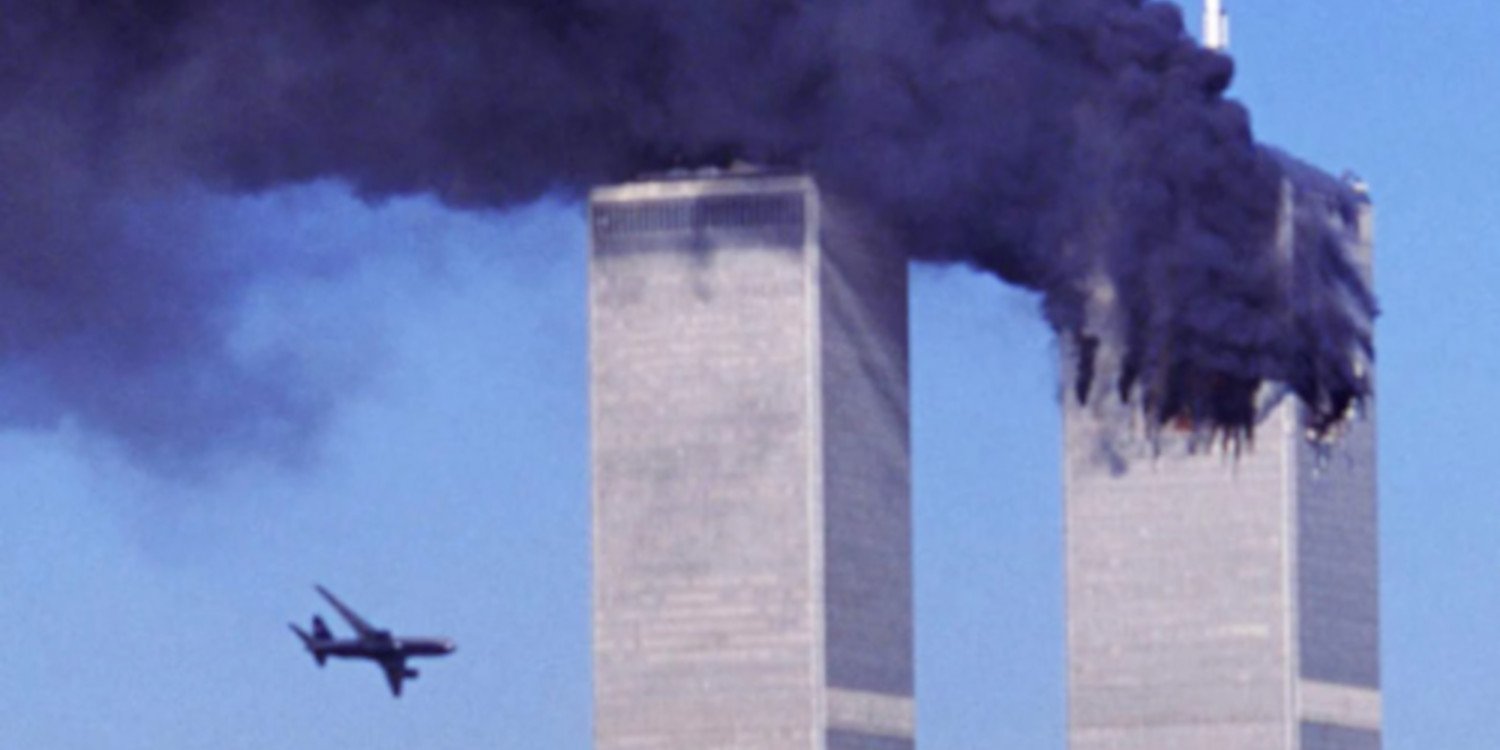
As you know well, the terrorist attacks of 9/11 destroyed the Twin Towers of the World Trade Center in Manhattan. Their collapse damaged many of the surrounding buildings including the editorial offices of The Wall Street Journal on Liberty Street just across the World Trade Center Plaza.
Months passed while The Wall Street Journal relocated its offices to 1211 Avenue of the Americas. In early January 2002, a letter came from a member of the WSJ Editorial Board. All was lost. We had to start over. But I believed at the time that I could not start over. It seemed an overwhelming task. Hope was crushed along with the towers themselves.
The loss of thousands of lives added great weight to that sense of hopelessness. I could not possibly confront my personal loss in the face of so much human tragedy caused by so much human evil. I will never forget the nightmare I had after receiving that letter. I was inside World Trade Center Tower One when the first plane struck. It was collapsing all around me. The nightmare was long, real, and horrifying. At the end of the dream I was still alive, but regretfully so. I have never been a person who sees the world in terms of himself. I tried to convey that in a post about the horrors of that day, “The Despair of Towers Falling, The Courage of Men Rising.”
I just had to wait a bit before my own courage would rise again. By the time I recovered the resolve to start over in 2002, the Catholic clergy abuse scandal erupted in Boston just a few months after 9/11 to become another New England witch hunt that swept the nation. This made my hope, and The Wall Street Journal’s effort toward justice a much steeper climb. It has always struck me that the two stories — the hijacking of the planes that attacked Manhattan and the Pentagon on 9/11, and the collapse of the dignity and morale of Catholic priests — both began in my hometown of Boston just weeks apart.

Sorrow Needs a Panoramic View
I cannot tell you how to suffer. I do not even know how myself. I can only tell you that, along with most of you, I do suffer. Perhaps that means something as a starting point. Maybe those who know sorrow feel at some fundamental level that reflection on the experience from someone who also suffers means more than a smug and smiling Gospel of prosperity from some TV evangelist.
I don’t mean to pick on TV evangelists and God help me if I judge them harshly, but I have a hard time reconciling the trenches of suffering with the Gospel of prosperity that some of them proclaim. No one in prison listens to Joel Osteen. His word is for the brokers, not the broken; not the broken-hearted.
A sanitized TV version of grace and glory feels nothing but empty and shallow against the real deep sorrow of the trenches. I found myself in one of those trenches, and, like Job on his dung heap, I was dragged there kicking and screaming at God for its injustice. For a long time, I have wondered what I did to deserve this trashing of my freedom, my name, and worst of all, my priesthood. I do, after all, have a King other than Caesar!
So does Peggy Noonan. She was a White House speechwriter for President Ronald Reagan, and now she writes the “Declarations” column for The Wall Street Journal’s Weekend Edition. She is neck deep in the affairs of New York City and Washington, but she also has her finger on the pulse of that vast expanse of America that stretches from there to the Pacific.
Peggy Noonan’s January 27, 2018 column was entitled, “Who’s Afraid of Jordan Peterson?” Formerly associate professor of psychology at Harvard, Jordan Peterson has taught psychology at the University of Toronto for 20 years. Ms. Noonan wrote about a British TV report on his book, 12 Rules for Life: An Antidote to Chaos.
She was intrigued because the interviewer was critical of Professor Peterson for his resistance to adopting the new orthodoxy of political correctness. Ms. Noonan summarized that the interviewer tried to silence his …
“… scholarly respect for the stories and insights into human behavior — into the meaning of things — in the Old and New Testaments. Their stories exist for a reason, he says, and have lasted for a reason: They are powerful indicators of reality, and their great figures point to pathways.”
Those Biblical pathways, it turns out, are always through the dark woods of sorrow. As I have written before, Sacred Scripture — the story of God and us — is filled with irony. The characters that populate the Biblical stories experience transformations born of suffering and sorrow.
Why we suffer is a cosmic mystery, but it is so even for God. As Saint Paul wrote, “He humbled himself and became obedient to the point of death, death on a cross” (Philippians 2:8). With trust, suffering takes on a meaning far greater than itself.

God Sees Facebook Too
If I were Job this is how I could frame my own lament:
“I spent the last 29 years in a dark periphery of my own called unjust imprisonment. Such a plight can cause a man to focus entirely on himself and his own bizarre fate. Those without hope here live in a prison inside a prison.”
I want to tell you about something that happened after I wrote a post entitled “Left Behind: In Prison for the Apocalypse.” It was about my friend, Skooter, who left this prison eleven years ago to face a life alone. Saint Mother Teresa once wrote that poverty does not mean just a lack of money, or food, or housing. The deepest poverty on Earth, she wrote, is to live life with no one who cares about us, no one to walk with us in suffering or sorrow.
I will always remember the day Skooter left us. From a distance, Pornchai Moontri and I watched him walk out the door carrying his life in two trash bags, but with no idea where, or to whom he would go. His life was missing the infrastructure that so many in Joel Osteen’s audience might take for granted.
Skooter was a young prisoner whom I taught to read and write. When he left prison, I never heard from him again except through a cryptic third party “thank you” from another young man who found himself back inside.
I did not know what happened to Skooter, nor did I know what exactly prompted me to write that post about him five years after he fell into silence. The silence was not his choice. When prisoners leave here, they are barred from contacting anyone left behind.
I do not know what prompted me to do this, but months after I wrote that post about him, I decided to try to find Skooter to see if he might like to read it. I called a friend, Charlene Duline in Indiana, a retired State Department official who became Pornchai Moontri’s Godmother in his Divine Mercy conversion. Charlene looked for Skooter on Facebook (using his given name), but the search yielded no result. A few days later, for reasons I do not know, I asked her to try again.
Now obviously, I have no access to Facebook but a past editor started a page for Beyond These Stone Walls. I have never even seen it so I don’t have a clue how Facebook works. I only know that my posts are shared there and that about 4,000 people “follow” them there. So while I was on the telephone with Charlene, she did the search again, but this time it yielded one result. I asked her to send a “connect request” from me. Within seconds, the acceptance came back with this message:
“G, is this really you? Is this possible?”
It seemed so bizarre that we were actually communicating in real time. Charlene sent Skooter a short reply telling him that she was on the telephone with me at that moment. Skooter sent back a number and asked me to call it. All the telephones in this prison are outside. So in the frigid cold, I called that number.
Skooter answered, and what he told me was astonishing. Skooter had been through a terrible dark night. After leaving prison at age 25, he struggled to build the life that he never had. He was alone, but he worked hard. Life was looking just a little promising and hopeful, then a cascade of dominoes began to fall.
Months before my sudden Facebook message reached Skooter, he lost his job. His boss in a small construction company was charged with some sort of corruption that Skooter had nothing to do with, but he was the collateral damage. Losing his job with no ability to plan was catastrophic. Paying rent by the week in substandard housing — a plight faced by so many former prisoners — Skooter then lost his place to live.
Everything he owned, which wasn’t much, ended up in storage. Then, unable to pay his storage bill, he lost even that. Living in a homeless shelter, Skooter went to a Christian food pantry for some help. He was asked for an address and he said he did not have one. He was told that he needs an address before they can give him food. Skooter roamed the streets and despaired.
Early in the morning after a sleepless night in the cold, he walked into the woods feeling totally defeated. He brought a rope. I’m sorry, but there is just no comfortable way to tell this. Skooter hanged himself from a tree. A hunter came upon the scene and cut down Skooter’s unconscious body, but he was still alive.
The hunter left Skooter on the ground and called the police from a highway rest area pay phone. Skooter was taken to a hospital where he had a 48-hour emergency commitment in the psychiatric ward. This is all dismal, but the rest shook me to the core. When Skooter emerged from this nightmare, he went to a city library to keep warm. He learned that he can use a computer there for free.
Feeling alone and discarded, the very poverty that Saint Mother Teresa described above, something compelled him to open a Facebook account. It was at that moment that I was on a phone from prison talking with Charlene when we searched for Skooter for the second time and there he was. Skooter told me that as he sat there wondering what to do next, my “friend request” appeared on his screen.
The photo of Skooter (above) was taken at a friend’s home at Christmas before his dark night brought him into a dark forest. I have been where Skooter was. I wrote of “How Father Benedict Groeschel Entered My Darkest Night.” Now I have entered Skooter’s darkest night, and from inside these prison walls I walk with him through his pathways of suffering and sorrow. No one could today convince Skooter that God has no plan.
So, where were you when God laid the foundations of the Earth? Have you ever in your life commanded the morning or showed the dawn its place?
+ + +
Editor’s Note: Thank you for reading and sharing this post. You might like these other posts cited herein:
The James Webb Space Telescope and an Encore from Hubble
The Chief Priests Answered, ‘We Have No King but Caesar’

The Eucharistic Adoration Chapel established by Saint Maximilian Kolbe was inaugurated at the outbreak of World War II. It was restored as a Chapel of Adoration in September, 2018, the commemoration of the date that the war began. It is now part of the World Center of Prayer for Peace. The live internet feed of the Adoration Chapel at Niepokalanow — sponsored by EWTN — was established just a few weeks before we discovered it and began to include in at Beyond These Stone Walls. Click “Watch on YouTube” in the lower left corner to see how many people around the world are present there with you. The number appears below the symbol for EWTN.
Click or tap here to proceed to the Adoration Chapel.
The following is a translation from the Polish in the image above: “Eighth Star in the Crown of Mary Queen of Peace” “Chapel of Perpetual Adoration of the Blessed Sacrament at Niepokalanow. World Center of Prayer for Peace.” “On September 1, 2018, the World Center of Prayer for Peace in Niepokalanow was opened. It would be difficult to find a more expressive reference to the need for constant prayer for peace than the anniversary of the outbreak of World War II.”
For the Catholic theology behind this image, visit my post, “The Ark of the Covenant and the Mother of God.”

In New Hampshire Courts, Police Corruption Is Judged in Secret
Former Detective James McLaughlin, aka John Doe, has a single incident on a list of police misconduct but only because the public is barred from providing evidence.

Former Detective James McLaughlin, aka John Doe, has a single incident on a list of police misconduct but only because the public is barred from providing evidence.
January 24, 2024 by Ryan A. MacDonald
Editor’s Note: The following is Ryan A. MacDonald’s continuation of a post that appeared here recently entitled, “Detective James McLaughlin and the Police Misconduct List.”
+ + +
Just a day before starting this article, I received a surprising message with a link to a new title posted in Australia by Andrew Urban on the well-known Wrongful Convictions Report blog . The title of the new article is “Sexual Abuse or Justice Abuse?”
The well-researched article first appeared in Australia on January 8 this year, but by the end of the day it had found its way around the globe. I read it with concern at first, wondering if Mr. Urban’s article somehow preempts this one which is also well researched. Our two pieces were written with similar conclusions but from very different points of view. I am struck by how incisively Andrew Urban and several reader comments unmasked the questionable police tactics of former Keene, NH Detective James McLaughlin, architect of the case against Father Gordon MacRae.
Since then, I have had a chance to peruse Mr. Urban’s excellent Wrongful Convictions Report with a special interest in his posts about the case against the late Cardinal George Pell. The cases of Cardinal Pell and Father MacRae seem remarkably similar in their background origins, their shady police investigations, and in the extent to which money changed hands. Most interestingly, Cardinal Pell and Father MacRae also wrote about each other in their respectively unjust imprisonment. Father MacRae’s latest report on the Pell matter was his recent bombshell, “The Trial of Cardinal Becciu, the Betrayal of Cardinal Pell.”
Preceding all the above by several months, Los Angeles-based documentary researcher, Claire Best also performed a public service with one of her many incisive articles published at Medium.com. This one, published September 1, 2023, is entitled simply, “Who Is James F. McLaughlin — New Hampshire’s Top Child and Internet Sex Crimes Detective?” Here’s an important excerpt:
“When McLaughlin’s name first appeared on a list of police with credibility issues in late 2021, it disappeared within hours. Something’s up, and past and present Attorneys General and District Attorneys know it. What are they hiding that they don’t want to come out, and why? For the majority of the sex crimes James F. McLaughlin investigated, plea deals were reached before trial. Money seems to be involved... He owns companies in Jaffrey (NH) with an agent/attorney who specializes in trusts and municipal laws. His wife owned a real estate company in Keene (NH). How were they funded to invest in real estate?
"Thomas Grover, the accuser of Father Gordon MacRae, admitted to his former stepson — Charles Glenn and a victim of YDC abuse who has demanded federal investigation of Attorneys General for their role — that he was offered money by James F. McLaughlin to accuse the priest who has been denied justice for the past 30 years — framed by the former sex crimes police officer.”
[See also “The New Hampshire YDC Scandal and the Trial of Fr MacRae,” a collaborative effort by Claire Best and Ryan A. MacDonald.]

Police Misconduct under Shield of Law
As indicated in “Detective James McLaughlin and the Police Misconduct List,” former detective James McLaughlin has petitioned the court to remove his name from an official NH Attorney General’s List of police with credibility or misconduct issues. McLaughlin has been allowed to seek his removal from the list under a pseudonym, “John Doe,” in Court filings. Thus any hearing before a New Hampshire judge will be held in secret at a time and place that is also secret. His police personnel file has been sealed. If any New Hampshire citizen had input or pertinent information that could further inform the Court in this process, that information is rendered moot by concessions to “John Doe’s” judicial secrecy.
At least one New Hampshire judge has published his disagreement with this process in a published op-ed, “Judge: Laurie List Police Lawsuits Are Being Improperly Sealed.” The judge, former NH Senior Assistant Attorney General Will Delker, stated:
“One of the fundamental precepts of a democracy is that public officials must be accountable to the citizens. This concept has been codified in the New Hampshire Constitution since 1784. Part I, Article 8 provides: ‘All power residing originally in, and being derived from, the people, all the magistrates and officers of government are their substitutes and agents, and always accountable to them. Government, therefore, should be open, accessible, accountable, and responsive...’” “Cases cannot be fully sealed from the outset.... The party seeking to maintain court records under seal must demonstrate a ‘sufficiently compelling interest’ that outweighs public right of access.”
Whatever that ‘sufficiently compelling interest’ is or was in the case of former Detective McLaughlin, it, too, remains under seal and beyond public view. Having followed his cases and activities for years, I simply cannot fathom what that “compelling” secrecy interest could be. The Court process itself smacks of corruption.
The obvious public hazard here is that the McLaughlin petition to be removed from the Laurie List is thus heard in a vacuum. All that is publicly known is an original, non-descript 1985 incident labeled “Falsification of Records.” In other postings, specifically in articles by Damien Fisher at InDepthNH.org, the Laurie List incident is described as “Falsification of Evidence,” a far more serious infraction for a police officer.
Whether the original matter was “falsification of records” or “falsification of evidence,” or both, McLaughlin’s 1988 and 1994 investigations of Fr. Gordon MacRae involved both. I will clarify evidence for this below.
Damien Fisher appears to be the sole New Hampshire reporter covering the matter of the Laurie List. He reports multiple attempts at obtaining information under Freedom of Information Act requests with limited success. What he has obtained and reported on, however, raises serious questions about the judicial secrecy under which this matter still hides. It seems that as a sworn officer, James F. McLaughlin is culpable of far more malfeasance than his 1985 “Falsification of Records” infraction alludes, but it remains the sole publicly known infraction. There are hints of many others, however, but public accountability is hindered by judicial secrecy.
Attorney Andru Volinsky, who is representing the New Hampshire Center of Public Interest Journalism in its ongoing lawsuit to unseal the complete Laurie List:
“I have no idea whether any of the judges who looked at these cases applied an appropriate standard whether to make this anonymous or sealed or not. It creates a system of secrecy that does not build confidence in the court system.”

Keene, NH Det. James McLaughlin celebrates his 350th arrest as a sex-crimes crusader.
Infractions That Never Made the Laurie List
Listed below, therefore, I have itemized specific New Hampshire Revised Statutes Annotated (NH RSAs) governing police misconduct laws. Each is followed by examples of claimed misconduct raised by citizens or reporters regarding Detective James McLaughlin that had been kept out of any official investigation due to the seal of judicial secrecy. No one has investigated these claims:
RSA 641 : 6 (I) — Falsifying Physical Evidence
A person commits a Class B felony if, believing that an official proceeding as defined in RSA 641:1, II, or investigation is pending or about to be instituted, he alters, destroys, conceals, or removes any thing with a purpose to impair its verity or availability in such proceeding.
RSA 641 : 1 (I a) - Perjury
A person is guilty of a Class B felony if in any official proceeding he makes a false material statement under oath or affirmation, or swears or affirms the truth of a material statement previously made, and he does not believe the statement to be true.
RSA 641 : 2 (I b)— False Swearing
A person is guilty of a misdemeanor if he makes a false statement under oath or affirmation or swears or affirms the truth if (b) the statement is one which is required by law to be sworn or affirmed before a notary or other person authorized to administer oaths;
EVIDENCE FOR VIOLATIONS: In sworn interrogatories in the 1994 case of NH v. Gordon MacRae, Detective McLaughlin was ordered by the Court to produce to the defense any taped conversations with MacRae or other witnesses in the case. McLaughlin wrote in a police report logged as Case No. 89-0-2440, “I also told [MacRae] the interview would be recorded to safeguard both him and the police from misunderstandings about what was exactly stated.”
McLaughlin then went on in his report to attribute statements to MacRae that were never made. When MacRae’s defense requested a copy of the tape, McLaughlin responded under oath that the recording in question had been recycled for other investigations and is thus no longer available.
Eleven years later, in 2005, McLaughlin sent that very tape recording to a reporter at The Wall Street Journal who then described its contents very differently than McLaughlin first reported them. Neither McLaughlin nor the prosecutor has ever explained this. This “Falsification of Evidence” should have been logged as an additional finding on the Laurie List about McLaughlin, but no one has acknowledged or investigated it.
RSA 641 : 3 (I a) — Unsworn Falsification
A person is guilty of a misdemeanor if he or she makes a written or electronic false statement ... on or pursuant to a form bearing a notification authorized by law.
EVIDENCE FOR VIOLATION: Throughout the “investigation” of MacRae, multiple tape recordings were referenced in police reports, but none were ever turned over for defense review as ordered by the court. McLaughlin’s signed reports attributed to named witnesses allegations about Gordon MacRae that those witnesses insist were never made. However the recordings containing such statements became inexplicably unavailable.
RSA 105 : 19 (I) — Reports of Misconduct by Law Enforcement Officers
For the purposes of this section, “misconduct” means assault, sexual assault, bribery, fraud, theft, tampering with evidence, use of a chokehold, or excessive and illegal use of force.
EVIDENCE FOR VIOLATION: From a Signed Statement of Steven Wollschlager: (October 27, 2008):
“Again during this meeting I mostly just listened to scenarios and statements being spoken to me by the police. The lawsuits and money were of greatest discussion and I was left feeling that if I would go along with the story I could reap the rewards as well.
“McLaughlin had me believing that all I had to do was make up a story and I could receive a large sum of money as others already had. McLaughlin reminded me of the young child and girlfriend I had and referenced that life could be easier for us with a large amount of money.”
RSA 641 : 5 (I a) — Tampering with Witnesses and Informants
A person is guilty of a class B felony if: Believing that an official proceeding, as defined in RSA 641 : 1, II or investigation is pending or about to be instituted, he attempts to induce or otherwise cause a person to a) Testify or inform falsely.
EVIDENCE FOR VIOLATION: From a Signed Statement of Debra Collett (February 20, 2008)
“I am Debra Collette I am making this Statement to James Abbott, Investigator for Gordon MacRae. My involvement leading to speaking with James Abbott was as Clinical Director at Derby's Lodge in NH. I was contacted by Keene Police Detective McLaughlin. I was uncomfortable with repeated stopping and starting the tape recorder when he did not agree with my answers to his questions ...
“His treatment of me included coercion, intimidation veiled and more forward threats as well as being disrespectful. I was overtly threatened. McLaughlin told me he would personally come to my home, drag me out of it bodily if necessary, and force me to appear in court and testify despite my information to him.
“My overall experience in interacting with [him] was one of being bullied with [his] attitude of animosity, anger, and preconception of guilt ... [He] presented as argumentative, manipulative, and threatening via use of police power in an attempt to get me to say what they wanted to hear.”
RSA 641 : 7 (III) — Tampering with Public Records or Information
A person is guilty of a misdemeanor if he purposely and unlawfully destroys, conceals, removes or otherwise impairs the verity or availability of any such thing.
EVIDENCE FOR INFRACTION: Detective McLaughlin’s tape recordings of his interviews with Ms. Debra Collett cited above simply disappeared before MacRae’s 1994 trial and therefore could not be heard by defense counsel, the judge, or the jury.
+ + +
Citations from reported articles at InDepthNH.org by Damien Fisher regarding content not reported on the Laurie List
1. Altered Tape Recordings: Source: Damien Fisher, “County Investigates McLaughlin Complaint Filed By Man Convicted Decades Ago” (November 15, 2022):
“In 1988, James McLaughlin received a letter of reprimand from then-Chief Thomas Powers after James McLaughlin was involved in a December 1987 heated verbal confrontation on the phone, and later inside the station. It was during this incident that the audio portion of the tape was destroyed under suspicious circumstances, according to Powers ... . Powers called James McLaughlin’s explanation for the tape erasure ‘unacceptable.’”
2. Other Undocumented Infractions:
a) [From the same source as above]: From a 1988 Letter of Chief Thomas Powers in the file of James F. McLaughlin:
“I reviewed your personnel file and several internal affairs investigations. While you have accumulated a number of praises in your career, a disproportionate number of serious accusations and violations have significantly detracted from your record, including a one-week suspension.”
b) Source: Damien Fisher, “Records Show Keene Police’s Famed Ex-Detective Caught in Lies” (September 19, 2022) :
“McLaughlin was suspended for lying about shooting his gun, and another in which he ‘accidentally’ destroyed an audio recording that could have put him in a bad light.” “The records obtained by InDepthnH.org indicate there are more internal affairs reports dealing with McLaughlin which the city has not so far provided. The city has also not provided an explanation for the omission of the other reports.”
c) Source: Damien Fisher, “Famed Keene Cop Called Out for Federal Entrapment” (January 11, 2022) :
“Once it was discovered that McLaughlin had sent [child sex abuse images] to [Defendant Lee] Allaben, United States District Court Judge Steven McAuliffe censured the police officer in court.”
+ + +
Editor’s Note: Thank you for reading and sharing this post. We thank Ryan A. MacDonald for his careful analysis. Part One, which appeared here recently, is: “Detective James McLaughlin and the Police Misconduct List.” You may also be interested in these related posts published at the site, Wrongful Convictions Report on the case of Fr. Mac Rae:
Sexual Abuse or Justice Abuse?
And by Claire Best and Ryan A. MacDonald:
The New Hampshire YDC Scandal and the Trial of Father MacRae
And again by Ryan A. MacDonald:
Police Misconduct: A Crusader Cop Destroys a Catholic Priest

The Eucharistic Adoration Chapel established by Saint Maximilian Kolbe was inaugurated at the outbreak of World War II. It was restored as a Chapel of Adoration in September, 2018, the commemoration of the date that the war began. It is now part of the World Center of Prayer for Peace. The live internet feed of the Adoration Chapel at Niepokalanow — sponsored by EWTN — was established just a few weeks before we discovered it and began to include in at Beyond These Stone Walls. Click “Watch on YouTube” in the lower left corner to see how many people around the world are present there with you. The number appears below the symbol for EWTN.
Click or tap here to proceed to the Adoration Chapel.
The following is a translation from the Polish in the image above: “Eighth Star in the Crown of Mary Queen of Peace” “Chapel of Perpetual Adoration of the Blessed Sacrament at Niepokalanow. World Center of Prayer for Peace.” “On September 1, 2018, the World Center of Prayer for Peace in Niepokalanow was opened. It would be difficult to find a more expressive reference to the need for constant prayer for peace than the anniversary of the outbreak of World War II.”
For the Catholic theology behind this image, visit my post, “The Ark of the Covenant and the Mother of God.”

Detective James McLaughlin and the Police Misconduct List
The NH ‘Laurie List’ is a once secret list of police misconduct. Ex-Detective James F McLaughlin, who sent a priest to life in prison, now sues to get off the list.

The NH ‘Laurie List’ is a once secret list of police misconduct. Ex-Detective James F McLaughlin was recently removed from the list in a secret ‘John Doe’ hearing.
Editor’s Note: Ryan A. MacDonald has published numerous articles on the sex abuse crisis in the Catholic Church including, “Police Misconduct: A Crusader Cop Destroys a Catholic Priest.” This is a necessary sequel.
+ + +
January 17, 2024 by Ryan A. MacDonald
Are you in favor of destroying the lives of Catholic priests under false pretense? If not, please read on. Catholic priest Gordon J MacRae is now in his thirtieth year of wrongful imprisonment after rejecting a 1994 plea deal offer to serve one to two years. I previously wrote at the link cited above about newly emerging evidence in the case. The Wall Street Journal boldly took up this matter in a series of articles by Pulitzer Prize-winning journalist Dorothy Rabinowitz and noted civil rights attorney Harvey Silverglate. Their work exposing this wrongful prosecution and police misconduct is collected at “The Wall Street Journal on the Case of Fr Gordon MacRae.”
Newly emerging evidence came to light with a revelation that the police detective who investigated and testified against Father Mac Rae was added to a previously secret list of officers with dishonesty or police misconduct issues. The list was held in secret by the New Hampshire Attorney General until a court ordered publication of the list in 2022. Detective James McLaughlin was added to the list for “Falsification of Records,” an incident or incidents that occurred in 1985, nine years before the 1994 MacRae trial. Because the behavior was known to state prosecutors at the time of the trial, they were obligated by Supreme Court precedent to report this to Father MacRae’s legal counsel before trial. They failed to do so.
This bombshell was first reported by someone at the New Hampshire Office of the American Civil Liberties Union which had been a plaintiff in a lawsuit that eventually made the “Laurie List” public. Father MacRae himself wrote of this development in “Predator Police: The New Hampshire ‘Laurie List’ Bombshell.”
Police officers placed on the Attorney General’s list have the ability to challenge its publication by petitioning the courts to remove their names for cause. Former Detective McLaughlin filed such a petition so, pending a court hearing, his name was blacked out from the public list just hours after it appeared. New Hampshire courts have allowed officers on the list to file their petitions using “John Doe” pseudonyms. A hearing for McLaughlin — though not a public one — is likely to be scheduled early in 2024.
Not everyone is on board with the notion of a judicial system operating in secret. One judge, a former Senior Assistant Attorney General, has objected to the secret forum in which these removal petitions are being heard. (See “Judge: Laurie List Police Lawsuits Are Being Improperly Sealed”). Judge Will Delker’s published objection cites a fundamental precept of democracy that public officials must be accountable to citizens: “Court records are presumptively open to the public absent some overriding consideration or special circumstance. The party seeking to maintain court records under seal must demonstrate a sufficiently compelling interest that outweighs the public’s right to access.”
New Hampshire reporter Damien Fisher has managed to obtain, through Freedom of Information Act requests, some limited, heavily redacted evidence of the matters before the court in former Detective McLaughlin’s petition. He documented them in a December 18, 2023 article, “Laurie List Lawsuit Matches Former Well-Known Keene Cop’s Record.” To force a reporter to such lengths to obtain public information in public records turns the court system into a sham.

Covering Up for Police Corruption
There is a good deal more in the problematic and unconstitutional practices of Detective James F. McLaughlin than what is currently before the Court in his petition to be removed from the public accountability list, but the public is kept in the dark. Citizens should have an opportunity to address concerns about why his name should remain on that published list, but that is circumvented by secrecy. The public cannot learn the identity of the “John Doe” before the Court. Reporter Damien Fisher was only able to discern this from a careful examination of this particular “John Doe’s” petition.
Additionally, the public cannot obtain a Court date or docket number to have their concerns heard. As a result, pertinent evidence is prevented from coming before the Court. The court of public opinion is a different matter, but no citizen should have to appeal to it in order to obtain justice.
Though not a resident and citizen of the State of New Hampshire, I have researched its laws in regard to the conduct of police. The violations alleged against McLaughlin in the case of Father MacRae alone are many and great. No public entity has investigated these and judges hearing MacRae’s two appeals — a direct State appeal in 1996 and a Writ of Habeas Corpus in 2012 — resulted in rejection without hearing from any witnesses privy to said misconduct.
So if we cannot place it before the Court, we place it before you in the form of official excerpts of the New Hampshire Revised Statutes Annotated, the very State laws that Detective McLaughlin has broken and for which he should be censured. Each is followed by signed Statements given to a former FBI official investigating this case, but in each case no judge has allowed the Statements or witnesses thereof to be heard under oath and on the record in any New Hampshire court.
RSA 105 : 19 — Reports of Misconduct by Law Enforcement Officers
For the purposes of this section, ‘misconduct’ means assault, sexual assault, bribery, fraud, theft, tampering with evidence, tampering with a witness, use of a choke hold, or excessive and illegal use of force.
1. STATEMENT OF STEVEN WOLLSCHLAGER (Alleging Attempted Bribery)
Introduction: Steven Wollschlager was a friend of accuser Thomas Grover. During Detective James McLaughlin’s investigations in 1988 and 1994, Mr. Wollschlager was interviewed. It is unknown whether the interviews were recorded. Wollschlager states that the interview reports misrepresented statements attributed to him that he never made. In a 1994 pre-trial interview, McLaughlin is alleged to have attempted to suborn Wollschlager to commit perjury before a grand jury with the suggestion of “a large sum of money.” Wollschlager reported being lured into agreement, but later recanted, refusing to testify before a grand jury:
“My name is Steven Wollschlager, DOB 12-7-1973. I give this signed statement at my own free will to Investigator James Abbott with no promises or bribes. I am willing to testify to the following statement to proceed in a court of law or otherwise under oath that I am giving facts and details to the best of my memory.
“I have had opportunities during several periods of my life to know Gordon McCrea (sic). Never in all our meetings or conversations was there any inappropriate talk of sex, sex for money, favors, or any other thing related to such.
“My first encounters with Gordon came when I was age 15 and using drugs. Gordon counseled me through Monadnock Family Counseling, maybe three sessions. During this time he also introduced me to some persons in the AA program. At this time there was never anything inappropriate going on, nor did I ever feel uncomfortable for any reason around Gordon.
“In 1988 while in rehab (which Gordon helped my parents get me into), I was interviewed by [Keene] Detective McLaughlin about Gordon. This detective did most of the talking — Did he ever do this or that? — asking me many questions as to whether or not anything inappropriate ever happened with Gordon against me. Never during this time did I say anything to any police officer that Gordon had done anything wrong towards me.
“Years passed and in 1994, before Gordon was to go on trial, I was contacted again by Keene police detectives McLaughlin and Collingworth. I was aware at the time of Gordon’s trial, knowing full well that it was bogus and having heard of the lawsuits and money involved, also the reputations of those who were making accusations. I agreed to meet with the above detectives after being told that I would be reimbursed for my time and gas money.
“Again during this meeting I mostly just listened to scenarios and statements being spoken to me by the police. The lawsuits and money were of greatest discussion and I was left feeling that if I would go along with the story I could reap the rewards as well.
“McLaughlin asked me many times if Gordon ever tried to come onto me sexually or offered me money for any sexual favors. He had me believing that all I had to do was make up a story about Gordon and I could receive a large sum of money as others already had. McLaughlin reminded me of the young child and girlfriend I had and referenced that life could be easier for us with a large amount of money.
“I knew the Grovers’ reputation as well as others involved, many of whom I went to school with. It seemed as though it would be easy money if I would also accuse Gordon of wrongdoing. I left that meeting after being given, I believe, $50, easy money like what would come from lawsuits against McCrae (sic). I was at the time using drugs and could have been influenced to say anything they wanted for money .
“A short time later after being subpoenaed to Court, I had a different feeling about the situation. I did not want to lie or make up stories. After speaking with the Clerk of Courts I was approached by another person. After telling this person that I did not want to be there and I stated Gordon had never done anything wrong towards me sexually or otherwise, I was told I could leave. This person seemed visibly upset that I had nothing to say.”
Signed: Steven Wollschlager October 27, 2008
2. STATEMENT OF DEBRA COLLETT (Alleging Witness Tampering and Tampering with Evidence)
Introduction: Ms. Debra Collett was Thomas Grover’s primary counselor in 1987 at Derby Lodge, a residential drug addiction treatment center located in Berlin, NH. In police interviews with Detective McLaughlin pretrial in 1993/94, Grover claimed to have revealed to Debra Collett that Fr. Gordon MacRae molested him in his teen years. Grover had previously been treated for addiction at Beech Hill Hospital in Dublin, NH in 1985, but his treatment was terminated when he was caught smuggling drugs to sell to other patients. Ms.Collett here reveals that Detective McLaughlin recorded his interviews with her, but neither a report nor the recordings were ever turned over to MacRae’s defense as required.
“I am Debra Collett, DOB 6-17-1952. I am making this Statement to James Abbott, Investigator for Gordon MacRae. My involvement leading to speaking with James Abbott was as Clinical Director at Derby’s Lodge in Berlin, NH. I was individual counselor for Tom Grover when he was a client at Derby Lodge.
“Thomas Grover never revealed to me that Gordon MacRae perpetrated against him. Mr Grover spent a great deal of time being confronted in treatment for his dishonesty, misrepresentation, and unwillingness to be honest about his problems. Thomas Grover did reveal that he had been perpetrated against sexually, but named no specific person except to say that his “step father” or “foster father” molested him. When asked if Thomas meant, “Mr. Grover,” Thomas replied, “yes, among others.”
“Thomas Grover presented as unwilling to join a group of other people who like himself experienced similar difficulties. Instead, he became angry, punched walls, flicked things, and slammed doors to evade and not address his issues.
“When it became evident that [the MacRae case] was going to trial, I was contacted by Keene Police Detectives Clarke and McLaughlin. They questioned me and I had several contacts with them.
“My experience was that neither presented as an investigator looking for what information I had to contribute, but rather presented as having made up their minds and sought to substantiate their belief in Gordon MacRae’s guilt. I experienced Detective Clark as the primary questioner. I was uncomfortable with his repeated stopping and starting the tape recorder when he did not agree with my answers to his questions and his repeated statements that he wanted to put this individual where he belonged, behind bars, that a priest of all people should be punished.
“I confronted Det. Clark about his statements and his stopping and starting the recording of my statement, and his attitude and treatment of me which seemed to include coercion, intimidation, veiled and more forward threats as well as being disrespectful. At that point, and in later dealings, I was overtly threatened concerning my reluctance to continue to subject myself to their treatment with threats of arrest. McLaughlin told me he would personally come to my home, drag me out of it bodily if necessary, and force me to appear in court and testify despite my information to him.
“My overall experience in interacting with these detectives was one of being bullied with their attitude of animosity, anger, and preconception of guilt regarding Gordon MacRae. They presented as argumentative, manipulative, and threatening via use of police power in an attempt to get me to say what they wanted to hear.”
Signed: Debra Collett 05-20-2008
3. STATEMENT OF LEO DEMERS IN A LETTER TO JUDGE ARTHUR BRENNAN (Alleging Witness Tampering and Suppression of Evidence)
Letter dated October 24, 2013:
“My wife, Penny, and I were present in the courtroom throughout most of the trial of Fr. Gordon MacRae. For all these years, I have had many questions about this trial and much that I’ve wanted to clarify for my own peace of mind. I learned recently that both a superior court judge here in New Hampshire and the NH Supreme Court declined to hold a hearing on the evidence and merits of a habeas corpus petition in this case. Now that state courts seem no longer to be involved, I feel more inclined to approach you on what has been bothering me, as you were the presiding judge.
“We saw something in your courtroom during the MacRae trial that I don’t think you ever saw. My wife nudged me and pointed to a woman, Ms. Pauline Goupil, who was engaged in what appeared to be clear witness tampering. During questioning by the defense attorney, Thomas Grover seemed to feel trapped a few times. On some of those occasions, we witnessed Pauline Goupil make a distinct sad expression with a downturned mouth and gesturing with her finger from the corner of her eye down her cheek at which point Mr. Grover would begin to cry and sob on the stand. The lawyer’s questions were never answered.
“I have been troubled about this for all these years. I know what I saw, and what I saw was a clear attempt to dupe the court and the jury. If the sobbing and crying were not truthful, then I cannot help but wonder what else was not truthful on the part of Mr. Grover. If he was really a victim who wanted to tell the simple truth, why was it necessary for him and Ms. Goupil to have what clearly appeared to be a set of prearranged signals to alter his testimony? The jury was privy to none of this, to the best of my knowledge.
“Secondly, I was struck by the difference in Thomas Grover’s demeanor on the witness stand in your court and his demeanor just moments before and after outside the courtroom. On the stand, he wept and appeared to be a vulnerable victim. Moments later, during court recess, in the parking lot he was loud, boisterous and aggressive. One time he even confronted me in a threatening attempt to alter my own testimony during sentencing. …
“I simply believe that, like so many others, Mr. Grover and those coaching him have misled you and your court. You also seemed to rely heavily in your sentencing of MacRae on the investigation and findings of Det. McLaughlin. My wife and I had some firsthand experience with him and his tactics during his investigation. He was not at all interested in the facts or the truth. He attempted to use coercion and bullying tactics to get my wife and me to change the facts we presented to him, facts that did not support any of his preconceived ideas.
“We are not the only persons to have had this experience with him. I have read that Debbie Collett, Thomas Grover’s counselor, outlined in detail how she was threatened and coerced into altering her testimony. Another witness alleges that he was overtly bribed by this detective to accuse MacRae during that investigation.”
Signed: Leo Demers, August 24, 2013
+ + +
There is much more alleged of this detective that should come before a Court deciding on his public exposure on the Exculpatory Evidence Schedule or ‘Laurie List.’ As long as the Court allows Mr. James McLaughlin to appear as “John Doe” in any hearing regarding his appearance on the police misconduct list which is meant to be public, citizens are prevented from witnessing to the truth in this regard. None of the people mentioned here have ever been allowed to testify under oath about this detective. Now we know why.
This necessitates a Part 2 of this post, hopefully coming next week.
Meanwhile, please share this article. There is nothing more destructive of the cause of justice and the common good than the noise of too few and the silence of too many.
Pray for justice, and for the integrity of our justice system.
+ + +
Editor’s Note: We thank Ryan A. MacDonald for this newest chapter in a continuing struggle for justice. You may also be interested in these related posts:
Police Misconduct: A Crusader Cop Destroys a Catholic Priest
Predator Police: The New Hampshire ‘Laurie List’ Bombshell
New Hampshire Corruption Drove the Fr Gordon MacRae Case
Police Investigative Misconduct Railroaded an Innocent Priest

Keene, NH Det. James McLaughlin celebrates his 350th arrest as a sex-crimes crusader.
The Eucharistic Adoration Chapel established by Saint Maximilian Kolbe was inaugurated at the outbreak of World War II. It was restored as a Chapel of Adoration in September, 2018, the commemoration of the date that the war began. It is now part of the World Center of Prayer for Peace. The live internet feed of the Adoration Chapel at Niepokalanow — sponsored by EWTN — was established just a few weeks before we discovered it and began to include in at Beyond These Stone Walls. Click “Watch on YouTube” in the lower left corner to see how many people around the world are present there with you. The number appears below the symbol for EWTN.
Click or tap here to proceed to the Adoration Chapel.
The following is a translation from the Polish in the image above: “Eighth Star in the Crown of Mary Queen of Peace” “Chapel of Perpetual Adoration of the Blessed Sacrament at Niepokalanow. World Center of Prayer for Peace.” “On September 1, 2018, the World Center of Prayer for Peace in Niepokalanow was opened. It would be difficult to find a more expressive reference to the need for constant prayer for peace than the anniversary of the outbreak of World War II.”
For the Catholic theology behind this image, visit my post, “The Ark of the Covenant and the Mother of God.”

The Trial of Cardinal Becciu, the Betrayal of Cardinal Pell
In December 2023 Cardinal Giovanni Angelo Becciu, the first prelate in history to face trial in a Vatican court, was convicted of embezzlement and money laundering.

Credits: Left, CNS; Right, CNS/Paul Haring
In December 2023 Cardinal Giovanni Angelo Becciu, the first prelate in history to face trial in a Vatican court, was convicted of embezzlement and money laundering.
January 10, 2024 by Fr Gordon MacRae
I recently explained to a friend concerned about the emergence of accounts of historic abuse by priests that mainstream media often save such stories to run them near Christmas and Easter. The motive of the left-leaning media in this seems obvious. It is to drive a wedge between Catholics and their Church. So it was doubly distressing when lurid stories of criminal behavior were generated from the highest levels of Church authority during the Advent and Christmas seasons this year.
“A Cardinal Once Seen as Future Pope Now Faces Prison.” That shocking headline was a front page story by Francis X. Rocca in the December 13, 2023 edition of The Wall Street Journal. Cardinal Giovanni Angelo Becciu, Prefect of the Vatican Congregation for the Causes of Saints, has stood accused by Vatican investigators of the crimes of embezzlement and money laundering since 2020. Trial for the then 75-year-old prelate commenced in 2021. In the weeks before Christmas in 2023, he was convicted of the charges and sentenced to a prison term of five-and-a-half years.
Cardinal Becciu is the first cardinal in Church history to face criminal charges in a Vatican court. According to the Rocca article, five others also faced criminal charges in the same case. They included other Vatican officials and outsiders. The case centered on a failed Vatican investment in a high-end London property and “the alleged theft of money intended to free a kidnapped nun but reportedly spent instead on resort vacations and luxury goods from Prada and Louis Vuitton,” according to Rocca. This story could not be worse.
The trial, which concluded near Christmas, included “accusations of Vatican vendettas as well as Becciu’s secretly recorded conversation with the pope.” Mr. Rocca reported that Pope Francis changed Church laws during the investigation in ways that defendants’ lawyers said favored the prosecution and violated the right to a fair trial — “including a broader authority to eavesdrop on suspects.”
Prior to his role as prefect for the Vatican office, Cardinal Becciu had been in the official role of “Substitute for General Affairs.” Mr. Rocca described this role as “effectively the pope’s chief of staff.” Becciu served in this capacity for the last two years of the pontificate of Benedict XVI and at least the first five years of the papacy of Francis. Becciu described this role, reported by journalist Francis X. Rocca, in 2018: “The substitute is, so to speak, the one who has no time for himself but must give it first to the Holy Father and therefore be willing to take any of his calls and favor any of his initiatives.”
It was Francis who elevated Becciu to the rank of cardinal and appointed him to his role overseeing the canonization of Saints. When the charges of money laundering and embezzlement emerged in 2020, Pope Francis asked him to resign.

Cardinal Becciu, Pope Francis, Cardinal Pell [Credits: CNS/Guglielmo Mangiapane/Reuters, CBCEW, Daniel Ibanez/CNA/EWTN]
Who’s Left on the Side of Right?
Several biographies of Pope Francis point to Vatican corruption as a primary impetus for his elevation to the papacy in the conclave of 2013. In my post, “Synodality Blues: Pope Francis in a Time of Heresy,” I described the conditions under which Benedict XVI shocked the world with his decision to step down from the Chair of Peter. His final year was marred by Vatican corruption, especially revolving around Vatican finances. The betrayals and political machinations in Rome became legendary.
The word, “machination” refers to a crafty scheme or cunning design for the accomplishment of a sinister end. There were several such schemes at work in the background that caused Benedict XVI to conclude, as he did in his February 2013 announcement, that he must step down:
“I have come to the certainty that my strengths, due to an advanced age, are no longer suited to an adequate exercise of the Petrine ministry.”
In the years to follow the 2013 conclave, one scandal after another emerged from Rome. Writing for The New York Times in 2018, conservative Catholic columnist Ross Douthat wrote of the “latest bomb” to go off in “an already cratered Catholic landscape.” The bomb then was an 11-page “testimony” from Archbishop Carlo Maria Vigano, a former Vatican ambassador to the United States, accusing Pope Francis of shielding and enabling a serial abuser, Cardinal Theodore McCarrick, by releasing him from restrictions on his activities and travel.
The restrictions had been imposed by Benedict XVI in the wake of revelations that McCarrick had sexually abused seminarians for years. Cardinal McCarrick had been restricted by Benedict to a life of prayer and penance, but ignored it. According to columnist Robert George writing in The Washington Post in 2018, “Pope Francis ignored it as well.”
Ross Douthat attributed this decision of Francis to the fact that he “needed allies” in the ongoing struggle between conservative and liberal Catholics. This is a scandal of its own. Douthat reported that McCarrick “was sympathetic to the Pope’s planned liberalizing push.” The irony was that liberal Catholics, the very ones who championed full exposure of the sexual abuse crisis, were willing to look the other way when Francis promoted McCarrick, removed his disciplinary sanctions, and corralled his help for an obsessive agenda to thwart Catholic conservatives. Some have suggested that such obsessive concerns helped to keep rogue Vatican actors like Cardinal Becciu from scrutiny. When the spotlight of obsession is on sexual abuse alone, money flows freely in the surrounding darkness.

When Cardinal Pell Was Accused
The case against Cardinal George Pell was also influenced by nefarious machinations, including police and prosecutor corruption. This was at the heart of a curious incident related in Prison Journal (Volume 1, p. 329). At a pretrial hearing on Cardinal Pell’s false sexual abuse charges, among the most difficult charges to defend against, a Melbourne, Australia priest who was present in the court told Pell’s supporters that he prays that the prosecutor will “mess up his presentation.” When that actually happened, the priest reportedly said, “See, my prayers are working!” When Cardinal Pell was told of this he said, “I would have much preferred that he prayed for justice to be done.”
Those were the spontaneous words of an innocent man who believed that justice in this life is possible — even likely. The guilty on the other hand engage in any number of contrived machinations to do an end run around the law. When a defendant is innocent and there is no evidence supporting the charge, it is too often police and prosecutors who resort to machinations to do an end run around the law.
There is a vivid example of this on the same page of Pell’s Prison Journal cited above. Detective Sgt. Kevin Carson of the Ballarat, Australia Police Department produced a report claiming that sexual abuse by Catholic priests in Victoria — where Pell was facing trial — was responsible for forty-three suicides. After the shocking story was leaked to tabloid media, a parliamentary inquiry into the Church’s handling of sexual abuse was launched. An inquiry is similar to a grand jury report in the United States.
The police set up an investigation, but were able to identify only twenty-five of the forty-three named by Detective Carson. Of those twenty-five names, only sixteen had committed suicide. But only one of the sixteen had been assaulted by a member of the clergy. As Pell himself pointed out, “One is one too many, but one is not forty-three.” This tendency to “heighten the hype” lends itself to unfair trials and wrongful convictions, but it also lends itself to career advancement, a shamefully strong force in many of the US grand jury reports on Catholic clergy.
In his analysis of the Cardinal Becciu trial in The Wall Street Journal cited above, Francis X. Rocca included the following paragraph:
“Around that time, Francis made Australian Cardinal George Pell his finance chief and gave him sweeping powers. Pell unveiled new financial guidelines for the Vatican. But he clashed with the secretariat, which opposed his plans for a financial audit by an external auditing firm. Pell considered Becciu his main opponent.... Other Vatican officials also lobbied the Pope against Pell’s changes. The Pope curtailed Pell’s powers and the external audit was canceled. Pell later returned to Australia to face child sex abuse charges. He was acquitted on appeal and died” [on January 10, 2023].
In an October 15, 2023 published commentary on Mr. Rocca’s account in The Wall Street Journal, I added some further context to the story:
“The part of this nebulous story that most troubles me is the decision of the Pope to listen to Cardinal Becciu and other Vatican officials who lobbied against Cardinal George Pell’s financial reforms even after [ the Pope] had empowered him to reform Vatican finances. Mr. Rocca does not speculate on the source of charges against Cardinal Pell in Australia — charges for which he was exonerated in a unanimous decision of Australia’s High Court. This was after he wrongly spent 400 days in prison. There are many who believe that there may have been a connection between these false charges and Cardinal Pell’s attempted reforms of Vatican finances. Pell himself suspected this.”

Book cover image courtesy of Ignatius Press; Red cardinal photo by RachidH (CC BY-NC 2.0 DEED)
Many Unanswered Questions
In Cardinal Pell’s Prison Journal Volume 2, in an entry dated 2 August 2018, he devoted several pages to an article of mine, “Was Cardinal George Pell Convicted on Copycat Testimony?” The article had been sent to him in prison by Sheryl Collmer, a columnist for Crisis magazine. (The full excerpt now appears at our “Voices from Beyond” feature. )
My article drew a parallel between an accuser’s testimony in the trial of Cardinal Pell and that of another accuser in an unrelated case reported in Rolling Stone magazine by a now disgraced reporter, Sabrina Rubin Erdely. It turned out that there was indeed a connection, and the Erdely article was widely read in Australia before Pell was accused. As Francis X. Rocca observed in The Wall Street Journal excerpt above, “Pell considered Becciu his main opponent.” Is there something further to be deduced from this? Consider this 2020 entry from the Australia site Wrongful Convictions Report — “Cardinal Pell ... well, well, well”:
“Italian media have reported that Cardinal Giovanni Angelo Becciu, 72, is suspected of wiring 700,000 euros to recipients in Australia who helped to ensure hostile testimony in the trial of Cardinal George Pell, who was accused of molesting choir boys in Melbourne in the 1990s. Becciu, days after being sacked by the Pope, denies the truth of the reports.”
Consider also these further entries in Cardinal Pell’s Journal written from his prison cell:
Friday, 2 August 2019: “The allegations behind the 2011 Rolling Stone article, published in Australia, have also been demolished as false by, among others, Ralph Cipriano’s ‘The Legacy of Billy Doe’ published in the Catalyst of the Catholic League in January-February 2019. No one realized in 2015, when the allegations against me were first made to police, that the model for copycat allegations was also a fantasy or a fiction. I am grateful to Fr MacRae for taking up my cause.”
Sunday, 27 October 2019: “I finished reading a collection of articles from 23 October 2019 on the Vatican finance scandals ... [One] article mentioned Msgr Cesare Burgazzi, who worked in the Vatican Secretariat of State on the finances who became disillusioned by his discovery of a parallel bank, another IOR, and was then removed from his position through media accusations of sexual behavior which were later shown to be completely baseless. I had not heard of this.” [Emphasis added].
Thursday, 14 November 2019: “So far, the Vatican financial scandals have not bitten as deeply, especially in Australia, but they are a scandal of incompetence exploited by criminals.... Becciu had given an interview to a journalist as he was under pressure, which is not surprising.”
Thursday, 28 November 2019: “Cardinal Becciu furiously denounced as ‘another false article’ Ed Condon’s accurate account on the London property fiasco and of the accounting procedures which attempted to conceal it.” [Footnote: Ed Condon, “Vatican Officials: Swiss Bank Suspected of Money Laundering led to Pell Conflict,” Catholic World Report, 21 November 2019.]
Saturday, 30 November 2019: “I am becoming more interested in trying to put together the early stages in the evolution of the charges against me. Why were the charges first ascribed to 1997 instead of 1996? When was Sunday Mass introduced as a setting for the crime? Who helped the complainant? When did the similarities with the [Rolling Stone’s] Billy Doe incidents in Philadelphia emerge?”
Cardinal Pell’s last question now haunts this story: “Is there a Rome connection?”
+ + +
Note from Fr Gordon MacRae: I continue to feel an obligation to the late Cardinal Pell to uncover the truth of this story whenever and wherever possible. Thank you for reading and sharing this post. You may also like these related posts from Beyond These Stone Walls:
Excerpt: From the Prison Journal of Cardinal Pell, 2 August 2019
Was Cardinal George Pell Convicted on Copycat Testimony?
The Path of Sabrina Rubin Erdely's Rolling Stone
The Lying, Scheming Altar Boy on the Cover of Newsweek
The Eucharistic Adoration Chapel established by Saint Maximilian Kolbe was inaugurated at the outbreak of World War II. It was restored as a Chapel of Adoration in September, 2018, the commemoration of the date that the war began. It is now part of the World Center of Prayer for Peace. The live internet feed of the Adoration Chapel at Niepokalanow — sponsored by EWTN — was established just a few weeks before we discovered it and began to include in at Beyond These Stone Walls. Click “Watch on YouTube” in the lower left corner to see how many people around the world are present there with you. The number appears below the symbol for EWTN.
Click or tap here to proceed to the Adoration Chapel.
The following is a translation from the Polish in the image above: “Eighth Star in the Crown of Mary Queen of Peace” “Chapel of Perpetual Adoration of the Blessed Sacrament at Niepokalanow. World Center of Prayer for Peace.” “On September 1, 2018, the World Center of Prayer for Peace in Niepokalanow was opened. It would be difficult to find a more expressive reference to the need for constant prayer for peace than the anniversary of the outbreak of World War II.”
For the Catholic theology behind this image, visit my post, “The Ark of the Covenant and the Mother of God.”

Pornchai Moontri: Here in Thailand with the Lion Kings
Pornchai Moontri arrived in Thailand in early 2021 during a global pandemic and after a 36-year absence. Life has been a daily struggle, but hope is on the horizon.

Pornchai Moontri arrived in Thailand in early 2021 during a global pandemic and after a 36-year absence. Life has been a daily struggle, but hope is on the horizon.
January 3, 2024 by Pornchai Maximilian Moontri
Editor’s Note: Pornchai Moontri is now the Asia Correspondent for Beyond These Stone Walls. The image atop this post depicts the route for a high-speed passenger and cargo rail that will have a station in Pak Chong, Thailand where Pornchai is now living. His most recent post, which we will link to again at the end of this one, was the very moving “On the Day of Padre Pio, My Best Friend Was Stigmatized.”
+ + +
Sawasdee Kup, my friends. When Fr Gordon MacRae asked me to write the first post of 2024 at Beyond These Stone Walls, I was excited. But when I asked him what I should write about he said “Just write whatever comes to mind.” Now I am just totally nervous! This was during a phone call to Thailand from the little barred room where we once both lived in Concord, New Hampshire. Being there was supposed to be a punishment, and in many ways it lived up to that expectation. But in spite of it, there were also very special things that happened there. I learned the ways of Divine Mercy there, and was touched by it. We conversed with St. Maximilian Kolbe and our Blessed Mother there, and they answered us.
It was from there that Father G helped to win my freedom and from there that he walked with me every day through the daily torment of ICE detention and deportation. Every day for 150 days trapped in crowded ICE custody during a pandemic, I would wake up and ask the Lord if this might be the day I will be free. Then at night I would go to bed asking for the grace to cope with yet another day. Father G reminded me that this is how we live now — in union with the Suffering of Christ.
After 29 years in prison and over five months in ICE detention, I finally arrived in Thailand on February 9, 2021. I thought I would burst with excitement, but in reality, I was filled with fear. Because it was in the middle of the Covid pandemic, the Thai government required me to stay alone, with no human contact at all, in a Holiday Inn hotel room in Bangkok for fifteen days. I have to say it was a lot nicer than all my other stays in solitary confinement.
Back in 2005, after several years in the prison version of solitary confinement, I was moved to an over-crowded prison in New Hampshire and many years of never, ever being alone. After that, the sudden aloneness of a Holiday Inn hotel room felt scary. But in a daily phone call, Father G walked with me through that trial as well. His contacts here arranged to have a Samsung Galaxy smart phone placed in the room before I arrived. You would laugh if you saw me trying to figure it out. I had never before seen one. It was like an alien device to me.
At the Home Page on the little screen, I typed in “Beyond These Stone Walls.” I did not expect anything to happen, but suddenly there it was! For eleven years I could only imagine what this magical blog looked like. I remember the Psalm, “If today you hear his voice, harden not your hearts.” I think people on the Space Station could have seen my smile when Father G appeared on my screen and I heard him speaking.
I had stumbled upon a video documentary interview that he once told me about. But now I was seeing and hearing it. It was 2:00 AM and I was exhausted from jet lag and the 24-hour flight to Bangkok, but I wanted to hear it all. Just like old times, however, Father G put me to sleep! That was the end of day one in Thailand. You can read the rest if you want in one of the first posts I wrote from here: “Beyond These Stone Walls in Thailand.”

Photo by Diana Robinson (CC BY-NC-ND 2.0 DEED)
The Lion Kings
Then came the hard adventure of adjusting and thriving as opposed to just living. That was the challenge Father G gave me. “I don’t want you to just survive. I want you to thrive.” Well, that has been a harder challenge, easier said than done, but I haven't given up on it. Neither has Father G.
Sometimes I felt like Simba in The Lion King. Banished from the kingdom and trying to find his way in a strange land separated from all he knew, Simba could only imagine his father’s voice. For a time after my arrival in Thailand, I was living with Father John Le, SVD and some members of the Missionary Society of the Divine Word. Father John, who is now the local superior for the Thailand province of his Order, became a very good friend to both me and Father Gordon.
Father John manages a Vietnamese Refugee Project in Thailand. On my last day in hotel solitary, he showed up to pick me up. People being deported can take nothing but the clothes they are wearing, and mine were meant for Concord, New Hampshire, not Thailand where the temperature was about 114 degrees Fahrenheit and super humid.
Father G and our friend Viktor Weyand had some U.S. funds sent for me ahead of time, so Father John took me shopping for clothing more suitable to Thailand. He took me to the biggest and busiest shopping mall in Bangkok where I had a panic attack from being around so many people. I heard of this happening to other former prisoners. One day a few months later, Father G challenged me to go back to that mall. I could walk to it from Father John’s SVD house where I was living then. It was a sort of personal triumph that I went back there and just walked around for a couple of hours.
I did not buy anything, but it helped me not to panic so much around crowds of people. Language was also a problem. I look Thai and have a Thai name, but no one could understand me or why I looked so confused when they spoke to me. It was embarrassing and I could not explain the long traumatic story that led up to this moment.
Over the next few months, I had the great honor of helping Father John with food distribution when visiting the Vietnamese refugee communities he serves in Thailand. One of these visits took me to the far Northeast of Thailand about nine hours drive with Father John to the place where I was born and where my mother’s little house still stands unoccupied. I lived there with my aunt and cousins until I was eleven and was taken from Thailand. My mother was later murdered. Father G told that awful story in “Getting Away with Murder on the Island of Guam.” I cannot bring myself to read it, but I lived it.
On one of the refugee visit trips north, Father John and I ended up staying at that house. There were lots of memories, many of them painful. Some of my mother’s things were still in the house which was left unoccupied for over 20 years. I have traveled back there a few times to work on my mother’s house and make it habitable, but it became clearer to me that I cannot live there. I had been gone for too long. The family I thought I remembered no longer remembered me. With help from Father G and Father John, I had to accept that I no longer have the family I thought I had in Thailand.
Father G and Father John are my family now, and Chalathip, a retired teacher and benefactor of Father John’s refugee work. She also took me in. She convinced Father G that I must relearn Thai, and cannot do so while living with four priests who spoke only Vietnamese. Chalathip lived just a short walk away on the same street as Father John’s SVD Community house and she offered me an empty apartment on her second floor.
Father John and Father G speak often and Father G still calls me every morning. He calls at 6:00 PM which is at 6:00 AM for me. I never imagined that someone’s guidance would become so important to me. For much of my life, the only voice I listened to was my own. That did not always go so well. I have learned that family is not always just the blood that runs though our veins. It is where our heart is. I am blessed with the example and fatherhood of two priests who live selfless lives and work tirelessly for others. They are, to me, The Lion Kings.

Independence Day Delayed
Back in 2006 or so, at just about the time Father G and I met, I was told by two immigration officials that I would have to be deported back to Thailand when my sentence was over. I worried about this for months back then, and I could see only doomsday scenarios in my future. I settled in my mind on my imagined “Plan B.” It was built on hopelessness. My “Plan B” was to wait until my sentence was almost over, and then in the last days of it, I would destroy myself. I saw no other way and I did not know how to ask for help and, really, I believed that there was no one I could ask. God? Who’s he? I was proud then even though I had nothing in my life to be proud about.
Father G knew about my eventual deportation, and he kept wanting to help me prepare for it. I had not heard Thai spoken since I was eleven in 1985 so by twenty years later my Thai was all but gone. Through a Thai language publisher in San Francisco, Father G got some Thai instruction books and CDs donated to the prison library and he arranged with the librarian for me to go there twice a week to study Thai. I had the added handicap of never having learned to read and write Thai as a child.
People who have no hope don’t usually prepare for the future. I did not believe I had a future. I only had a past. But Father G was relentless. He began to poke around in my past and the dark corners of my mind where I never let anyone look. He managed to get the whole story of my life out of me. Then he convinced me to let him write about it. He told me that people in Thailand would see it, and someone there would reach out to help me. I told him that I did not need anyone's help. I did not want anyone's help. Father G saw right through that lie.
He saw other things as well. He became the only person who ever looked out for my best interest, so I surrendered control of my life to him, but he told me to surrender only to God. I tried that, and ended up becoming a Catholic on Divine Mercy Sunday in 2010. I could not believe the whole Divine Mercy thing at first but I believed that Father G believed it so I gave it a try. My mother was murdered by the evil man who took me from Thailand, but Father Gordon told me that the Mother of Jesus would be my Mother as well. She put me into the Hands of the Living God.
Then everything changed. All my problems were still there, my doubts, my mood swings, my painful past. And I was plagued with nightmares. But now there was a spark of something new. One day, Gordon sat me down and challenged me that if I want to let God in, I had to abandon all thoughts of “Plan B,” so I did.
The largest religious belief in most Southeast Asian countries is Theravada Buddhism. It began in India around the Sixth Century BC and arrived in Thailand and Cambodia in the first century AD as the primary religion and philosophy of life. Like most abandoned children in Thailand, I was handed over to a Buddhist monastery for a time as a young child. When I was taken from Thailand at age eleven, all that happened before then was forgotten. So I came to God as an empty vessel.

The Train to Singapore
After a year or so in super-hot, super-crowded Bangkok, Father John and Chalathip and Father G talked about bringing me to a property Chalathip owns in the city of Pak Chong in the mountain region of central Thailand. I have lived there since. I attend Mass at St. Nicholas Catholic Church, one of three Catholic churches right here in Pak Chong, a city of about 225,000.
There are two homes on the large property. I live in the smaller one. The picture above this section is the view from my bedroom window. Pak Chong is much cooler than Bangkok, and I see Father John often because he stops here and stays with me on his way to and from his Order’s headquarters in Nong Bua Lamphu where I was born. My greatest wish and prayer is that Father G will be free, and be able to come here and stay.
Father G recently wrote about “Thailand’s Victims of Hamas in Israel.” He explained how some 30,000 young Thai men applied for work in Israel because there are few job opportunities in Thailand since the pandemic. I have to work — even if it is without income which has been the case since I arrived in Thailand. So I landscaped the entire property in Pak Chong and now it is a sort of oasis.
Pak Chong is just a few kilometers from the Khao Yai National Park, Thailand’s oldest and largest park and game preserve. It still has tigers and elephants in the wild. No one ever sees the tigers. They do not want to be seen. l repair the larger house as needed and as funds permit to make it ready for vacation rentals. In December 2023 I had our first guests, a small group that came here for an overnight to explore Khao Yai National Park.
The economy here is only slowly opening up. The largest industry in Thailand is tourism, and that had been shut down for three years. Father G has been studying a promising development that will very much impact Pak Chong and the rest of Thailand. China, to our north, leads the world in shipping and transportation by high-speed railway, a technology developed in China and Japan. China recently signed a treaty with Laos — which is between Thailand and China — to construct a high-speed railway from the City of Kunming in the South Chinese Province of Yunnam running all the way to Vientiane, the Capital of Laos on the Laos-Thailand border.
Thailand did not want China to build and operate its railway system, so the Chinese agreed to provide the high-speed rail technology while Thailand builds it. It will stretch from Vientiane in Laos in the north all the way to Bangkok in the south. The hopeful news is that a major station on the trade route and passenger rail is being built right here in Pak Chong. Father G had me take the photos of its construction above.
It is a 2.5-hour drive from Pak Chong to Bangkok, but the high-speed railway traveling at 240 kilometers per hour will reduce the travel time to just under one hour.This is promising news for Pak Chong which is situated right on that route, and for the Thai economy and its major industry, tourism.
Father G created a map of the route which is expected to be completed in Pak Chong in 2026. Once it reaches Bangkok, the Thai Capital, China plans to pick up completion of the railway again and extend it all the way down the Malay Peninsula. When complete, the high-speed rail will extend from Kunming, China through Laos, Thailand, and Malaysia, and finally connect with Singapore. Father G said that a major station on the route will exist right where I have settled in Pak Chong, and that may be an act of Divine Providence. I hope so.
Umm, did I just mention “Hope?”
+ + +
We found this June 2023 article “Phase 1 of high-speed rail ready ‘by 2026’” in the Bangkok Post.
Note from Father Gordon MacRae :
Our Tool Fund Project for Pornchai and Father John Le’s Refugee Program are still active at our “Special Events” page. Pornchai, Father John and I are deeply grateful to donors who contributed this past year.
You may also like these related posts by Pornchai Moontri:
On the Day of Padre Pio, My Best Friend Was Stigmatized
Free at Last Thanks to God and You!
Elephants and Men and Tragedy in Thailand
Imprisoned by Walls, Set Free by Wood
Father John and I caught this giant Mekong River catfish one day. I had to hold it down before it could swallow Father Jonah ... Umm, I mean Father John. We put it back in the river where it swam away after giving me a rather nasty look. I will never swim in that river again.

The Eucharistic Adoration Chapel established by Saint Maximilian Kolbe was inaugurated at the outbreak of World War II. It was restored as a Chapel of Adoration in September, 2018, the commemoration of the date that the war began. It is now part of the World Center of Prayer for Peace. The live internet feed of the Adoration Chapel at Niepokalanow — sponsored by EWTN — was established just a few weeks before we discovered it and began to include in at Beyond These Stone Walls. Click “Watch on YouTube” in the lower left corner to see how many people around the world are present there with you. The number appears below the symbol for EWTN.
Click or tap here to proceed to the Adoration Chapel.
The following is a translation from the Polish in the image above: “Eighth Star in the Crown of Mary Queen of Peace” “Chapel of Perpetual Adoration of the Blessed Sacrament at Niepokalanow. World Center of Prayer for Peace.” “On September 1, 2018, the World Center of Prayer for Peace in Niepokalanow was opened. It would be difficult to find a more expressive reference to the need for constant prayer for peace than the anniversary of the outbreak of World War II.”
For the Catholic theology behind this image, visit my post, “The Ark of the Covenant and the Mother of God.”

Catholic Grief and Faithful Shepherds in Death and Exile
2023 began in sorrow with the death of two beloved and faithful Catholic shepherds. It ended in sorrow with the exile of two beloved and faithful Catholic shepherds.

2023 began in sorrow with the death of two beloved and faithful Catholic shepherds. It ended in sorrow with the exile of two beloved and faithful Catholic shepherds.
December 27, 2023 by Fr Gordon MacRae
“Will no one rid me of this turbulent priest?” King Henry II (1133-1189) referring to Thomas Becket, Archbishop of Canterbury, who opposed the King’s effort to subject priests to trials under English law instead of Church law. Four of King Henry’s knights took the words as a directive. They murdered Thomas Becket as he offered Mass in the Canterbury Cathedral on December 29, 1170.
+ + +
Of the 54 posts published here in 2023, fully half of them were consumed with the painful internal affairs of the Catholic Church — affairs in which both priests and faithful Catholics always seem to come out on the losing end of things. My second post of 2023 was “Priests in Crisis: The Catholic University of America Study.”
Its title speaks for itself. The results of CUA’s broad study demonstrated a huge chasm between the perspective of bishops and that of priests in the trenches. The consensus among priests was that their bishops are largely oblivious and unresponsive to the pressures and challenges of their ministry. The consensus among bishops was the opposite, that they are right on top of things and are supportive of their priests in challenging times.
Perhaps the most glaring result of the study was the perception among priests that they can be “canceled” by their bishops for any reason or no reason at all. It is a grave irony, as we will explore later in this post, that the year began with an in-depth review of this study and ended with the removal of a faithful bishop from his ministry with no clear canonical crime or reason other than his fidelity.
Many Catholic laity also spent much of 2023 in a state of high anxiety about their lived experience of Catholic faith. As I began typing this post, I received a letter from a reader who revealed that she and her family have been spiritually enriched from weekly participation in the Traditional Latin Mass. “Please pray that this is not taken from us,” she pleaded. It gripped my heart to realize that the Catholic version of “cancel culture” is a source of torment for traditional Catholics.
This year began as the previous year ended — with breaking news of the December 31, 2022 death of Pope Emeritus Benedict XVI. His longtime secretary, Archbishop Georg Gänswein, revealed that Benedict was alarmed and saddened by the new restrictions placed by decree on any celebration of the Latin Mass, a practice that Benedict himself had restored to the faithful by Motu Proprio, the same means by which Pope Francis restricted it. The “optics,” as politicians often say, were terrible.
Much of the last year of Benedict’s Earthly life was spent fending off the exploitation and unjust smearing of his good name while the liberal secular news media feasted on the spoils. Much of the mud thrown at him seemed to emanate from the heart of the German synodal path. I wrote of this story and its fallout in 2022 in “Benedict XVI Faces the Cruelty of a German Inquisition.”
The matter at hand was the elderly Benedict’s failure to instantly recall accurately, and without consulting notes, a meeting he attended forty years earlier in which an accused priest was discussed. Benedict was thus accused of obfuscating, minimizing, and covering up the truth. The real agenda, according to Archbishop Gänswein, was to undermine Benedict’s reputation as a bulwark of Catholic Truth and orthodoxy, and to drive a wedge between faithful Catholics and his papacy. I addressed this again in early 2023 in “Paths I Crossed with Benedict XVI and Cardinal George Pell.”

George Cardinal Pell v. Vatican Corruption
Just ten days after the death of Benedict XVI, Cardinal George Pell died during routine surgery in a Rome hospital on January 10, 2023. Between 2020 and 2023, I wrote twelve posts about the plight of Cardinal Pell. I wrote them perhaps because I can most identify with all that he endured from explosive accusations and charges, a trial by media, exploitation by enemies of the Church from without and within, false imprisonment, and suspected corruption from both secular and ecclesiastical sources.
Among my posts about Cardinal Pell in 2023, one of them, the last one, drew a huge readership from around the globe. It was “Pell Contra Mundum: Cardinal Truth on the Synod.”
In the trials of my own life, I have not yet been able to attain the reversal of injustice that ultimately set Cardinal Pell free, but only because U.S. courts function with a different standard than Australia’s courts. In the U.S., finality in a case is given more weight than other considerations and it is difficult to overcome. When I started this post, I found a letter written to me by Cardinal Pell in Rome after his exhoneration. He wrote that I had been on his mind since his release from prison. He spoke of his plan to raise my case during various meetings in and around Rome, but he never got that chance.
While Cardinal Pell was in prison, I wrote an article about something I had researched heavily. The article is entitled, “Was Cardinal George Pell Convicted on Copycat Testimony?” Well, it turned out that he was. My article was sent to him in prison, and it became an entry in his celebrated Prison Journal, which was published after his release. He wrote the entry in his prison cell after reading my post.
Four of my dozen posts about the injustices that befell Cardinal Pell were written in 2023. One of them became recommended reading by the Catholic League for Religious and Civil Rights. It tied together, though unintentionally, several stories that are now prominent in the news. That post was “Miranda Devine, Cardinal Pell, and the Laptop from Hell.”
Readers may have seen recent news of the trial and conviction of Cardinal Giovanni Angelo Becciu charged with embezzlement in a Vatican Court. Vatican magistrates alleged that Becciu had embezzled more than $100,000 through a non-profit group run by his brother. Cardinal Becciu has been on trial since 2020 and was the first cardinal in history to face trial in the Vatican criminal court. On December 13, 2023, just a few days before the verdict of guilty, The Wall Street Journal’s Vatican correspondent, Francis X. Rocca, ran an extended story analyzing the case in “A Cardinal Once Seen as Future Pope Now Faces Prison.” Here is an excerpt:
“The Secretariat of State managed around $700 million in financial assets, including the investment that later engulfed Becciu and other Vatican officials in scandal.... Around that time, Francis made Australian Cardinal George Pell his finance chief and gave him sweeping powers. Pell unveiled new financial guidelines for the Vatican. But he clashed with the secretariat, which opposed his plans for a financial audit by an external auditing firm. Pell considered Becciu his main opponent in the secretariat. Other Vatican officials also lobbied the Pope against Pell’s changes. The Pope curtailed Pell’s powers and the external audit was canceled.... Pell later returned to Australia to face child sex abuse charges. He was acquitted on appeal and died this year.”
In an October 15 commentary on this account in The Wall Street Journal, I added some further context to this story:
“The part of this nebulous story that most troubles me is the decision of Pope Francis to listen to Cardinal Becciu and other Vatican officials who lobbied against Cardinal George Pell’s financial reforms after [the Pope] had empowered him to reform Vatican finances. Mr. Rocca does not speculate on the source of charges against Cardinal Pell in Australia — charges for which he was exonerated in a unanimous decision of Australia’s High Court. This was after he wrongly spent 400 days in prison. There are many who believe that there may have been a connection between Cardinal Pell’s attempted reforms of Vatican finances and these false charges in Australia. Pell himself suspected this.”
While researching this, I discovered yet another similarity between the Pell case and my own. In both of our legal matters, police misconduct and government corruption played a substantial role. It is a little known fact in the Cardinal Pell case that a 2014 email reveals an exchange between a media assistant in the Victoria, Australia Police Department and the Deputy Commissioner of Police suggesting that promoting these charges in the media could deflect from public exposure of a burgeoning scandal within the Police Department.

Bishop Joseph Strickland and Raymond Cardinal Burke
Then, seemingly dwarfing all of the above in shock value, Pope Francis swiftly and mysteriously removed Bishop Joseph Strickland from his role as shepherd of the Diocese of Tyler, Texas in November 2023. Then, in rapid succession he ordered Cardinal Raymond Burke to vacate his Vatican apartment and reportedly left this faithful shepherd without income or position. Lots of ink has been spilled over both stories, especially in the United States. I covered the Bishop Strickland story a week ago in the first segment of “Christmas for Those Bowed Down by the Fatigue of this World,” my Christmas post this year.
Both stories have been heavily covered by so many Catholic writers and commentators that there is nothing left for me to add except sorrow. These are faithful shepherds. Perhaps in time, the hidden truth of both matters will emerge. Absent that, I am sad to write, the buck stops only at the top.
In a stunning article in the January 2024 edition of Newsmax magazine (Pope Pushes Radical Agenda that Shocks Faithful) the National Catholic Register’s Vatican correspondent, Edward Pentin, commented on both stories:
“This past November, Francis removed [Bishop Joseph] Strickland from heading the Diocese of Tyler, Texas, citing his criticism of the Pope’s liberal social agenda and allowing the faithful to partake in the Latin Mass.... But the biggest surprise was his late November targeting of Cardinal Raymond Burke, the former Archbishop of Saint Louis and one of the Vatican’s most influential prelates.
“Burke has been an open critic of Francis for some time, alleging that the Holy Father has been discarding some of the most basic church teachings on communion, sexuality, and marriage. In a private meeting in Rome, Francis reportedly declared that Burke was ‘my enemy’ and he would strip him of his Vatican salary and even his apartment residence in Rome.”
Early in his pontificate, I wrote several posts in defense of Pope Francis. However, what Edward Pentin describes above seems more reminiscent of the court of Caligula than the Vicar of Christ.
Scandal and sorrow were not the only news items dominating this blog in 2023. There were other major events. We took a break from all the bad news of the Church to launch “A Personal Holy Week Retreat at Beyond These Stone Walls” in March. It was composed of most of our past special Holy Week posts and the invitation had many takers. In a Church wandering in the desert mired in political controversy it was encouraging to see this vast lay interest in the events of Holy Week.
In June, documentary film producer Frank X. Panico unveiled his project about my trial and imprisonment in a 45-minute video production, “Convicted for Cash: An American Grand Scam.”
As I marked the beginning of a 30th year in prison on the Feast of Saint Padre Pio in April, our friend Pornchai Moontri moved the world to tears with his deeply moving post that left me and many others speechless. It was, “On the Day of Padre Pio, My Best Friend Was Stigmatized.”
Not wanting to leave justice dangling, Los Angeles documentary researcher, Claire Best, caused a New Hampshire earthquake with her bombshell post, “New Hampshire Corruption Drove the Fr. Gordon MacRae Case.”
That led us finally into December with the much needed shining light of the year, “The Music of Eric Genuis Inspired Advent Hope.”
And on that note, this is where I leave you until 2024. Keep the faith. Keep it close to your heart. And may the Lord Bless you and keep you in the New Year ahead.
+ + +
Note from Fr Gordon MacRae: Thank you for reading and sharing this important post. You may like these related posts from Beyond These Stone Walls :
Priests in Crisis: The Catholic University of America Study
Paths I Crossed with Benedict XVI and Cardinal George Pell

Christ the Good Shepherd
The Eucharistic Adoration Chapel established by Saint Maximilian Kolbe was inaugurated at the outbreak of World War II. It was restored as a Chapel of Adoration in September, 2018, the commemoration of the date that the war began. It is now part of the World Center of Prayer for Peace. The live internet feed of the Adoration Chapel at Niepokalanow — sponsored by EWTN — was established just a few weeks before we discovered it and began to include in at Beyond These Stone Walls. Click “Watch on YouTube” in the lower left corner to see how many people around the world are present there with you. The number appears below the symbol for EWTN.
Click or tap here to proceed to the Adoration Chapel.
The following is a translation from the Polish in the image above: “Eighth Star in the Crown of Mary Queen of Peace” “Chapel of Perpetual Adoration of the Blessed Sacrament at Niepokalanow. World Center of Prayer for Peace.” “On September 1, 2018, the World Center of Prayer for Peace in Niepokalanow was opened. It would be difficult to find a more expressive reference to the need for constant prayer for peace than the anniversary of the outbreak of World War II.”
For the Catholic theology behind this image, visit my post, “The Ark of the Covenant and the Mother of God.”