“There are few authentic prophetic voices among us, guiding truth-seekers along the right path. Among them is Fr. Gordon MacRae, a mighty voice in the prison tradition of John the Baptist, Maximilian Kolbe, Alfred Delp, SJ, and Dietrich Bonhoeffer.”
— Deacon David Jones
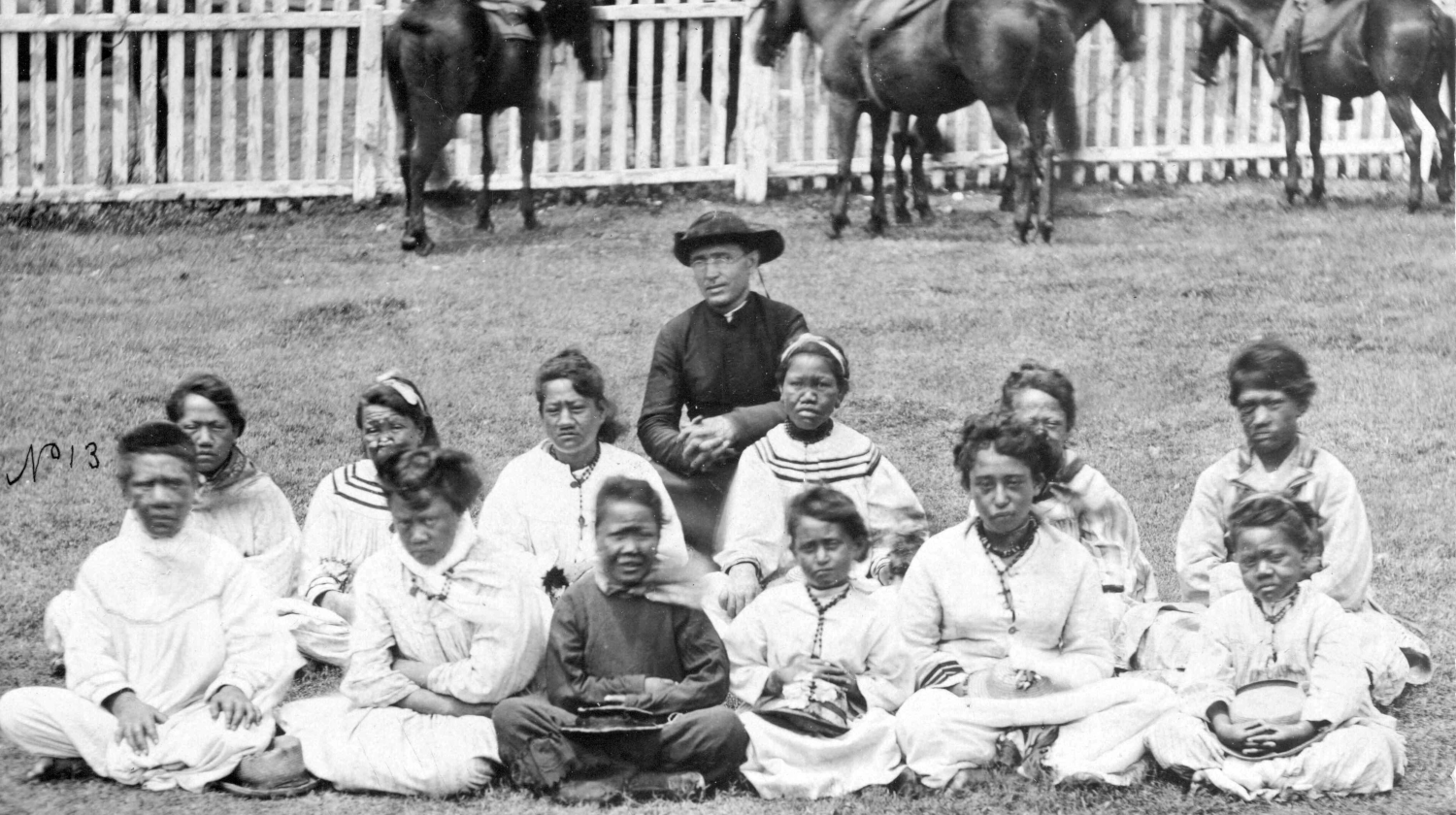
A Lesson From Saint Damien of Molokai, Leper Priest
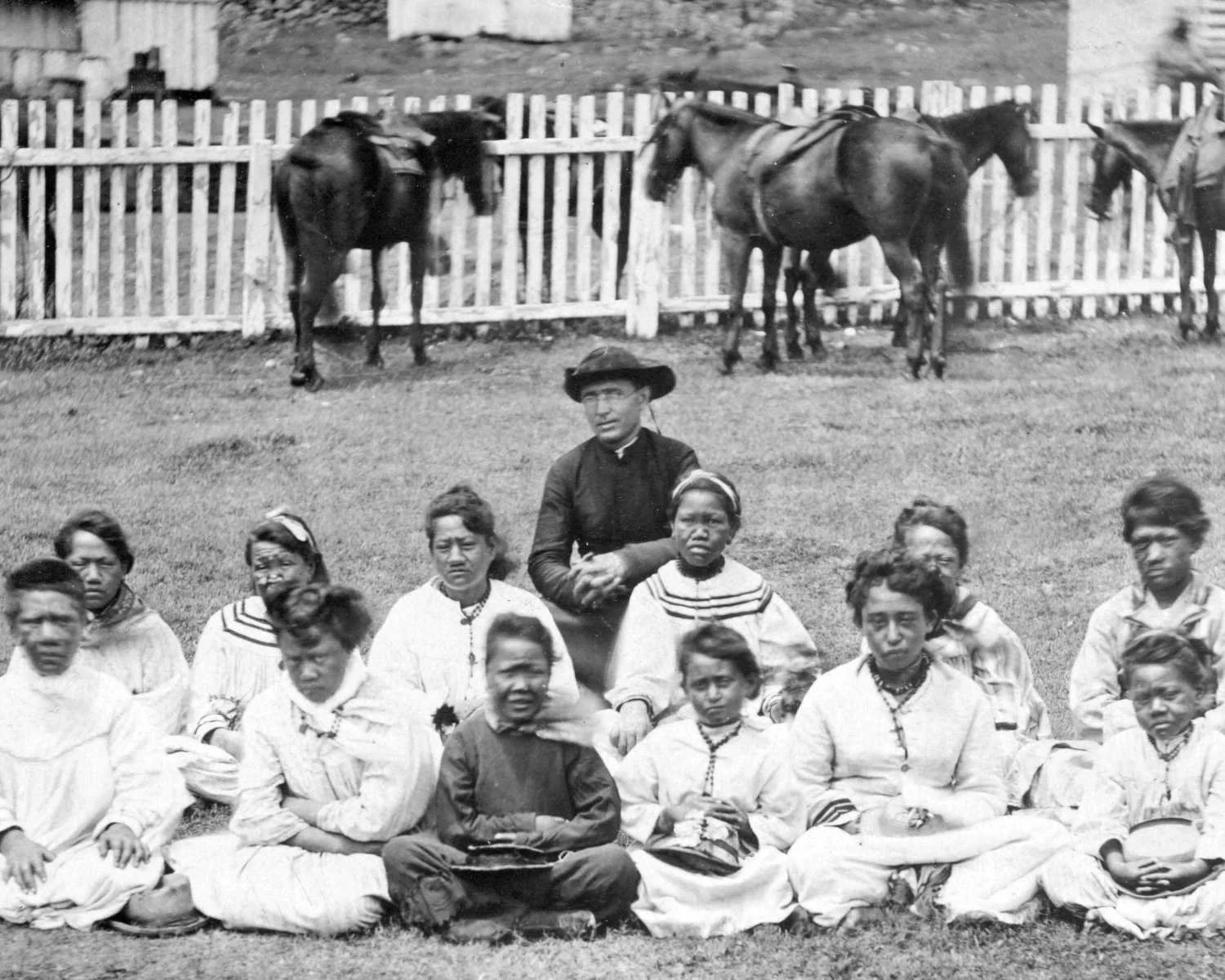
Should the State’s flawed justice be mirrored in the Church? This must be asked and the truth written. But ask as well, “Can a leper priest also serve God?”
Should the State’s flawed justice be mirrored in the Church? This must be asked and the truth written. But ask as well, “Can a leper priest also serve God?”
May 10, 2026 by Father Gordon MacRae
This is a post I wrote on May 6, 2015, and everything in it is relative to that time frame. However, just about everything in it also impacts the current time frame. So I am posting it again.
+ + +
Pornchai Moontri and I and other friends are just beginning another retreat program in prison sponsored by the National Shrine of The Divine Mercy and the Marians of the Immaculate Conception. One of the texts used for the retreat is, You Did It to Me, one of many such books by Father Michael Gaitley, MIC.
Something happened over the last few weeks that cast yet another, but brighter light on recent events that have so overshadowed Beyond These Stone Walls. The text for the retreat is You Did It to Me by Father Michael Gaitley, MIC. The timing of it is by design, of course, but not by my design. I just nudged Pornchai Max and pointed out a photo of both of us in the middle of the book. “My, for prisoners, you guys get around,” wrote BTSW reader Mary Fran Cherry back then. She alerted me to our photo in the book. The retreat lifted a corner of the shroud that overshadowed my life behind these prison walls beginning on Wednesday of Holy Week.
Ryan A. MacDonald wrote of this in “For One Priest, A Fate Worse than Dying in Prison,” the second of his excellent two-part analysis of a recent court ruling that was a setback in my hope for justice and freedom. I have much gratitude for Ryan’s effort, and especially so because he left you with hope by telling you that I learned of this decision just as I was reading, You Did it to Me.
While reading that book, my eyes were opened a little, just enough to see what discouragement kept me from seeing. It reminded me so vividly of a story that took place on the road to Emmaus at another time of discouragement:
“That very day two of them were going to a village named Emmaus, about seven miles from Jerusalem, and talking with each other about all these things that had happened. While they were talking and discussing, Jesus himself drew near and went with them. But their eyes were kept from knowing him … Then one of them, named Cleopas, answered him, ‘Are you the only visitor to Jerusalem who does not know the things that have happened there in these days?”
— Luke 24:13-23
Someone might ask that same question of me if I lapse into writing about a Divine Mercy retreat without addressing “all these things that had happened” in the arena of justice and injustice. So I am also most grateful to New Jersey Attorney Vincent James Sanzone for his enlightened analysis of the legal precipice awaiting me and other falsely accused priests in both Church and State: “A Criminal Defense Expert Unfurls Father MacRae Case.” Prior to writing that guest post, Attorney Sanzone wrote a brilliant letter to Pope Francis about this matter, and to EWTN. I believe the EWTN letter may have been what prompted Brian Fraga and the National Catholic Register to publish “New Hampshire Priest Continues the Long Road to Clear His Name” (NCRegister.com, March 18, 2015).
Was I discouraged by the outcome revealed to me on Wednesday of Holy Week? Yes, I was. Was I devastated as some have suggested? I was, for a time. Have I given up? Not hardly. That is about all I have to offer about this. More important things have happened, and I have no time to descend into a litany of woe-is-me. Another day, perhaps. It is time now to step out of this arena of justice and all its flaws, and to step back onto that road to Emmaus.
Voice from Beyond
As I wrote at the beginning of this post, something happened that cast a brighter light — brighter than my discouragement, at least — on the events of recent days. Let me first tell you what happened.
On the evening of Divine Mercy Sunday as this retreat began, Pornchai Maximilian sat in a chair to my right and Michael Ciresi to my left. Along with seventeen other prisoners who joined us, we watched and listened to a DVD presentation by Father Michael Gaitley to introduce the retreat. It was excellent, of course, and Pornchai was riveted to the projection of Father Gaitley on the prison chapel wall.
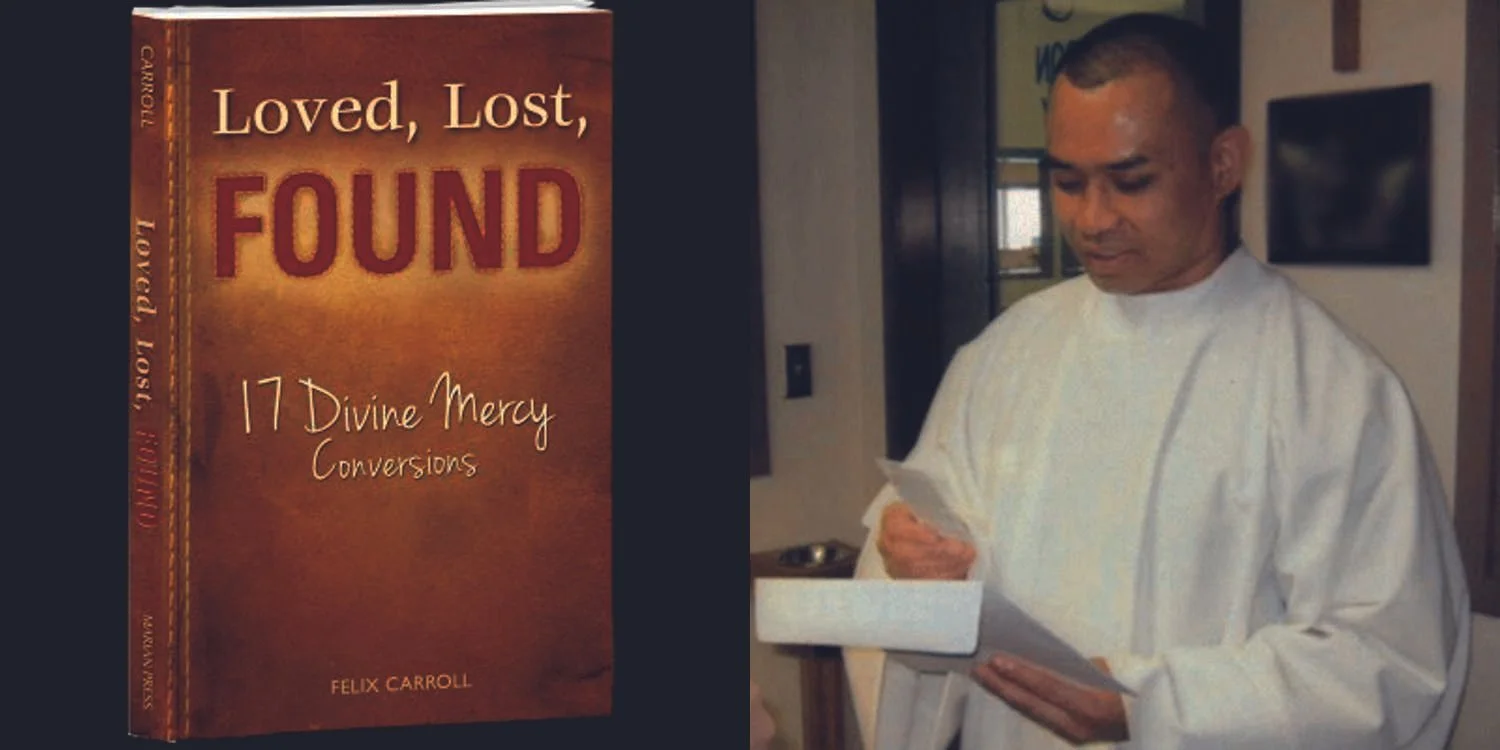
Every now and then the camera recording Father Gaitley swept over his audience, and there, seated near the back, I spotted a familiar face: Marian missionary Eric Mahl. You may recall that Pornchai and Eric Mahl both had chapters featuring them in Felix Carroll’s great Divine Mercy book, Loved, Lost, Found: 17 Divine Mercy Conversions. Later they met and became friends and brothers. I nudged Pornchai and pointed as Eric appeared on the wall. Just at that moment, Eric looked toward the camera and smiled. Pornchai smiled back.
The next day a letter arrived for Pornchai. As though right on cue, it was from Eric Mahl. It was a copy of a letter from Eric to some people who are helping Pornchai by organizing an effort to secure his future in Thailand when he is free from these stone walls. During his missionary outreach to prisons, Eric Mahl has had three meetings with Pornchai. On the last one, he was accompanied by Father Seraphim Michalenko who served as Vice-Postulator for the Cause of Canonization of Saint Maria Faustina. I wrote of that meeting in “Father Seraphim Michalenko on a Mission of Divine Mercy.” Eric also wrote of that meeting in his letter:
“This very holy priest had the opportunity to meet one-on-one with Pornchai in the Chapel, to talk to him and get to know him. When [Father Seraphim] and I were on our way home back to the Shrine in Massachusetts, he told me that the peace in that Chapel must be what Heaven is like and that Pornchai Moontri is a very holy and beautiful child of God. I write all of this to let you know how I desire to see this restored child of God out of prison and living free in Thailand where he could help the rest of society.”
— Letter of Eric Mahl
On April 19, the second Sunday evening of our retreat, we watched the second of Father Gaitley’s DVD presentations, and this time Pornchai listened intently while also looking for his friend Eric Mahl in the background. Later that evening, during a small group discussion led by Marian volunteer Jim Preisendorfer, I heard something astonishing. During Father Gaitley’s presentation, he spoke of the eight reasons why we do not appreciate the Trinity. One of them, Reason Number Seven, is “Because we listen to the voice of the enemy.” By way of example, I wrote in my notes:
“Part of Satan’s strategy is to keep us unfocused from our destiny. He lures us into being satisfied with this world so that so many of us just settle for what this life gives us, or despair over what this life denies us.”
When I read my own notes, I could not even remember writing that. It was as though my pen were on autopilot. Then table moderator Jim Preisendorfer asked for a comment on “Reason Number Seven.” No one spoke so I read my note above. Jim asked if I could give a concrete example. “I can,” Pornchai chimed in. He then spoke about a conversation he and I had seven years earlier. Hope seemed futile for him then. I had asked him back then if he had any hope at all for the future. I will never forget his answer, “I don’t have a future I only have a ‘Plan B.’ ”
Over time I came to understand what “Plan B” was, though, I had not heard Pornchai speak of it for a long time. At the table during our retreat that night, Pornchai explained that “Plan B” was his only plan, and it arose spontaneously within him. “Plan B” was to never leave prison. Having been cast into prison with a 45-year sentence at age 18, followed by years of solitary confinement in a dreaded “Supermax” prison, Pornchai had laid out in his mind the only future this life could promise him: to live out his life in prison. To die in prison. He had nothing else to look forward to.
On that night, however, Pornchai reflected what Eric Mahl described. He radiated the life of a restored child of God for whom that dismal “Plan B” was but a long forgotten memory. He spoke of it as a perfect example of how listening to the voice of the enemy can deny us our destiny. I sat there asking myself, “When did this happen. How did it happen?”
Then Pornchai jabbed a thumb in my direction at the table. “When this guy stepped into my life,” he said, “he released me from the grip of ‘Plan B.’ ” Pornchai described how he took a great risk to trust in some vague hope that was covered in a cloud and could not be seen, so he just took my word for it. “Now, seven years later,” he said that night, “ ‘Plan B’ is just an old memory with no power over me, and people all over the world have come together to replace it.”
While he spoke at that table, I looked down at my own thumbs as Pornchai jabbed his thumb in my direction. I could not look up. I knew that if I made eye contact with him at that moment, I would have fallen apart. My own plan for my life and my priesthood certainly never included life in prison for a crime that never took place. It never included being demonized and scapegoated to satisfy the demands of contingency lawyers and insurance companies as Ryan pointed out. It never included pleading for my Church to see the failures of American civil justice instead of just blindly declaring them final and fulfilled justice.
Ryan A. MacDonald charged in a comment a few weeks ago that the American hierarchy’s response to the priesthood crisis has been more like a housecleaning than a healing. My plan for my life never included a dread that my own bishop might echo in Rome the Twelfth Century plea of Henry II about Thomas Beckett “Will no one rid me of this turbulent priest?”
My plan for priesthood also never included Pornchai Moontri, nor could I have ever foreseen the notion that the tragedy that befell me could ever be anything other than a tragedy for someone else.
The Leper Priest
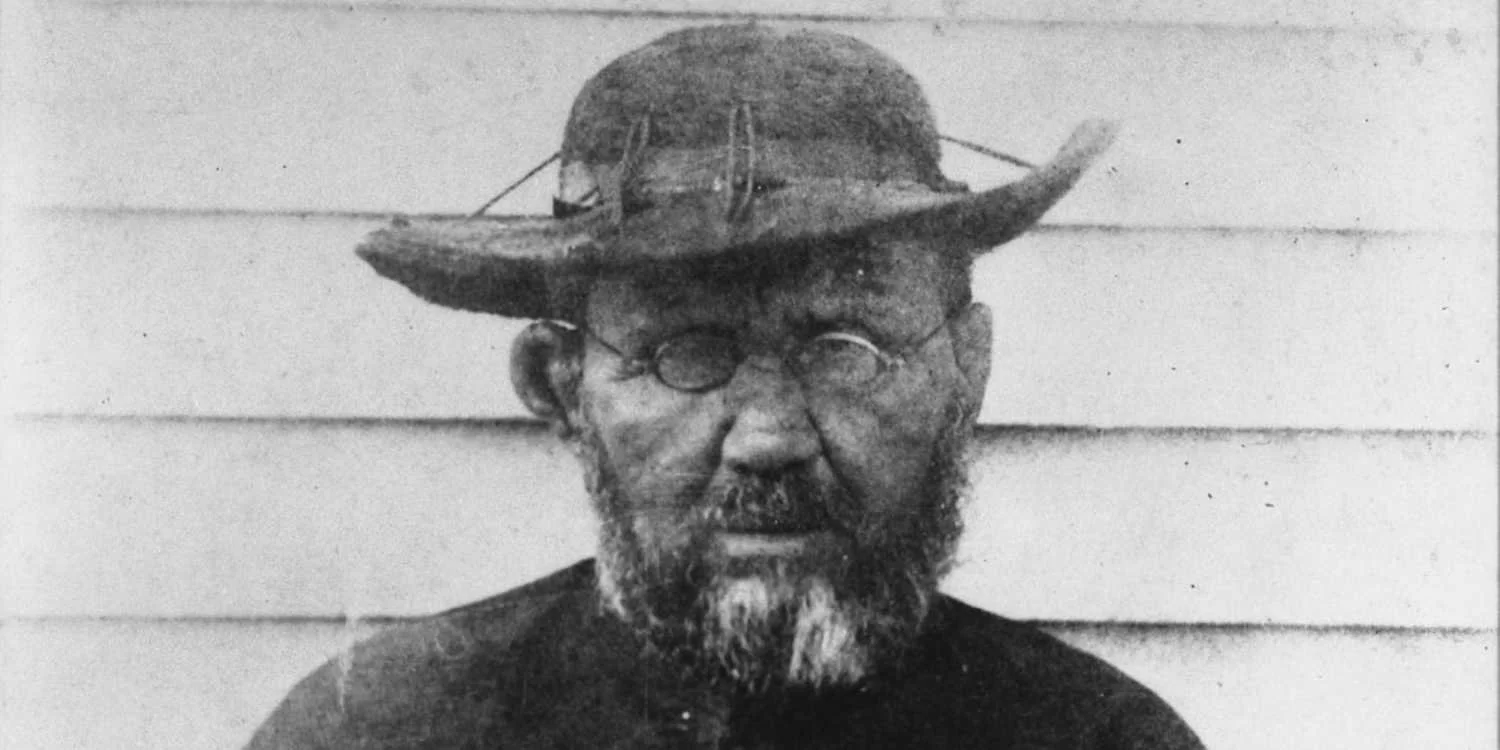
I vividly remember, as a young seminarian in the latter 1970s, watching a two-part PBS dramatization of the life of Father Damien de Veuster, the Belgian priest who in 2009 became Saint Damien of Molokai. I was fascinated by the PBS version. It remains in my psyche as one of the alluring things that drew me toward and kept me focused on a side of priesthood in danger of being lost today, the notion that priesthood is not a job, but an ontological state of being. To see priests “fired” and cast off seems like “Reason Number Seven,” like succumbing to the voice of the enemy as he lures priesthood from its destiny.
When Damien of Molokai was driven across that line between ministering to lepers and becoming a leper, it was seen as a tragedy to his friends, but hindsight sees it as a gift to the Church and the world. When he was canonized by Pope Benedict XVI in 2009, Emily Stimpson wrote of him in “Untamed Saint” in Our Sunday Visitor:
“Saints are made through trials and persecution. And Father Damien had more than his share of those. For most of the 16 years he served on Molokai, he served alone… He begged his superiors to send him help. Usually they ignored his requests. Twice, however, they did send someone. The first was a Dutch priest who complained incessantly. The second was a French priest who accused Father Damien of improper relations with the native women. His superiors and bishop grew tired of his constant demand for help. They considered him an obstinate, headstrong troublemaker. The government shared that opinion, and more than a few officials gave credence to false rumors circulated about him. His detractors heaped every sort of abuse and calumny upon Father Damien … Enduring his own dark night, he felt abandoned by God and unworthy of heaven.”
— Emily Stimpson, “Untamed Saint,” OSV, October 11, 2009

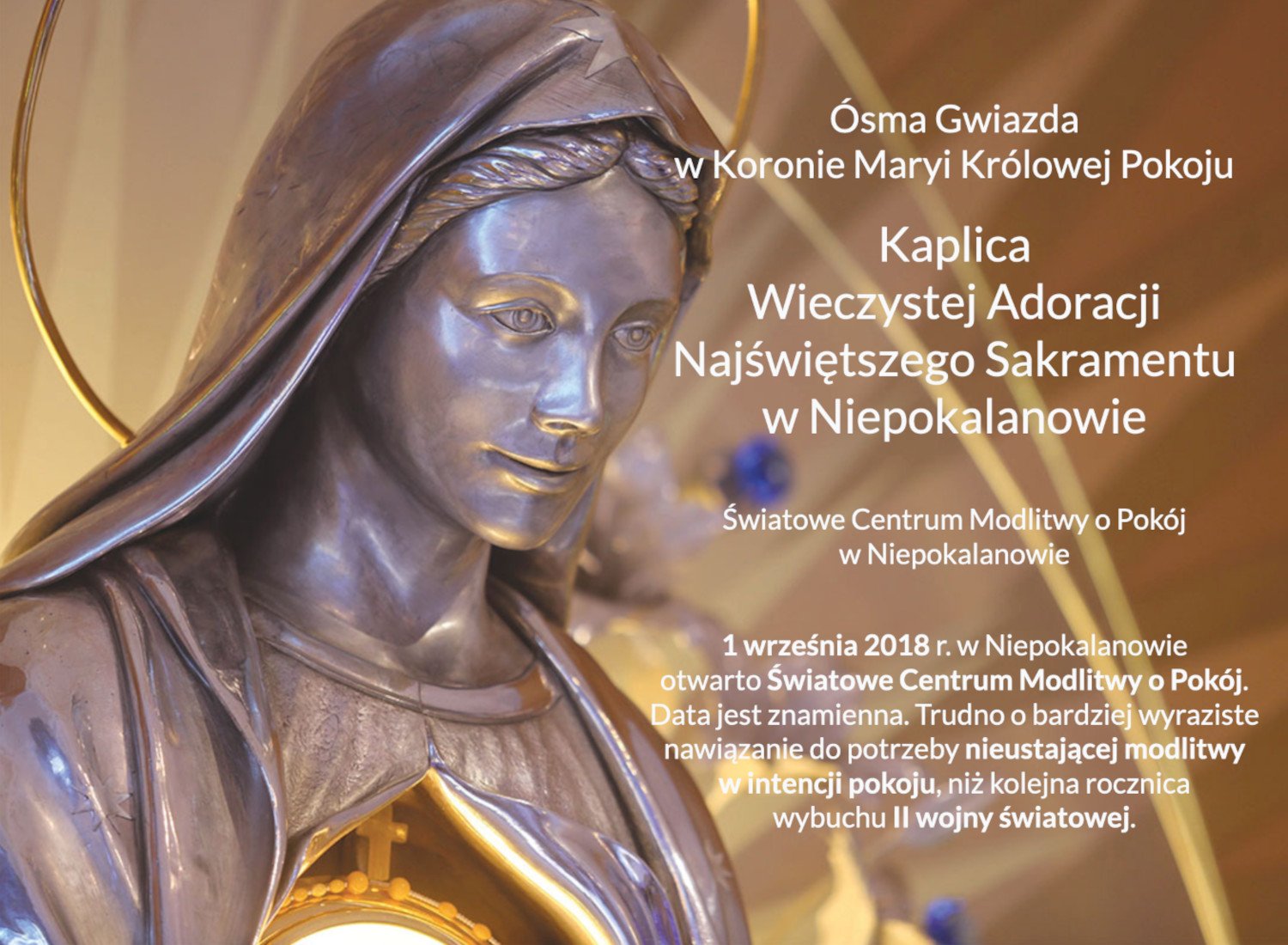

The Eucharistic Adoration Chapel established by Saint Maximilian Kolbe was inaugurated at the outbreak of World War II. It was restored as a Chapel of Adoration in September, 2018, the commemoration of the date that the war began. It is now part of the World Center of Prayer for Peace. The live internet feed of the Adoration Chapel at Niepokalanow — sponsored by EWTN — was established just a few weeks before we discovered it and began to include in at Beyond These Stone Walls. Click “Watch on YouTube” in the lower left corner to see how many people around the world are present there with you. The number appears below the symbol for EWTN.
Click or tap here to proceed to the Adoration Chapel.
The following is a translation from the Polish in the image above: “Eighth Star in the Crown of Mary Queen of Peace” “Chapel of Perpetual Adoration of the Blessed Sacrament at Niepokalanow. World Center of Prayer for Peace.” “On September 1, 2018, the World Center of Prayer for Peace in Niepokalanow was opened. It would be difficult to find a more expressive reference to the need for constant prayer for peace than the anniversary of the outbreak of World War II.”
For the Catholic theology behind this image, visit my post, “The Ark of the Covenant and the Mother of God.”
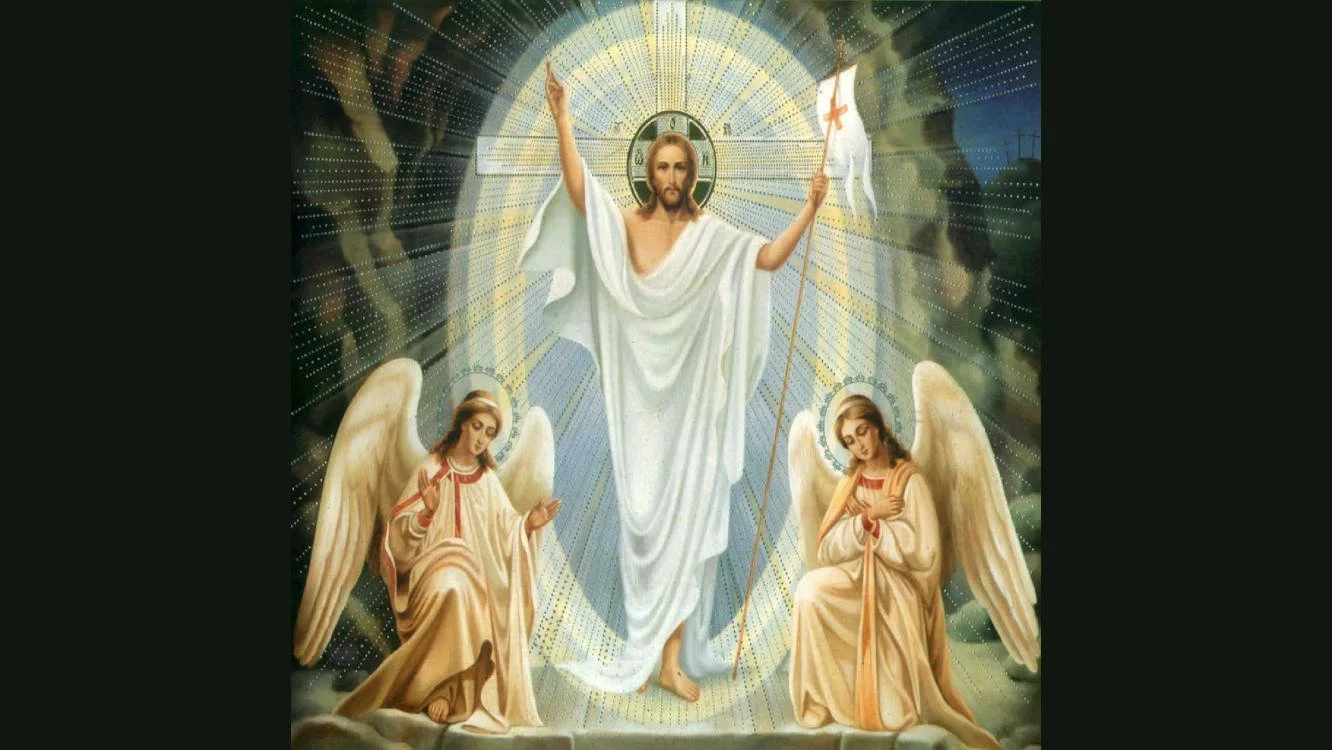
The Resurrection of Christ: Further Along the Road to Emmaus
What are we to understand when we speak of the Resurrection of Jesus? Ancient Scriptures and interpretations from a brilliant theologian-pope provide amazing clues.
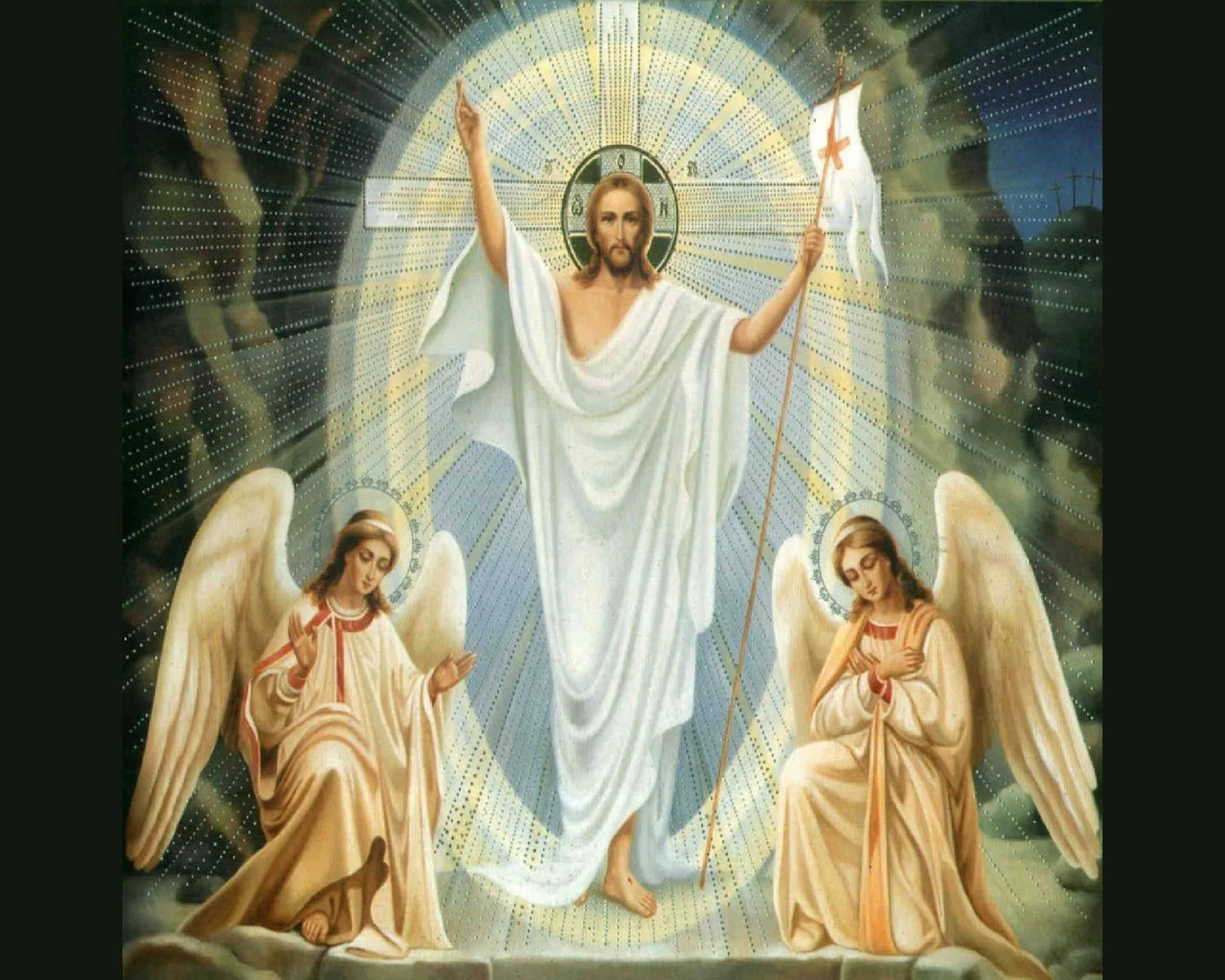
What are we to understand when we speak of the Resurrection of Jesus? Ancient Scriptures and interpretations from a brilliant theologian-pope provide amazing clues.
April 8, 2026 within the Octave of Easter
by Father Gordon MacRae with theological assistance from Pope Benedict XVI
Note: The following is Part 2 of our Holy Week post, “The Darkness of the Cross Enlightened on the Road to Emmaus.”
In the above captioned post, we left you on the Road to Emmaus. Jesus of Nazareth had been accused of blasphemy by the Jewish Sanhedrin. He was handed over to the Roman Governor Pontius Pilate for judgment. He was placed on trial, convicted, mercilessly scourged and then crucified. Those who followed and believed in him were devastated and lost. Some had hoped to find in him the manifestation of the Kingdom of God. Some hoped for a messianic end to the tyranny of Rome and its occupation of Judea. Others hoped for redemption. All were left demoralized. All had come to ruin. This is where we left you on the Road to Emmaus.
Some of the disciples of Jesus remained in Jerusalem in hiding. Others left, believing that all hope had come to an end. This includes the two who encountered a stranger on the Road to Emmaus about seven miles down that road from Jerusalem. One of them, Cleopas, and his fellow traveler, disciples of Jesus both, were among those who had hoped that Jesus would ultimately reign as a king in Jerusalem and rescue their nation from the oppression of Rome. Jesus, after hearing of their plight, while still disguised from their sight, challenged them: “O foolish men, and slow of heart to believe all that the prophets have spoken. Was it not necessary that the Christ should suffer these things and enter into his glory? Then beginning with Moses and all the prophets, he interpreted to them all the Scriptures concerning himself.” (Luke 24:25-27)
That Christ should suffer is a mystery foretold in the Old Testament according to Acts 3:18. On the Road to Emmaus Jesus gives to the two fleeing disciples an overview of Salvation History from the Hebrew Scriptures. His entire life was foreordained in Scripture, his birth, his earthly ministry, his death and his Resurrection.
Having come to the village in which they intended to stay, while the stranger intended to go further on, the two disciples asked him to remain with them saying “Stay with us, for it is toward evening and the day is now far spent.” While they were at table in that village the stranger took bread and blessed and broke it and gave it to them recalling the sequence of his actions at the Last Supper. Immediately their eyes were opened and they recognized him in the breaking of the bread. Then he vanished from their sight.
“Did not our hearts burn within us as he spoke to us on the road while he opened to us the Scriptures?”
— Luke 24:32
They immediately abandoned their flight from Jerusalem and returned as quickly as they could. They found the Eleven, the Apostles, gathered together along with other disciples who remained. Some of the Eleven declared to them what the others in the room had already heard with great excitement, “The Lord has risen indeed, and has appeared to Simon!” Then they told of what happened on the road, and of how Jesus was made known to them in the breaking of the bread.
The disciples became animated as the horror of the Crucifixion was slowly transformed into this newfound hope of the Resurrection as the appearances of Christ multiplied. They had no expectation or notion of what this meant. Coming down from the mountain after their experience of the Transfiguration (Mark 9:2-13), Jesus cautioned them to tell no one what they had seen or heard. “So they kept the matter to themselves while wondering what rising from the dead meant.” The disciples did not know, and could find out only by encountering the reality of it. So what exactly did the Resurrection of Christ mean? For my answer to this, I count heavily on the view of one of the most accomplished Catholic theologians of our time, Joseph Ratzinger, who became Pope Benedict XVI.
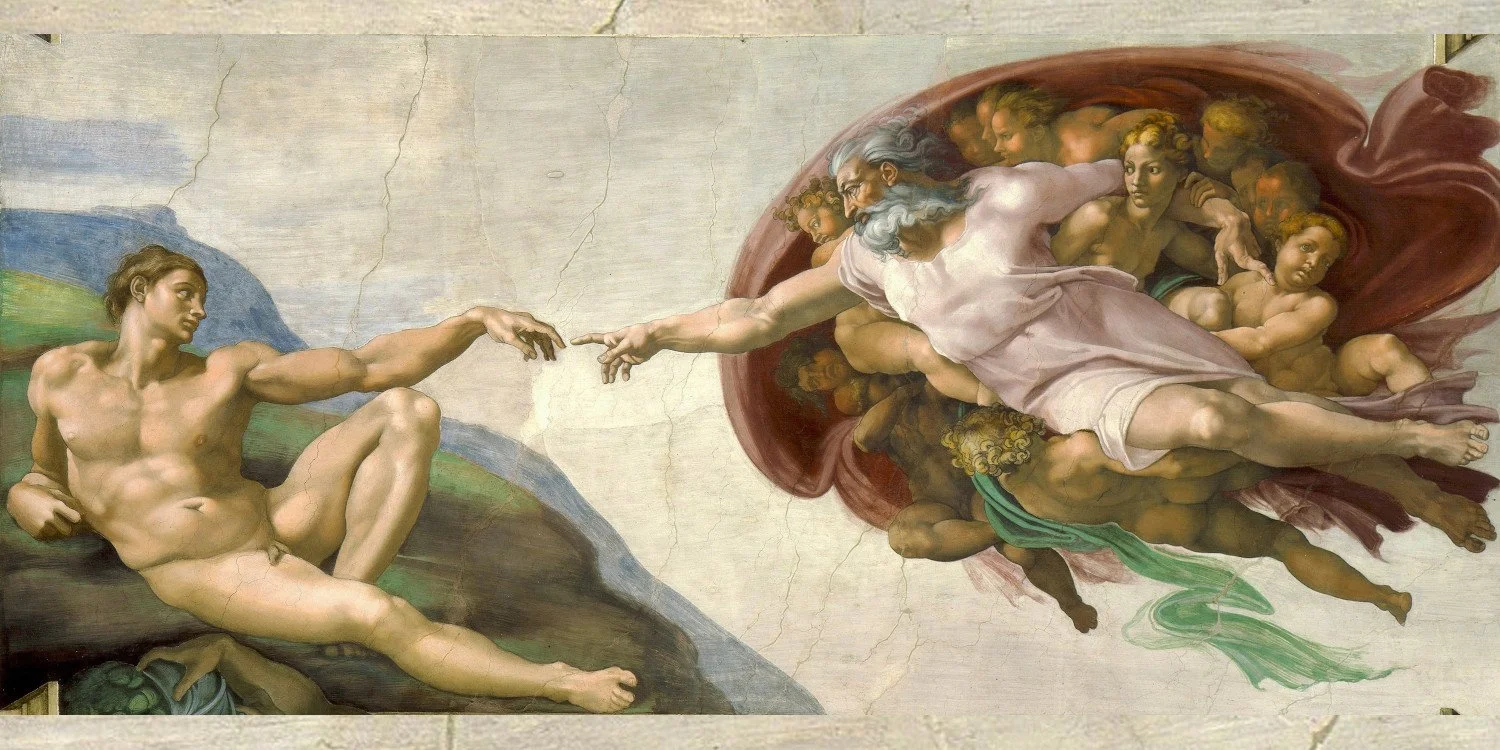
An Evolutionary Leap
“ ‘If Christ has not been raised, then our preaching is in vain and your faith is in vain. We are even found to be misrepresenting God, because we testified that he raised Christ’ (1 Corinthians 15:14-15). With these words to the community of Corinth, Saint Paul explains drastically what faith in the Resurrection of Jesus Christ means for the Christian message. It is its very foundation. Our faith stands or falls on the truth of the testimony that Christ is risen from the dead.”
— Pope Benedict XVI, Jesus of Nazareth, Vol 2: Holy Week, p241
Our answer to the question of the Resurrection will determine whether Jesus merely was in history or also still is. This is a most important question. So what actually happened to Jesus? For the witnesses who encountered the Risen Lord in Scripture, it is hard to say because for the most part they did not fully understand this new reality about Christ. There are multiple “resurrection” stories in the New Testament. Luke (11:17) tells us of the raising of the son of the widow of Nain. Mark (5:22-24, 35-43) tells of the raising of the daughter of Jairus. John (11:1-44) famously relates the raising of Lazarus.
What happened to Jesus is entirely different from these. His Resurrection was not merely the miracle of a resuscitated corpse. We have all heard stories of people brought medically back from the brink in near-death experiences. What the Gospel relates about Christ is very different from any of those accounts. The Resurrection of Jesus was about breaking out into an entirely new form of life, a life that is no longer subject to the law of dying and becoming, but rather lies beyond it. The Resurrection of Jesus opens up a new dimension not only of his existence, but also of ours.
Reading these conclusions from Pope Benedict XVI in Jesus of Nazareth, his masterwork of theological exegesis, almost seems like science fiction, but it is neither science nor fiction. It is not a newly written script for an episode fo Startrek: The Next Generation. It is rather an account seeking understanding that has always been at our fingertips. Benedict XVI cautioned that this opens up an analogy that could be easily misunderstood, but delving into it is a necessity of salvific truth and faith. The Resurrection of Christ constitutes an “evolutionary leap,” a new possibility of human existence that affects everyone and that opens up a new kind of future for humanity.
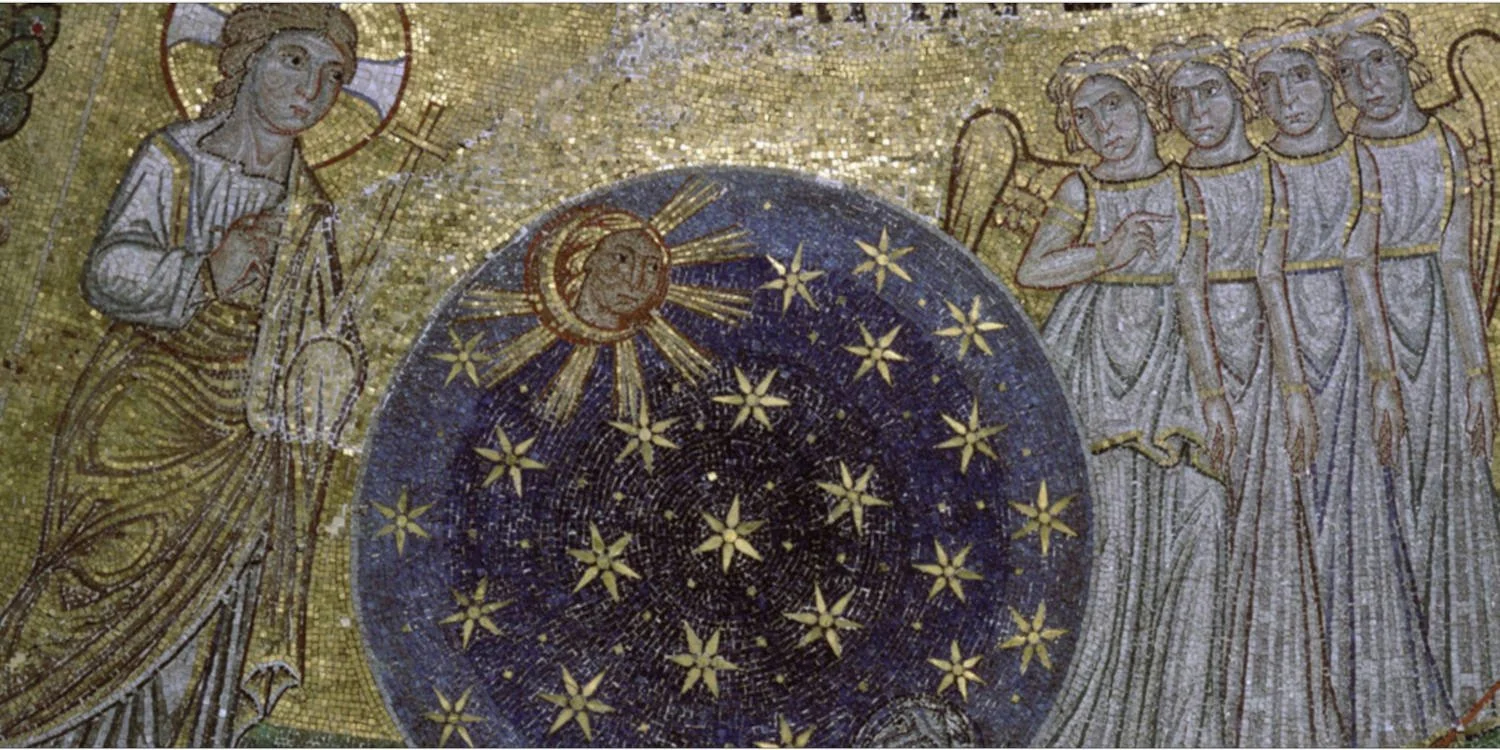
The Cosmic Body of Christ
On the basis of all this biblical evidence, what are we now in a position to say about the true nature of Christ’s Resurrection? Pope Benedict presents it as something akin to a radical “evolutionary leap” in which a new dimension of life emerges, a new dimension of human existence.
This is what is meant by those passages in Saint Paul’s letters written from prison (Colossians 1:12-23 and Ephesians 1:3-23) that hint at the cosmic Body of Christ, indicating that Christ’s transformed (Resurrected) body oversteps the boundaries of what we are able to conceive. Here is an example:
“He has delivered us from the dominion of darkness and transferred us to the kingdom of his beloved Son … . He is the image of the invisible God, the firstborn of all creation, for in him all things were created, in heaven and on earth, visible and invisible, whether thrones or dominions or principalities or authorities — all things were created through him and for him. He is before all things, and in him all things hold together. He is the head of the body, the Church; he is the beginning, the firstborn from the dead, that in everything he might be pre-eminent. For in him all the fulness of God is pleased to dwell, and through him to reconcile to himself all things, whether on earth or in heaven, making peace by the blood of his Cross.
— Colossians 1:13-20
The Resurrection of Jesus points far beyond history but has left a footprint within human history that was attested to by witnesses as an event of unprecedented kind and importance.
This man Jesus, complete with his body, now belongs totally to the sphere of the divine and eternal. The evidence in the Gospel is clear. The Resurrected Jesus can walk among us. He shows the Doubting Apostle, Saint Thomas, the wounds in his hands and side. He lets Thomas probe those wounds that are now for eternity a part of him, accepted on our behalf.
From here on, in both spirit and body, Jesus has a place within God. Even if man by his nature is created for immortality, it is only by virtue of the Resurrection of Christ that the place exists for our immortal souls to find their “space” in which immortality takes on its meaning as communion with God. This is hinted at in a mysterious passage from Saint Paul’s Letter to the Colossians written from prison. It was the Second Reading for our Easter Sunday Mass this year. I, too, have written some things from prison that press against the boundaries of easy understanding, but I do not hold a candle to Saint Paul:
“If then you have been raised with Christ, seek the things that are above where Christ is at the right hand of God. Set your minds on things that are above, not on things that are on earth. For you have died, and your life is hidden with Christ in God.”
— Colossians 3:1-3
+ + +
Note from Father Gordon MacRae: Thank you for reading and sharing this post. It is unclear whether I have shed any light at all on the mystery of the Resurrection of Jesus. But it is most clear to me now that the Resurrection of Christ sheds light on us as we stand in God’s Presence.
You may also like these related posts from Beyond These Stone Walls:
The Darkness of the Cross Enlightened on the Road to Emmaus
The Apostle Falls: Simon Peter Denies Christ
The Eucharistic Adoration Chapel established by Saint Maximilian Kolbe was inaugurated at the outbreak of World War II. It was restored as a Chapel of Adoration in September, 2018, the commemoration of the date that the war began. It is now part of the World Center of Prayer for Peace. The live internet feed of the Adoration Chapel at Niepokalanow — sponsored by EWTN — was established just a few weeks before we discovered it and began to include in at Beyond These Stone Walls. Click “Watch on YouTube” in the lower left corner to see how many people around the world are present there with you. The number appears below the symbol for EWTN.
Click or tap here to proceed to the Adoration Chapel.
The following is a translation from the Polish in the image above: “Eighth Star in the Crown of Mary Queen of Peace” “Chapel of Perpetual Adoration of the Blessed Sacrament at Niepokalanow. World Center of Prayer for Peace.” “On September 1, 2018, the World Center of Prayer for Peace in Niepokalanow was opened. It would be difficult to find a more expressive reference to the need for constant prayer for peace than the anniversary of the outbreak of World War II.”
For the Catholic theology behind this image, visit my post, “The Ark of the Covenant and the Mother of God.”
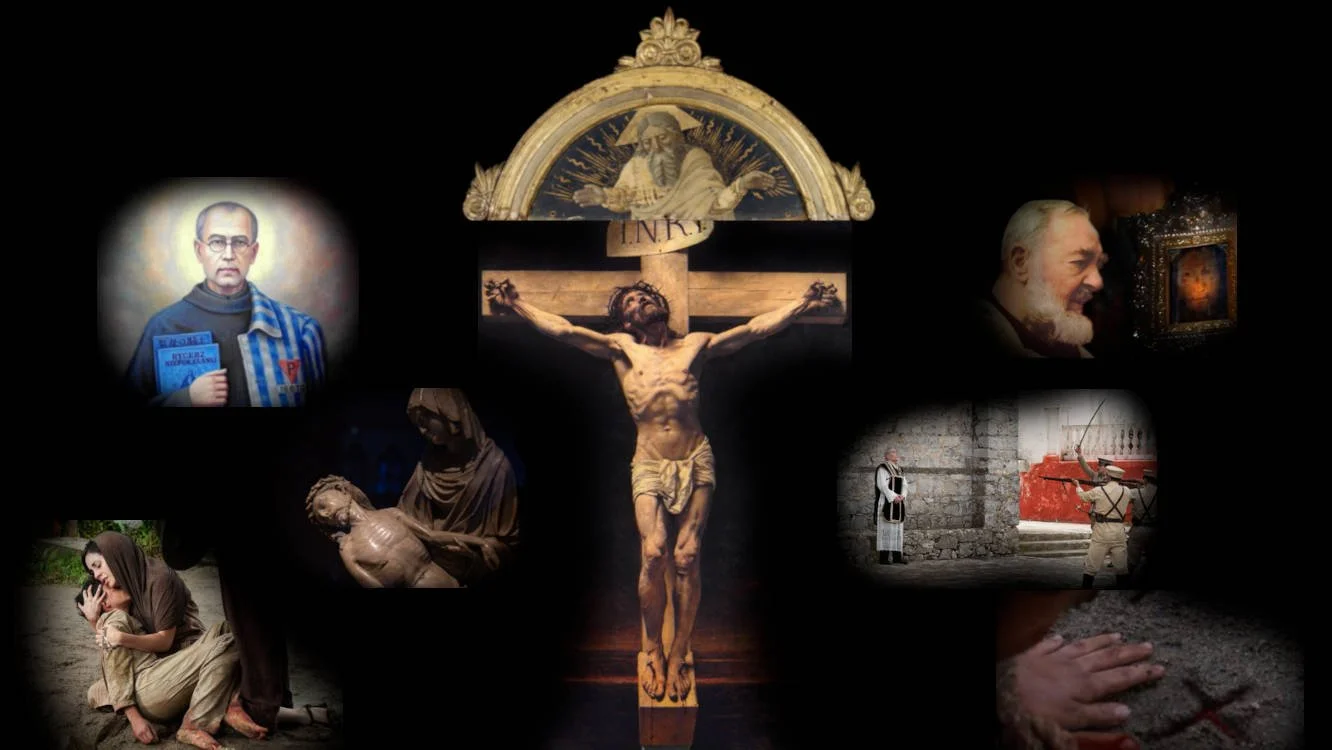
The Darkness of the Cross Enlightened on the Road to Emmaus
At Gethsemane Jesus of Nazareth agreed to bear the Cross to his own Crucifixion so that following him to Heaven’s Gate would not be a burden of impossibility for us.
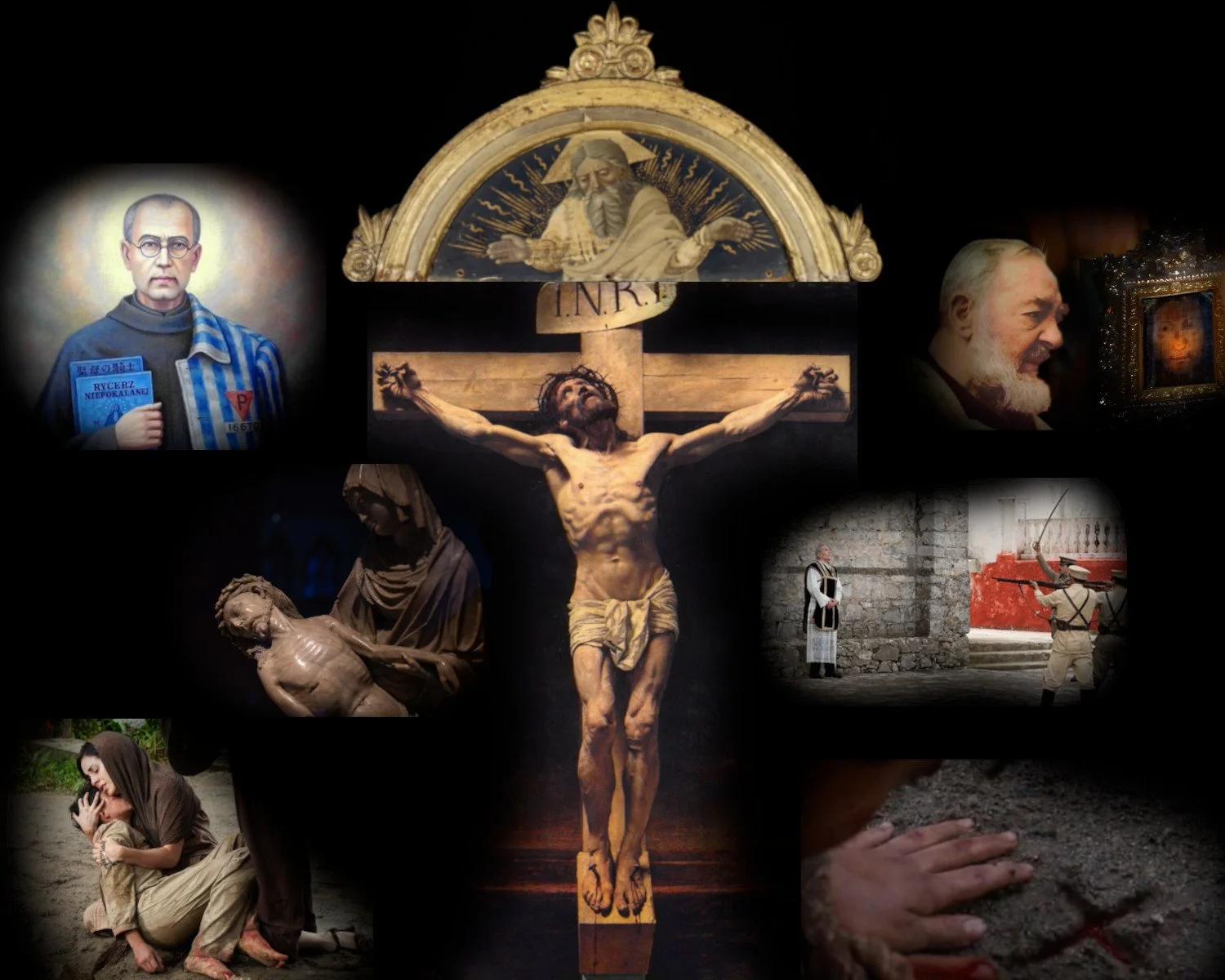
At Gethsemane Jesus of Nazareth agreed to bear the Cross to his own Crucifixion so that following him to Heaven’s Gate would not be a burden of impossibility for us.
Holy Week 2026 by Father Gordon MacRae
In all of human history, no method of execution has been devised more heinously, or delivered with more cruelty than crucifixion. In the Old Testament — no stranger to the cruel acts of men — crucifixion did not exist. It was first introduced to human history in the Sixth Century BC by the Persians, the ancestral empire of present-day Iran. I recently wrote of Iran and its place in history in “Iran, by Another Name, Was Once the Savior of Israel.”
My visual introduction to crucifixion was not so much biblical, but cinematic. Over many years I had pondered in depth its biblical presentation, but it was only when I watched the 2004 film, The Passion of the Christ directed by Mel Gibson, that I experienced and absorbed its visual impact. The brutality of the film was criticized for its excessive violence, but there was no such thing as a “gentle” crucifixion.
The Passion of the Christ contains all the elements ascribed to the event in the four Gospel accounts of the Crucifixion of Jesus in Sacred Scripture. I have read and studied those accounts many times, but I could watch that film only once and never again. It left me in a state of profound sorrow. That sorrow caused me to rethink some of the peripheral, but mysterious events that Sacred Scripture lends to the Crucifixion scene. One of them is the following excerpt from Psalm 22 attributed to King David. He never experienced crucifixion, but in Psalm 22 he wrote of it in the first person and in vivid prose 1,000 years before Jesus of Nazareth experienced it:
“My God, my God, why have you forsaken me? Why are you so far from helping me, from the words of my cry?
“O my God, I cry out by day, but you answer not, and by night, but I find no rest.
“Yet you are holy, enthroned upon the praises of Israel. In you our fathers trusted; they trusted and you delivered them. To you they cried and they were saved. In you they trusted, and were not disappointed.
“But I am worm and no man; scorned by men and despised by the people. All who see me scoff at me. They mock me with parted lips; they wag their heads. ‘He trusted in the Lord, let him deliver him. Let him rescue him if he delights in him.’
“I am poured out like water, and all my bones are wracked; my heart is like wax, it is melted within my breast. My strength is dried up like a potsherd, and my tongue cleaves to my jaws. You have laid me in the dust of death.
“Indeed, many dogs surround me; a pack of evildoers closes in upon me. They have pierced my hands and my feet. I can count all my bones; they stare and gloat over me. They divide my garments amongst them. For my clothing they cast lots.”
— Excerpted from Psalm 22, a Psalm of King David, circa 1000 BC
Most observant Jews would likely have recognized “My God, my God, why have you forsaken me?” as the opening line of Psalm 22. Mysteriously, those present for the Crucifixion of Jesus failed to do so. The Gospel quotes them as saying, “He is calling upon Elijah.” It was a distortion of the mixed Hebrew and Aramaic in the plea of Jesus from the Cross: “Eloi, Eloi, lema sabachthani.” In a magisterial treatise, Jesus of Nazareth: Part 2 Holy Week, Pope Benedict XVI wrote “Psalm 22 is Israel’s great cry of anguish, in the midst of its sufferings, addressed to the apparently silent God …. Now we hear the great anguish of the one suffering on account of God’s seeming absence.” Many of us have been here when simply calling out or pleading with God is not enough. In extreme anguish, prayer inevitably becomes a loud cry. Jesus prays this loud cry on behalf of all of us: “My God, my God, why have you forsaken me?”
What is remarkable about the four Gospel accounts of the Crucifixion is the multitude of Old Testament allusions and quotations they contain. In them, the Word of God and the events of the Gospel are deeply interwoven into the Passion Narrative. Two of these allusions, Psalm 22 and Isaiah 53, the “Suffering Servant” motif, shed light on the entire Passion event.
Isaiah begins with a direct reference to this saving act of God in a prophesy written hundreds of years before its fulfillment: “Behold, a virgin shall conceive and bear a son, and shall call his name ‘Emmanuel’” — a name which means “God with us.”
All of Sacred Scripture makes clear one consistent truth. If God is with us, we are not always with God. This becomes especially evident in the Passion Narrative of the Gospels, the arrest, interrogation, trial, scourging, and Crucifixion of Jesus. No one who followed him to this end, and who came to believe that he is the Messiah, the Christ of God, could ever have imagined that he would face humiliation, torture, Crucifixion and death. When it came, despite all promises to the contrary, most of his disciples shrank from their own promises and fled. None of us can stand in judgment of them. I wrote of one of history’s most vivid examples in “The Apostle Falls: Simon Peter Denies Christ.”
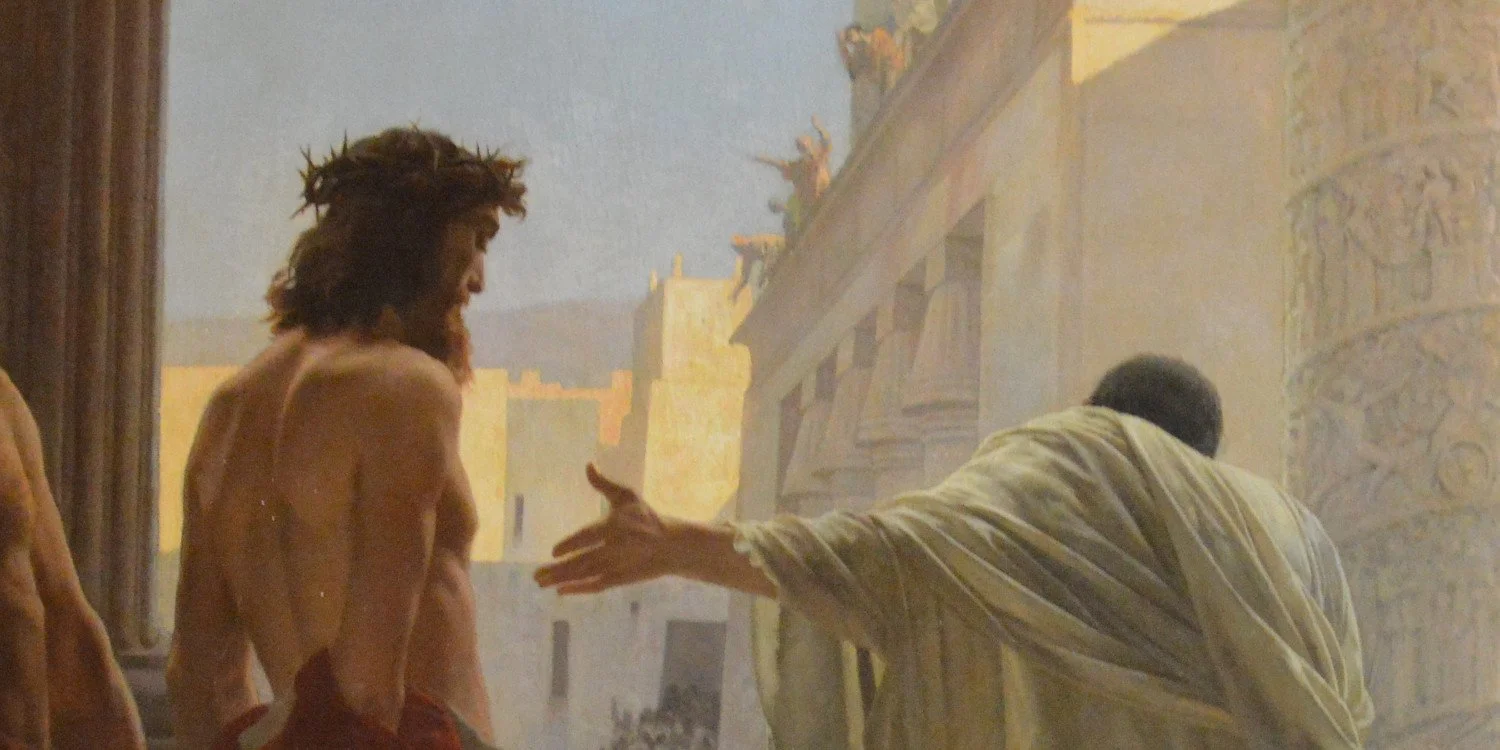
He Suffered under Pontius Pilate
But prior to all that, Jesus was interrogated by Pontius Pilate, the Roman military governor or procurator of the imperial province of Judea from 26 to 36 AD. The Jewish historian, Flavius Josephus, portrayed Pilate as a harsh administrator who failed to understand the religious convictions and national pride of the Jews. Pilate is known mainly for his connection with the trial and execution of Jesus. His culpability in the outcome has been the subject of debate ever since, and this conflicting view was implied even by Pope Benedict XVI, who wrote:
“After the interrogation, Pilate knew for certain what in principle he had already known beforehand: this Jesus was no political rebel; his message and his activity posed no threat for the Roman rulers. Whether Jesus had offended against the Torah was of no concern to Pilate as a Roman.”
— Jesus of Nazareth: Holy Week, p195
The Gospels of John and Mark present the custom of choosing a prisoner to be released on the Passover. The Gospels present a juxtaposition of the theological significance of choosing Jesus or Barabbas for release. John refers to Barabbas simply as a robber (18:40). In the political context of the time the Greek word that John used has also acquired the meaning of “terrorist,” or “rebel.” This is clear from Mark’s account: “And among the rebels in prison who had committed murder in the insurrection, there was a man called Barabbas” (Mark 15:7). It was clear that Pilate preferred to release Jesus, yet the crowd had different categories. Pilate came to understand their strong preference to release Barabbas, who had acquired the personna of a swashbuckling rebel.
The governor of Judea had complete judicial authority over all who were not Roman citizens, but many cases, especially those relating to religious matters, were decided by the Sanhedrin, the Jewish supreme council. According to the Gospel accounts, after the Sanhedrin found Jesus guilty of blasphemy it committed him to the Roman court because it lacked the authority to impose a death sentence. Pilate refused to approve their judgment without further investigation but the Sanhedrin threatened Pilate. When Pilate asked them, “Shall I crucify your king?” “The Chief Priests Answered, ‘We Have No King but Caesar’”
The Jewish priests then made other charges against Jesus, accusing him of blasphemy by calling himself a king (which he never actually did) and a son of God. Pilate appears to have been impressed with the dignity and honesty of Jesus, and tried to save him (John 18:38-39, 19:12-15). But fear of an uprising in Jerusalem and a resulting report to Roman authorities forced Pilate to accede to the Sanhedrin’s demand after the chief priests declared that freeing Jesus would mean that Pilate “is no friend of Caesar.” The false claim that Jesus was “King of the Jews,” was perceived as a threat to the Roman empire. It ended up on the inscription bearing the official nature of his offense to be affixed to his Cross.
Jesus was thus to be crucified and was handed over by Pilate for scourging, a brutal aspect of the punishment that often left the accused dead even before being crucified. Some have suggested that the scourging was intensified by Pilate to sway Jewish leaders away from crucifixion if the scourging was brutal enough. The guards saw to it that it was, but to no avail. It is very likely that Jesus carried only the crossbeam to which his hands were affixed first by ropes and then nails were added upon the height of Mount Calvary. His scourging had left his skin shredded so Simon of Cyrene was recruited to help carry the crossbeam. Only a few faithful women, including his Mother, his Mother’s sister, and Mary Magdalene remained with the beloved disciple John.
Each of the four Gospels presents a parallax view, the same scene but from a different perspective. In the Gospel according to John, the dying Jesus addressed his Mother: “Woman, behold your son” and to John, “Behold your Mother” (John 19:27). The Gospel instructs us that “from that hour the disciple took her into his own home.” Faithful Catholics have done the same ever since. Mary occupies a very special place in this scene and in our hearts.
As for Pontius Pilate, he was recalled to Rome in AD 36. According to the Roman historian, Eusebius, Pilate later committed suicide. Other traditions, however, report that Pilate secretly became a Christian and was condemned to death by the Roman Senate. Perhaps for this reason, Pilate is strangely revered by Coptic Christians as a martyr. They observe his feastday on June 25.
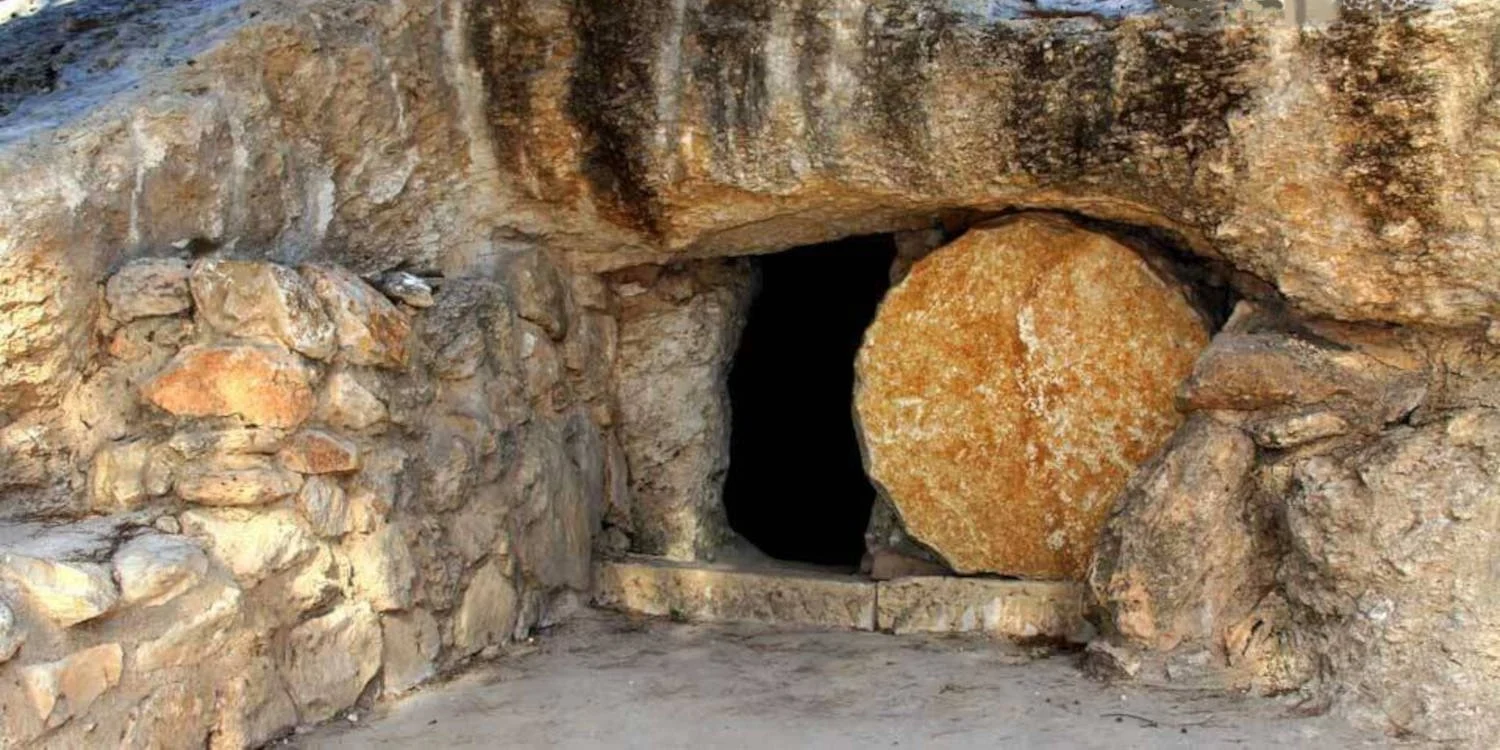
“Why Do You Seek the Living among the Dead?” (Luke 24:5)
The Resurrection of Jesus is the crowning event of the Passion Narratives of all four Gospels. Joseph of Arimathea, a member of the Sanhedrin who “was looking for the Kingdom of God” risked his standing in the Sanhedrin by asking Pilate for the body of Jesus, which was granted. Joseph interred the body in his own tomb hewn from rock (Luke 24:51). Some women went to the tomb as the Sabath was beginning. They saw the body of Jesus there then left to observe the Sabath.
On the next day, the first day of the week, these same women, now identified as Mary Magdalene, Joanna and Mary, mother of James, returned with spices to prepare the body according to the ritual law. They found the stone sealing the tomb to have been rolled away and two men in dazzling apparel frightened them asking,”Why do you seek the living among the dead?” When they told this to the disciples, they were not believed, but Peter ran to the tomb and found it just as they had said.
Later that same day, two of his disciples — one identified as Cleopas — were venturing about seven miles from Jerusalem along the road to Emmaus. They were speaking with great sorrow and trauma about the events of this and previous days. I have been where they were on that day. I do not mean that I have been on the road to Emmaus, except perhaps figuratively. I have been at a place at which all that I had ever worked for and hoped for just collapsed in irreparable ruin, and there was no justice in it. Reading about this encounter on the road to Emmaus, their deep sorrow and loss resonates with me on a personal level.
Then they encounter the Risen Christ along that road, but “Their eyes were kept from recognizing him.” (Luke 24:16) The visitor asked what their animated conversation was all about. The one named Cleopas was incredulous: “Are you the only visitor to Jerusalem who does not know the things that have happened there in these days?” “What things?” asked the stranger. Then came the outpouring of their grief:
“The things concerning Jesus of Nazareth who was a prophet might in word and deed before God and all the people, and how our chief priests and rulers delivered him up to be condemned to death, and crucified him. We had hoped that he was the one to redeem Israel. And besides all this, it is now the third day since this has happened. Now some women of our company have just amazed us. They were at the tomb early in the morning, but they did not find his body. They came back saying that they had even seen a vision of angels who said that he is alive. Some of those who were with us went to the tomb and found it just as the women said, but him they did not see.”
(To be continued.)
+ + +
Note from Father Gordon MacRae: Thank you for reading and sharing this post, which will now be added to both Our Holy Week Retreat and to our Collection called The Bible Speaks. You may also like these related posts leading up to the top of Mount Calvary:
Satan at the Last Supper: Hours of Darkness and Light
Waking Up in the Garden of Gethsemane
The Eucharistic Adoration Chapel established by Saint Maximilian Kolbe was inaugurated at the outbreak of World War II. It was restored as a Chapel of Adoration in September, 2018, the commemoration of the date that the war began. It is now part of the World Center of Prayer for Peace. The live internet feed of the Adoration Chapel at Niepokalanow — sponsored by EWTN — was established just a few weeks before we discovered it and began to include in at Beyond These Stone Walls. Click “Watch on YouTube” in the lower left corner to see how many people around the world are present there with you. The number appears below the symbol for EWTN.
Click or tap here to proceed to the Adoration Chapel.
The following is a translation from the Polish in the image above: “Eighth Star in the Crown of Mary Queen of Peace” “Chapel of Perpetual Adoration of the Blessed Sacrament at Niepokalanow. World Center of Prayer for Peace.” “On September 1, 2018, the World Center of Prayer for Peace in Niepokalanow was opened. It would be difficult to find a more expressive reference to the need for constant prayer for peace than the anniversary of the outbreak of World War II.”
For the Catholic theology behind this image, visit my post, “The Ark of the Covenant and the Mother of God.”

After Eight Years in Exile Fr William Graham Is Credibly Innocent
Fr William Graham of the Diocese of Duluth, Minnesota was falsely accused and cast out in 2016 after his bishop deemed a nearly 40-year-old claim to be “credible.”

Fr William Graham of the Diocese of Duluth, Minnesota was falsely accused and cast out in 2016 after his bishop deemed a nearly 40-year-old claim to be “credible.”
May 1, 2024 by Fr William Graham with an Introduction by Fr Gordon MacRae.
“Now have salvation and power come … for the accuser of our brethren has been thrown down, who accused them day and night before God. They have conquered him by the blood of the Lamb and by the word of their testimony.”
— Revelation 12:10-11
From Fr Gordon MacRae: Some of our readers might have passed over my recent post, “Pop Stars and Priests: Michael Jackson and the Credible Standard.” Much more than the strange story of Michael Jackson, that post was really about the much stranger story of Catholic priests falsely accused. Commenter James Anderson wrote of it, “This article is the best ever on your false conviction.” The matter of falsely accused Catholic priests has received some increased attention of late, but not nearly enough to counter the vast media bias that grew and festered through news of the scandal of sexual abuse in the Catholic priesthood since the moral panic of 2002.
In my post linked above, I wrote of a development in my diocese, the Diocese of Manchester, New Hampshire. A press release from the diocese has indicated that more names of long deceased priests have been added to a published list of the merely accused. The previous standard of “credibly accused” has now evolved to include everyone accused with no apparent investigation whatsoever. We published about the grave injustice posed by this practice in another post, “In the Diocese of Manchester, Transparency and a Hit List.”
Also in recent years, the Catholic League for Religious and Civil Rights has published a good deal about the rights of priests and why those rights must be defended within the Church. Another excellent source of commentary built upon justice is The Media Report hosted by writer David F. Pierre, Jr. Back in 2019, he sent a title and link into our Inbox: Two Falsely Accused Priests Fight Back and Win! In the matter of one priest in the Diocese of Duluth, MN, Dave Pierre summarized a development that caught my attention back then:
We are pleased to report that a Minnesota appeals court recently upheld a $13,500 jury award to Rev. William C. Graham after the jury found that an accuser had falsely accused him.
As we reported last year, the accuser was represented by the notorious law firm of Jeff Anderson, and Anderson's sleazy lawyer, Mike Finnegan, lied to the media that there was somehow a "split verdict" in the jury's decision.
But a woman on the jury wrote a letter blasting Finnegan's characterization of the verdict and added that there was "no proof" that any abuse occurred. Good for her.
Hopefully, this is the beginning of a new trend. When folks lie to courts claiming they were abused by priests, the priests should countersue, naming names. Justice demands it.
The slowly evolving matter of justice for Father William Graham finally came to a conclusion just days ago when Father Graham’s removal from ministry was overturned by the Vatican for lack of any credible evidence. Father Graham has been restored as pastor to the very parish from which he was removed unjustly eight years ago, and exiled from any priestly ministry, barred from even identifying himself as a priest. It comes as a great and triumphant irony that Father William Graham is now restored as pastor of Saint Michael the Archangel Parish, a parish named to honor the Patron Saint of Justice. Here is Father Graham’s first homily upon his return sent to me just days ago.
+ + +

Father William Graham on the Road to Emmaus
Well, as I was saying, before I was so rudely interrupted ... Thank you. I’ve been working on that line for the last 95 months.
The old gospel hymn describes what I see here today: “When all God’s children get together, what a time, what a time, what a time!” And what a wonderful sight this is to me: all of us together again around book and table, thanking God for the gift of Christ, remembering and celebrating that the Church makes the Eucharist and the Eucharist makes the Church. Vatican II teaches us that: “the Church has never failed to come together to celebrate the Paschal Mystery: reading those things ‘which were in all the scriptures concerning Him’ (Luke 24:27), celebrating the Eucharist in which ‘the victory and triumph of His death are again made present,’ and at the same time giving thanks ‘to God for His unspeakable gift’ (2 Cor. 9:15) in Christ Jesus, ‘in praise of His glory’ (Eph. 1:12), through the power of the Holy Spirit. To accomplish so great a work, Christ is always present in His Church, especially in her liturgical celebrations.’
We are much like those disciples who, on the road to Emmaus, met Jesus. He was made known to them as He is made known to us: in the telling of the stories and in the breaking of the bread. Those disciples shared the agony of the passion and death of Jesus. We, too, have suffered as the Body of Christ, broken, but called to new life and renewed hope.
You and I have been through a terrible, traumatizing experience. I was falsely accused and denied both justice and mercy by our local Church. A number of folks have asked why I didn’t just quit and go away. That is not how justice is accomplished; it is not how we seek the Truth, who is Christ, and who will set us free. Doing the right thing is a demanding task. You know that. I have found the path to justice exhausting and worrisome and, let me say, very, very, very expensive. All that we have is our human dignity, and it is our obligation to assert and defend that dignity as we seek the face of God. Pope St. Leo the Great told us of that duty of ours when he said in the fifth century, “Christian: remember your dignity!”
I am deeply sorry that the pursuit of justice was so long and difficult for you here, and for me, and for all who were involved. Those who stood for justice will enjoy what the psalmist promises, that the Lord does wonders for his faithful ones, and hears us when we call upon him. Further, the light of the Lord will shine on us, and he will put gladness into our hearts (Psalm 4).
The Vatican official who made the last determination of my case spoke out on March 25. He is Archbishop Charles Scicluna, adjunct secretary of the Dicastery for the Doctrine of the Faith. He told Vatican Media that “The pope very often repeats this phrase: ‘When one of us suffers, we all suffer.’” Scicluna added, “If there is this attitude of solidarity, if there is the thirst for justice of which Jesus speaks, but also the will to do good, then the law becomes a living instrument, otherwise, like all laws, it could remain a dead letter.”
I am grateful for the Church’s laws and courts. I received no justice, no comfort and no word of mercy from the Diocese of Duluth during my long ordeal, and often told the bishop, and the previous bishop, that Psalm 31 speaks to my pain: “I am like a dead man, forgotten, like a thing thrown away.”
Pope Paul VI told us that if we want peace, we must work for justice. We who seek Christ among us must understand that justice is the first virtue of both Church and civilization. Without justice, we have no future or no hope. I am grateful to the Vatican, my legal team, my family and friends, and many of the members of this parish, and many former members, who insisted that justice be done. We cannot walk away from injustice and hope that the universe will fix it. Our mission is to build the Reign of God among us; we cannot do so if we ignore the demands of justice. Justice is first and obligatory; we are bound to seek justice; we are called to do charity. Jesus Himself tells us in today’s Gospel passage why we pursue justice, no matter the cost. Remember that the two disciples who had encountered Jesus on the road to Emmaus were telling the others about their experience. “While they were still speaking about this, [Jesus] stood in their midst and said to them, ‘Peace be with you.’” They were terrified, thinking He was a ghost. When they recognized Jesus, He ate with them, and said:
“Thus it is written that the Christ would suffer
and rise from the dead on the third day
and that repentance, for the forgiveness of sins,
would be preached in his name to all the nations,
beginning from Jerusalem.
You are witnesses of these things.”
Christ “claims dominion over all creation,
that He may present to [the] almighty Father,
an eternal and universal kingdom:
a kingdom of truth and life,
a kingdom of holiness and grace,
a kingdom of justice, love, and peace.”
— Preface of Christ the King
We, you and I, are called to be men and women of peace, in imitation of Jesus, with whom we are on the road, and whose Spirit gathers us to Himself. Here at St. Michael’s, our immediate task will be to pray together and listen to each other with the ears of our hearts. After that, we will ask each other, Where do we go from here? We can’t have a plan or an agenda yet, but we will move to healing and peace, reconciliation, cooperation with grace, “Proclaiming the Gospel in Word, Sacrament, and Service” (Parish Mission Statement 2015).
I have heard that some say that this is a time for mourning, or grief or grieving. I do not say that. I say that this is the day that the Lord has made. Let us be glad and rejoice in it.
May The One who began this good work in us bring it to completion in the day of Our Lord Jesus Christ!
+ + +
Note from Father Gordon MacRae: Thank you for reading and sharing this landmark post. You may also like these related posts from Beyond These Stone Walls:
Saint Joseph: Guardian of the Redeemer and Fatherhood Redeemed
Casting the First Stone: What Did Jesus Write on the Ground?
The Eucharistic Adoration Chapel established by Saint Maximilian Kolbe was inaugurated at the outbreak of World War II. It was restored as a Chapel of Adoration in September, 2018, the commemoration of the date that the war began. It is now part of the World Center of Prayer for Peace. The live internet feed of the Adoration Chapel at Niepokalanow — sponsored by EWTN — was established just a few weeks before we discovered it and began to include in at Beyond These Stone Walls. Click “Watch on YouTube” in the lower left corner to see how many people around the world are present there with you. The number appears below the symbol for EWTN.
Click or tap here to proceed to the Adoration Chapel.
The following is a translation from the Polish in the image above: “Eighth Star in the Crown of Mary Queen of Peace” “Chapel of Perpetual Adoration of the Blessed Sacrament at Niepokalanow. World Center of Prayer for Peace.” “On September 1, 2018, the World Center of Prayer for Peace in Niepokalanow was opened. It would be difficult to find a more expressive reference to the need for constant prayer for peace than the anniversary of the outbreak of World War II.”
For the Catholic theology behind this image, visit my post, “The Ark of the Covenant and the Mother of God.”