“There are few authentic prophetic voices among us, guiding truth-seekers along the right path. Among them is Fr. Gordon MacRae, a mighty voice in the prison tradition of John the Baptist, Maximilian Kolbe, Alfred Delp, SJ, and Dietrich Bonhoeffer.”
— Deacon David Jones

I Know Why the Caged Bird Sings Some Older Songs
The Covid pandemic nearly ended this blog by a priest in prison. From under its wreckage came something new, but catching up and keeping up is a steep uphill climb.

The Covid pandemic nearly ended this blog by a priest in prison. From under its wreckage came something new, but catching up and keeping up is a steep uphill climb.
November 29, 2023 by Fr Gordon MacRae
I will always be grateful to the Catholic League for Religious and Civil Rights for seeing past the myths and agendas about the sexual abuse crisis in the Church. They got to the truth, and boldly exposed it in Bill Donohue’s recent book, The Truth about Clergy Sexual Abuse. If you are not a member of the Catholic League, please consider joining. It has done much to support the religious liberty of Catholics and has defended the reputations of Catholic priests falsely accused, including mine.
Most of our readers know that this blog began in the summer of 2009 as These Stone Walls. I had been invited by Bill Donohue to submit an article for the monthly Catholic League journal, Catalyst. My first published piece from prison was rather bluntly but truthfully titled, “Sex Abuse and Signs of Fraud.”
It was published in November 2005 just six months after Dorothy Rabinowitz and The Wall Street Journal published a major two-part exposé about the fraudulent case against me. Together, these articles caused a bit of an uproar with denunciations coming from the activist group, SNAP, the Survivors Network of those Abused by Priests. It was out of fear of the relentless public condemnation of accused priests that our due process rights severely eroded while most in the Church maintained a self-preserving silent distance. That tide changed just a little when the Catholic League published “SNAP Exposed.” After terrorizing priests and bishops for two decades, SNAP president David Clohessy resigned after exposure in a kickback scheme.
Besides Bill Donohue, some other high profile Catholics — though they were few — also took courageous positions in spite of ridicule. Cardinal Avery Dulles sent words of encouragement, the first I had ever heard in prison from any prelate or priest: “Your article is an important one, and hopefully will be followed by many others. Your writing, which is clear, eloquent, and spiritually sound, will be a monument to your trials.”
However, one Catholic blogger took umbrage with that. He need not be named now, but he published a mean-spirited criticism of Cardinal Dulles, chastising him for reaching out (technically, reaching “in”) to a convicted priest in prison. When it was read in Australia, a writer there urged me to allow her to start a blog in my name. At about the same time, Father Richard John Neuhaus published an influential editorial about my trial in First Things magazine entitled, “A Kafkaesque Tale.”
One month later in 2008, Cardinal Dulles asked in a letter to me in prison that I consider “adding a new chapter to the volume of Christian writing from those unjustly in prison.” He asked that I add to the voices of some who had already become my spiritual heroes: St. Maximilian Kolbe, Fr Walter Ciszek, Fr Alfred Delp, and Dietrich Bonhoeffer. If Cardinal Dulles were to make this request today, he would surely add Cardinal George Pell. All had inspired me. All had become a part of my life in prison.
Then Cardinal Dulles died on December 12, 2008, the Feast day of Our Lady of Guadalupe. His good friend, Father Richard John Neuhaus, who joined him in eternal life just three weeks later, eulogized him in First Things: “We thank God for love’s fire that burned to the end, and we pray that the truth to which he bore tireless witness, is now opened to him in the fullness of the Beatific Vision for which he longed with nothing less than everything.”
Thus These Stone Walls was born in 2009. It was my friend, Pornchai Moontri who suggested its name from a 17th Century poem, “To Althea from Prison,” by Richard Lovelace:
Stone walls do not a prison make,
Nor iron bars a cage;
Minds innocent and quiet take
That for an hermitage;
If I have freedom in my love,
And in my soul am free,
Angels alone that soar above
Enjoy such liberty.
This blog began in conflict but it also began in friendship. What started off as a negative slur against me and Cardinal Dulles turned into something life-changing, for both me and others. I recently recalled this story with my friend, Pornchai Moontri, who is now free in Thailand, but struggling to reclaim the life that was long ago taken from him. On September 23, to mark the start of my 30th year unjustly in prison, Pornchai wrote a deeply moving post about what happened to both of us and what this blog has accomplished in our lives. It made me cry. It also many of our readers cry, but not all tears are tears of sorrow. Pornchai’s post was, “On the Day of Padre Pio, My Best Friend Was Stigmatized.”

Some Older Songs Must Now Be Sung Anew
My apologies and thanks to the great Marguerite Johnson for lending me a title for this post from I Know Why the Caged Bird Sings, her acclaimed 1970 autobiography. Born in St. Louis, Missouri in 1928, Marguerite began writing under the pen name, Maya Angelou at age 25 in 1953, the year I was born. She went on to become a celebrated American poet, novelist, screenplay writer, actress, film director, and an icon of the American Civil Rights movement. Her writing began in trauma, as did mine, and her trauma was followed by seven years of silence. During those seven years, Maya Angelou did not speak at all.
Some of our readers have seen the graphic atop this post before. As the Covid pandemic engulfed the world in 2020, writing from my present location became difficult to the point at which I was almost effectively silenced. Then, after publishing over 500 posts, These Stone Walls, our earlier version of this blog, collapsed entirely in October of 2020 as Covid shutdowns swept the world, and swept away my ability to write and publish from prison.
At the same time my writing from prison was collapsing, my friend Pornchai Moontri was spending five horrible months awaiting deportation in ICE detention packed 70 to a room during the worst of the Covid pandemic. I wrote of what happened in our first post for the newer version of this blog which we renamed, Beyond These Stone Walls. Posted on November II, 2020, I described the loss of our earlier blog in “Life Goes On Behind and Beyond These Stone Walls.”
Then this caged bird began to sing again — and without that awful mask! Now here we are, three years later, and we are running into a problem for which I need your help and patience. When These Stone Walls collapsed in 2020, we left behind more than 500 past posts that now exist in a sort of archival limbo uploaded to a computer in New York. They need to be restored one by one and then reformatted to fit the host venue at Beyond These Stone Walls. This is a time-consuming process and, as you know, I can do none of it myself. I have no access to a computer or the internet and have never actually even seen this blog.
Longtime readers may have noticed that some posts in the last month or two seem vaguely familiar. Some — especially posts about Sacred Scripture which readers seem to appreciate — follow the Church’s three-year liturgical cycle for Mass readings. For special feasts and observances, I have been asking our editor to retrieve a past post to restore and update it for posting anew. Sometimes these posts are updated to the point at which they are entirely new. Occasionally, readers note that a post seems to have been “recycled.”
Our volunteer editor spends many days preparing my new posts for publication by embedding links and choosing graphics — sometimes even creating new and inspiring graphics from scratch. It would not be possible for her to format and publish new posts while also trying to restore more than 500 older posts one by one. I resolve part of the problem by occasionally restoring a relevant older post and then posting it anew. But they are not simply “reruns.” These restored posts go through a lot of re-editing with new and updated content.
Over the last year or so, many readers have asked me to consider editing our past posts into a book format for a published journal similar to the three-volume Prison Journal of George Cardinal Pell. I don’t think I have written anything worthy of such a project, but the bigger problem is that nearly everything I have written over the I4-year life of this blog has been for an electronic format. It would be a massive effort for even an experienced editor to accomplish the task of converting over 500 blog posts for publishing in a book. I cannot even see my own blog and have no access to past posts beyond what is in my own mind, so I could accomplish none of this myself.

God Alone Knows What the Future Holds
Two years ago, I thought that any hope for justice in my life was a ship that had long since sailed. You may have read of our experience with New Hampshire judges who have simply declined to review any new evidence or witnesses in this matter. Ryan MacDonald wrote of this in “A Grievous Error in Judge Joseph Laplante’s Court.”
Then at the beginning of 2022 Ryan MacDonald also wrote of a new development in, “Police Misconduct: A Crusader Cop Destroys a Catholic Priest.” Along with that came a new hope for justice, but it is justice against the tide and there are many people with nefarious agendas committed to preventing it.
However, I have declined to allow any fundraising toward this end. Many of our readers contributed generously to an appeal effort several years ago only to have it dashed in the end by New Hampshire judges who declined to hold hearings in the matter. We described how and why this was so in “Why This Falsely Accused Priest Is Still in Prison.” In the arena of justice, little has changed since then except perhaps in the court of public opinion.
I also know that all of our readers endured the same financial burdens I did during the long pandemic shutdown worldwide. Other countries have suffered much more than America did. In recent days, I have learned that some 24 young men from Thailand — who sought migrant labor in Israel to support their families — are now held captive by Hamas terrorists in tunnels under Palestine. As I write this, 10 have been released back to the Thai government after spending six weeks in hellish captivity underground. Many more of these young workers from Thailand were slaughtered by Hamas terrorists on October 7. I plan to write more about this soon. These innocent bystanders had nothing to do with the issues behind their captivity. They are captives of terrorists now only because they are poor.
But I cannot now shun all fundraising without also silencing my own voice. Toward the end of each year, fees for our platform and domain come due along with fees from a few services that help in the management of this site. Along with those costs, I must also, at this time, order Mass supplies and typing ribbons for the coming year. And I have to eat and replace some tattered clothing. Prisoners must also provide a co-pay for medical services. And, as many of you know I sacrifice to continue assistance to my friend, Pornchai, who could have easily been among those who were killed or in captivity in Gaza as they sought migrant work to support themselves and their loved ones.
So in the month before Christmas each year, I count on our readers for help, if able. Please visit our “Contact and Support” page for how. Thank you for considering this.
I was a Beatles fan as a youth in the 1960s. They were radical then but now they are just “old school.” Several years after the 2001 death of George Harrison, a group of musicians from that era led by Paul McCartney and Ringo Starr appeared in a tribute to George Harrison on PBS. It featured many of the songs Harrison wrote for the Beatles and others. One of them was the haunting ode, “All Things Must Pass.”
The song depressed me at first, but now it inspires me. What kind of world would this be if none of us ever left it behind? This humble blog must also one day pass. I am not Jesus so my words will all one day pass away. But in the meantime, there is Truth to be told for as long as I have a voice and a forum to tell it. Unlike most Catholic blogs, this one comes to you in spite of many hurdles.
There are hopeful signs still, including a resurgence of interest in the matter of justice. And as for this Voice in the Wilderness, there is new interest there as well. The popular Catholic site, GloriaTV established a page to present some of my posts which has increased traffic to BTSW substantially.
However, no one brought more timely meaning and light to these pages than the late Cardinal George Pell of Australia. A white martyr for the cause of truth and justice, his voice seems louder and clearer now than ever. It was most recently heard in my post, “Pell Contra Mundum: Cardinal Truth on the Synod”
+ + +
Note from Father Gordon MacRae: If you have not already done so, please share my recent post, “Pell Contra Mundum: Cardinal Truth on the Synod” which also addresses the recent plight of Bishop Joseph Strickland which has roiled the entire Church.

The late Cardinal Avery Dulles and Father Richard John Neuhaus, who passed from this life just three weeks apart, and just as this blog which they spawned was beginning.

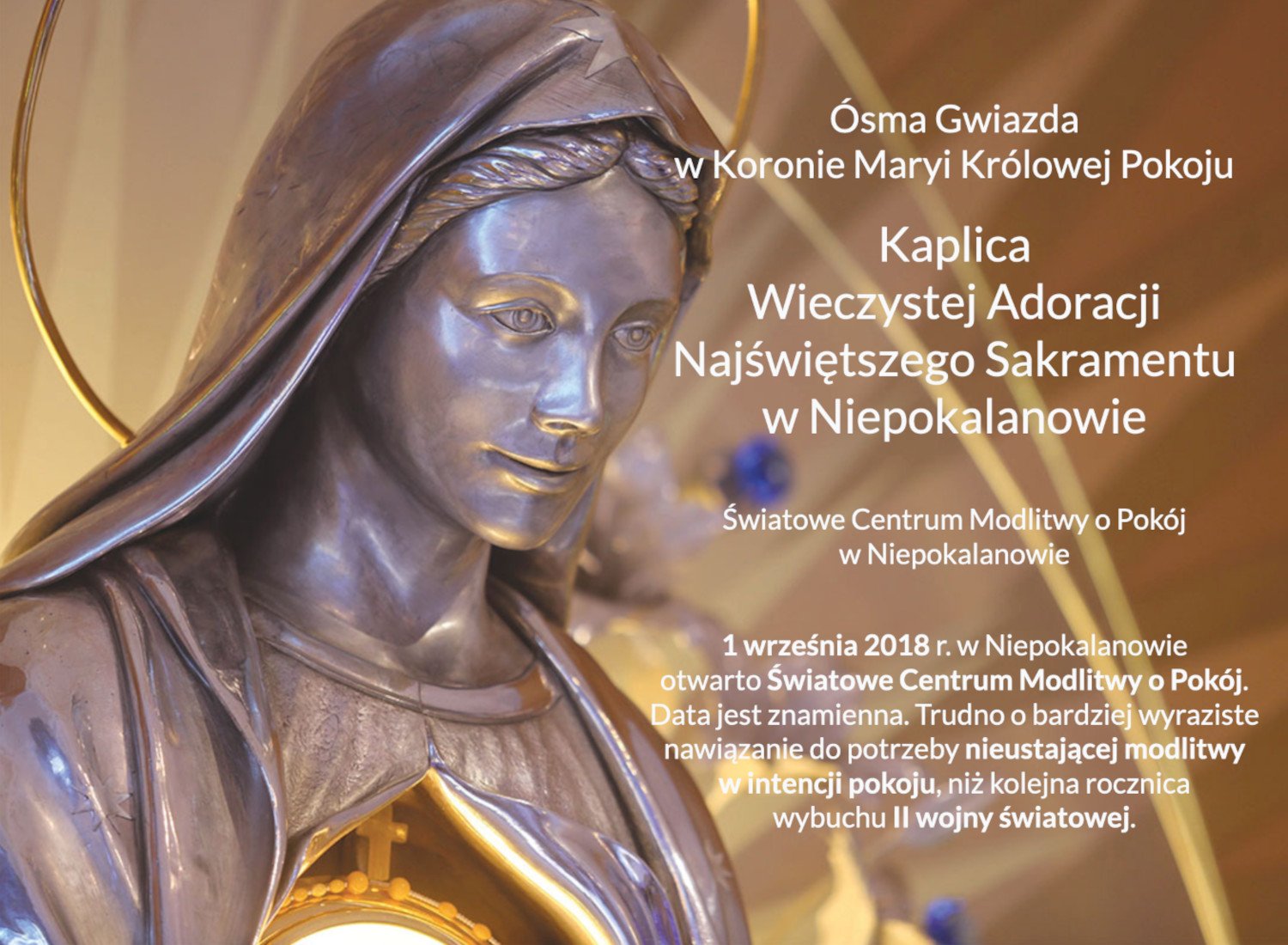

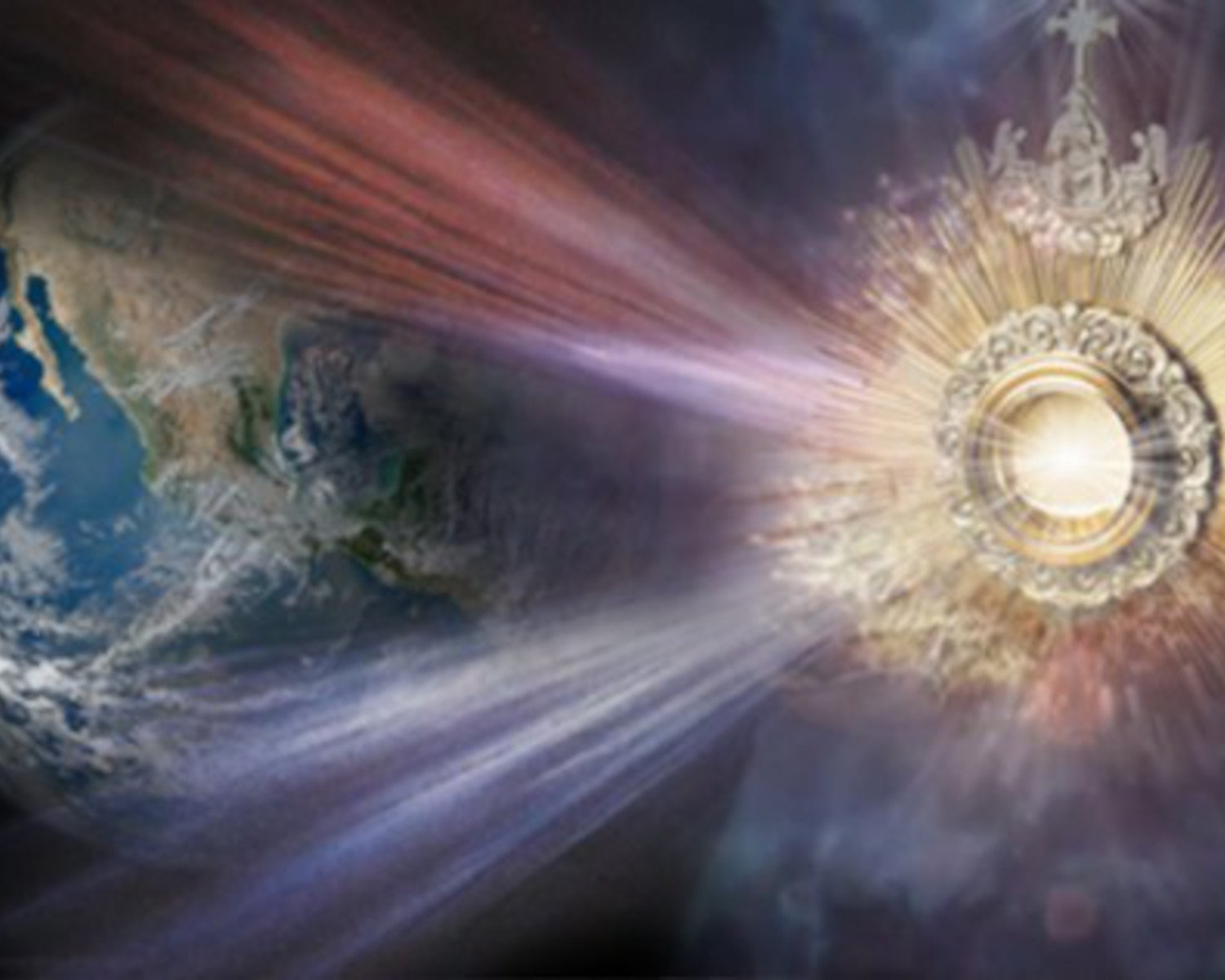
The Eucharistic Adoration Chapel established by Saint Maximilian Kolbe was inaugurated at the outbreak of World War II. It was restored as a Chapel of Adoration in September, 2018, the commemoration of the date that the war began. It is now part of the World Center of Prayer for Peace. The live internet feed of the Adoration Chapel at Niepokalanow — sponsored by EWTN — was established just a few weeks before we discovered it and began to include in at Beyond These Stone Walls. Click “Watch on YouTube” in the lower left corner to see how many people around the world are present there with you. The number appears below the symbol for EWTN.
Click or tap here to proceed to the Adoration Chapel.
The following is a translation from the Polish in the image above: “Eighth Star in the Crown of Mary Queen of Peace” “Chapel of Perpetual Adoration of the Blessed Sacrament at Niepokalanow. World Center of Prayer for Peace.” “On September 1, 2018, the World Center of Prayer for Peace in Niepokalanow was opened. It would be difficult to find a more expressive reference to the need for constant prayer for peace than the anniversary of the outbreak of World War II.”
For the Catholic theology behind this image, visit my post, “The Ark of the Covenant and the Mother of God.”

A Not-So-Subtle Wake-Up Call from Christ the King
The Gospel for the Solemnity of Christ the King is the Judgment of the Nations, an invitation to Glory and a road map on how to get there.

The Gospel for the Solemnity of Christ the King in 2023 was the Judgment of the Nations, an invitation to Glory and a map for how to get there.
November 18, 2020 by Fr. Gordon MacRae
“I consider that the sufferings of this present time are not worth comparing with the glory that is to be revealed to us.”
— Saint Paul, Romans 8:18
The image atop this post is one that we used at the end of my post, “The God of the Living and the Life of the Dead.” It was written for All Souls Day which just happened to fall in 2020 just days before the most contentious and bitterly divided U.S. election in decades. Its echoes of civil unrest reverberated out of America to circle the globe. So we are using the image again and reposting the link because in the heat of battle a lot of readers missed that post.
The image is a powerful one of Christ leading prisoners through the gates of Dachau — or is it Purgatory? It is a hopeful image, and one that reflects the Mind of God as revealed by the Prophet Ezekiel at Mass on the Solemnity of Christ the King:
“As a shepherd tends his flock when he finds himself among his scattered sheep, so will I tend my sheep. I will rescue them from every place where they were scattered when it was cloudy and dark... The lost I will seek out; The strayed I will recover; The injured I will bind up; The sick I will heal.”
— Ezekiel 34:15-17
That describes the Mission of the Church as well, or at least what it should be. I recently received a message from a lawyer who asked if I would be willing to talk with a young priest who has had a catastrophic and very public failure. His bishop’s only public comments were that the priest will be expelled from ministry and will never function as a priest again. The lawyer wants to find spiritual and psychological treatment for him. I am still stricken by this confusion of roles and expectations. The lawyer calls for healing while the shepherd calls only for vengeance.
There is a lot in the readings for Christ the King that should give us pause about our own roles and expectations — not our expectations of faith, but rather faith’s expectations of us.
The Gospel for Christ the King is from Matthew 25:31-46, a passage referred to as the “Judgement of the Nations.” It ends with a familiar condemnation, not of what some of us did in life, but of what we didn’t do:
“I was hungry and you gave me no food; I was thirsty and you gave me no drink; I was a stranger and you did not welcome me, naked and you did not clothe me; sick and in prison and you did not come to me... Truly I say to you, as you did it not to one of the least of these, you did it not to me.”
— Matthew 25:42-46
It is interesting that in the Gospel of Saint Matthew, the plot of the Pharisees and High Priest to kill Jesus unfolds just after the above passage. There are certain things that human nature is loathe to hear, and one of them is to have our hypocrisy mirrored and laid bare. I am no exception. Welcoming the stranger and the alienated requires the strength of will to resist some potent peer pressure.
Some years ago, at about the time I first began writing posts for publication from prison, a man was moved into the housing unit where I lived. He was horribly disfigured and everyone just avoided him. He was living out in the open in an overflow bunk with no place to retreat from the scowls and stares of other prisoners. I was disgusted by the way he was shunned.
And then I awoke in the middle of the night disgusted with myself. While passing judgment on the avoidance and shunning of the crowd I was oblivious to my own. This is called spiritual blindness, among the most self-righteous of our sins. So after a sleepless night I went to him, pulled a chair up to his bunk as he sat alone, and talked for awhile. After some days, he trusted me enough to tell me that his disfigurement was the result of a suicide attempt. My heart went out to this broken man, and we remained friends for the entire time he was in prison.

There but for the Grace of God
The fact that my own life had once spiraled into what the Prophet Ezekiel described above as a place “cloudy and dark,” became in that instance a tool for aiding that man. I wrote of my own venture into cloudy and dark in “How Father Benedict Groeschel Entered My Darkest Night.” Had I never experienced such darkness, I could not have imagined what my friend was enduring.
The image atop this segment of this post is one we have used before, but it is a perfect image for the Solemnity of Christ the King. “When I was in prison you came to me” is perhaps one of the Gospel’s most daunting challenges. The image depicts a priest hearing a confession through the food slot of a door in a supermax prison in solitary confinement. I like to think that this brave priest ministering to the darkness is someone who has come to terms with a hard truth. “If my life had veered even slightly from the path I was on, that could just as easily be me living behind that door. There but for the grace of God go I.”
Coming to terms with such a truth strips away all pretense of moral or spiritual superiority. As you know, my good friend, Pornchai spent many years behind such a door before he ended up here with me. It took some time for the demons he encountered to leave him, but they eventually did. He once described his coming to faith as the result of a long, slow exorcism. Now, as described here a week ago in “Life Goes On Behind and Beyond These Stone Walls,” his prison sentence is fully served. But he is not at all free. He now approaches ten weeks in ICE detention which his keepers keep reminding him is not a prison.
In reality, he says it is the worst prison he has ever been in. Packed forty to eighty in a room, he is surrounded by mostly young men awaiting forced, but horribly slow, deportation. If solitary confinement is the cruelest thing we do in America, ICE detention comes a close second. His travel documents that were valid for 90 days when they were issued by his Embassy three months ago have been negligently allowed to expire by indifferent ICE handlers.
He is fortunately able to reach out to me through some of those who help to publish these posts. The for-profit ICE detention center sells food to detainees at highly inflated prices and allows telephone calls at the rate of eleven cents per minute. What we all thought would be a two-week stay there has turned into ten, and I have had to sacrifice to get funds to him each week for food and phone calls, both of which are a necessity to ward off total discouragement.
The disappointment and discouragement in his voice when he calls are painful to hear. But in the midst of such suffering, Pornchai has done something remarkable. He has fulfilled the Gospel for Christ the King. There are a few young men around him who have been stranded there with nothing for many months with no funds, no food, and no way to call anyone. Their families impoverished in Honduras do not even know where they are and they have no way to reach out to them. I felt embarrassed when Pornchai asked me if it is okay for him to share his food with them.
Then he made a list of their names, ICE detention numbers, and countries of origin for our helpers to call their Consulate and begin the process of obtaining travel documents for them to move on. The irony is that, thanks to him, they have all left before him. This week he told me that he has a new friend, age 22, who speaks no English and has been stranded there for six months. They pray together and Pornchai shares his food with him. I asked how they communicate and Pornchai said, “by food and prayers.” The young man’s name — this floored me — is Maximilian.
“Come you who are blessed by My Father, inherit the Kingdom prepared for you from the foundation of the world. For I was hungry and you gave me food, I was thirsty and you gave me drink, a stranger and you welcomed me, naked and you clothed me, ill and you cared for me, in prison and you came to me.”
— Matthew 25:34-36

In a World Cloudy and Dark
One night some months ago while Pornchai was still in this cell with me, I stumbled upon EWTN in the middle of a talk by our friend, Father Michael Gaitley, MIC. I told Pornchai to leave his football game and turn his little TV to EWTN. At the moment he did so, he saw himself on the screen. Father Gaitley had put up a photograph of Pornchai and me reciting our Consecration to Jesus through Mary in the prison chapel on the Solemnity of Christ the King in 2013.
That seems so very long ago now. We had just completed Father Gaitley’s “33 Days to Morning Glory” retreat, and we felt as though we had just discovered a bright light in what was a very dark time for us. Marian Helper magazine published this account back then in “Mary Is at Work Here,” (Marian Helper, Spring 2014). The author, Felix Carroll, paid a special tribute to Pornchai:
“The Marians believe Mary chose this particular group of inmates to be the first. That reason eventually was revealed. It turns out that one of the participating inmates was Pornchai Moontri who was featured in last year’s Marian Press title, Loved, Lost, Found: 17 Divine Mercy Conversions... Fr. Gordon MacRae joined Pornchai in the consecration and called it a ‘great spiritual gift that opened a door to the rebirth of trust’ at a particularly dark time for both men.”

Inmates Pornchai Moontri (second from left) and Fr. Gordon MacRae (third from left) make their consecration to Jesus through Mary on Nov. 24 in New Hampshire State Prison for Men. They pray to become instruments in Mary's "immaculate and merciful hands for bringing the greatest possible glory to God."
Now for so many, Pornchai and I included, this seems like an even cloudier and darker time with tension and uncertainty part of our daily experience. I plan to read the above excerpt from Marian Helper to Pornchai when we speak on the night I am typing this. In the bleak setting in which he now finds himself, this reminder of the ray of light that beckoned to us is much needed.
The callousness of ICE handlers notwithstanding, the real culprit in all these delays extending Pornchai’s imprisonment has been the global pandemic. Thailand has closed its borders to all international travel and presently allows only repatriation flights for its own citizens to return to their country. Pornchai seems to be far down the list, but he must not forget who his Mother is.
Many people are hurting and anxious over the times that we are in and the perils that lie before us. Trust seems to have gone out of our world, and the reign of Christ the King feels for many like a vague notion of the past. It is not. The task before us is to look into the present darkness to reach out to souls worse off than ourselves. I am humbled by how much Pornchai just spontaneously does this in a place that offers little beyond anxiety and hopelessness.
Gospel for the Solemnity of Christ the King, don’t ask yourself how you could possibly be expected to go visit the imprisoned. If you read this far, you already have. Now open your heart to do the rest, and inherit the Kingdom prepared for you from the foundation of the world.

Editor’s Note: On April 29, 1995 — the fiftieth anniversary of the liberation of Dachau — the Russian Orthodox Memorial Chapel of Dachau was consecrated. Dedicated to the Resurrection of Christ, the chapel holds an icon depicting angels opening the gates of the concentration camp and Christ Himself leading the prisoners to freedom.
Dachau 1945: The Souls of All Are Aflame
Note from Fr. Gordon MacRae: Please visit our Special Events Page for information on how you can help us behind and Beyond These Stone Walls. Thank you and God Bless you.


The Eucharistic Adoration Chapel established by Saint Maximilian Kolbe was inaugurated at the outbreak of World War II. It was restored as a Chapel of Adoration in September, 2018, the commemoration of the date that the war began. It is now part of the World Center of Prayer for Peace. The live internet feed of the Adoration Chapel at Niepokalanow — sponsored by EWTN — was established just a few weeks before we discovered it and began to include in at Beyond These Stone Walls. Click “Watch on YouTube” in the lower left corner to see how many people around the world are present there with you. The number appears below the symbol for EWTN.
Click or tap here to proceed to the Adoration Chapel.
The following is a translation from the Polish in the image above: “Eighth Star in the Crown of Mary Queen of Peace” “Chapel of Perpetual Adoration of the Blessed Sacrament at Niepokalanow. World Center of Prayer for Peace.” “On September 1, 2018, the World Center of Prayer for Peace in Niepokalanow was opened. It would be difficult to find a more expressive reference to the need for constant prayer for peace than the anniversary of the outbreak of World War II.”
For the Catholic theology behind this image, visit my post, “The Ark of the Covenant and the Mother of God.”
You may also like these related posts:
The God of the Living and the Life of the Dead

Pell Contra Mundum: Cardinal Truth on the Synod
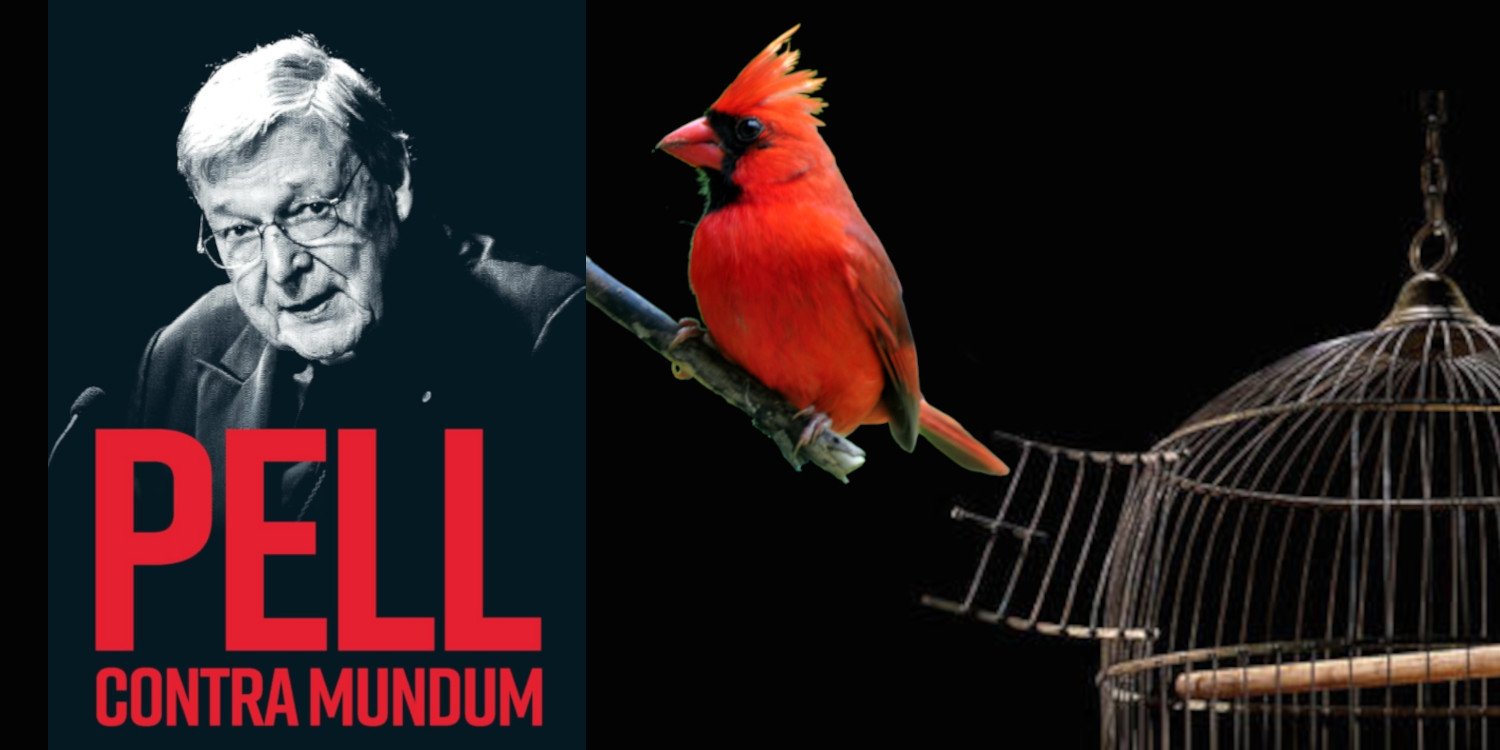
In Pell Contra Mundum, Fr. Robert A. Sirico profiles the late Cardinal George Pell including some incisive reflections on the Synod he called ‘a toxic nightmare.’
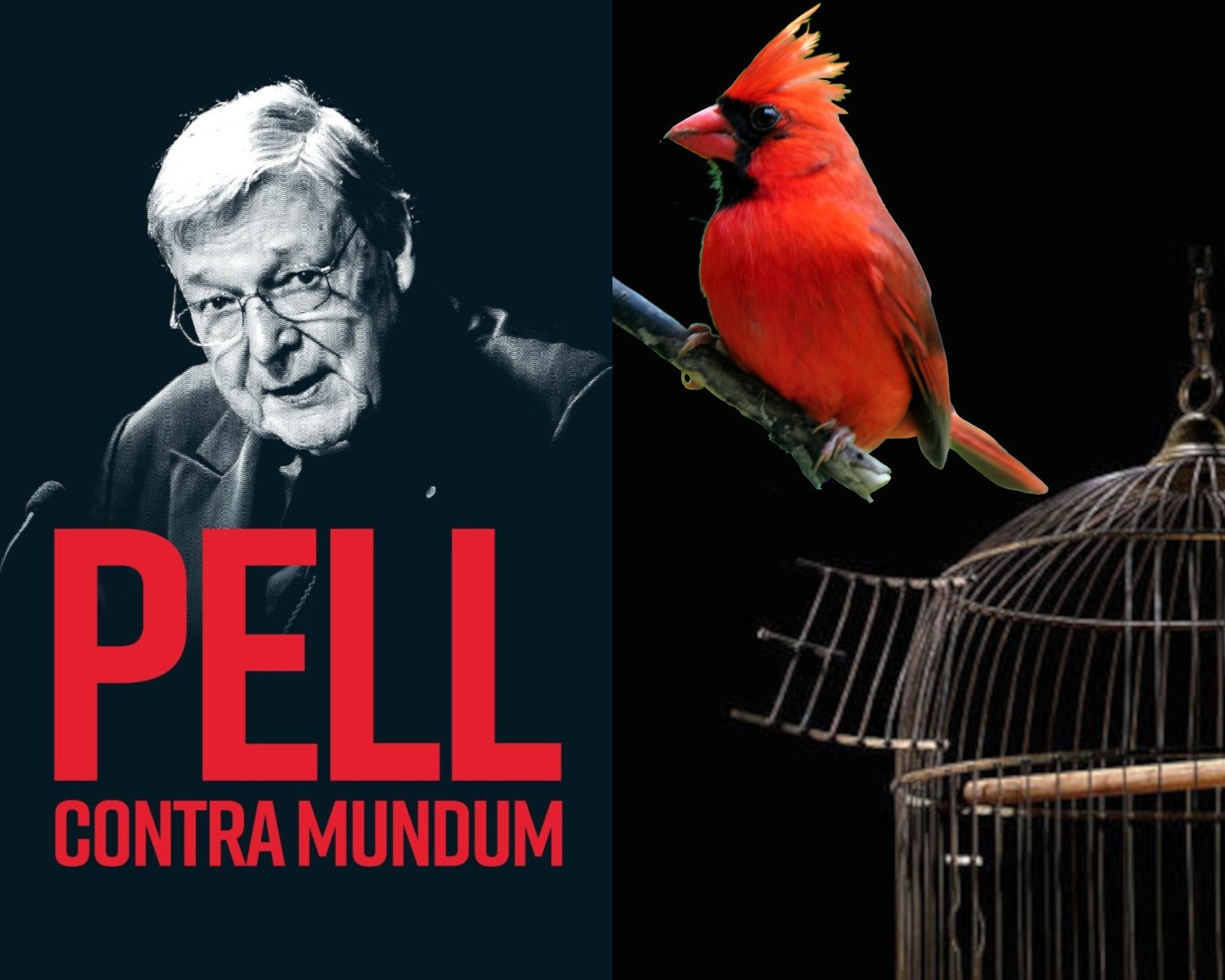
Book cover image courtesy of Connor Court Publishing; Red cardinal photo by RachidH (CC BY-NC 2.0 DEED)
In Pell Contra Mundum, Fr. Robert A. Sirico profiles the late Cardinal George Pell including some incisive reflections on the Synod he called ‘a toxic nightmare.’
November 15, 2023 by Fr Gordon MacRae
“This prison journal should never have been written. That it was written is a testament to the capacity of God’s grace to inspire insight, magnanimity, and goodness amidst wickedness, evil, and injustice. That it was written so beautifully bears witness to the Christian character that divine grace formed in its author.”
Such words could never describe anything that I have ever written or will write from within my impenetrable prison walls. The above quote is from George Weigel’s Introduction to the Prison Journal of George Cardinal Pell (Ignatius Press, 2020). As I undertook my own prison journal — writing one post at a time, week after week, half a world away from the prison Cardinal Pell innocently and gracefully endured — I had no idea that my own prison writing would have a presence in his.
I learned of it only after Cardinal Pell finally saw justice and became free after 400 days in solitary confinement in an Australia prison. Like much of the free and thinking world, I was angered and mortified that he had to endure those 400 days, and the humiliating trials that preceded them, for crimes that never took place. I had written a post from my own prison entitled, “Was Cardinal George Pell Convicted on Copycat Testimony?” It was sent to Cardinal Pell in prison by Sheryl Collmer of Tyler, Texas, a writer for Crisis Magazine. It brought a focused light to the prosecutorial fraud that, once exposed, may have helped to overturn his conviction.
Still, even today in Australia and beyond, there are some who claim to a biased and bigoted condemnation of this White Martyr, a condemnation devoid of all truth and justice. After his release and his return to Rome, Cardinal Pell wrote to thank me for the small role I played in writing about the fraud perpetrated against him. I don’t think anyone has ever gotten all the way to the bottom of that fraud.
After his release, Cardinal Pell also wrote to me of his desire to bring attention to my own plight, but that was not meant to be. It was nonetheless a great solace to me to be able to write in 2020, “From Down Under, the Exoneration of George Cardinal Pell.”
On the day that I write this entry into my own less exalted prison journal, I mark 10,740 days and nights in prison also for crimes that never took place. I do not compare this to the abomination of humiliation endured by George Pell. It is just the opposite. I write it to convey the extent to which he inspired me, inspires me still, and gives me hope that justice eventually wins out whether here or in Thy Kingdom Come.
Cardinal Pell is gone from our sight now, but his words still inspire many. One of the many is Fr. Robert A. Sirico, cofounder of the Acton Institute and editor of the recent book, Pell Contra Mundum (Connor Court Publishing, 2023). Father Sirico described his subject matter for the book: “George Cardinal Pell, a White Martyr with insights into the Spirit of this age and the ongoing crisis in the Church.” In an interview with Edward Pentin in the National Catholic Register, Father Sirico spoke of the book:
“It really grew out of the sadness, the grief of Cardinal Pell’s death. I was with him the night of Pope Benedict’s funeral. We had dinner in his apartment. Cardinal Zen [another White Martyr] was there and a few others ... . I had known Pell for more than 25 years, and over these last few months we had been talking about the Synod and things happening in the Church. We knew he was going in for the surgery. I left Rome, and then that morning got up to the call that he had died in the hospital ... . And later that day or the next, his piece in the London Spectator came out.”

“Hostile to the Apostolic Tradition”
KABOOM! As 2023 was underway shortly after Cardinal Pell’s death, that is how I summed up his posthumously published article in The Spectator which Pell titled, “The Catholic Church Must Free Itself from this Toxic Nightmare.” Its focus was on the present Synod on Synodality that has rocked the Church and faithful Catholics. In that same edition of The Spectator (11 January 2023) associate editor Damian Thompson characterized Cardinal Pell’s explosive article:
“Shortly before he died ... Cardinal George Pell wrote the following article for The Spectator in which he denounced the Vatican’s plan for its upcoming ‘Synod on Synodality’ as ‘a toxic nightmare.’ The booklet produced by the Synod, to be held in two sessions this year and next year, is ‘one of the most incoherent documents ever sent out from Rome,’ says Pell. Not only is it ‘couched in neo-Marxist jargon,’ but it is ‘hostile to the apostolic tradition,’ and ignores fundamental Christian tenets such as belief in divine judgment, heaven and hell.
“The Australian-born Cardinal, who endured the terrible ordeal of imprisonment in his home country on fake charges of sex abuse before being acquitted, was nothing if not courageous. He did not know that he was about to die when he wrote this piece; he was prepared to face the fury of Pope Francis and the organisers when it was published. As it is, his sudden death may add extra force to his words when the Synod meets this October.”
I commend with gratitude Father Robert Sirico, Damian Thompson at The Spectator, Edward Pentin at the National Catholic Register, and others who have posthumously amplified Cardinal Pell’s voice in service to the Church. On 11 January 2023 the day after Cardinal Pell’s death while undergoing surgery, Damian Thompson wrote for The Spectator, “Cardinal Pell’s righteous fury at the Vatican’s theological direction”:
“Cardinal Pell, a former head of Vatican finances does not criticise Pope Francis directly in the piece he has written for The Spectator. But it was the latter who instituted this ‘synodal way’ which, according to Pell, ‘has neglected, indeed downgraded the Transcendent, covered up the centrality of Christ with appeals to the Holy Spirit and encouraged resentment, especially among participants.’ Pell states quite plainly that the whole process — which began with a ‘consultation’ of the laity in which only a minuscule proportion of the world’s Catholics took part — is in the process of being rigged. The Synod’s participants will not be allowed to vote and the organising committee’s views will be passed on to Pope Francis ‘for him to do as he decides.’
“That phrase goes to the heart of the matter. Pell describes this arrangement as ‘an abuse of synodality, a sidelining of the bishops, which is unjustified by scripture or tradition’ and ‘liable to manipulation.’ ... This is the last public statement by a hugely influential cardinal who was once part of the Pope’s inner circle. Put simply, it expresses righteous fury at the theological direction of this pontificate, hinting that it is betraying Christ himself. And, by a sad coincidence, it appears in the same week as Archbishop Gänswein’s revelations that Benedict XVI in retirement was horrified by his successor’s suppression of the Latin Mass and also suggested that it was based on a bogus consultation.”
As Cardinal Pell thus wrote with candor and love for the Church: “The Catholic Church must free itself from this toxic nightmare.”

A Prequel: The German Inquisition of Benedict XVI
I cannot continue this post without placing it in its truthful context with an extended excerpt from my March 2, 2022 post, “Benedict XVI Faced the Cruelty of a German Inquisition.” Following vile accusations out of Germany that Benedict XVI was negligent in dealing with sexual abuse charges against a priest 40 years earlier, it did not take long for the true agenda to be unmasked. In the same week as this condemnation of Benedict, a meeting of Germany’s “Synodal Path” declared its support for same-sex unions, sweeping revisions in Church teaching on homosexuality and the practice of priestly celibacy, the ordination of women, lay involvement in the selection of bishops, and other signs of a Catholic “woke” agenda.
Several clergy from Germany anonymously shared that post with others, but only one under his own name on social media. On April 11, 2022, a group of 103 bold and faithful bishops from the United States, Canada, and around the world signed “A Fraternal Open Letter to Our Brother Bishops in Germany.” Here is an excerpt:
“Events in Germany compel us to express our growing concern about the nature of the entire German ‘Synodal Path’ process and the content of its various documents... . The urgency of our joint remarks is rooted in Romans 12, and especially in Saint Paul’s caution: ‘Do not be conformed to this world.’ And their seriousness flows from the confusion that the Synodal Path has already caused and continues to cause, and the potential for schism in the life of the Church that will inevitably result.”
In his weekly podcast carried by LifeSiteNews, Tyler, Texas Bishop Joseph Strickland explained why he was one of the signatories of that letter:
“It should be every bishop, in my opinion, and it’s because we are being bishops. Bishops are to guard the deposit of faith. It is a promise we made. And frankly, the Synodal Path of Germany is doing the opposite. It is eroding the deposit of faith, saying, ‘It’s all up for grabs.’”
It was encouraging for many that 103 brave and faithful bishops signed that letter in March of 2022. Ironically, and it is very painful for faithful Catholics in the United States, Bishop Joseph Strickland was removed as Shepherd of the Diocese of Tyler, Texas by Pope Francis on the very day that I am writing this post. Mainstream US media is only supposing the reason because no one really knows except Pope Francis. The secular media is attributing it to his disagreements with Pope Francis on the direction of the Synod.
From my limited perspective it is encouraging that 103 bishops signed that letter, and alarming that Bishop Strickland was removed for it. The bishops of Germany are failing to read and interpret the writing on the wall. Their agenda, which seems to have overwhelmed the direction of the Synod is barely distinguishable from the one being imposed on our culture by "woke" politicians. I wrote of that agenda in “The ‘Woke’ Have Commenced Our Totalitarian Re-Education.”
In Prison Journal Volume 2, Cardinal Pell wrote candidly about his concern for the direction of the Church in Germany and the Synod. From his prison cell on August 9, 2019, he wrote of Edith Stein, now known as Saint Teresa Benedicta of the Cross, who like Saint Maximilian Kolbe one year earlier, was murdered at Auschwitz in 1942.
In his journal, Cardinal Pell wrote that Edith Stein was German by birth, and he asked readers to pray for her intercession for the Catholic Church in Germany. He quoted German Cardinal Gerhard Müller, former Prefect of the Congregation for the Doctrine of the Faith, a position once held by Cardinal Joseph Ratzinger:
“The Catholic Church in Germany is going down. Leaders there are not aware of the real problems. They are self-centered and concerned primarily with sexual morality, celibacy, and women priests. They do not speak about God, Jesus Christ, grace, the Sacraments, faith, hope, or love.”
— Prison Journal Volume 2, p. 75
It is a cause of deepest concern and confusion that Bishop Strickland is removed from office while the bishops of Germany remain in place with their apostasy barely challenged. Later in the book, Cardinal Pell wrote about Vatican concerns for the growing possibility of a German Catholic schism over the very issues identified by Cardinal Müller. If such a progressive schism were to occur, it would sweep much of Europe where — with the exception of Poland — Mass attendance is at a historically low point. Cardinal Pell cited a September 17, 2019 Catholic Culture article by Philip Lawler, “Who Benefits from all this talk of schism?”
Lawler argued in 2019 that the prospect of a schism is remote, but becoming less so. He cited that Pope Francis has spoken calmly about such a prospect saying that he is not frightened by it, something that Lawler and Cardinal Pell found to be disconcerting in and of itself.
Cardinal Pell added that The New York Times has been writing about the prospect of a Catholic schism by the “John Paul and Benedict followers in the United States.” Cardinal Pell wrote that Lawler’s diagnosis is correct. The Cardinal added:
“The most aggressive online defenders of Pope Francis realize they cannot engineer the radical changes they want without precipitating a split in the Church. So they want orthodox Catholics to break away first, leaving progressives free to enact their own revolutionary agenda.”
— Prison Journal Volume 2, p.215 (emphasis added)
In light of this, it comes as no surprise that some progressive US bishops have pushed Pope Francis into divisive restrictions on the Traditional Latin Mass and other traditional expressions of the faith. These efforts, and German Catholic steps taken to marginalize the late Benedict XVI and Archbishop Gänswein, both stalwarts of Catholic orthodoxy, should be of grave concern to faithful Catholics everywhere. Embracing and promoting fidelity at this juncture has never been more minimized in Rome yet more urgently needed everywhere else.
Faithful Catholics must never accede to the desired end that German progressives and perhaps even the Synodal Path now seek. Handing the Church over to them would leave “Satan at the Last Supper” while Jesus is removed from the room. It is not the faithful, after all, who wander today into the desert to Azazel.
+ + +
An Important Message sent to us from the Catholic League for Religious and Civil Rights
November 17, 2023
To watch last night's episode of EWTN’s "The World Over with Raymond Arroyo," featuring Bishop Joseph Strickland, Fr. Gerald Murray, and Robert Royal, click here.
+ + +
Note from Fr. Gordon MacRae: Please share this post in honor of the late Cardinal George Pell and those who have amplified his most important voice in the desert. You may also like these related posts from Beyond These Stone Walls:
The Vatican Today: Cardinal George Pell’s Last Gift to the Church
Paths I Crossed with Benedict XVI and Cardinal George Pell
Fr Gordon MacRae in the Prison Journal of George Cardinal Pell by Ryan A. MacDonald
The Eucharistic Adoration Chapel established by Saint Maximilian Kolbe was inaugurated at the outbreak of World War II. It was restored as a Chapel of Adoration in September, 2018, the commemoration of the date that the war began. It is now part of the World Center of Prayer for Peace. The live internet feed of the Adoration Chapel at Niepokalanow — sponsored by EWTN — was established just a few weeks before we discovered it and began to include in at Beyond These Stone Walls. Click “Watch on YouTube” in the lower left corner to see how many people around the world are present there with you. The number appears below the symbol for EWTN.
Click or tap here to proceed to the Adoration Chapel.
The following is a translation from the Polish in the image above: “Eighth Star in the Crown of Mary Queen of Peace” “Chapel of Perpetual Adoration of the Blessed Sacrament at Niepokalanow. World Center of Prayer for Peace.” “On September 1, 2018, the World Center of Prayer for Peace in Niepokalanow was opened. It would be difficult to find a more expressive reference to the need for constant prayer for peace than the anniversary of the outbreak of World War II.”
For the Catholic theology behind this image, visit my post, “The Ark of the Covenant and the Mother of God.”

From Dorothy Rabinowitz: ‘Say Not the Struggle Naught Availeth’
A Pulitzer Prize-winning journalist inspired poetic justice for a wrongly imprisoned priest with some obscure poetry that left a giant footprint on world history.
A Pulitzer Prize-winning journalist inspired poetic justice for a wrongly imprisoned priest with some obscure poetry that left a giant footprint on world history.
November 8, 2023 by Fr Gordon MacRae
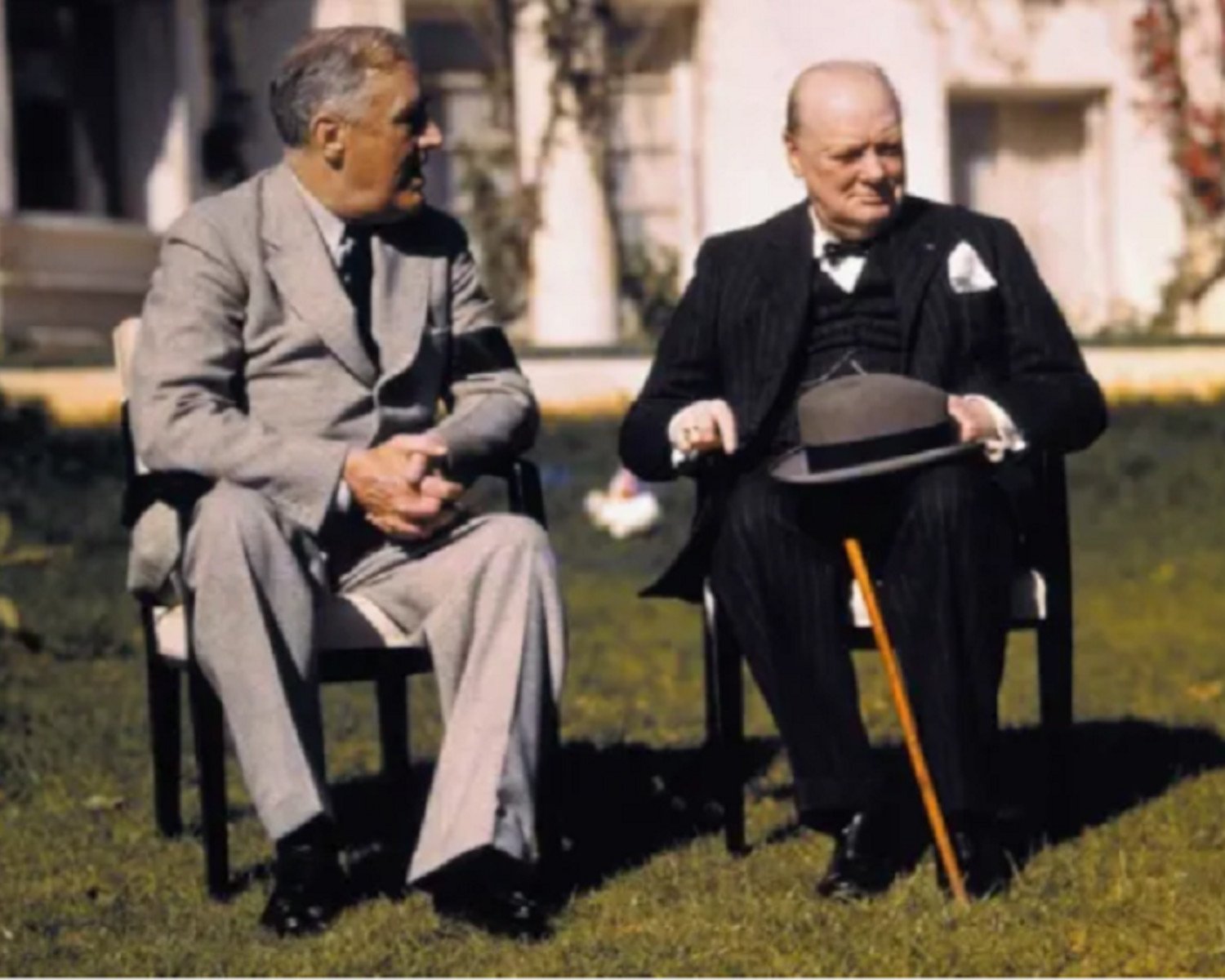
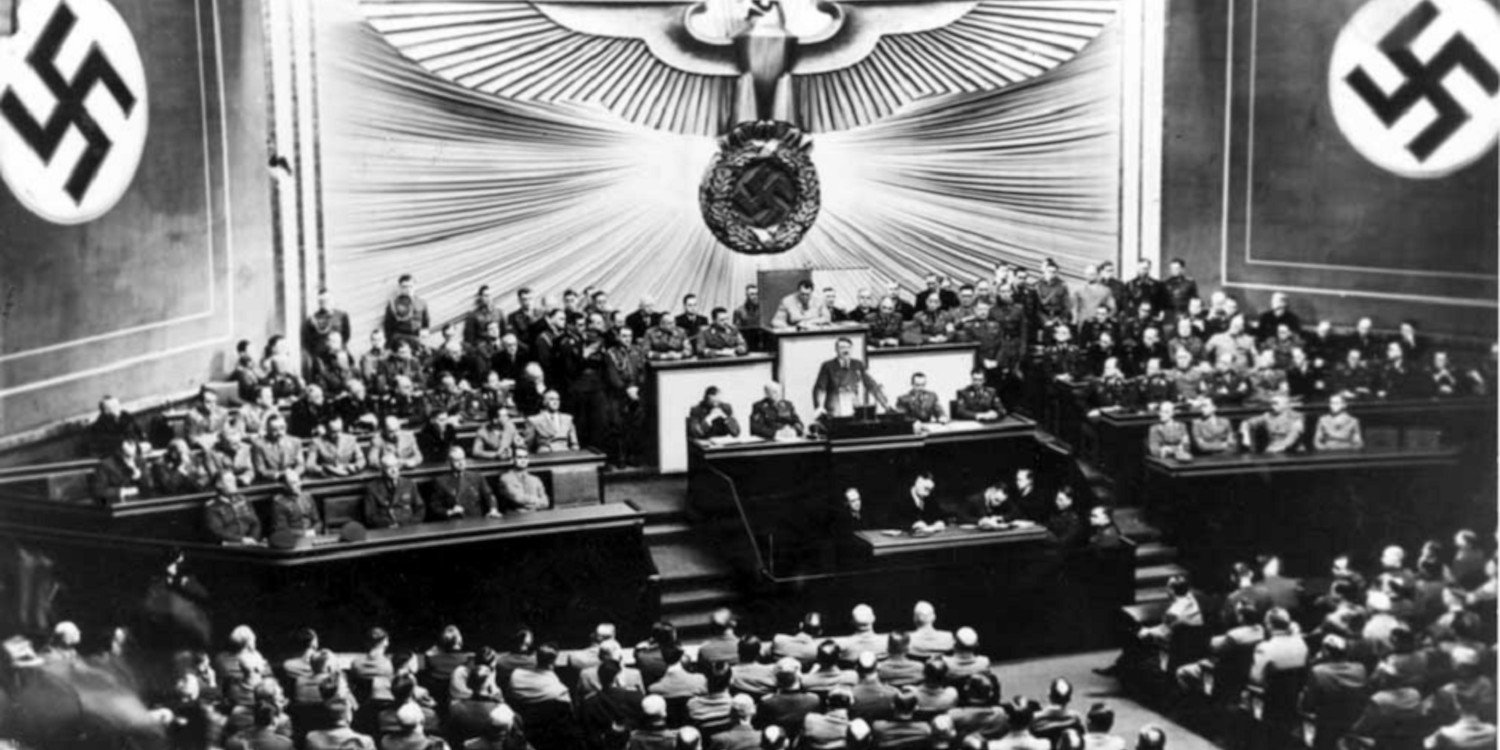
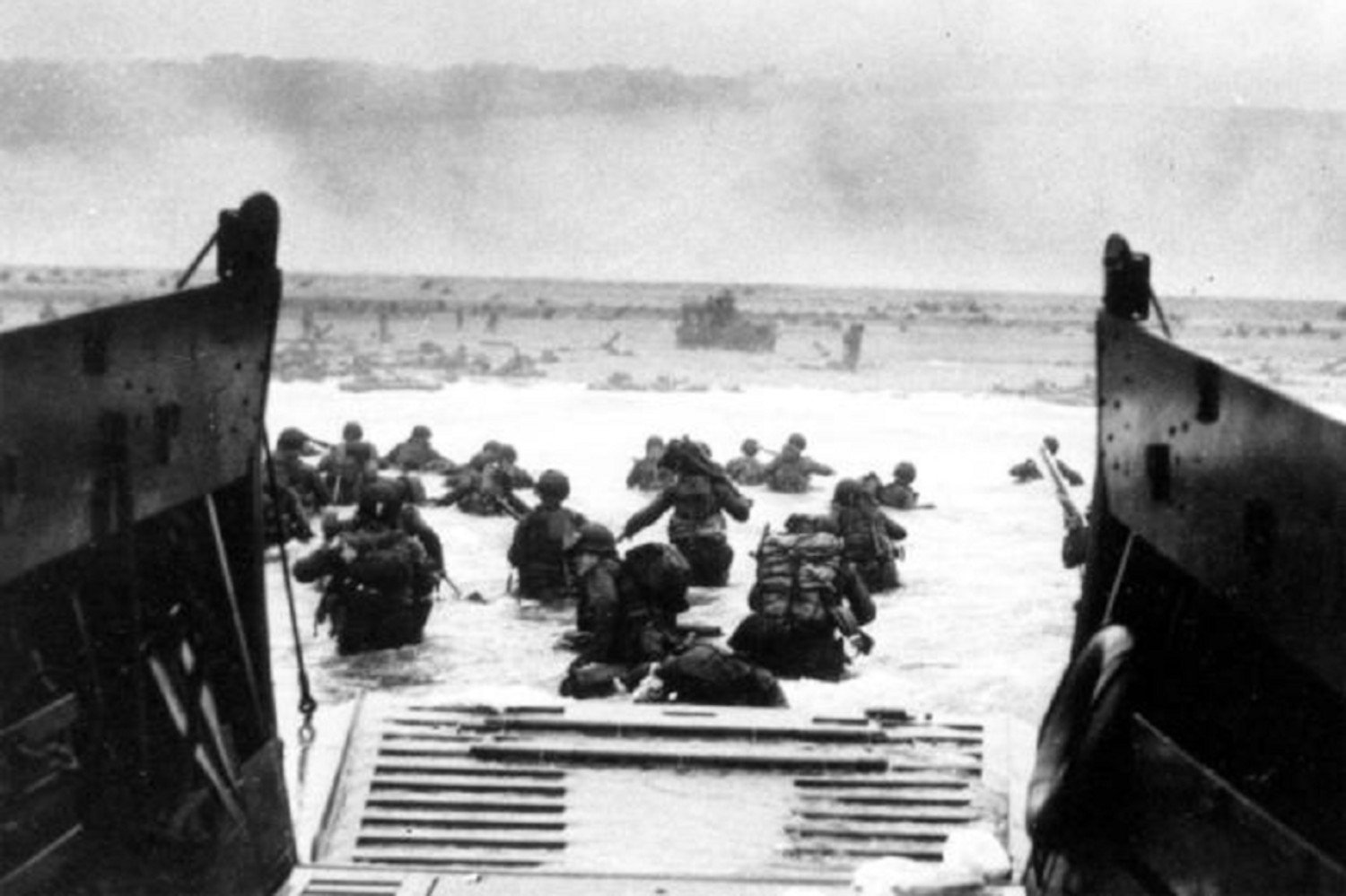
Introductory Note: A few years ago I wrote a post to honor Veterans Day, and have reposted a link to it each year near November 11. History is important and if we ignore it we end up repeating it. In the photo above, US President Franklin Roosevelt and British Prime Minister Winston Churchill met in 1941 to discuss a possible American entry into World War II after the Nazi invasion of Europe cast the entire free world into darkness. Strangely, their final decision was prompted by their trading two obscure poems each delivering to the other a message about vital events in history. Winston Churchill’s message to FDR was a pivotal moment. It was recently sent to me by Wall Street Journal columnist Dorothy Rabinowitz who inspired hope for me in the tyranny of darkness I faced. This is that remarkable story.
+ + +
As most readers know, I work in a library and though it is technically a law library it still gives me access to a world of books. Some of what is available there is not very helpful and not exactly literary but I still try to keep classic literature from being discarded to make room for the junk that too many prisoners want to read, such as graphic novels and comic books. Graphic novels fly off the shelves while Les Miserables collects dust.
The library has a fairly large poetry section, but what most prisoners are looking for is not Robert Frost or T.S. Elliot. They scour the shelves for snippets of love poems to plagiarize for their letters to girlfriends, both real and imagined. Longfellow languishes on the shelf while Cowboy Love Poetry blazes happy trails through the prison mail room.
I had also been scouring the poetry section. After the struggle described in some of our posts — such as “Dying in Prison in the ‘Live Free or Die’ State” — I received one day a surprising message from Dorothy Rabinowitz at The Wall Street Journal with the subject, “Thoughts Between Deadlines.” It set me on a course of self-assessment in the face of struggle when she wrote:
“Do you have access to Google for information seeking? This isn’t the kind of information that moves legal proceedings, but it is a great source of empowerment nonetheless. I would ask you to look up just the line, ‘Say Not the Struggle Naught Availeth.’ It should bring up the poem, written by the Victorian poet, Arthur Clough, who never wrote anything in the least memorable, except this one whose powers were such that, a hundred years after it was written, Winston Churchill sent it to Franklin Roosevelt.”
With this, Dorothy Rabinowitz certainly had my rapt attention pushing all the buttons — history, literature, and irony — that would draw me into a course of discovery. Between 2005 and 2022, The Wall Street Journal published a series of four major articles about my struggle culminating in the most recent, “Justice Delayed for Father MacRae,” by Boston attorney Harvey A. Silverglate.
In all that time, Dorothy maintained a rather stolid interest, more inclined to uncover and report the facts of a difficult and nebulous story than its implications far beyond just me. In all these years, this message from her was the first contact that went to my struggle for justice and not just the discernment of facts.
With no access to Google or the internet, it took a few days for Dorothy’s message to get to me along with the results of the search she recommended. By telephone, I asked a friend to conduct the search that Dorothy recommended. To my surprise it took us to a remarkable but obscure poem, and I will get back to that in a moment. But first, the remainder of Dorothy’s equally remarkable message:
“The year was 1941. The English stood alone. America was not yet at war, but FDR was doing all within his power to get aid to them. The world faced a Europe overrun with triumphant Nazi troops. FDR had just won his fourth term and sent his new personal ally, the very Republican he had defeated — a heroic internationalist, Wendell Wilkie, who had been the standard bearer for an entirely isolationist Republican party — with a personal message of support to Churchill.”
There is more to the message, which I will get back to in a moment, but what made it so fascinating for me was my admiration for both Churchill and FDR. By 1940, Nazi Germany under Hitler occupied Poland, France and much of Europe with terrifying speed while America slept. The Battle of Britain (a very fine historical film) made clear that Hitler could not defeat the British air and naval forces under Churchill. Back to that in a moment as well.
Readers may have heard or read recent articles about newly discovered information about Pope Pius XII and the Vatican during the Nazi terror in Europe in the 1940s. A lot of ink has been spilled suggesting that Pope Pius was “Hitler’s Pope.” It was a slur derived from commentary about his reticence to publicly condemn Hitler and the Nazi Party during the war. The new information recently divulged centered on an archbishop advising Pope Pius who became concerned that Germany was going to win this war and a slaughter would ensue. It could have been the end of the Catholic Church. So with Nazi troops on his doorstep, and the rest of Europe under siege, Pope Pius became extremely cautious. The Catholic bishops of Holland issued a public statement in German condemning the Nazi deportation of Jews who had become Catholics to Auschwitz and other death camps. In retaliation, the Nazis raided convents and monasteries in Holland arresting anyone with Jewish roots. One result was the execution of Edith Stein who is now revered as Saint Teresa Benedicta of the Cross. This is a story I told in “Saints and Sacrifices: Maximilian Kolbe and Edith Stein at Auschwitz.”
Poetic Justice
The origin of the term, “Poetic Justice” has been difficult to nail down. It appears to have been first used in the Sixth Century B.C. in reference to the Greek poet, Ibycus. His works were collected in seven books, of which only fragments survive. The manner of his death created a legend. Dying from an assault by robbers, the legend held, Ibycus called on a passing flock of cranes to avenge him. Near Corinth, one of the robbers saw the flock of cranes and cried out, “Behold the avengers of Ibycus!” His cry betrayed him and the cranes devoured him, a death described as “poetic justice.”
Dorothy Rabinowitz sent me the most stunning example of poetic justice in the modern era. Fears of Nazi domination of the Atlantic made it easier for Franklin Roosevelt to defy the American isolationists by increasing aid to Britain. When the U.K. depleted its financial reserves, FDR replaced them with U.S. funding for arms production. Under the “Lend-Lease” act of 1941, there were no terms for payback. Dorothy continued in her message:
“FDR’s message to Churchill included the Longfellow poem that ended, ‘Sail on, Sail on, O Union strong and great — humanity with all its hopes and fears is resting on thy fate.”
This, of course, sent me on a hunt for its source. I found it in a collection of poetry by Henry Wadsworth Longfellow entitled, “The Building of a Ship” published in 1850. Remember that both FDR and Churchill had come to the realization that England alone held the fragile line against German invasion and global tyranny. Its collapse seemed just a matter of time. This epic poem sent by FDR to Churchill nearly a century after it was written concluded,
“Then too, sail on O Ship of State!
Sail on, O Union strong and great!
Humanity with all its fears,
With all the hopes of future years,
Is hanging breathless on thy fate!
Sail on, nor fear to breast the sea!
Our hearts, our hopes are all with thee,
Our hearts, our hopes, our prayers, our tears,
Our faith triumphant o’er our fears,
Are all with thee, are all with thee.”
I can readily see why FDR sent this to Churchill along with his diplomatic message about US funding for arms production. The demonic shroud of darkness that Hitler cast over all of Europe 83 years ago placed the rest of the world in a state of hopeless terror. Dorothy’s message to me continued:
“Churchill had no trouble grasping the importance of the pledge in this American poem, and recited it in a 1941 address to Parliament. As a return message, he sent to FDR the British poem I am writing to you about. You will see why I thought of you when I read it. Read it in the face of all the silences and rejections of appeals to justice that you have seen.”
Dorothy’s message was printed and snail-mailed to me. As soon as I received it, I called a friend to search for the poem she refers to. Its author is the British poet, Arthur Hugh Clough (1819-1861). Educated at Oxford, he became a tutor there during the Oxford Movement. Also called “Tractarianism,” one of the chief leaders of the Oxford Movement was Saint John Henry Cardinal Newman. Newman and the other adherents of the movement challenged a common view that the English Reformation constituted a complete break between Rome and the Church of England. The movement began in 1833 when the British government abolished ten bishoprics in Ireland. The Oxford Movement’s adherents warned that the Church of England was abandoning the principles of the 16th Century Reformers by allowing the Church of England to be dominated by secular authorities.
The Oxford Movement proposed that the Church of England could be saved from secularism only through a return to its Catholic origins. This became wildly controversial in the Church of England when Cardinal Newman published “Tract 90” in 1841 in which he attempted to prove that the Anglican 39 Articles of Religion were not inconsistent with Roman Catholic teaching. As a consequence of the Oxford Movement being suppressed, several hundred English clergy left the Church of England to become Roman Catholic, including Cardinal Newman himself. It was at this time that Arthur Hugh Clough left Oxford in protest against the Church of England’s 39 Articles of Religion, a struggle that informed his poetry.
Background (CC BY-NC-SA 2.0 DEED)
Say Not the Struggle Naught Availeth
As Dorothy Rabinowitz wrote in her message to me, Arthur Clough wrote little that was memorable except this one poem, “Say Not the Struggle Naught Availeth.” A century after its writing, it had an oversized footprint on history. Here is the entire poem sent from Churchill to FDR:
Say not the struggle naught availeth,
The labour and the wounds are vain,
The enemy faints not, nor faileth,
And as things have been, they remain.
If hopes were dupes, fears may be liars;
It may be, in yon smoke concealed,
Your comrades chase e’en now the fliers,
And, but for you, possess the field.
For while the tired waves, vainly breaking
Seem here no painful inch to gain,
Far back through creeks and inlets making,
Comes silent, flooding in, the main.
And not by eastern windows only,
When daylight comes, comes in the light,
In front the sun climbs slow, how slowly,
But westward, look, the land is bright.
Clough’s beautiful poem is a testament to the notion that whatever struggle we must take up and endure in this life, the struggle itself is worthy, even when what we fight against is unjust and impenetrable. This is sometimes difficult to see and accept, but what sort of person would I be if I did not struggle against injustice not only against me, but for all priests falsely accused for financial gain? Margaret Drabble, a poetry critic at Literary Hub wrote of the poem:
“This poem by Arthur Hugh Clough unfailingly brings tears to my eyes. It speaks of hope, and effort, and disappointment, and perseverance... The imagery is profoundly beautiful, and reminds me of the great beaches of my childhood, of Wordsworth’s immortal shore. I can feel those ‘tired waves, vainly breaking,’ and then the flooding fullness of the sea.”
Dorothy also described the poem in her message:
“Clough was unspecific in the references. There are references to military battles, but they are clearly only metaphors. Its imperishable eloquence is exactly the kind that fires resolve to win in the end, which I depend on, which we must all depend on. Read it, and let me know you found it.”
So, Dorothy, as you can see, I found it! “Say Not the Struggle Naught Availeth” is now enshrined on my cell wall. As you have suggested, I read it in the face of all the silences and rejections of appeals to justice that I have seen. It is a vivid reminder, as it was for Churchill and FDR, that some struggles are much bigger than their mere protagonists. This struck home for me when a prominent writer — an author and Catholic deacon in Pennsylvania where the priesthood and Church have been much maligned of late — published this review of Beyond These Stone Walls:
“There are few authentic prophetic voices among us, guiding truth-seekers along the right path. Among them is Fr. Gordon MacRae, a mighty voice in the prison tradition of John the Baptist, Alfred Delp, SJ, and Dietrich Bonhoeffer.”
— Deacon David Jones
With that, Dorothy, I stopped being a victim of this struggle and became a warrior.
+ + +
Note From Father Gordon MacRae: Adolf Hitler declared war on the United States on December 11, 1941, so, for America, the struggle was availeth after all.
Please share this post. Please watch and listen to Dorothy Rabinowitz in a five-minute WSJ interview on this story.
You may also like these related posts from Beyond These Stone Walls:
Hitler’s Pope, Nazi Crimes and The New York Times
Catholic Scandal and The Third Reich: The Rise and Fall of a Moral Panic
November 11 is Veterans Day, a day set aside to remember all those who bravely risked much to win and defend our freedoms. Please honor them with me by sharing my post, “Veterans Day: War and Remembrance and the Cost of Freedom.”
May the Lord Bless you and keep you.

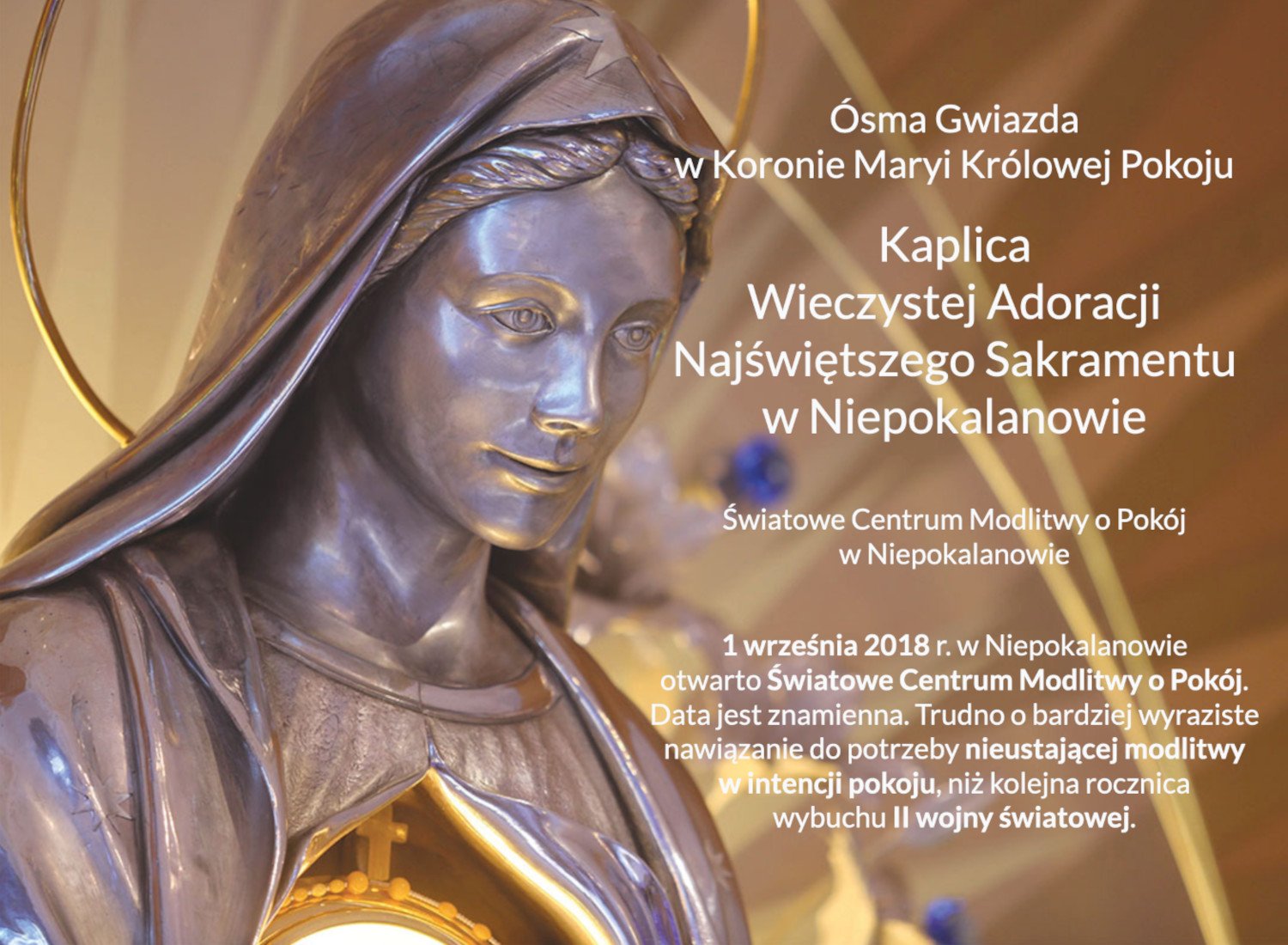

The Eucharistic Adoration Chapel established by Saint Maximilian Kolbe was inaugurated at the outbreak of World War II. It was restored as a Chapel of Adoration in September, 2018, the commemoration of the date that the war began. It is now part of the World Center of Prayer for Peace. The live internet feed of the Adoration Chapel at Niepokalanow — sponsored by EWTN — was established just a few weeks before we discovered it and began to include in at Beyond These Stone Walls. Click “Watch on YouTube” in the lower left corner to see how many people around the world are present there with you. The number appears below the symbol for EWTN.
Click or tap here to proceed to the Adoration Chapel.
The following is a translation from the Polish in the image above: “Eighth Star in the Crown of Mary Queen of Peace” “Chapel of Perpetual Adoration of the Blessed Sacrament at Niepokalanow. World Center of Prayer for Peace.” “On September 1, 2018, the World Center of Prayer for Peace in Niepokalanow was opened. It would be difficult to find a more expressive reference to the need for constant prayer for peace than the anniversary of the outbreak of World War II.”
For the Catholic theology behind this image, visit my post, “The Ark of the Covenant and the Mother of God.”

Saint John Paul the Great: A Light in a World in Crisis
Karol Wojtyla became a priest on All Saints Day 1946. On Divine Mercy Sunday 2014 the Church affirmed what the world already knew: he is Saint John Paul the Great.

Karol Wojtyla became a priest on All Saints Day 1946. On Divine Mercy Sunday 2014 the Church affirmed what the world already knew: he is Saint John Paul the Great.
November 1, 2023 by Fr Gordon MacRae
Two names were added to the Communion of Saints on Divine Mercy Sunday 2014, and midway through this third decade of the 21st Century, one of them still looms large in the living memory of billions, Catholics and not. I must write especially of Saint John Paul II because his Holy Father-hood is like a set of bookends framing my life as a priest. I have written of him before, and of the origin of his being dubbed “John Paul the Great” for his monumental impact on the state of world affairs.
That post, which we will link again at the end of this one, was “A Tale of Two Priests: Maximilian Kolbe and John Paul II.” It began, ironically enough, in the era in which Angelo Roncali became Pope John XXIII. It’s an ironic twist that John XXIII was beatified by John Paul II, but on Divine Mercy Sunday 2014 they were canonized together. So in a sense, this tribute to one is a profound bow to the sainthood of both.
I don’t want to begin with the negative, but sometimes it’s best to just get the detractors out of the way. The Media Report had an article about a 2014 PBS Frontline presentation entitled “Secrets of the Vatican.” The Frontline piece was co-produced for PBS by Jason Berry, and it was clear, for those who would see, that the agenda behind it had nothing to do with the Truths about the Catholic Church.
The triple crown PBS and Jason Berry aimed for was Holy Week, Easter, and the Divine Mercy Canonization of Pope John Paul II. One prisoner who watched it thinking it might be a tour of the Vatican Museum called it “Jason Berry’s hatchet job on the Catholic Church.” Had PBS settled on that more honest title, its ratings might have been higher. The timing of such productions is carefully choreographed, of course, to coincide with any big Catholic news coming out of Rome.
As the Canonization of these two 20th Century popes made headlines, so did the predictable efforts to defame them. I wrote of the timing of such ploys recently in “Benedict XVI Faced the Cruelty of a German Inquisition.” It has become a tradition of sorts in modern media to deck the halls with anti-Catholic slurs during the seasons of both Christmas and Easter. The strategy is that if enough mud can be thrown during times when Catholics on the fence assess their faith, some will ultimately abandon it.
It must be terribly frustrating for those behind such campaigns that at Easter every year, tens of thousands of adults thinking for themselves in the U.S. alone are received into the Catholic faith. Thousands more return after decades away. Our readers heard from one of them in the moving post, “Coming Home to the Catholic Faith I Left Behind.” Will such stories find their way into Jason Berry’s next PBS Holy Week special? Don’t count on it! But there is now a far more important story to tell.

A Pope’s 33 Days
The summer of 1978 was a strange one for me. I had graduated early that summer from Saint Anselm College in Manchester, New Hampshire. A life-changing discernment to leave the Capuchin order to become a diocesan priest had culminated in sweeping change for me that summer. I became a priesthood candidate for the Diocese of Manchester and was assigned to commence graduate studies toward M. Div. and S.T.M. degrees at St. Mary Seminary and University in Baltimore, Maryland, a Pontifical Institute and the nation’s oldest Roman Catholic seminary. It was a summer of transition, and in the background of its whirlwind of change for me was the death of Pope Paul VI and the election of Albino Luciani, Archbishop of Venice, who became Pope John Paul.
Thirty-three days later, on the morning of September 28, 1978, came a knock on my seminary room door. “The Pope has died,” said an unidentified voice on the other side. “Um . . . that was a month ago,” I responded. “No,” said the voice, “the NEW Pope has died.” I never knew who the voice was, but as I made my way through the cavernous corridors toward class that morning the shock of the story was everywhere.
Eighteen days later, on October 16, 1978, the same Conclave of papal electors, who chose the first Pope John Paul just 51 days before, elected a successor. Karol Jozef Wojtyla, Archbishop of Krakow, Poland, became the first non-Italian pope since 1522. He took the name, John Paul II in honor of the first whose reign was the shortest in Church history. The new pope was 58 years old, spoke 14 languages, and would reign for 27 years — one of the longest in Church history — until his death on April 2, 2005.
With my nose buried in a textbook when that knock came on my door in 1978, I had no way to know of the long, twisted road upon which priesthood would take me. I instantly remembered that day as though yesterday, however, when 27 years later on April 2, 2005, a knock came on my cell door as a prisoner’s voice reported the news: “The Pope has died.” In between these two events, Pope John Paul the Great visited 129 countries, beatified 1,342 souls, canonized 483 saints, declared one Doctor of the Church, promulgated 14 encyclicals, and in his spare time he dismantled the Soviet Union, tore down the Berlin Wall, and brought European Communism to its knees.
Is that last point an exaggeration? Not according to the KGB. When John Paul II and John XXIII were canonized in April 2014, Catholic press was filled with accounts of the legacies of both, but for John Paul II the secular media were also filled with tributes to him, and foremost among these was John Paul’s role in the collapse of the Soviet Union. I rely on some of these tributes more than I do the Catholic press for this post because we might expect all but chronically dissenting Catholics to hold John Paul in high regard. The key to his witness, however, is found elsewhere.
One such source is a superb book by Eric Metaxas entitled Seven Men and the Secret of their Greatness (Thomas Nelson, 2013). Seven Men is a profile in courage with subjects chosen by Eric Metaxas because they were exemplars of manhood, bravery, and public witness to the courage of their convictions. Among them, for this prolific and highly regarded non-Catholic writer, was Pope John Paul II:
“Of all the men in this book, there is only one who has come to be called ‘the Great.’ John Paul the Great . . . . The man whom the Polish authorities once regarded as harmless became one of the key figures in the collapse of communism across Europe.”
— Seven Men, pp. 141, 157
The threat this pope posed to the communist agenda did not go unnoticed by the KGB. In “The Enduring Legacy of John Paul II” (Catalyst, December 2010) Ronald Rychlak chronicled Soviet KGB involvement in the assassination attempts, first of John Paul’s reputation and character, and then of John Paul himself. Reviewing Witness to Hope (HarperCollins 1999), George Weigel’s magisterial biography of Pope John Paul II, Ronald Rychlak described the KGB anxiety about this pope:
“Within months of his election, John Paul II ignited a revolution of conscience in Poland and it ultimately led to the collapse of European Communism and the demise of the Soviet Union.”
— Ronald Rychlak, Catalyst
I also wrote of the story of KGB targeting of both Pope John Paul II and Pope Pius XII in “Hitler’s Pope, Nazi Crimes, and The New York Times.” I was not at all alone in seeing the great thorn in the side that Pope John Paul had courageously become for communism and its intent to dominate Europe, and then the world. In “Popes, Atheists and Freedom” (WSJ, December 30, 2010) Daniel Henninger wrote of Pope John Paul’s courageous confrontation with the Soviet Union:
“In 1984, after John Paul had completed two pastoral pilgrimages to Communist Poland, a conference was convened by members of the KGB, Warsaw Pact, and Cuban intelligence services. Its purpose: to discuss joint measures for combating the ‘subversive activities’ of the Vatican.”

Pope John Paul II and the Miracle of Fatima
I sometimes think that I am among the priesthood’s worst skeptics. I write of measurable things, after all: history and science, the Voyager Spacecraft among the stars, and “The James Webb Space Telescope.” If someone told me when I was ordained 41 years ago that I would one day be writing about a connection between Pope John Paul and the Miracle of Fatima, I would not have believed it.
It was Father Michael Gaitley, MIC, who opened my eyes. The great Marian author of 33 Days to Morning Glory wrote something about John Paul II that did more than open my eyes. It shook my world. What follows is a summary.
In 1917, during World War I, the Blessed Virgin Mary appeared to three shepherd children in Fatima, Portugal. I have always accepted this because the Church accepts it, but I have also always tried not to think too much about it. No, it’s much worse than that. I once, as a much younger priest, scoffed at it all. I kept my scoffing to myself, but the whole story of Fatima was reduced in my mind to a lot of pre-scientific nonsense.
It was Mary herself who straightened me out, aided somewhat by Father Michael Gaitley. I wrote about some of this in “Behold Your Son, Behold Your Mother,” a feature article at Marian.org. I wrote that Father Gaitley’s presentation on Pope John Paul II was powerful and compelling.
The first vision at Fatima took place at 5:00 PM on May 13, 1917. After the prophesies about the conversion of Russia, the child visionaries saw a “bishop dressed in white” who “would suffer much and then be shot and killed.” This became known as the last secret of Fatima, and was kept hidden, for a time, by the Church.
Exactly 64 years later, on May 13, 1981 at exactly 5:00 PM, Pope John Paul II was shot four times as he blessed the crowds in St. Peter’s Square. One of those bullets would have surely killed him had it not missed his abdominal artery by a tiny fraction of an inch. John Paul attributed the guidance of this bullet to the hand of Our Lady of Fatima whose first apparition shared that same date.
The Soviet Empire was created in the aftermath of the 1917 Russian Revolution, and it became the largest nation on Earth. In his 1948 book, The Gathering Storm, Winston Churchill wrote of a proposal to the ruthless Soviet leader, Joseph Stalin. The proposal was that the Soviet Union should not suppress Catholicism, but should rather encourage it in order to build a relationship with the Pope. “The Pope?” Stalin famously retorted. “How many divisions has he got?”
That conversation took place on May 13, 1935, 46 years to the day before the Soviet Union tried to eliminate Pope John Paul II because he became communism’s biggest obstacle in all of Europe. The Pope survived. Stalin’s successors in the Soviet Union learned the answers to his questions far too late for their own survival.
As a wise friend once said to me, “There are no coincidences, only signs.” My scientific mind could still have dismissed all this had I not witnessed what up to then I thought to be impossible: the 1989 fall of the Soviet Empire and the collapse of communism in Europe. On November 9, 1989, thousands danced upon the Berlin Wall before it finally crumbled. I scoffed no longer as I pondered “How Our Lady of Fatima Saved a World in Crisis.” As Communism swept Europe and threatened to engulf the world in Godless darkness, Pope John Paul II was her instrument of powerful resistance.
Karol Wojtyla was ordained a priest on All Saints Day, 1946, and is now in the company of the Communion of Saints, including the 483 saints who were canonized by a Saint. As a priest and bishop, he studied Sister Faustina’s Diary and promoted her devotion to Divine Mercy, and later her cause for sainthood. He once wrote that as a priest he always felt spiritually close to Sister Faustina. Karol Jozef Wojtyla surrendered his Earthly life on the Vigil of Divine Mercy Sunday, 2005.
Saint John Paul the Great, pray for us as we face, yet again, a world in crisis.

Note from Father Gordon MacRae: Thank you for reading and sharing this post. You may also like these related posts which we hope you will share with others:
A Tale of Two Priests: Maximilian Kolbe and John Paul II
Of Saints and Souls and Earthly Woes
The Eucharistic Adoration Chapel established by Saint Maximilian Kolbe was inaugurated at the outbreak of World War II. It was restored as a Chapel of Adoration in September, 2018, the commemoration of the date that the war began. It is now part of the World Center of Prayer for Peace. The live internet feed of the Adoration Chapel at Niepokalanow — sponsored by EWTN — was established just a few weeks before we discovered it and began to include in at Beyond These Stone Walls. Click “Watch on YouTube” in the lower left corner to see how many people around the world are present there with you. The number appears below the symbol for EWTN.
Click or tap here to proceed to the Adoration Chapel.
The following is a translation from the Polish in the image above: “Eighth Star in the Crown of Mary Queen of Peace” “Chapel of Perpetual Adoration of the Blessed Sacrament at Niepokalanow. World Center of Prayer for Peace.” “On September 1, 2018, the World Center of Prayer for Peace in Niepokalanow was opened. It would be difficult to find a more expressive reference to the need for constant prayer for peace than the anniversary of the outbreak of World War II.”
For the Catholic theology behind this image, visit my post, “The Ark of the Covenant and the Mother of God.”

Eternal Life Matters: Spiritual Survival in Trying Times
#EternalLifeMatters because God is a God of the living, not of the dead. As political and cultural chaos descends all around us, it is our end game that matters most.
#EternalLifeMatters because God is a God of the living, not of the dead. As political and cultural chaos descends all around us, it is our end game that matters most.
October 25, 2023 by Fr Gordon MacRae
One of my favorite political columnists is Gerald F. Seib. He is retired now, but still writing occasional feature articles. For several years, he wrote The Wall Street Journal’s weekly “Capital Journal” column. He always managed to open my eyes to a more panoramic view of what is going on in America and throughout Western Culture. On October 6, 2020, his title was, “Turning-Point Year Heads to Parts Unknown.”
My immediate concern was what he meant by “turning point” and “parts unknown.” You may not be able to see this landmark column without a WSJ subscription, but I don’t think Mr. Seib will mind if I summarize his main points. There have been times in the history of this nation when one shocking event after another became an “inflection point” that turns the culture in a new direction and ushers in a new era with a radical redirection of the future. For example, in 1861, when Abraham Lincoln was elected president, the Civil War broke out which in historical hindsight turned out to be a major inflection point for this nation. In 1932, the Great Depression and Franklin Roosevelt ushered in the New Deal which was not nearly as radical as the left’s proposed “Green New Deal,” but nonetheless was an inflection point for life in America.
By the standard of shocking points that become “inflection points,” the year 2020 appears to be one of these moments in history. A global pandemic, four years of a highly contentious and divided political climate, a major party turning decisively left while the party in power turns the Supreme Court decisively right. The Covid pandemic has changed everything about us in just three years. It has altered how we live, interact, work, and recreate. It has also greatly altered our politics. It has become very important to sift through the politics of Covid lest we repeat them to our detriment. For example, potential courses of treatment became shunned, not for medical reasons but for political ones. The shuttering of schools and churches while liquor stores and casinos remained open had the effect of shattering rational dialogue about what is good for America and Americans. The origins of Covid, necessary to identify, were defined based on politics and not science. I wrote of this to much criticism from the left in “Covid: The Chinese Communist Party and the U.S. News Media.”
Polls have been little help as predictors of what comes next for either our politics or our culture. Our lives as individuals also experience a kind of “inflection point” tendency in the face of crisis. A radical change of direction within ourselves is usually associated with some sort of event or a series of events. Here is a small example. You likely recall that our friend, Pornchai Moontri, stepped onto my path after spending several years in a solitary confinement prison. For a view of how life-changing and destructive that was, see the riveting PBS Frontline documentary “Locked Up in America — Solitary Nation,” a production that depicts the very prison and cell that held my friend for fourteen years, seven in one long grueling stretch.
Just before writing this post, I received a lengthy message from John C., a young man who was in that same prison with Pornchai and knew him well. They helped each other to survive. John wrote to me after coming across posts about Pornchai’s current life at Beyond These Stone Walls. He was deeply impacted not only by the revelations about all that Pornchai suffered in life, but by the story of his Divine Mercy conversion. John wrote that he was brought up Catholic as a child, but became an atheist in prison.
When Pornchai told me sixteen years ago that he does not believe in God, I told him that I, too, lost all faith as a young man. I said that I awoke one morning uttering the words, “God, I do not believe in you.” What I heard simultaneously in my head and in my heart was, “Just be glad it isn’t mutual!” That was one of the inflection points in my life at age 16, and hearing about it became one of Pornchai’s as well. Perhaps that may also become true for John. The mere fact that he is now reading this blog of all things is a signpost of its own.
As for Pornchai, I do not think he could have coped with all that he endured if he had not become a person of faith. After leaving prison in September 2020, he spent the next five months imprisoned not only in an ICE deportation warehouse in Louisiana, but by Covid which left all international travel frozen in place. He was packed into a room with seventy ICE detainees — most from Central America, where the noise was unbearable and the blazing lights were kept on 24/7. He was sleep-deprived and suffered terribly. However, he also reached out to help several others who suffered much more. He protected and helped a seventeen-year-old Vietnamese refugee who spent a year in that place before we were able to help hasten his return to his mother and family in Vietnam. Pornchai recruited me to find others to assist “Tri.” In Vietnam he is still in touch with Pornchai and me. He does not understand the Catholic use of the word “Father.” So in his messages he refers to me as “Dad Gordon.”

A conversation between Father G and Pornchai Max, “breaking through ICE.”
Bearing the Cross of My Neighbor
With the help of BTSW reader Claire Dion, who put two cellphones together enabling us to communicate for about ten minutes each day, Pornchai and I were able to talk by phone during his five months in ICE detention. Pornchai himself wrote of the impact of this time, and his survival in “Free at Last Thanks to God and You!”
I wrote recently in these pages a post entitled “The Hamas Assault on Israel and the Emperor Who Knew Not God.” I wrote it because each week when I sit down to write a post, I look at the Mass readings for the Sunday that will follow it. That is often, besides the depressing news, my first source for something to write about. In the post I just cited, the Prophet Isaiah’s unintended connection to current events was striking. The connections in this post with the next Sunday’s Gospel (from Matthew 22:34-40) are much more subtle, but they are in there and I hope to pull them out. The connections of the First Reading (from Exodus 22:20-26) are much more clear:
“Thus says the Lord: ‘You shall not molest or oppress an alien, for you were once aliens yourselves in the land of Egypt.”
It is one thing to require that an alien observe the laws on entering and remaining in a country legally. It is quite another to treat him as something less than a human being.
In Sunday’s First Reading from the Book of Exodus (22:20-26), if the oppressed alien in your midst cries out to me, “I will surely hear him, for I am compassionate.” That compassion is an attribute of God that is supposed to be a life-changing inflection point for us.
The Gospel, from Matthew 22:34-40, is much more subtle. It opens with an account that the Pharisees gathered when they learned that Jesus had somehow managed “to silence the Sadducees.” How Jesus did that requires a little background. The Sadducees make a brief, but important appearance in the Gospels. Their approach to Jesus is consistently hostile. They are a caste of priestly aristocrats who manage the affairs of the Jerusalem Temple. But their management is primarily political.
The Sadducees reject the Hebrew Prophets and all Scripture except the Pentateuch, the first five books that comprise the Torah, also called the Books of Moses. That is their sole source of religious consideration. They arose in the Second Century BC as a political interest group whose most important goal is to remain in good stead with whatever occupying force has swallowed up Jerusalem. In the case of the Gospel, it is the Roman Empire. The Sadducees are well represented in my post reflecting on John 19:15: “The Chief Priests Answered, ‘We Have No King but Caesar’.”
The Sadducees also reject the existence of angels, an afterlife, and resurrection from the dead. They took their name from the High Priest, Zadok, who served the Temple under King Solomon centuries earlier. They were political and doctrinal enemies of the Pharisees who took great interest in the fact that Jesus silenced them. He did so, as he is prone to do with the Pharisees as well, by trapping them in the hypocrisy of their own words.
To discredit the words of Jesus about resurrection, they concocted a story based on a fragment of law from the Book of Deuteronomy (25:5-6) holding that if a man dies childless, his brother is to take his wife and fulfill his duty to bear a son to continue his deceased brother’s name. The Sadducees presented Jesus with a query about a woman who lost seven husbands, taking in marriage each of the surviving brothers in turn. “In the resurrection,” they asked, “which of the seven will she be wife?” Jesus could have cited the Prophets on the hope of resurrection, but he knew the Sadducees rejected them. So he cited the only Scripture to which they gave credence:
“Have you not read what was said to you by God? ‘I Am the God of your Fathers, of Abraham, of Isaac, and of Jacob’ (Exodus 3:6). God is not the God of the dead, but of the living.”
By declaring the Patriarchs of Israel — Abraham, Isaac, and Jacob — to be alive and in the Presence of God, Jesus amazed the crowd and silenced the Sadducees who had no response.

The Pharisees and Saduccees Come to Tempt Jesus by James Tissot (cropped)
The Greatest Commandment
Having satisfied themselves that Jesus is right and the Sadducees most certainly wrong about resurrection, the Pharisees in this Gospel account (Matthew 22:34-40) went on to test Jesus further. One of them, “a lawyer” set up a question. The Greek word this Gospel account used for “lawyer” is “νομικός,” found only once in Matthew’s Gospel, but six times in Luke’s. The word is synonymous with “Scribe,” and therefore denotes a man very well versed in both the Law and the Prophets. The question posed is this “Teacher, which is the greatest commandment in the Laws?”
Jesus answers, as he did previously with the Sadducees, by a quote from the Torah in the Book of Deuteronomy (6:4-5) laid out in the chapter following the Ten Commandments given to Moses:
“Hear, O Israel, The Lord your God is One Lord; and you shall love the Lord your God with all your heart, and with all your soul, and with all your might.”
But then Jesus shocks the Pharisees by finding in their Torah a necessary addendum to their Great Commandment. He quotes from another Book of Moses, the Book of Leviticus (19:18) to lay out the fulfillment of the first part, “And you shall love your neighbor as yourself.”
“On these two Commandments,” says Jesus, “depend all the Law and the Prophets.” In another Gospel passage, the Parable of the Good Samaritan in the Gospel of Luke (10:25-37), another lawyer stood up to put him to the test with a question: “Teacher, what must I do to inherit eternal life?” The answer is “Keep the Commandments,” and the Commandments referred to are those cited from the Torah – not the Ten, but the Two. The Love of God is rendered empty and false without its logical manifestation: love of neighbor and the bearing of his cross.
In the end, the Scribes and Pharisees employ even their theological enemies, the Sadducees, to stack the court when they haul Jesus before Pilate. The Way of the Cross and the rejection of God in the flesh was a mirror image of today’s effort to deny our true destiny: Life! and not just this one! Eternal Life Matters!
+ + +
Note from Father Gordon MacRae: You may also like these related posts from Beyond These Stone Walls:
As the Church prepares to honor our beloved dead on the Solemnity of All Souls, you can silence any lingering doubts of Sadducees with “The God of the Living and the Life of the Dead.”
Writing from Thailand as I began a 30th year of unjust imprisonment, Pornchai Moontri wrote “On the Day of Padre Pio, My Best Friend Was Stigmatized.”
And lastly, if you have been concerned by news out of Rome and Germany about fears of a schismatic synod, you might like my post “Synodality Blues: Pope Francis in a Time of Heresy.”
The Eucharistic Adoration Chapel established by Saint Maximilian Kolbe was inaugurated at the outbreak of World War II. It was restored as a Chapel of Adoration in September, 2018, the commemoration of the date that the war began. It is now part of the World Center of Prayer for Peace. The live internet feed of the Adoration Chapel at Niepokalanow — sponsored by EWTN — was established just a few weeks before we discovered it and began to include in at Beyond These Stone Walls. Click “Watch on YouTube” in the lower left corner to see how many people around the world are present there with you. The number appears below the symbol for EWTN.
Click or tap here to proceed to the Adoration Chapel.
The following is a translation from the Polish in the image above: “Eighth Star in the Crown of Mary Queen of Peace” “Chapel of Perpetual Adoration of the Blessed Sacrament at Niepokalanow. World Center of Prayer for Peace.” “On September 1, 2018, the World Center of Prayer for Peace in Niepokalanow was opened. It would be difficult to find a more expressive reference to the need for constant prayer for peace than the anniversary of the outbreak of World War II.”
For the Catholic theology behind this image, visit my post, “The Ark of the Covenant and the Mother of God.”

What Belongs to Caesar and What Belongs to God
Pharisees set a trap for Jesus with a query about paying tax to Caesar. Like much in the Gospel, this has a story on its surface and a far greater one in its depths.

Pharisees set a trap for Jesus with a query about paying tax to Caesar. Like much in the Gospel, this has a story on its surface and a far greater one in its depths.
Note from Father Gordon MacRae: One of the most frequent religious questions in the Google database of searches is also the Gospel at Mass for the 29th Sunday in Ordinary Time. With that question, the Pharisees laid out a trap for Jesus.
+ + +
Prisoners often come to my door with questions. Sometimes they simply don’t have the ability to search through the library for answers and sometimes they just assume that a guy my age must know at least something about almost everything. My friend, Pornchai Moontri, when he was here with me, used to sometimes chime in with answers of his own.
One day a prisoner asked me, “Do you know any Latin? Pornchai shot back, “Of course he does. Latin was his first language!” The implied meaning was that I am old enough to remember when Latin was spoken on the streets of the Roman Empire. The prisoner didn’t get the joke so he didn’t laugh. I got it, and I still look forward to my quid pro quo moment.
But Pornchai may not have been entirely wrong. I went to a public high school as a teen growing up on the North Shore of Massachusetts in the 1960s. (Yes, locals still call it the “Noath Shoah”). I graduated from Lynn English High School when I was only one month seventeen in 1970, and what I most remember about those years is Latin. At Lynn English I studied basic, intermediate, and advanced Classical Latin with Miss Ruggiero who also moderated the “Latin Club” of which I was a charter member.
Latin was not my first language, but I became proficient in my first language, English, only because I studied Latin. I owe a great debt to Miss Ruggiero because she was never satisfied with our merely learning the discipline of Latin declinations and conjugations. We also had to study in depth the setting in which it was spoken: the vast Roman Empire that had spread throughout the known world.

The Roman Empire
The Roman Empire lasted for only five centuries. One of them, the one we now call the First Century A.D. (Anno Domini, Latin for “the Year of the Lord”) includes the Roman occupation of Judea during the birth, life, death, and resurrection of Jesus, and the life of the Early Church.
The Empire began to spread from the city of Rome to the rest of Italy and neighboring regions to become the Roman Republic about 500 years before the birth of Jesus. In 49 B.C., Gaius Julius Caesar, a Roman military strategist and politician, prevailed in a civil war and became dictator of the Republic. He ruled for only five years when he was assassinated on the Ides of March (March 15). The month of July was named in his honor. Caesar’s longtime military deputy, Mark Antony, and Caesar’s grandnephew, Gaius Octavius, defeated Caesar’s assassins and rivals. Then they turned on each other. At the battle of Actium in 31 B.C., Octavius prevailed over a plot by Roman governor Mark Antony and the Egyptian princess, Cleopatra, Caesar’s former mistress who took up with Mark Antony. It’s one of the great soap operas of history.
In 27 B.C. the Roman Senate proclaimed Octavius to be the Roman Republic’s supreme leader giving him the title, “Augustus,” meaning “exalted or holy one.” Most historians cite 27 B.C. as the date the Roman Empire was born. Its first Emperor took his title and added “Caesar” in honor of his great-uncle, Julius.
Caesar Augustus thus meant, “Caesar the Exalted Holy Roman Emperor.” It was a title and not a name. Augustus was also given the titles, “Pontifex Maximus,” supreme head of the state religion, and “Pater Patriae,” Father of the Fatherland.
The month of August was named in the ancient Roman Calendar in honor of Caesar Augustus. It’s easy to see the Roman influence not only in the Latin language of the Church but in the religious titles later assigned by tradition to the papacy. It’s a crime against history to allow Latin to fade from Catholic Tradition, for Christianity transformed it from the language of Earthly powers to the language of the Church. I once wrote of the meaning of this loss in the life of the Church in “A House Divided: Cancel Culture and the Latin Mass.”
From 27 B.C. forward, “Caesar” became the title for a string of Roman rulers. Three are mentioned by name in our New Testament: Augustus, who reigned at the time of the birth of Jesus (see Luke 2:1); Tiberius, in whose fifteenth year as Emperor Jesus was baptized by John at the Jordan (Luke 3:1); and Claudius (Acts 18:2), who commanded that all Jews leave the city of Rome. Others, such as Caligula and Nero, are not mentioned by name but had a profound effect on early Christianity.
By the birth of Jesus, Augustus centralized power by turning to the Equestrian Order, Roman citizens with wealth, power, and property, and sustained their loyalty by appointing them governors over the various regions of Roman occupation. When Jesus was about 14 years of age, Tiberius succeeded Augustus as Emperor, and later appointed one of the Equestrian Order, Pontius Pilate, as governor of Judea.
In some ways in the early years of the advance of Rome into Palestine, the Jews saw it to their advantage. It was a chance to free themselves from the oppression of the Seleucids, the Greek dynasty under Antiochus IV Epiphanies who overtook the Jerusalem Temple in 167 B.C. and replaced the Torah in the Sanctuary with the cult of Zeus.
This is a story of great imperial oppression and Jewish resistance that is laid out in the First Book of Maccabees (1 Macc 8:1-6) which spoke positively of the advancing Romans and an alliance with the Jews to expel the Greek oppressors. It is the story of the Jewish Festival of Hanukkah. A century before the birth of Jesus, Rome became the dominant force in the Mediterranean region, having replaced the Hellenistic Greek influence that sought to destroy the Hebrew language and expression of faith.

Caesar and Christ
So when I came to the Gospel reading for the Twenty-ninth Sunday in Ordinary Time, I was struck by the answer Jesus gave to the religious scholars of his day, the Pharisees, who had set out to entrap him. Armed with a thorough knowledge of Hebrew Law, they asked Jesus if it is permissible for Jews to pay the census tax to Caesar.
The brief story that the Gospel tells in Matthew 22: 15-22 is a good story on its face, but if you are willing to venture a little deeper under into its depths, the result is fascinating. So sometime before or after you hear the Gospel for the 29th Sunday in Ordinary Time, invest a little of your own ordinary time for a careful reading of the rest of this post.
It is impossible to fully understand the dynamic in this account between Jesus and a group of Pharisees without some exploration of its setting. First, the story on the surface:
“The Pharisees went off and plotted how they might entrap Jesus in speech. They sent their disciples to him, with the Herodians, saying, ‘Teacher, we know that you are a truthful man and that you teach the way of God in accordance with the truth. And you are not concerned with anyone’s opinion, for you do not regard a person’s status. Tell us, then, what is your opinion: Is it lawful to pay the census tax to Caesar or not?’” The trap is set.
“Knowing their malice, Jesus said, ‘Why are you testing me, you hypocrites? Show me the coin that pays the census tax.’ Then they gave him the Roman coin. He said to them, ‘Whose image is this and whose inscription?’ They replied, ‘Caesar’s.’ At that he said to them, ‘Then repay to Caesar what belongs to Caesar, and to God what belongs to God.’ When they heard it, they marveled; and then they left him and went away.”
— Matthew 22: 15-22
Why were the Pharisees plotting against Jesus at all? It began in an earlier chapter of the Gospel, Matthew 12. The Pharisees challenged Jesus over his disciples plucking grain on the Sabbath because they were hungry. The chapter then culminates in his Sabbath Day healing of a man with a withered hand. Using the Pharisees’ own expertise in Hebrew Law and the Prophets, Jesus challenged them to consider the prophetic meaning of “I desire mercy, and not sacrifice” (quoting from the Prophet Hosea 6:6). Stymied by the challenge, “the Pharisees went out and took counsel against him on how to destroy him.” (Matthew 12:14).
The next encounter between Jesus and the Pharisees is the account of their question about whether the Hebrew Law permits Jews to pay a census tax to Caesar. When Jesus asked to see the coin that would be used, and then asks whose image is on this coin, he cut to the heart of their trap with one of his own.
The coin was a denarius stamped with the profile of the Emperor, Tiberius Caesar. The tax was deeply offensive to the Pharisees because of a law set forth in the Book of Exodus:
“You shall not make for yourself a graven image whether in the form of anything that is in heaven above, or that is on the earth beneath… You shall not bow down to them, or worship them.”
— Exodus 20:4-5
To pay a tax to Caesar using the coin of the realm, one engraved with Caesar’s image, was considered a direct affront to the Hebrew Law, and yet the Roman occupation required it and it was the price Jews paid for freedom from the oppression of the Greeks who committed a far more serious abomination: total desecration of their Temple. So paying it was an accommodation that the Jews begrudgingly obliged despite the Mosaic Law.
But what these Pharisees wanted to know from Jesus was not whether or not to pay the tax, but his opinion on whether it was in accord with the Law of Moses. The trap was set no matter how he answered. If his opinion was that it was lawful to pay, then it would be a public insult against the Law of Moses which could be used to discredit him. If he said it was not lawful to pay, then it would have been a public insult against Rome which could be used to accuse him of insurrection.
But in the end, Jesus trapped the entrappers by saying something that caused them first to marvel, and then to simply go away in silence. His trap had multiple tiers. The first was to play upon the word, “image.” The coin bore the image and likeness of Tiberius Caesar. Therefore, for Jesus, it belonged to him.
To pay the tax is simply to render to Caesar what belongs to Caesar. It would be a clearer violation of the law against graven images for a Jew to keep the coin. But the Pharisees would also see in this a subtle reference to a passage in Genesis with great authority:
“So God created man in his image; in the image of God he created him.”
— Genesis 1.27
Hence the second part of Jesus’ challenge: “Render to Caesar the things that are Caesar’s and to God the things that are God’s.”
This meant not just their obedience to the Law, but their very selves. The gist of the implication is even stronger. This higher duty, for Jesus, is incumbent not only upon these Pharisees, but even upon Caesar himself, and that was a revolutionary thought that put the Pharisee’s in a stupor.
For the Pharisees to challenge him in any way after this would have required their affirmation that Caesar is an ultimate authority that surpasses even the will of God. So they were left to marvel, and then they just left. This places an entirely new meaning on the accommodations to Caesar made by religious authorities of Jesus’ time — and perhaps even our own.
Somehow, between this scene in the Gospel of Matthew that is proclaimed at a Sunday Mass, and the Gospel of John that we will hear in Holy Week, came the final descent of faith and the cost of believing culminating in the scene before Pilate that became one of my most read Holy Week posts, “The Chief Priests Answered, ‘We Have No King but Caesar.’”
It was the ultimate accommodation to Caesar from which there is no return. As for the vast Roman Empire that tried to make its Emperor god, the successor of Peter remains in Rome to this day. The successor of Caesar is but a footnote on history.
+ + +
The dotted line in the map above marks the perimeter of the Roman Empire at the time of Jesus.
Note from Father Gordon MacRae: You might want to pay a visit this week to our new feature on the Home Page, “Special Report,” to read my post, “Synodality Blues.”
For more forays into the deeper wells of Scripture visit these posts on Beyond These Stone Walls:
Saint Luke the Evangelist, Dear and Glorious Physician
The Passion of the Christ in an Age of Outrage
The Eucharistic Adoration Chapel established by Saint Maximilian Kolbe was inaugurated at the outbreak of World War II. It was restored as a Chapel of Adoration in September, 2018, the commemoration of the date that the war began. It is now part of the World Center of Prayer for Peace. The live internet feed of the Adoration Chapel at Niepokalanow — sponsored by EWTN — was established just a few weeks before we discovered it and began to include in at Beyond These Stone Walls. Click “Watch on YouTube” in the lower left corner to see how many people around the world are present there with you. The number appears below the symbol for EWTN.
Click or tap here to proceed to the Adoration Chapel.
The following is a translation from the Polish in the image above: “Eighth Star in the Crown of Mary Queen of Peace” “Chapel of Perpetual Adoration of the Blessed Sacrament at Niepokalanow. World Center of Prayer for Peace.” “On September 1, 2018, the World Center of Prayer for Peace in Niepokalanow was opened. It would be difficult to find a more expressive reference to the need for constant prayer for peace than the anniversary of the outbreak of World War II.”
For the Catholic theology behind this image, visit my post, “The Ark of the Covenant and the Mother of God.”

Synodality Blues: Pope Francis in a Time of Heresy
On February 28, 2013, Pope Benedict XVI shocked the world as the first pope in over 700 years to resign. The time of Pope Francis has been a tempest of controversy.

On February 28, 2013, Pope Benedict XVI shocked the world as the first pope in over 700 years to resign. The time of Pope Francis has been a tempest of controversy.
What faithful Catholic could forget the events of February and March, 2013? The story first broke on February 11 that year. It was a Monday. Pope Benedict XVI had summoned a minor consistory of the cardinal-residents of Rome. The official reason was the announcement of three new saints.
The names of the three beati were read by Cardinal Angelo Amati. Then Pope Benedict, looking tired and worn, stunned the world as he spoke in Latin from a prepared text:
“Ingravescente aetate non iam aptas esse ad munus Petrinum aeque administrandum …”
“I have come to the certainty that my strengths, due to an advanced age, are no longer suited to an adequate exercise of the Petrine ministry.”
I had just returned that afternoon from a meeting when a friend knocked on my door. “Can a pope quit?” he asked. “No,” came my tired reply. “Well,” he said, “I think this one just did.” I quickly turned on FOX News, and like so many of you, my heart was stabbed with sorrow. Even in exile, I pondered what could have brought Pope Benedict XVI to this point, and what it would mean for the Church.
If you spent any time at all with the rabid round-the-clock television news media back then, it seemed that the haters of the Catholic Church had won as Benedict collapsed under a relentless assault. If the gates of hell had not yet prevailed against the Church, they were certainly giving it their all.
In hindsight, there were foreshadows of Benedict’s thoughts, but only the most observant Vatican watchers might have noticed, and for the most part, they remained in silent denial. In 2010, Pope Benedict was extensively interviewed by journalist Peter Seewald for a book entitled Light of the World (Ignatius 2010). Readers of the book might have noted this statement of Benedict:
“If a pope clearly realizes that he is no longer physically, psychologically, and spiritually capable of handling the duties of his office, then he has a right and, under some circumstances an obligation, to resign.”
— Pope Benedict XVI
The last pope to have done so was Pope Saint Celestine V in the year 1294. In 2009, a year before publication of Light of the World, Pope Benedict visited the Cathedral in L’Aquila, Italy. While there, he placed a white stole on Pope Celestine’s glass coffin, a gesture given new meaning four years later when Benedict followed Celestine to become only the second pope in over 700 years to resign.

When in Rome, Don’t Do as the Romans Do
The media coverage was an absolute circus. Over successive weeks I felt an obligation to use my small voice at Beyond These Stone Walls to address this story in saner terms. In the five weeks leading up to the Conclave of 2013 and the earliest days of the papacy of Pope Francis, I wrote many posts. The first of these was “Benedict XVI: The Sacrifices of a Father’s Love.”
Writing them with limited resources and no Internet access at all made them more like editorials than blow-by-blow accounts of what was happening in Rome. This was all unfolding during Lent in 2013, and we were facing a daily media onslaught of wild speculation and agenda-driven reporting.
I had no idea when I wrote the above post that so many readers would later thank me for bringing sanity and clarity to a dark, tumultuous time of uncertainty and doubt. Since then, I have written several posts about the almost hidden Pope Emeritus and the pontificate of Pope Francis. One of the most recent of these was “Pope Francis Suppresses the Prayers of the Faithful.”
Some readers who vehemently disagree with some of the actions and positions of Francis have chided me for defending him. But I don’t think I have defended him. He doesn’t need my defense and wouldn’t even notice if I had one. Instead, I have defended the truth of what was actually happening in the Church at the time Benedict stepped down, and of how a reformer like Francis came to the Chair of Peter. That does not mean that I agree, or even see his reforms as reforms.
Some in the media speculated that a Wikileaks scandal was the ultimate cause of Benedict’s decision. It resulted when Pope Benedict’s butler stole and released confidential documents but, in the end, this had little to do with his resignation. It was, as I described it then, a result of “Pope Benedict XVI: The Sacrifices of a Father’s Love.”

The Winds of Change
In his eye-opening book, The Great Reformer: Francis and the Making of a Radical Pope (Henry Holt 2014) British religious affairs expert and journalist, Austen Ivereigh got to the heart of why Pope Benedict really stepped down. It was an event that occurred one year earlier in March of 2012, and my heart went out to Benedict when I read it:
“…at the end of a fleeting trip to Mexico and Cuba, [Benedict] realized that he could not go on. He had stumbled on the steps of the cathedral of Leon in the Mexican state of Guanajuato, and that night he hit his head on the sink as he fumbled his way to the bathroom in his hotel in the city. The cut was not deep, and few knew because his skullcap covered it, but, as often happens to old people after such falls, it brought a sudden cognizance of his frailty.”
— The Great Reformer, p 344
And as Austen Ivereigh also points out, “the Vatican was at this time imploding.” Headlines were full of the “Vatileaks” scandal described above. The public airing of confidential documents pilfered from the elderly Pope’s private desk conveyed an image of “an ineffectual pope sitting powerlessly atop a Vatican riven by Borgia-style factionalism and rivalry” (Ivereigh, p 343).
The Vatican was under siege by factions within its ranks. The documents were stolen by Pope Benedict’s otherwise faithful butler, Paolo Gabriele, and leaked for the same stated reason for which he stole them — a desperate action moved ultimately by fidelity to the Church. A lot of people in Rome shared his frustration with the stifled need for reform blocked by endless powerful factions in Rome — especially in the financial scandals in the Vatican bank. Austen Ivereigh characterized the time:
“Looking back, it is hard not to see in [Benedict’s] decision an exhausted European Church standing back to allow the vigorous Church of Latin America to step forward.”
— The Great Reformer, p 344
I’m not so sure that I agree that the above quote was what Pope Benedict had in mind when he made what had to be the most momentous decision of his life. But I do know that the local sensus fidelium — the mind of the truly faithful in Rome — had some sympathy for the desperate act of the Pope’s butler. Who knows? Centuries from now, his actions may be seen as inspired by the Holy Spirit.
I know that sounds unlikely, but judging this point in Church history is impossible in a Church that sees its place in history in terms of millennia. A while back, I wrote a post entitled “Michelangelo and the Hand of God: Scandal at the Vatican.” Its point was that one of the most corrupt and tumultuous periods in the history of the Church — the Renaissance papacy of the 15th and 16th Centuries — was a time in the Church, says historian Barbara Tuchman, “when the values of this world replaced those of the hereafter.”
From our vantage point in history, the corruption and scandal of that time also produced much of the art and architecture that we today treasure with reverence as the centerpieces of our expression of faith — including Saint Peter’s Basilica itself. Wherever you stand on the directions and decisions of Pope Francis, history supports the truth that the Holy Spirit has at times used our flawed human nature for the same ends in which He has used our gifts.
The Conclave of 2013 was carried out in an unprecedented intrusion of minute-by-minute media coverage and coverage by social media. The pressure for a reformer was great. Like many of you, I have misgivings and distrust about some of the direction in which this Pope seems to be taking the Church. I think most readers know that I share a deep respect for Tradition. Most readers would conclude, and rightly so, that I have felt thoroughly betrayed by liberal factions in both Church and State. My reasons for that sense of betrayal are many and complex. Both I and others have written about them.
But there has been a betrayal from the voices of Tradition as well. It’s a point that I know may alienate some readers, but it must be said. Among some conservative voices in the Church, there has been a huge controversy about the Pope’s pastoral exhortation, Amoris Laetitia. The concern is that its pastoral approach to reception of the Eucharist for some divorced and remarried Catholics undermines the Sacramental bond of Matrimony and the meaning of Communion. I share this concern for the integrity of the Sacraments and the integrity of the Church’s mandate to teach and personify the ideal — even when human nature doesn’t always live up to ideals. When has it ever?

The “Heresy” of Pope Francis
But for me, the Traditionalist voices may be choosing these battles selectively. They remained largely silent over the last twenty-one years since the grave public priesthood scandal of 2002. Using scandal as a means to an end, factional agendas in the Church have demanded broad changes in the way the Church perceives priests. These agendas have greatly undermined and reinterpreted the Sacrament of Holy Orders and all but destroyed the paternal bond between bishops and priests. Catholic writer Ryan A. MacDonald addressed this in his article, “Our Bishops Have Inflicted Grave Harm on the Priesthood.”
Where were these voices of Sacramental concern when all due process for accused priests was thrown out the window to pacify lawyers and insurance companies and a corrupt, scandal-hungry news media? None of them are ever pacified. Where were the voices of Sacramental concern when it was the Sacrament of Holy Orders that was being discredited, undermined and cheapened? Where were the defenders of the Sacramental bond when priests were being described as self-employed contractors as some bishops did to fend off insurance liability in 2002?
Where have these defenders of Sacramentals bonds been while bishops dismissed priests from the clerical state with no corroboration, no defense, little due process, and no appeal, and often based on mere accusations that were sometimes 30, 40, 50 years old, and sometimes based on no accusation at all?
The Sacrament of Holy Orders suddenly became dispensable in response to the current orthodoxy of political correctness which demands that no one must ever question a claim of victimhood. I must tell you that this attitude toward accused priests has invaded every aspect of American Catholic life, and like all things American, it is spreading throughout the world.
Sometimes, even with the most practiced politicians, it is a spontaneous reaction rather than one filtered through handlers that most clearly reflects justice in the human heart. I believe I saw justice, wisdom, and courage in the heart of Pope Francis when he let loose a spontaneous reply to a question for which he was later dressed down by his own team. It happened during a visit to Chile amid the controversy of a bishop widely condemned for tolerating, even witnessing, acts of sexual abuse. When asked why he had not removed that bishop, Pope Francis spontaneously replied, “Show me some evidence.”
For the victim culture that fuels the #MeToo movement, the Pope had committed cultural heresy. The next day, Boston Cardinal Sean O’Malley, a close advisor to Pope Francis on the sexual abuse crisis in the Church, issued a rare public rebuke, clarifying that the Church must not question any claim of victimhood. Within a day, the Pope’s spontaneous words were filtered through the new orthodoxy of political correctness and Pope Francis then fell into line with its doctrinal infallibility.
Not long after, the Our Sunday Visitor newspaper published an article by Brian Fraga entitled, “Abuse Survivors and the Value of Belief” (OSV Feb. 25-Mar. 3, 2018). Both the article and the subject were seriously marred, however, by an agenda-driven quote from Mary Jane Doerr, Director of the Archdiocese of Chicago Office for the Protection of Children and Young People:
“Doerr said that, generally, less than four percent of allegations are not true. ‘Children lie to get out of trouble, not into trouble…’ She added an insight she once heard from a mental health professional: ‘Children lie every day about sexual abuse. They lie to protect the abuser.’”
Mary Jane Doerr, and, I hope, Brian Fraga, should know that this in no way characterizes the story of Catholic priests accused of abuse. More than seventy percent of the accusations have come, not from children, but from adults who stand to gain huge financial settlements for making such claims. That in itself should be cause for caution and investigation. Finding the truth does not re-victimize real victims, only the fraudulent ones.
My accuser is not a child. At the time of my trial, he was a 27-year-old man with a criminal history of fraud, forgery, assault, and drug charges. He and his three adult brothers all conjured their memories of abuse in the same week. They together amassed $650,000 in unquestioned settlements, and bragged to friends who have since gone on record that they “got one over on the Catholic Church!”
In my 2005 article for Catalyst, “Sex Abuse and Signs of Fraud,” I quoted noted Boston Civil Rights lawyer Harvey Silverglate who wrote in 2004 that the Church should not capitulate to significant numbers of claims brought only after it became clear that the Church would settle financially, and with no corroboration. This characterizes more than seventy percent of the total number of such claims.
The initial, spontaneous reaction of Pope Francis to the matter of Bishop Barros in Chile was the only just one, and the only truly Catholic one. It is heresy, today, to even suggest the notion of due process and a presumption of innocence when a man stands accused of abuse. By no means do I want to compare Pope Francis with former President Donald Trump, but both committed the same spontaneous heresy against political correctness at roughly the same time.
After a media flurry about dismissing a White House staff member accused of domestic abuse, the former American President also had one of these lucid moments of spontaneous justice not yet filtered by handlers concerned for its political correctness. In one of his famous, sometimes too blunt tweets, President Donald Trump expressed a truth that I hope Pope Francis will keep in mind:
“Peoples lives are being shattered and destroyed by a mere allegation. Some are true and some are false. Some are old and some are new. There is no recovery for someone falsely accused. Life and career are gone. Is there no such thing any longer as due process?”
— President Donald Trump, Feb. 10, 2018
This erosion of the priestly Sacramental bond in the Church now threatens the Church’s mandate to be a Mirror of Justice to the world. When asked just a few years ago about priests blessing same-sex unions, Pope Francis spontaneously responded, “The Church cannot bless sin.” Now in response to demands of the woke in the Synod on Synodality, he has dabbled in talk about leaving this up to the conscience of individual priesst instead of the conscience of the Church. That is heresy.

+ + +
Editor’s Note: Father Gordon MacRae is a priest of the Diocese of Manchester, New Hampshire who has just begun his 30th year in prison for crimes that never took place. He is the subject of a multi-part analysis in The Wall Street Journal and a video documentary entitled, “Convicted for Cash: An American Grand Scam.”

The Hamas Assault on Israel and the Emperor Who Knew Not God
A story out of time for our time: The Prophet Isaiah wrote of Cyrus, King of the Persian Empire who knew not God but was chosen by God to restore freedom to Israel.

A story out of time for our time: The Prophet Isaiah wrote of Cyrus, King of the Persian Empire who knew not God but was chosen by God to restore freedom to Israel.
October 11, 2023 by Fr Gordon MacRae
On October 7, 2023, the Palestinian terrorist group Hamas, attacked the Nation of Israel with an ongoing barrage of long-range missiles. At this writing, the Israeli death toll exceeds 1,000 with thousands of others critically wounded or missing. Many Israeli citizens are being held hostage under Hamas death threats. Just weeks earlier, the Biden Adminstration “unfroze” $6 billion in Iran assets in exchange for Iran’s release of five prisoners.
Many believe that the payment of such ransom to belligerent regimes increases the likelihood of a rogue state continuing to take hostages and hold them in Iranian prisons. Many others believe that these funds were ultimately used to supply and help launch the Hamas attack on Israel. The Wall Street Journal has since reported that Iran is indeed behind this attack and plotted it along with Hamas for weeks.
Hamas is a Palestinian group that has grown dramatically in recent years. It seeks to create a single Islamic state in historic Palestine, which is now largely divided between Israel and the Israeli-occupied West Bank and Gaza Strip. Hamas in Arabic means “zealot,” and is an acronym for “Harakat al-Muqawama al-Islamiyya,” or “Islamic Resistance Movement.” The group was founded in 1988 as a militant segment of the Palestinian Arab national movement which became gradually radicalized.
Hamas openly seeks Israel’s destruction and this attack has the same impact in Israel that September 11, 2001 had on the United States. If the Islamic Republic of Iran is indeed behind the funding and/or arming of this attack, the free world has to investigate and come to a definitive conclusion.
Ironically, I began working on this post on the very day Israel was attacked. The irony is that my post is about Cyrus the Great, the Sixth Century BC King of the Persian Empire in what is now modern day Iran. King Cyrus is the subject of a reading from the Prophet Isaiah (45:1) at Sunday Mass on October 22, this year:
“Thus says the Lord to his anointed, to Cyrus, whose right hand I have grasped, to subdue nations before him and ungird the loins of kings, to open doors before him that gates may not be closed.”
Read on, please, because this Cyrus, pulled from the pages of Biblical history as the ancestor of contemporary Iran, was once the salvation of Israel.

In Defense of Religious Liberty
With only rare variations in any given week, between seventy and eighty percent of the readers of Beyond These Stone Walls are in the United States. Typically, until recently, readers in Canada, the United Kingdom, and Australia, comprised most of the remaining twenty to thirty percent. Most recently, this has changed, and the top countries visiting this blog now vary greatly.
I have noticed from weekly traffic reports that readers in other countries actually increase when I write about current events in the United States. It is hard for me to NOT write about some developments especially when they fall within the realm of human rights and religious freedom. If I fail to address what seems to capture the attention of an entire nation, then I feel as though I am overlooking the elephant in the sacristy. It may seem understandable, but nations that are emerging with large numbers of readers of this blog now include Thailand, Singapore, Ukraine (which greatly surprised me), Nepal, Germany and sometimes Israel.
I recently received a snail-mail letter from “Frances” writing from the United Kingdom. She is a long time reader who occasionally comments on my posts. Here is an interesting excerpt from her letter which gave me a bit of much needed perspective:
“A lot of your posts recently have been about the state of your country and upcoming elections. I often consider the differences between our two countries and sometimes I wonder why people are so surprised by public opposition in the USA to the Catholic Church. Here in England, we are still grateful not to be hanged, drawn and quartered, or crushed to death. A practicing Catholic here could not in reality serve as Prime Minister, and it would be very difficult for a Catholic to be a member of Parliament. I think they would have to make too many compromises.
“Some might claim to be Catholic, but looking at what they do and how they vote, that is questionable. We are used to this situation. We take it for granted that we are the ‘outsiders’ swimming against the tide of public opinion, patriotism, and respectability. With the help of God, we just persevere. But in your country now, the Church seems to have gone from being accepted and respected to being persecuted.”
The persecution is not as overt as it was in post-Reformation England. We will not see Catholics hanged, or drawn and quartered. What we will see — what we are about to see — is a shameless display of Catholic accommodations to the political left’s march further left. The present “Catholic” US President comes to mind. So does the current Bishop of San Diego. In a 2020 rebuttal to Father James Altman, that Bishop wrote that denying the Eucharist to a pro-choice Catholic politician means that we must also deny the Eucharist to anyone who does not accept climate change. That bishop has since been elevated by Pope Francis to Cardinal. Sometimes the most stinging assaults on our Faith come from within.
There are other Catholic leaders, however, who have stood out with courage and integrity in defense of Catholic moral teaching. One — though surprising to some — is Cardinal Timothy Dolan, Archbishop of New York, who penned an op-ed in The Wall Street Journal in 2018 entitled, “The Democrats Abandon Catholics.” It was an honest and faithful assessment of the state of the Democratic Party and its betrayal of Catholics who embrace the Church’s traditional defense of life. Others who come immediately to mind are Cardinal Raymond Burke, and the immensely faithful leader, Bishop Joseph E. Strickland.
In Defense of Jerusalem
It was inspiring to see Cardinal Dolan defend the truth against an anti-Catholic onslaught of biased rhetoric from politicians who court Catholic votes while carrying out a frontal assault on Catholic beliefs. The greatest tragedy to befall the Catholic Church in the United States was to accommodate itself to the culture in which it lives. Church leaders became comfortable in America, then they amassed political power, then they tried to hide the corruption that always accompanies the quest to retain power. There is no more vivid example than the career path of former Cardinal Theodore McCarrick whose distortion of the Church’s mandate for the culture of life was laid bare in my post, “Joe Biden, Cardinal McCarrick and the Betrayal of Life.”
The precarious state of religion in this culture, and especially the state of Catholicism in America, has an important historical precedent. As Pope Francis steers the Church into a Synod on Synodality, a controvery between Tradition and accommodation to culture is leaving us scattered. I raised an important question in my post, “Will Pope Francis Stand Against Catholic Schism?” The great cultural divide threatens to leave one side or the other in exile from this Church. The leadership needed in defense of our Faith does not appear to be coming from the sources we might hope for. When I looked at the Mass readings chosen long ago for the 29th Sunday in Ordinary Time in our liturgical cycle this year, the Prophet Isaiah left me wondering whether we are looking in the right place.
“Thus says the Lord to his anointed, Cyrus, whose right hand I grasp, subduing nations before him, and making kings run in his service, opening doors before him, and leaving the gates unbarred: For the sake of Jacob, my servant, of Israel, my chosen one, I have called you by your name, giving you a title, though you knew me not. I am the Lord and there is no other; there is no God besides me. It is I who arm you, though you know me not, so that toward the rising and the setting of the sun people may know that there is none besides me. I am the Lord. There is no other.”
— Isaiah 45:1, 4-6
The Scripture quote above is the First Reading for the Mass of Sunday October 22 this month. Ordinarily, I would have posted this analysis of it on the Wednesday before, which would be October 18. However, the Gospel Reading on that Sunday refers to a cornerstone of our Faith, so I am posting this a week ahead to accommodate the Gospel.
There is little known of the Prophet Isaiah except that he lived in Jerusalem and his prophetic activity extended from about 740 BC to 701 BC, a period of about forty years. In the passage above, the Lord, through Isaiah, is addressing a man named Cyrus who is called by God and given power and a title, “though you knew me not.” The power and authority given to Cyrus is not for Cyrus, but rather so that “the people may know that there is none besides me. I am the Lord.”
Two centuries after the prophesies of Isaiah, in 597 BC, Israel fell under the armies of Babylonian King Nebuchadnezzar II. This account, told in the Second Book of Kings (Ch. 24ff) resulted in two waves of exile of the Jews into Babylon. In the first wave, in 597 BC, Israel’s leaders were compromised and taken away. This undermining of the leaders was for the purpose of destroying the religious identity of the people. Then, in 586 BC, the real devastation came. Babylon destroyed the Temple and the entire city of Jerusalem, and sent the remaining Jews into exile.
Then, some two centuries after first appearing in the prophecy of Isaiah, God took the right hand of a man named Cyrus, who knew not God, and subdued nations before him, placed kings in his service, opened doors and unbarred gates just as predicted. Cyrus the Great conquered Babylon and all its surrounding regions to become first King of the Persian Empire — which again includes present day Iran. Cyrus did not live a lifestyle that the People of God had any reason to respect. He did not appear to believe in anything but himself.
But Cyrus had one quirky trait that seemed to have been instilled in him by a much Higher Authority. Despite his personally sinful lifestyle and quest for Earthly powers, Cyrus developed a deep respect for the Jews and their Faith, even though he personally shared in none of it. The Lord God had groomed him, knocked down kingdoms before him, so Cyrus did what only the Emperor of the Persian Empire could do. He issued an edict ordering the reconstruction of the city of Jerusalem and its Temple, and he returned the Chosen People from their fifty-year exile in 539 BC to the land of Israel earning him an honored place in Judaism and Salvation History.

The Prophet Ezra and the Decree of Cyrus
The Prophet Isaiah presents Cyrus as appearing in about 545 BC as the hope for Jerusalem. He is bestowed by Isaiah with a rather lofty title, “the anointed of Yahweh.” Such a title marked the beginning of the era of messianic prophecy for Israel. The title would have been seen as a great insult to the Jews, but they came to view Cyrus from his present actions and not his past lifestyle. Isaiah (44:28) expanded his title to “Shepherd of Israel,” in recognition of the strangest trait that was found in him: his almost obsessive insistence on the promotion of religious liberty and the establishment of laws that will guarantee and protect it for the Jewish People and for Israel.
In regard to the restoration of Israel, this hope was fulfilled in 538 BC when Cyrus ordered the protection of the Jews and their return to Jerusalem to oversee the rebuilding of their Temple from the treasury of the Persian Empire. The full text of the Decree of Cyrus appears in the Book of the Prophet Ezra (6:3-5), a passage once doubted for its authenticity but now accepted as authentic by modern Scripture scholars:
“In the first year of Cyrus the King, a decree concerning the House of God in Jerusalem: Let the House be rebuilt, the place where sacrifices are offered and burnt offerings are brought. Its height shall be sixty cubits and its breadth sixty cubits with three courses of great stone and one course of timber. Let the cost be paid from the royal treasury. And also let the gold and silver vessels of the House of God which Nebuchadnezzar took out of the Temple be brought to Babylon to be restored and then returned to the Temple in Jerusalem, each to its place in the House of God.”
— Ezra 6:3-5
The Prophet Ezra went on to describe that some of the restoration of Jerusalem was interrupted by local vassal kings who did not believe that the conquering tyrant, Cyrus, would issue such an order. A complaint was made by a local governor to Darius I, King of Hystaspis, that the Jews were rebuilding the city. Darius then found an authenticated copy of the Decree of Cyrus, and ordered that the Temple and reconstruction of the city will be continued with no further hindrance. This was the same King Darius, by the way, who threw Daniel into the lions’ den (Daniel 6:6ff).
Is there a point of understanding to be considered from all this in our present time? Only you can arrive at such a conclusion. I have already arrived at mine, and I must come down on the side of religious liberty. I am tired of seeing the Little Sisters of the Poor having to defend themselves in never ending court proceedings. I am tired of listening to hapless bishops equate the immorality of 70-million prenatal executions with “climate change.” I shuddered when the Pentagon announced in 2020 that the U.S. Navy would halt all Catholic Masses on Naval bases — a decision that was mercifully reversed from higher up. I shuddered, as should all of you, when I read the FBI memos calling for investigations of Traditional Catholics who were equated with radicalized groups. I was inspired when the immediate past President, in a Cyrus-like gesture, ordered that the United States Embassy to Israel must be restored to its rightful spiritual Capital, Jerusalem.
Our Temple is rebuilt from within ourselves. Catholics must not acquiesce to exile and accommodation to a culture turning from God. Our faith and our vote are not mutually exclusive.
+ + +

The Persian Empire under Cyrus the Great (Courtesy of the United States Military Academy, West Point)
Note from Fr. Gordon MacRae: Thank you for reading and sharing this post. You may also like these related posts from Beyond These Stone Walls:
The Passion of the Christ in an Age of Outrage
The Holy Spirit and the Book of Ruth at Pentecost
The Eucharistic Adoration Chapel established by Saint Maximilian Kolbe was inaugurated at the outbreak of World War II. It was restored as a Chapel of Adoration in September, 2018, the commemoration of the date that the war began. It is now part of the World Center of Prayer for Peace. The live internet feed of the Adoration Chapel at Niepokalanow — sponsored by EWTN — was established just a few weeks before we discovered it and began to include in at Beyond These Stone Walls. Click “Watch on YouTube” in the lower left corner to see how many people around the world are present there with you. The number appears below the symbol for EWTN.
Click or tap here to proceed to the Adoration Chapel.
The following is a translation from the Polish in the image above: “Eighth Star in the Crown of Mary Queen of Peace” “Chapel of Perpetual Adoration of the Blessed Sacrament at Niepokalanow. World Center of Prayer for Peace.” “On September 1, 2018, the World Center of Prayer for Peace in Niepokalanow was opened. It would be difficult to find a more expressive reference to the need for constant prayer for peace than the anniversary of the outbreak of World War II.”
For the Catholic theology behind this image, visit my post, “The Ark of the Covenant and the Mother of God.”
The New Hampshire YDC Scandal and the Trial of Father MacRae
A victim of abuse is one among 1,300 plaintiffs in a New Hampshire Youth Detention scandal covered up by State officials even as they investigated Catholic priests.

A victim of abuse is one among 1,300 plaintiffs in a New Hampshire Youth Detention scandal covered up by State officials even as they investigated Catholic priests.
October 4, 2023 by Ryan A. MacDonald and Claire Best
On September 23, 2023, Father Gordon MacRae began a thirtieth year in the New Hampshire State Prison for crimes that never took place. He was sentenced by Judge Arthur Brennan to 67 years in prison after refusing a plea deal offer to serve one to two years. He was sentenced solely for the claims of Thomas Grover, claims that have since been undermined by members of his family and an investigation by former FBI Special Agent Supervisor James Abbott. His post-trial affidavit is now posted on this site along with several witness statements that NH judges have declined to hear.
More recently, Claire Best, a Los Angeles-based documentary researcher and astute investigator, took up this matter with a stunning article entitled “New Hampshire Corruption Drove the Fr. Gordon MacRae Case.”
That corruption runs deeper than any of us thought. Claire Best has also recently published on another scandalous abuse and cover-up unfolding in New Hampshire just as the eyes of the nation are on its upcoming celebrated First-in-the-Nation Presidential Primary. Her latest on that story has a tentacle that reaches into the MacRae trial. Published at other venues, it is “New Hampshire’s Youth Detention Center Scandal.”
When the spotlight was on the Roman Catholic Diocese of Manchester in 2002, the Office of the New Hampshire Attorney General convened a grand jury to investigate. Despite no indictments or charges filed, the State published a report profiling every lurid claim bolstering multi-million dollar settlements with little to no evidence. When the spotlight fell upon the prestigious St. Paul’s School in Concord, NH another grand jury investigation commenced. In the case of the State Youth Detention Center, with its 1,300 open cases and the State’s procurement of a $100 million settlement fund, no grand jury investigation is taking place. This is curious, and is seen by many as an extension of the past cover-up.
Claire Best’s account laying out her case for corruption behind all this should be required reading for New Hampshire politicians and officials of the State’s Department of Justice as well as the US DOJ. One revelation in her most recent account seriously impacts the credibility of Thomas Grover’s accusations against Father MacRae that have kept him in prison for three decades since his 1994 trial.

Claire Best on New Hampshire’s Youth Detention Center Scandal
The Youth Detention Center Scandal Gets Bigger: NH Supreme Court Chief Justice Gordon MacDonald and US Attorney Jane Young should be under investigation.
On August 25, 2023, a group of approximately 100 gathered in Concord, New Hampshire to demand a federal investigation into the cover-ups of abuse at the Youth Detention Center. They blamed Attorneys General and others for the cover-ups. They are right. The State of New Hampshire has ignored thousands of complaints over the years about corruption, ignored reports from the Office of Inspector General and carried on with a complete lack of accountability.
Former residents of New Hampshire youth center demand federal investigation into abuse claims
The Sununu Youth Services Center in Manchester, previously called the Youth Development Center, has been under criminal …
www.nhpr.org
YDC abuse is decades old, as is state cover-up, master lawsuit alleges
Lawmakers, juvenile advocates have long wanted to close the center
www.nhbr.com
The current messaging requesting a much needed federal investigation involves someone with a connection to the case against Father Gordon MacRae. Charles Glenn is one of the plaintiffs alleging abuse and criminal assault by State employees at the New Hampshire Youth Development Center.
Charles Glenn is also the former stepson of Thomas Grover. Thomas Grover was adopted by Patricia Grover of NH-DCYF. He was a drug addict who was offered money (substantiated in statements) to accuse Father Gordon MacRae who was framed by Police Detective James F McLaughlin whose name was hidden on the Laurie List. The Laurie List is a once secret list of New Hampshire police officers whose credibility has been compromised by official misconduct. Keene Detective James F McLaughlin was on that list and likely one of the principal reasons why Attorney General Gordon MacDonald argued to keep the list secret.
Police Misconduct: A Crusader Cop Destroys a Catholic Priest - Beyond These Stone Walls
Keene New Hampshire sex crimes detective James McLaughlin developed claims against a Catholic priest while suppressing …
beyondthesestonewalls.com
Reportedly, (and I understand that the AG’s office has been aware of this since 2012) Charles Glenn once approached Father Gordon MacRae in Concord men’s prison library where MacRae was clerk (around 2008 or so). He allegedly said to MacRae “You know the case against you was bogus, right?”. MacRae allegedly told him that he did know this but wanted to know how Charles Glenn knew it. Charles Glenn told him that his mother, Trina Ghedoni, was married to Thomas Grover during the years that Charles Glenn was in the Youth Detention Center. Later, Charles Glenn allegedly approached a friend of Father Gordon MacRae’s — Edward Silva (deceased). Silva relayed that Charles Glenn had information that could undo the case against Father Gordon MacRae but that he wanted money to provide that information. To clarify, the overture of an expectation of money for the information came only from Edward Silva and not Charles Glenn. MacRae told Silva that this would render the information useless and so it went no further.
Jim Abbott — a former FBI special agent — who was investigating the case against Gordon MacRae interviewed Trina Ghedoni (Charles’ mother) five times. She told him that she and Thomas Grover were visiting Charles Glenn at the YDC. The case against Father Gordon MacRae had exploded in the local media by then so Charles Glenn was well aware that Thomas Grover was his primary accuser. During a later visit with Thomas Grover alone at YDC, Grover allegedly told Charles Glenn that Father Gordon MacRae had never actually touched him but that he was about to “get a lot of money for this story”.
Trina Ghedoni told former FBI investigator Jim Abbott that she learned of those conversations between Thomas Grover and her son only after she divorced Thomas Grover. She also told Jim Abbott that Police Detective James F McLaughlin and therapist Pauline Goupil (who motioned for Thomas Grover to cry during his testimony from the back of the court room — observed by witnesses who wrote to the judge about it but were ignored) were Thomas Grover’s primary coaches as he developed this scam.
Trina Ghedoni told Jim Abbott that she would ask her son, Charles Glenn, to cooperate. By that time her son was in the NH State Prison. Apparently Charles Glenn was in constant trouble at the prison and not long after his first conversations with Father Gordon MacRae ended up in punitive segregation. Jim Abbott visited him at least three times and was able to elicit a signed statement that Thomas Grover — his former stepfather — admitted on numerous occasions that his charges against MacRae were “a total fraud for money”.
This became the basis for the “new evidence” that put Father Gordon MacRae’s habeas corpus petition into state and federal courts in 2012. But both New Hampshire State and Federal judges declined any hearing. Charles Glenn’s and Trina Ghedoni’s statements, among others, were attached to the habeas corpus. The documents are here:
While Charles Glenn languished in and out of punitive segregation, he allegedly tried to talk to Father Gordon MacRae but the latter stopped him advising him that it could be seen as witness tampering. When he ended up in segregation again he was reportedly angry with his mother for some unknown reason. He wrote a letter to the NH AG (Michael Delaney or Joseph Foster at the time) in which he accused Jim Abbott of having an affair with his mother (baseless, I understand). He wanted to get out of segregation and start over somewhere else. He was later moved to a Connecticut prison after revoking his exculpatory statement in support of Father Gordon MacRae. Charles Glenn is now back in New Hampshire’s state prison and told Father Gordon MacRae recently that he was cooperating in the effort to get a federal investigation of the New Hampshire YDC.
On August 30, 2018, AG Gordon MacDonald was noted in the Concord Monitor to have argued against the release of the Laurie List which had James F McLaughlin’s name added to it in June 2018 for crimes dating back to 1985. These most likely were known of by AG Gordon MacDonald due to his work representing the Diocese of Manchester along with his partner at Nixon Peabody and their partner, disgraced “monsignor” Edward Arsenault.
N.H. AG: List of officers with credibility issues should stay private
The New Hampshire attorney general's office says a list of police officers with potential credibility problems…
www.concordmonitor.com
The investigation into James F McLaughlin is being dragged out. He is currently working in DA Chris McLaughlin’s (no relation) office which raises questions as to why a DA would hire a dishonest police officer at all unless it is to be complicit in going through and deleting more files.
Grafton County Investigation into Laurie List Ex-Cop McLaughlin Ongoing
The investigation into former Keene Police Lt. James McLaughlin's testimony that put a Vermont man in prison for the…
indepthnh.org
Please see the entire article by Claire Best:
New Hampshire’s Youth Detention Center Scandal: Gordon MacDonald & Jane Young should be under investigation.
+ + +
Statement of Charles Glenn
Introduction:
Charles Glenn’s mother, Trina Ghedoni, was married to Thomas Grover in the time period leading up to, during, and after the 1994 trial of Fr. Gordon MacRae. During some of this time period, from ages 13 to 16, Charles Glenn, was a resident of YDC, the State of New Hampshire’s “Youth Development Center,” a State run juvenile detention facility in Manchester, NH. Charles Glenn signed the forgoing Statement for former FBI investigator James Abbott in 2008, but later withdrew it. Mr. Glenn is one of 1,300 plaintiffs in a civil case alleging sexual and physical abuse by State employees at YDC. He explains that after this experience he was no longer motivated to speak in defense of someone accused of abuse and this caused him to withdraw his statement in 2008. In 2023, after reading reports of fraud in the trial of Father MacRae, Mr. Glenn reinstated his 2008 Statement and asked that it be published.
My name is Charles Glenn and my birth date is July 15, 1981. I am the son of Trina Ghedoni who married Thomas Grover in 1994 in the State of New Hampshire.
I am giving this signed Statement to James Abbott who is a private investigator working on behalf of Gordon MacRae, an ex-priest who was convicted of the sexual abuse of Tom Grover at a 1994 trial. Mr. Abbott has previously interviewed me on April 22, 2008 and this Statement is based on that interview as well as this interview.
From 1993 to 1997 I was assigned to the Youth Development Center in Manchester, New Hampshire. During this period, my mother Trina Ghedoni was dating and later married to Thomas Grover. Almost every week my mother would visit me with Thomas Grover and on numerous weekends I would receive a furlough and be allowed to go to my home at 410 Prescott St. in Manchester where my mother and Thomas Grover lived.
During these visits, and over a number of months and years, Thomas Grover discussed the sex abuse allegations against Gordon MacRae with me. Grover often stated to me that he was going to set MacRae and the church up to gain money for sexual abuse. Grover would laugh and joke about this scheme and after the criminal trial and civil cash award he would again state how he had succeeded in this plot to get cash from the church.
On several occasions Thomas Grover told me that he had never been molested by MacRae. Grover stated to me that there were other allegations made by other people against MacRae and Grover jumped on and piggybacked onto these allegations for the money.
Grover, on several occasions, called his civil case attorneys for money or cash advances on his expected cash award and Grover told me that his attorneys directed him to go for psychiatric and drug therapy to gain jury appeal in his court case. The attorneys would give cash advances to Grover when he asked for them. Grover stated the counseling would help convince the jury that his problems were the result of his molestation by MacRae. Grover told me his attorneys directed him to go to the Manchester Mental Health Unit and act crazy as this would be helpful in the trial.
After the civil award was settled, Grover and my family visited me [at YDC] and showed me $30,000 in cash, and pictures were taken by my family at this time. Grover again was bragging of his putting it over on the church. He then went out and bought a couple of cars.
Grover was never embarrassed about the publicity, but would laugh at it.
Grover’s statements to me were made before, during, and after the criminal trial and never once did he say over this four year period that he was abused by MacRae. Grover never changed his statements that he set up Gordon MacRae and the church.
I have read and understood the above Statement and it is a true and accurate account of statements made to me by Thomas Grover over the period of 1993 to 1997.
Signed: Charles Glenn May 21, 2008
+ + +
Excerpts of Investigator Interview with Trina Ghedoni
Introduction:
Trina Ghedoni is the former wife of Thomas Grover. The following are excerpts of statements to former FBI investigator James Abbott collected during his 2008 to 2011 investigation of the case against Fr. Gordon MacRae:
Trina Ghedoni met Thomas Grover a few years before the 1994 trial of Gordon MacRae. They married in 1994. During her marriage to Grover, and as a result of the 1994 trial, she became increasingly aware of issues and problems with his trial testimony and perjury. This became a factor in her ultimate decision to divorce Thomas Grover.
During her four-year marriage to Grover while living in Prescott, Arizona, Ghedoni thought Grover “made up” the whole thing. His attitude and demeanor after the trial and his sexual obsession with pre-teen and teenage girls led Ghedoni to question Grover’s truthfulness. Grover would leave home sometimes for days at a time and go to a motel to view pornography all day. He was caught by Ghedoni on two occasions having sex with his biological sisters on the Arizona Indian reservation where they relocated after Grover received his settlement. She stated that Grover had a hole in a sheetrock wall where he hid pornography. Ghedoni relates that Grover was a sexual addict.
Trina Ghedoni advised that her son, Charles Glenn, moved to Arizona with Trina and Tom in August of 1997. Charles would “pump” Tom about his life. Ghedoni stated that Charles at age 15-16 would not give her specifics but after the trial told her that Tom had “Bs’d” the whole thing “and everyone would be surprised to know what other things Tom did.”
Ghedoni stated that around 1988 Grover was interviewed by Detective McLaughlin but made no allegation that resulted in a charge. In 1989 or 1990, when Grover was 22 or 23 and living in Manchester before accusing MacRae, he met a Dominic Martin and they became close friends and drinking buddies. Martin had a girlfriend whose name Ghedoni could not recall. Martin talked with Grover about setting up priests for money. Of note, Dominic Martin was later convicted for extortion against a priest in neighboring Massachusetts in 2002.
Ghedoni advised that a therapist named Pauline Goupil consulted with Tom Grover every day of MacRae’s 1994 trial. All Tom’s testimony or proposed testimony passed through Pauline Goupil who also tracked Tom’s medications during the trial. Ghedoni advised that, pre-trial, Detective James McLaughlin would converse with Pauline Goupil who in turn would talk to Tom. Ghedoni felt that Ms. Goupil was preparing and directing Tom at all times.
Trina Ghedoni described Thomas Grover as a “compulsive liar,” a “manipulator,” and a “drama queen,” who “molded stories to fit his needs [and] lied to get what he wanted.” He is someone who can also “tell a lie and stick to it ’til its end.”
In 1994, Grover asked Ghedoni to marry him “because it would look better and, more importantly, he needed the security of a wife for the trial.” During the entire time he and Ghedoni were together before this trial, “never once did Grover say he was abused by MacRae.”
Ghedoni stated that Thomas Grover was never abused, and that he stated several times that he was going to “get the church” for money. She stated that Grover lied at trial about the presence of a chess set in MacRae’s office during abuse. Grover reportedly admitted that this was perjury, but said “it was what they wanted.” “They,” according to Ms. Ghedoni, referred to Detective James McLaughlin and Pauline Goupil.
Detective McLaughlin referred Tom Grover to his civil attorney, Robert Upton who provided Grover with multiple cash advances. Grover claimed his lawsuit was necessary to get money for therapy, but once he received his cash in 1996, he never sought therapy again. Ms. Ghedoni described Det. McLaughlin as “gung ho,” “very aggressive,” and compared him to the TV personality John Walsh.
Ghedoni reported that Pauline Goupil’s son had been convicted in 1989 as the notorious “West Side Rapist,” and went to prison but she learned this only after Grover had been in therapy with Ms. Goupil.
Ms. Ghedoni added that Grover could never give a consistent account of his claimed abuse. Before the trial Grover befriended Dean Clay and they smoked “weed” together for long periods. Dean Clay later attempted to testify for the defense but was denied by the judge.
+ + +
Related Notes
After Thomas Grover’s initial testimony at MacRae’s 1994 trial, Dean Clay read of it in a local newspaper. The next day, Dean Clay showed up in the courtroom. Before the trial resumed, he told MacRae’s defense counsel that he knew Tom Grover and had been told by Mr. Grover that he was involved in an insurance scheme or scam for which he will get a lot of money. Mr. Clay believed that the scam Grover referred to was this trial. After strenuous objection by prosecutors, Judge Brennan declined to allow the jury to hear testimony from Dean Clay.
Dominic Martin and his wife, Brianna Martin, were arrested in Boston in 2003. They pled guilty and were convicted of the extortion of a priest with false claims of sexual misconduct. Dominic Martin had changed his name. He was formerly Todd Biltcliff, a Keene, New Hampshire resident who in 1992 received an undisclosed settlement after accusing a New Hampshire priest, Fr. Stephen Scruton, of molesting him in a hot tub at the YMCA. Ryan A. MacDonald wrote of that account in “Police Investigative Misconduct Railroaded an Innocent Catholic Priest.”
During Former FBI Agent James Abbott’s investigation, Thomas Grover and his brothers refused to be interviewed or answer any questions pertaining to this matter. They received combined settlements in excess of $600,000.
Ms. Pauline Goupil also declined to be interviewed or answer any questions. Pauline Goupil is the subject of a recent article by Ryan A. MacDonald, “Psychotherapists Helped Send an Innocent Priest to Prison.”
In a post-trial Writ of Habeas Corpus petition, New Hampshire State and Federal judges declined to hear or consider any testimony from any of the witnesses who offered the Statements and evidence contained herein.
+ + +
The following links have been added to “Investigator Affidavit and Witness Statements” :
Sworn Affidavit of Investigator James Abbott
Excerpts of Investigator Interview with Trina Ghedoni
Statement of Steven Wollschlager
“The truth will set you free,” but to date no State or Federal judge in New Hampshire has allowed any of the above witnesses to testify under oath.
The Eucharistic Adoration Chapel established by Saint Maximilian Kolbe was inaugurated at the outbreak of World War II. It was restored as a Chapel of Adoration in September, 2018, the commemoration of the date that the war began. It is now part of the World Center of Prayer for Peace. The live internet feed of the Adoration Chapel at Niepokalanow — sponsored by EWTN — was established just a few weeks before we discovered it and began to include in at Beyond These Stone Walls. Click “Watch on YouTube” in the lower left corner to see how many people around the world are present there with you. The number appears below the symbol for EWTN.
Click or tap here to proceed to the Adoration Chapel.
The following is a translation from the Polish in the image above: “Eighth Star in the Crown of Mary Queen of Peace” “Chapel of Perpetual Adoration of the Blessed Sacrament at Niepokalanow. World Center of Prayer for Peace.” “On September 1, 2018, the World Center of Prayer for Peace in Niepokalanow was opened. It would be difficult to find a more expressive reference to the need for constant prayer for peace than the anniversary of the outbreak of World War II.”
For the Catholic theology behind this image, visit my post, “The Ark of the Covenant and the Mother of God.”